One hundred characters, exhibition scale
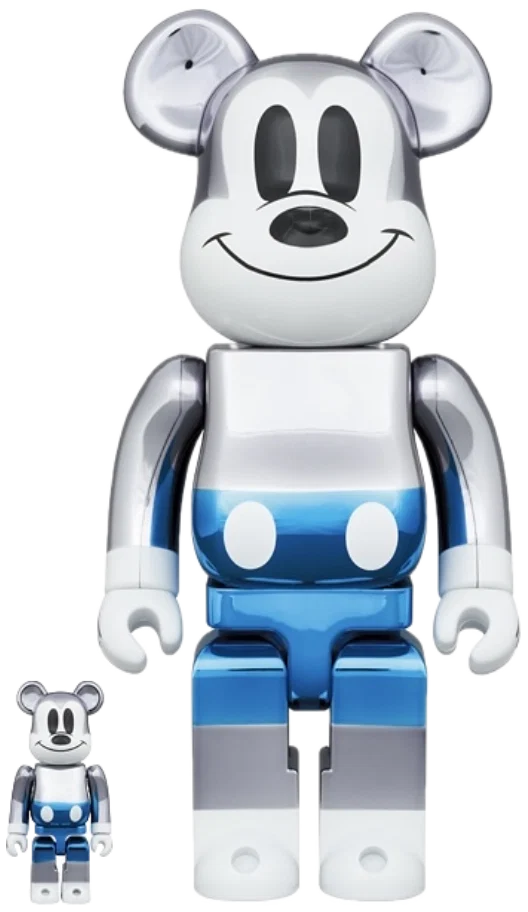
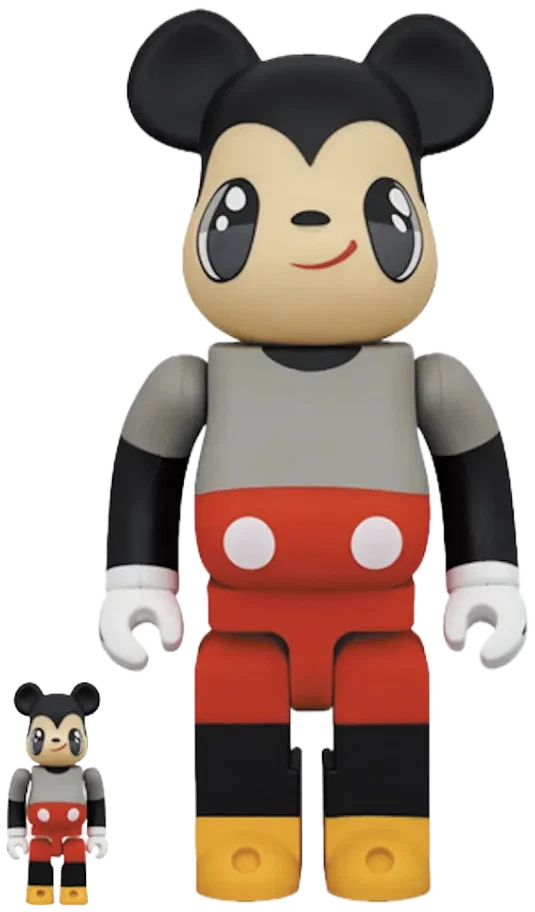
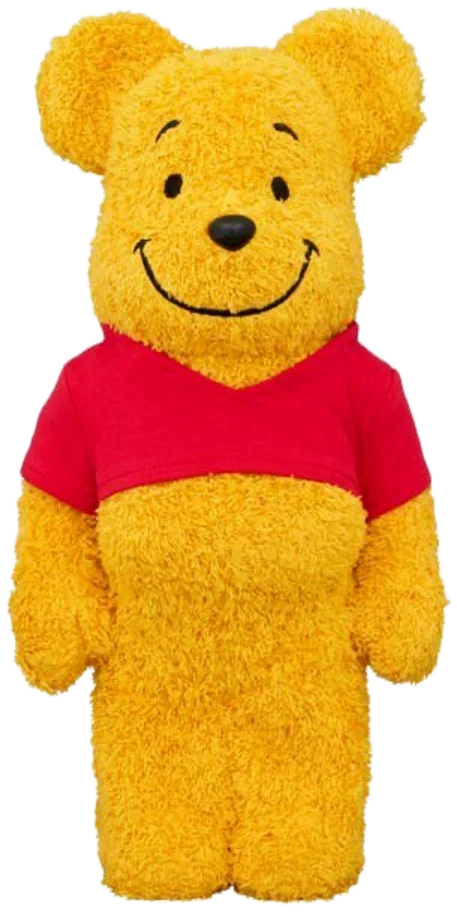
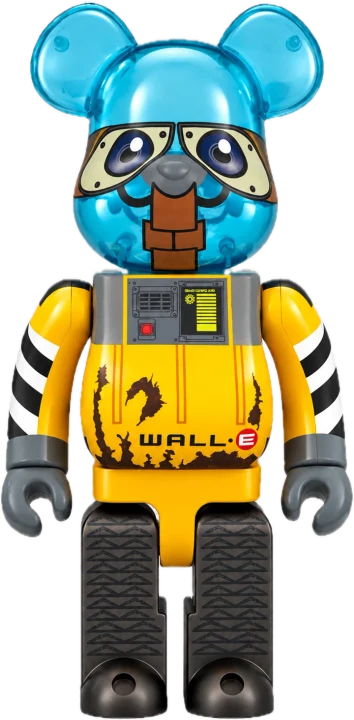
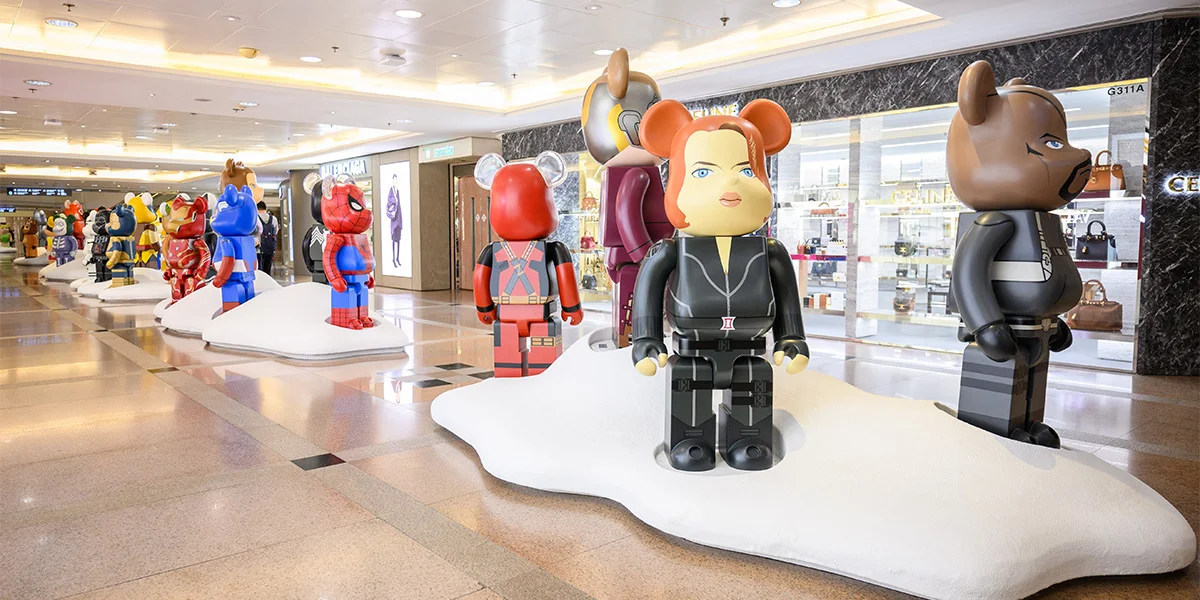
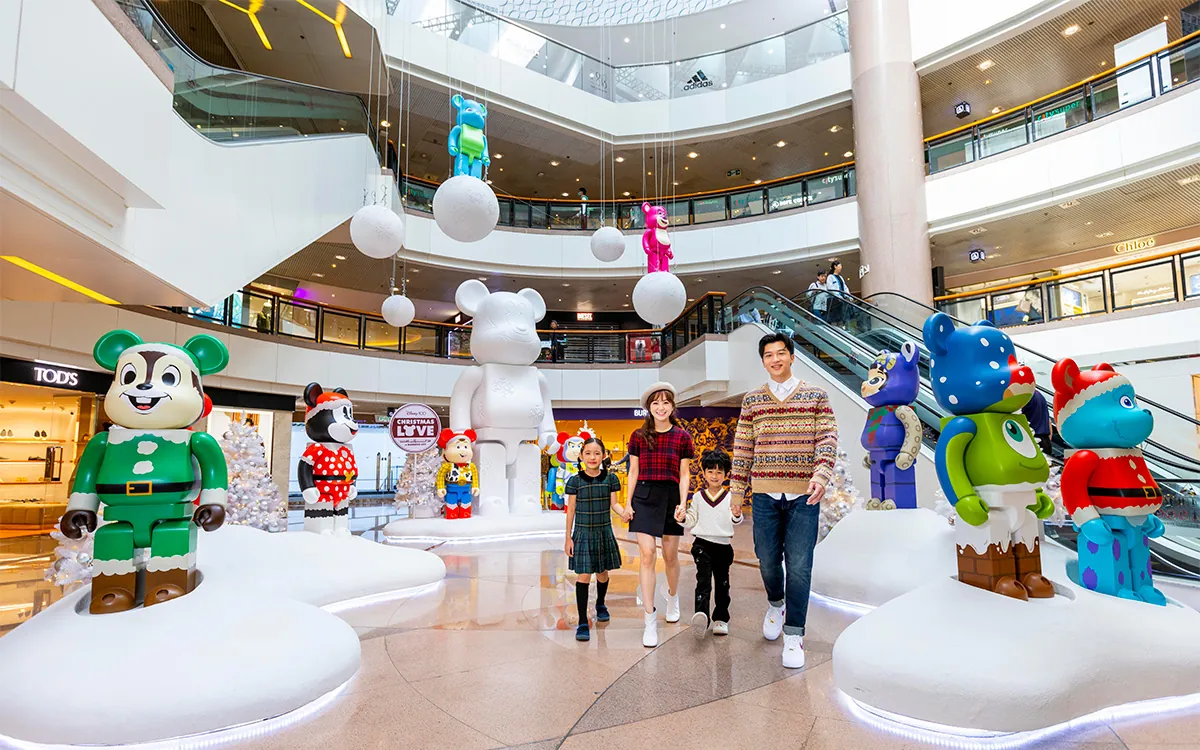
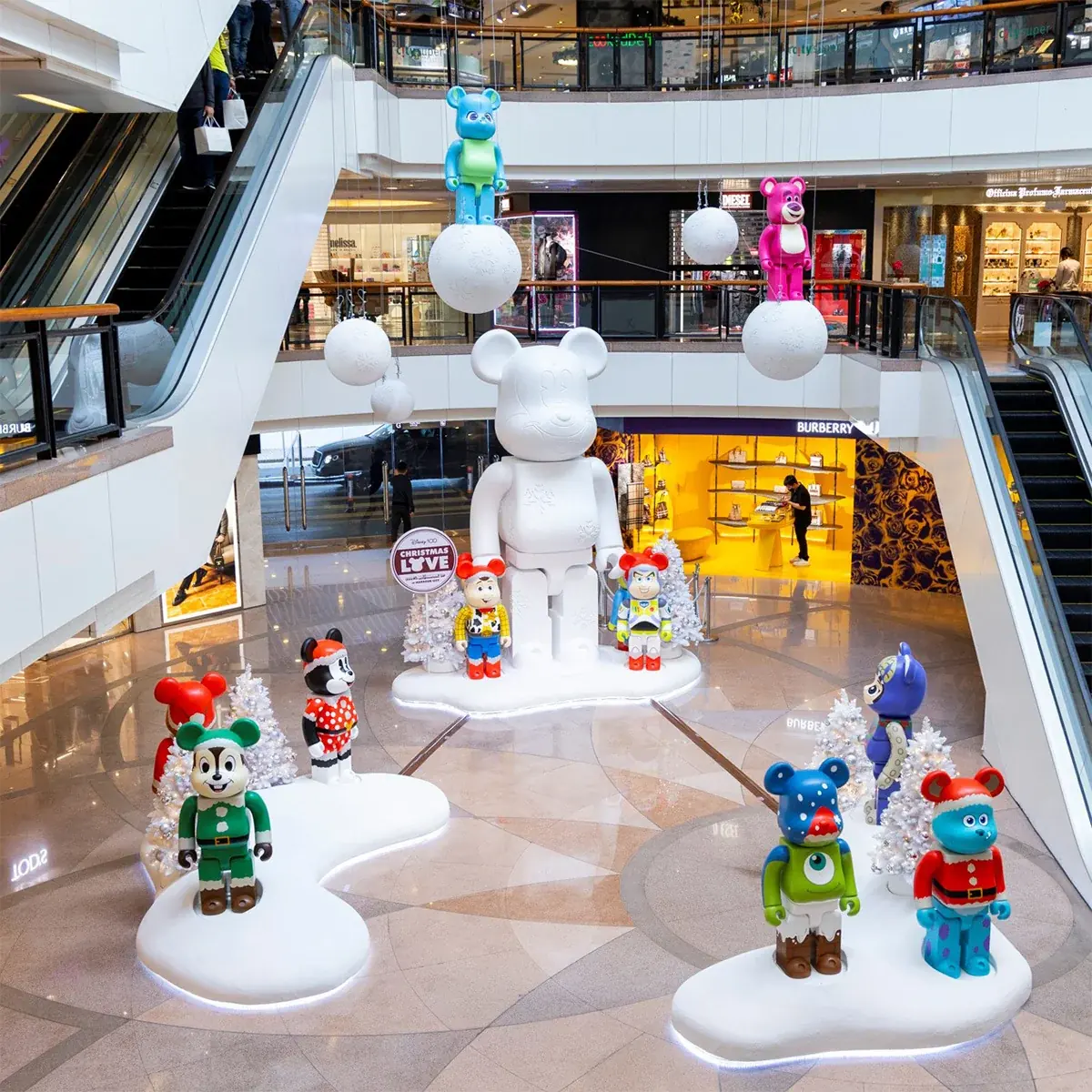
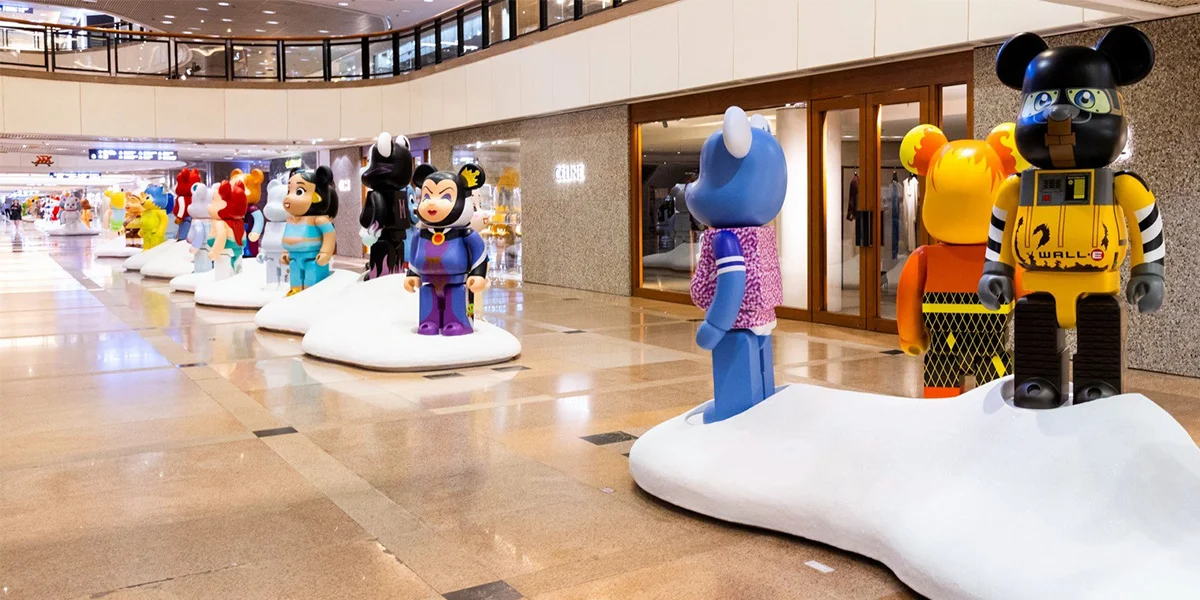
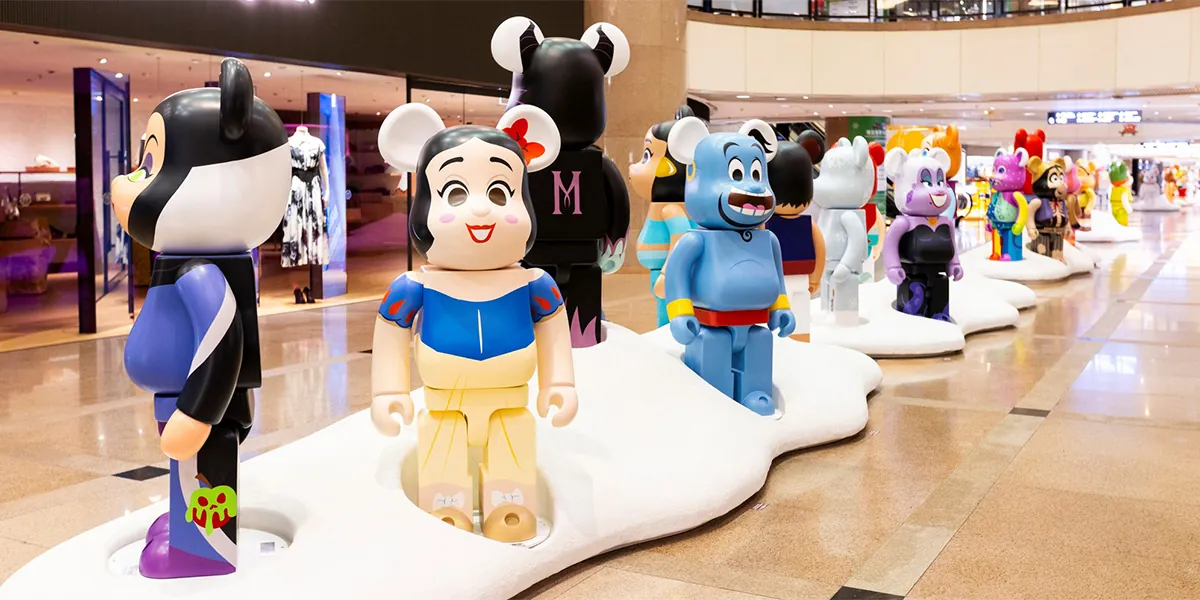
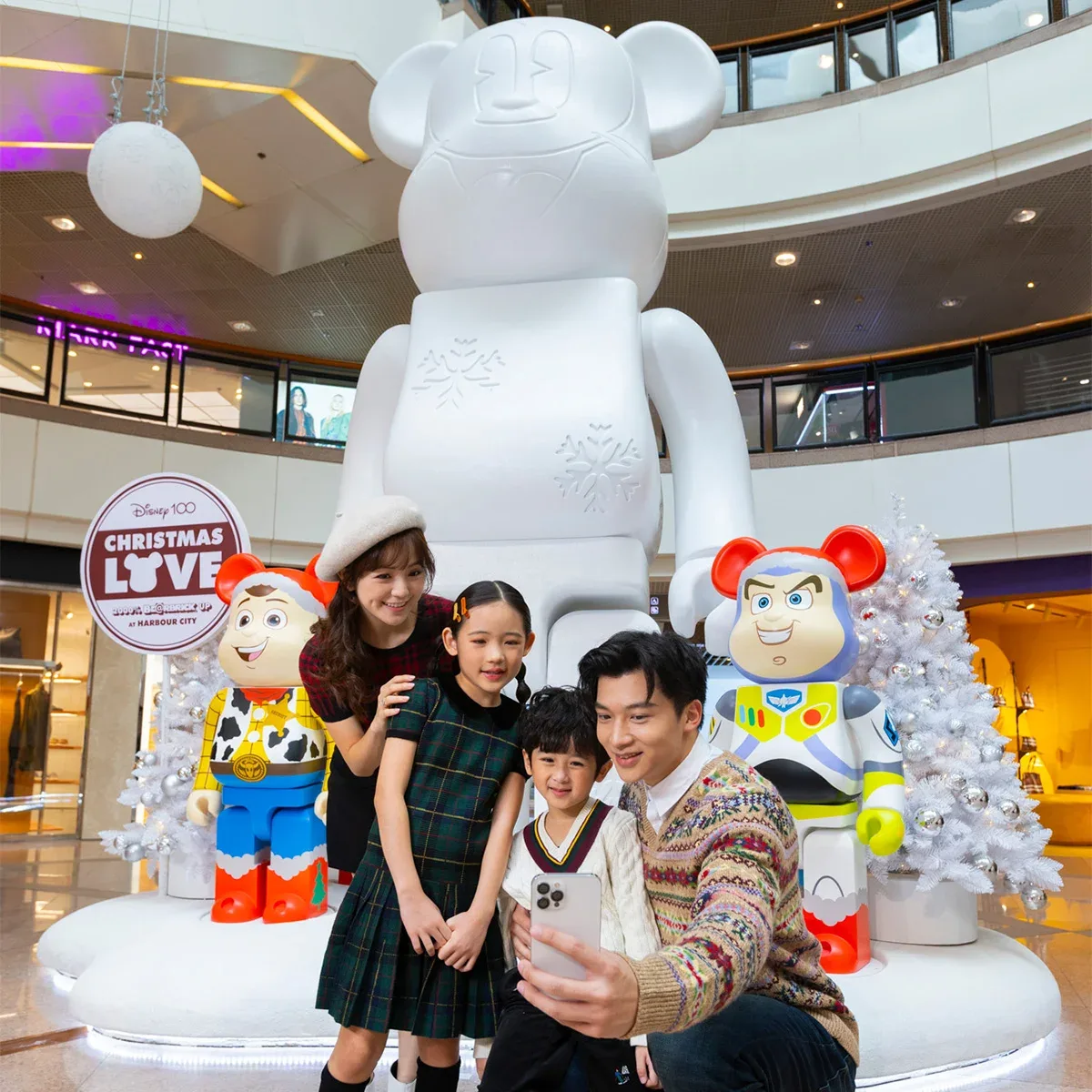
Harbour City hosted Disney100 CHRISTMAS LOVE 2000% BE@RBRICK UP from 24 November 2023 to 1 January 2024. It presented one hundred figures approximately 140 cm tall, made in fibreglass with no articulation. The 4.2-metre white Mickey belonged to the separate 6000% format.
Keep that distinction in mind when browsing the photographs. A single image can include several scales, visitors and scenic elements. Not every large bear in the frame is a 2000%, and a photograph of a festive installation is not a product photograph. This article looks back at a completed exhibition; it is not announcing an upcoming release.
Why the silhouette works at human scale
With a small collectible, the graphic often comes first: a character’s eyes, a costume colour or an unexpected pattern. Enlarge the object until it approaches human height and the sequence reverses. You notice its physical outline before identifying the character. Rounded ears, the broad head and the compact torso register at a distance; finer details reward a closer look.
That change is what makes exhibition scale interesting to us. It reveals how a familiar shape can take on a different role without abandoning its visual identity. On a shelf, a figure belongs to an arrangement. Beside a chair or along a walkway, it starts to determine the arrangement. The event photographs are therefore worth reading as compositions, rather than simply as a checklist of characters.
Recognising Disney inside another shape
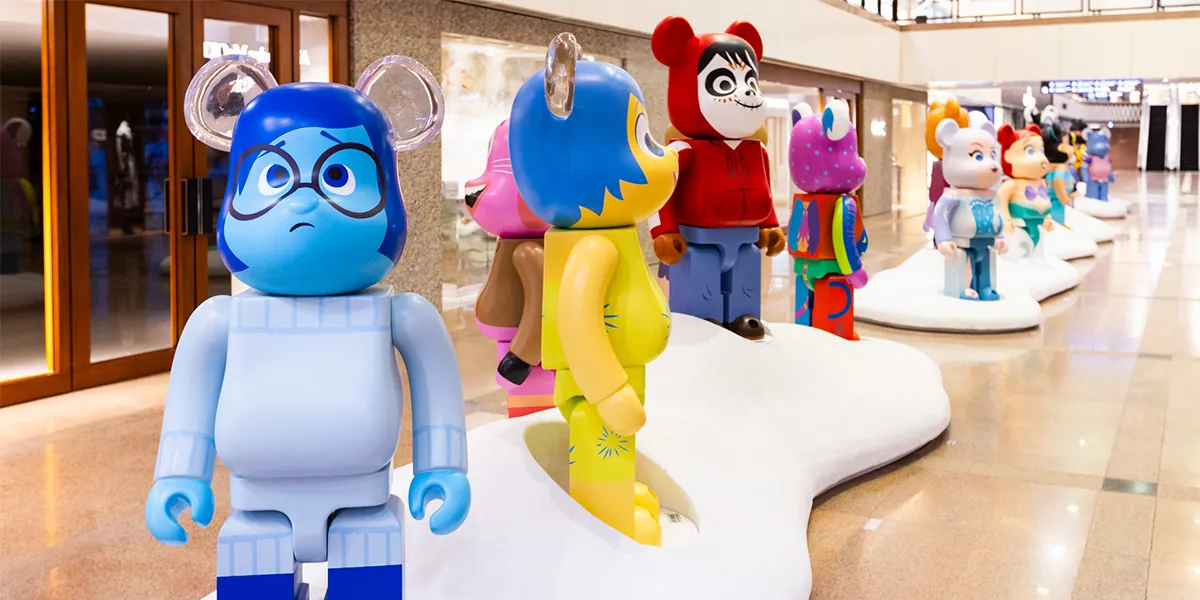
BE@RBRICK creates a particular design challenge: a character must remain recognisable within a silhouette that is not its own. Colour placement, familiar symbols and graphic proportions do much of the work. Try naming figures in a wide photograph before zooming in. Then compare the designs that communicate immediately with those that reveal their identity through a smaller detail.
In his Hypebeast interview, MEDICOM TOY’s Tatsuhiko Akashi discussed collaboration as a process of understanding both partners. It offers a useful way to judge a collectible: look beyond a famous name and consider how persuasively its visual world has been translated into BE@RBRICK’s shape.
Your favourite need not be the most familiar character. Sometimes an unusual colour relationship is what makes you return to an image. A collection becomes more personal when choices are tied to specific visual details, rather than recognition alone. Noticing what attracts you is more useful than trying to recreate somebody else’s selection.
How to read the exhibition photographs
Begin with a wide view. Look at the spacing: are figures isolated or arranged in groups? Where can a visitor walk? How much empty space surrounds each head and shoulder? These small observations reveal the structure of the display and help the eye navigate a busy field of colours and faces.
A close photograph answers different questions. It shows graphic edges, surface treatment and the relationship between neighbouring colours. It is less reliable for comparing height. A low camera position, wide lens or different distance can alter apparent proportions substantially. For a sense of scale, look for a person or a familiar architectural element at approximately the same distance from the camera.
Captions matter here. They distinguish the setting from the object’s specification and explain why a picture has been included. An event photograph records a moment and a place. It does not establish that a particular figure is currently available to buy, nor does it document the condition of a later resale example.
What scale changes in a room
If you imagine bringing that idea into a private interior, start with placement. Mark the intended footprint on the floor and walk around it before thinking about colour. Height is only one measurement. Doors, stairs, corridor turns and the eventual transport packaging can be more restrictive than the space where the object will stand.
We would give a large figure a visual pause around it. That does not necessarily mean a dedicated room, but it does mean a background against which the outline remains legible. A busy painting, patterned wallpaper and several nearby sculptures may compete for the same attention. A quiet wall lets the graphic do its own work.
Test lighting from the position where the object will usually be seen. A bright reflection can conceal part of a design, while softer side lighting can make volume easier to read. This is an editorial suggestion about composition, not a care specification. Follow the documentation supplied with the particular object when deciding on its display and storage conditions.
Questions to ask before buying a large example
Start with identification: exact name, format, material, provenance and supporting documentation. Ask for recent photographs of the actual example being offered, including its base and areas hidden in a front view. An official exhibition image can explain the design, but it cannot replace a condition inspection.
Discuss delivery separately: packaging dimensions, handling arrangements, insurance and responsibility for damage. With an oversized object, those details belong in the purchase decision from the beginning. If a seller claims a particular edition size or exceptional status, ask for the original evidence rather than assuming that information about another release applies.
We have deliberately avoided an “investment average” here. A price detached from verified transactions, condition and provenance says very little about a specific object. Assess the actual offer, the practical cost of placing it and your reason for wanting it. Physical size is not a promise of future price growth.
Do you need to start with 2000%?
No. If BE@RBRICK’s visual language appeals to you, first establish the scale you enjoy living with. A small figure leaves room for several characters; a medium example can anchor a shelf; a large one asks for a deliberate location. Those are different ways to collect, rather than compulsory steps towards the largest available object.
The Disney100 photographs let you imagine the far end of that spectrum without making a purchase. Pick one character and picture it in your own space. Are you drawn to the character, the graphic interpretation or the physical presence? Answering that question can help you choose a much smaller collectible with considerably more confidence.