In this article
Start with the silhouette
Colour is often the first thing you notice in a catalogue photograph. A blue character can seem entirely different from a pink one, even when both belong to the same family. To tell COMPANION, BFF and CHUM apart, set the palette aside for a moment. Look at the head, the surface of the body and the proportions of the arms and legs. Those features will usually explain more than the colourway.
KAWS is the artist Brian Donnelly; COMPANION, BFF and CHUM are characters within his work. They are not three sizes of one toy or successive stages in a collection. You do not need to memorise every collaboration before choosing a favourite. A few visual distinctions are enough to make the names useful, whether you are browsing a catalogue or looking at a sculpture in a room.
COMPANION: a familiar figure in changing poses
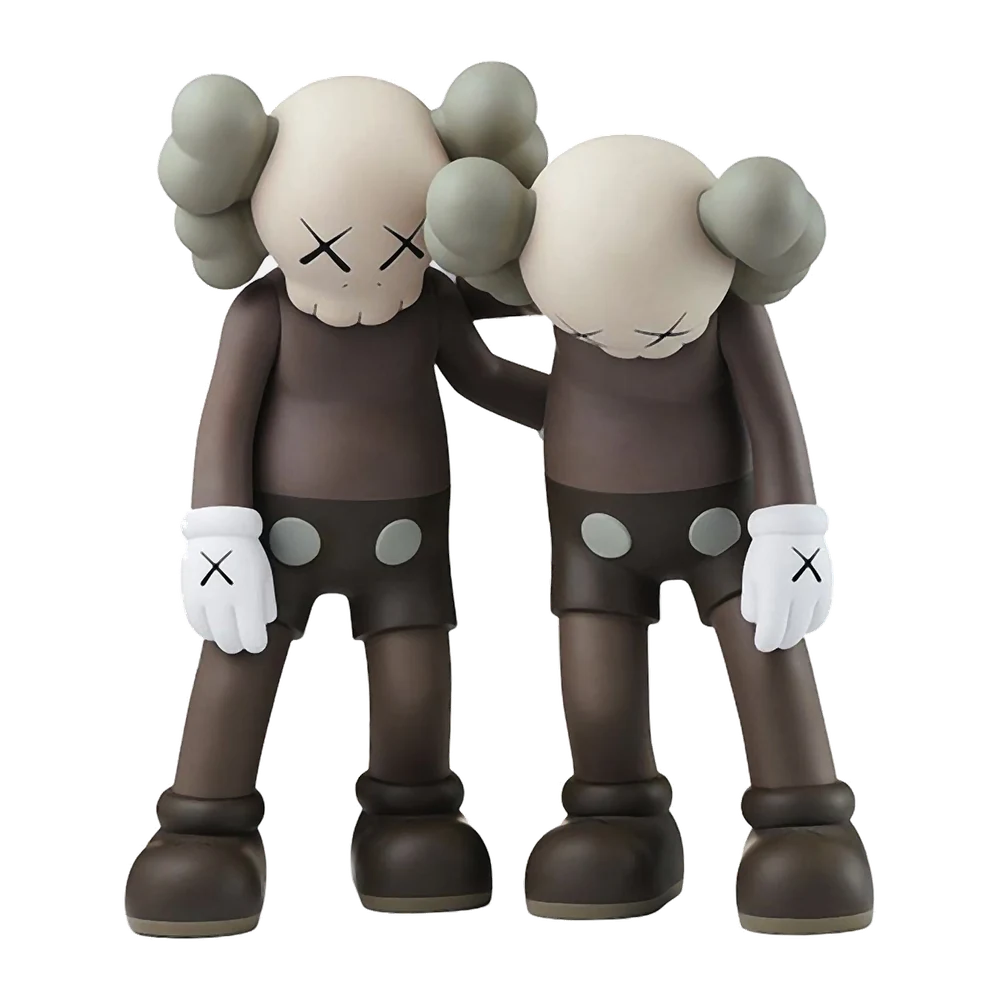
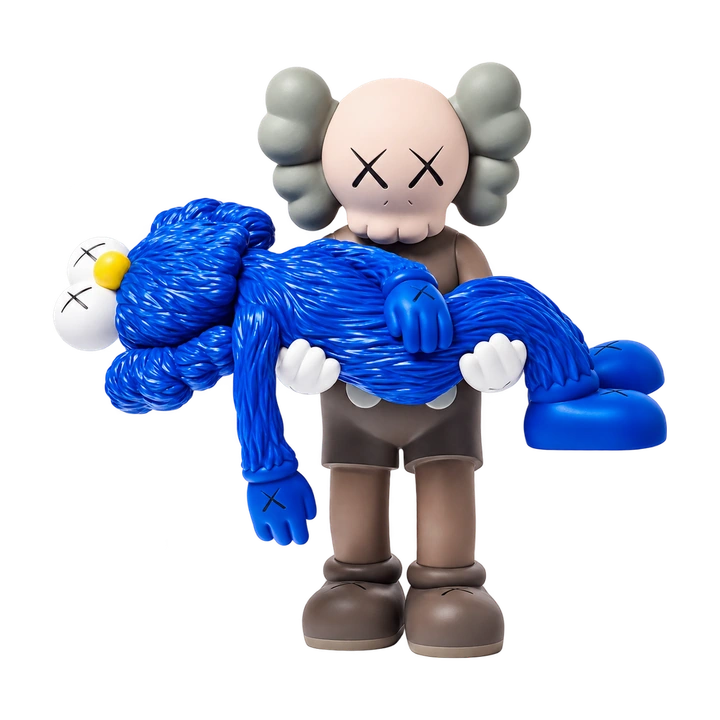
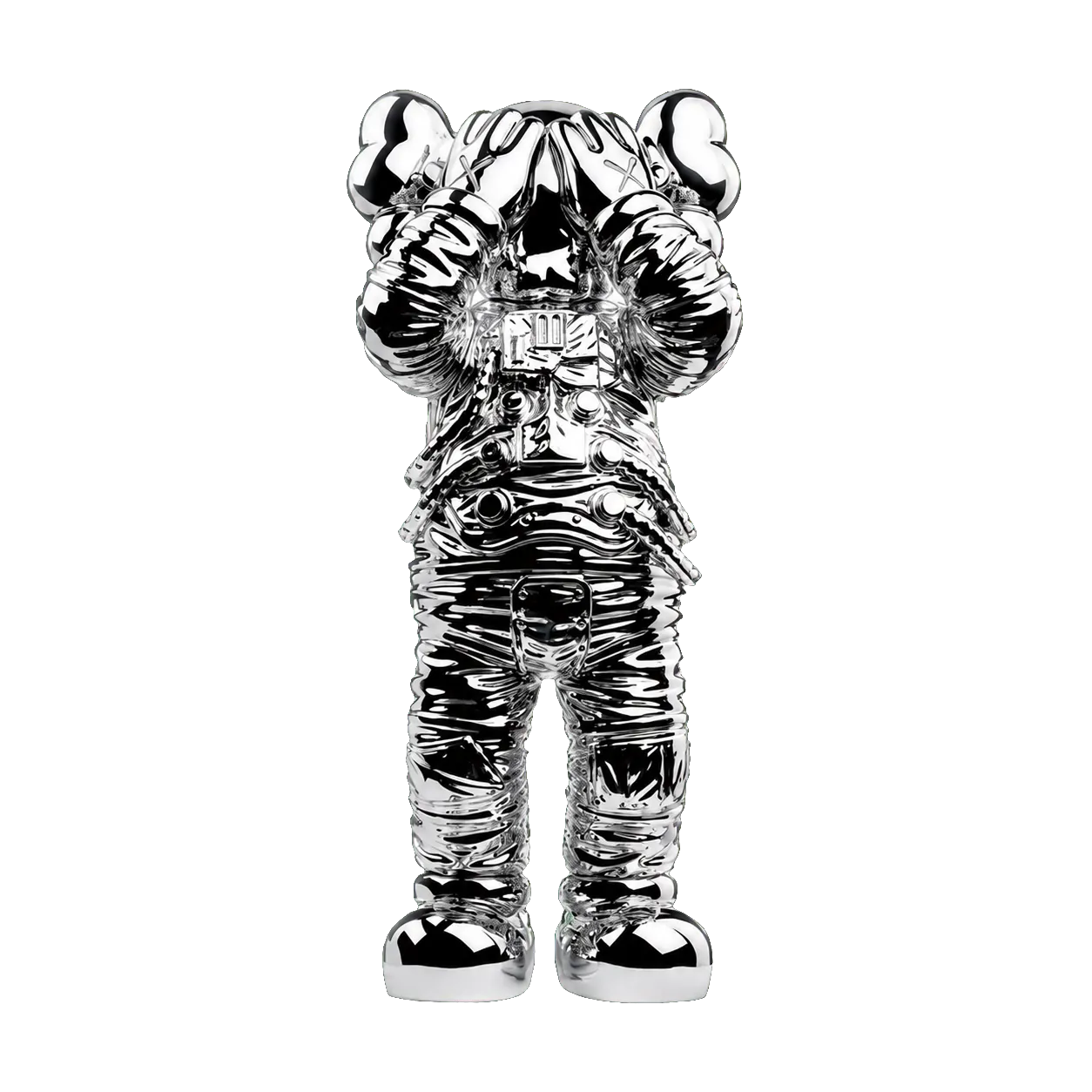
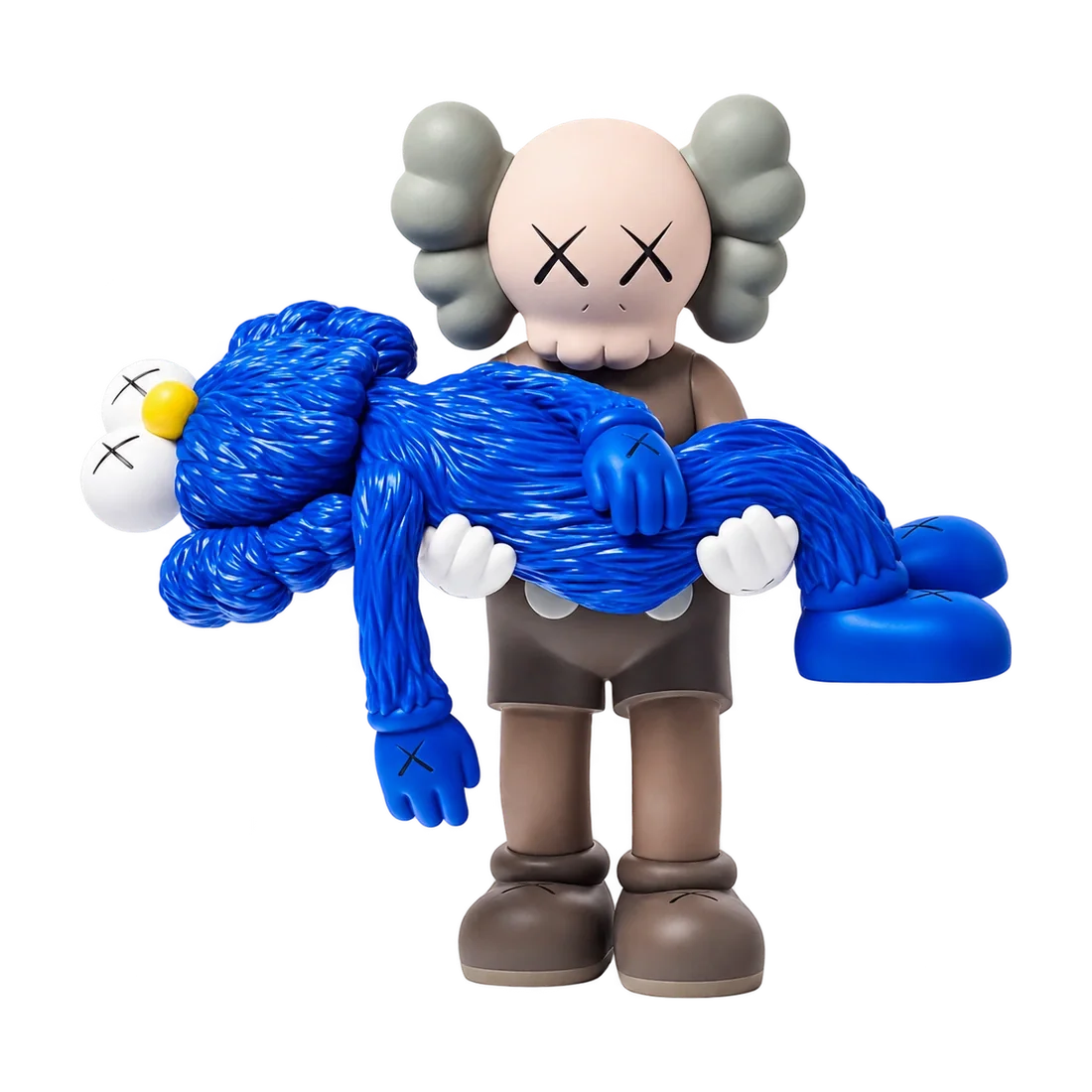
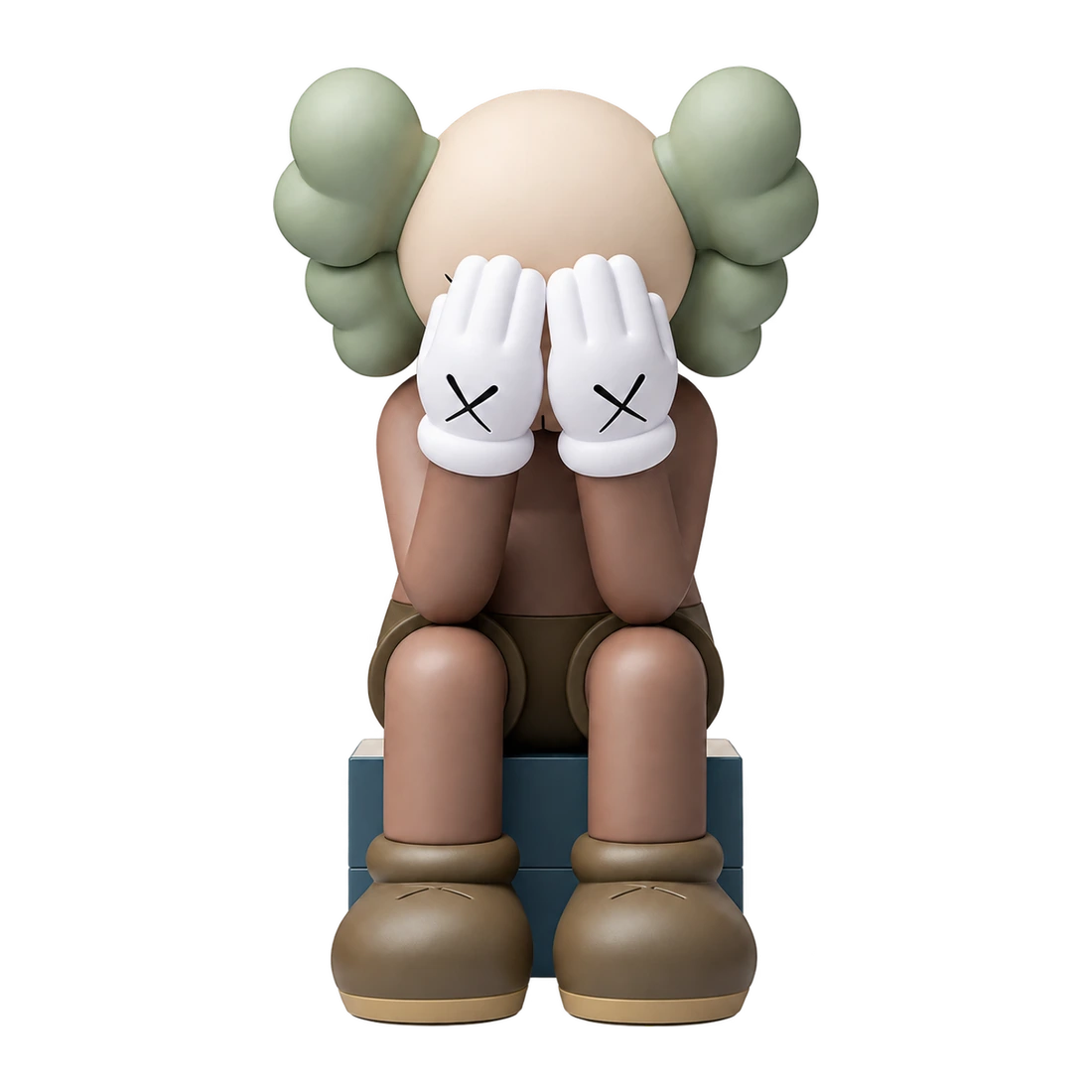
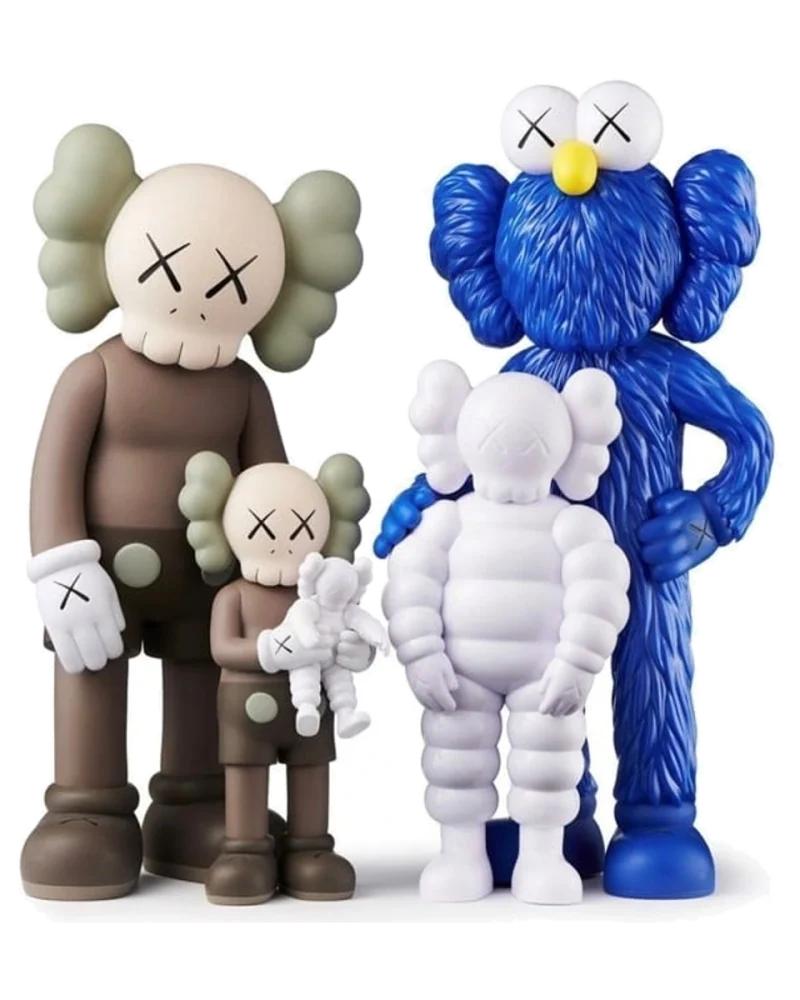
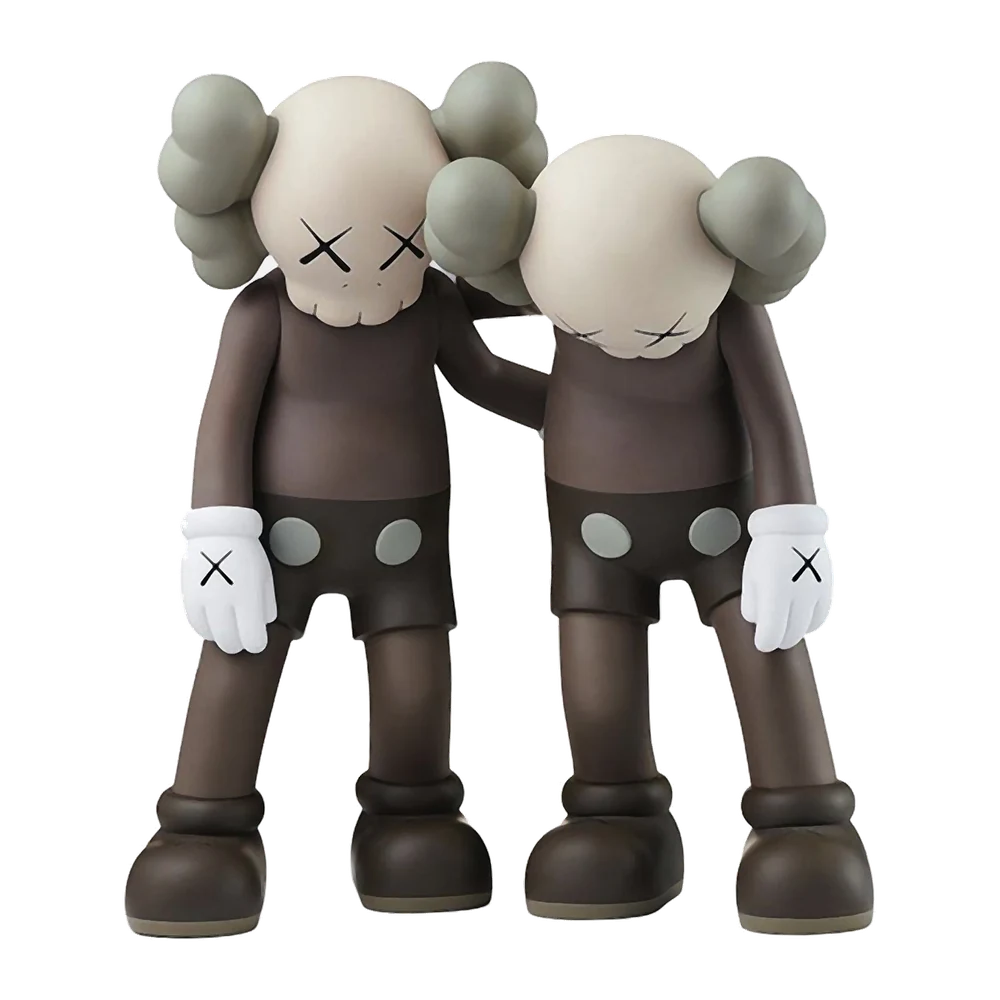
COMPANION has a smooth body, gloves, shorts and oversized shoes. Its rounded head carries protruding crossbone-like forms and crossed-out eyes. The National Gallery of Victoria describes this combination of recognisable cartoon clothing and the artist’s particular treatment of the head. Together, those details make the character readable even when it turns sideways or covers part of its face with its hands.
Recognising the character is only the beginning. COMPANION can stand, sit, support another figure or appear within a more elaborate group. The gesture matters as much as the face. You might respond to a quiet stance, the relationship between two bodies or a suggestion of tiredness. These are ways of reading the work, rather than emotions every viewer is obliged to share. Compare the poses before settling on a colour.
BFF: recognise the texture before the material
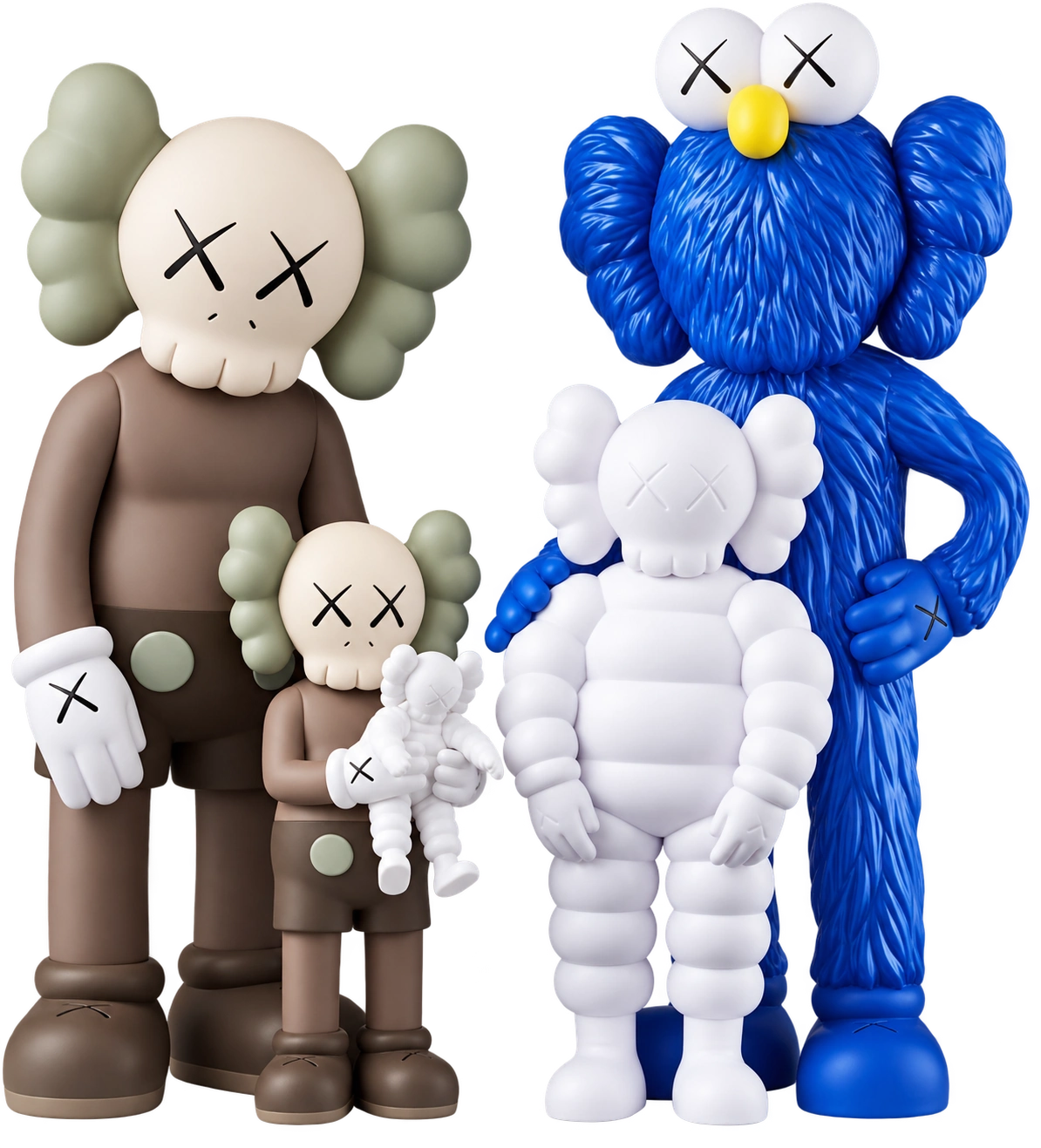
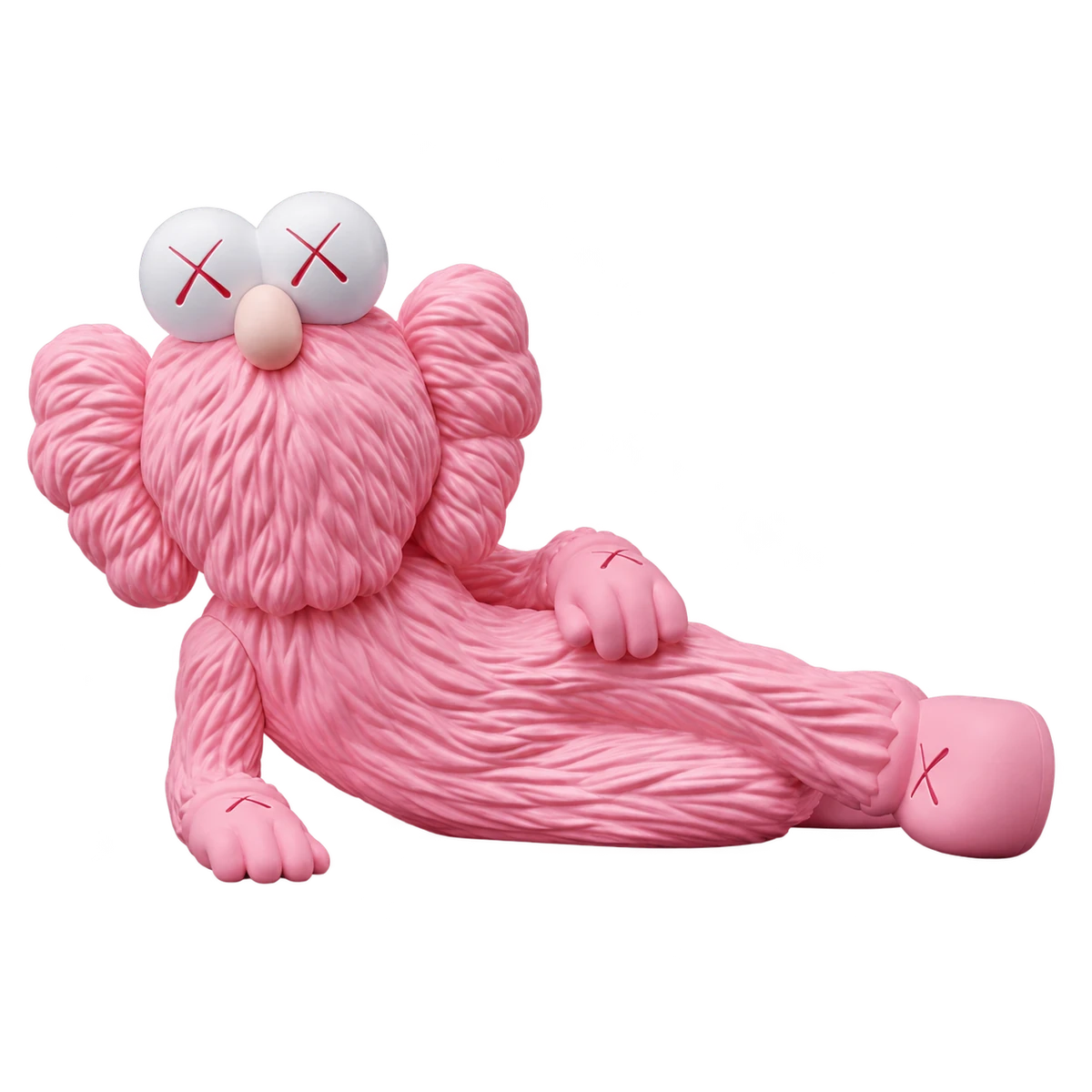
BFF has a rippling, fur-like outline, rounded forms and a projecting nose. Unlike COMPANION, shorts are not the useful starting point. The character’s surface remains distinctive even in a restrained colour: light catches its relief, giving the silhouette a softer appearance. The crossed-out eyes connect BFF to KAWS’s visual language without making it another version of COMPANION.
Fur-like describes an appearance, not necessarily what the object is made from. A BFF can be a plush item or a sculpture whose surface represents fur. SFMOMA’s account of FAMILY includes the character in a bronze grouping. The name therefore does not promise softness to the touch. Read the material and technique for the particular work, especially if the photograph makes a solid surface look deceptively soft.
Photographs
CHUM: a body built from rounded sections
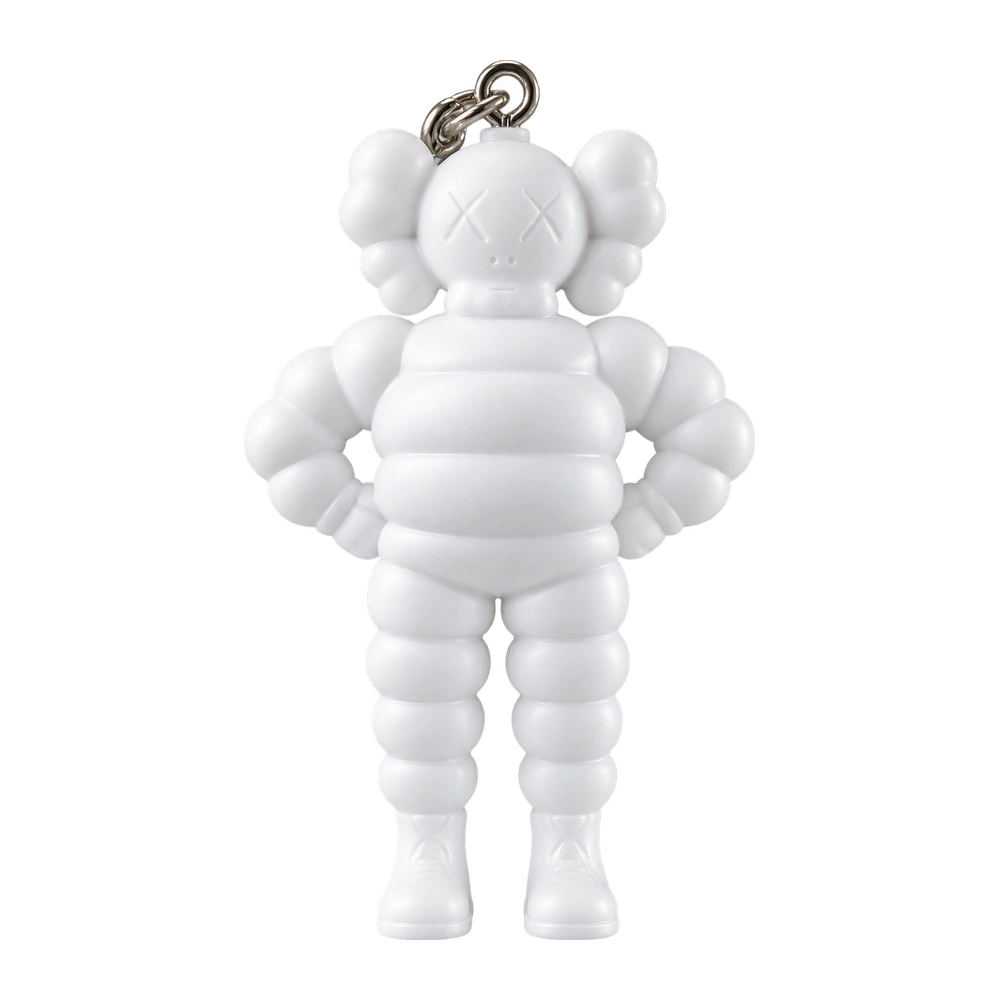
With CHUM, look first at the torso and limbs. Distinct rounded sections build a broad, full body. Beside a comparatively slender COMPANION, the figure appears more compact and substantial. This difference can be clearer from a distance than small details on the face. Try reducing several reference photographs to the same display size: the rhythm of CHUM’s silhouette will still stand out.
That construction has a practical consequence at home. Two figures of equal height can occupy quite different amounts of space and carry different visual weight. If CHUM appeals to you, do not stop at the measurement from base to head. Check the width across the shoulders, the position of the arms and the depth. On a narrow console, those measurements may matter more than the headline height.
A character is not the same as an edition
The character’s name, the title of a work and its particular version answer different questions. COMPANION identifies a figure within KAWS’s vocabulary. The title identifies the composition you are considering. Colour, material, size and release information then describe its execution. Calling everything a black KAWS may be convenient in conversation, but it makes finding a particular piece again unnecessarily difficult.
Group compositions deserve a closer look. FAMILY brings COMPANION, BFF and CHUM together; SFMOMA describes an intimate family arrangement. Seeing them side by side makes their differences particularly clear. However, a photograph of that sculpture does not mean three separate figures from another release come as a set. The contents of a purchase must be checked against its own description, rather than inferred from an exhibition photograph.
Photographs
Choose a place before choosing a larger size
Start with the spot where you will see the work each day. An open shelf calls for attention to depth and the background behind the figure. A console asks you to consider the relationship with a picture or mirror. A larger freestanding object needs room to be viewed and enough clear space to walk past it. There is no need to plan an entire collection at once.
Then compare photographs of the characters with your own room. Smooth COMPANION, textured BFF and segmented CHUM create different patterns of light and shade. This is not a formula assigning each character to an interior style. Test the actual arrangement: does the silhouette disappear among books, compete with a busy print or remain clear from your usual seat? One considered object can make more sense than a group assembled simply to fill a shelf.
Use photographs to ask better questions
A front view and a side view are a useful starting pair. One explains the pose; the other reveals depth, the tilt of the head and the position of the arms. An installation photograph adds a sense of scale, but it cannot replace current images of the actual example offered. A wide-angle lens or a low camera position can alter apparent proportions considerably.
Nor should crossed-out eyes or a familiar outline be treated as proof of authenticity. This guide distinguishes characters; it does not authenticate an object. Before purchasing, ask for its exact title, material, dimensions, condition and provenance. Request current photographs and supporting information. A convincing image alone cannot establish the history of a piece, the contents of a set or the terms under which it is being sold.
You can begin with one character
There is no obligation to collect all three. Try explaining your preference without using popular or rare: perhaps you like a pose, the rounded outline, the texture or a colour beside your furniture. A specific reason helps separate your own interest from the wish to reproduce somebody else’s home. It can also reveal that a different version of the same character would suit you better.
Next time you browse KAWS, identify the character first, the work second and the particular execution after that. COMPANION offers a smooth body and distinctive clothing, BFF a fur-like relief, and CHUM a sequence of rounded forms. Those differences provide a useful beginning. The finer details can follow naturally as you return to the works you want to spend more time with.
Beyond figures: prints and paintings
KAWS’s world extends beyond COMPANION, BFF and CHUM. His characters and graphic motifs also appear in two dimensions. A print and a painting, however, are different objects. Printed work has its own technique and edition information; a painting should be described through its medium and execution. An image reproduced in a book does not become an artist’s print simply because it shows a painting.
For a wall, consider more than a familiar face. Colour fields, line and the scale of the image beside furniture all matter. Establish whether the item is a screenprint, poster, painting or another format. Any signature, numbering or edition statement must belong to that particular work.
Vinyl, keyholder or plush
One character can take the form of a vinyl figure, a keyholder or a plush object. A shared silhouette does not make these interchangeable. A keyholder with a metal loop is a distinct format, rather than simply a small display sculpture. Plush asks for a different condition check: fabric, seams and surface wear deserve attention alongside the shape.
Keep the complete version name with its dimensions and material. Before buying, look at photographs of the whole object, including its attachment or base. That makes its actual scale easier to understand and reduces confusion between similar images of different releases.
Books that open up the work
A book lets you compare figures with drawings, paintings and exhibition works. KAWS: WHAT PARTY, published by Phaidon, accompanies the Brooklyn Museum retrospective. The museum shop separately describes a paperback titled KAWS. Check the title, format and ISBN rather than assuming that visually related publications are the same book.
Different cover colours do not automatically indicate a limited edition. A special or signed edition needs supporting information from the publisher. Choose for the contents, too: studio photographs, preparatory drawings and a broader overview each offer a different reason to return to a book. An attractive cover is only the beginning of that decision.
Museum releases and small printed objects
A museum connection should be identified precisely. Christie’s documents UNTITLED (KAWS x Brooklyn Museum), released for a fundraising project, as a small screenprint on paper. It should not be described as a pack of playing cards or an unspecified museum postcard.
The word cards can itself refer to very different things: postcards, printed artworks or an actual deck. Check the exact name and purpose of each release. Purchase through a museum shop does not automatically make every souvenir signed or numbered. For a personal collection, a clear description, documented provenance and your own reason for keeping the object are more useful starting points.