Allow four to five hours if you want time to look, walk between addresses and stop for lunch. With two hours, choose the three-stop version below.
These are commercial galleries with public exhibition programmes. You can look without arriving as a prospective buyer. The useful questions are which exhibition is on, whether it occupies the whole building, and how much time the work deserves. An installation photograph helps answer those questions before you leave; a famous gallery name alone does not.
This guide concentrates on five specific London branches. For a different side of the city, see our London gallery guide. The addresses below stay useful as exhibitions change; the dated programme is separated from the walking route.
The route at a glance
White Cube Mason’s Yard → Thaddaeus Ropac → David Zwirner → Hauser & Wirth → Gagosian Grosvenor Hill. Start near Green Park or Piccadilly Circus and finish in Mayfair. The short street connections make it easy to drop a stop rather than hurry through a room.
| Gallery | Exact address | What earns the visit | Regular public hours |
|---|---|---|---|
| White Cube Mason’s Yard | 25–26 Mason’s Yard, London SW1Y 6BU | Painting and the change of scale between gallery levels | Tuesday–Saturday, 10:00–18:00 |
| Thaddaeus Ropac, Ely House | 37 Dover Street, London W1S 4NJ | Modern and contemporary work in the rooms of a historic house | Tuesday–Saturday, 10:00–18:00 |
| David Zwirner | 24 Grafton Street, London W1S 4EZ | Closely looking at prints, paper and collaboration with a printer | Tuesday–Saturday, 10:00–18:00 |
| Hauser & Wirth London | 23 Savile Row, London W1S 2ET | Different exhibitions within the same London address | Tuesday–Saturday, 10:00–18:00 |
| Gagosian Grosvenor Hill | 20 Grosvenor Hill, London W1K 3QD | Larger presentations that let you compare painting and objects | Tuesday–Saturday, 10:00–18:00 |
Hours and programmes were checked on 22 November 2026. They overlap for Saturday 28 November 2026, the example day used here. This is a route checked against published information, not a claim that the editor walked it. Allow extra time for street crossings and navigation; the walking estimates are planning allowances rather than measured journey times.
On view now: a dated exhibition shortlist
| London venue | Exhibition | Announced dates |
|---|---|---|
| White Cube Mason’s Yard | Louise Giovanelli: In the Light of False Suns | 20 November 2026–16 January 2027 |
| Thaddaeus Ropac, Ely House | Georg Baselitz: The Heroes 1965–66 | 13 October–18 December 2026 |
| David Zwirner, Grafton Street | No Plan at All: Prints from BORCH Editions | 5 November–19 December 2026 |
| Hauser & Wirth, Savile Row | Lorna Simpson: Previous & Ongoing and Cindy Sherman | 13 October–23 December 2026 |
| Gagosian, Grosvenor Hill | This Is Still Not a Pipe: The Afterlife of Magritte | 24 September–12 December 2026 |
For a later trip, open the exhibition link again rather than treating this table as a permanent promise. An installation view remains a useful record after a show closes, but it then becomes an archival example. Openings and private events can have different access arrangements from an ordinary public visit.
White Cube Mason’s Yard: start with light and painted surfaces
Mason’s Yard rewards a deliberate approach: find the courtyard entrance, step away from the busy streets and give the first room a few minutes. White Cube’s venue record describes a street-level gallery and a double-height basement gallery. The building opened in 2006, designed by MRJ Rundell & Associates. The contrast between its levels gives a small address more spatial variety than the name “White Cube” might suggest.
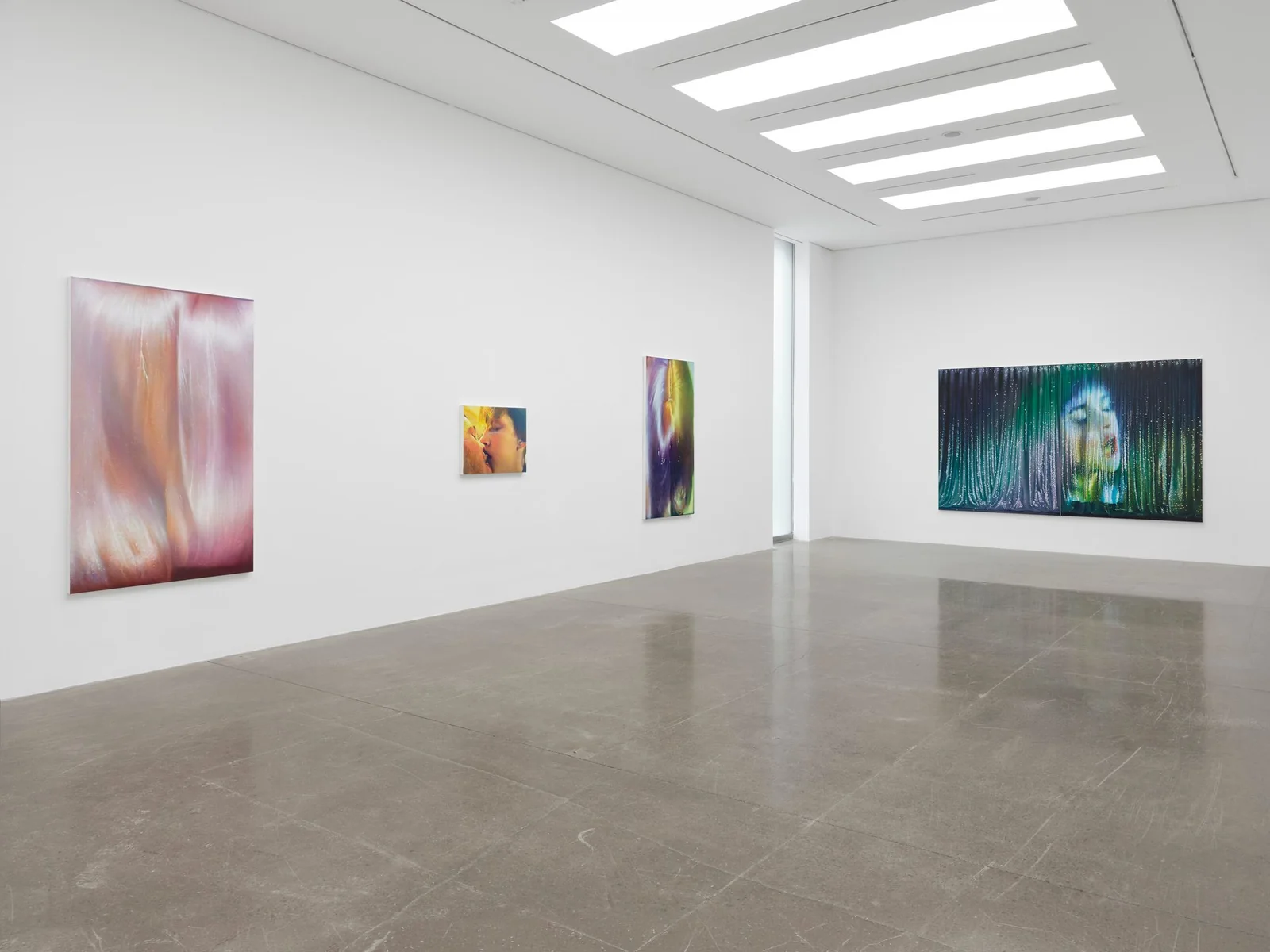
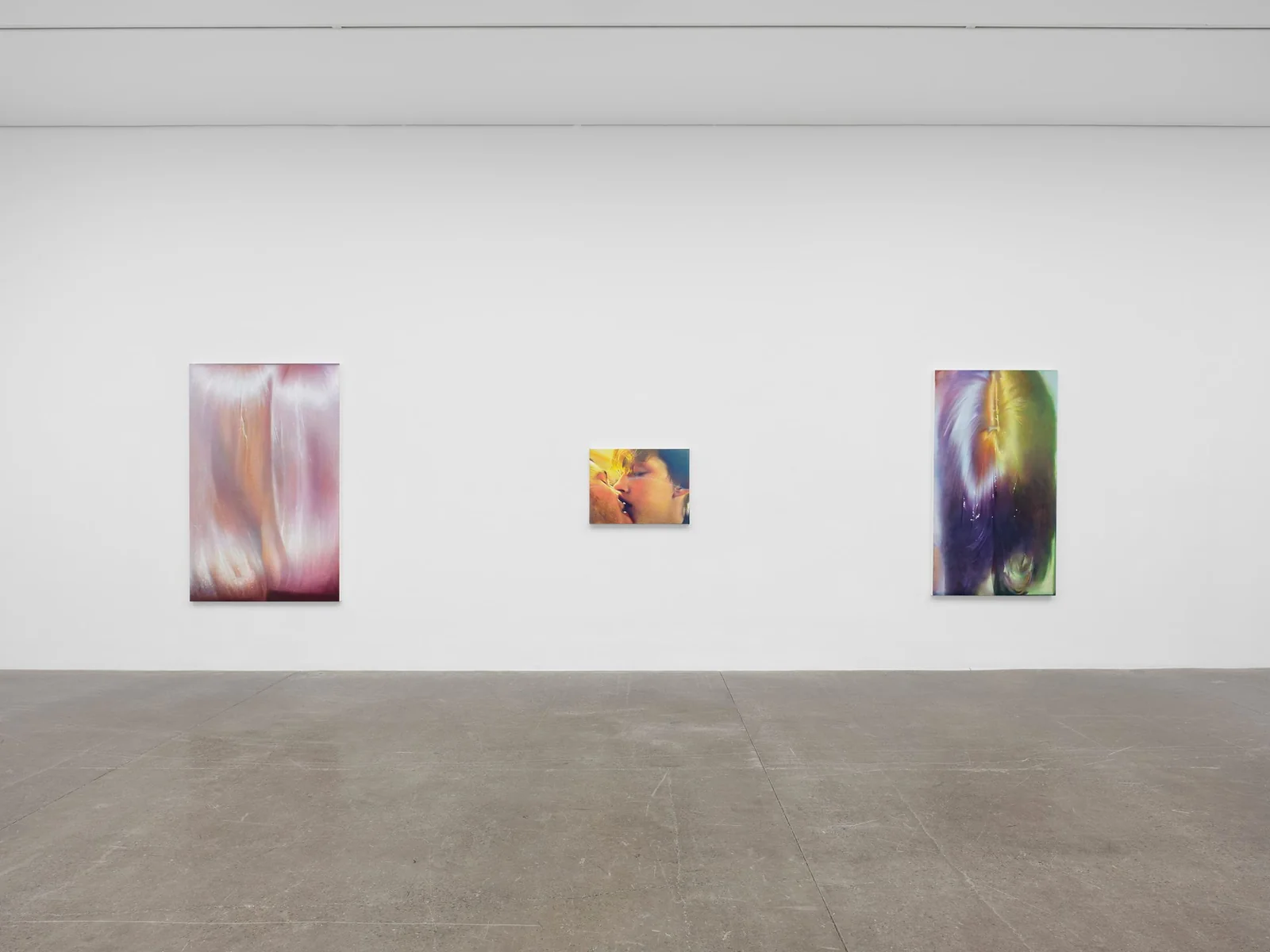
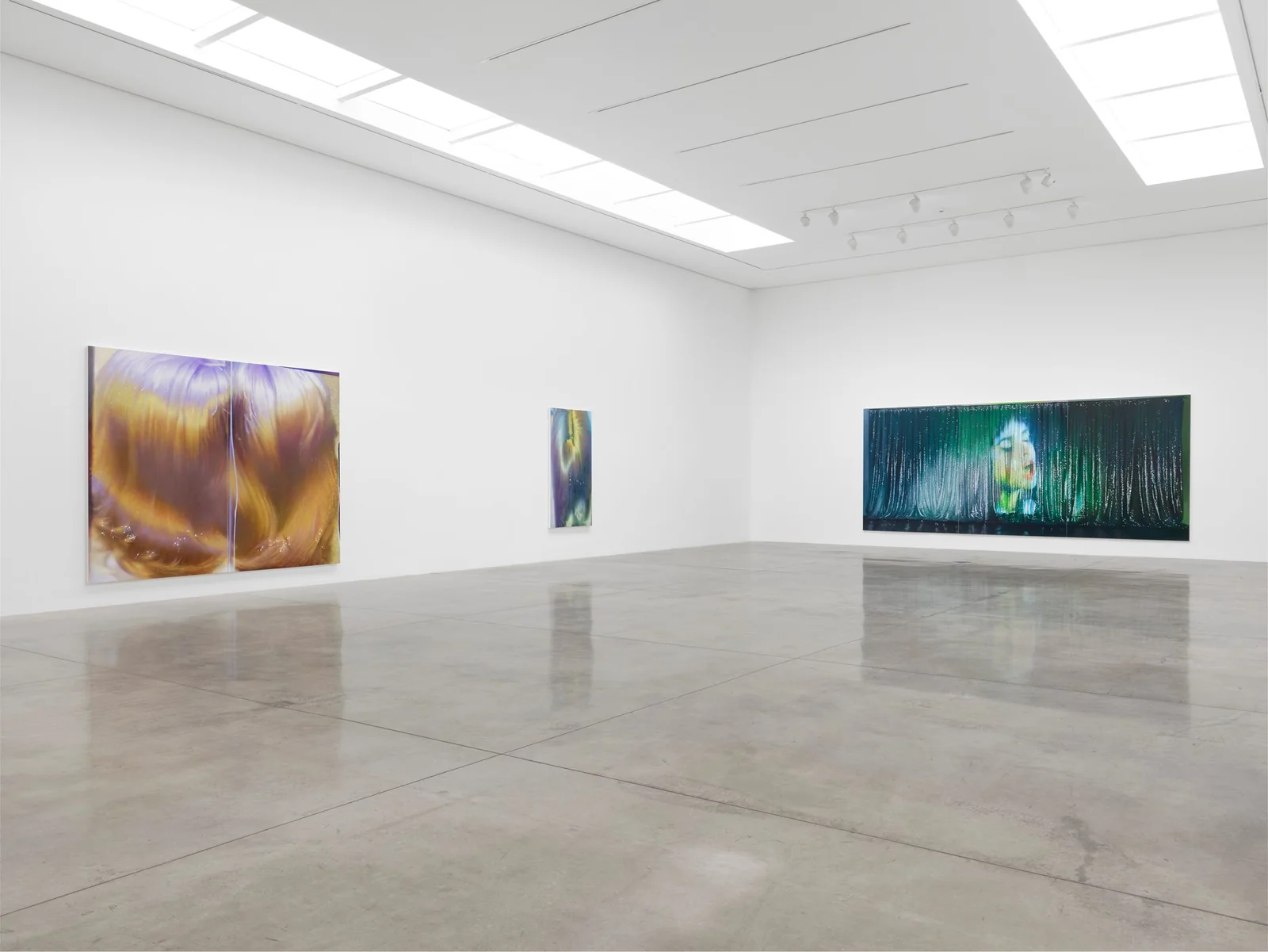
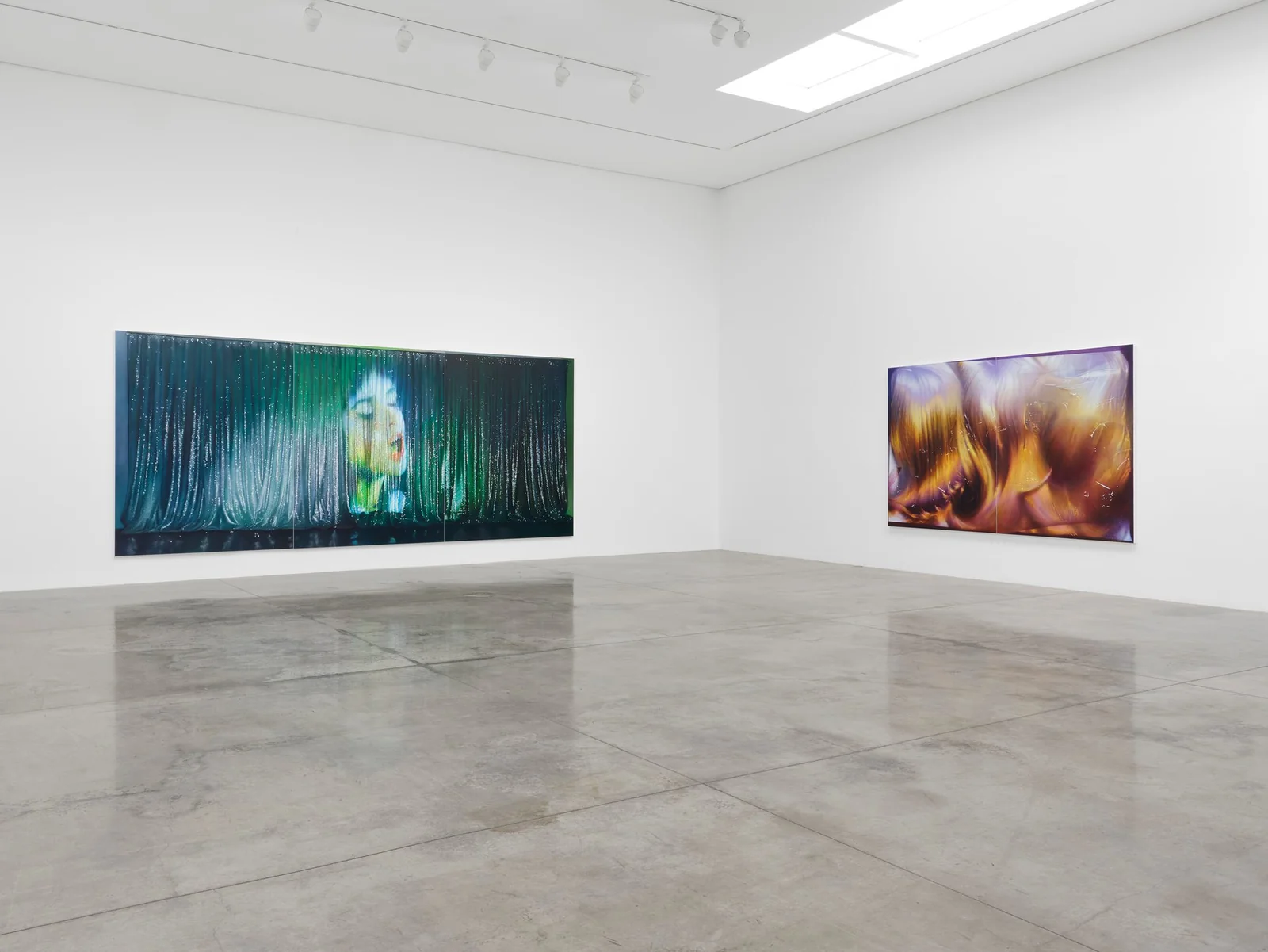
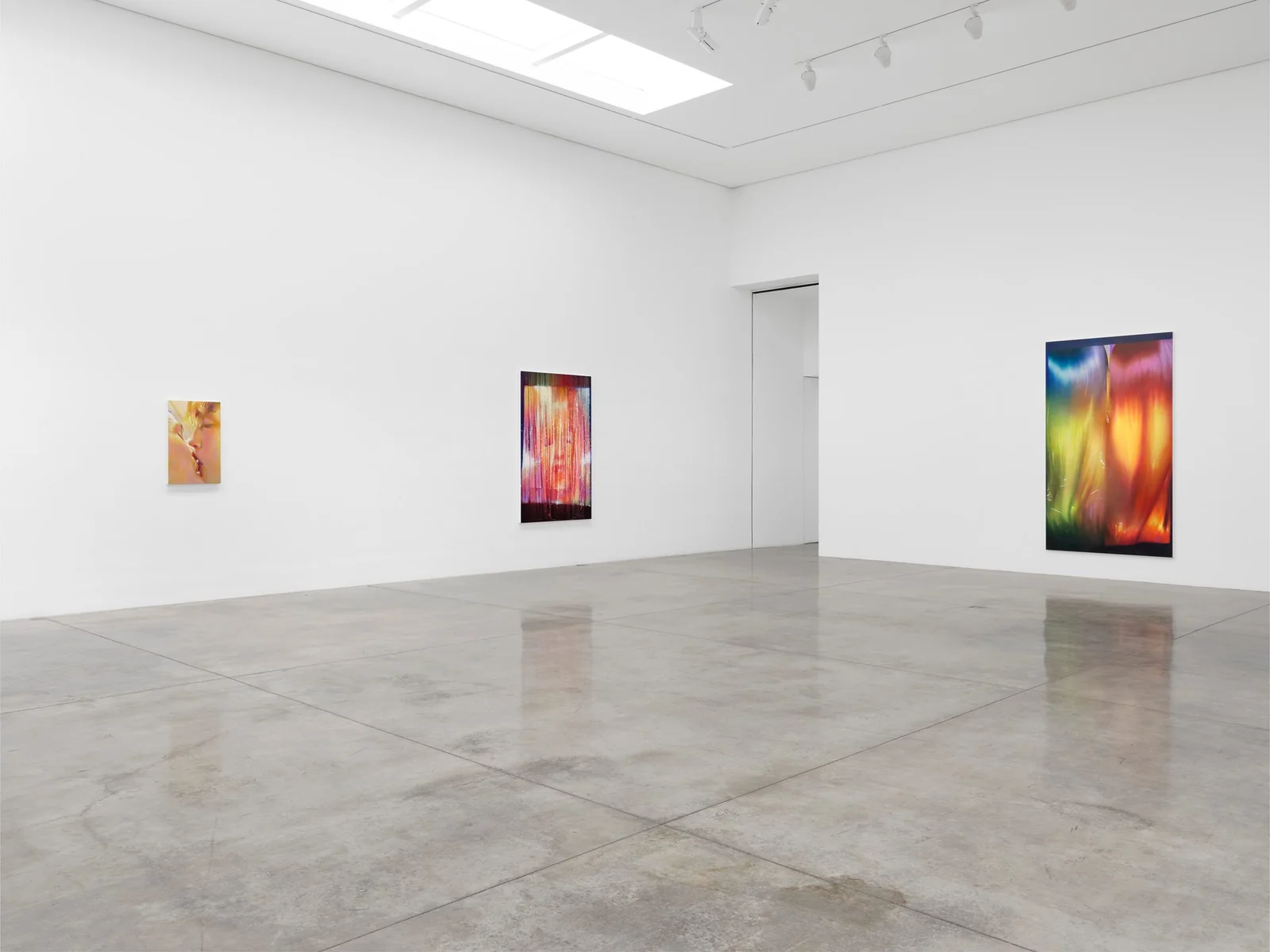
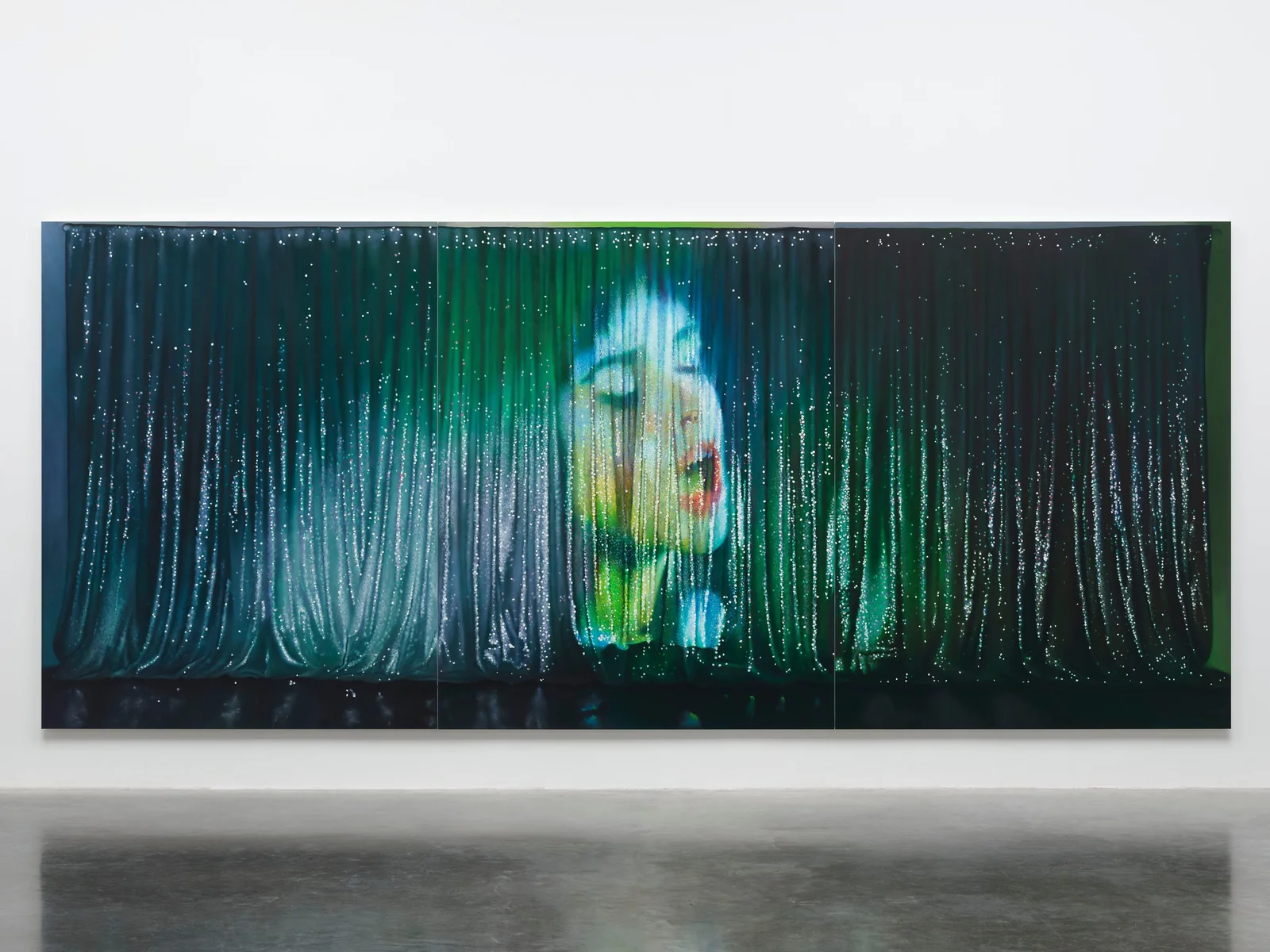
In Louise Giovanelli’s In the Light of False Suns, faces and luminous folds of fabric make a useful starting point. The installation photographs show relatively small paintings sharing walls with broader compositions, including curtain-like surfaces. Look first from across the room, then move closer: when does something that reads as light become a painted edge, a fold or a change of colour? Compare the distance from which a face becomes legible with the distance needed to take in a larger work.
The exhibition text connects the title with an optical phenomenon, parhelia. You do not need to turn that explanation into a puzzle with one solution. It is an invitation to notice borrowed or unstable light in the paintings. The photographs help show spacing and scale; the actual surface is a reason to visit in person.
Allow 30–40 minutes. White Cube explicitly states that there is no admission charge. Mason’s Yard and Bermondsey are separate locations: the latter is not another room around the corner and does not fit this five-stop walking circuit.
Thaddaeus Ropac: paintings in the rooms of Ely House
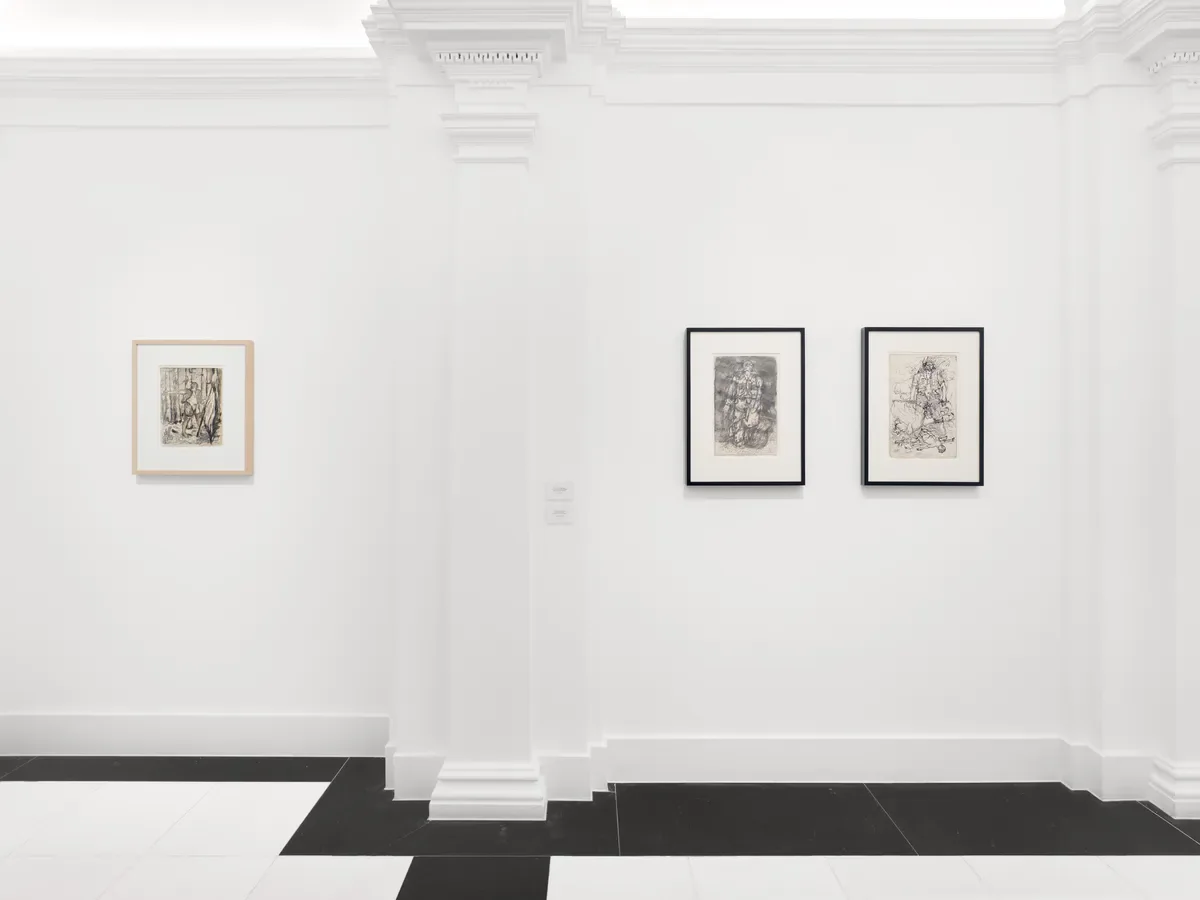
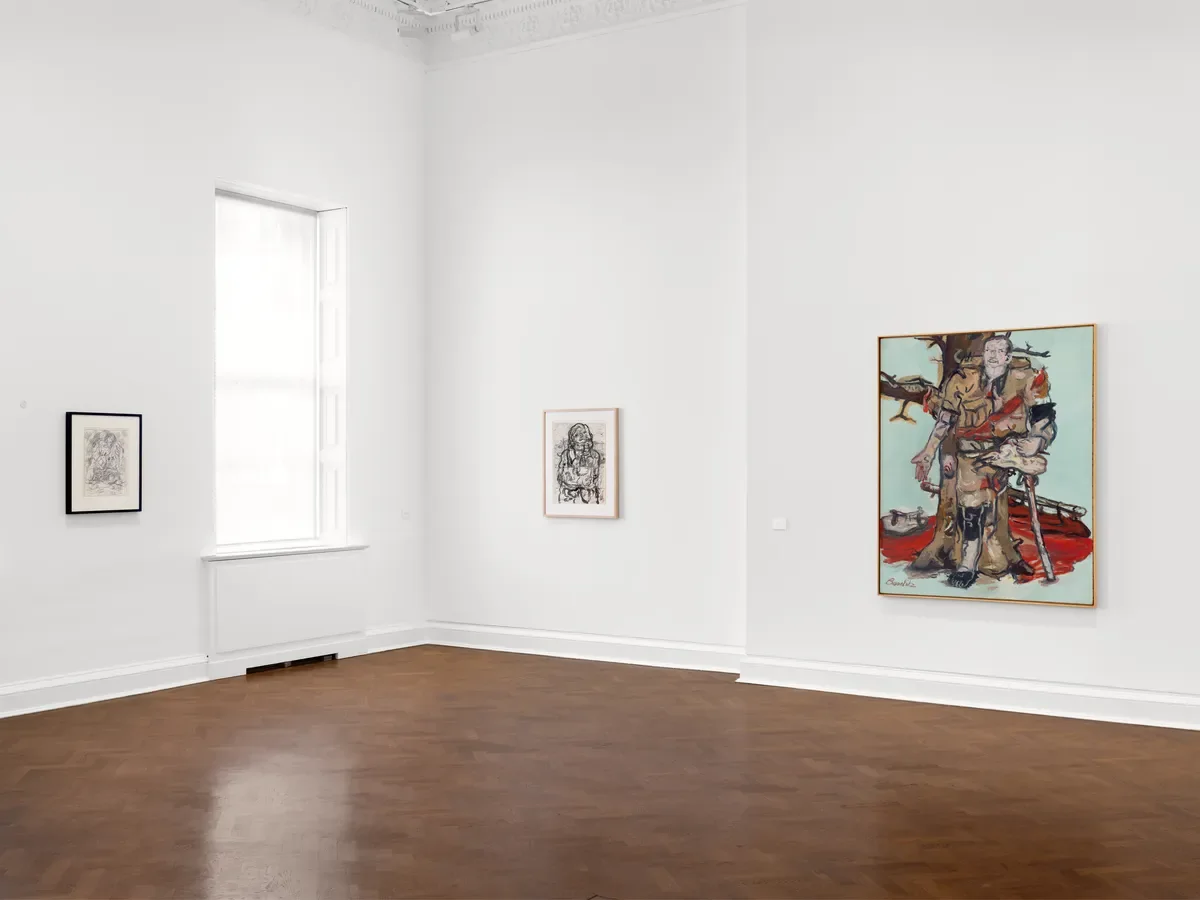
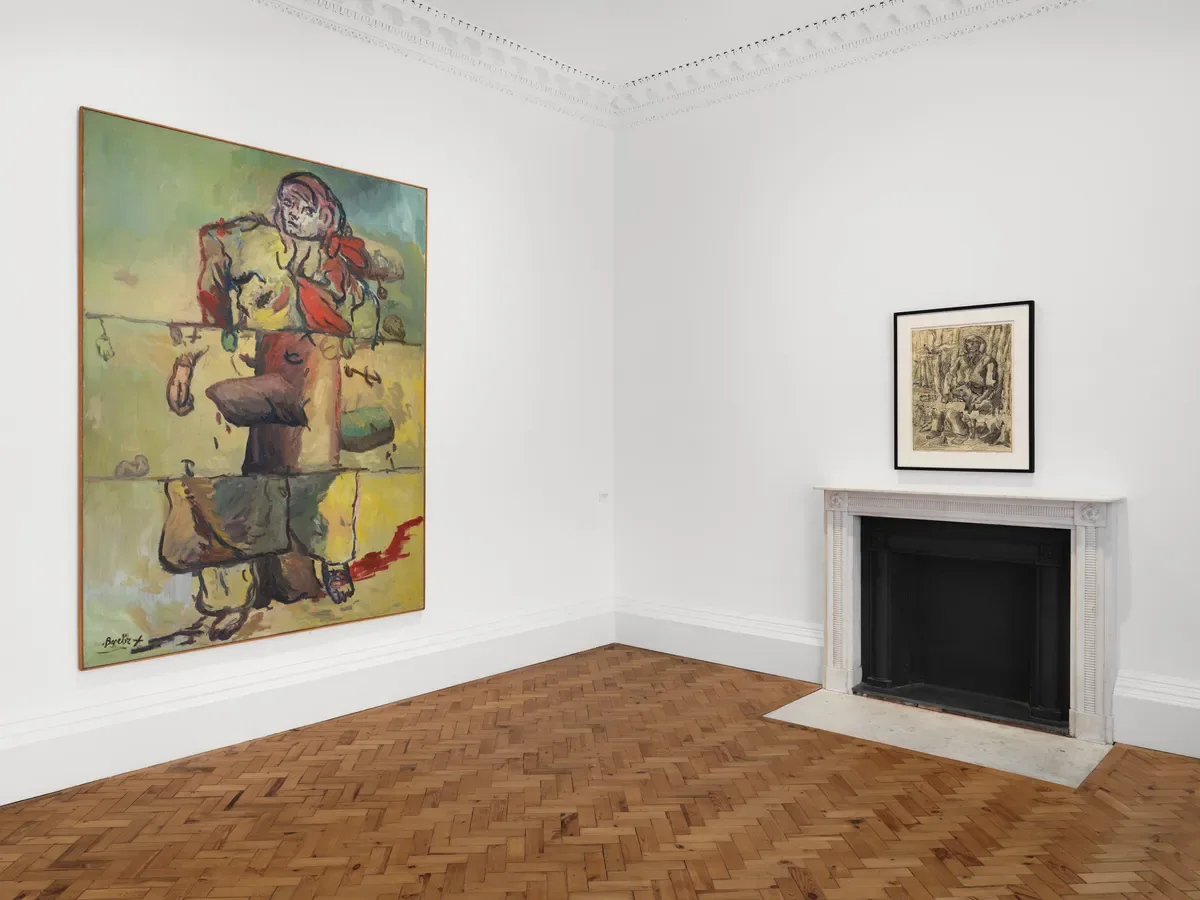
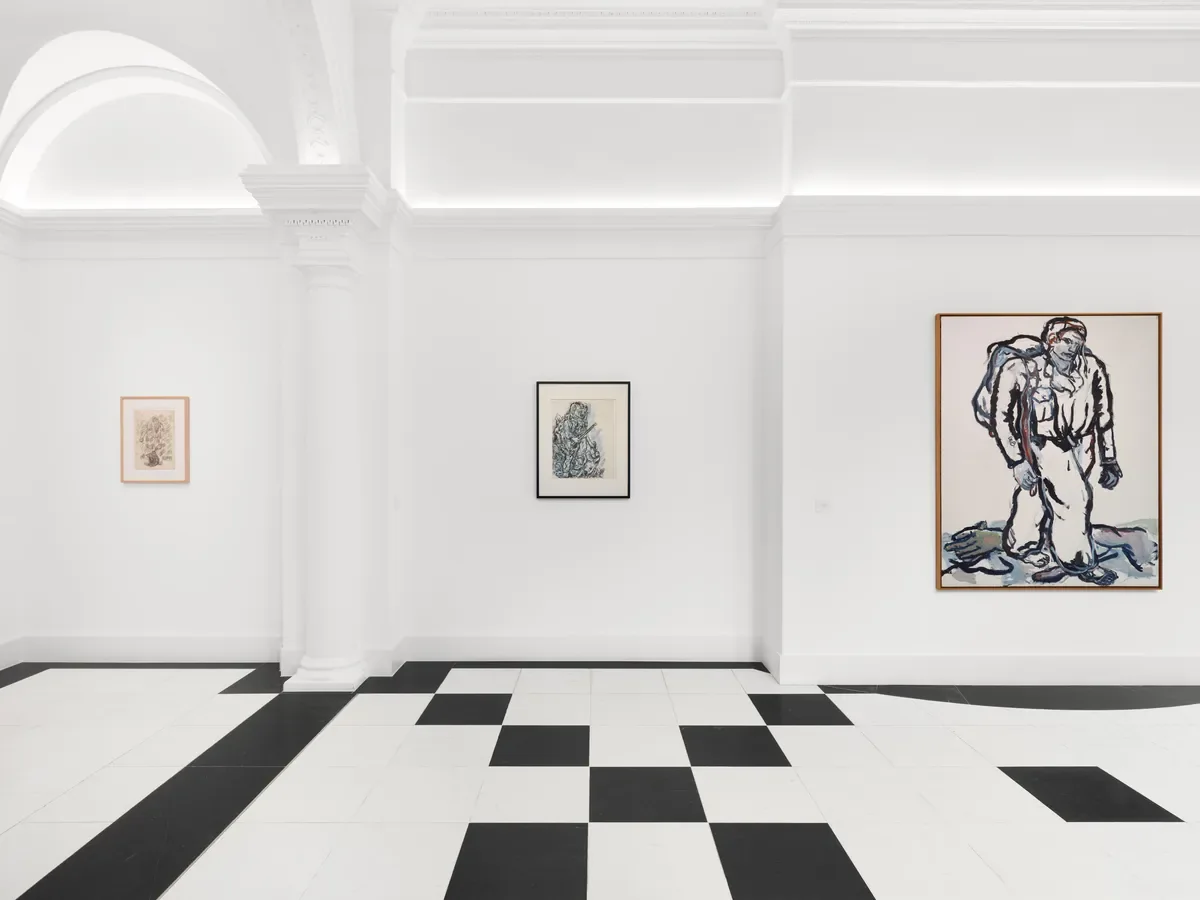
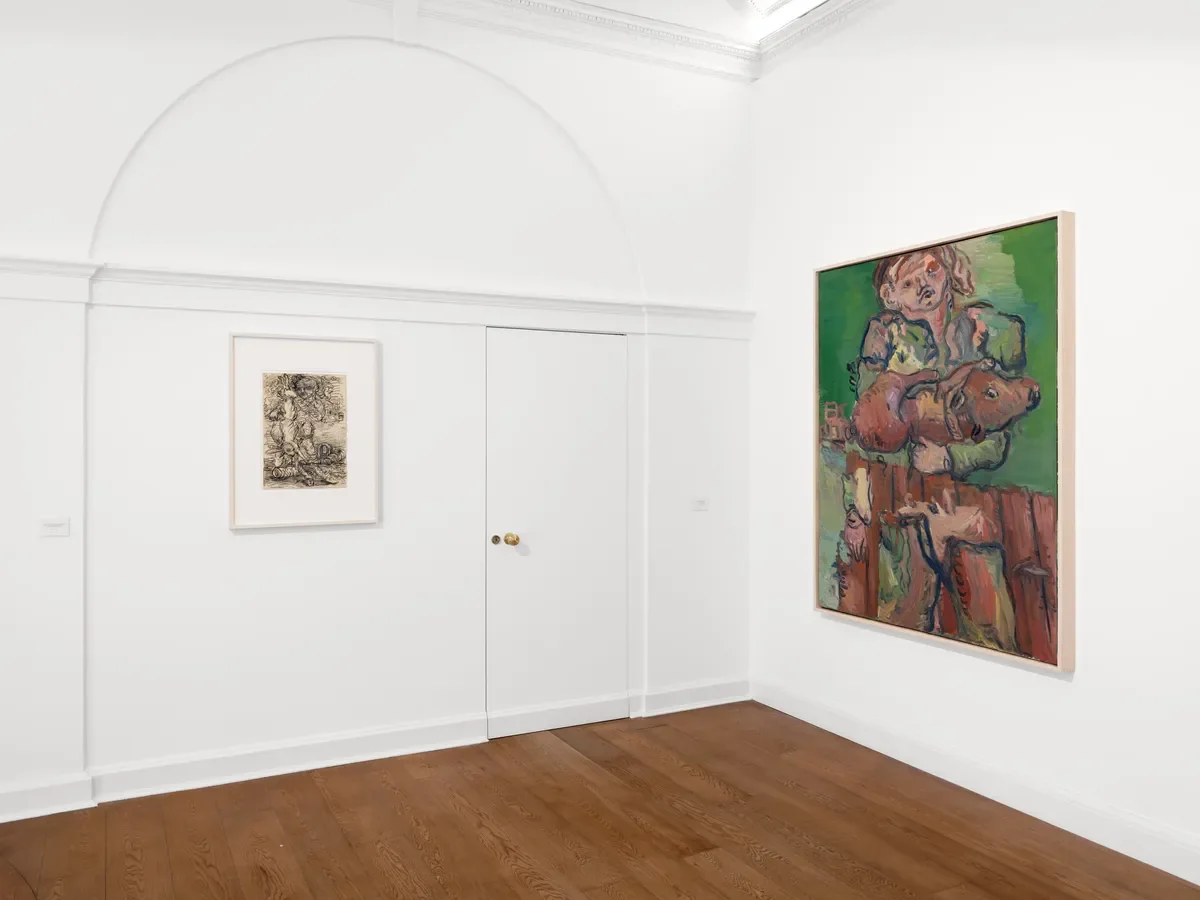
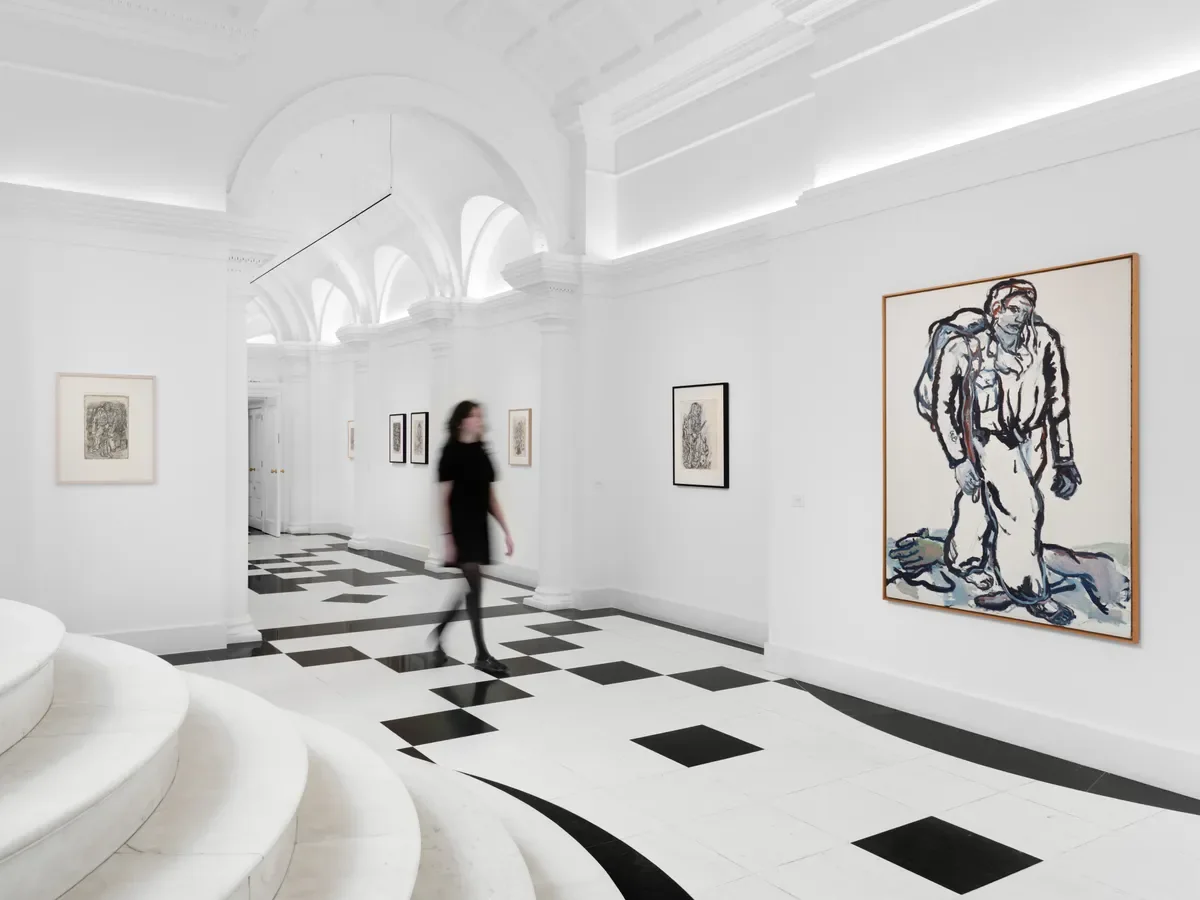
Ely House at 37 Dover Street gives this walk a marked architectural change. Let the room sequence become part of your viewing: pause at a doorway, see how a painting occupies the wall, and then approach it. A photograph that includes the doorway or surrounding room can be more useful for understanding scale than a tightly cropped reproduction.
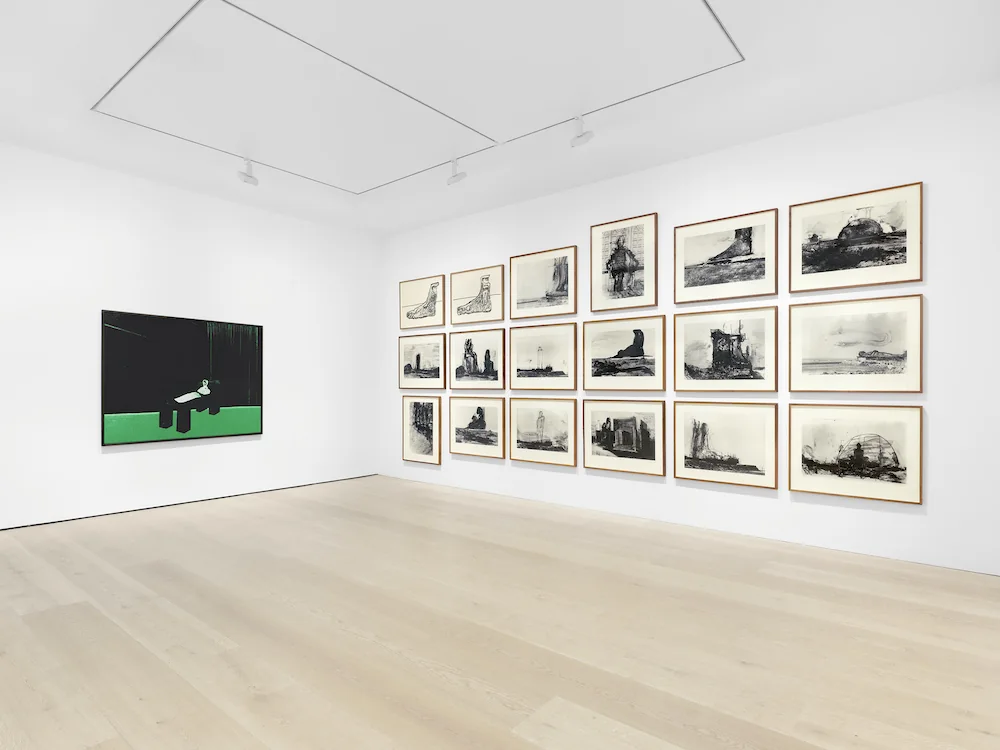
The current Baselitz presentation revisits the Heroes of 1965–66. The figures are monumental but vulnerable, with awkward proportions, damaged surroundings and a sense of uncertain footing. Begin by asking what the body is doing and where its weight seems to fall. Follow a hand, a piece of clothing or the point at which a figure meets the ground. Then return to the whole painting.
The early dates matter. It is easy to arrive with Baselitz’s later upside-down compositions in mind and overlook what these earlier figures are doing. This stop offers a chance to notice a particular phase of an artist’s work rather than match a picture to an instantly recognisable signature.
Allow 35–45 minutes for the exhibition and movement between rooms. The gallery contact page confirms the Dover Street address and regular hours. If you need step-free access or a lift between particular rooms, ask the venue about the specific exhibition layout before travelling; the historic-house setting alone does not establish its access arrangements.
David Zwirner: give one print ten minutes
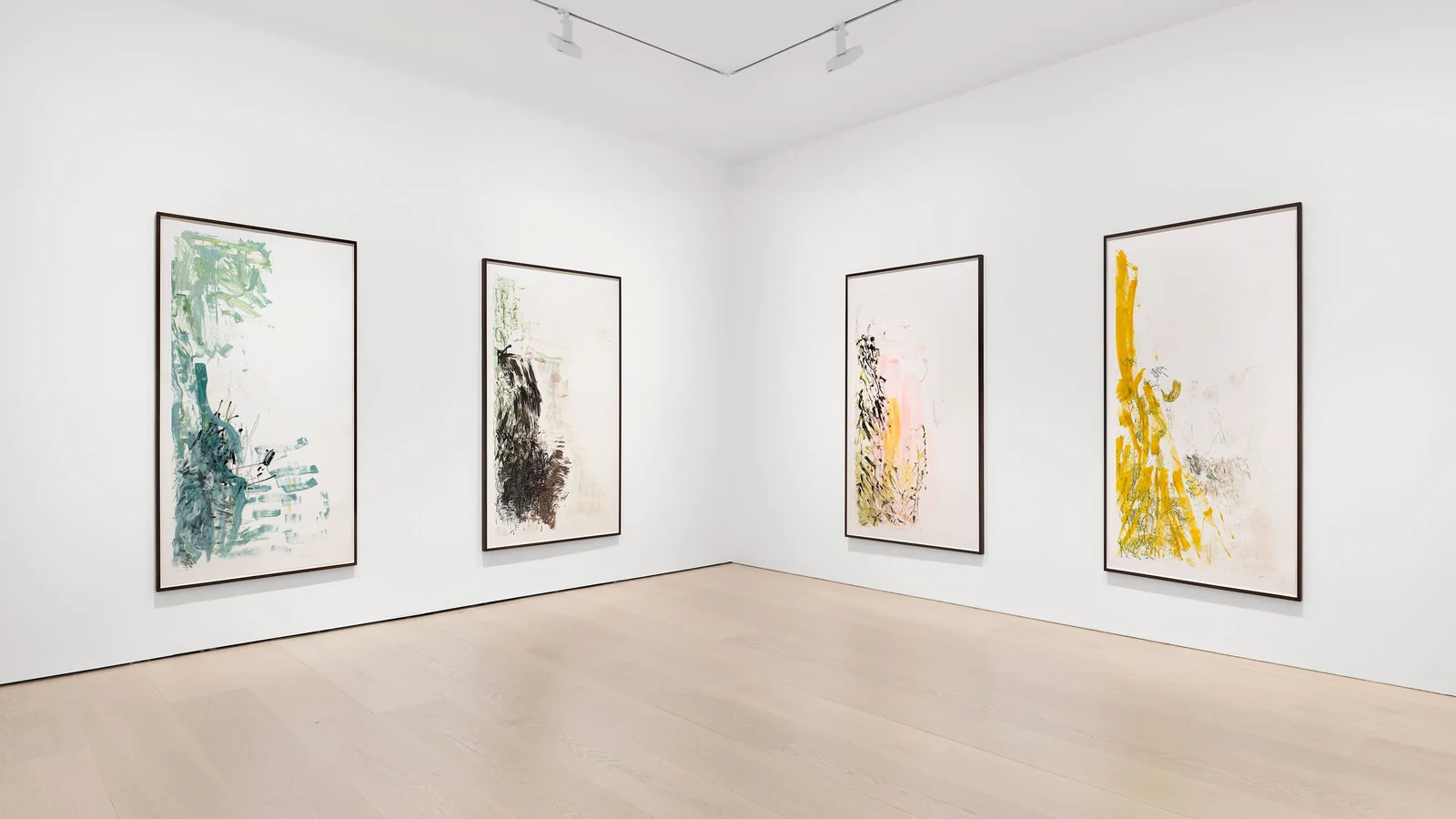
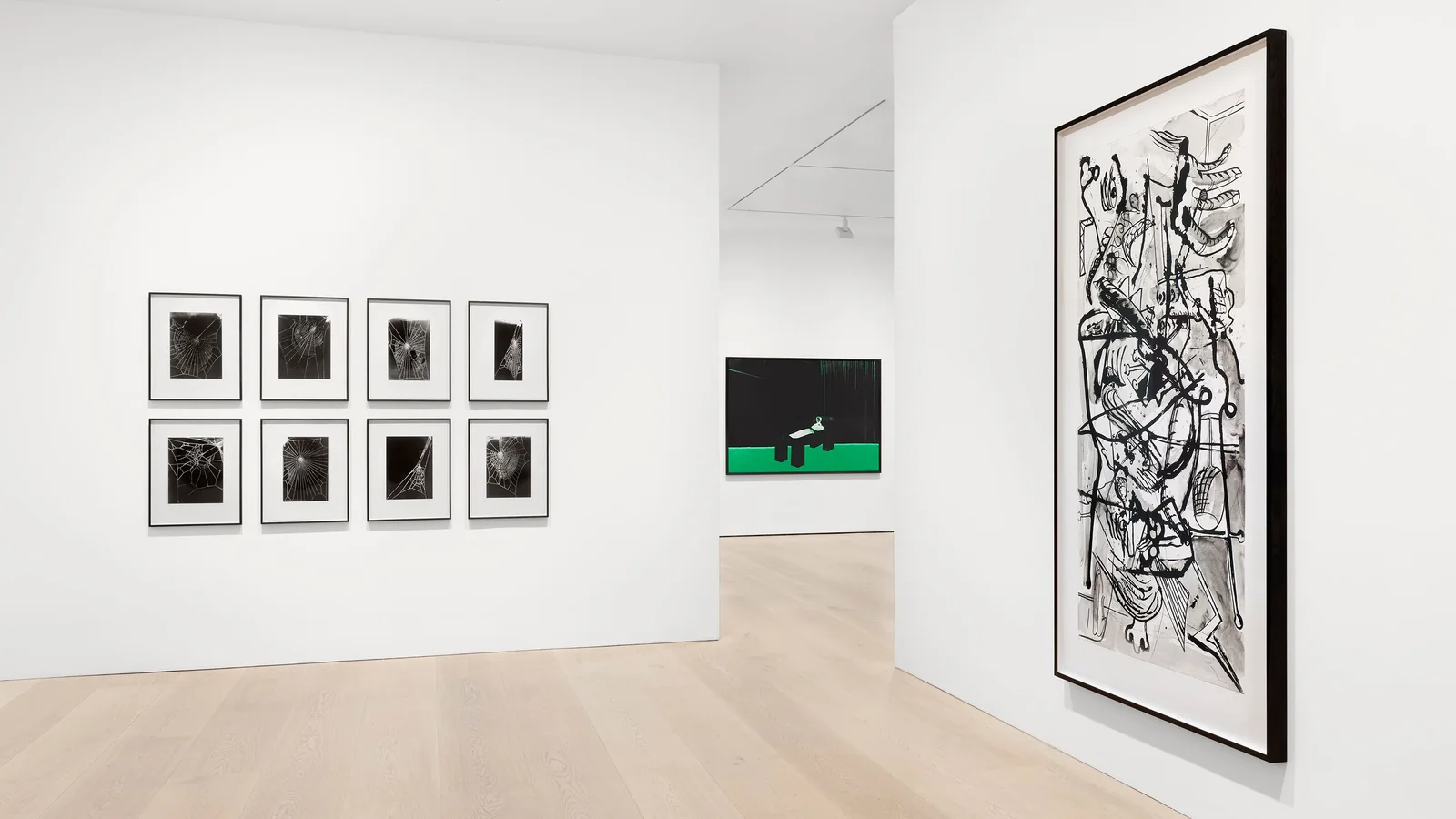
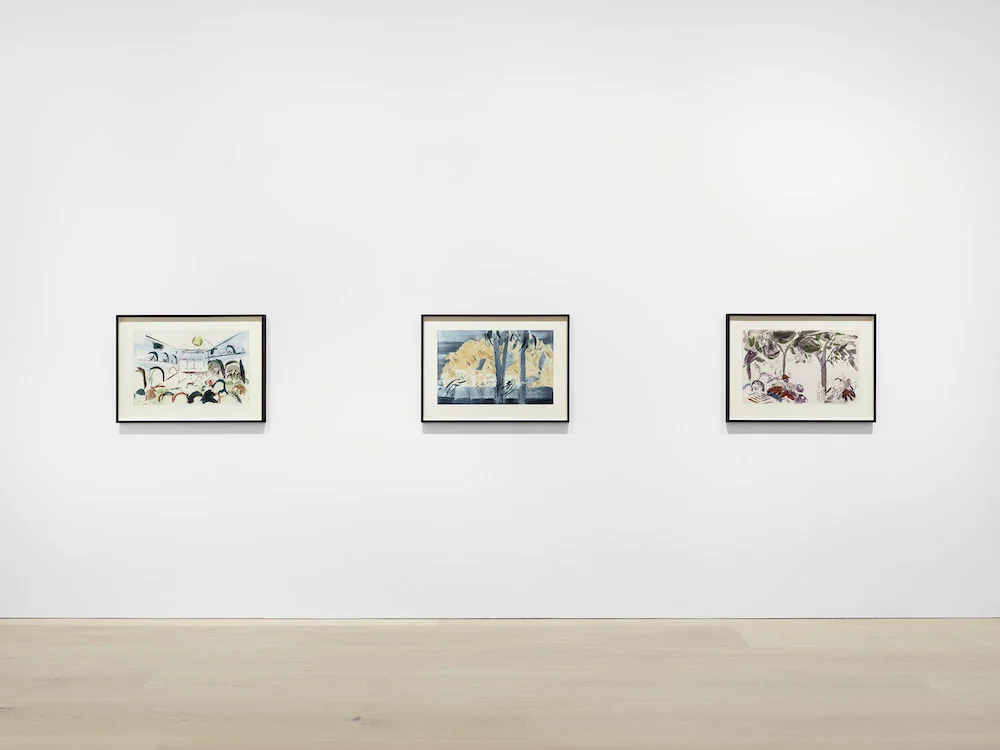
At 24 Grafton Street, No Plan at All offers a different kind of attention. The London exhibition brings together new and historical prints from BORCH Editions, the Copenhagen workshop founded by Niels Borch Jensen in 1979. The announced artists include Julie Mehretu, Mamma Andersson, Georg Baselitz, Huma Bhabha and Tacita Dean.
Here, choose one work before trying to take in the whole list. Read its label for the printing process and paper, then compare the image from close up and a few steps back. A dense passage may separate into individual marks; a pale area can become as important as the darker image. Those are useful observations to make before a photograph on a phone reduces everything to one flat rectangle.
An original print also has a production history. The artist’s decisions meet the knowledge of the workshop: how a plate is worked, how ink is carried, how one impression is compared with another. The exhibition gives that collaboration a central place. Do not assume every work uses the same process simply because all belong to a print show; the label for each sheet is the authority.
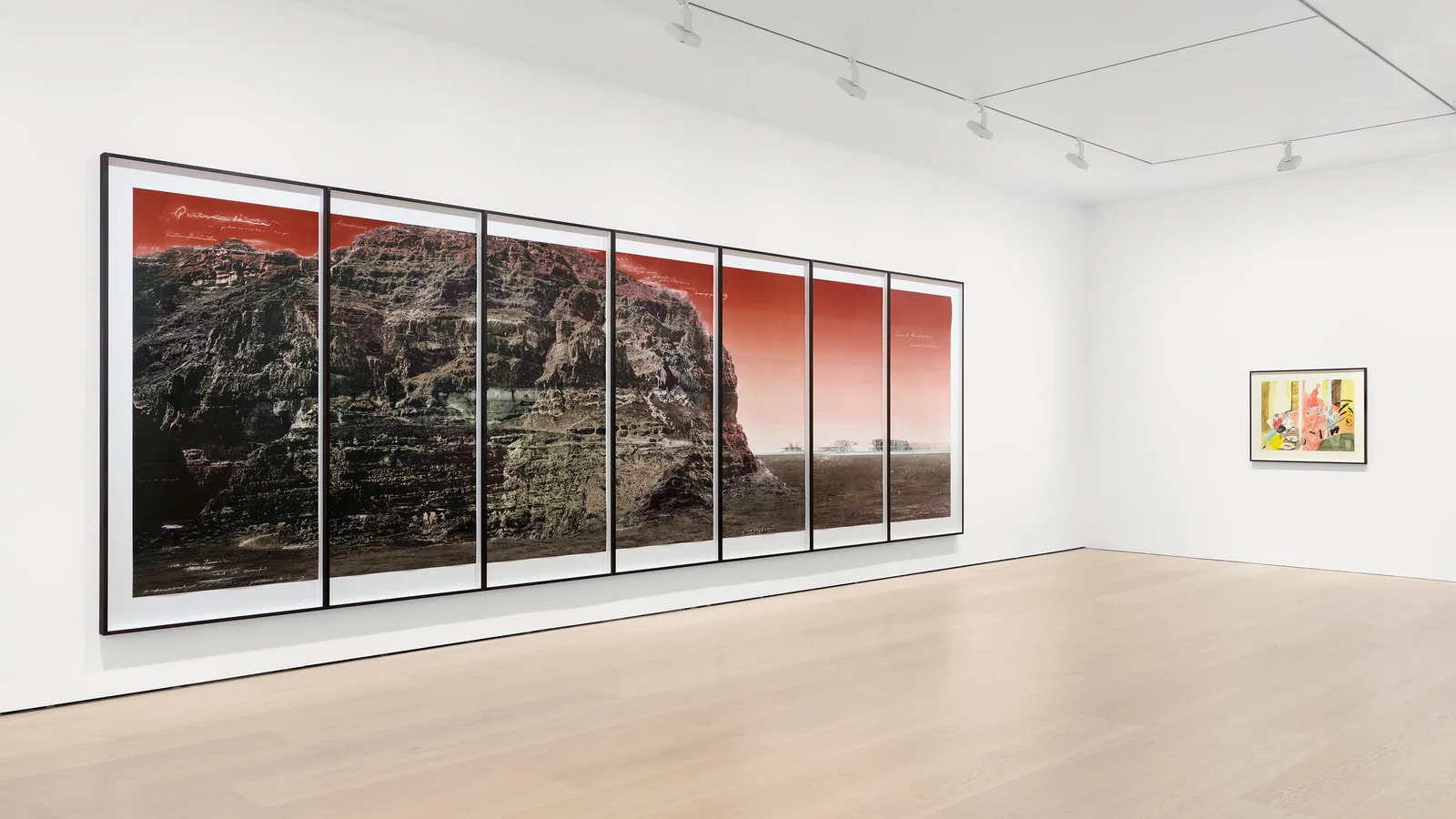
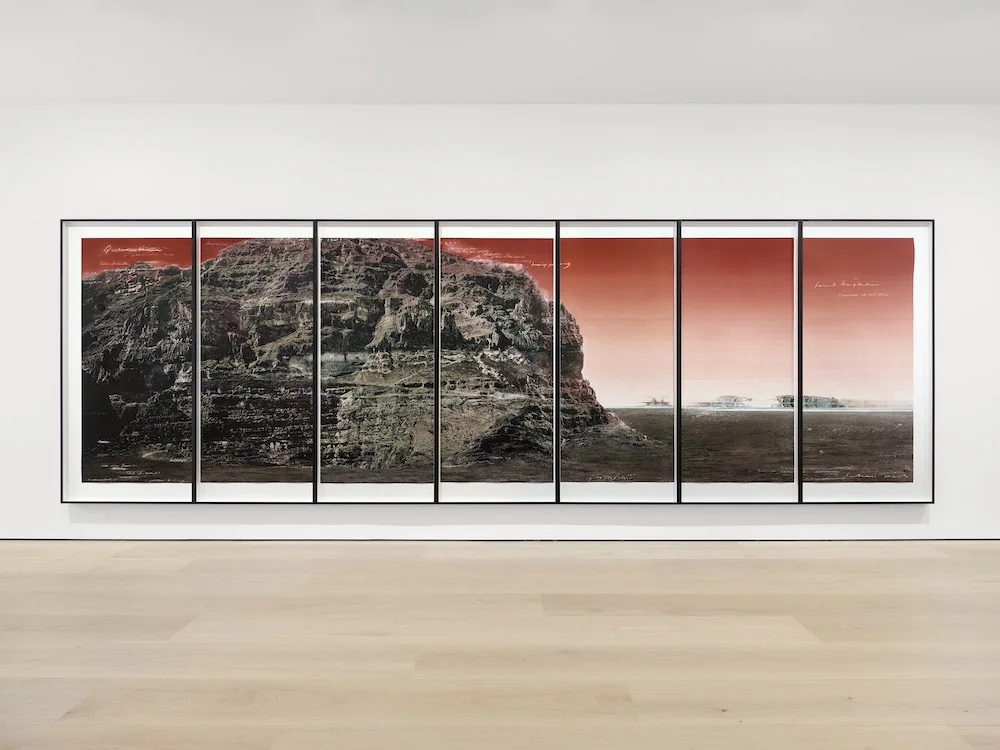
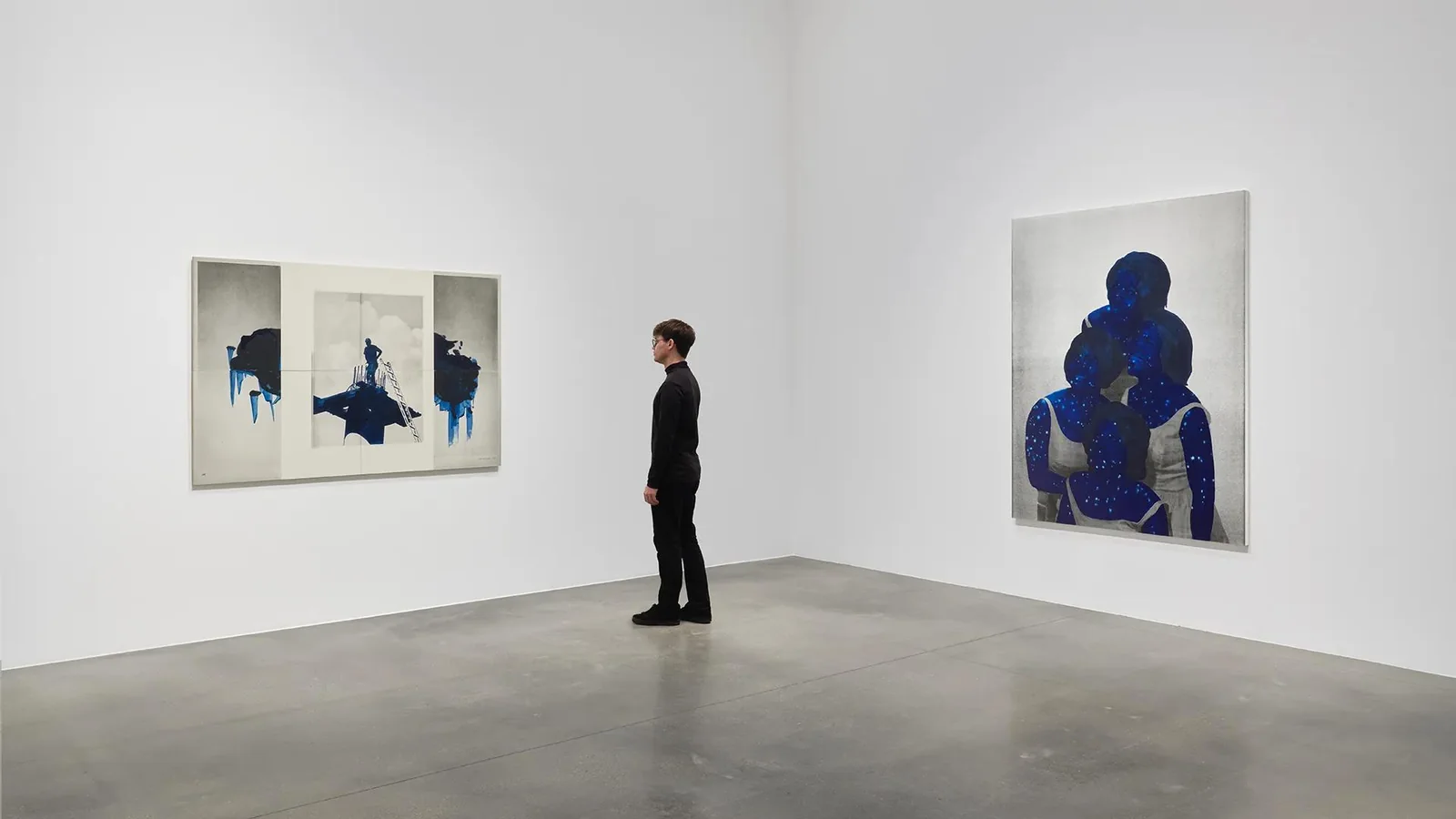
A precise example is Julie Mehretu’s First Seal (R 6:1) (2020). The checklist gives a four-part work on Somerset paper, 170 × 208 cm before framing, combining photogravure with aquatint and other etching processes. Look for how the printed image continues across the four sheets. That physical division and the scale of the whole are difficult to grasp from a small screen.
Allow 30–40 minutes, with ten of them reserved for one sheet. Our separate David Zwirner guide develops the method of looking more slowly. It also covers other locations, which should not be confused with this Grafton Street visit.
Hauser & Wirth: two artists, one address
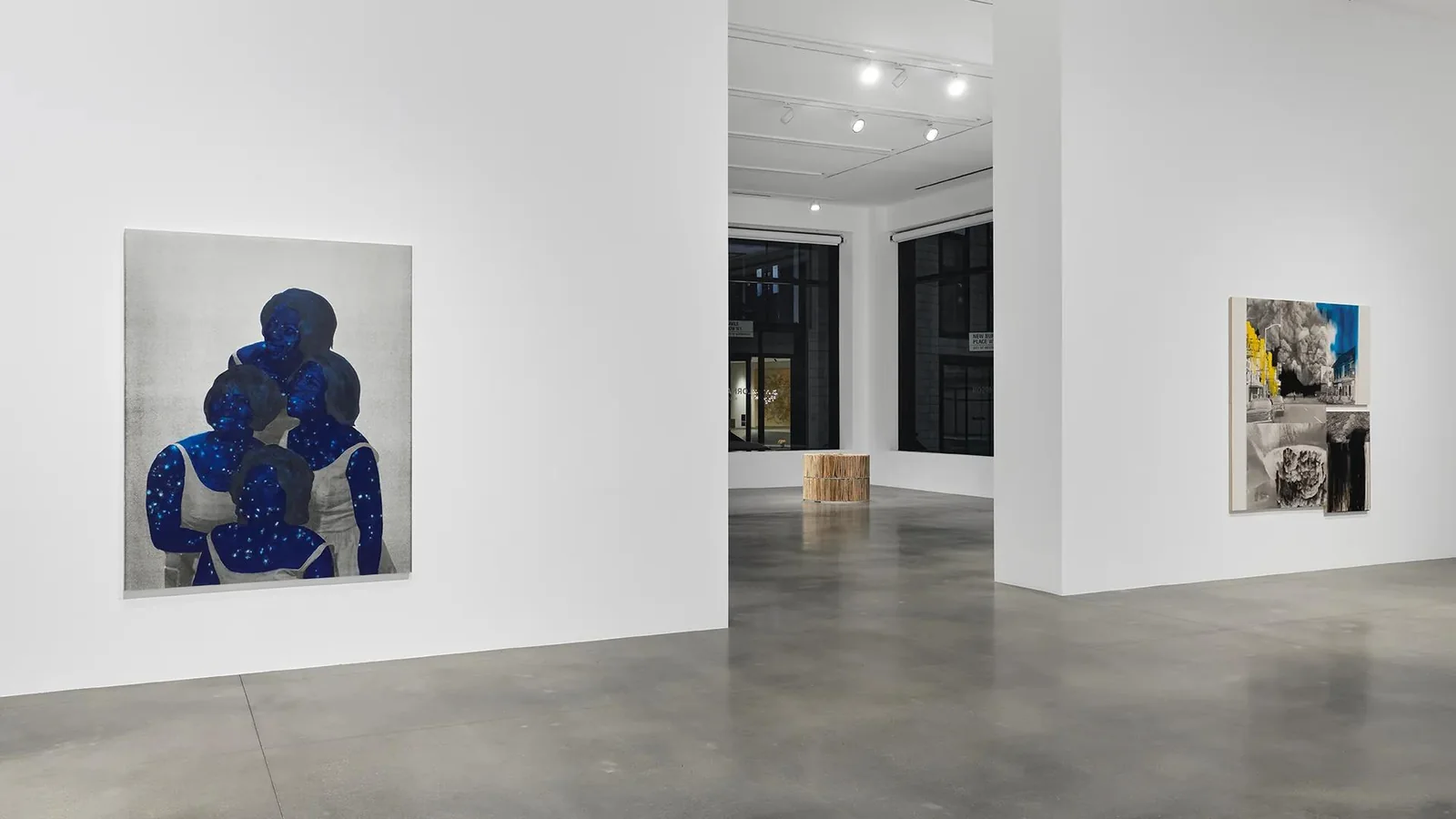
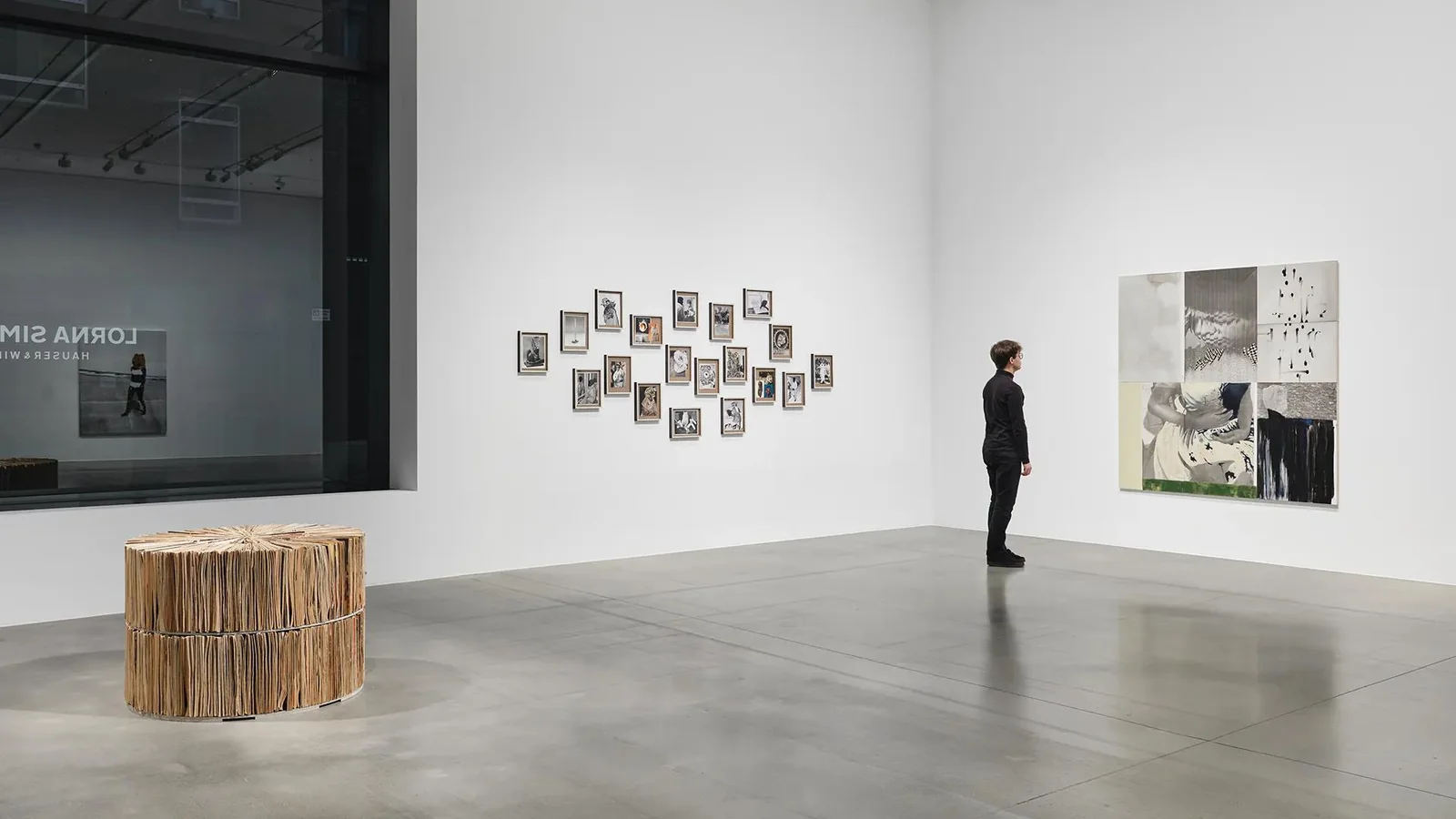
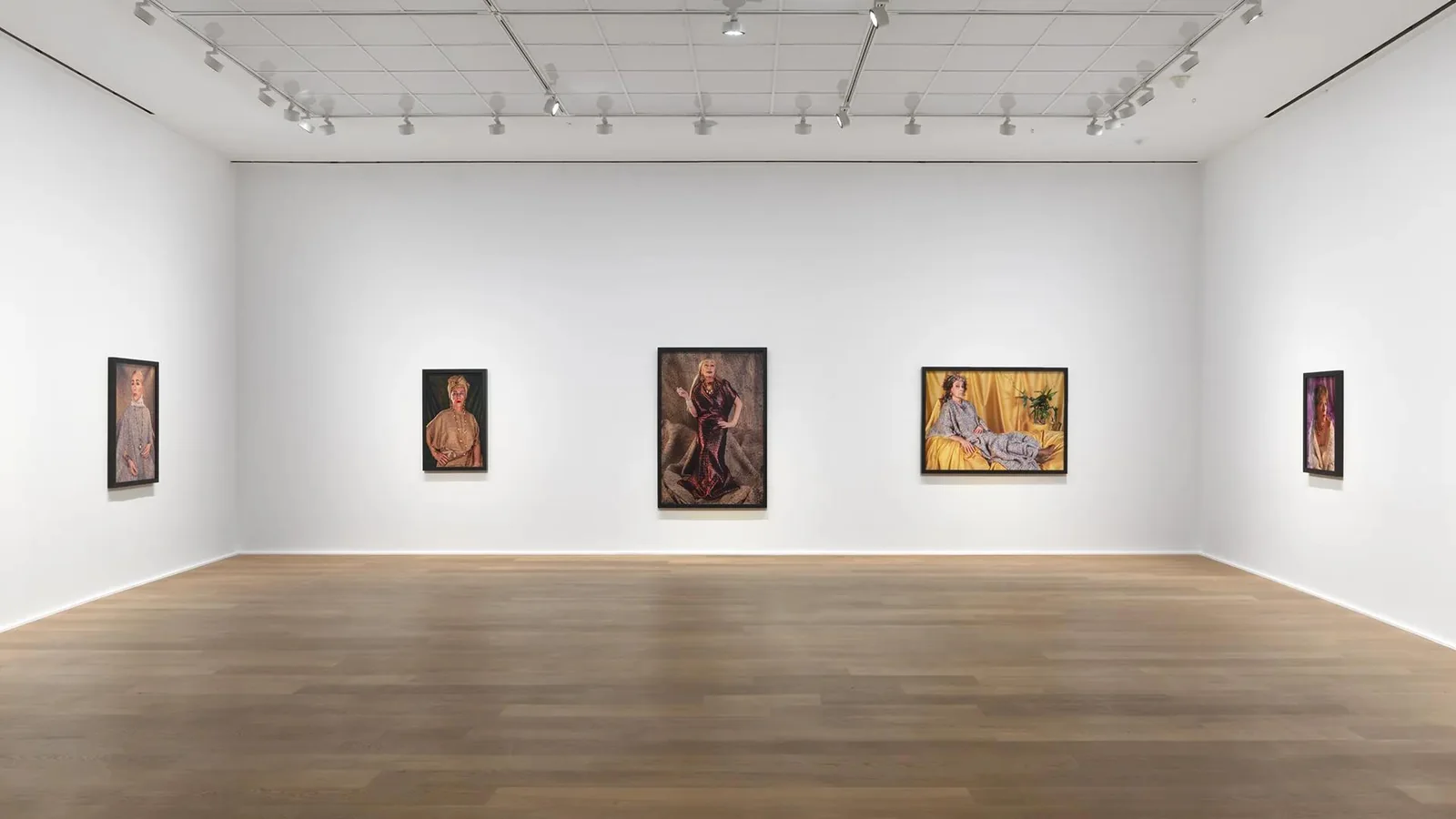
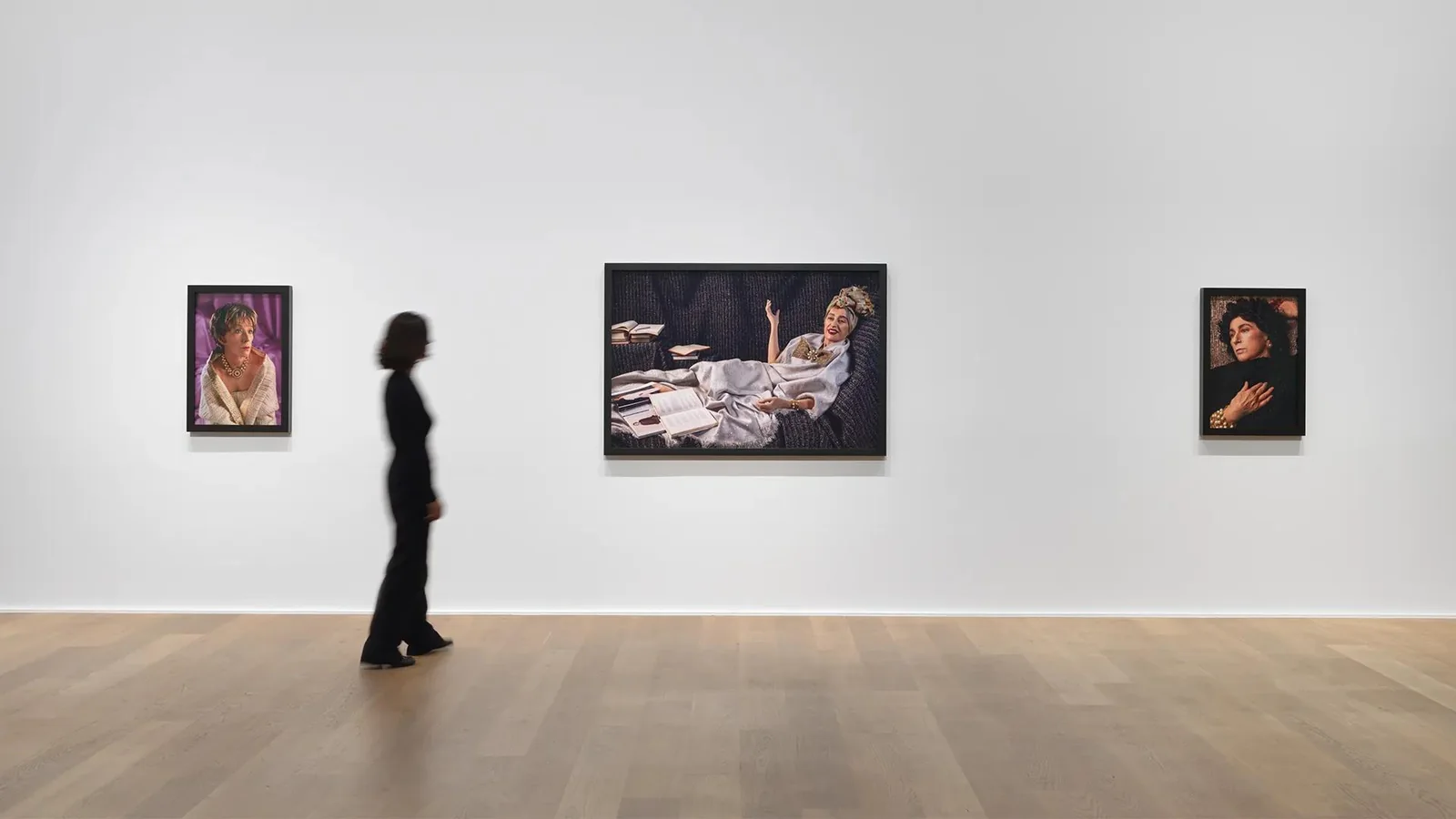
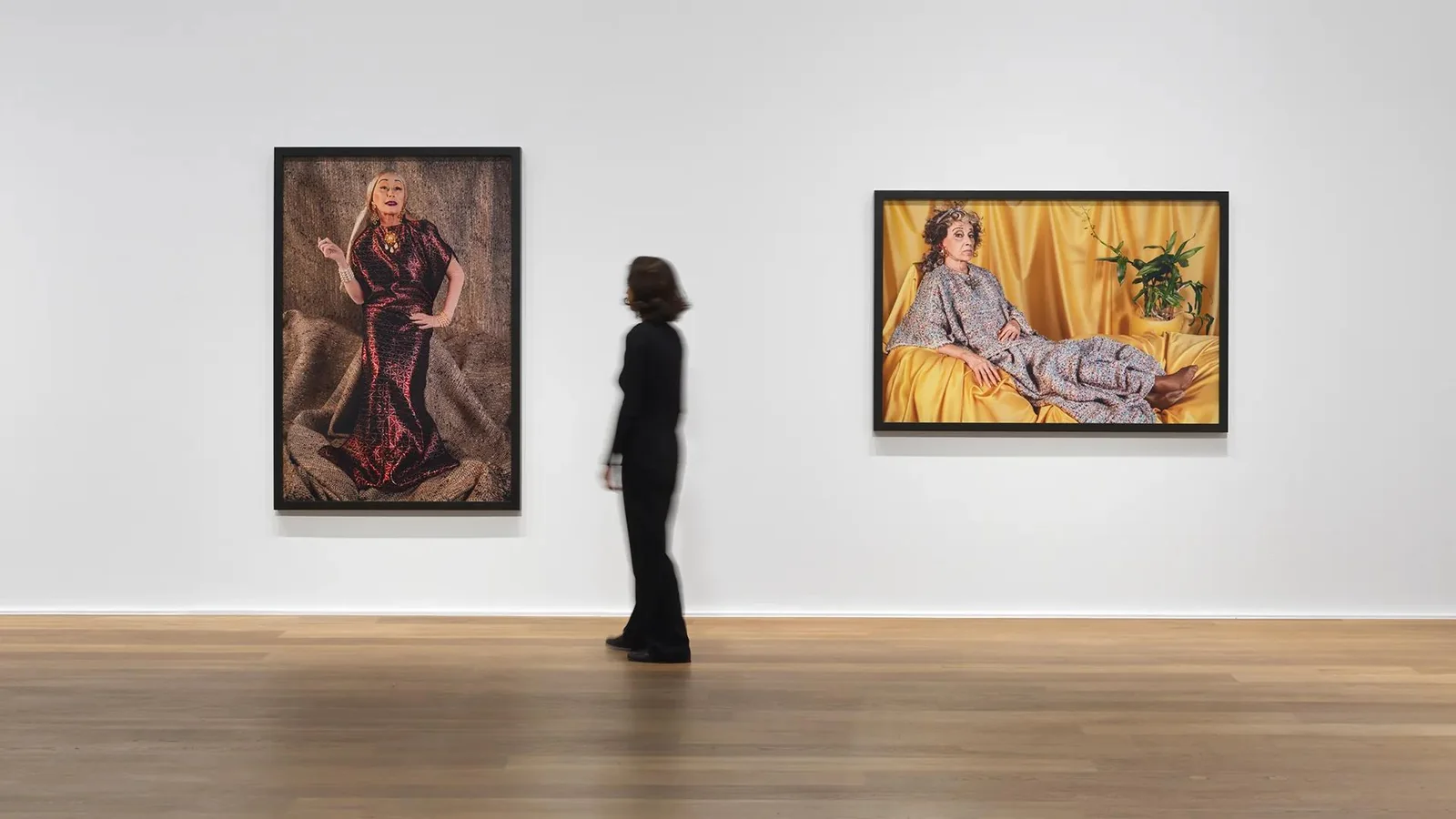
At 23 Savile Row, it is worth checking how the London programme is divided before you enter. Lorna Simpson’s Previous & Ongoing and the Cindy Sherman exhibition run over the same announced period. They offer a productive comparison between images whose meaning changes through context, sequence and presentation.
Start with Simpson’s exhibition. Consider how an image behaves at the scale of the wall: what carries your eye across it, what stays difficult to identify, and whether a photograph of the work would preserve that uncertainty. The gallery installation is part of the reading, not merely a neutral container.
Move to Sherman’s presentation and consider the constructed character. Pose, costume and setting can suggest a familiar social role without giving you a conventional story about a named person. Comparing the two exhibitions is more rewarding than treating each as another tick on a five-gallery list. Give the change of room and artistic language a moment to register.
The London venue lists Simpson in the North Gallery and Sherman in the South Gallery. Simpson’s Well Rounded (2026), made from compressed copies of Ebony magazine, turns an archive of printed images and stories into a cylindrical sculpture. Sherman’s new Fabric Matrons photographs use elaborate drapery as both costume and setting. Compare a compressed physical archive with an identity constructed for the camera: the material choices make the two presentations distinct.
Allow 40–50 minutes if you want both. Hauser & Wirth states that its exhibitions are free and do not require advance booking. Its London visitor information also explains access to public areas and the step-free route to the South Gallery through the main atrium. Check that information for your own needs. The separate Hauser & Wirth guide covers destination spaces such as Somerset and Menorca; those are independent trips.
Gagosian Grosvenor Hill: finish by comparing pictures and objects
The final stop is 20 Grosvenor Hill. Use the address as well as the gallery name: Gagosian has more than one London venue. Its locations page separates Grosvenor Hill from Davies Street and from the Paris branches.
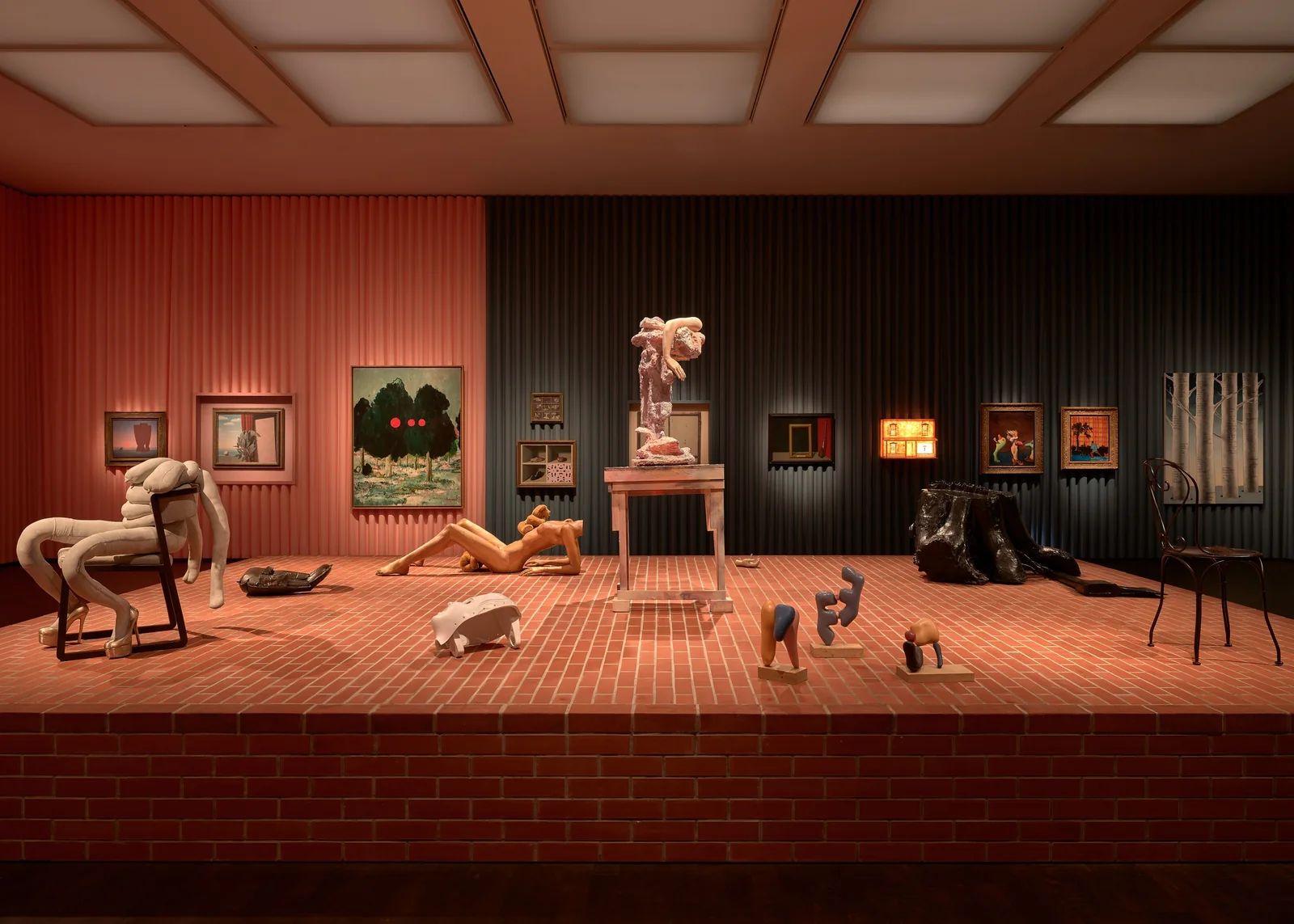
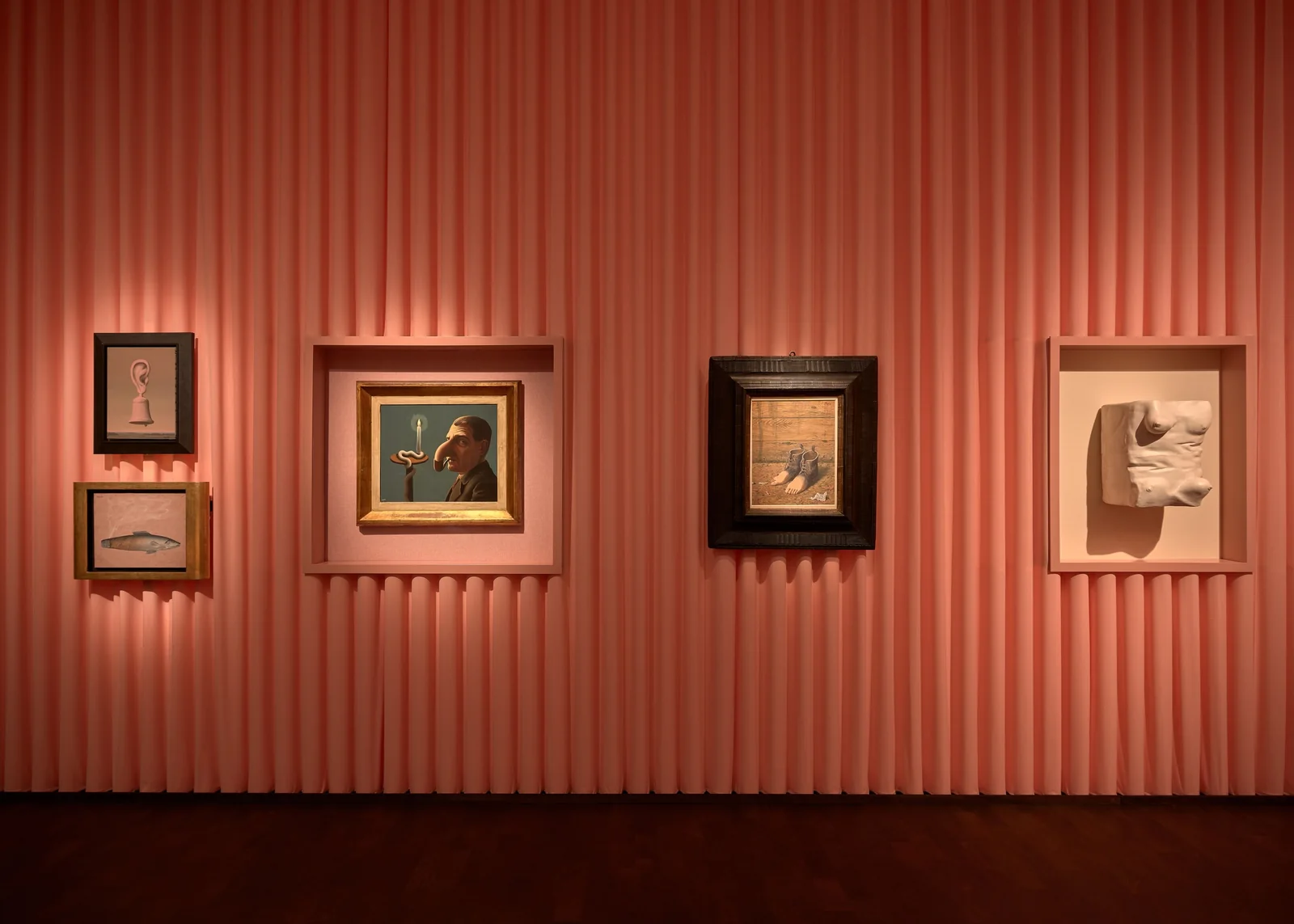
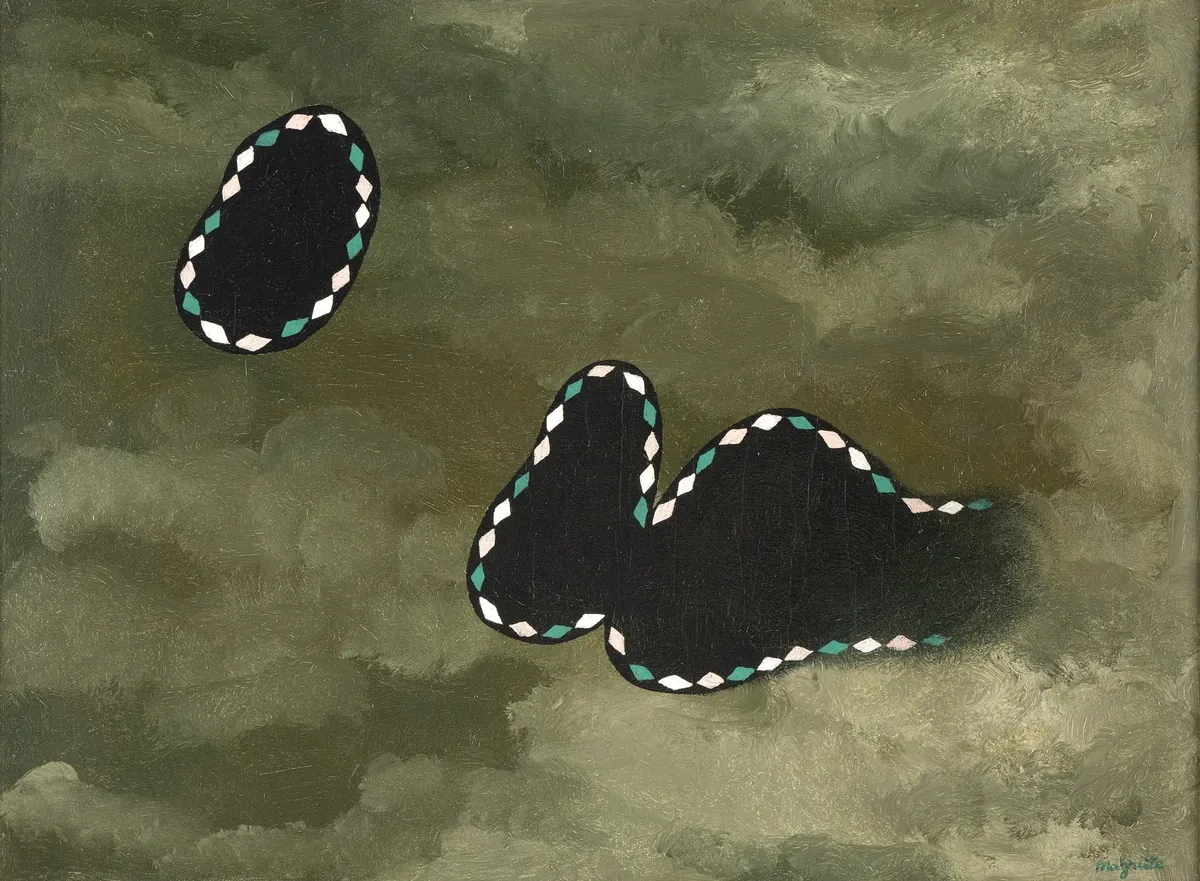
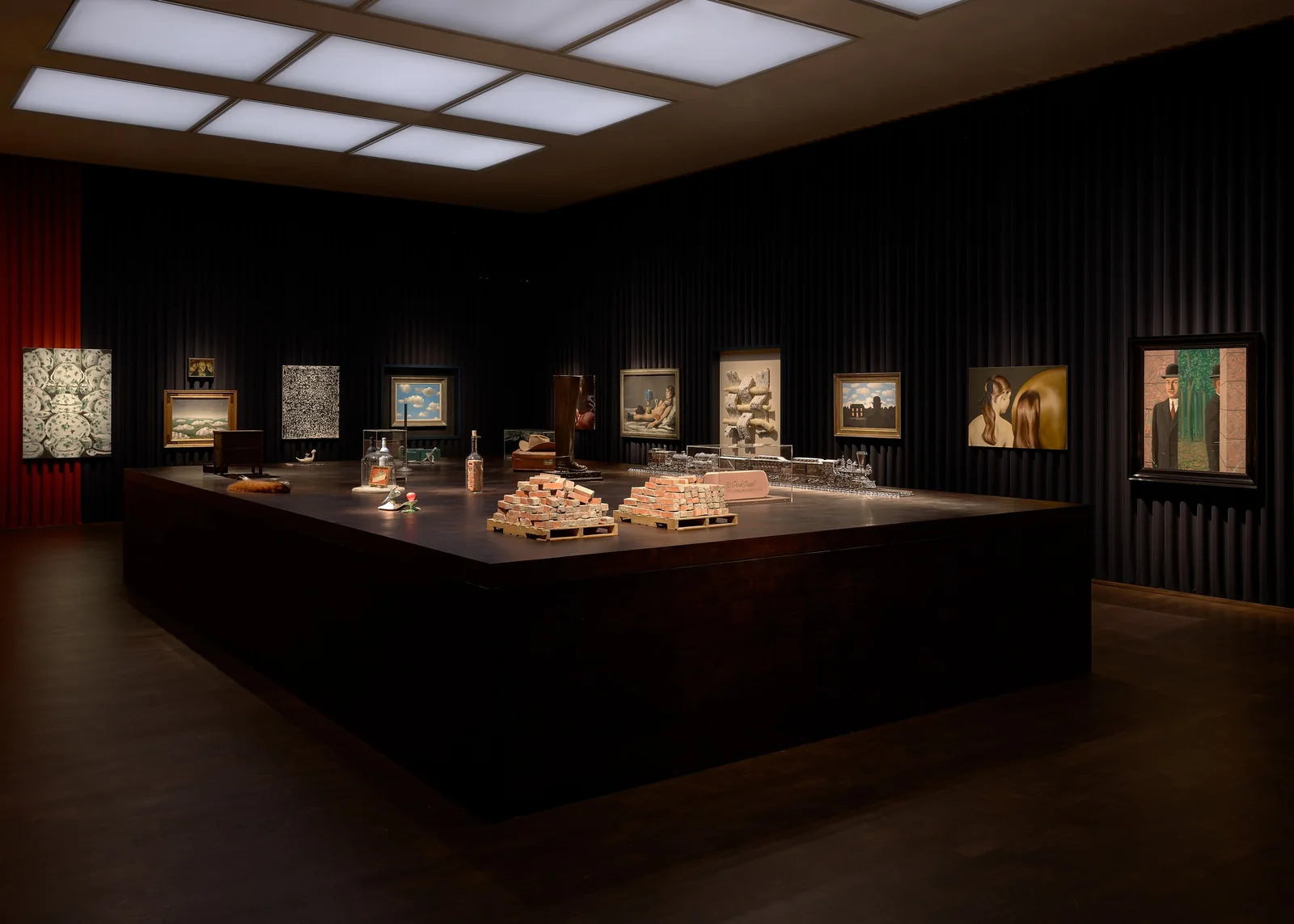
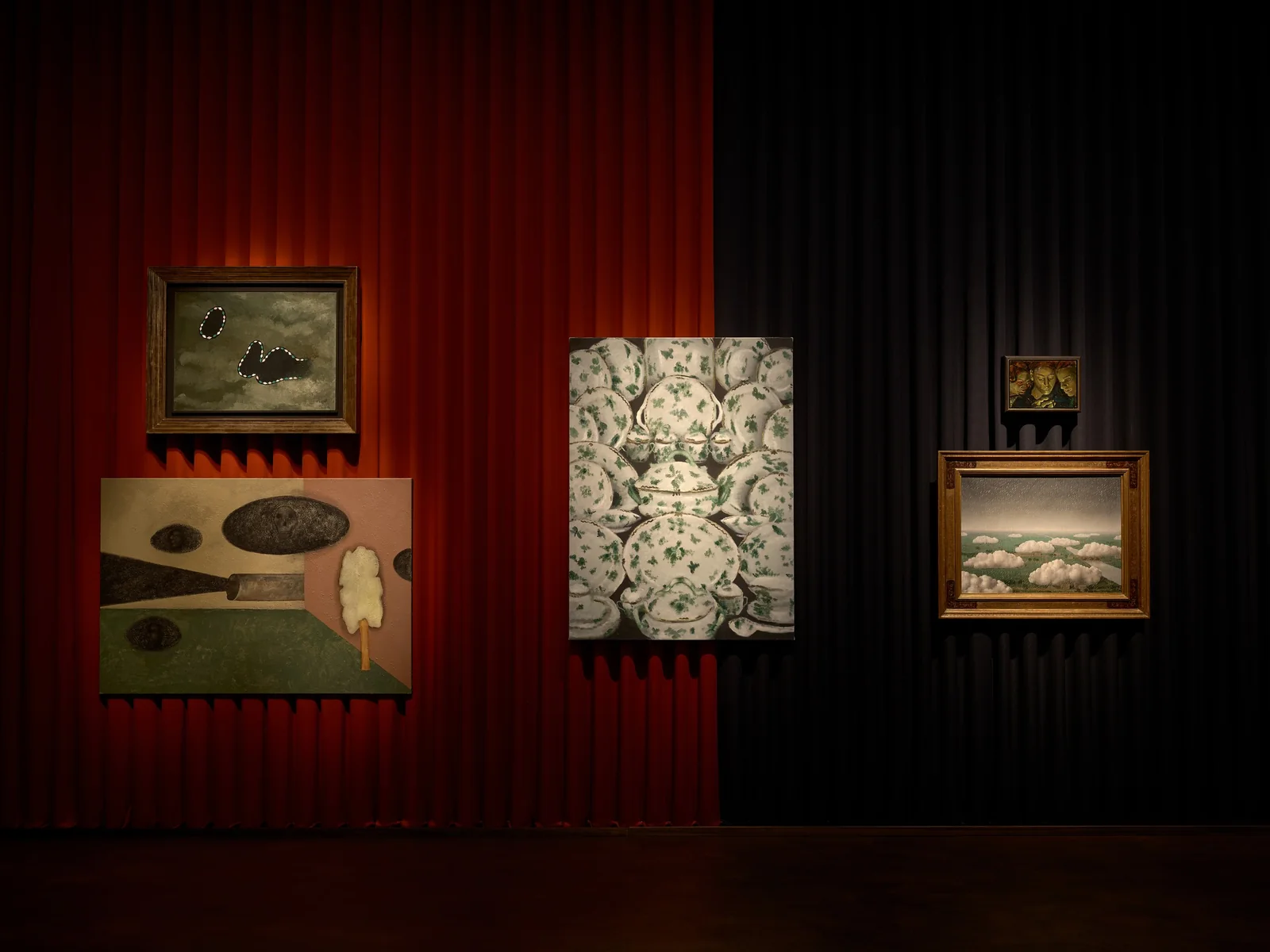
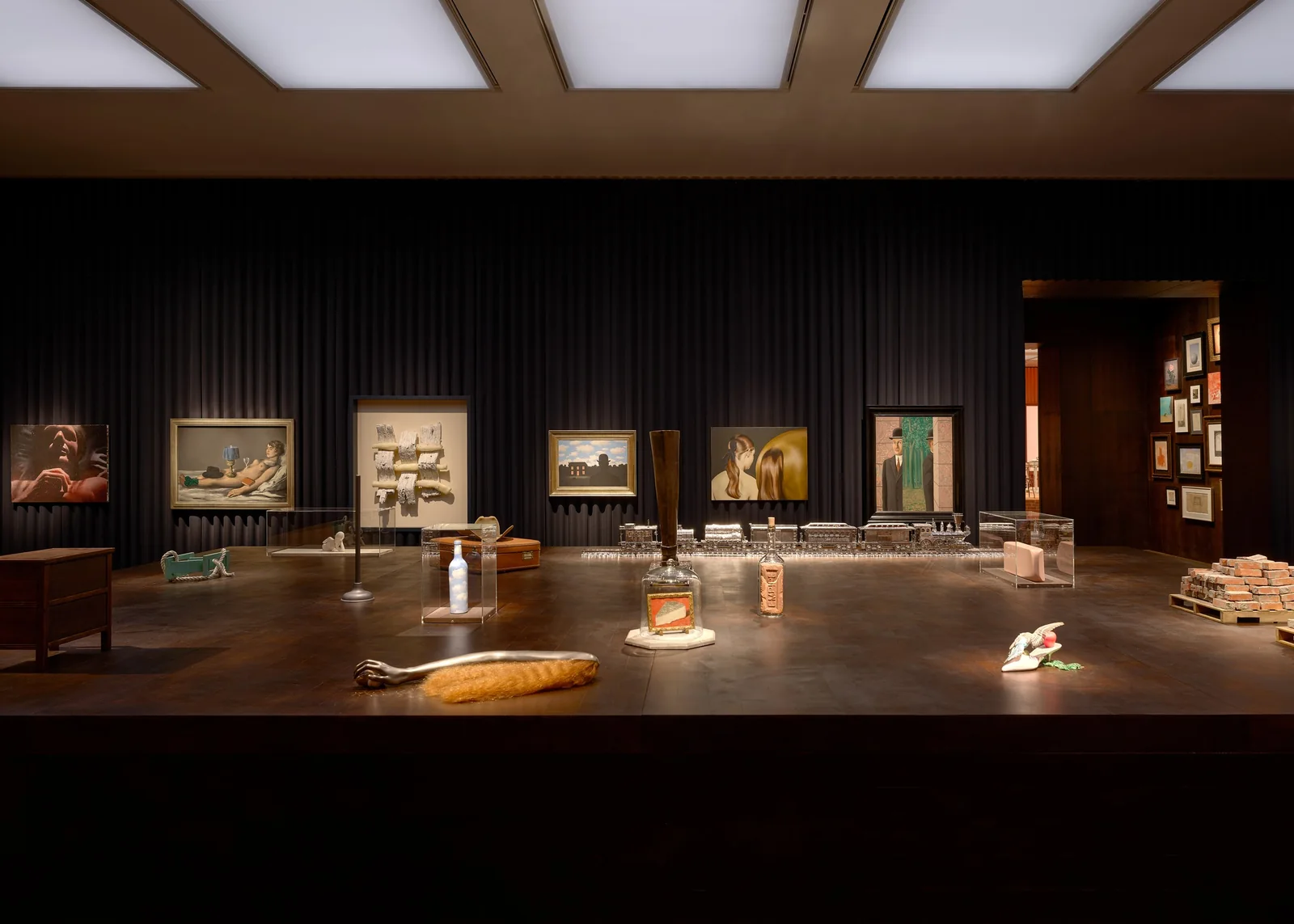
This Is Still Not a Pipe: The Afterlife of Magritte is an especially good ending for this route. The exhibition places Magritte in a conversation with later artists. Its installation views show paintings alongside objects, including a raised arrangement with a pronounced stage-like character. The room lets you compare different ways an ordinary thing becomes strange.
Two works on the official checklist make that question concrete: Magritte’s L’Apparition (1928) and Vija Celmins’s Pink Pearl Eraser (1966–67), made with acrylic on balsa wood. An image can interrupt familiar relationships; an object can also become unfamiliar through its material or scale. You can carry that question around the room without needing to recognise every artist.
Allow 40–50 minutes. Resist trying to photograph the entire checklist. Pick one encounter between a picture and an object, then look for a second that behaves differently. The broader Gagosian guide explains the international network; this walk stays with the London exhibition.

Choose a short visit or a full half-day
For two hours, choose White Cube → Thaddaeus Ropac → David Zwirner. Allocate roughly 25–30 minutes inside each, plus street connections and a small buffer. This makes a compact progression from painted light to a historic interior and a closer encounter with printmaking. If a single work holds your attention, dropping the third stop is a sensible use of the time.
For four to five hours, begin around 10:30 on Saturday 28 November 2026 and follow all five stops. Aim for White Cube first, Ropac and Zwirner before lunch, then Hauser & Wirth and Gagosian. Allow approximately 5–15 minutes for each street connection, depending on crossings, entrances and pace. A 30–40 minute lunch break keeps the afternoon from turning into a race. This is a suggested schedule within the published hours, not a timed reservation.
If one stop is closed or between exhibitions, keep the others and spend longer looking. Gagosian Davies Street is a possible nearby substitute only after checking its own programme and hours. White Cube Bermondsey is better saved for another visit. On Sundays and Mondays, the regular hours listed here do not support this five-stop route; check for a specifically announced exception rather than assuming access.
Before leaving: entry, access and a useful question to ask
White Cube and Hauser & Wirth explicitly publish free-admission information. We have not labelled the whole circuit “free”: check the other venues’ current conditions, especially for openings, talks and private events. Ask before taking photographs, recording video or using a tripod. A room being open to visitors does not establish a photography policy.
For accessibility, confirm the entrance, the rooms included in the current show and the lift or step-free route you need. A short distance on a street map can still involve a difficult threshold. On the day, asking for a floor plan or exhibition checklist is often more useful than trying to guess which spaces are open.
One question works at every stop: what changes when this image becomes a physical object in a room? Size, surface, paper, framing and distance all contribute. Keep a note about one work that changed your mind, rather than trying to remember five complete exhibitions.
Choosing a print after the walk
The same attention helps when building a collection at home. Compare the printing process, image dimensions, paper, framing and the details of the particular edition before choosing. A work should remain interesting after the first recognisable motif has done its job.
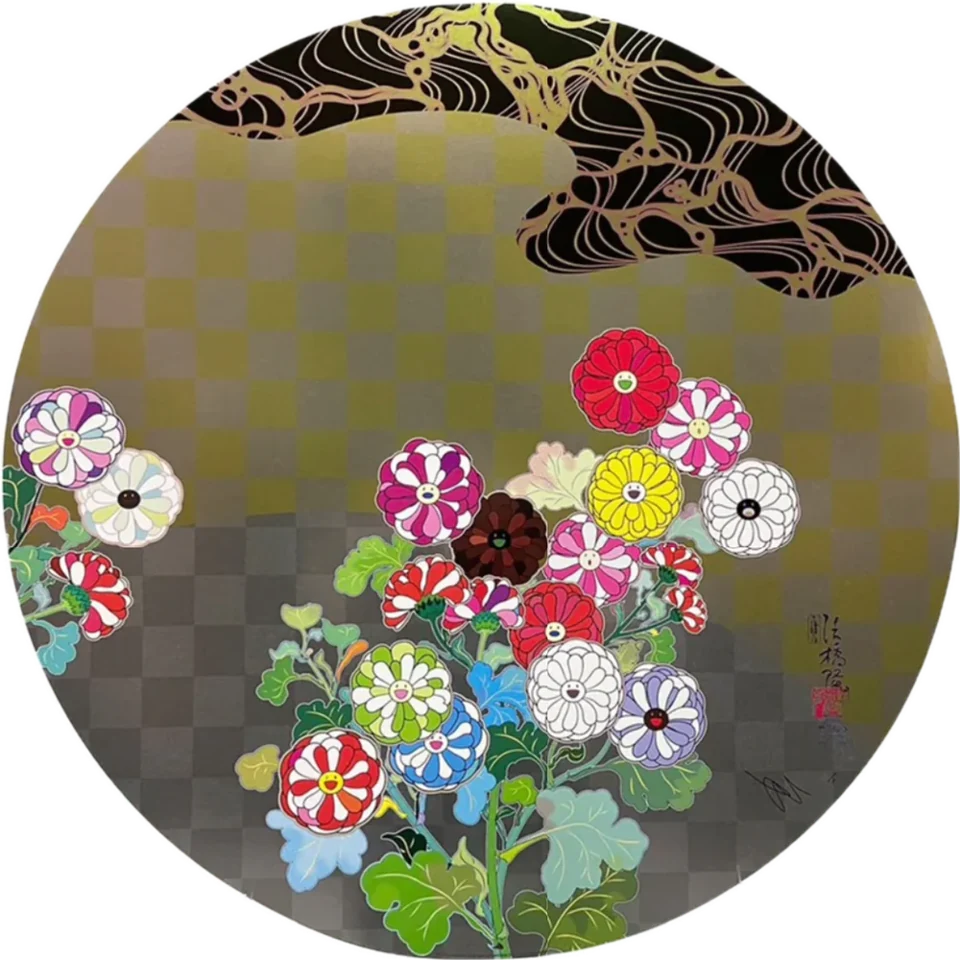
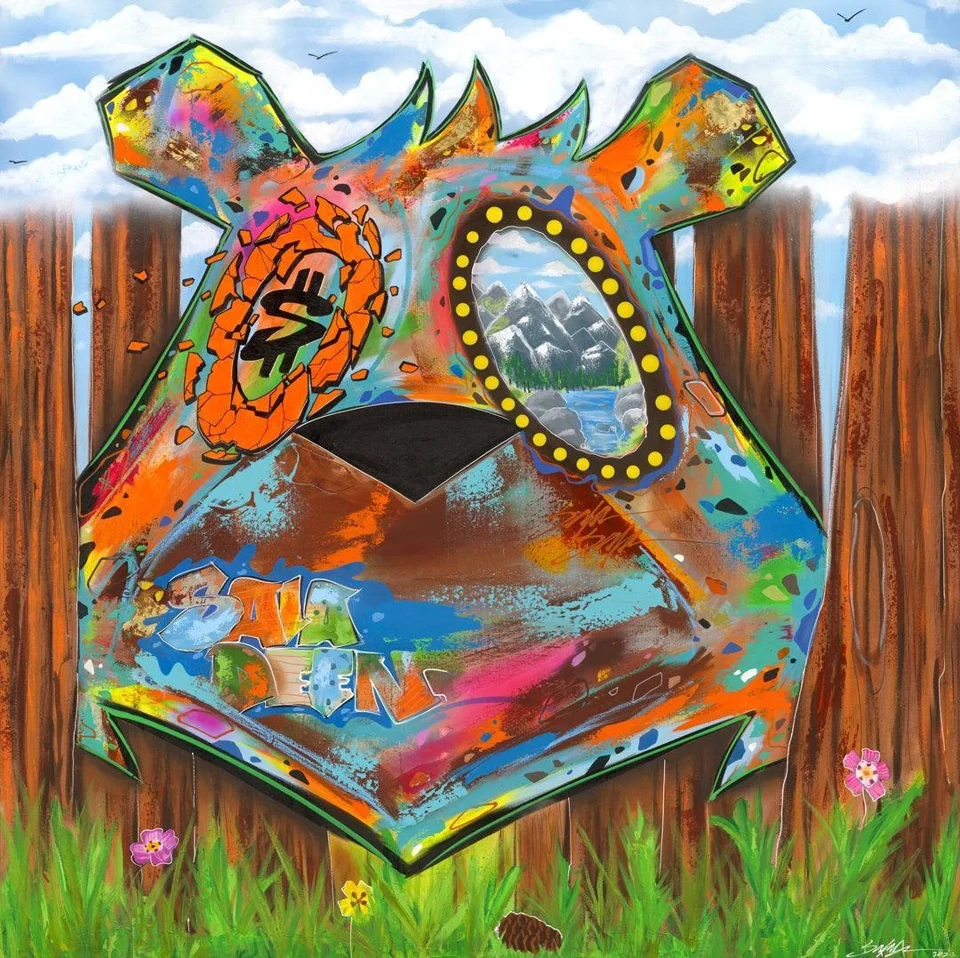
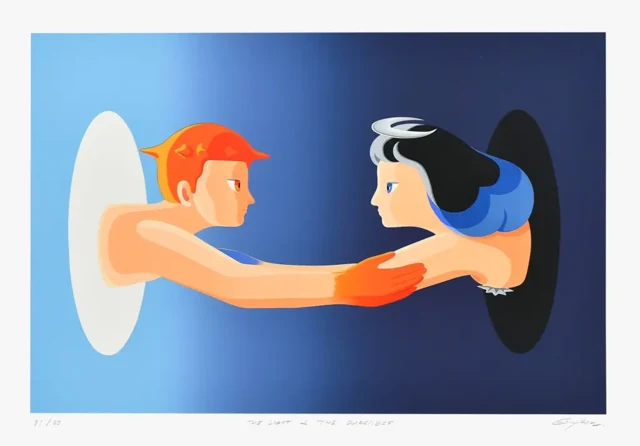
The ArtComburo selection below brings together Takashi Murakami’s Korin Flower and Water, James Jean’s Raven, King Saladeen’s Outside of My Environment and Gongkan’s The Light & The Darkness. Their product pages give the details of each catalogue item. Use the differences between them to continue comparing composition, colour and scale after your gallery visit.