In this article
Start with the figure
Begin with what you intend to show now. A standing BE@RBRICK, a group of small figures and a KAWS with projecting arms require different amounts of space. Even if they fit on the same surface, the arrangement will look and function differently.
Record the object’s title, height, width, depth and any base. For several figures, add the intended layout. This helps establish whether the display needs one horizontal sequence, individual compartments or clear space around a single composition.
Then consider the position at home. A wall can support a sequence; a freestanding table allows side views. A passage needs sufficient room around the object. The display has to suit the figure and the room together: an attractive case of an awkward size soon becomes inconvenient for both.
Outside dimensions and usable space
A case’s headline measurements may describe its exterior rather than the room available to a figure. Wall thickness, bases, frames, door tracks and projecting fittings can reduce the usable volume. Internal height, width and depth are the dimensions to establish.
For example, a figure 28 centimetres high placed in a 30-centimetre interior leaves two centimetres above it. Adding a separate stand reduces that clearance. The object also needs to pass through the actual opening, especially where a lid or door does not open fully.
Measure the figure in the pose in which it will be displayed. The furthest projecting part establishes width; the body, arms or base may determine depth. A paper rectangle on a table can help translate the proposed footprint into a real area of the room.
Model 1A
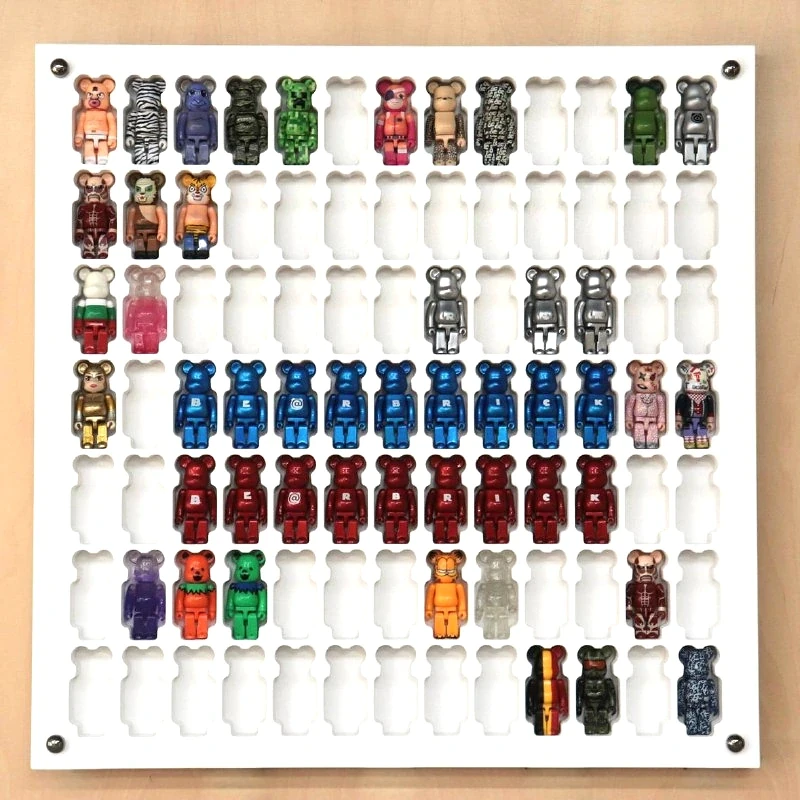
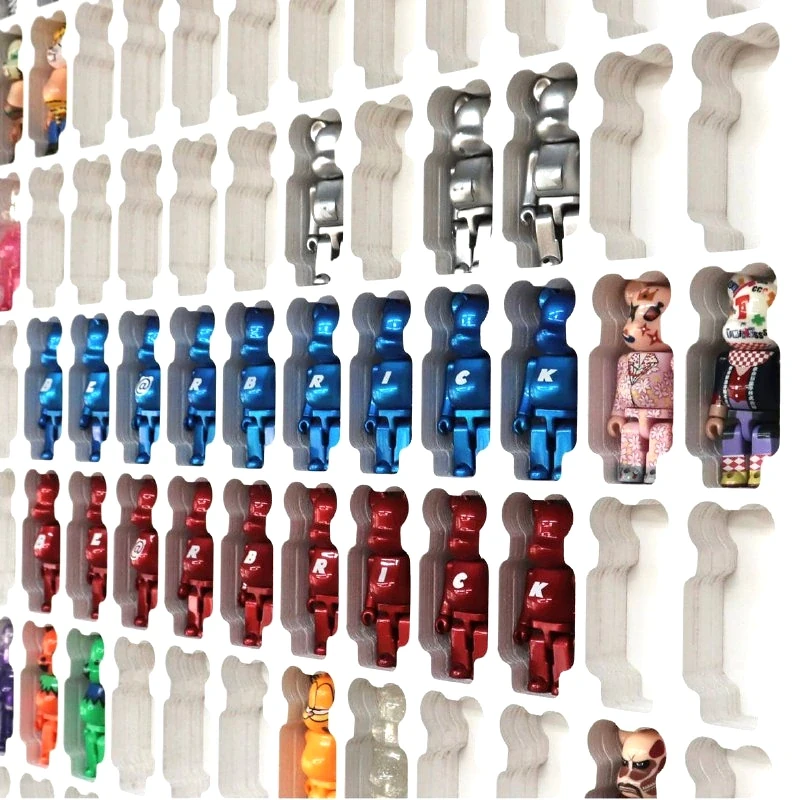
Compartments for small BE@RBRICK figures
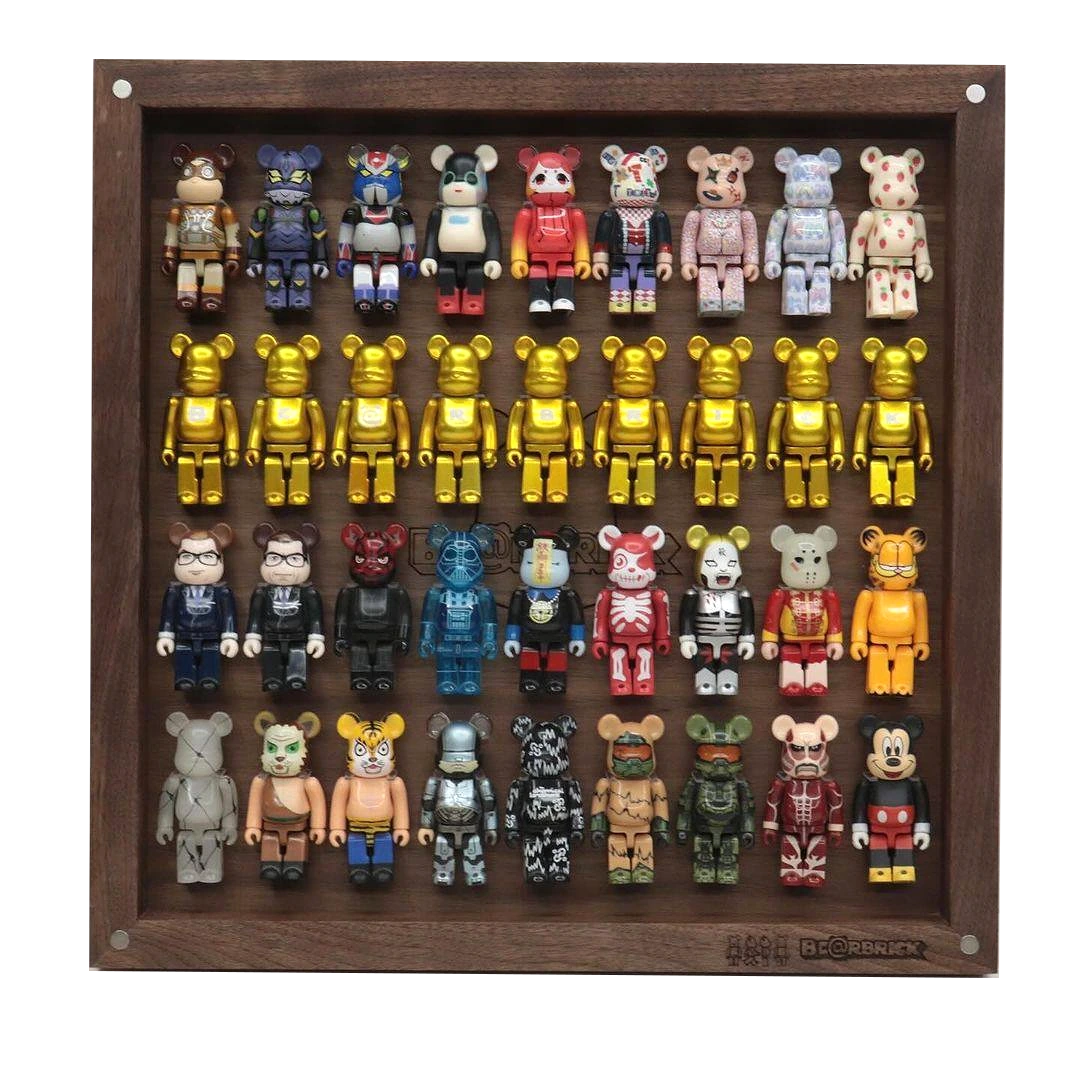
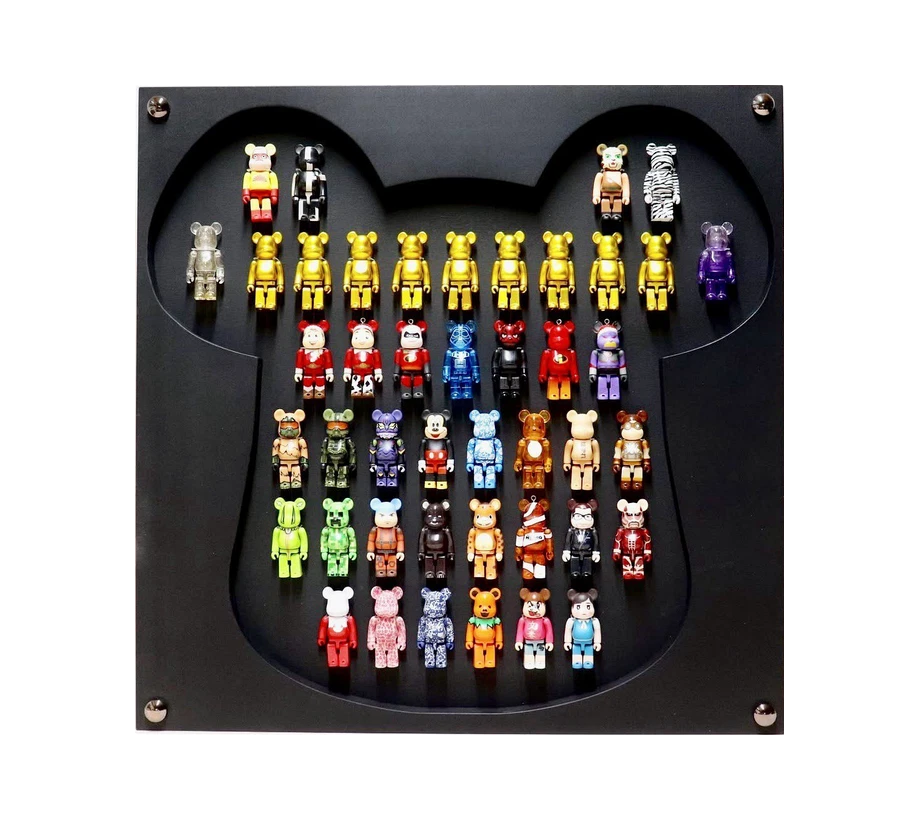
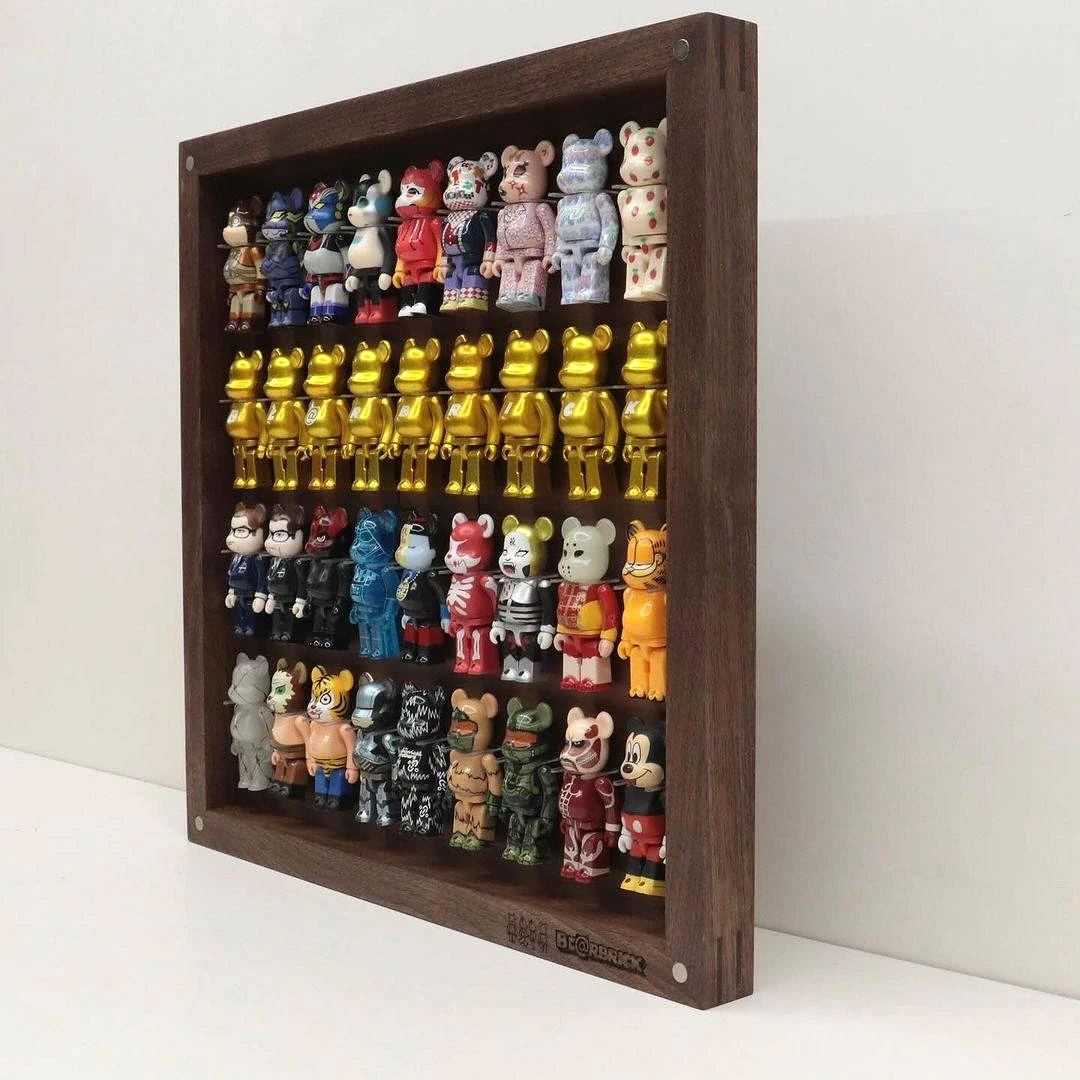
A compartmented display gives each small figure a defined place. Rows make a collection easier to read, compare by colour and check for gaps. This can be useful for showing several releases within one compact field.
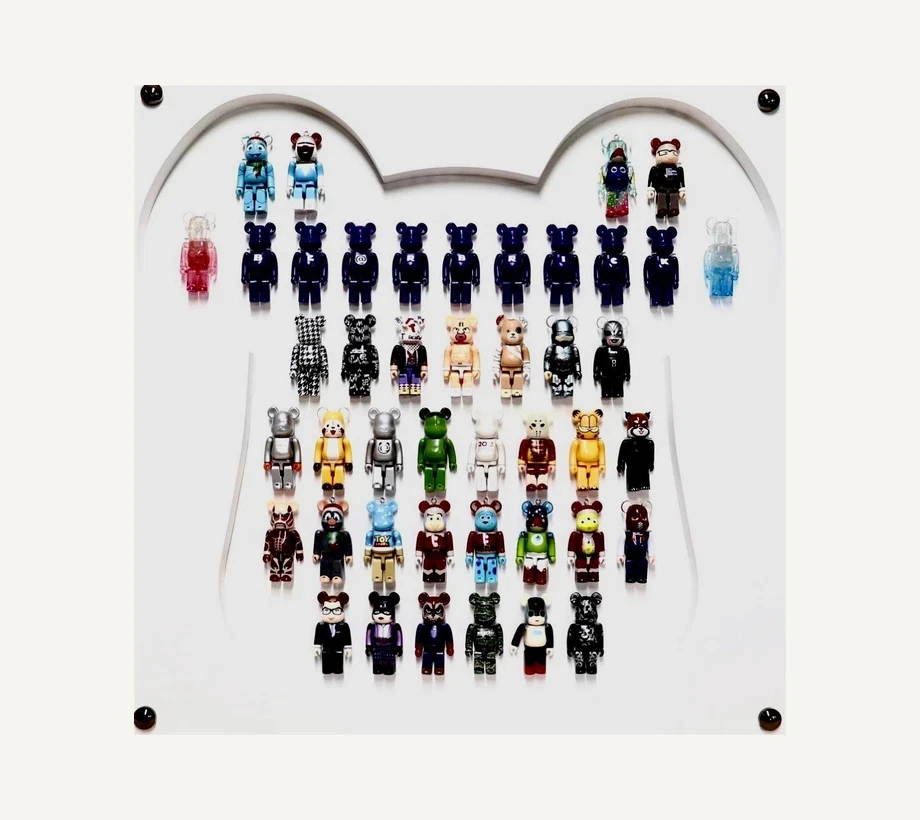
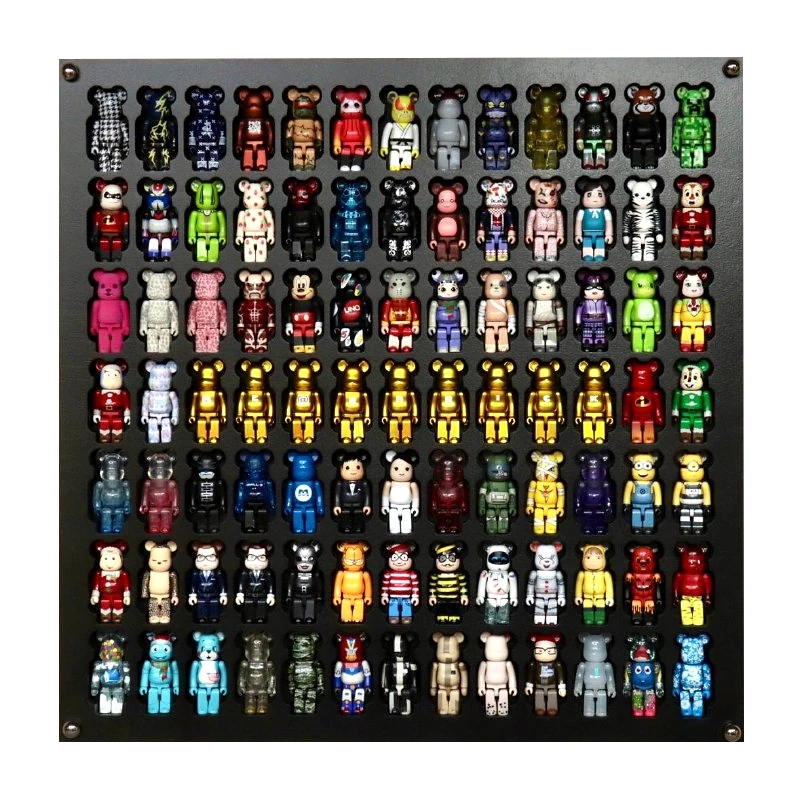
The MEDICOM TOY archive records a Display Blister Board approximately 400 × 500 millimetres in size, holding 45 figures, with standing or hanging options. These are the specifications of a particular product. The panel’s overall dimensions do not establish the usable dimensions of each compartment.
Contents deserve their own reading. Another official release names a set of nine BASIC BE@RBRICK figures. Included figures and display capacity answer different questions. Establish what comes in the box and which size the positions are designed to hold.
Explore our Model 1A and Model 7A listings for full views, rows and details. Check the listing for the intended figure size and included components.
Model 1A
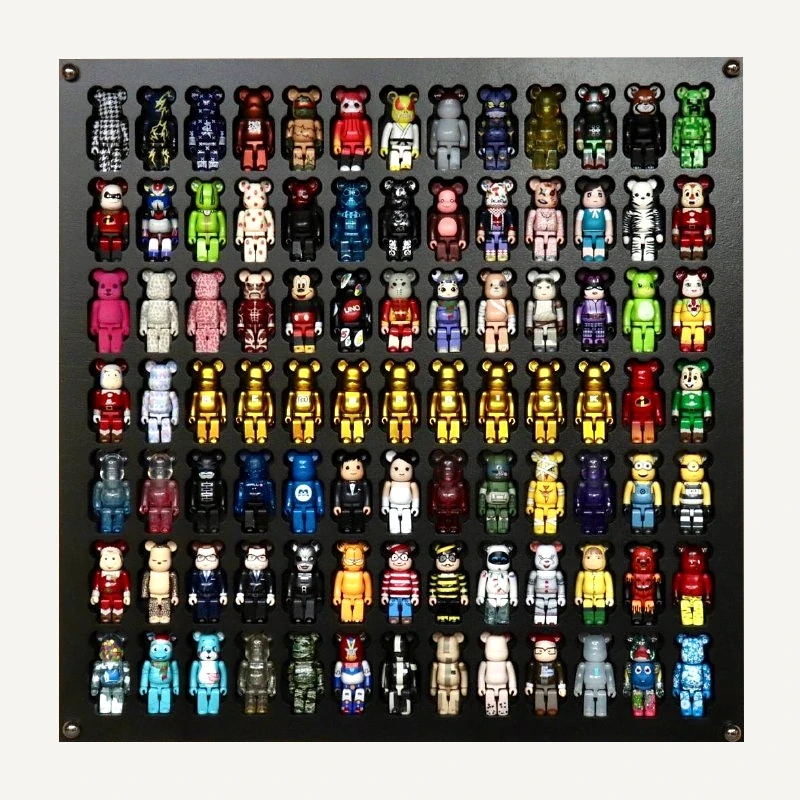

How 100%, 400% and 1000% change the task
An official PARCO press release lists standard BE@RBRICK formats at approximately 7, 28 and 70 centimetres tall. These are useful first references, while width, depth and the particular object’s features still matter when choosing a display.
A very large shelf can make a small figure disappear. A defined display area or neighbouring objects of comparable scale can help. For 400%, shelf spacing matters, along with the ability to see the head without an upper crossbar interrupting the view.
A 1000% figure often becomes an object in its own right within the room. Picture its position before choosing a cabinet: check the route past it, backdrop, distance from furniture and installation method. Planning a place for a seventy-centimetre figure is easier before it arrives.
KAWS: the silhouette matters beyond height
KAWS makes the difference between height and occupied space especially clear. A standing character, an embrace and a reclining figure may need very different depths. Width can become the defining measurement for a composition with several characters.
Look from the front and side. A meaningful gesture should remain visible, with room for the arms, face and entire base. For a case, also establish how the piece passes through the door or beneath a removable cover.
When choosing from photographs, ask for the object’s dimensions. Shipping-box measurements describe packaging and help with transport and storage, but offer no reliable footprint for an unpacked sculpture. Three actual measurements provide a better starting point than a single overall photograph.
Open shelving and easy rearrangement
An open display lets a figure be viewed without the reflections of a transparent wall. Side views, repositioning and small group arrangements are straightforward. It can suit a collection that changes regularly.
It also brings more regular attention to objects and furniture. The Western Australian Museum distinguishes open and enclosed display, noting the greater maintenance needs of an open arrangement. At home, an accessible position makes inspection and cleaning around the objects more convenient.
A shelf need not be filled completely. Gaps help faces and silhouettes remain distinct. Before buying more furniture, try removing a few objects from the existing arrangement. Sometimes what the collection needs is more space between pieces rather than another cabinet.
Model 7A
Individual cases and shared cabinets
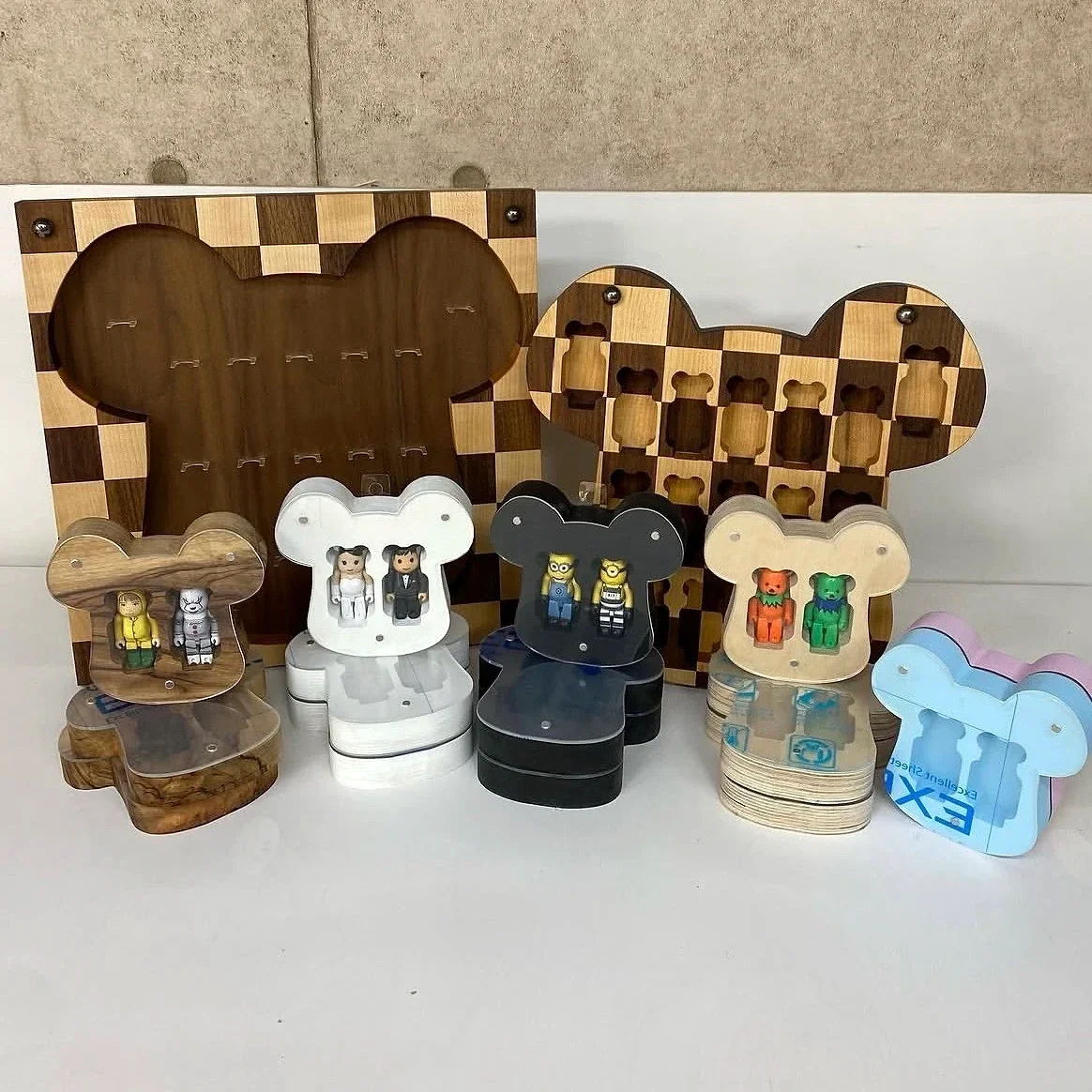
An individual case highlights one work, while a cabinet brings several objects together. The choice depends on whether the display should read as a standalone composition or a sequence. In either setting, consider ordinary eye-level views and the position of visible joints.
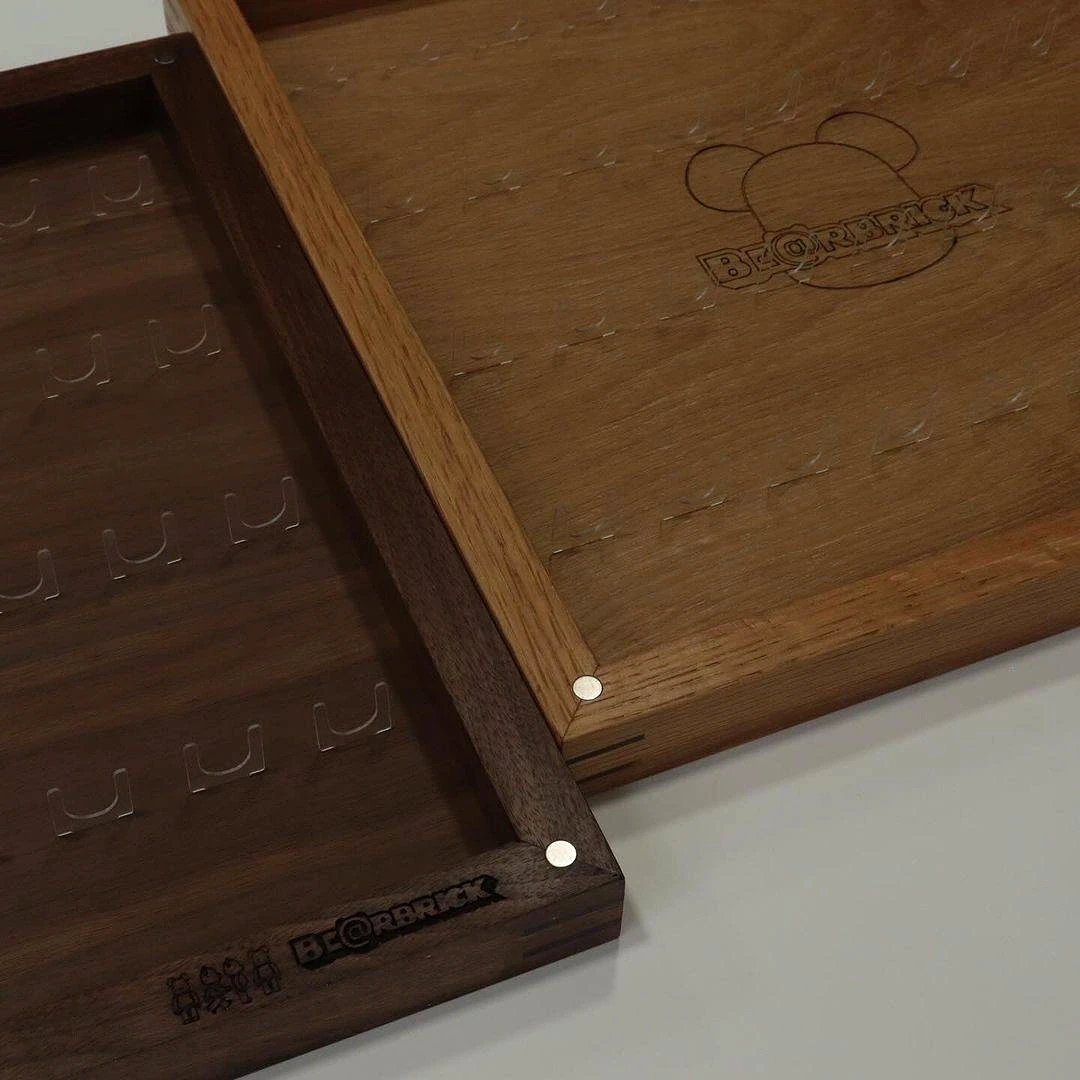
Transparent walls create a physical boundary. Their effectiveness against dust depends on construction, joins and the opening mechanism; a cover alone does not establish an airtight seal. CCI’s guidance on pollutants also considers conditions within enclosures, including the materials used to build them.
Practical questions provide a useful starting point. What are the base and walls made from? How does the lid lift off? Can the rear row be reached without moving the front? Clear answers help turn an appealing overall appearance into an arrangement that is pleasant to use.
Glass, acrylic and stated protection
Glass and transparent polymer panels have different properties. A CCI technical bulletin discusses differences in weight, rigidity and susceptibility to scratching. The material of a particular model should come from its specification rather than an assumption based on a photograph.
UV filtering is a separate property. Transparency alone does not establish ultraviolet protection, and “acrylic” does not tell us the filtering level. Where this matters for a work, ask the manufacturer about the particular panel being supplied.
Everyday details also matter: visible glare, ease of inspection, edges and fittings. A clear material is best considered alongside the intended position and lighting. The same case can look quite different beside a window and against an interior wall.
Check reflections before adding light
Look at the object under ordinary daylight and evening lighting first. A pale figure can merge with a pale backing, while chrome may reflect a window more strongly than its own graphics. A small change of position can sometimes help more than another bright light.
CCI recommends checking glare from the expected viewing positions. For a home cabinet, try standing, sitting and side views. If a highlight obscures a character’s face, adjust the source or display position first.
Avoiding direct sun is a sensible starting point. Decorative lighting can also be used when enjoying the collection rather than remaining on continuously. Its role is to reveal colour and surface, with brightness, distance and operating time considered in relation to the object’s material.
Plinths and a stable base
A plinth gives a large figure its own position in a room. It also changes viewing height: a face can move closer to eye level, or a low composition become more visible. Decide the role of the work before settling on the base’s height.
Stability concerns both the plinth and the object above it. In its physical-forces guidance, CCI addresses falls, collisions and movement of inadequately supported objects. At home, the practical aim is a base that stands securely in its position and adequately supports the figure.
The display’s documentation should provide its load rating. A photograph of shelf thickness or a model name is no substitute. For a wall-mounted display, check the intended fixings and installation requirements as well. A large object is best considered with its actual weight and the base’s construction known.
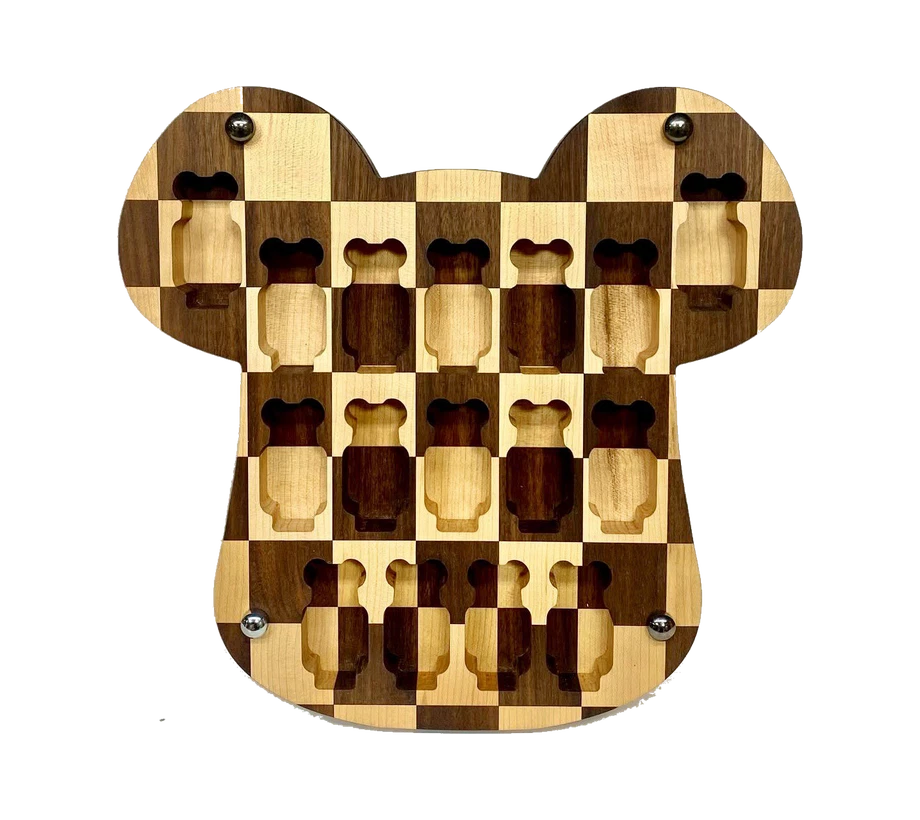
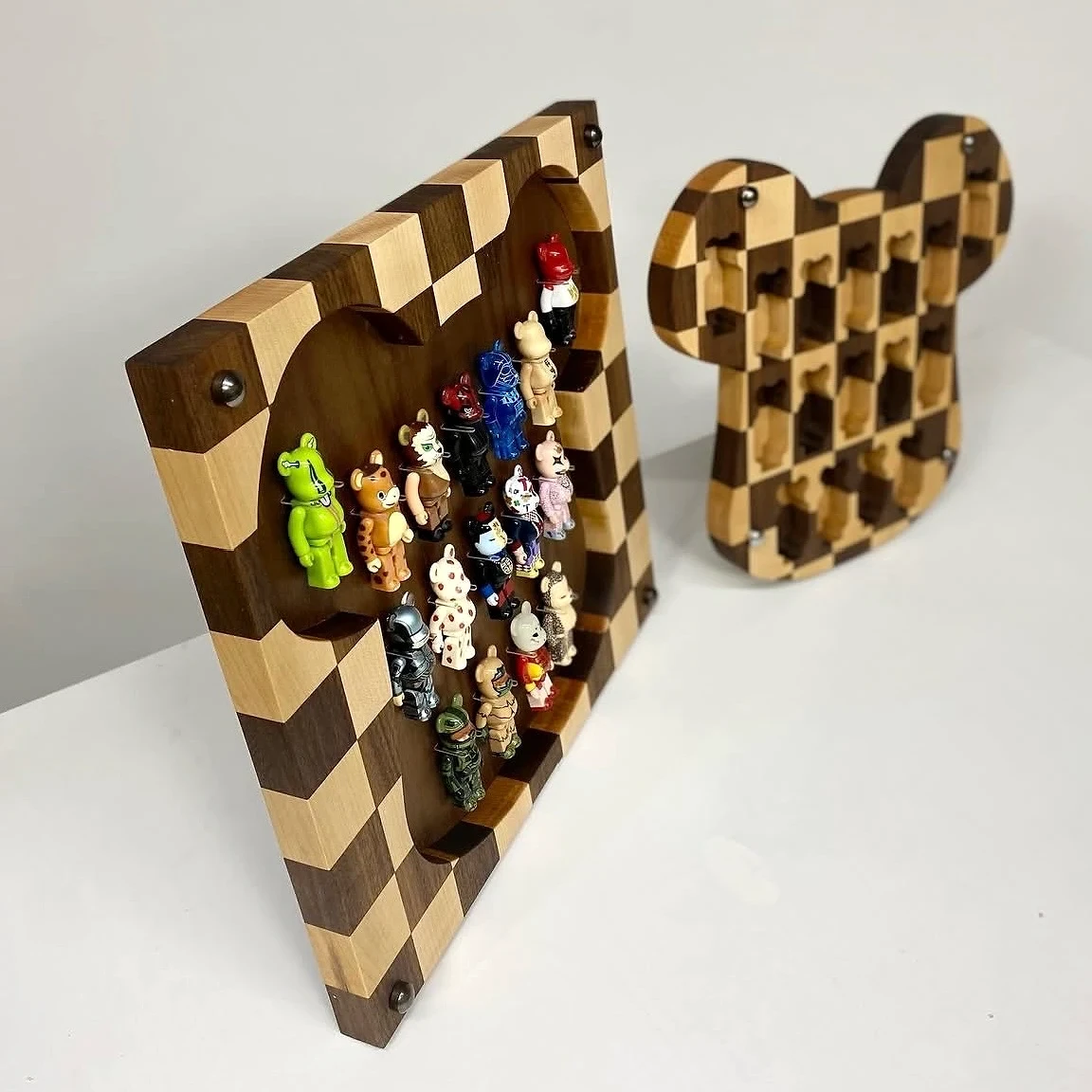
Wood Display 16
Access and everyday care
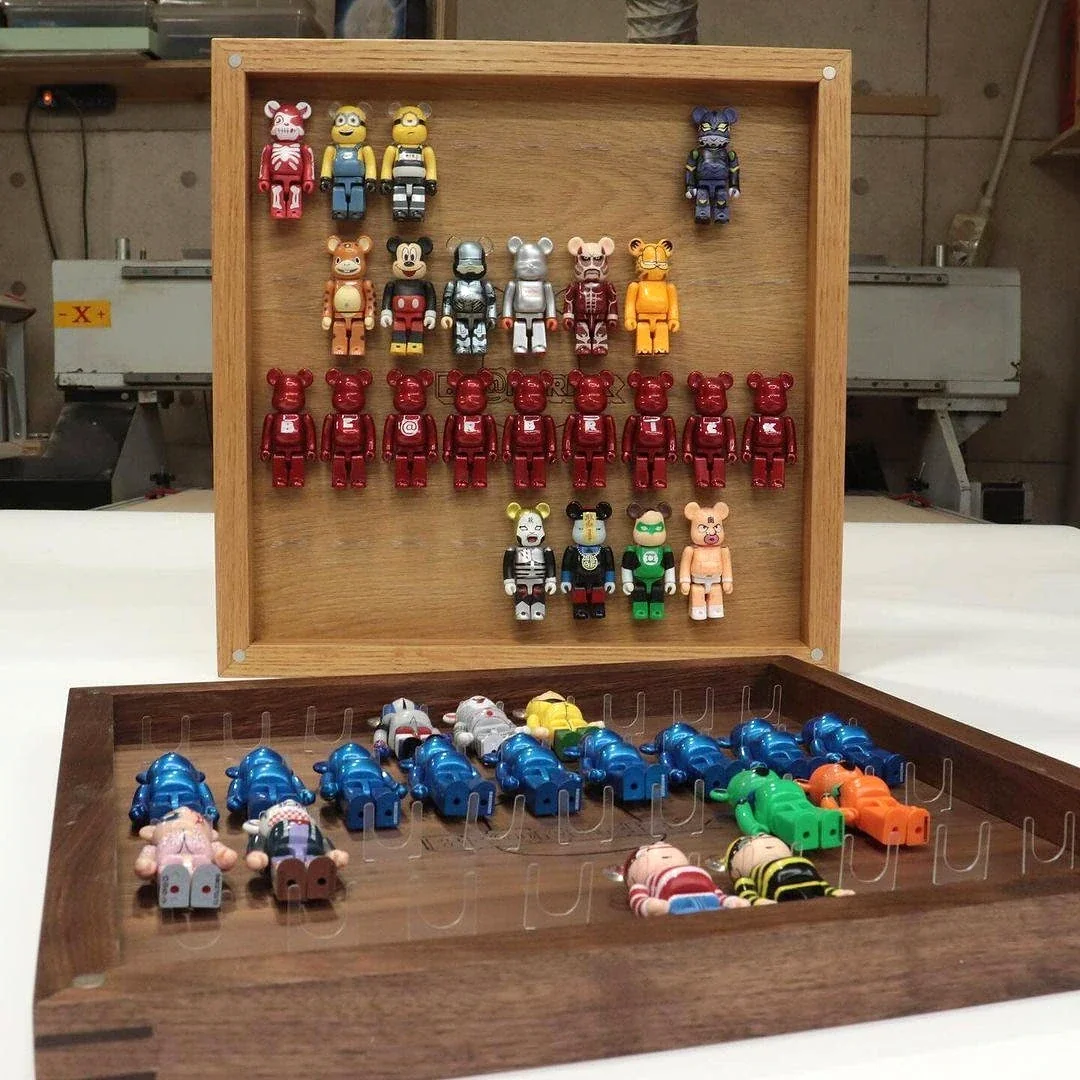
A useful display allows an object to be removed calmly. Check the door’s path, where a lifted lid can be placed and whether the figure can be supported from underneath. Having to reach across several other works for every change suggests an arrangement worth reconsidering.
CCI’s plastics guidance advises supporting objects from below and treating projecting parts carefully. A wide opening is therefore a practical advantage, allowing space for hands and a clear view when moving a figure.
Ask the relevant manufacturers about care for finishes and transparent panels, including which products suit the particular material. The display itself also merits occasional inspection: joints, shelves and the base’s stability remain important even when a collection has occupied the same position for years.
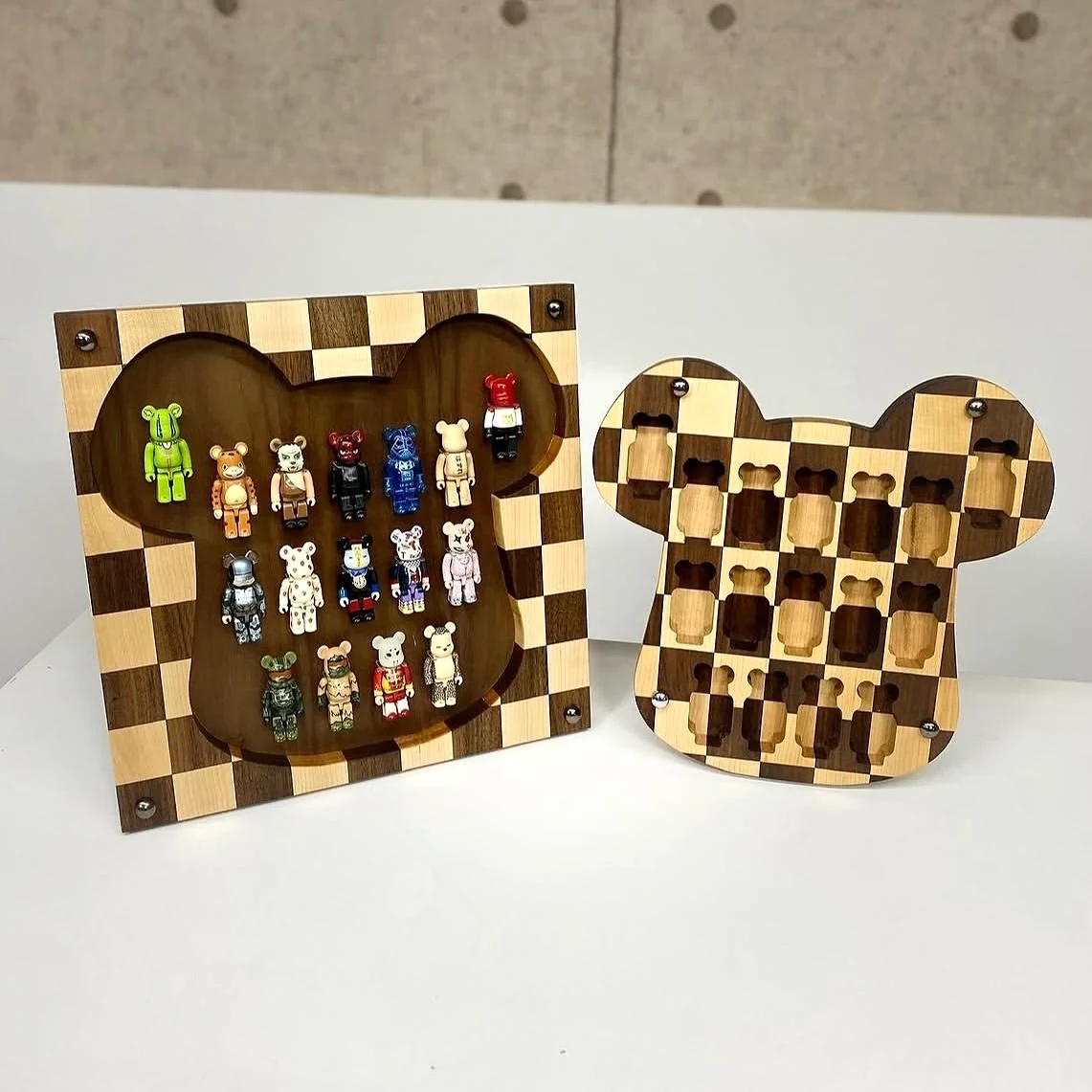
Wood Display 16
An arrangement with room to grow
Imagine the display with the objects you have now and one future addition. Would the sequence remain clear? Would every shelf need to move? A modest allowance for change can help when choosing furniture without making it necessary to fill every position immediately.
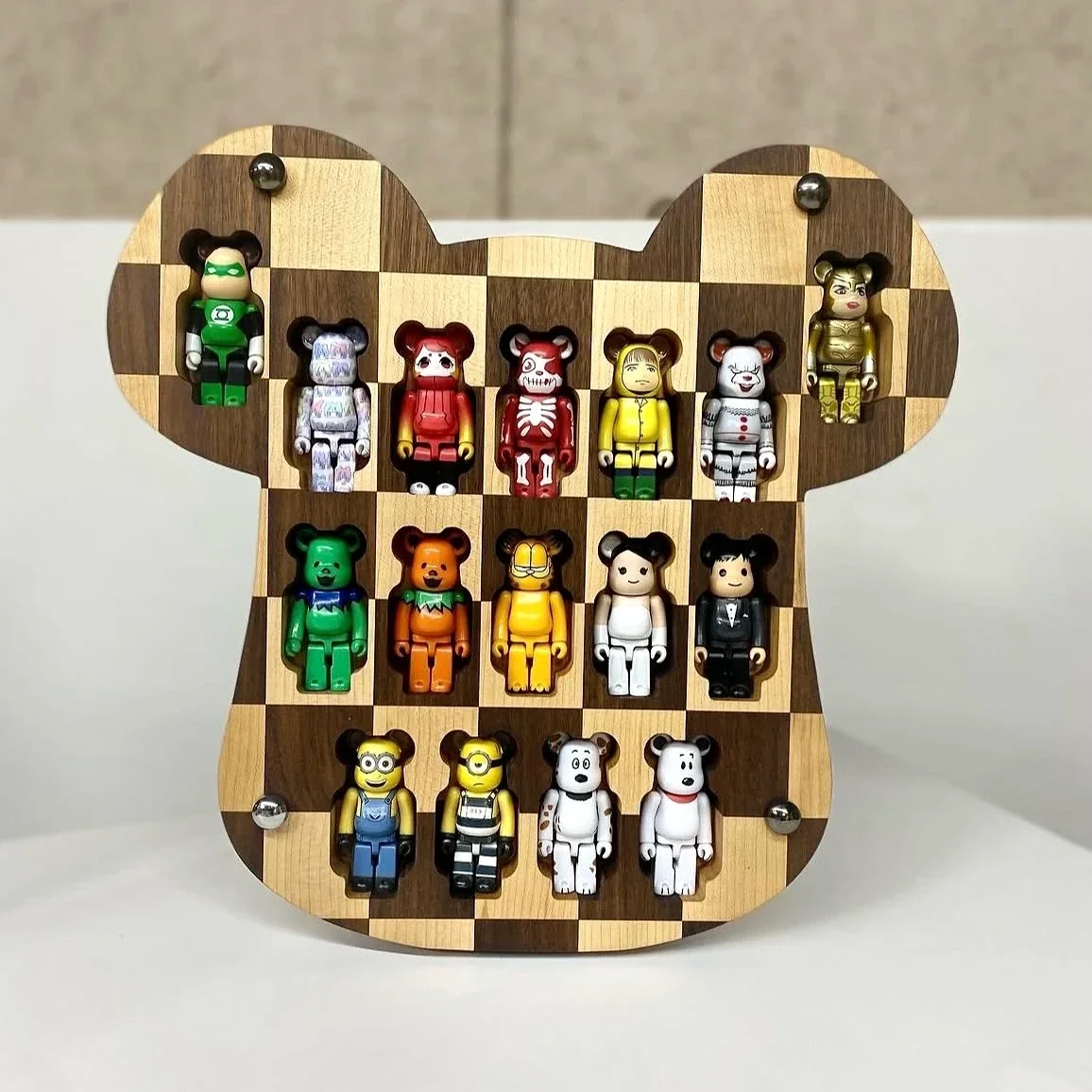
Several groups can share a room: a small colour sequence, a large standalone BE@RBRICK and a KAWS composition against its own backdrop. Each can use a different display solution. Related frame colours or a consistent shelf line can connect them despite the objects’ differences.
Before ordering, check the figure’s dimensions, usable internal volume, opening size, installation method, load rating and access for care. Finish and colour become easier choices once those practical details are established. A good display clarifies the collection and makes it comfortable to live with every day.
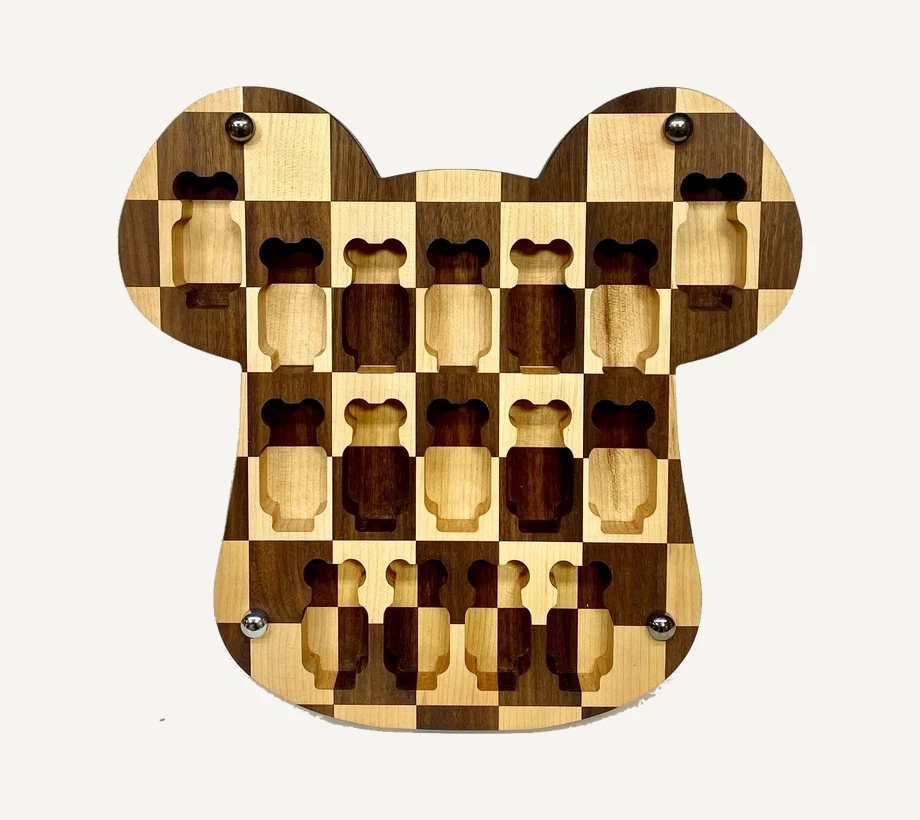
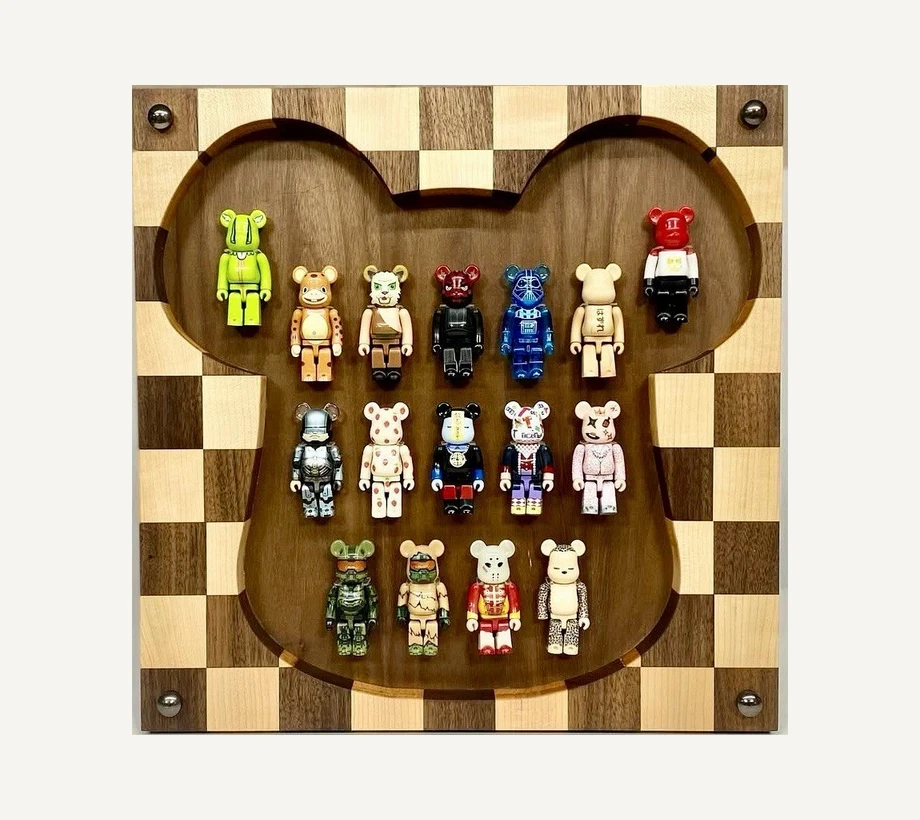
Compare Display Board 44 Black and White, or explore the different silhouettes of Wood Display 16 Bear Head and Square Frame. View the display catalogue, our BE@RBRICK size guide and KAWS collectors’ displays.
Displays