In this article
A collection begins with personal interest
Photographs of other people’s homes can make a collection look complete from the outset. What we see is one moment in a longer history: objects have been chosen, arranged and photographed in good light. Searches, changes of position and pieces that are currently off display remain outside the frame.
Individual decisions are often the most useful things to notice. How does a figure relate to the furniture? What stands beside it? How much clear space surrounds it? One observation can be applied even to a small shelf.
The following stories draw on interviews and home features from particular times. Collections continue to change, and an older image remains valuable as part of that history. It offers a glimpse of someone’s taste without becoming a complete inventory of everything they own today.
NIGO: toys, design and large paintings
In a 2014 Sotheby’s interview, NIGO appears as a collector bringing together toys, furniture and art. His Tokyo studio contained KAWS paintings and sculptures. In a 2019 conversation, he recalled meeting the artist around 1996. Personal interest and friendship preceded their well-known collaborations.
This suggests a flexible approach to collecting. Different categories of object can share a space when they are connected by the owner’s eye. A small character can stand beside a distinctive piece of furniture and hold its own as an image, rather than appearing only among other figures.
Collections also have chapters that come to an end. Part of NIGO’s collection was offered at Sotheby’s in 2019, including KAWS works. Change is equally natural in a personal display: one object suggests a new direction, another makes room for it, and a third remains a lasting point of reference.
NIGO

Pharrell Williams: one artist across several scales
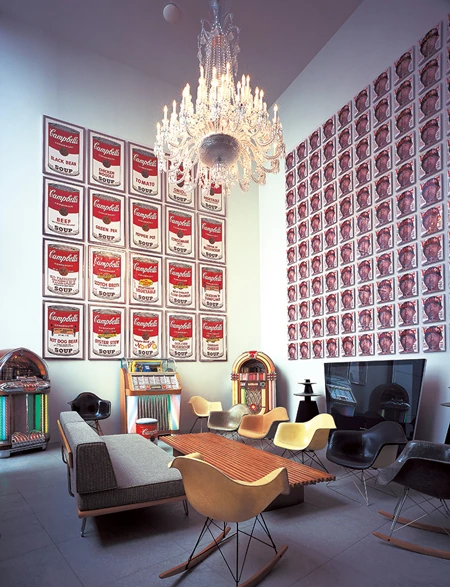
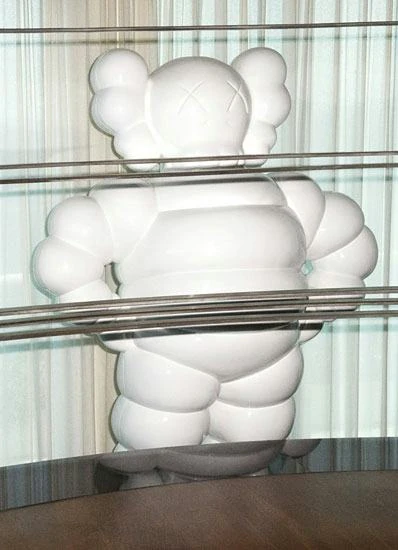
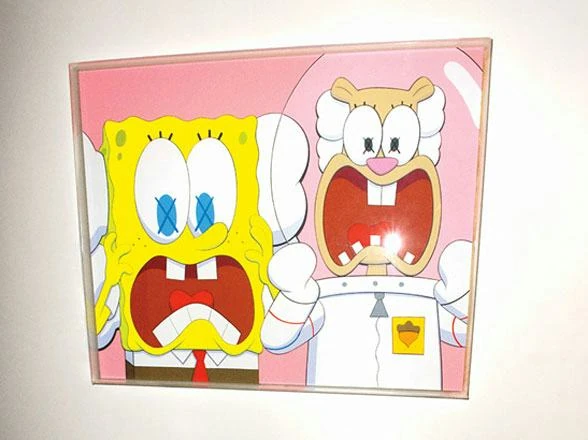
In W’s 2011 Miami home feature, Pharrell’s collection included paintings, prints and CHUM. KAWS himself, interviewed by Tobey Maguire, connected Pharrell’s collecting with NIGO and discussed making SpongeBob paintings for him.
The movement between formats is interesting here. An artist’s visual language can be recognised on a wall and in a three-dimensional object without repeating the same piece. At home, another figure of a familiar size might eventually give way to a print, offering a different encounter with that world.
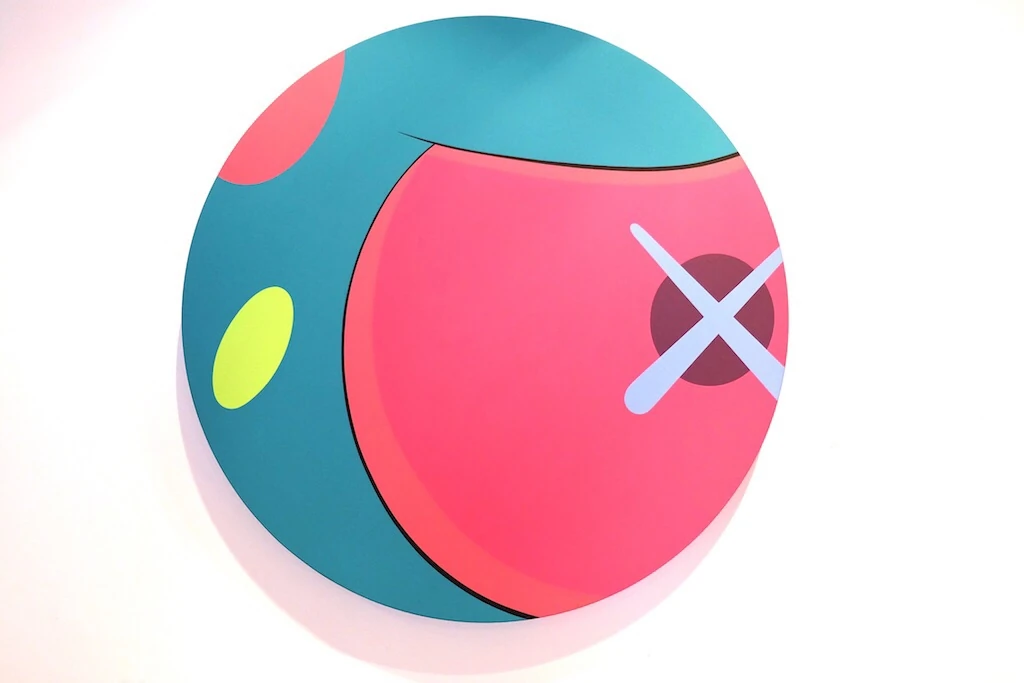
The principle still works in a smaller room. One wall piece can establish the overall mood, while sculpture becomes a closer point of attention. They can occupy different parts of the room and sustain a conversation across the distance. A collection gradually connects with the architecture rather than remaining an isolated group on a single shelf.
Pharrell Williams
Kevin Poon: collecting through a community
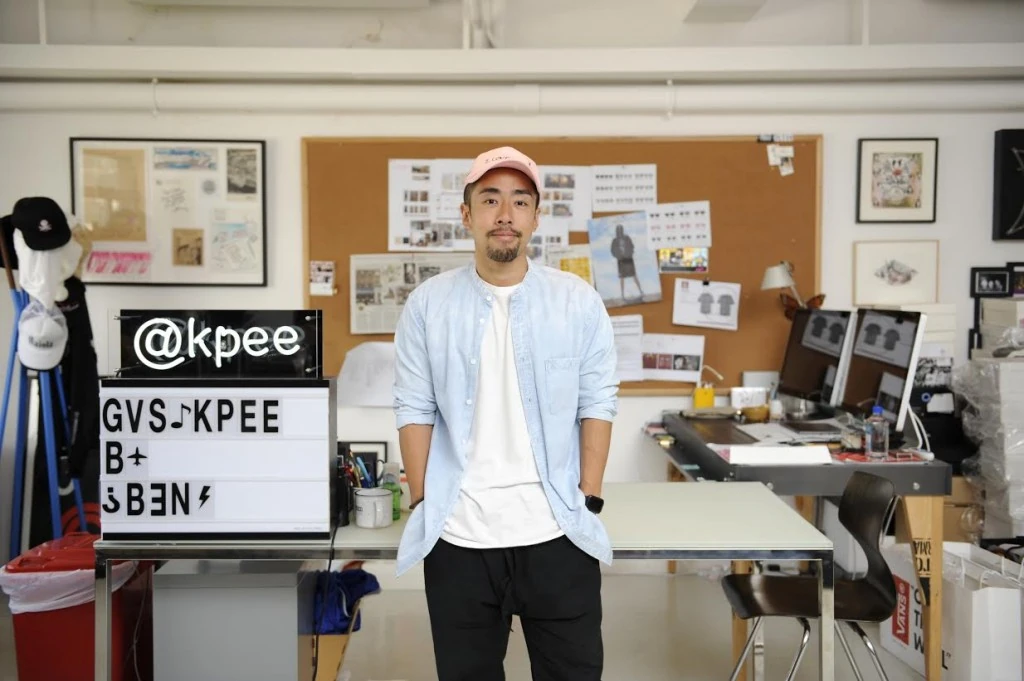
Hong Kong entrepreneur and Woaw Gallery founder Kevin Poon is explicitly identified as a KAWS collector in a 2022 CNA Luxury interview. In a conversation with Tatler, he described how relationships with artists grew from street culture into a more serious interest in art.
His story is a reminder that purchases are only part of collecting. An exhibition, book or conversation with another enthusiast can change the way an object is understood. A familiar character gains context and connections with other artists.
For someone starting with KAWS figures, that offers a useful next step: look beyond the chosen series. Compare a sculpture’s mood with a painting, follow an exhibition history or consider which other works you would enjoy seeing nearby. A small collection can then become a personal expression of taste, rather than an attempt to reproduce someone else’s display.
Kevin Poon


Jeffrey Xu: KAWS at an everyday domestic scale
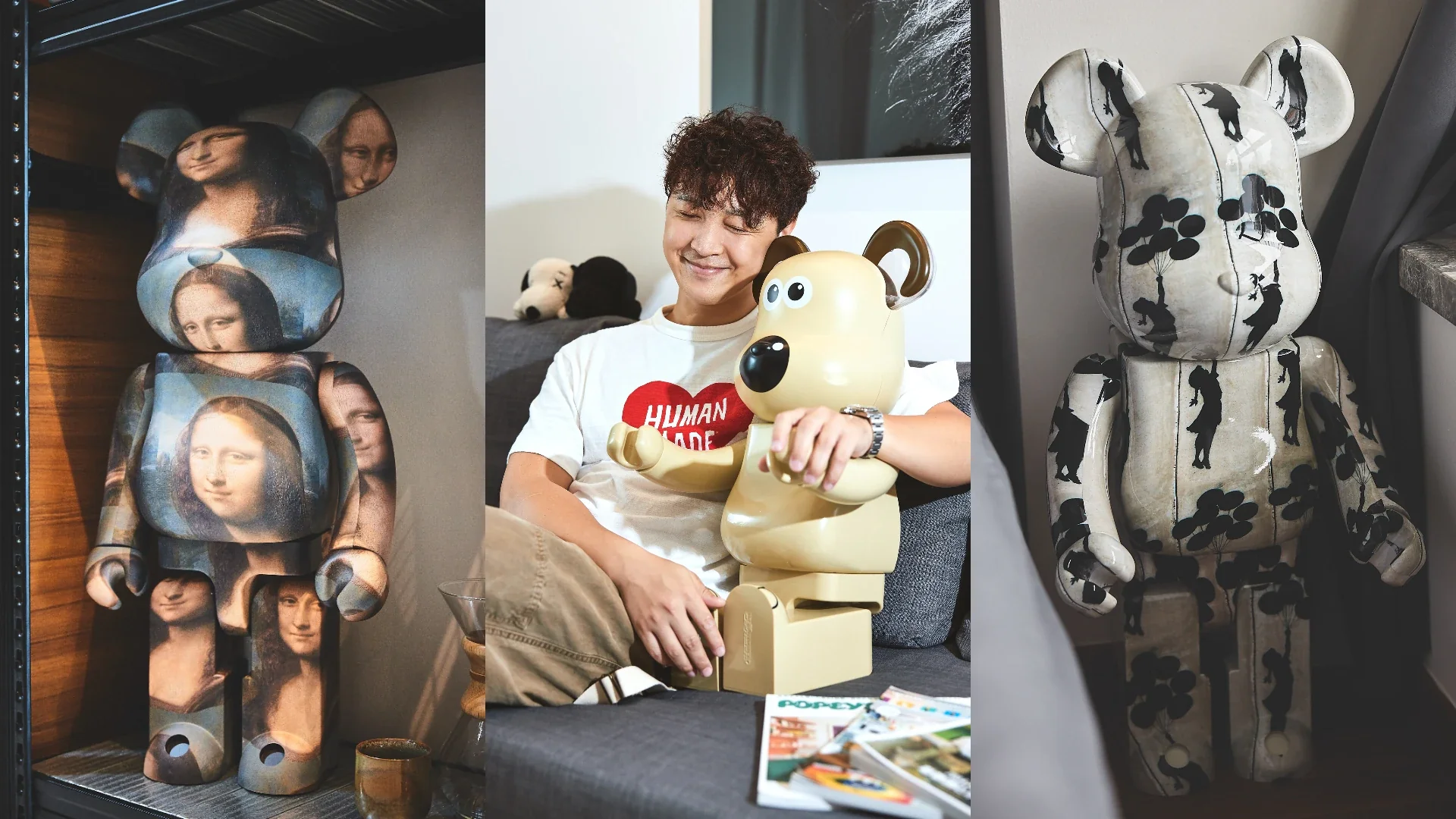
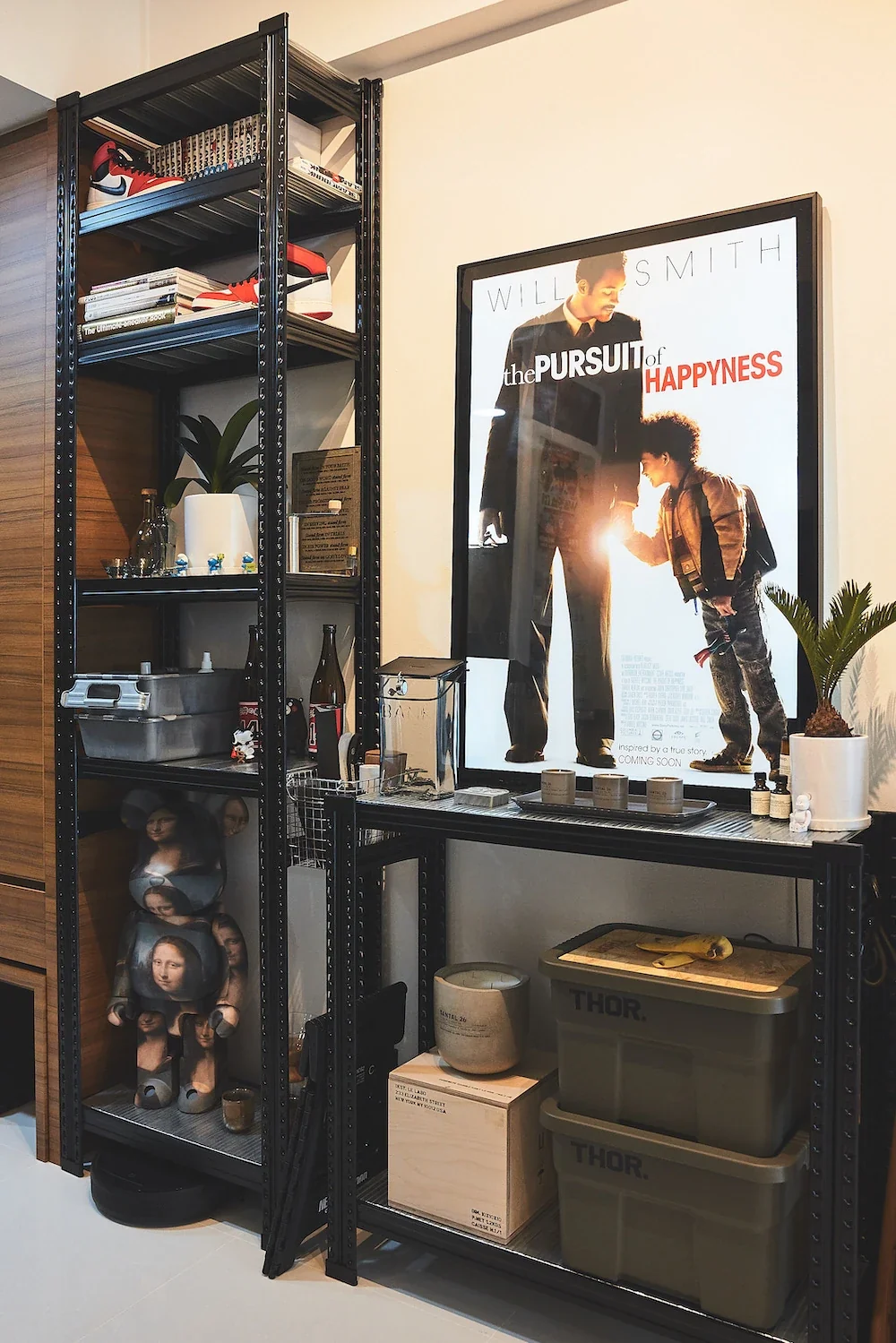
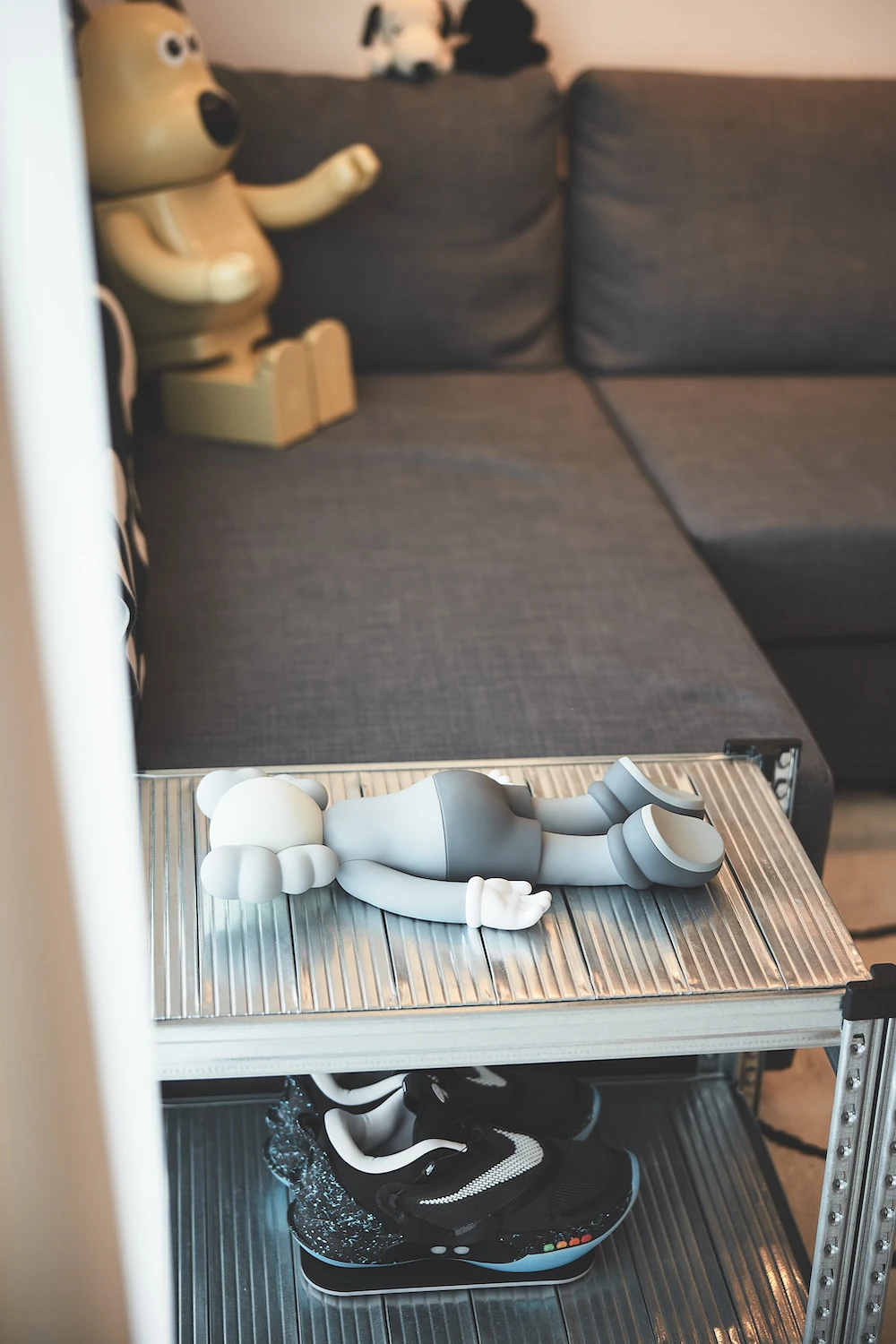
In an 8days home feature republished by CNA, actor Jeffrey Xu showed his apartment in Singapore’s Bendemeer. One COMPANION lay face down on a rack, with two others stored in boxes. He associated the displayed figure’s pose with the mood of the pandemic year of 2020.
It is a familiar situation: there are more objects than available positions, and displaying everything at once becomes difficult. The collection still exists, with some works in view and others awaiting a change of arrangement.
A small rotating display can offer an alternative to adding more furniture after every purchase. A few figures receive space and attention before making room for others. Different poses make this especially rewarding. A standing character and a reclining composition need different shelf depths and read differently from across the room. Choosing their positions becomes part of the enjoyment of collecting.
Jeffrey Xu
Beth Redmond: KAWS becomes furniture
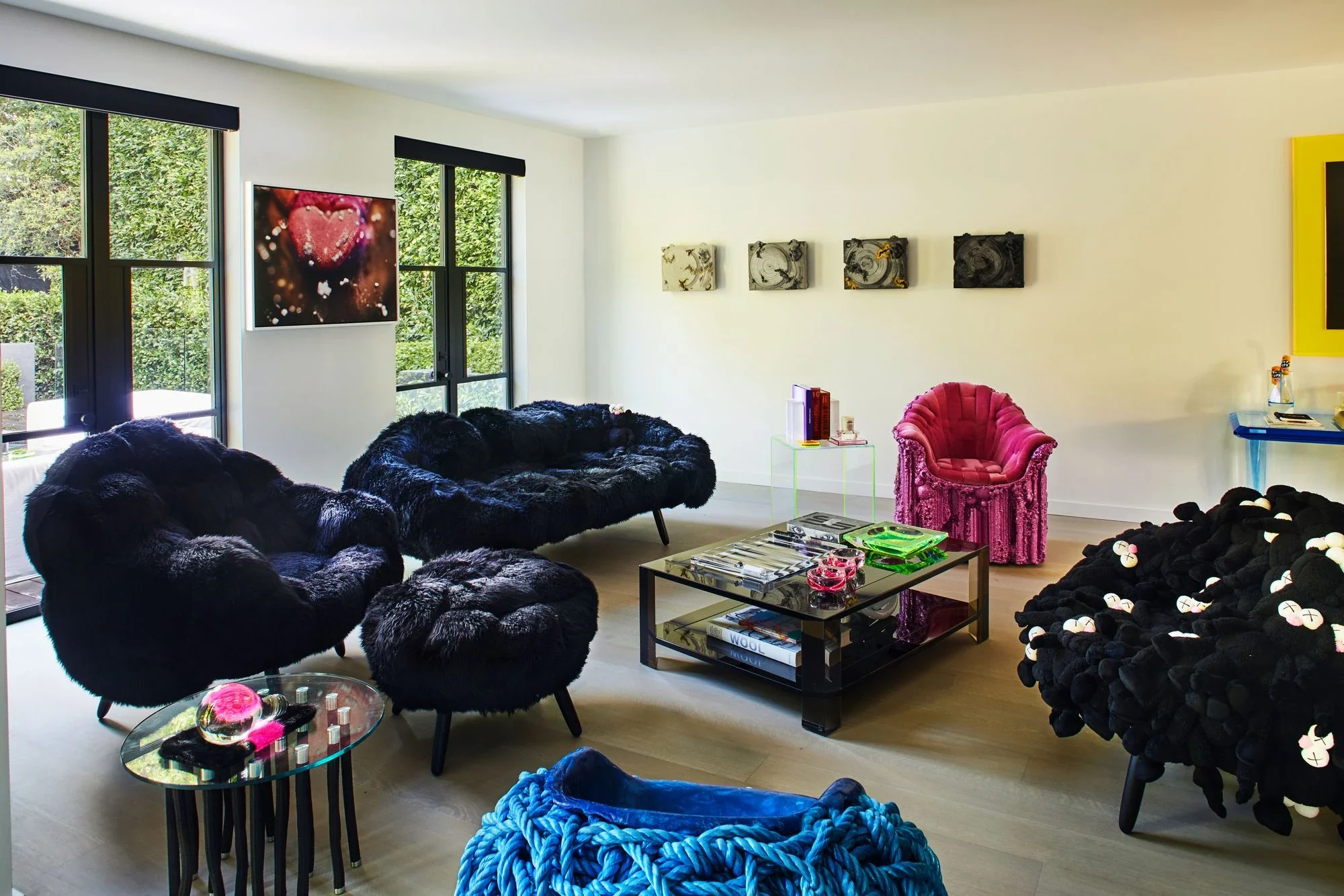
Architectural Digest’s 2019 photographs show a pink plush KAWS × Campana sofa in Beth Redmond’s West Hollywood home.
Furniture offers another way to live with a collection: an object shapes a space through its volume. Viewing distances, neighbouring surfaces and sightlines are arranged around it. The principle can apply to quite a different object at home too—first decide its role, then consider what should surround it.
A visually active work can be supported by a quieter setting. One colour might be repeated elsewhere, or a calm surface left beside it. A deliberately dense composition can also work. What matters is enjoying that decision in everyday life, after the carefully placed lighting and flattering angle of a magazine photograph have gone.
Beth Redmond
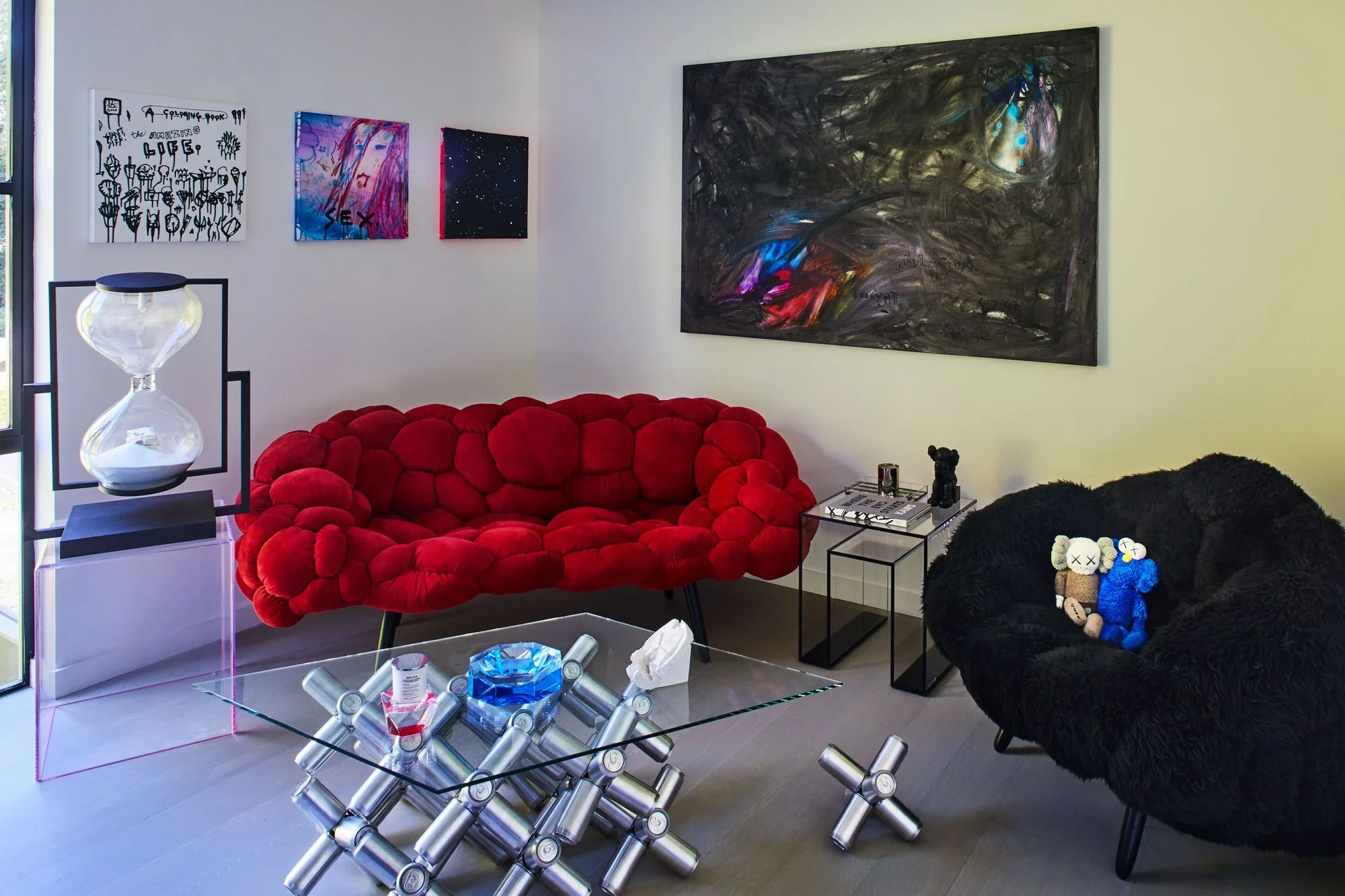
Serena Williams: art in place of a formal living room
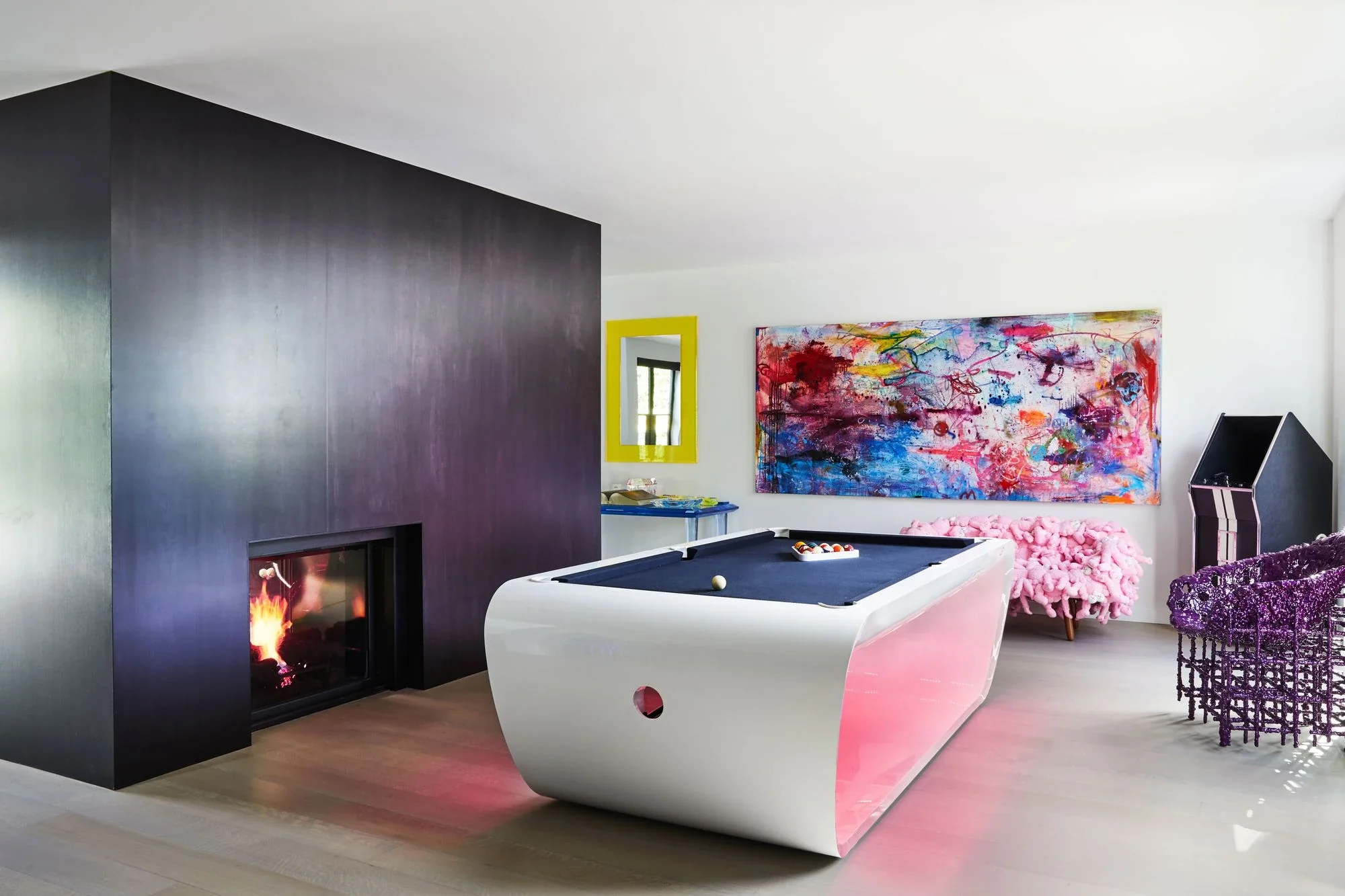
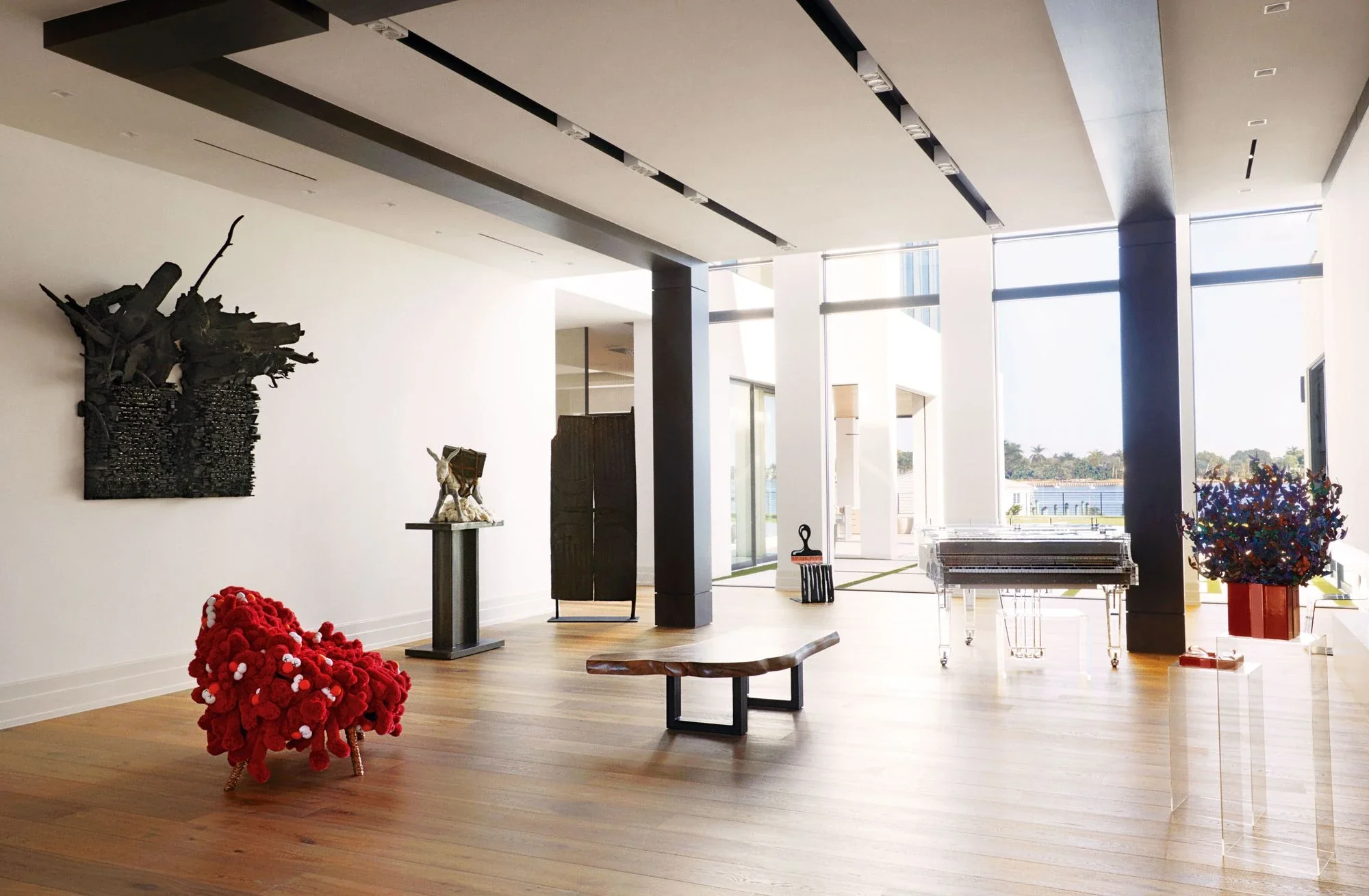
In her 2021 Architectural Digest home tour, Serena Williams presents a gallery space and KAWS × Campana furniture in place of a formal living room.
There is a practical idea here. A home may already have a place that looks appropriate but is seldom used: an empty entrance area, an overly formal corner or a surface filled with incidental decoration. A favourite work can change how that part of the room feels.
The whole space need not become a museum. Giving art a clear place along a daily route lets people pass it, approach it and pause to look. A figure acquires a scale in relation to the person beside it, and the room gains a reason to linger. This is especially useful for a larger KAWS work that feels crowded among smaller objects.
One work or a whole group?
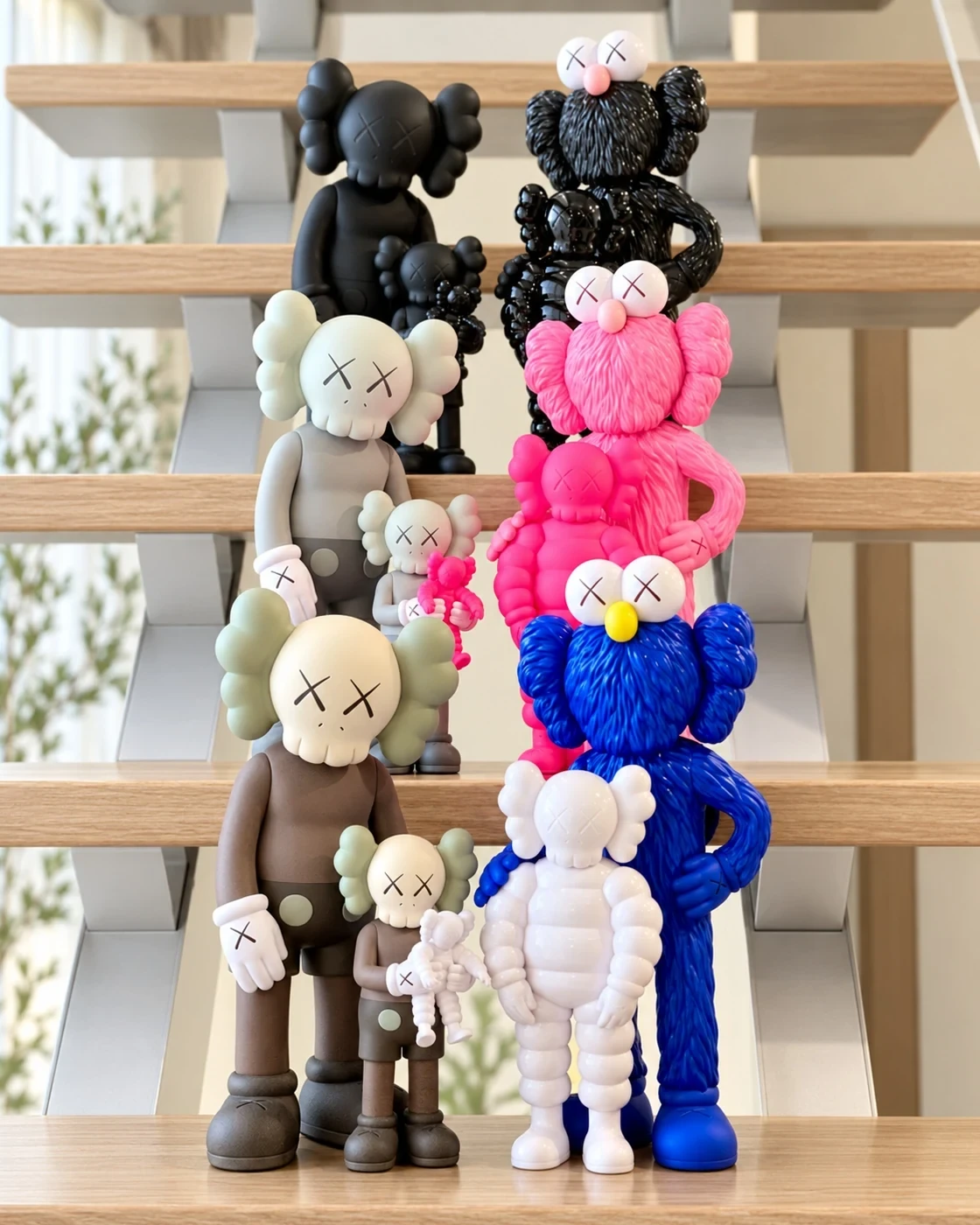
An individual figure and a group have different strengths. One work draws attention to pose, silhouette and surface. A sequence reveals differences of colour, character, material and mood. The choice begins with what you want to see in the room.
When pieces are similar in size, repeated spacing can make them read as a sequence. Different sizes are worth testing without other objects first: a large figure may obscure a smaller one, while projecting details can disappear against a dense background.
Start with the objects already available and photograph the arrangement from the room’s usual entrance. That view can be more informative than a close-up. It shows whether a figure remains visible in everyday surroundings and has enough space to feel like a work in its own right.
Pose matters more than quantity
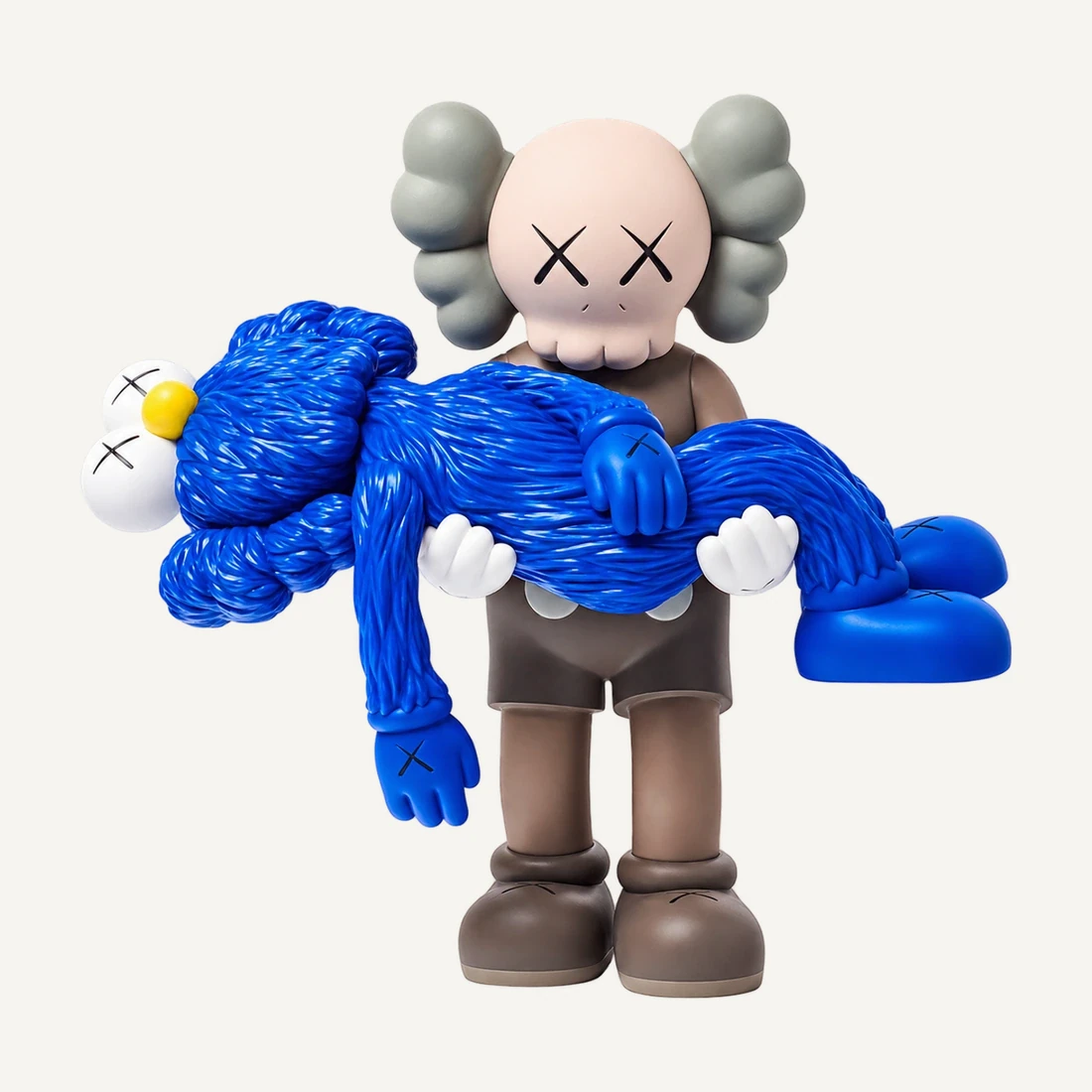
Emotion in KAWS often begins with the position of the body. Dropped shoulders, a covered face, an embrace or a reclining figure can communicate before someone recognises a title. A collection can follow these different states as well as colours or years.
That provides a simple guide to display. A meaningful gesture needs a position where the hands and angle of the body are visible. A paired composition benefits from room to see the relationship between its characters. A low, reclining work is worth checking from a distance: it may almost disappear on a shelf that is too high.
These choices can clarify the next addition. A new silhouette may bring a different feeling more effectively than another version of a pose already in the collection. Variety can develop without needing a large number of objects.
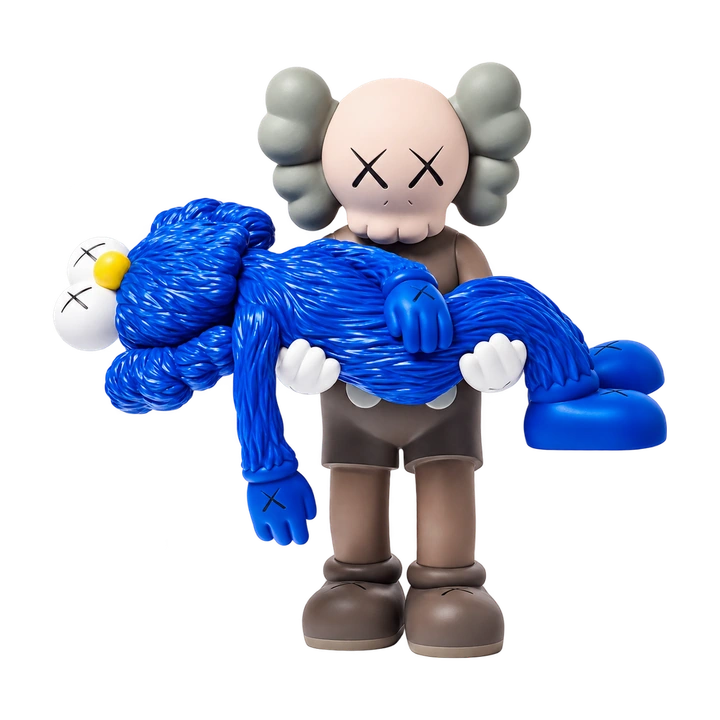
Compare the gestures through our photographs of GONE Brown / Blue, ALONG THE WAY Brown and FAMILY Brown / Blue / White. Each catalogue page includes full views and detail photographs.
KAWS

A painting, a figure and a book in one room
Collectors’ stories show KAWS sharing space with other art and design. That freedom is useful at home. A figure can stand near another artist’s print, while a book connects an object with an exhibition or a period of work.
One shared quality can bring an arrangement together: colour, scale, mood or a personal story. There is no need to repeat every feature at once. A quiet painting and a vivid sculpture may create a more interesting relationship than several closely similar objects.
Books can remain accessible for reading and works available for looking. A densely packed wall of objects can make everyday use of a room more difficult. Some clear space leaves room for additions without a complete rearrangement and helps the setting retain the feeling of a lived-in home.
Background and light reveal the details
A strong silhouette is easier to appreciate against a background that leaves its edges distinct. That might mean a deeper tone for a light figure or a calm, light surface behind a dark one. The useful question is whether the head, hands and outline remain visible under ordinary lighting.
For a reflective finish, look at what appears in the surface. An incidental bright highlight may dominate, or the object may look darker than expected. Softer lighting can make the finish easier to read while preserving its character.
Position also affects the object’s stability. A secure base, a clear shelf edge and space around projecting details matter alongside the wall colour. It helps to choose a large piece with its position in mind, and to test a small group against the way people move nearby and use the furniture.
Some of the collection can stay off display
The home display and the full collection need not be identical. Storing some works lets the room’s mood change without parting with objects. This can be useful when several versions of one character have accumulated or when small thematic groups appeal.
Keep packaging and accessories together, along with a record for each piece: title, release, dimensions, photographs and purchase documents. Later, it becomes easier to remember what distinguishes similar objects and what belongs in each box.
Changing the display can become an enjoyable ritual. Bringing out a figure that has not been shown for a while, looking again at its finish and choosing a new neighbour are further ways to engage with a collection. Attention returns to objects already chosen, making the next addition a more considered decision.
What these homes can offer your collection
The six stories provide no single formula. NIGO connects different collecting worlds; Pharrell explores several formats by one artist. Kevin Poon brings context and community into focus, and Jeffrey Xu makes choices about what is currently displayed. Beth Redmond and Serena Williams suggest a room-wide role for KAWS objects.
A small change can be enough to begin: make room for one figure, rearrange a sequence, add a wall work or clear the area around a favourite object. The result makes it easier to see whether another piece is needed and what role it might play.
The most engaging domestic KAWS has a personal reason for being there and a suitable space. A collection can then reflect the person who lives with it, changing alongside them, holding memories and offering a reason to look at a familiar image again.
Explore the five-character composition in our KAWS FAMILY story. Our open-edition guide and rare and expensive KAWS article offer context for choosing a particular release.