In this article
Warhol images on a three-dimensional bear
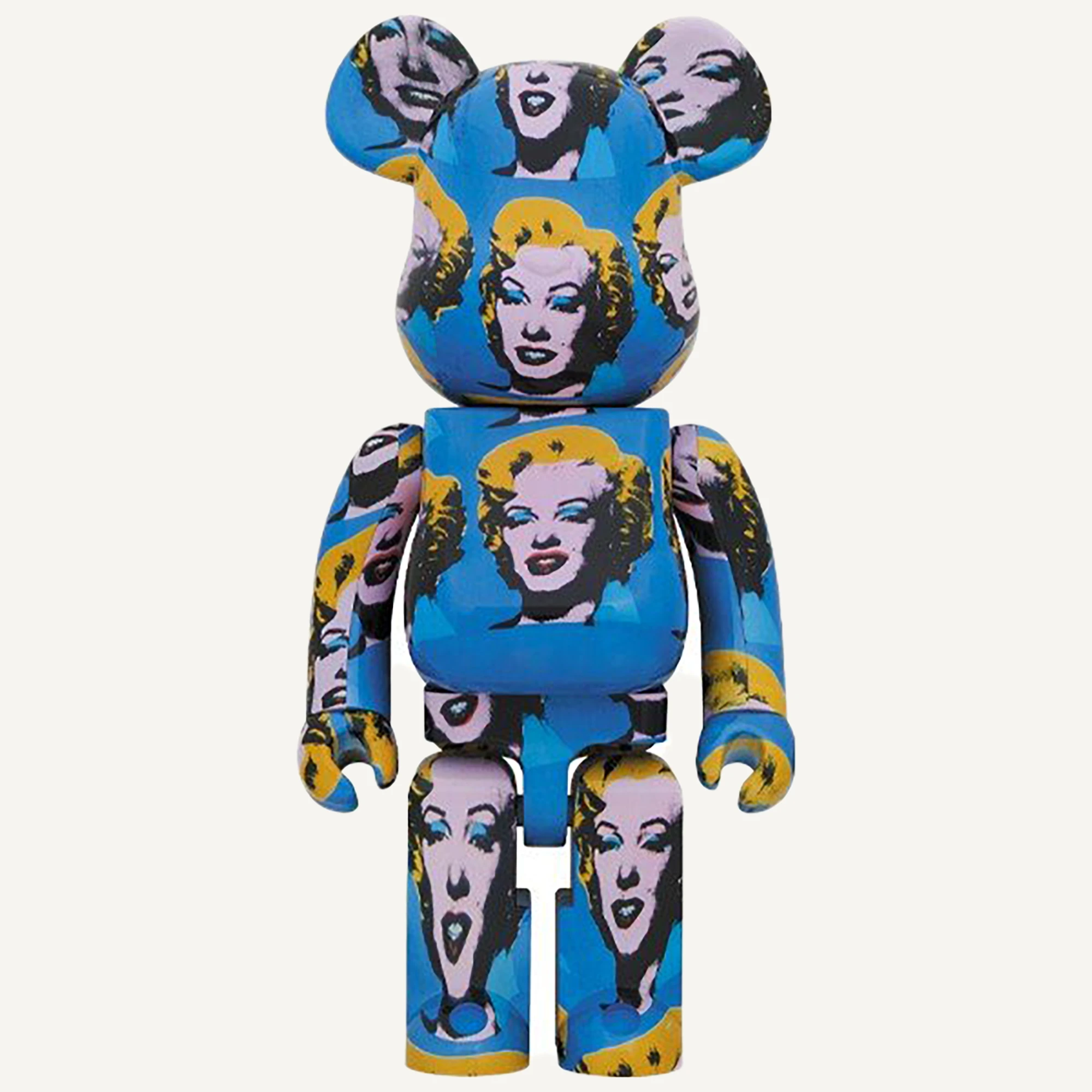
On an Andy Warhol BE@RBRICK, an image familiar from a painting or print travels across a very different surface. The bear has a rounded head, ears, articulated limbs and a body that turns away from the viewer. A face or piece of lettering cannot be read in the same way from every side.
That translation is the interesting part of the collection. A Marilyn portrait, Elvis image or Brillo graphic gives the same platform a different character. You can recognise the artwork and still notice how much the object’s form changes your encounter with it.
These figures are licensed collectible products. They are separate from Warhol’s signed prints, paintings and original sculptures, with their own releases, sizes and manufacturing history.
Why Warhol works so well in this format
Andy Warhol made repeated images part of the language of Pop Art. Publicity photographs, familiar faces and consumer packaging could become material for looking at modern life. Recognition mattered, but so did changes of colour, repetition and the way an image appeared on a surface.
A repeated bear silhouette creates a useful setting for that visual language. Place two versions together and your eye moves between similarities and differences: the familiar outline stays, while colour and graphic treatment change.
This does not mean every BE@RBRICK continues a specific artistic intention documented by Warhol himself. It explains why his imagery and a platform built around variations can make such an engaging visual combination.
A licensed legacy, rather than a lifetime collaboration
Warhol died in 1987, years before BE@RBRICK began in 2001. It would therefore be misleading to describe these figures as products he personally designed with MEDICOM TOY. Their history belongs to the licensed use of his artistic legacy.
The Andy Warhol Foundation explains its licensing role as part of its stewardship of the artist’s work. MEDICOM TOY’s product descriptions carry the corresponding rights credits; certain releases also identify separate rights connected with the depicted celebrity or brand.
For a collector, those credits help establish what the object actually is. “Officially licensed” identifies an authorised product relationship. It does not turn the manufactured figure into a painting made by Warhol or an artist-signed print.
An early archive: Factory Pack and BE@RHOL
MEDICOM TOY’s archive preserves an early connection through Andy Warhol Factory Pack #1, listed for a November 2003 release. The set brings several formats together, making it easy to see why names should be read carefully.
The listing distinguishes a VCD Banana, a KUBRICK Andy Warhol, a BE@RBRICK called BE@RHOL and a B@WBRICK called Sam. The banana is therefore not evidence that every object in the box belonged to a “Banana BE@RBRICK” series.
This early set also differs from later large figures covered with artwork imagery. It is useful context for the relationship, rather than a reason to group every Warhol-related MEDICOM object under one platform.
Marilyn: a family of specific versions
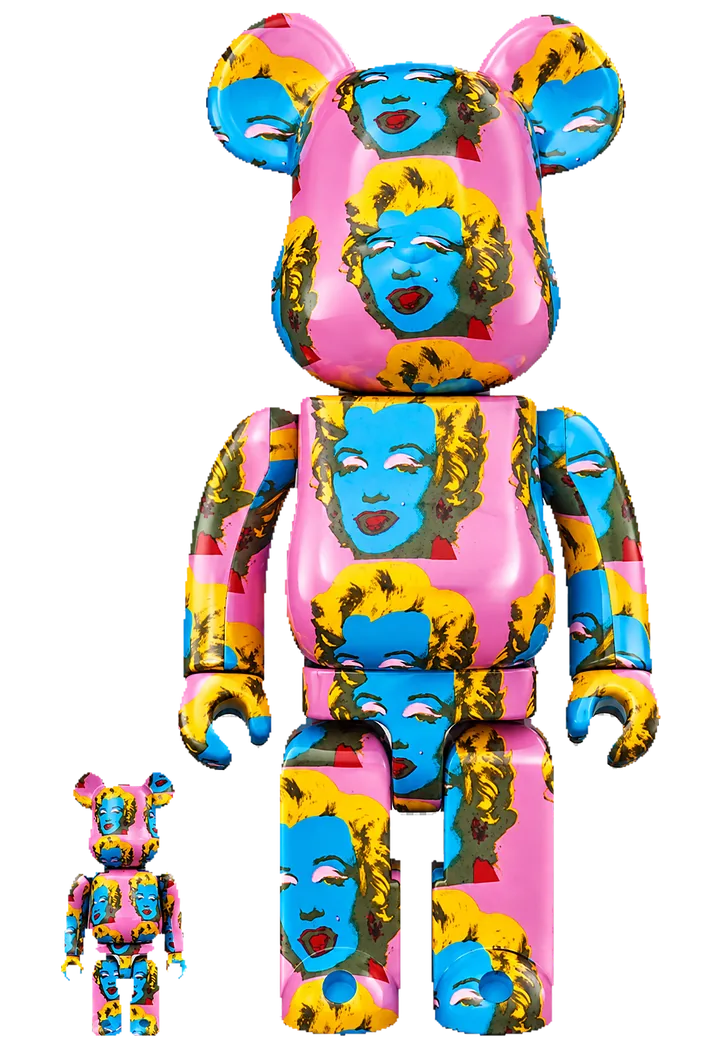
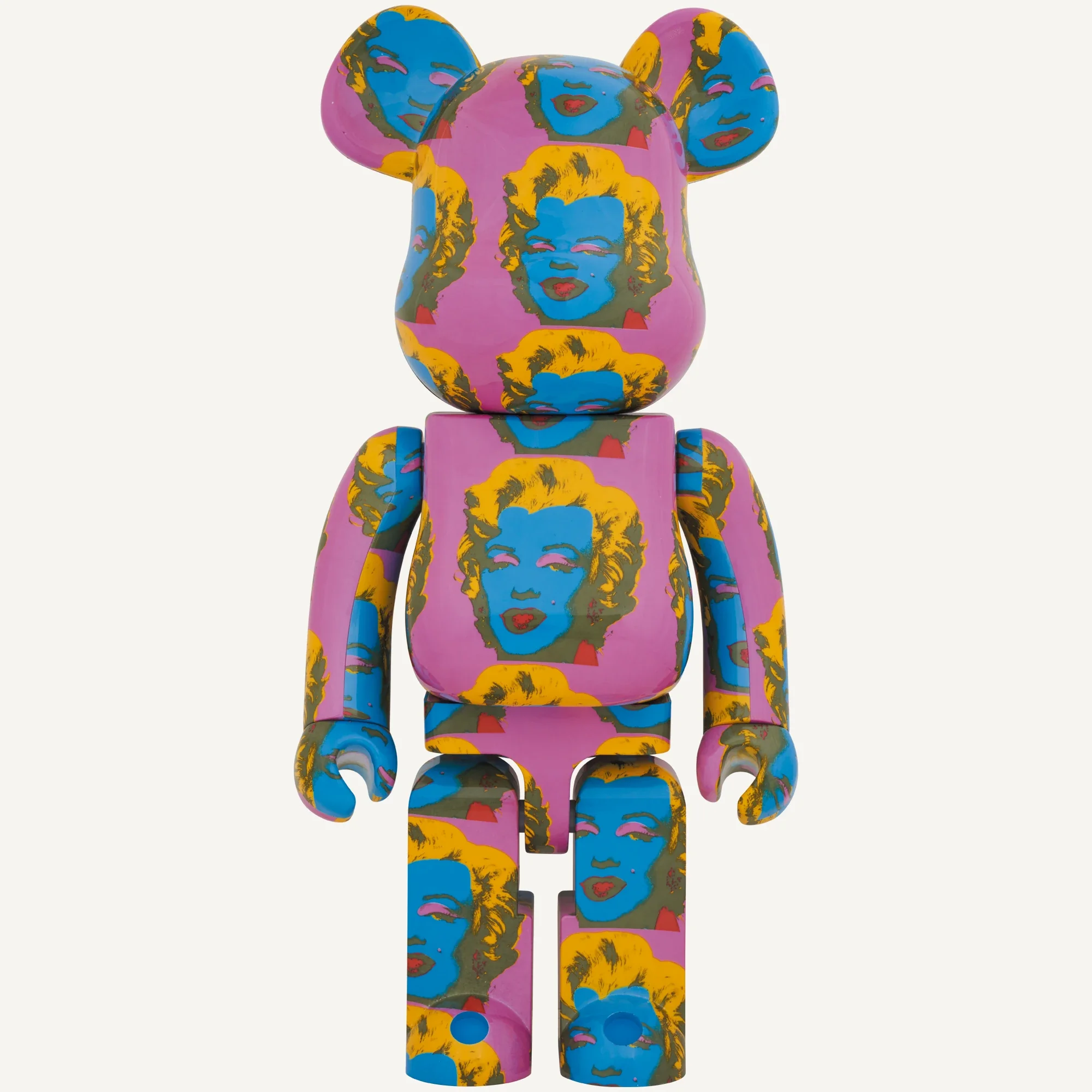
Marilyn Monroe is one of the most recognisable Warhol subjects to appear on BE@RBRICK. MEDICOM TOY documents both an Andy Warhol’s Marilyn Monroe 1000% and a later product explicitly titled Marilyn Monroe #2. These should be compared as distinct releases.
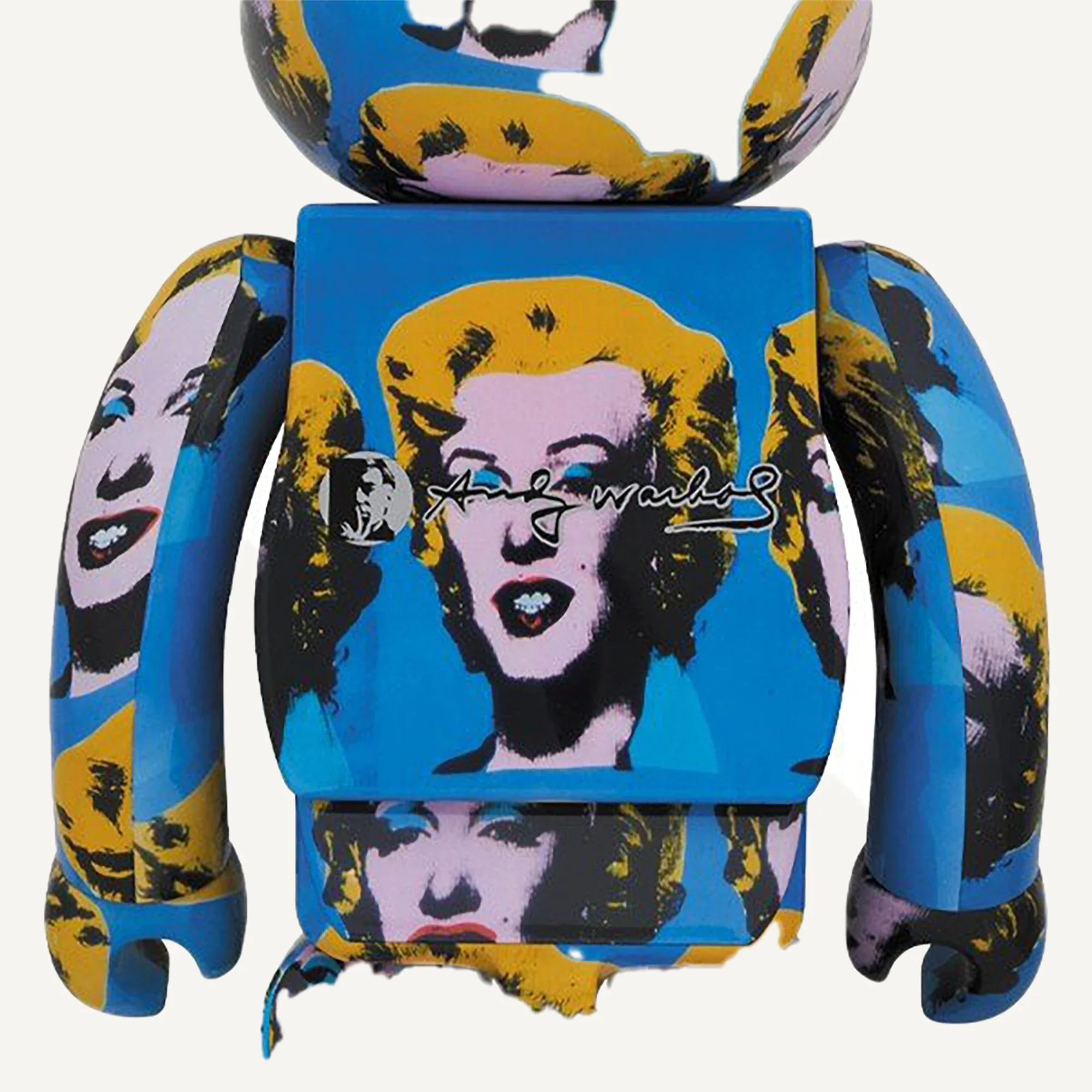
Look at the palette, the arrangement of the face and what happens across the back and limbs. The word Marilyn alone does not identify which figure you are seeing. Nor does it establish that the design reproduces one particular print from the 1967 portfolio or a specific painting from 1962.
Unless the product record identifies the source precisely, it is better to describe the visible design. A clear photograph and complete release name are more useful than an attractive but unsupported artwork attribution.
The Warhol lines: individual names and versions
Warhol has no single numbering sequence from a first to a thirteenth bear. Marilyn, Brillo, portrait treatments and album covers form separate lines. Archived formats are grouped by design rather than counted as different designs.
Andy Warhol: lines and designs
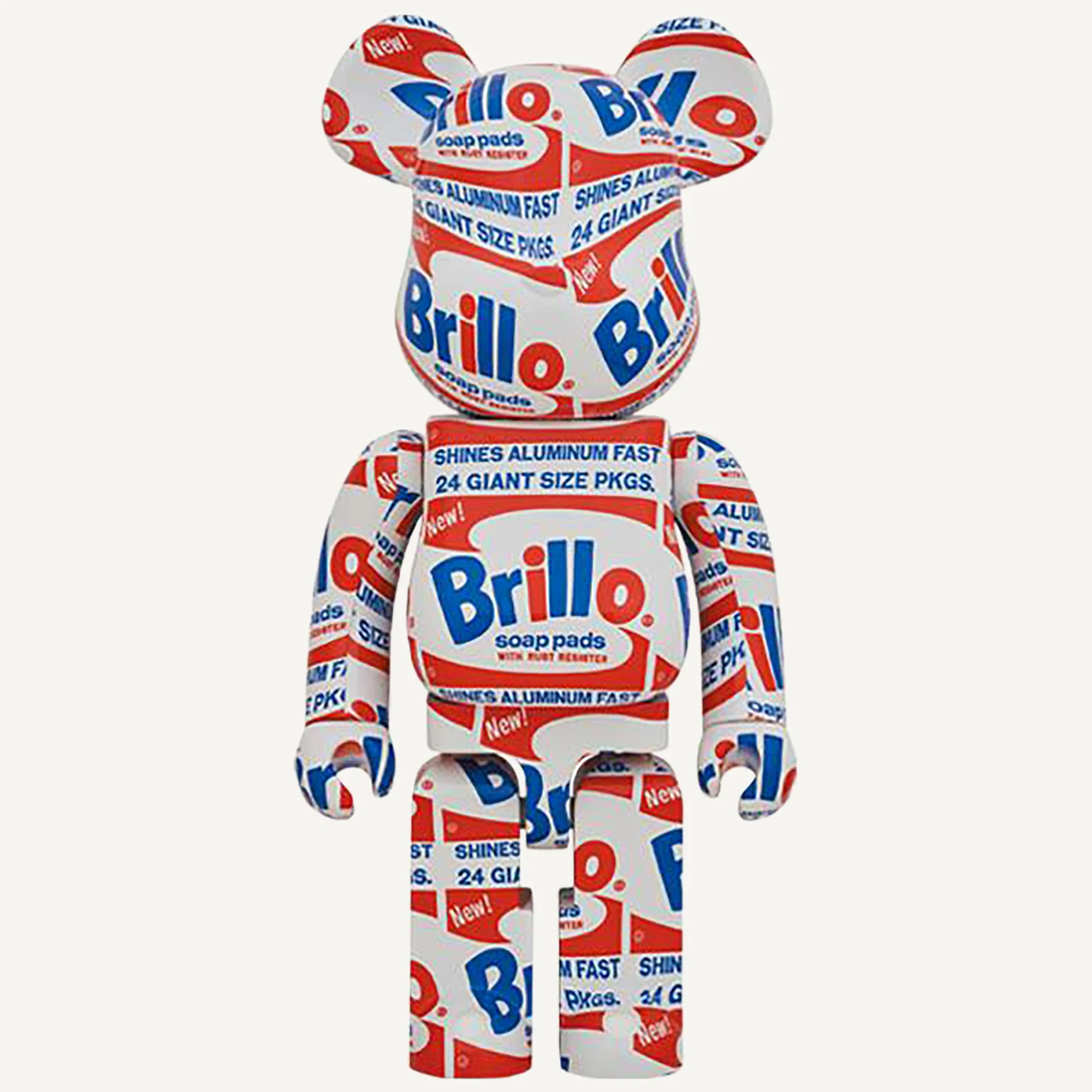
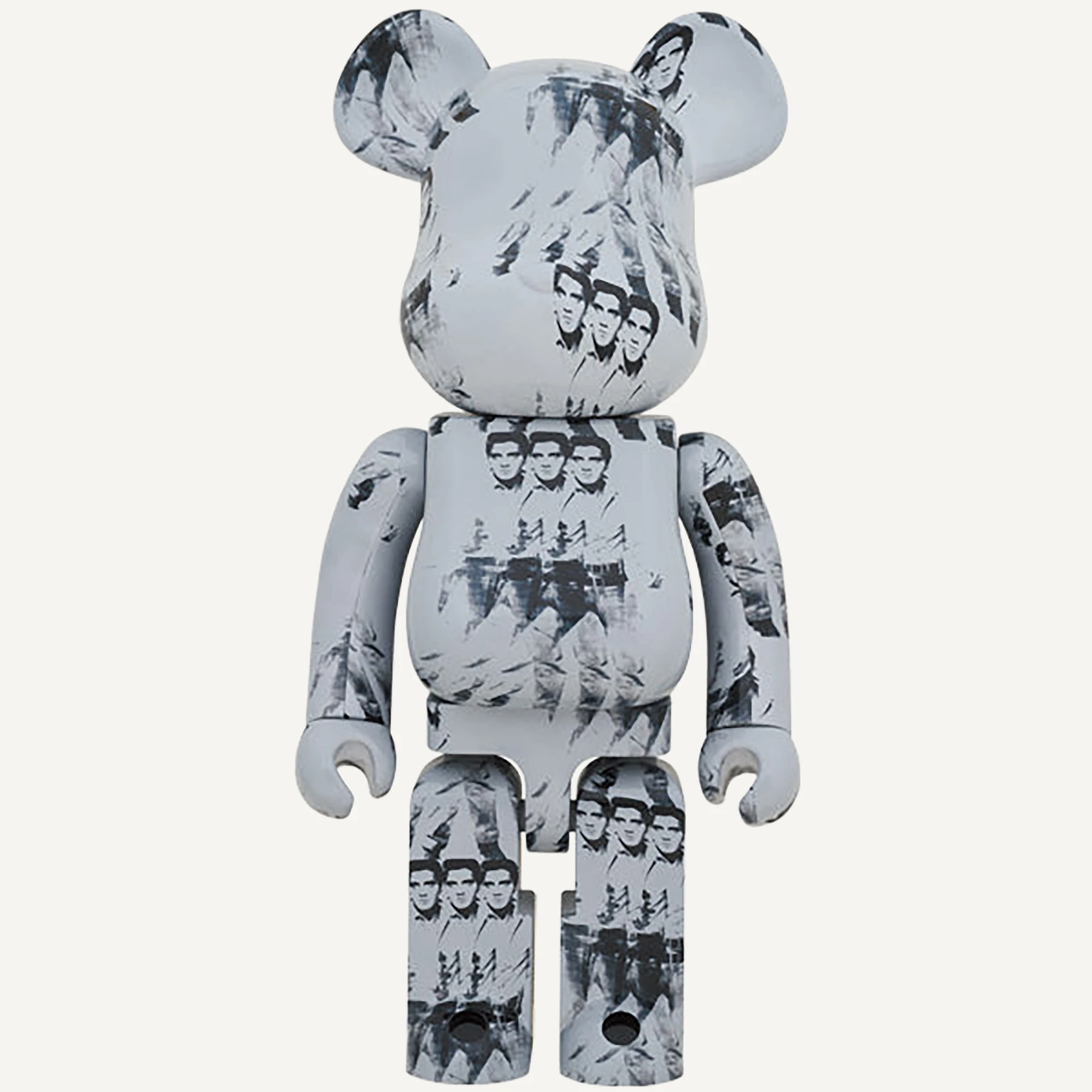
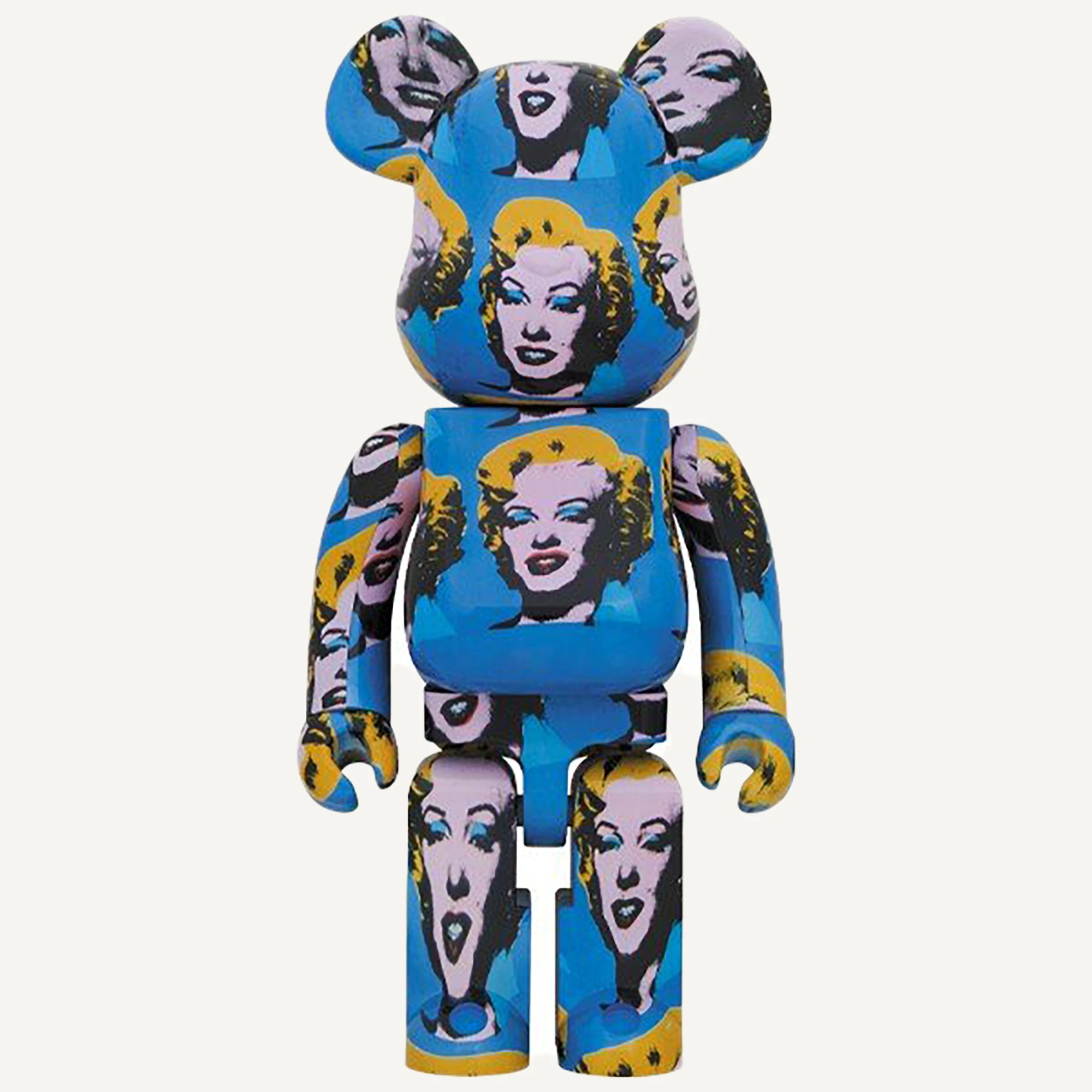
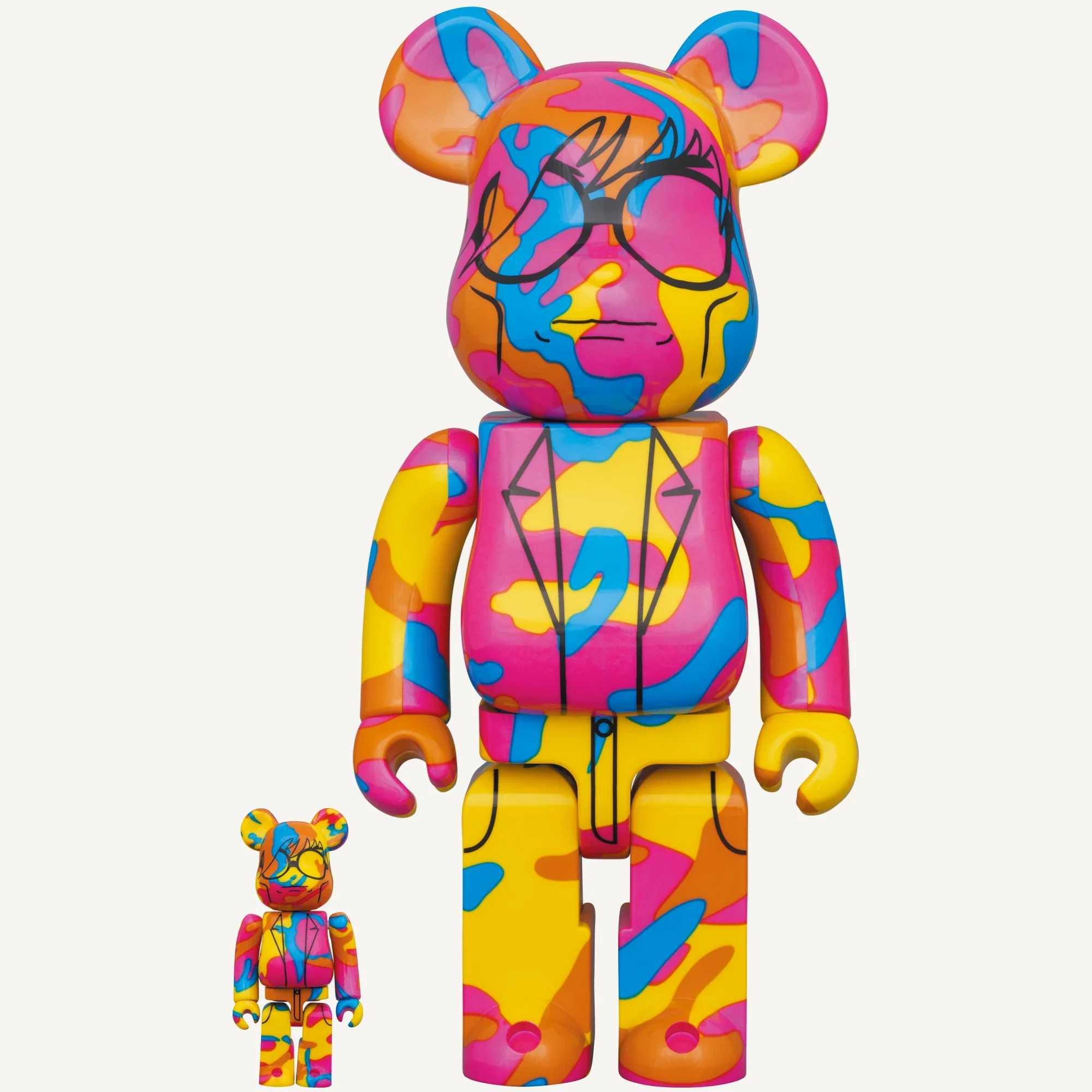
BE@RBRICK ANDY WARHOL "Brillo" 2022
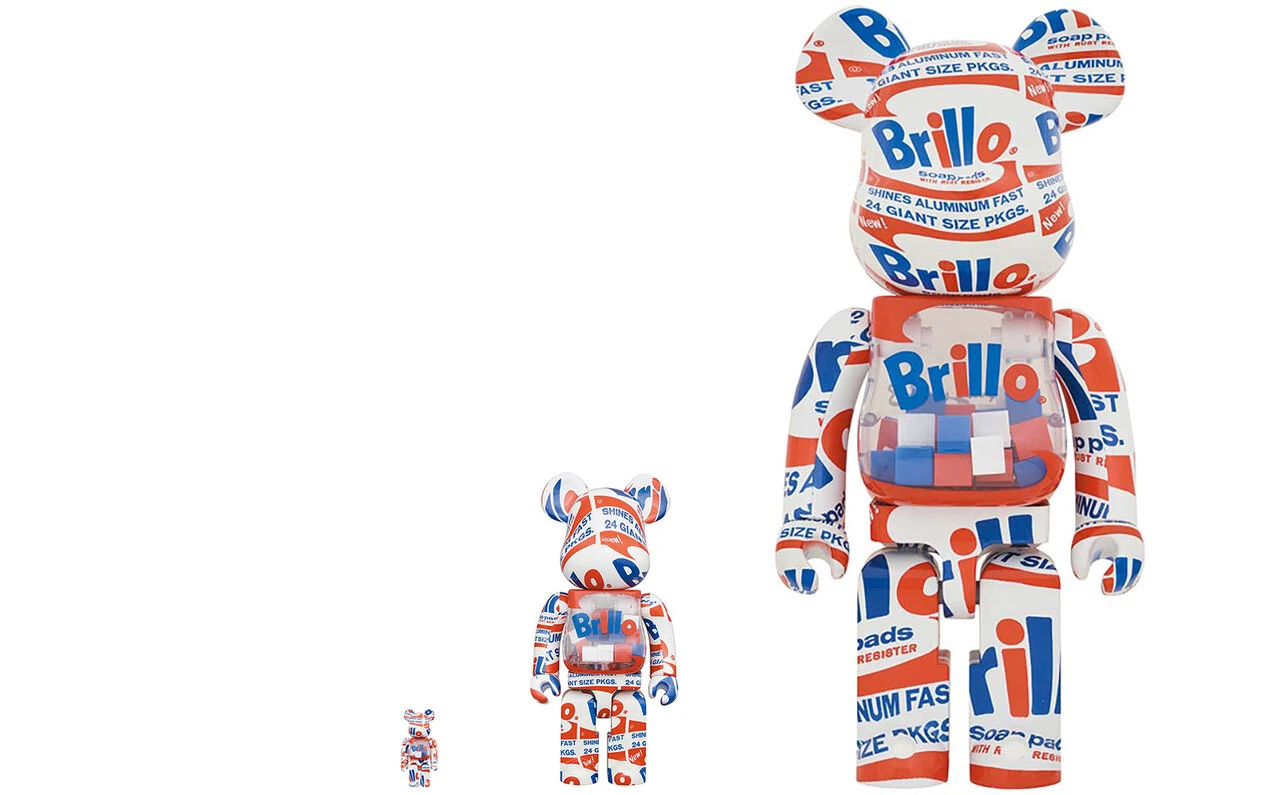
Brillo 2022 introduces a transparent torso section containing small coloured cubes. Familiar packaging graphics remain, but this physical effect distinguishes the design from a simple later date on the original Brillo.
Archived formats: 1000%; 100% + 400%.
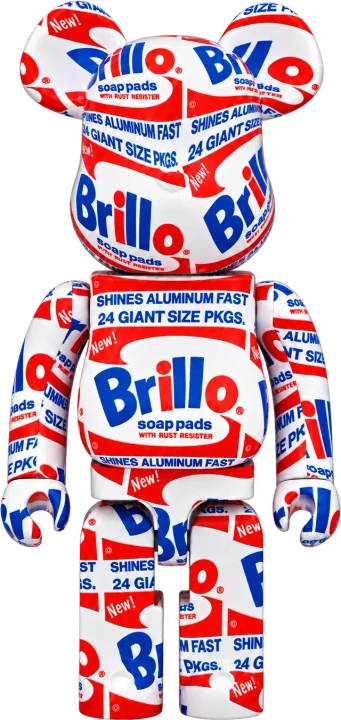
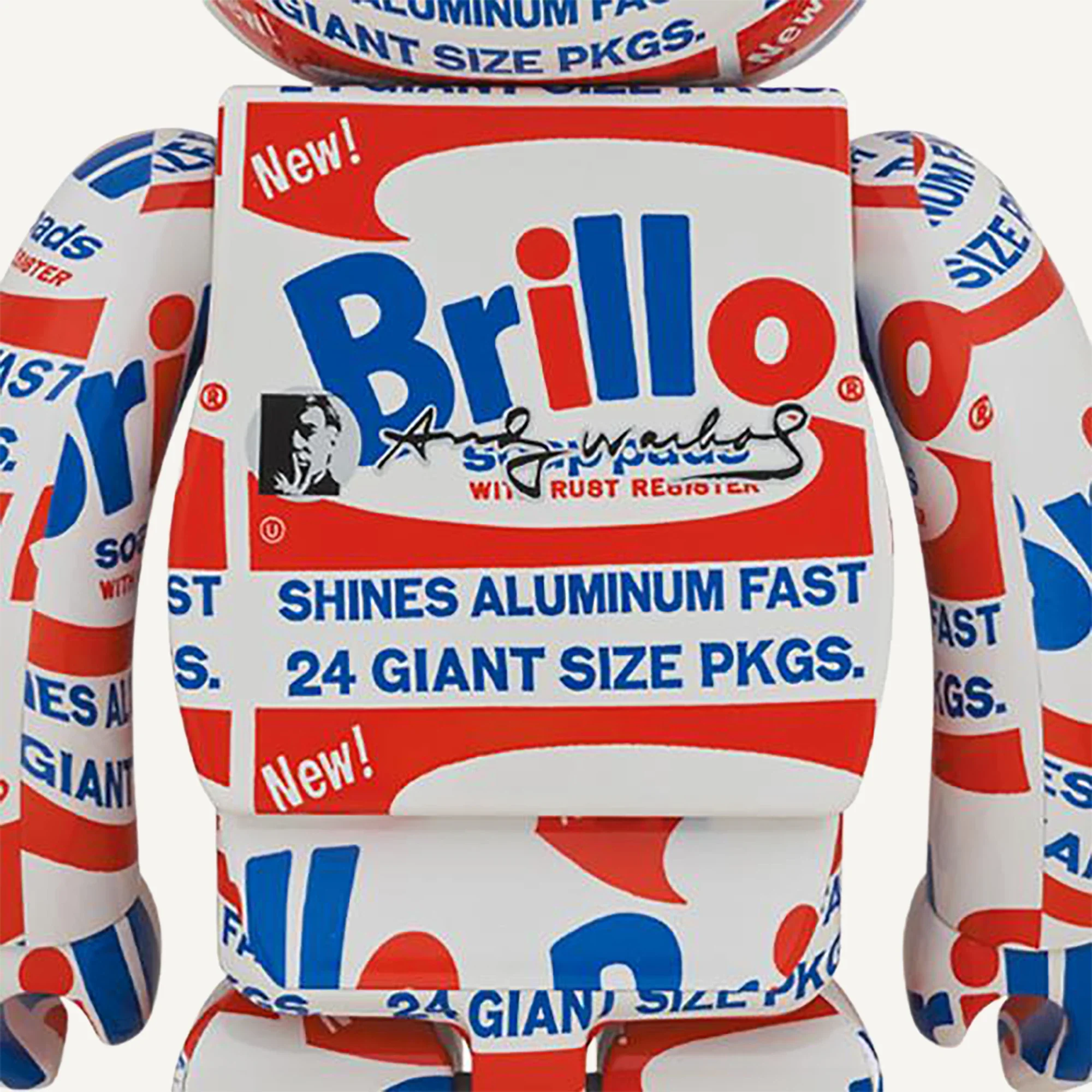
BE@RBRICK ANDY WARHOL "Brillo"
The original Brillo design uses familiar red-and-blue packaging graphics on a light body. The lettering becomes an overall pattern, distinct from the transparent treatment used for Brillo 2022.
Archived formats: 1000%; 100% + 400%.
BE@RBRICK ANDY WARHOL Camo Ver.
Camo Ver. is a separately named design in MEDICOM’s archive. Identify its specific announcement and size rather than merging it with every portrait or floral release under the general Warhol name.
Archived formats: 100% + 400%; 1000%.
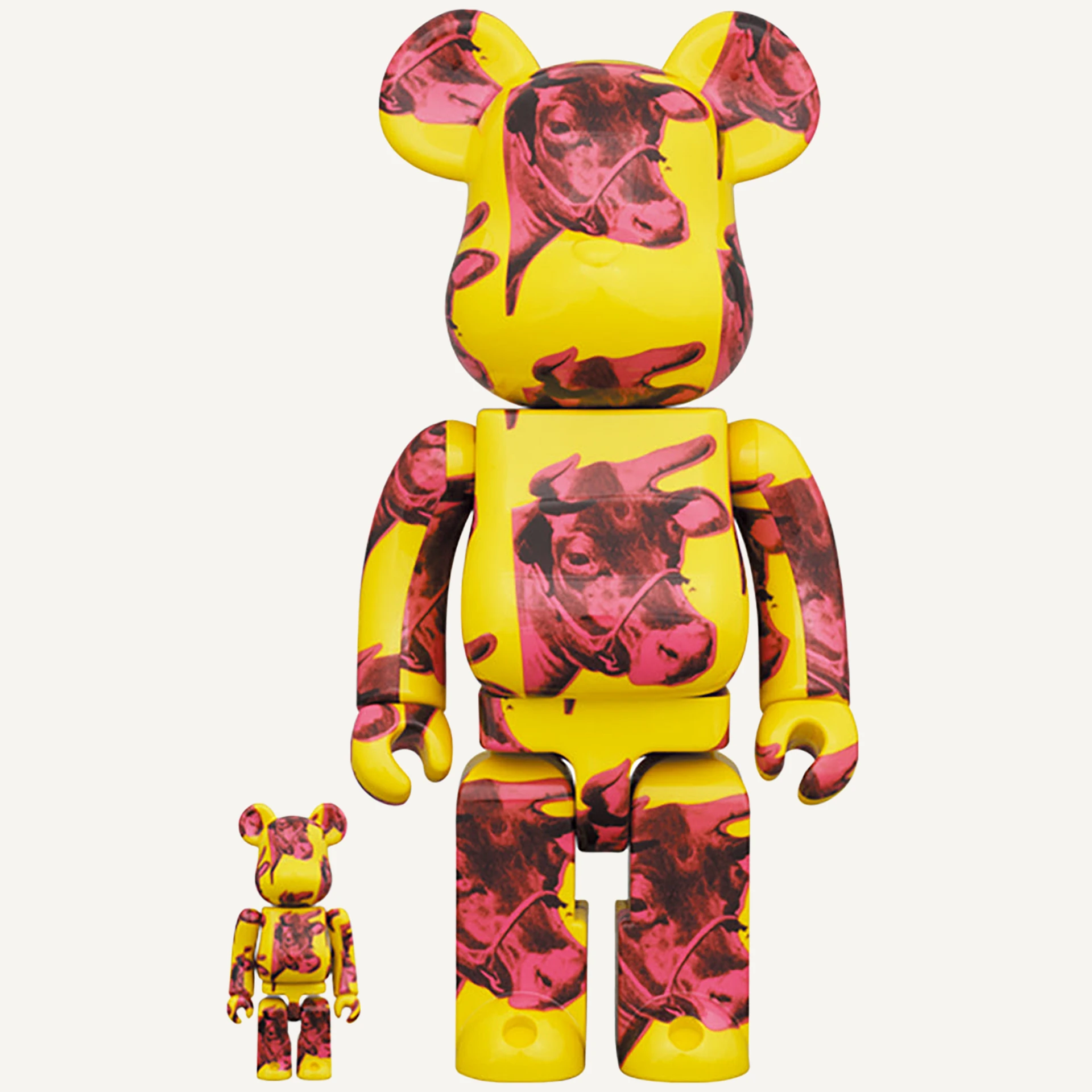
BE@RBRICK ANDY WARHOL "Cow Wallpaper"
Cow Wallpaper identifies a separate motif built around the cow image. It offers a different route from Marilyn or Elvis, with the exact design and size established by the individual release.
Archived formats: 100% + 400%.
BE@RBRICK ANDY WARHOL "Double Mona Lisa"
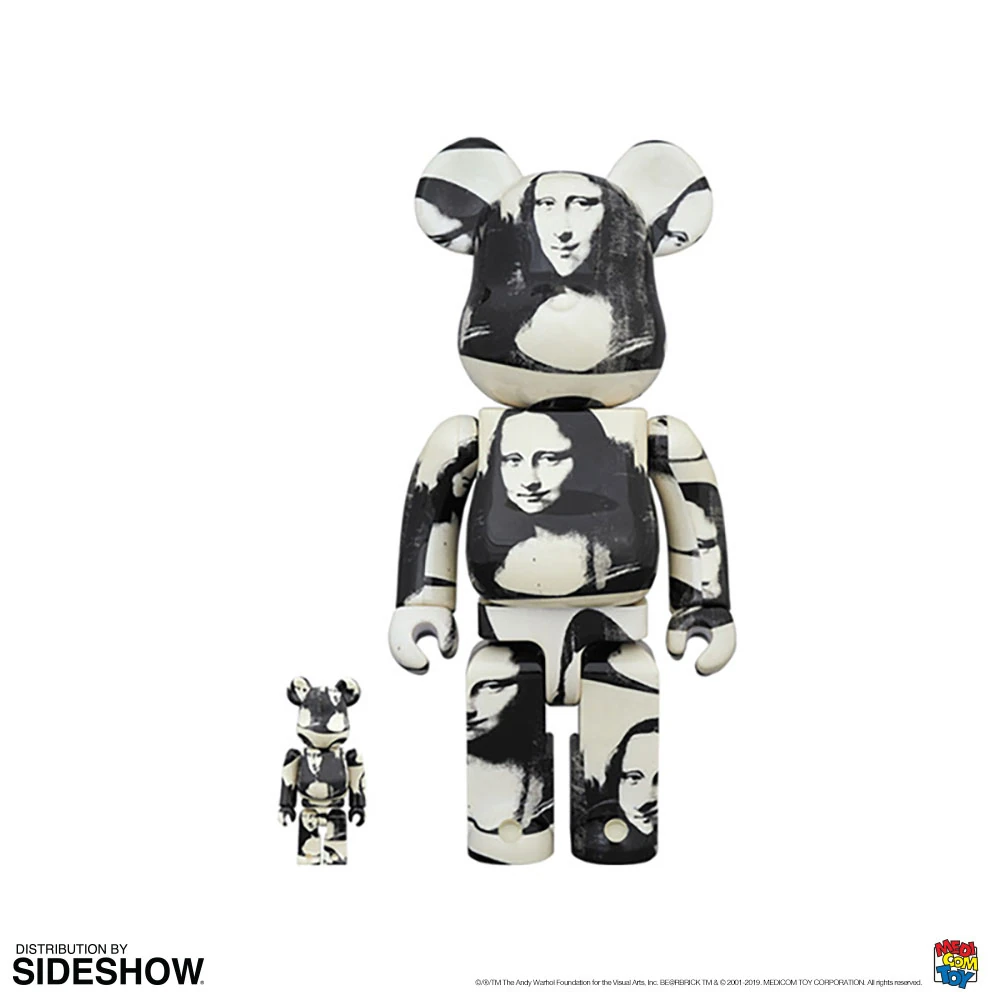
Double Mona Lisa names a distinct release referring to a reworked museum image. It is not a portrait figure of Warhol himself; verify the particular design and image placement against its official photograph.
Archived formats: 100% + 400% (announced schedule: September 2019); 1000% (announced schedule: September 2019).
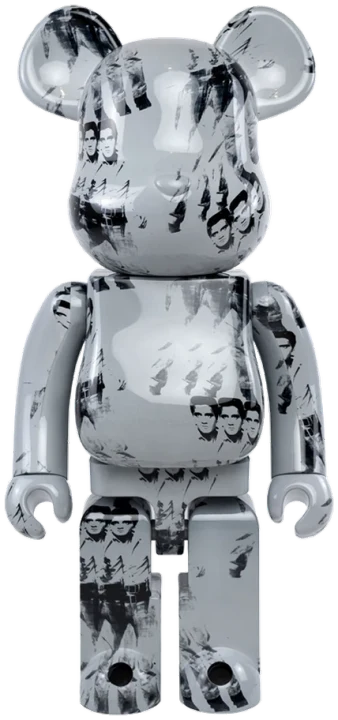
BE@RBRICK Andy Warhol's ELVIS PRESLEY
Elvis Presley introduces the performer’s image rather than relying only on a repeated face. The product identity and likeness rights should remain separate from an unverified attribution to a particular painting.
Archived formats: 1000%; 100% + 400%.
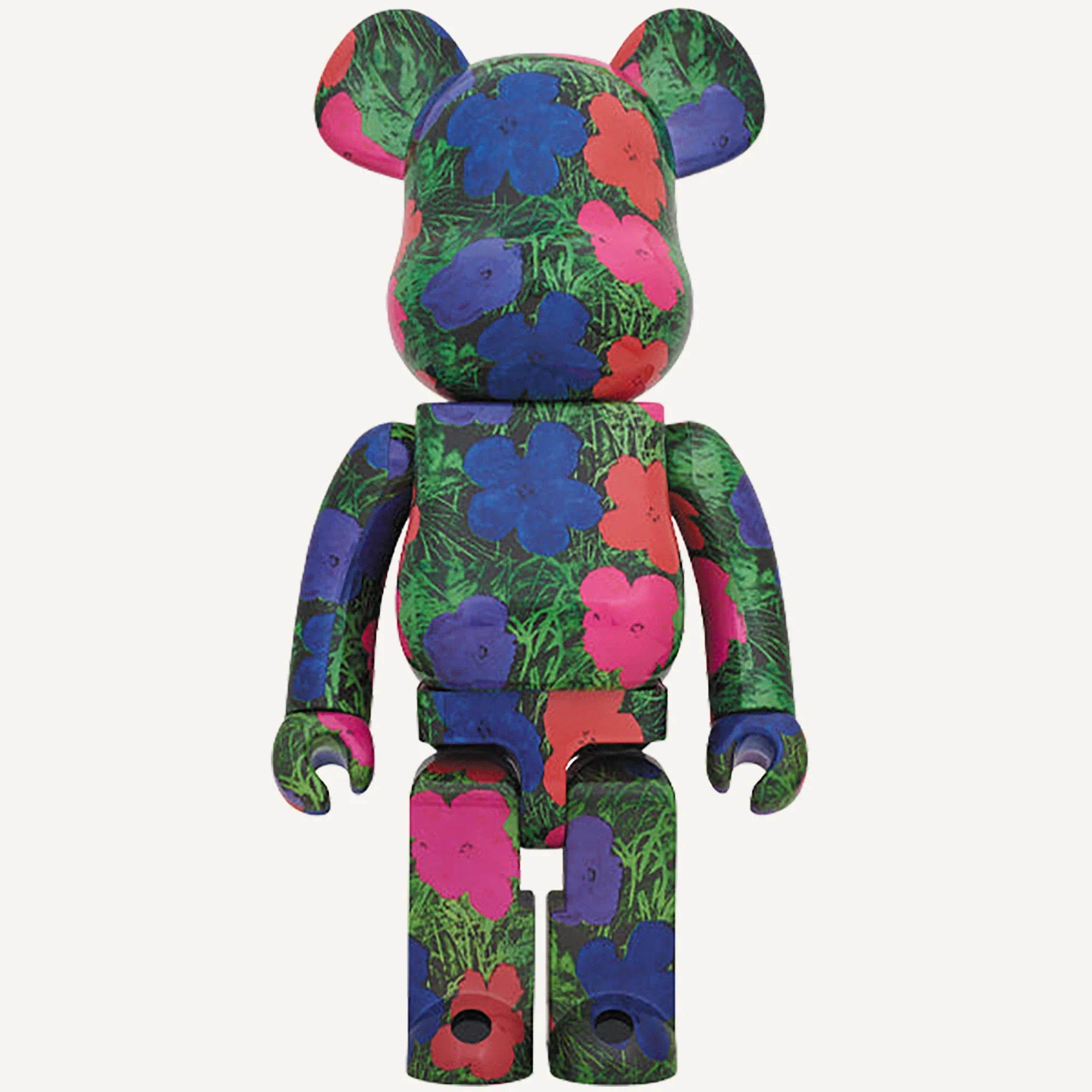
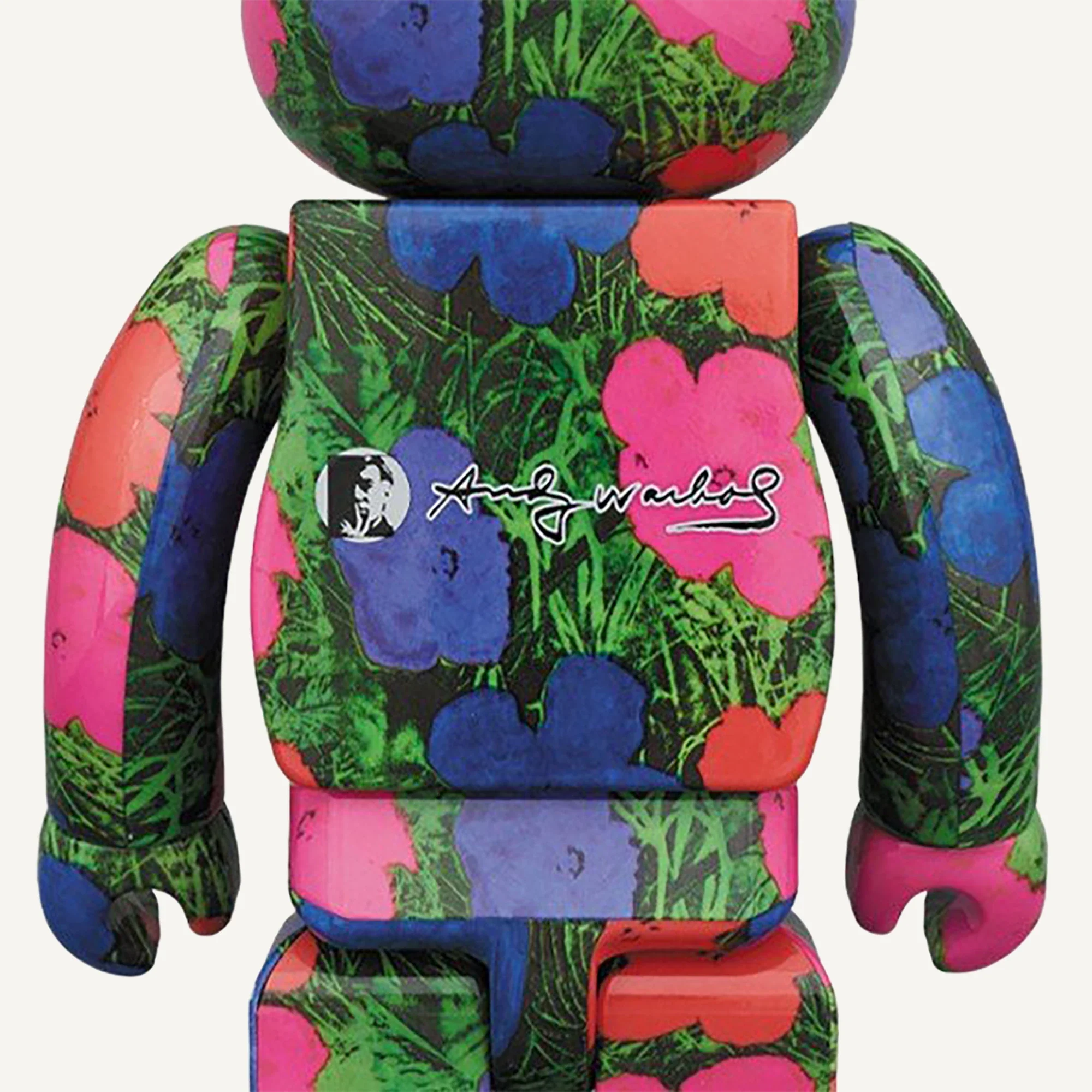
BE@RBRICK ANDY WARHOL “Flowers”
Flowers uses a floral motif rather than a celebrity portrait. Comparing sizes reveals how colour areas cross joints and the back, changing the way the same subject reads at different scales.
Archived formats: 1000%; 100% + 400% (announced schedule: May 2020).
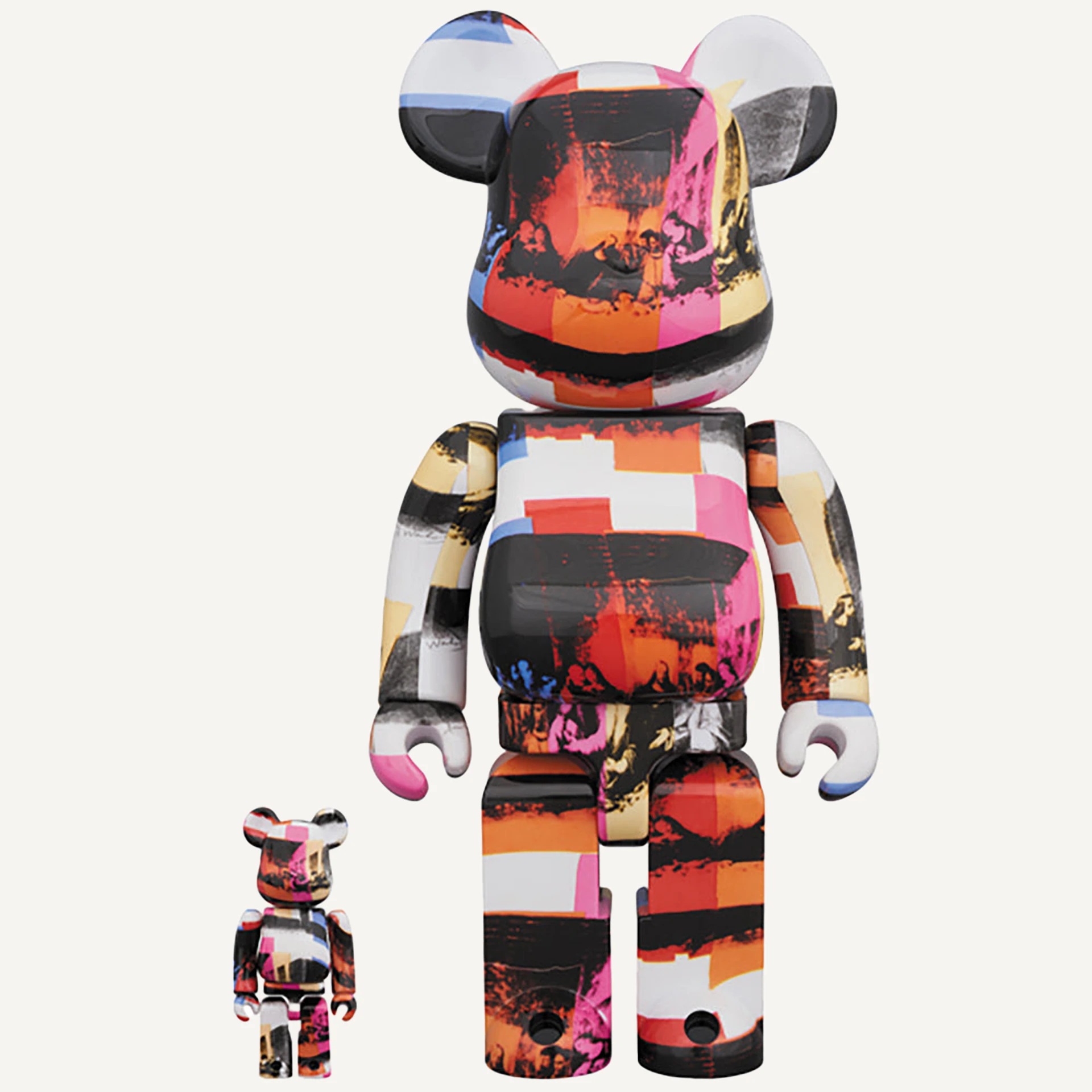
BE@RBRICK ANDY WARHOL "Last Supper"
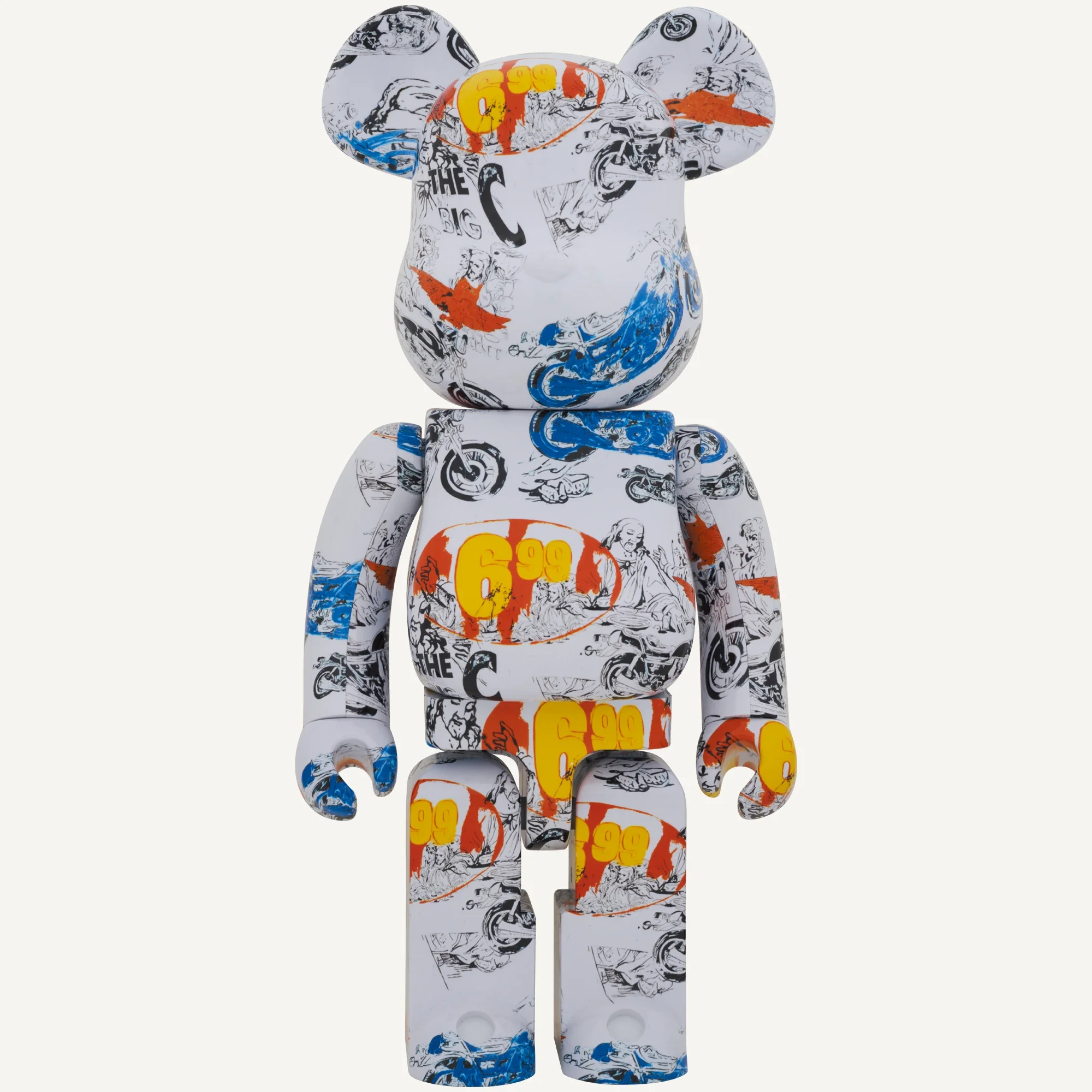
The later Last Supper combines black drawing, blue fragments and a bright 6.99 price motif on a light ground. Its distinct composition should be compared separately with the earlier The Last Supper.
Archived formats: 1000%; 100% + 400%.
BE@RBRICK ANDY WARHOL The Last Supper
The earlier The Last Supper entry gives a planned January 2020 release. Keep it distinct from Last Supper 2022: a shared subject and similar titles do not establish the same design.
Archived formats: 100% + 400% (announced schedule: January 2020); 1000% (announced schedule: January 2020).
Andy Warhol’s Marilyn Monroe BE@RBRICK
The first named Marilyn Monroe release carries portrait imagery across the bear. A precise painting or portfolio sheet should only be identified with supporting evidence, not inferred from Marilyn’s name.
Archived formats: 100% + 400%; 1000%.
BE@RBRICK Andy Warhol Marilyn Monroe #2
MEDICOM identifies Marilyn Monroe #2 as a second release of the subject. The number distinguishes the design; it does not mean two examples or the second sheet of a Warhol portfolio.
Archived formats: 100% + 400%; 1000%.
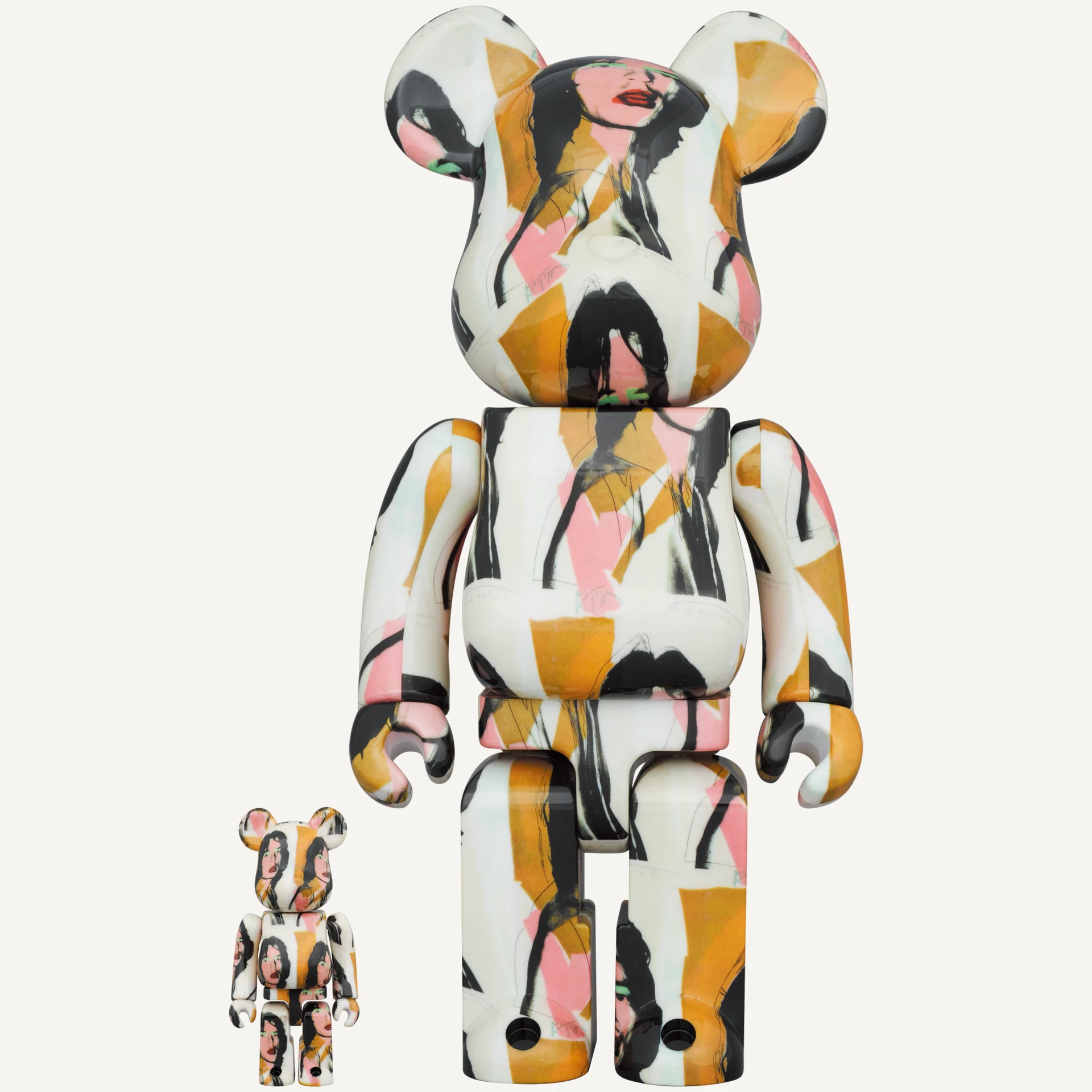
BE@RBRICK Andy Warhol "Mick Jagger"
Mick Jagger extends the celebrity subjects while retaining its own product identity. Keep this portrait release distinct from The Rolling Stones album designs, which refer to a different source object.
Archived formats: 100% + 400%.
BE@RBRICK Andy Warhol's Muhammad Ali(TM)
Muhammad Ali adds a sporting subject to the named Warhol releases. Part of the checked archive page is unavailable, so its date, edition and material should not be inferred from Elvis or Marilyn.
Archived formats: 100% + 400%; 1000%.
BE@RBRICK アンディ・ウォーホル 60's STYLE Ver.
60’s STYLE portrays the artist himself rather than placing a painting on the bear. Its named Warhol persona and 400% format should be distinguished from the smaller portrait versions.
Archived formats: 400%; 1000%.
BE@RBRICK アンディ・ウォーホル シルクスクリーン Ver.
SILKSCREEN Ver. belongs to the artist-portrait releases and has its own 400% product identity. Silkscreen is part of the model name here, not a claim that the figure is a signed paper print.
Archived formats: 400%; 1000%; 超合金 BE@RBRICK アンディ・ウォーホル シルクスクリーン Ver..
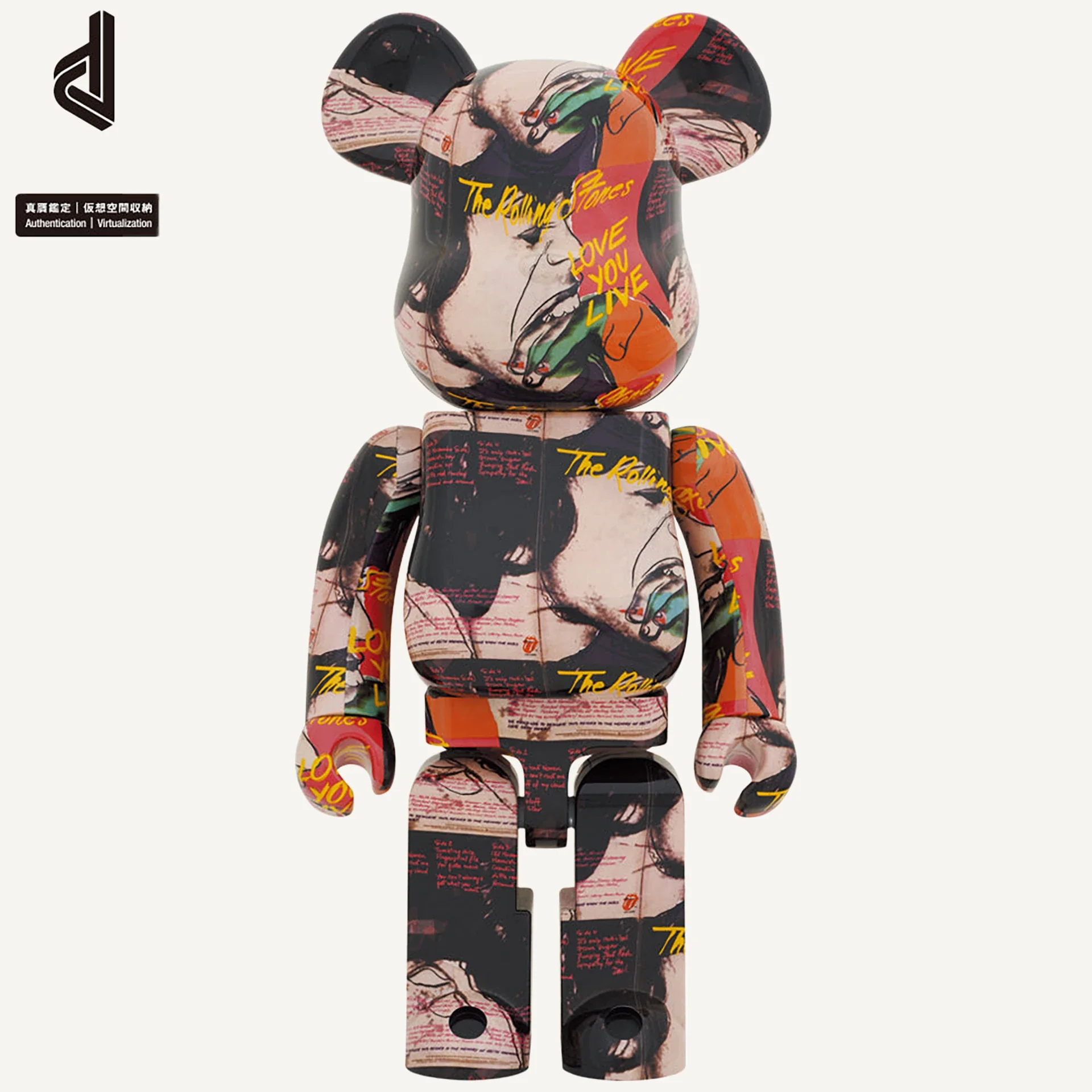
BE@RBRICK Andy Warhol × The Rolling Stones “Love You Live”
Love You Live refers to The Rolling Stones album imagery associated with Warhol. It forms its own musical chapter, distinct from the Mick Jagger portrait and the Sticky Fingers designs.
Archived formats: 1000%; 100% + 400%.
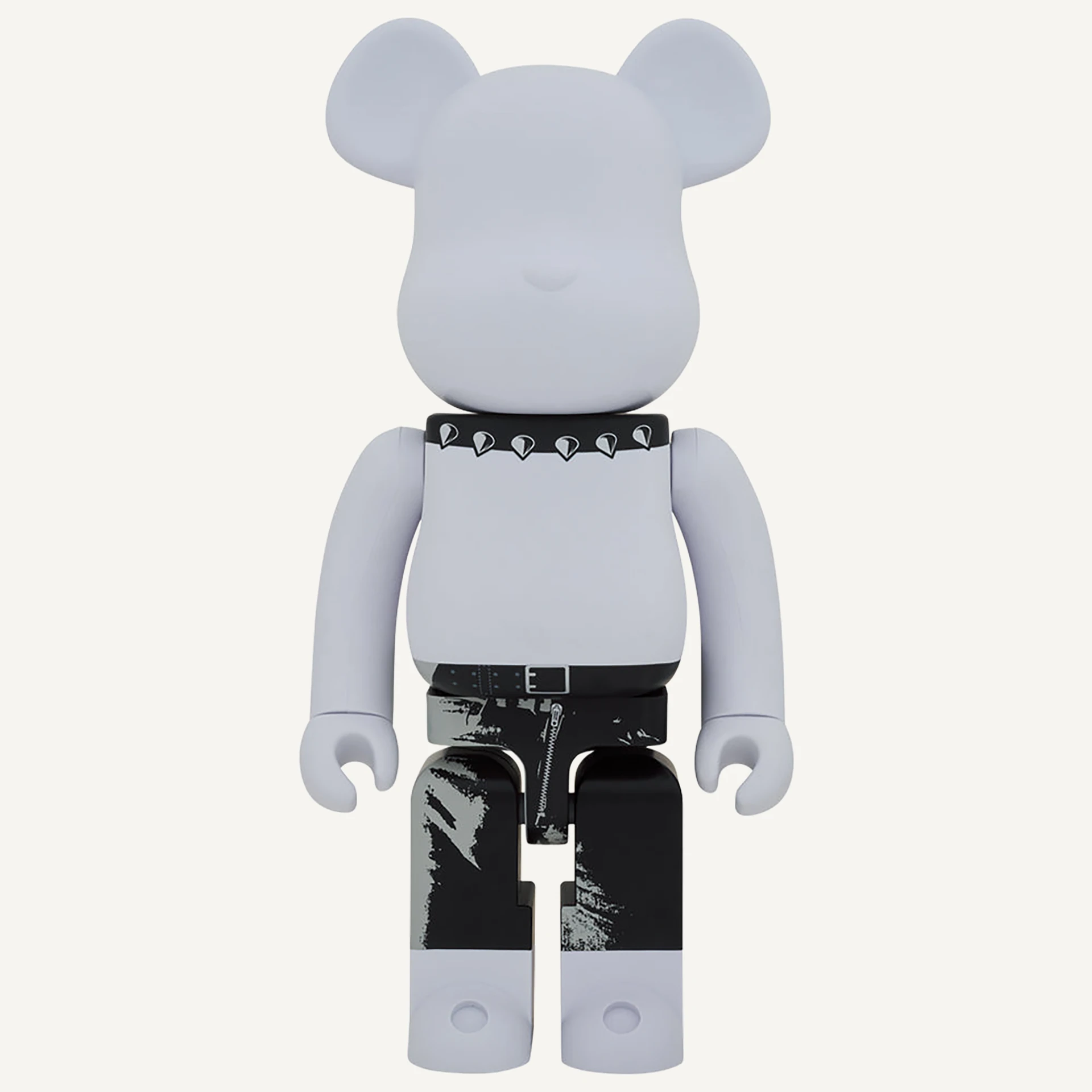
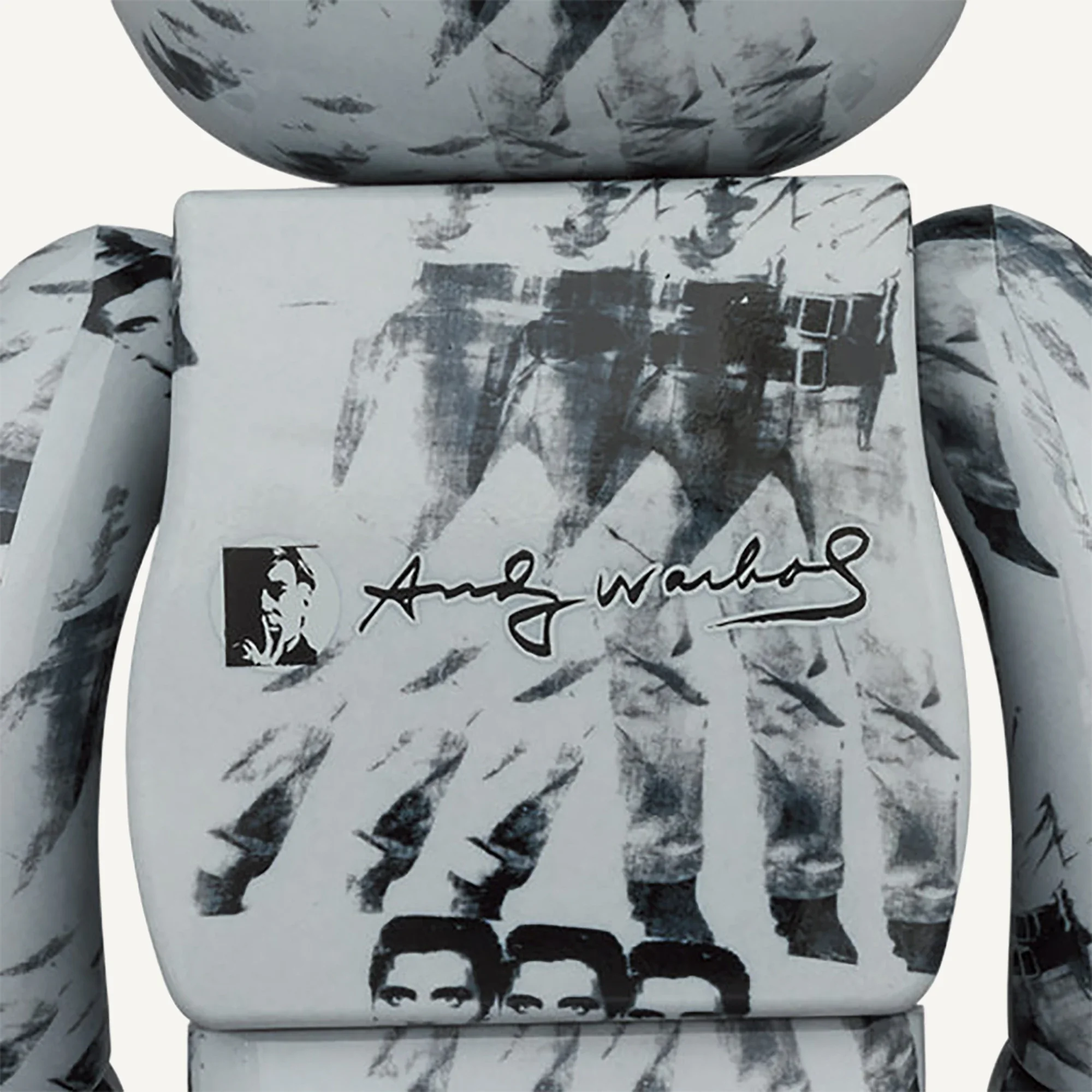
BE@RBRICK Andy Warhol × The Rolling Stones ”Sticky Fingers”
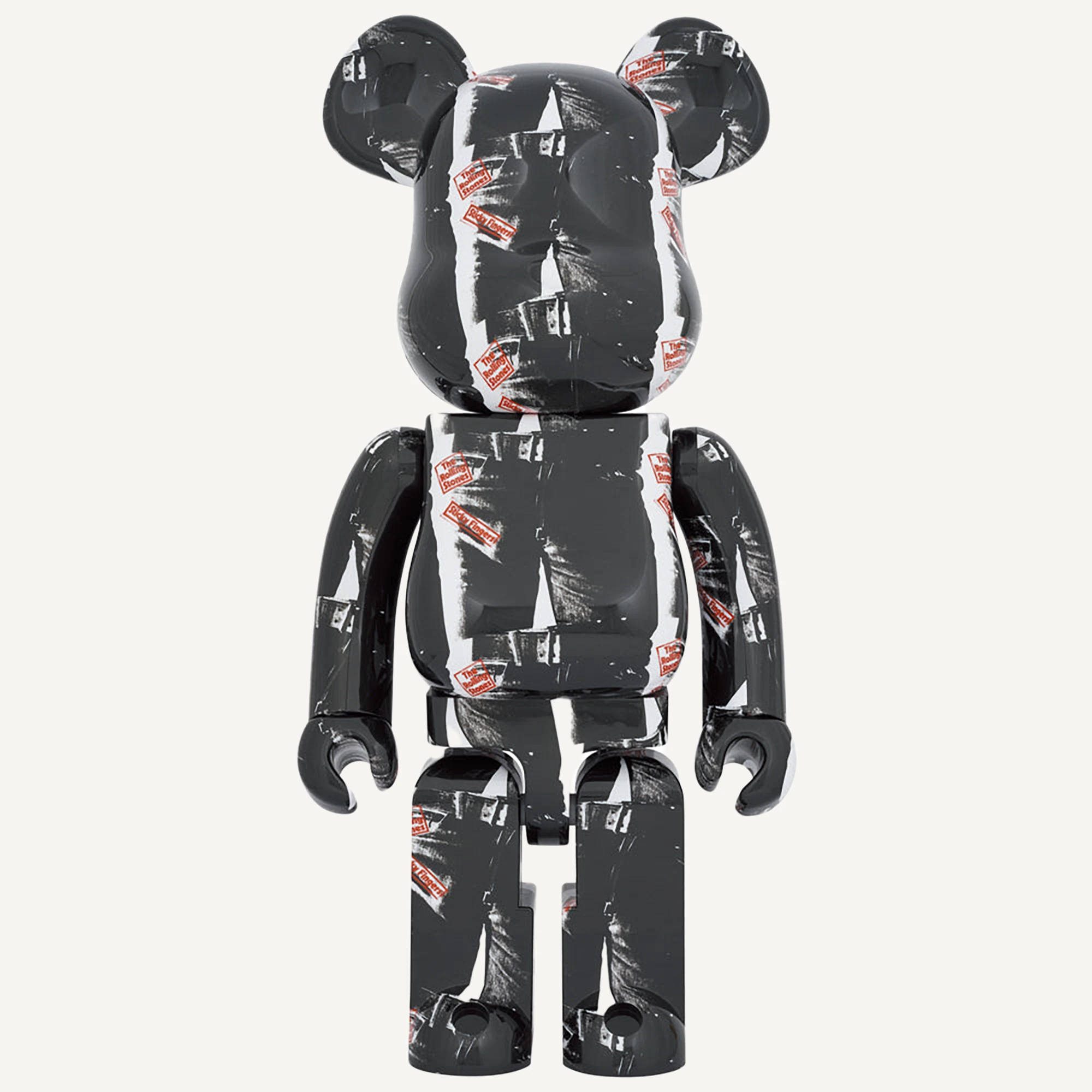
Sticky Fingers repeats black-and-white jeans imagery with small red lettering. Keep it distinct from the separate Design Ver.; the shared album reference does not mean both figures use the same treatment.
Archived formats: 1000%; 100% + 400%.
BE@RBRICK The Rolling Stones "Sticky Fingers" Design Ver.
Sticky Fingers Design Ver. is a separate manufacturer entry, not an interchangeable title for Andy Warhol × The Rolling Stones Sticky Fingers. Its complete name distinguishes products sharing the album reference.
Archived formats: 1000%; 100% + 400%.
BE@RBRICK ANDY WARHOL “SPECIAL”
SPECIAL presents Warhol through a black portrait outline over bright pink, blue, orange and yellow areas. It is a named design, not a generic label for any rare Warhol BE@RBRICK.
Archived formats: 100% + 400%; 1000%.
Warhol × Basquiat: #1–#4 and metal
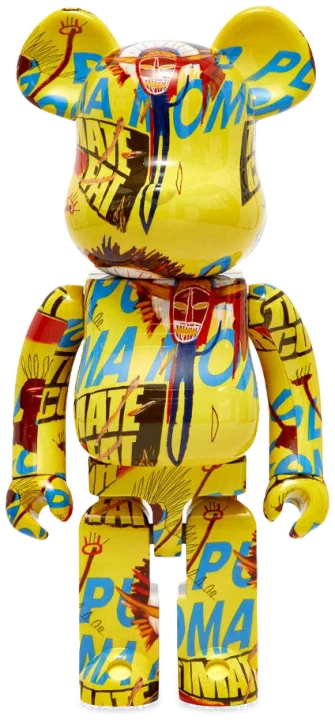
Joint Warhol and Jean-Michel Basquiat releases form a related but distinct branch. Their names point towards a shared artistic context, while the finished BE@RBRICK remains a later licensed product. This should be separated from the historical paintings the two artists made together.
Warhol × Basquiat #2
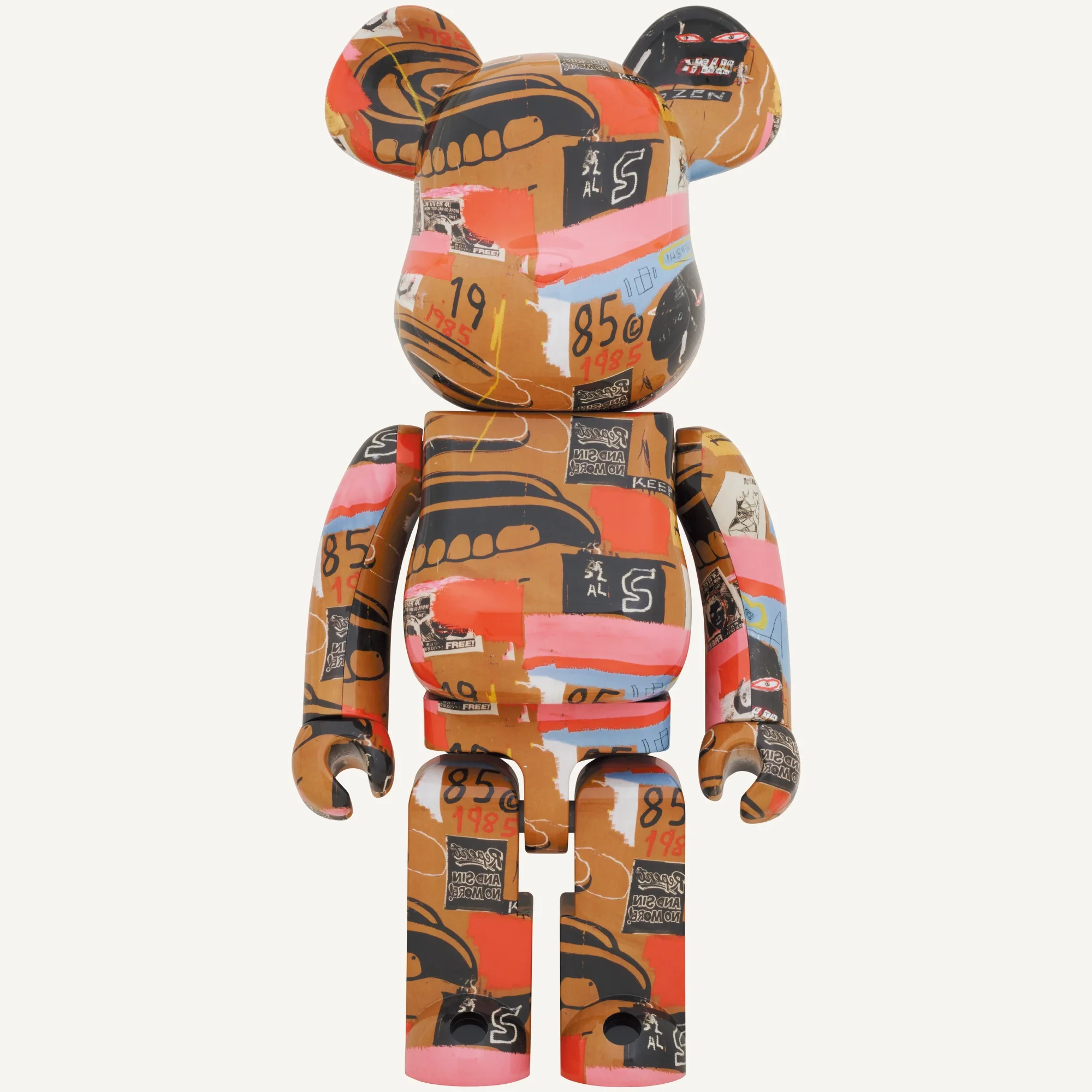
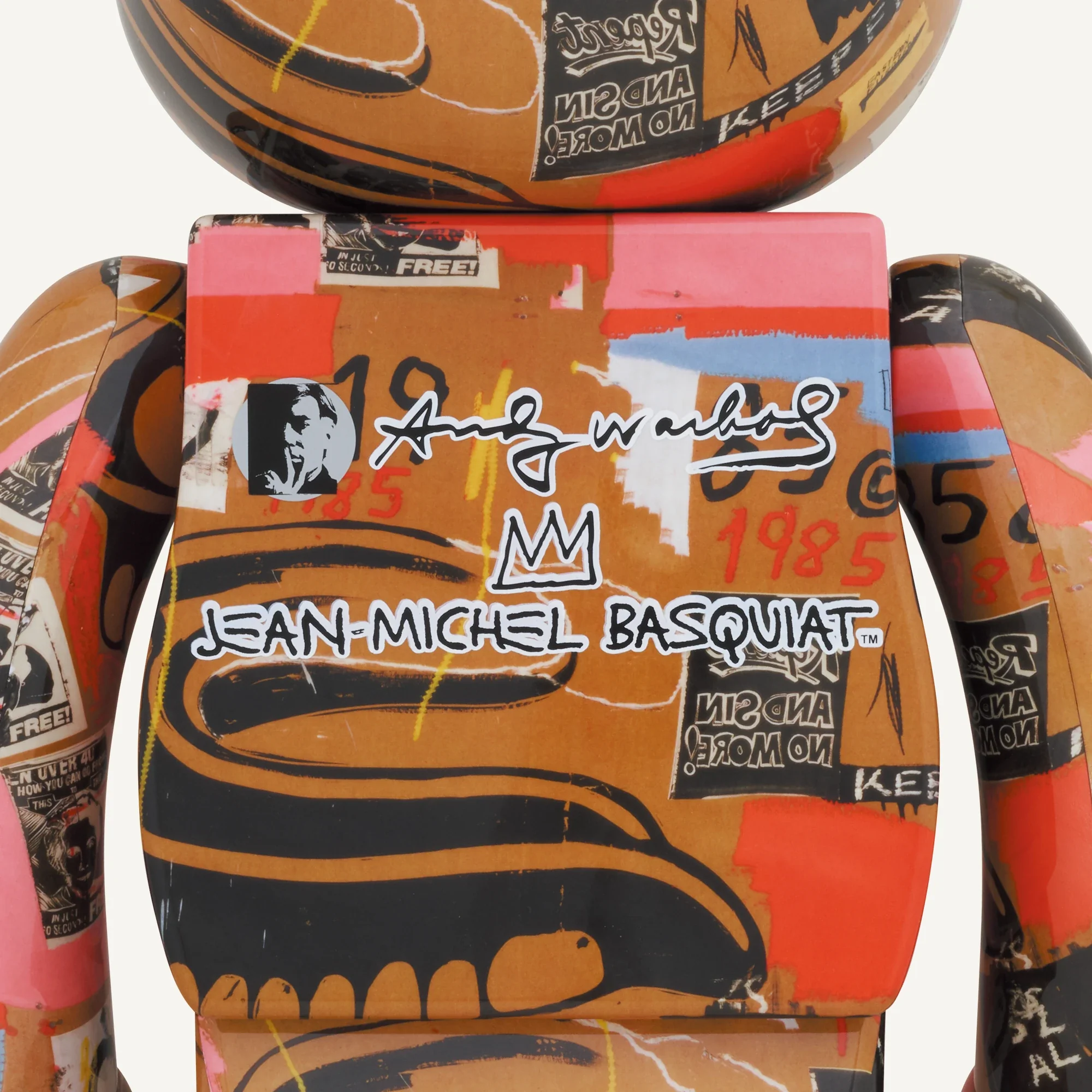
A numbered version in a product title usually helps identify a particular design within the release family. It should not be read as the total number manufactured. “Version 8,” for example, does not by itself mean that only eight figures exist.
For this article, the useful distinction is between the Warhol-only subjects and the joint line. The individual source works and numbered Warhol/Basquiat designs deserve their own close reading rather than being compressed into one universal Warhol series.
BE@RBRICK Andy Warhol × JEAN-MICHEL BASQUIAT #1
Warhol × Basquiat #1 identifies a distinct design in the joint licensed line. The number describes the version, not its edition size; name a precise painting only when the source supports it.
Archived formats: 1000%; 100% + 400%.
BE@RBRICK Andy Warhol × JEAN-MICHEL BASQUIAT #2
Warhol × Basquiat #2 identifies a distinct design in the joint licensed line. The number describes the version, not its edition size; name a precise painting only when the source supports it.
Archived formats: 1000%; 100% + 400%.
BE@RBRICK Andy Warhol × JEAN-MICHEL BASQUIAT #3
Warhol × Basquiat #3 identifies a distinct design in the joint licensed line. The number describes the version, not its edition size; name a precise painting only when the source supports it.
Archived formats: 1000%; 100% + 400%.
BE@RBRICK Andy Warhol × JEAN-MICHEL BASQUIAT #4
Warhol × Basquiat #4 identifies a distinct design in the joint licensed line. The number describes the version, not its edition size; name a precise painting only when the source supports it.
Archived formats: 400%; 1000%.
Superalloy BE@RBRICK Andy Warhol × Jean-Michel Basquiat
The joint Warhol × Basquiat Superalloy is a separate metal-format release. Check its own dimensions and construction rather than borrowing specifications from plastic sets or the numbered design line.
Archived formats: Superalloy BE@RBRICK Andy Warhol × Jean-Michel Basquiat.
Small formats and Andy Mouse: separate stories
BE@RBRICK アンディ・ウォーホル 60's STYLE Ver./80's STYLE Ver./SILKSCREEN Ver.
This archive entry groups three small portrait treatments: 60’s STYLE, 80’s STYLE and SILKSCREEN. They are not one common design; preserve the individual name when describing a particular figure.
Archived formats: BE@RBRICK アンディ・ウォーホル 60's STYLE Ver./80's STYLE Ver./SILKSCREEN Ver..
BE@RBRICK Andy Mouse
Andy Mouse belongs to Keith Haring’s portrayal of Andy Warhol. Keep this related artistic story separate from solo Warhol BE@RBRICK: Warhol’s presence as a subject does not change the image’s authorship.
Archived formats: 1000%; 400%.
BE@RBRICK SERIES 44
Series 42 and Series 44 are general numbered BE@RBRICK series, not two solo Warhol or Basquiat designs. Identify the specific figures within each series before presenting them as separate artist releases.
Archived formats: BE@RBRICK SERIES 44; BE@RBRICK SERIES 42.
Elvis: a different kind of presence
Elvis brings another celebrity image into the bear format. MEDICOM TOY lists an Andy Warhol’s Elvis Presley 1000%, with rights information for both Warhol’s work and Elvis’s name and likeness.
Where a Marilyn design directs attention towards a face and its colour treatment, an Elvis image introduces the outline and attitude of a figure. The change becomes particularly noticeable when the object is viewed from a distance: you first read the bear’s overall graphic rhythm, then move closer to inspect the image.
It is worth looking at all sides before choosing. A front view identifies the subject; side and rear views reveal how the image is distributed over the object, which affects how it will sit in an open display.
The MEDICOM archive records several sales stages: preorders for the Elvis set opened on 24 November 2020, while April 2021 announcements covered store sales in both formats. A preorder date and a later purchase date can therefore describe different stages of the same release.
Brillo and Flowers: packaging, pattern and colour
Celebrity portraits are only one route into the collection. Brillo brings the visual language of commercial packaging onto the bear. The familiar lettering and strong graphic areas make a different kind of object from a face-based design: words and colour blocks become the first things you notice.
Flowers takes another direction, using floral imagery and colour rather than a celebrity’s identity. It can be particularly interesting beside a more restrained figure, where the difference lies in the surface rather than the silhouette.
These motifs should still be identified by their exact release names. A product title is not automatically a full catalogue reference to the original artwork, and an archive photograph should not be used to invent a release date or unconfirmed edition size.
Surface details
Choose the image first, then the scale
Start with the motif you want to live with: a portrait, a graphic brand image or flowers. Then compare the available format and the place where it will stand. A smaller object invites a closer look, while a large one becomes part of the room’s visual structure.
Our BE@RBRICK size guide explains the differences between 100%, 400% and 1000%. For a patterned figure, distance matters as much as the height itself. Dense detail can read very differently on a shelf and across a room.
A calm background helps the artwork remain legible. Leave enough space to see the outline and turn the object safely; a crowded row can hide the details that made you choose that release.
How to compare collectible releases
Before buying, check the full product name, size, photographs of every side, condition and what comes with the figure. Artwork placement and colour should be compared with records of the same release. A shared artist name does not make two versions identical.
You can explore the 400% collection and 1000% collection to compare actual objects. The links lead to catalogue sections; they do not imply that every historical Warhol version is available.
For the separate question of original editioned works on paper, see our limited-edition print guide. A BE@RBRICK and a signed print can both interest a collector, but their editions, authorship and histories need to be understood on their own terms.