In this article
What collectors actually pay for rare BE@RBRICK
At the expensive end of BE@RBRICK, the familiar bear silhouette meets fashion history, an early artist collaboration or a demanding material. A listing price, however, is different from a completed transaction. A model advertised for tens of thousands of dollars may have a much lower documented auction result.
We have selected published sales involving Chanel, Haroshi × Karimoku and several KAWS releases. This is an evidence-based selection, not a claim to identify the most expensive examples ever sold. Original currencies are retained: converting an old transaction at today’s exchange rate would introduce misleading precision. The date beside a price refers to the auction; the year in a model’s name refers to its production.
These figures are the results published by the auction houses. They should not automatically be described as hammer prices or the seller’s proceeds. Buyer’s charges, taxes, shipping and the condition of an individual example affect the full acquisition cost.
Coco Chanel: a bear with a place in fashion history
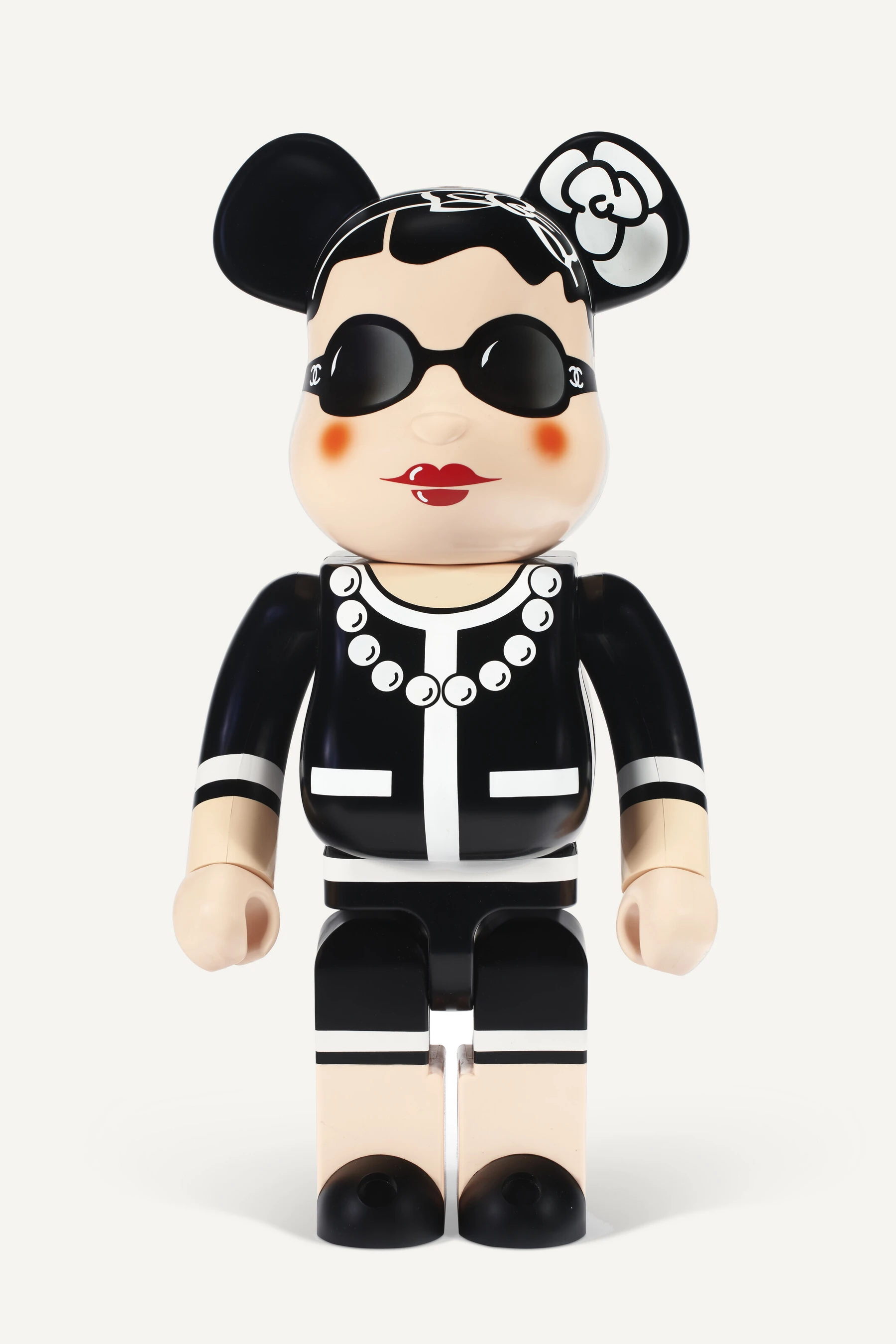
Black sunglasses, pearls and a tailored outfit make Coco Chanel recognisable without an oversized logo. The 2006 model is associated with Karl Lagerfeld. For example no.599, SBI records an edition of 1,000, a height of 72 cm, the original case and a Chanel certificate. These are specific details a buyer can investigate, rather than a vague promise of exclusivity.
Christie’s New York published a result of $35,000 on 9 December 2021. Another example, no.497, achieved $16,380 there on 8 December 2022. At SBI’s 13–14 September 2024 auction, no.599 realised ¥3,910,000 including buyer’s premium.
Those figures do not mean that every Chanel bear once cost $35,000 and subsequently halved in value. They concern different objects and different sale conditions. Photographs, condition, packaging, documentation and provenance all matter. Nor does an edition of 1,000 mean that 1,000 are available to buy: the owner of a desirable example may have no intention of selling.
Haroshi × Karimoku: a smaller format with a substantial price
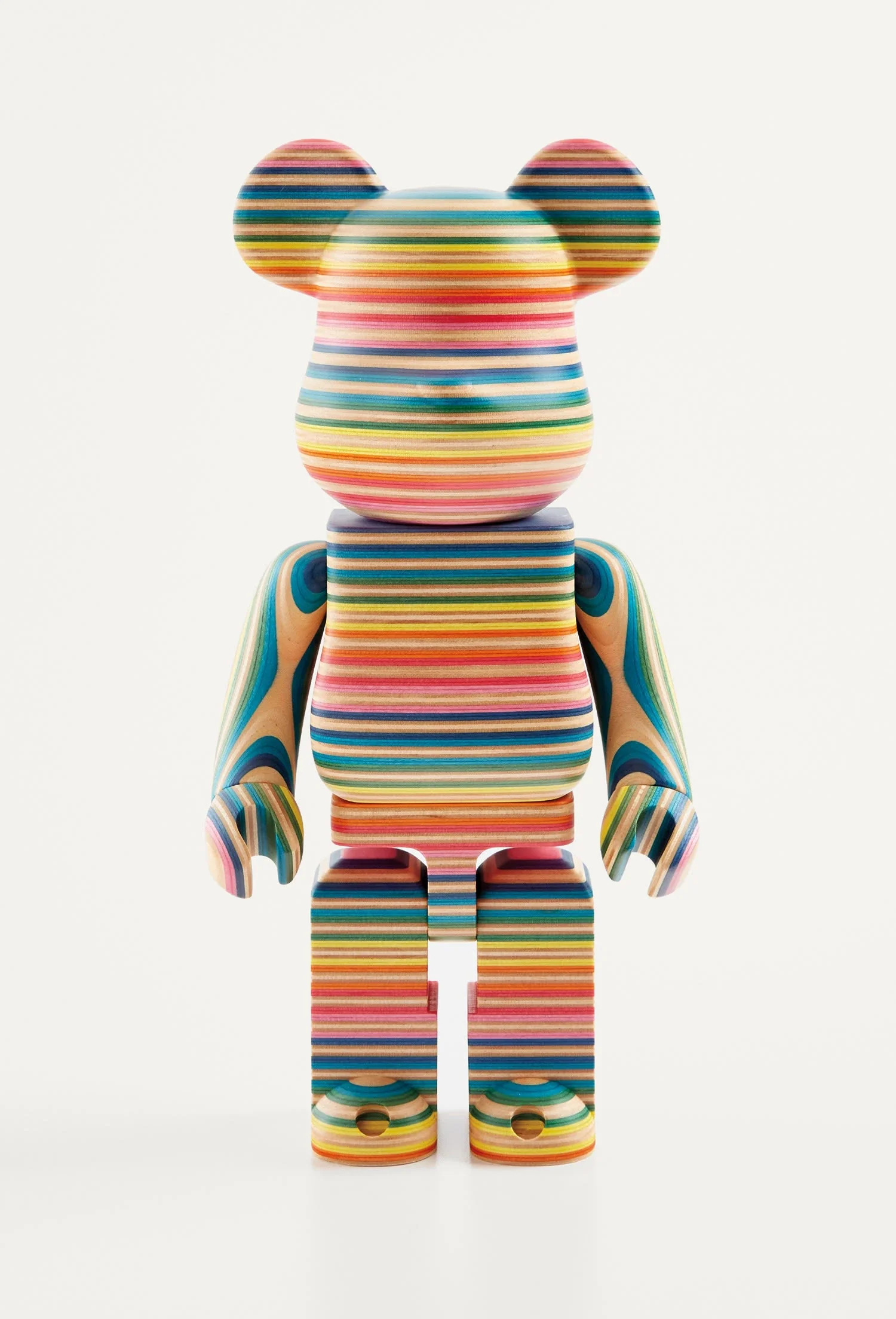
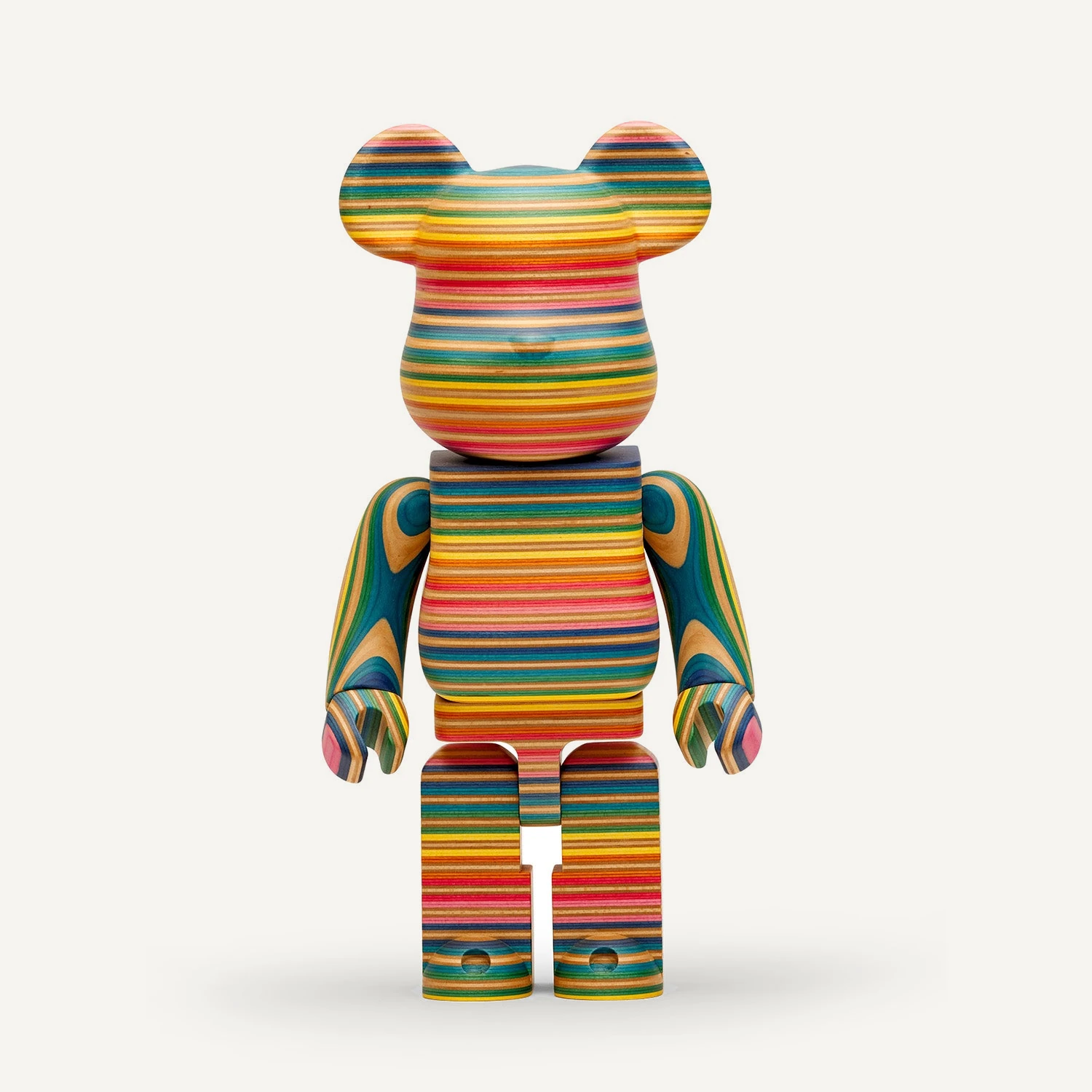
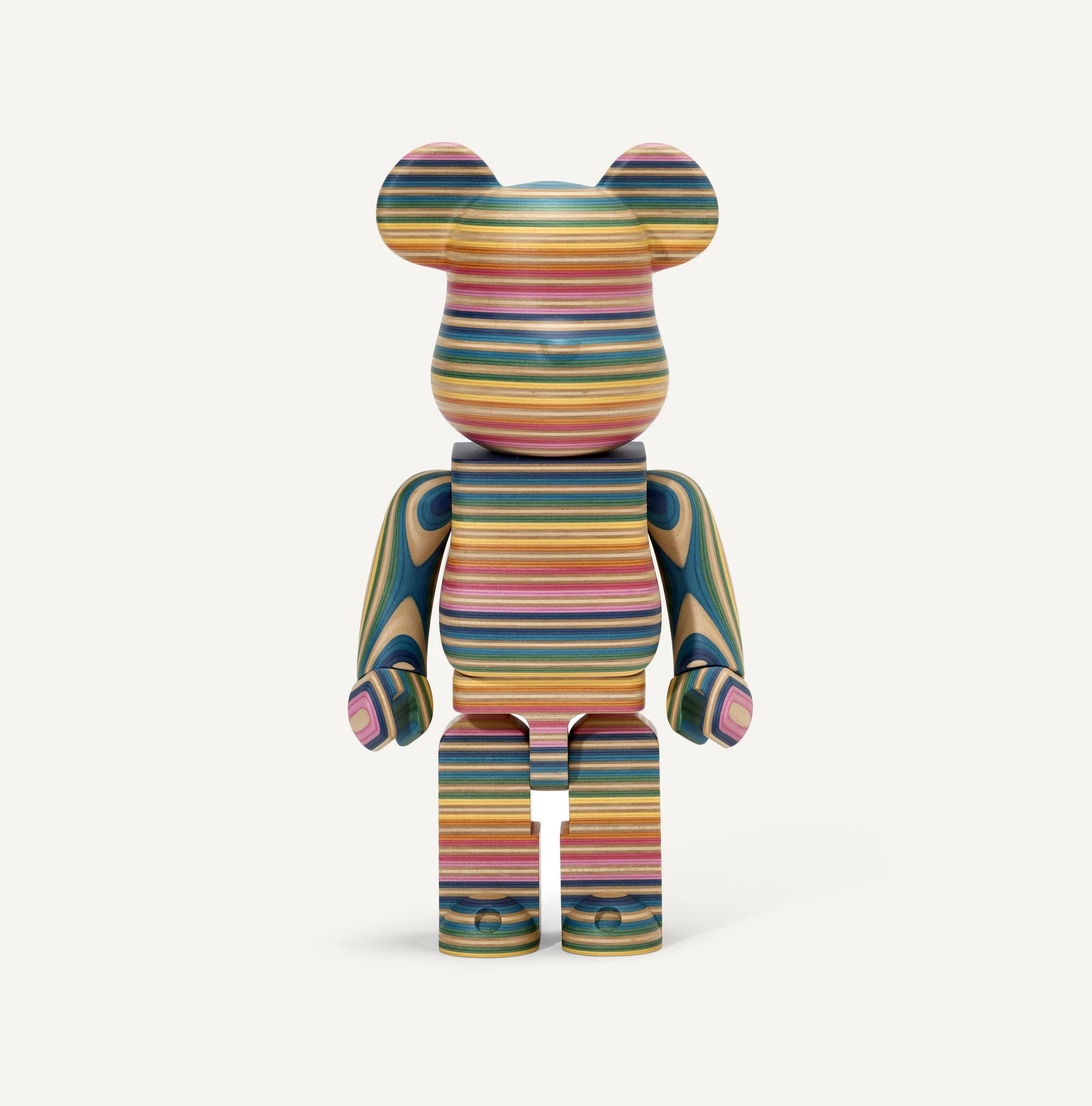
An expensive BE@RBRICK does not have to be a 1000%. Phillips sold a wooden Haroshi × Karimoku 400% for $21,250 in New York on 24 July 2020. That lot is catalogued at 26.7 cm high, while Medicom describes the release’s standard height as approximately 28 cm. A small measurement difference does not establish a separate edition.
Another Haroshi × Karimoku 400%, lot 78 at Phillips Hong Kong on 16 September 2021, achieved HK$151,200. This is another transaction, not a verified repeat sale of the same object. Establishing that would require matching identifying details and provenance.
Medicom’s official archive describes the 2019 release as a wooden Karimoku work finished individually by skilled craftspeople. Layers of material, changes of colour and the handling of the volume are central to its appeal. Its price cannot simply be transferred to every wooden bear. The artist, material, construction and exact version need to match. Our separate Karimoku article explores the production in greater depth.
A useful comparison with the two Phillips lots is Haroshi at Christie’s on20 April2023: a published result of HK$44,100. This exact example also appears in the gallery below. It shows the variation between actual auctions of the same model; a headline result does not become a compulsory valuation for every example.
Haroshi also provides a useful example of secondary demand. Its official December 2019 release price was ¥360,000 before tax. An example dated 2019 achieved ¥1,840,000 including buyer’s premium at SBI in June 2020. This documents an aftermarket premium over the initial retail price. It is not the same as a net investor return: the two prices include different costs, and the owner’s actual expenses are not published.
Haroshi: three auction examples
KAWS BWWT 2005: an edition of 150 in wood
The wooden KAWS for Bearbrick World Wide Tour offers a useful example of scarcity expressed as a documented number. Artcurial’s catalogue gives an edition of 150 for the 2005 BWWT Japan Karimoku 400%, a height of 28 cm and an engraved signature, date and location. The sold example retained its original box.
It achieved €9,375 in Paris on 5 May 2019 against an estimate of €2,800–3,500. An estimate is a pre-sale guide; the result shows that bidding exceeded those expectations on that occasion. It does not establish today’s price for every example in the edition.
The collector is acquiring an intersection of histories: early KAWS, World Wide Tour and Karimoku production. Searching merely for a “wooden KAWS Bearbrick” is not enough. A different year, graphic or production series may represent a different object with a different set of comparable sales.
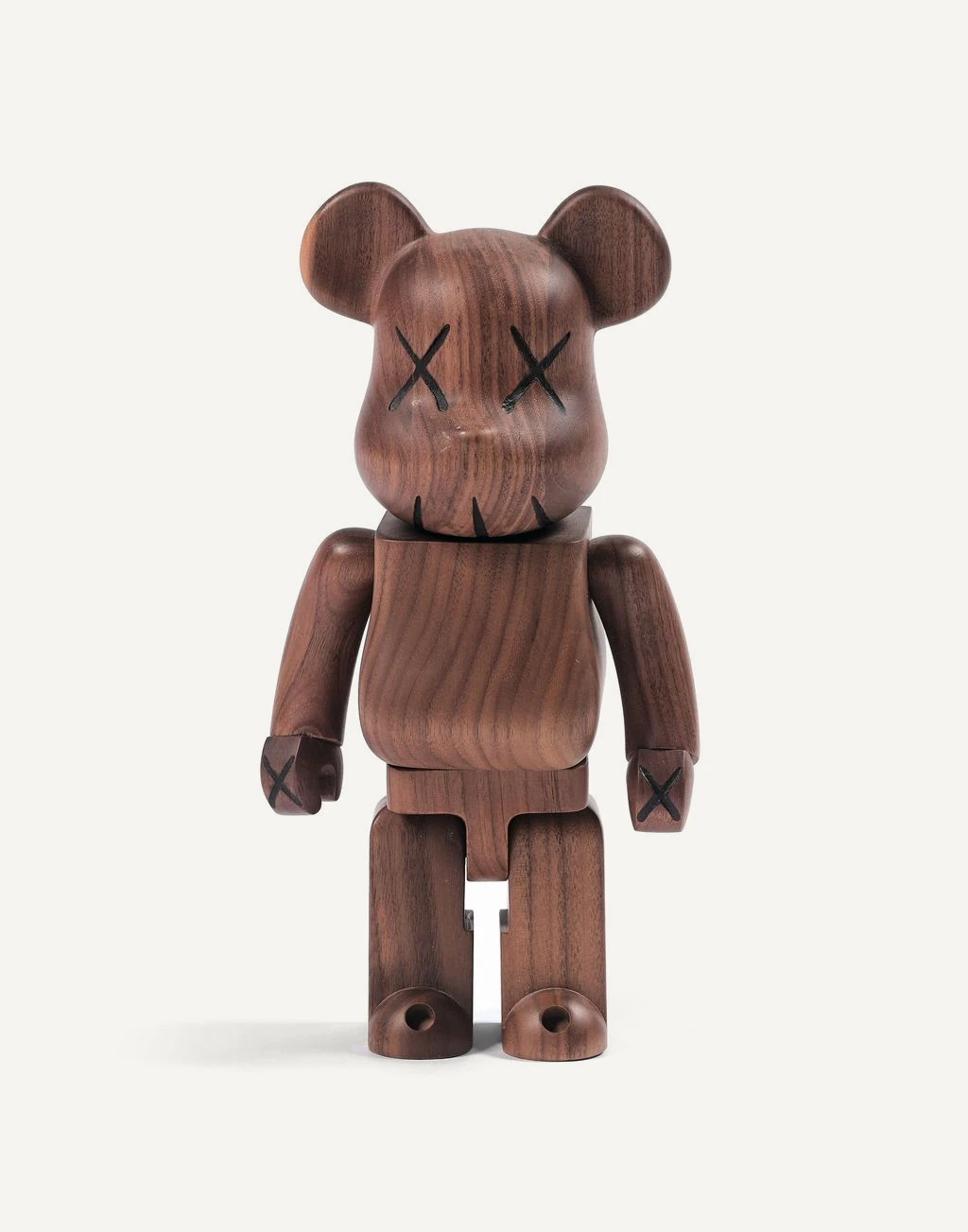
Chompers A-Nation: an early collaboration in a large format
The 2003 Chompers 1000% draws interest from its early place in the KAWS–Medicom relationship and its distinctive teeth motif. Medicom specifies an ABS body approximately 700 mm high. Rago describes its example of this model as being from an edition of 500. That number applies to the particular release, not every Chompers version or all sizes combined.
An example in its original box sold for €5,248 at Artcurial’s Limited Edition auction on 24 May 2022. Its estimate was €2,000–3,000. This is a significant result, but it does not become a six-figure transaction simply because expensive listings for other KAWS objects exist online.
Age makes condition particularly important with early plastic releases. Ask for detailed photographs of the surface and joints, and information about yellowing, cracks and repairs. Scarcity does not remove these concerns. A cheaper damaged example may be a less satisfying acquisition than a more expensive, well-preserved one.
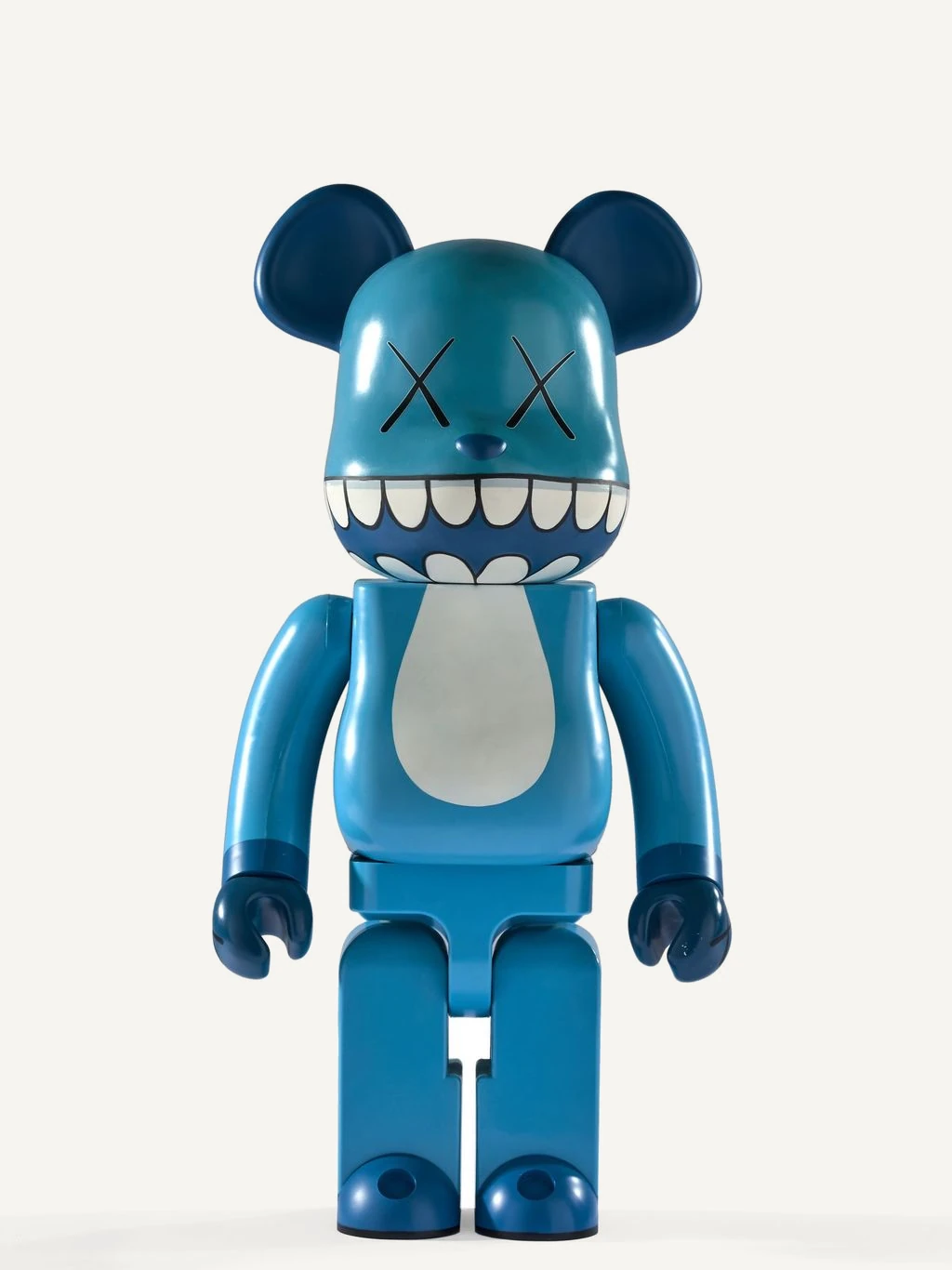
Dissected Companion: a familiar design, an unknown edition size
The divided figure with an anatomical motif is among the most recognisable KAWS BE@RBRICK designs. Recognition is not permission to invent a production total. For the brown 2008 Dissected Companion 1000%, Rago explicitly states that the edition size is unknown. Its 72 cm example, with original packaging, sold for $4,032 on 10 April 2024 against an estimate of $4,000–6,000.
It is a useful comparison beside Chanel and the wooden releases. The market does not value every large Bearbrick at the same level, even when a well-known artist’s name appears on each. A selection of spectacular results also does not describe a typical collection’s value.
Colour, year and scale need to match when choosing comparables. A small Companion carrying a related graphic does not establish the value of a 1000%. A separate KAWS sculpture in a similar pose belongs to a different collecting category altogether.
Why an online record needs more than a large number
Popular lists frequently mention Yue Minjun’s 2008 Qiu Tu. Even Heritage’s editorial artist guide cites $157,000 and describes it as a one-off work. However, we have not identified the original auction record for that historical transaction. We therefore do not treat it as equivalent to the verified lots here or declare it the current world record. That requires a named sale, date, currency and clear price basis.
Object identification creates another trap. Javier Calleja’s Bearbrick PR at Sotheby’s is a work in coloured pencils, watercolour and graphite on paper, measuring 97 × 70 cm. Its substantial estimate should not be presented as the price of a plastic figure just because Bearbrick appears in the title.
Unique artist works, charity lots, multi-object sets and regular editions also deserve separate treatment. A charity buyer may be supporting a cause as well as acquiring an object; a set’s total covers several items. Comparing either directly with a single production bear leaves out an important part of the transaction.
What makes a BE@RBRICK investment-worthy?
A collectible gains investment potential when a specific release attracts sustained demand and has a reasonably transparent resale market. BE@RBRICK can bring together several audiences: toy collectors, followers of an artist and buyers of a fashion brand. Chanel, early KAWS and Haroshi show different reasons why the same basic shape can become desirable.
The buyer considers more than appearance. Documented scarcity, the release’s place in an artist’s history, recognizable design, condition and entry price all matter. An early edition, a particular production technique or a single handmade work provides a substantive reason for interest. The word limited, without evidence identifying the release, provides much less.
Public auctions are useful because they record demand that resulted in a sale. Several transactions involving comparable objects help establish a range; the history of a particular example can trace its movement between collections. An appealing object, a sensible acquisition price and a credible route to resale make the investment discussion concrete.
Chanel no.599: tracing an actual resale
Chanel no.599 allows us to go beyond comparing similar bears. AAG sold it on 13 December 2021 as lot 202 for €22,000 hammer. In 2024, SBI offered no.599 as lot 316, explicitly listing that AAG auction in its provenance. SBI published a result of ¥3,910,000, including buyer’s premium.
The connection rests on more than the number on its back: the auction house documents the previous sale. This is the kind of ownership history worth checking before a substantial purchase. SBI also noted small scratches and soiling on the figure, with scuffing and peeling film on its original case. The certificate and packaging matter, while each component’s condition still needs examination.
Subtracting the two published figures would not establish a profit. A calculation would need exchange rates on payment dates, the AAG acquisition premium, storage and transport costs, the SBI consignment terms and the seller’s actual proceeds. A documented resale establishes a secondary-market transaction; the owner’s financial outcome requires a separate calculation.
READYMADE × BAPE: demand across brands
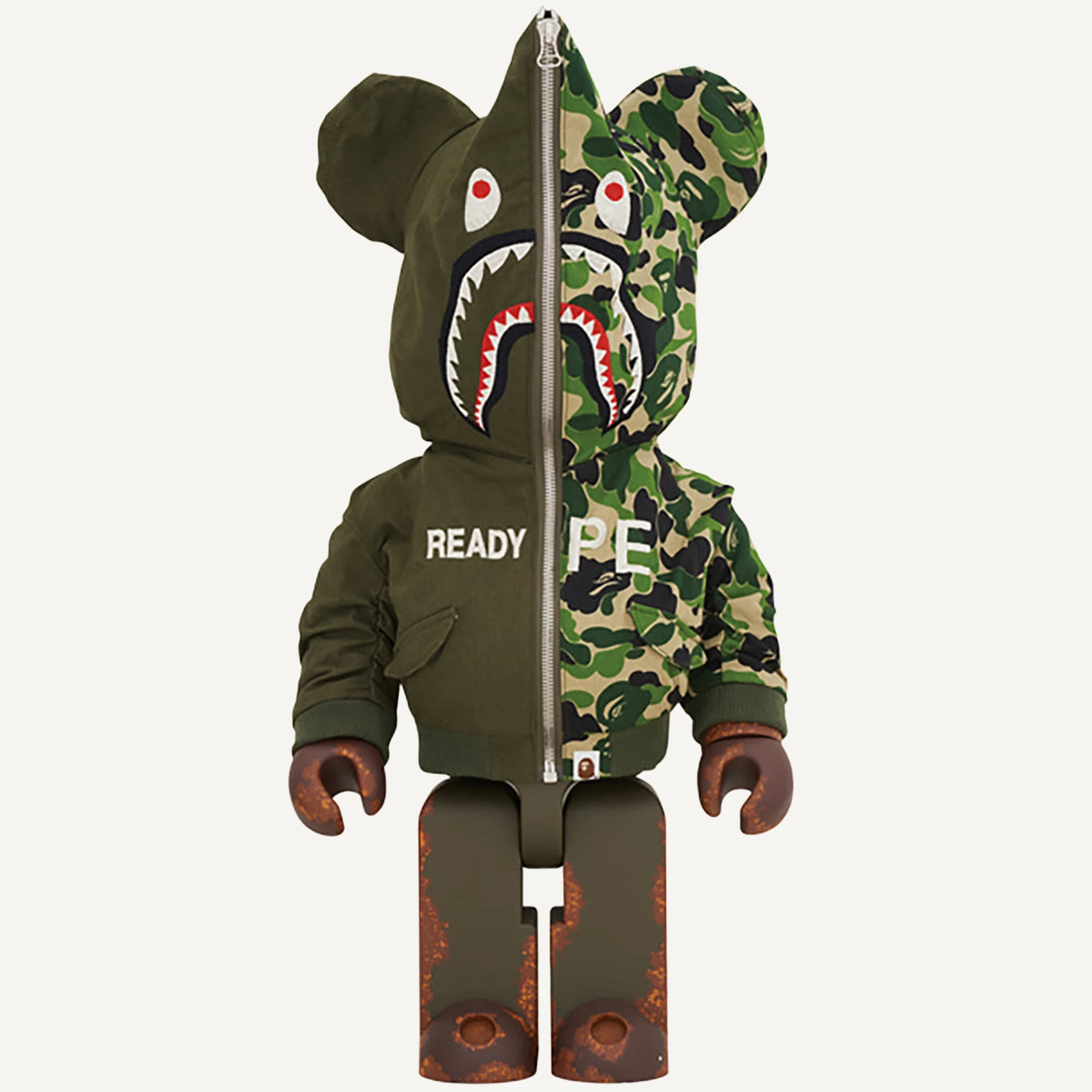
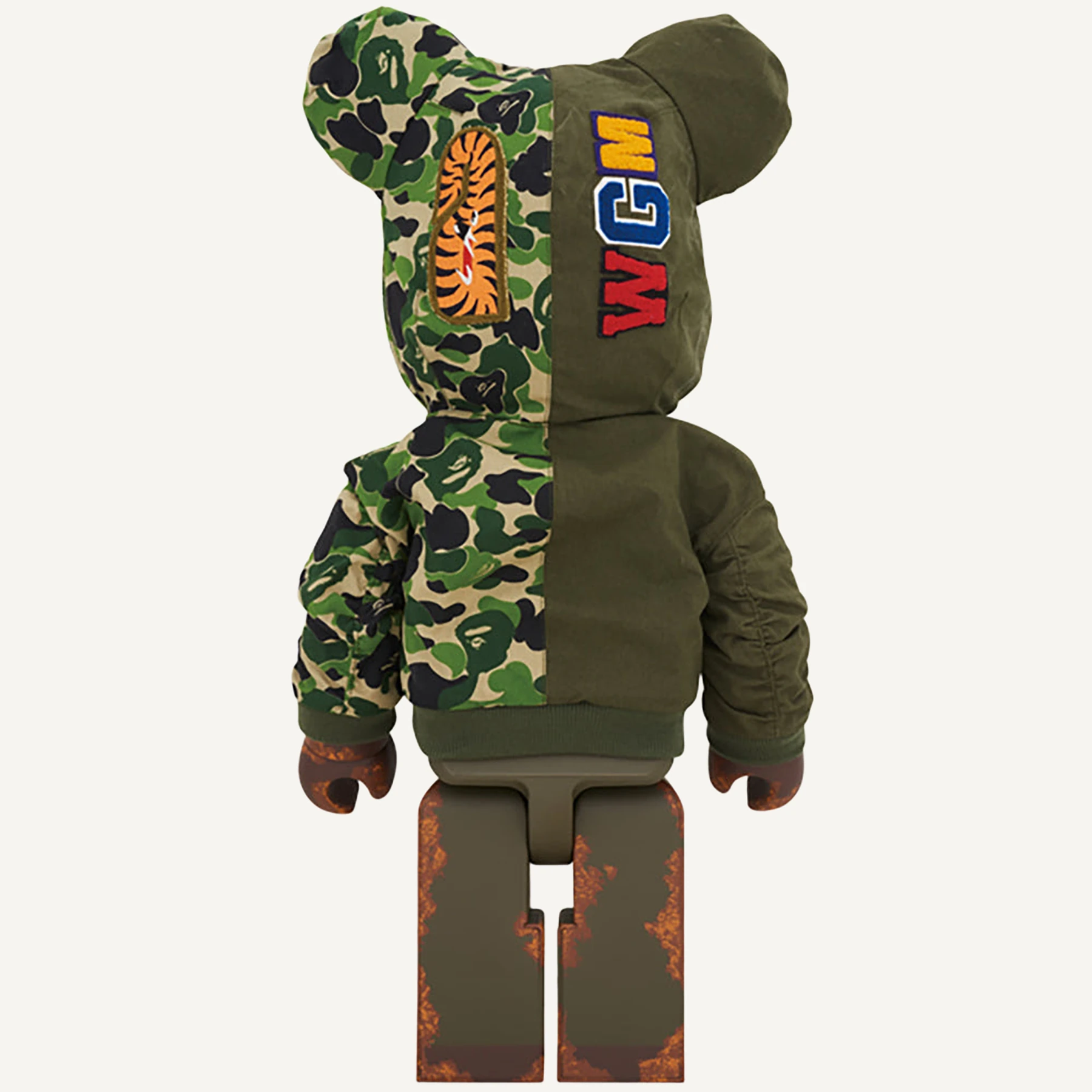
READYMADE × BAPE 1000% combines the bear silhouette with actual textile clothing. Medicom scheduled the release for October 2018, at approximately 70 cm tall and a primary price of ¥277,778 before tax. Its official description says quantities were limited, without stating an exact edition size.
Collectors need to assess the clothing, fastenings and complete package as well as the body. A collaboration can attract followers of both brands alongside art-toy collectors, creating an understandable basis for demand. Current value still requires transactions involving the same version. For example, a Heritage offering on 25 July 2023 remained unsold. One unsuccessful offering does not define the entire market, but interest in a model is different from a buyer accepting a specific example at the price offered.
READYMADE × BAPE: clothing and silhouette
One-off works: scarcity with a clear explanation
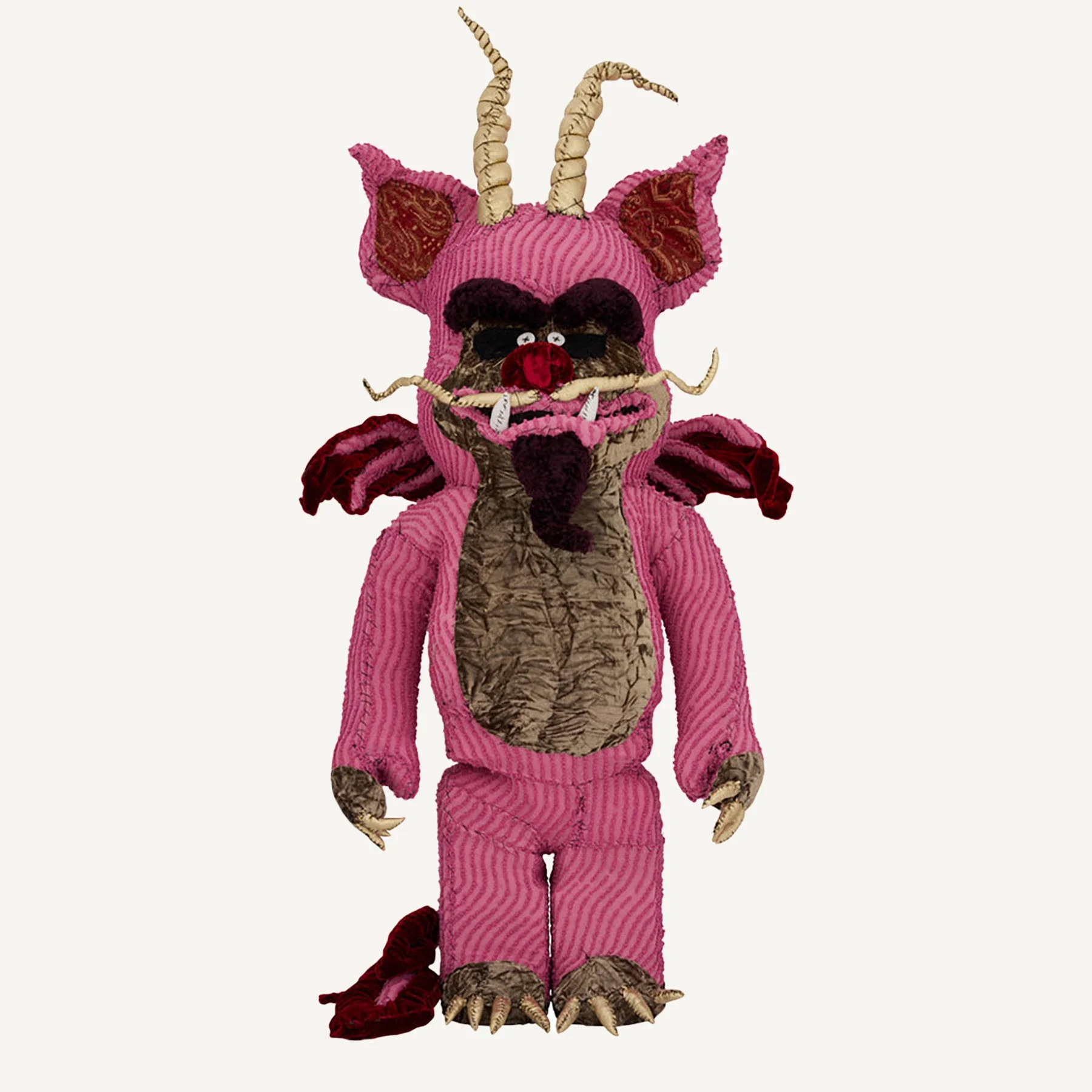
Anne Valérie Dupond’s work illustrates a different kind of rarity from a series-produced plastic bear. Medicom’s official archive describes the 2025 ONE OF KIND BE@RBRICK 1000% (ONE OFF) (EDITION 20) release, each handmade by the artist. The stated price was ¥550,000 including tax, with purchasers selected through a lottery. This is a primary-market offering by the artist and manufacturer, rather than a realised resale-auction price.
The attraction lies in the artist’s own work, fabric, hand stitching and individual composition. The absence of a second identical object also makes valuation harder: a direct comparable may not exist. Unlike a series-produced edition, its assessment depends on the particular work’s history and sales of comparable works by the artist.
These pieces should be distinguished from manufactured BE@RBRICK editions using Dupond’s designs. Her LION interview discusses translating her artistic language into a separate release. The artist is the same, while the production method and nature of scarcity differ.
Assessing a purchase with a future sale in mind
Start with three figures: the total acquisition cost, the prices achieved for comparable examples and the amount remaining after a sale. The seller’s asking price is only part of the first figure. Depending on the transaction, premium, taxes, shipping and insurance may be additional; selling brings its own costs.
A hypothetical example, not an auction-house tariff: a purchase costs 100,000, additional costs are 20,000 and selling deductions are 10%. Recovering the 120,000 invested would require a sale at approximately 133,333. A rise in headline price from 100,000 to 120,000 would not yet break even in this scenario.
The time needed to find a buyer matters too. An ambitious asking price can remain an unsold listing for a long time. Before buying, ask a specialist dealer or auction expert whether they would accept that exact release, on what terms and with which documents. This helps identify an object with a credible market as well as an appealing record-price story.
Why buying a rare release takes time
After a release ends, the limiting factor is the supply of individual examples. The right model may be available without its box, with a replaced component or without a clear acquisition history. Meanwhile, a particularly well-preserved work can remain in a private collection for years. Finding one takes patience as well as a budget.
Before bidding, request the condition report, photographs of the markings and number, and information about repairs and packaging. Ask whether personal inspection is possible and who will arrange transport. Wood requires attention to cracks and joints; plastic calls for checks for deformation, colour changes and joint damage. The inspection criteria for one material should not be applied mechanically to another.
Allow separately for buyer’s charges, taxes, insurance and shipping. With an object roughly 70 cm tall, even the packing dimensions and a safe route to its eventual position matter. The auction figure begins the acquisition calculation; it does not necessarily finish it. Rarity alone does not guarantee a future buyer, a quick resale or appreciation.
Starting with a collecting interest of your own
BE@RBRICK becomes easier to navigate with a personal focus: early KAWS, wooden production, fashion houses or BAPE. Auction history then helps compare objects without allowing a record price to replace personal taste. A more accessible release may suit both the collection and its setting better.
Continue through our articles on BE@RBRICK × BAPE and limited-edition prints. In the catalogue, check the exact version, dimensions and condition description; availability is specific to each product page. A historical price for a rare Chanel or Haroshi is not a valuation of every superficially similar bear.
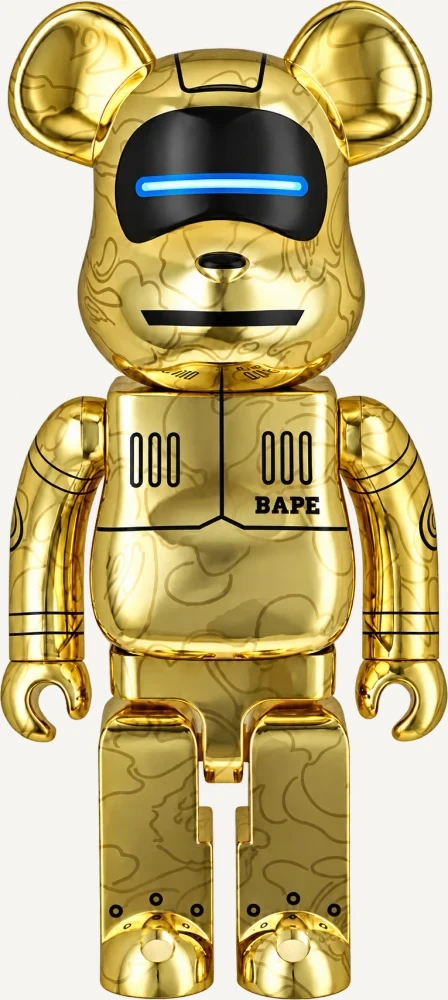
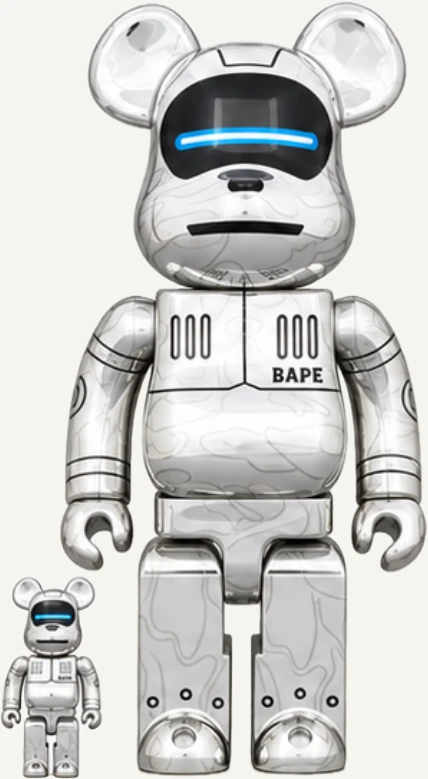
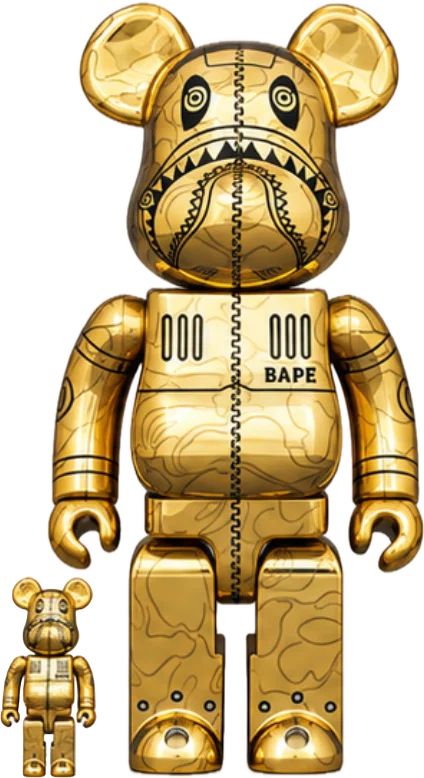
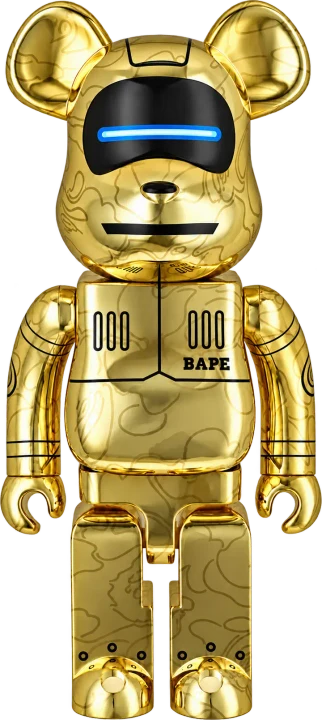
To explore scale, see BE@RBRICK1000%; for collaborations, view BAPE × Sorayama Camo Shark Gold400% +100%. These are separate catalogue releases, whose specifications and prices are not derived from the rare auction lots discussed here.
Distinctive collaborations in our collection
Sorayama offers a useful example of one artistic language applied to different characters. Our catalogue includes Future Mickey 1000%, Iron Man Reverse 1000% and BAPE × Sorayama Baby Milo Gold 1000%. Each release has its own subject and history; compare the exact version, size and condition of its finish when choosing.
BAPE × ALPHA INDUSTRIES Camo Shark 1000% takes another approach: textile clothing changes the familiar bear silhouette. Collaborations like these can give a collection a focus on a particular brand or material. We explore the release history in our BAPE feature.
Baby Milo × Sorayama from our collection