In this article
Choose a place you can actually keep clear
Look around the room before matching a figure to the sofa. Where do your keys land? Where does the laptop open? Which route do you take with shopping bags? A surface that looks empty in a photograph may be busy every evening. Choose somewhere that does not need clearing each time you want to enjoy the collection.
Pick a normal viewing position: your armchair, desk or the doorway. The figure should make sense from there. A detailed back is less useful if it will always face the wall. Put an ordinary object of roughly the right size in the proposed spot and leave it there for a few days. Notice whether you enjoy its presence or keep moving it out of the way.
Decide whether you are showing one work or a group
A single figure benefits from a clear outline. Leave some surface empty beside it and check that a lamp, plant or television does not cut across its shape. A small work can hold your attention at close range. A large one does not earn its place simply by being visible from the other end of the room.
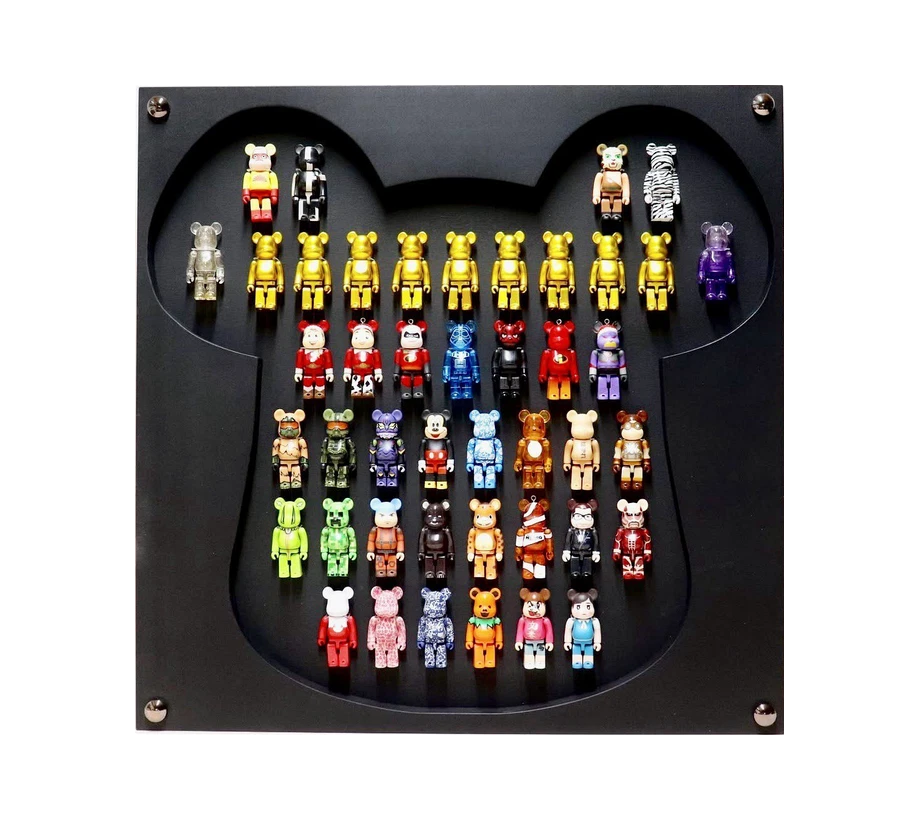
A group needs relationships. Try placing figures together because they share a character, colour or mood. Let a taller work give the arrangement some rhythm without hiding everything behind it. Start with a few pieces rather than emptying every storage box onto the shelf. Rotating what you display can make familiar works interesting again, while giving you room to notice each one properly.
Rehearse the size before changing the furniture
Write down the actual height, width and depth, including any base. A percentage in a product name or an isolated photograph does not describe all the space a figure occupies. Measure the inside of the shelf, not its external dimensions. Arms, ears and an extended pose may require more clearance than the front view suggests.
Make a paper outline or mark the dimensions with removable tape suitable for the surface. For a floor piece, mark its footprint too: a flat outline on the wall cannot show where your feet will go. Walk past with a bag, pull out a chair and open nearby doors. This small rehearsal is more useful than guessing from a close-up photograph. Check shelf load and the stability of any stand separately.
Photographs


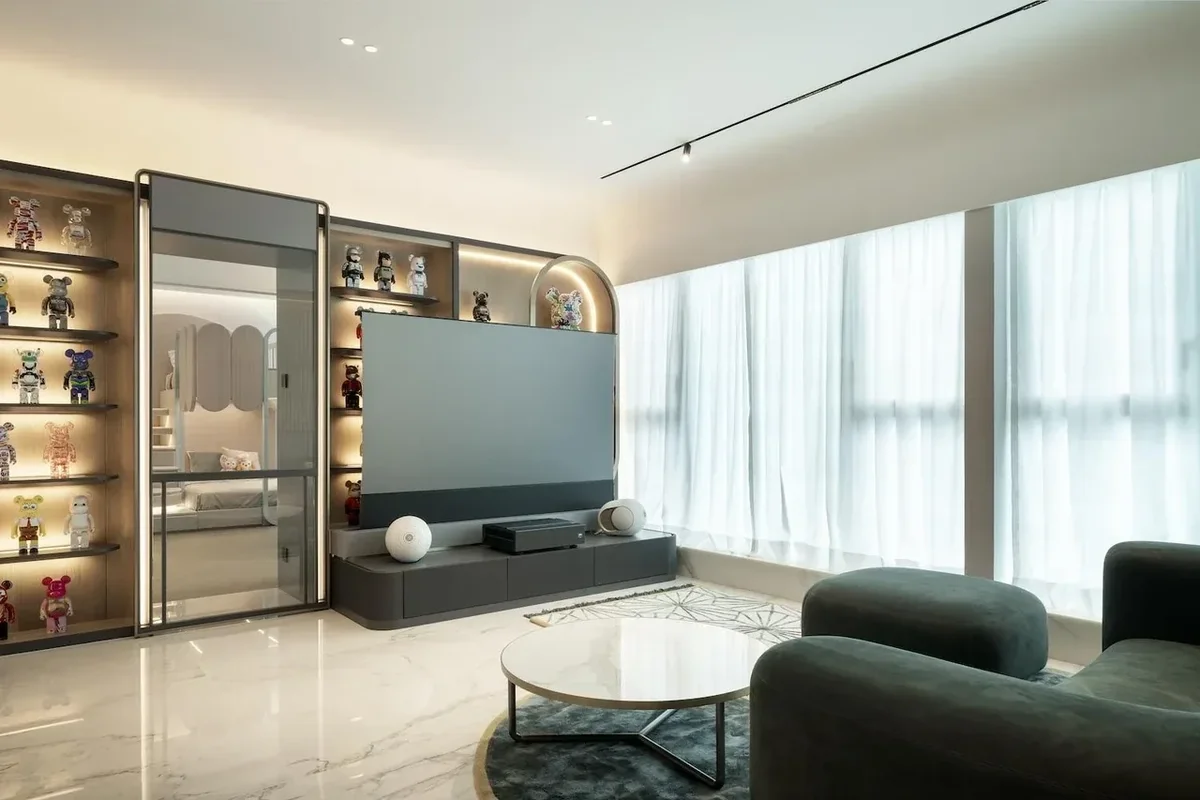
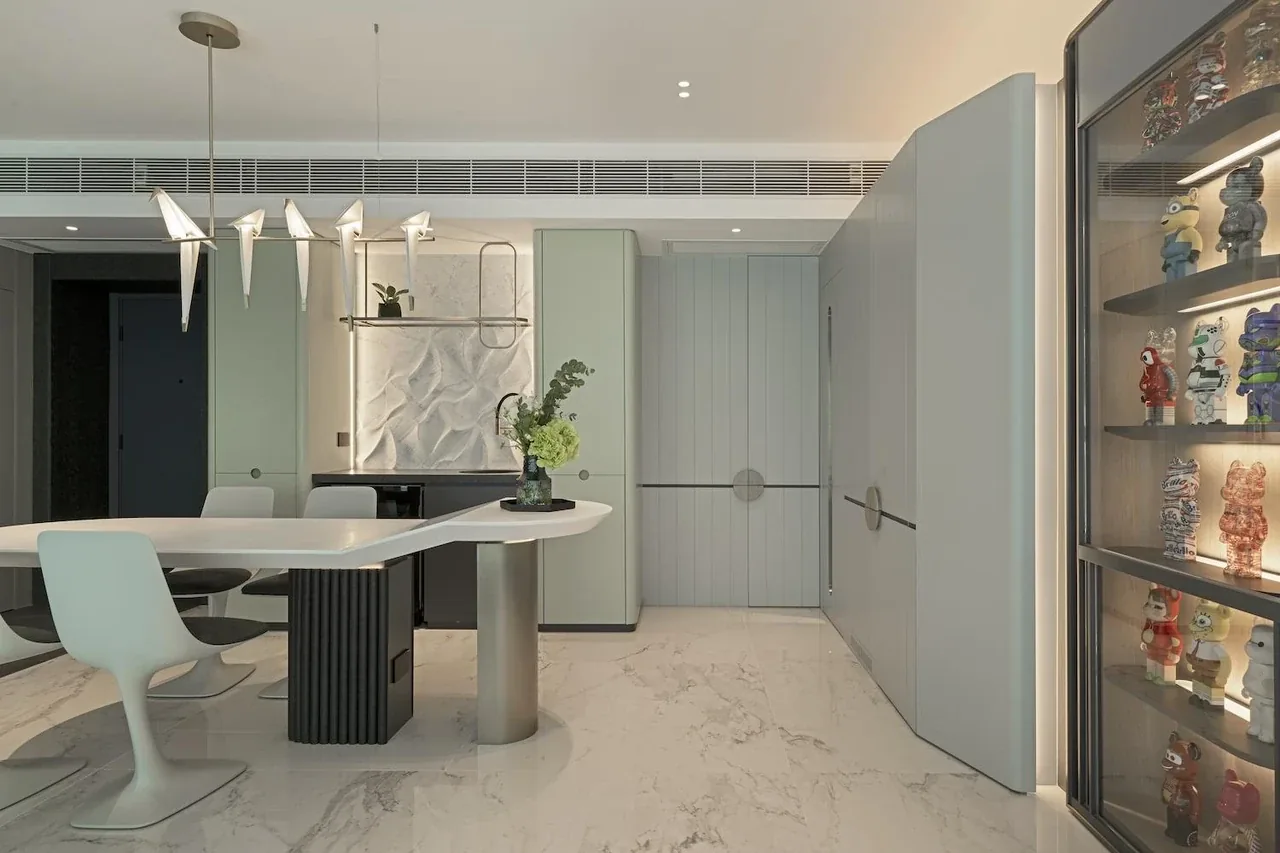
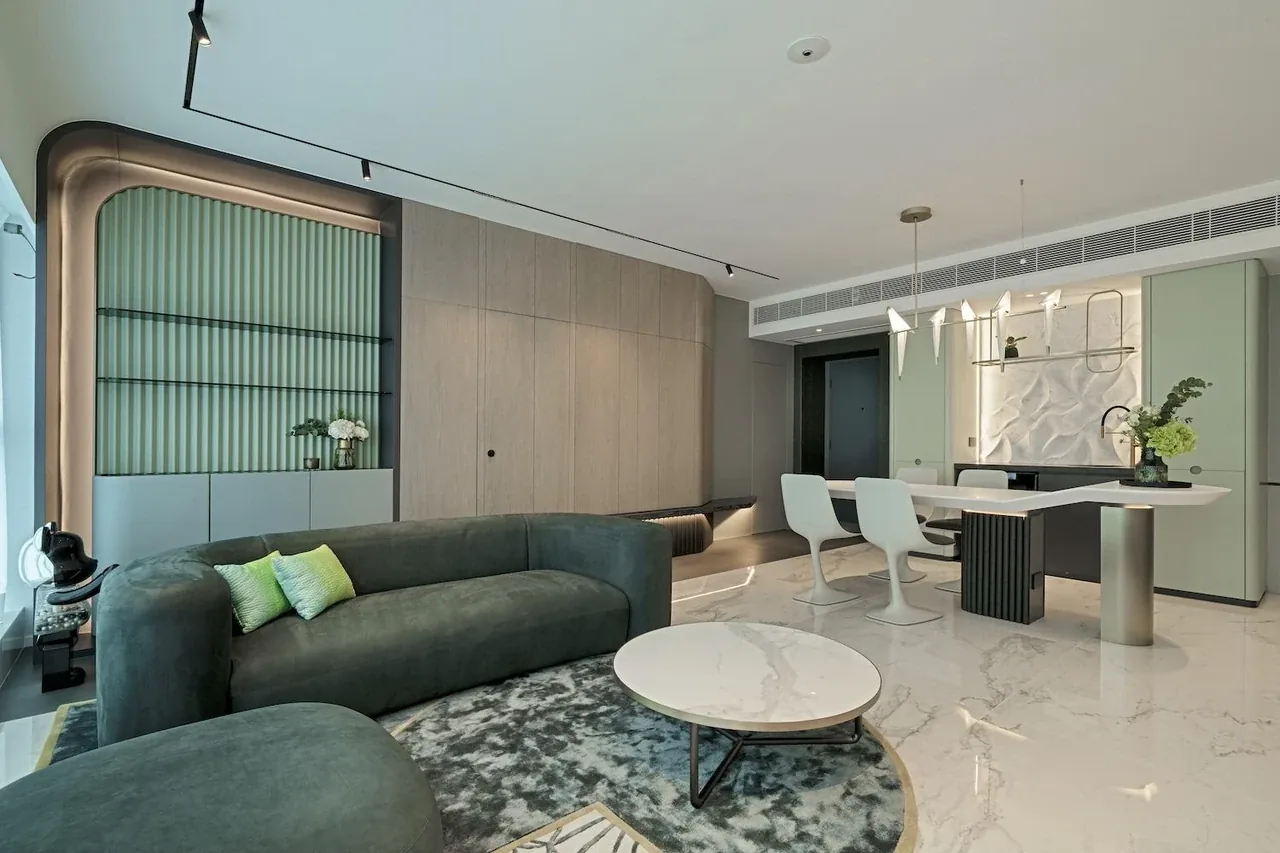
In this Sha Tin home by Artwill, the collection has its own display beside the television area. The green and neutral room palette leaves the colourful figures visible. The two photographs below show other angles of the same home, revealing the connection between the display and the dining area rather than presenting an isolated shelf.
Photographs
Leave space that helps you see the shapes
There is no useful universal gap for every collection. A wide pose needs different room from a narrow upright figure. Move the pieces until you can distinguish their outlines from your usual viewing position. Then look at a phone photograph of the shelf. The smaller image often makes accidental overlaps easier to spot.
A deep shelf can hold a front and back row, provided the back row remains visible. Use risers only when they are stable and suitable for the objects; a spare box is not automatically a good permanent plinth. Leave enough access to remove one piece without dismantling the whole arrangement. If cleaning already feels awkward, adding another figure will probably make the display harder to live with.
A quiet background can still have colour
A background might be dark timber, a painted wall or the spines of books. What matters is whether you can read the figure against it. Before buying more decoration, try another shelf. Moving one busy object or lifting a picture slightly higher may do more than adding a new accessory.
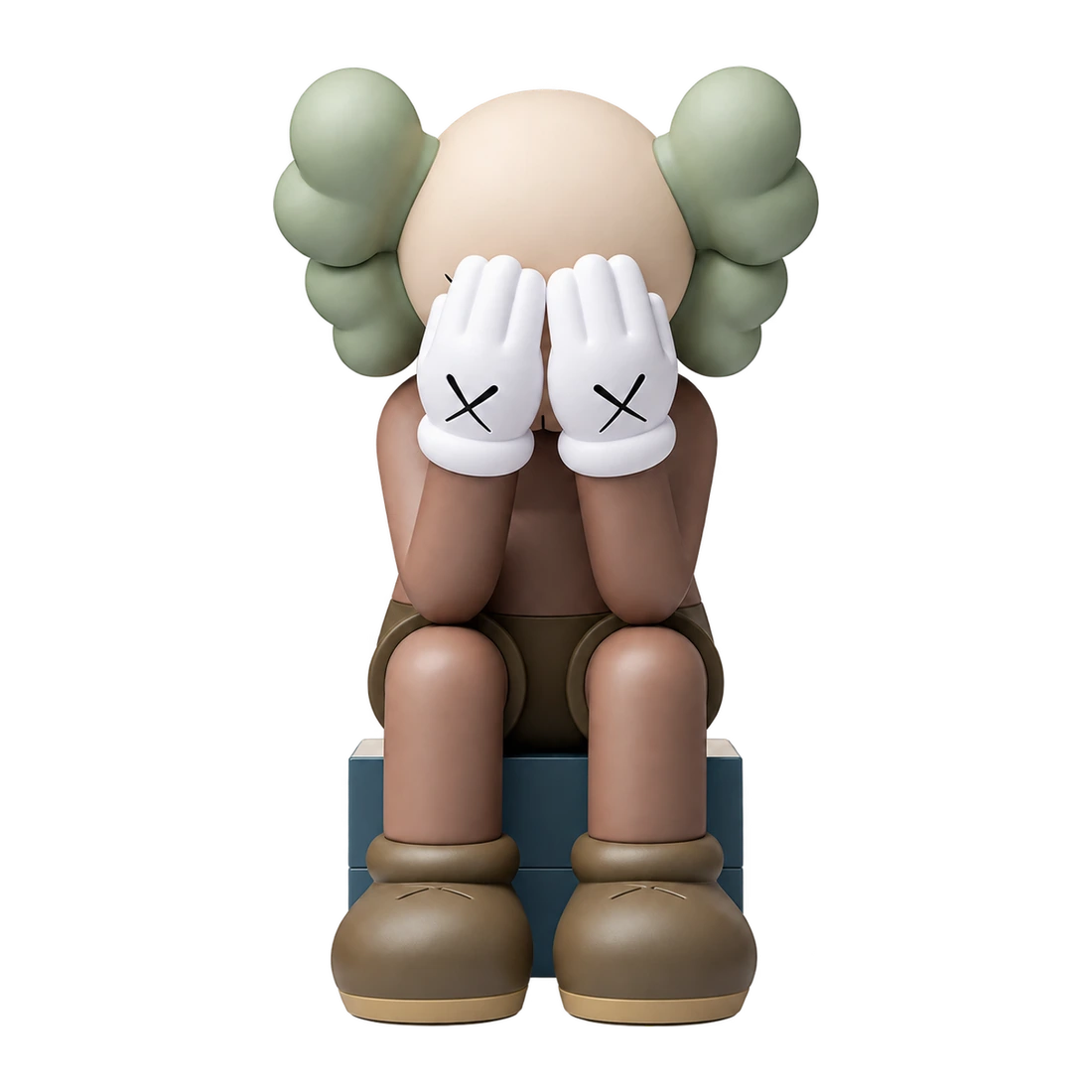
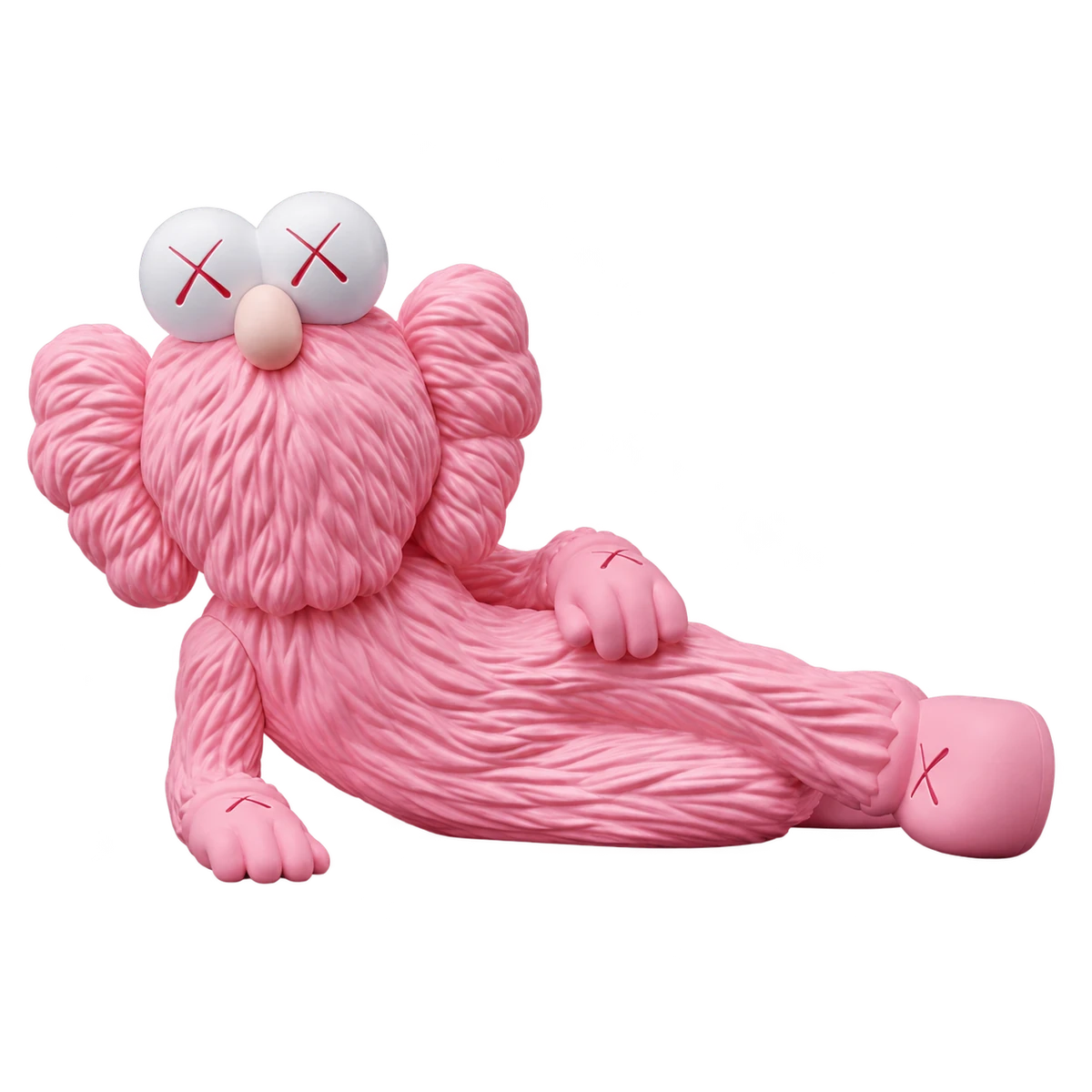
You do not need to repeat every colour on the character around the room. One small echo in a book cover, frame or textile can connect it to the setting. Equally, you may want the figure to stand apart. Give that contrast room to work instead of surrounding it with several equally demanding objects. Keep the arrangement because you like looking at it, rather than because it follows a prescribed palette formula.
Photographs
Check the display after dark
A spot you like in daylight may look different once the lamps are on. Sit where you normally spend the evening. Can you see the face? Does a reflection swallow the printed design? Before adding another light, try changing the angle of an existing one or shifting the figure slightly.
A glossy surface and a glass cabinet create separate reflections. Sometimes you end up looking at the room reflected in the door instead of the objects inside. Compare the view with the door open and closed. These are suggestions for seeing the work clearly, not universal conservation instructions. Requirements for light, temperature, cleaning and placement belong to the documentation for the particular object and its materials.
Choose a cabinet for access as well as appearance
Enclosed display may be worth considering when dust or curious pets make an open shelf impractical. Start with the door opening, shelf dimensions and ease of lifting an object in and out. A cabinet packed tightly from edge to edge can be less convenient than a smaller open arrangement you can actually reach.
Agree which surfaces belong to the collection and which are shared household space. Keep room for hands and cables on a working desk, and keep routes through the room comfortable. A figure should not need moving every time someone opens a cupboard. Follow the furniture manufacturer's instructions on load, stability and any required anchoring; an attractive composition does not replace those checks.
Let the arrangement develop with the room
Real homes can provide useful starting points. Home & Decor's selection of seven BE@RBRICK collectors' homes and Home Journal's Artwill interior feature offer further examples to explore. Use such features to notice possible approaches, rather than as shopping lists for recreating somebody else's room.
Begin with one spot and one change. Take a photograph, then return to the arrangement a week later. What still feels right? What has become an obstacle? A collection can occupy a single shelf and still have a strong presence. The useful result is somewhere you notice the works, can look at them comfortably and can keep living around them without arranging your whole day for an interior photograph.