It is an opportunity to see Haring beyond a single recognisable emblem. His line could inhabit black paper in the subway, the broad surface of a wall, a painting or a three-dimensional object. The support, viewing distance and surroundings change; the sense of energy remains. Those shifts between cities, surfaces and audiences connect the exhibition.
What is A World in Motion?
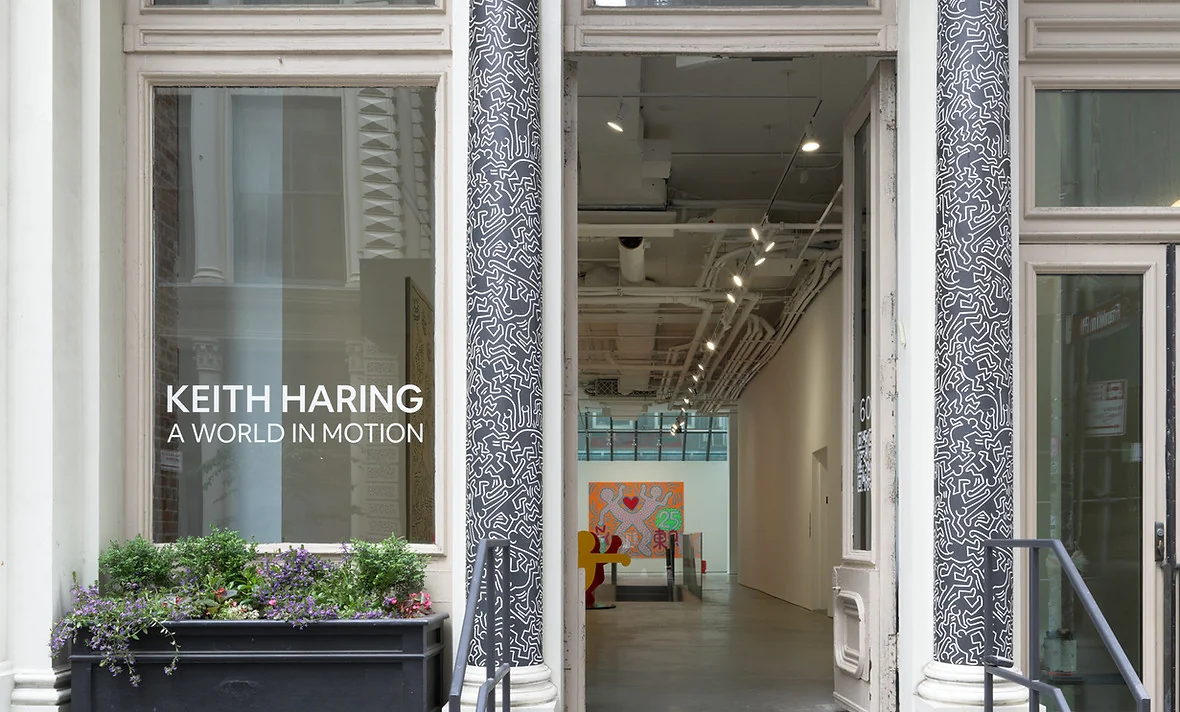
A World in Motion at 60 White opened on May 14, 2026. Curated by Carlo McCormick, it was developed in collaboration with collector and gallerist Lio Malca. The title refers both to the movement of Haring’s drawn bodies and to the artist’s own movement between countries and artistic communities.
The exhibition occupies several floors. The gallery’s official description emphasises international exchange: Haring carried his experience of New York street culture into other cities, while his work also changed through encounters with new surroundings. Geography therefore means more than a list of journeys. Tokyo, Paris and San Francisco become particular circumstances for which an image was made.
The focus distinguishes this approach from a comprehensive museum retrospective. There is no need to retell the artist’s entire biography through every exhibit. A more rewarding question runs through the show: why can such economical drawing work in a noisy public space, on a club wall and in a quiet gallery?
Inside the exhibition: look at the work and the space
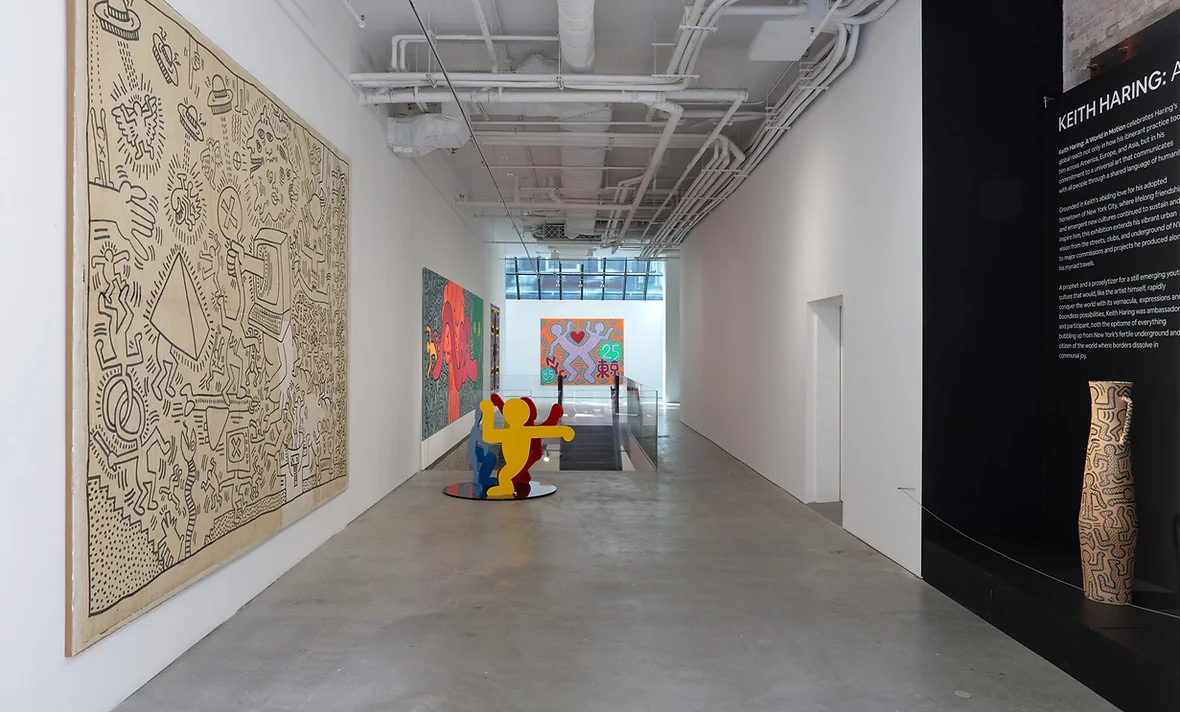
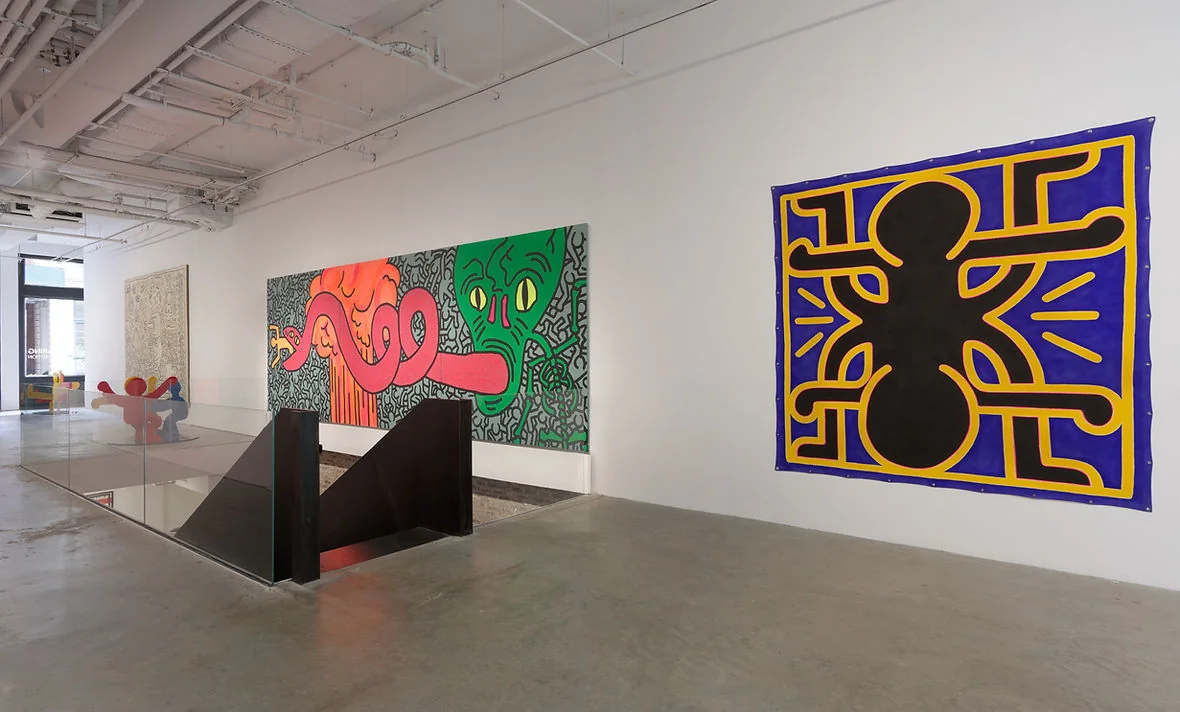
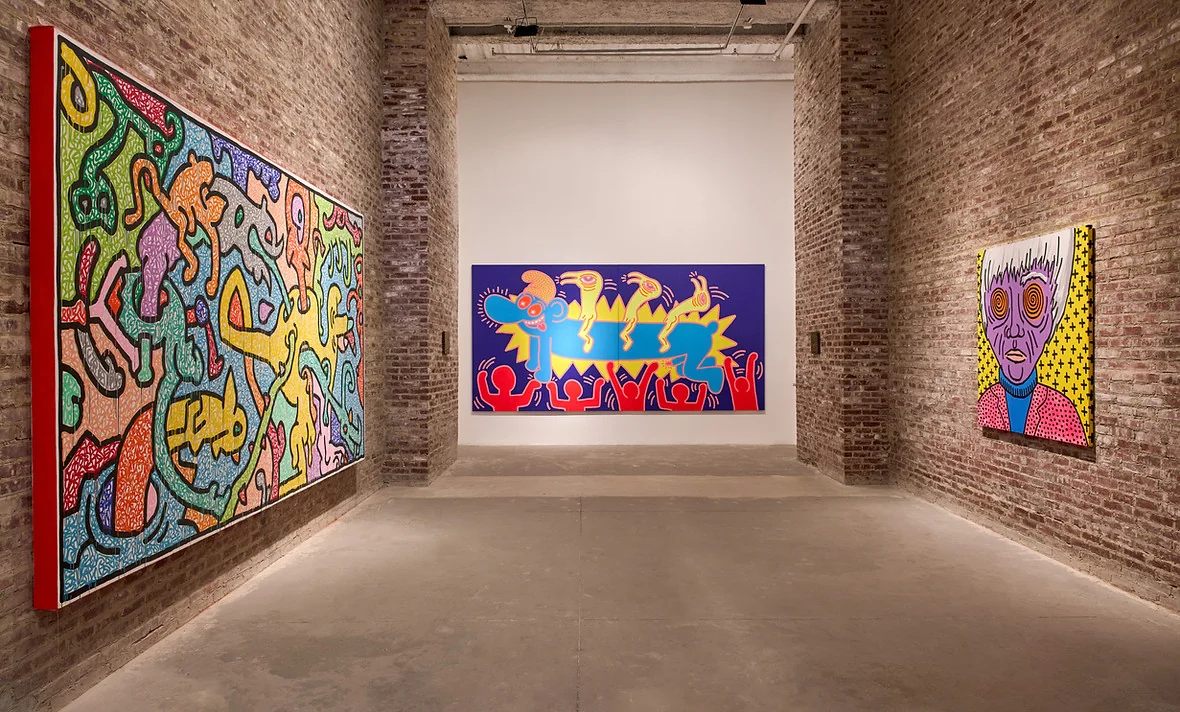
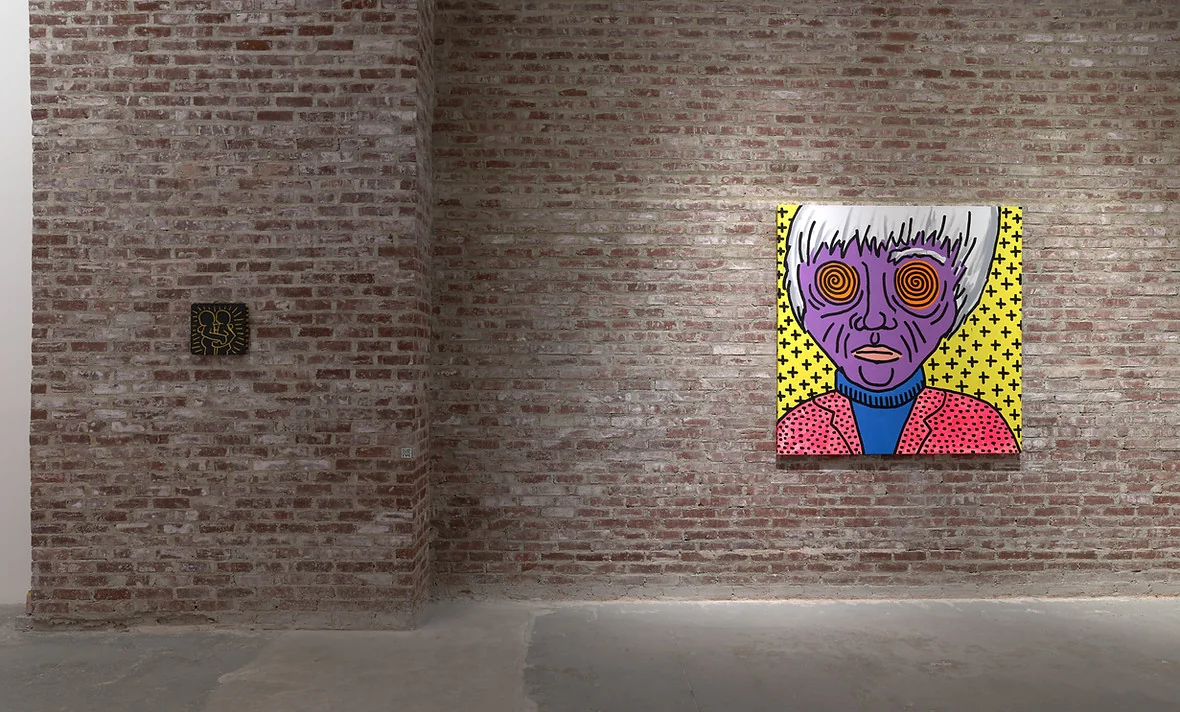
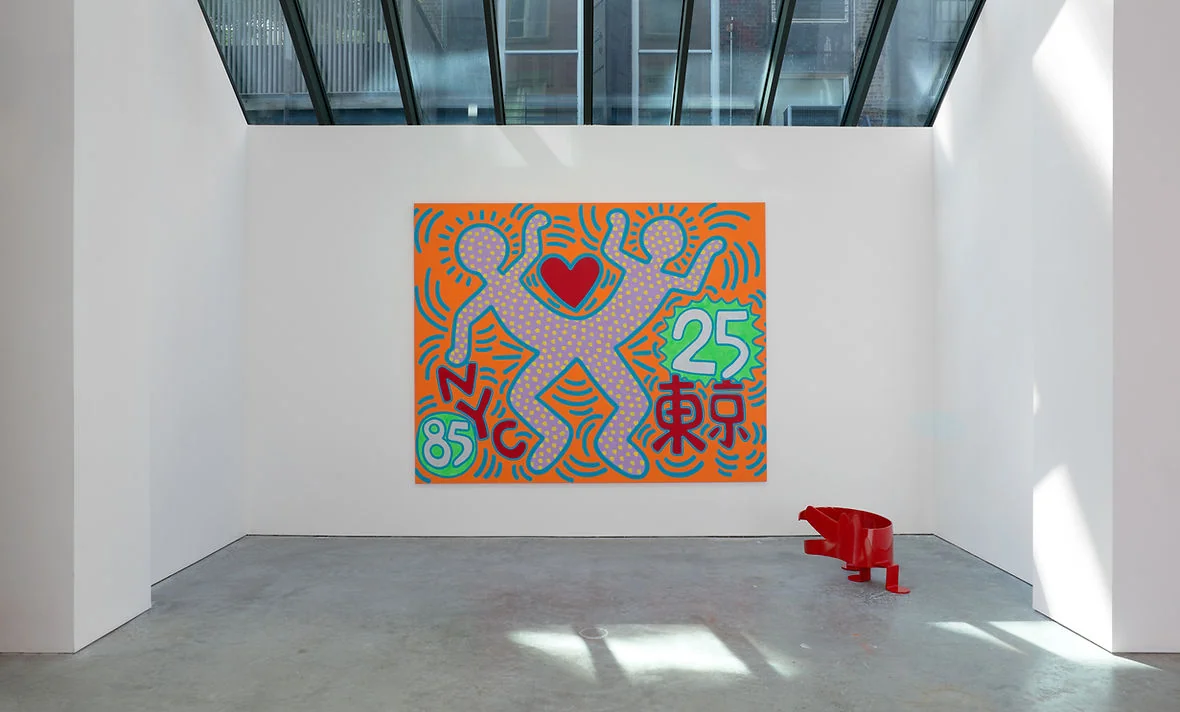
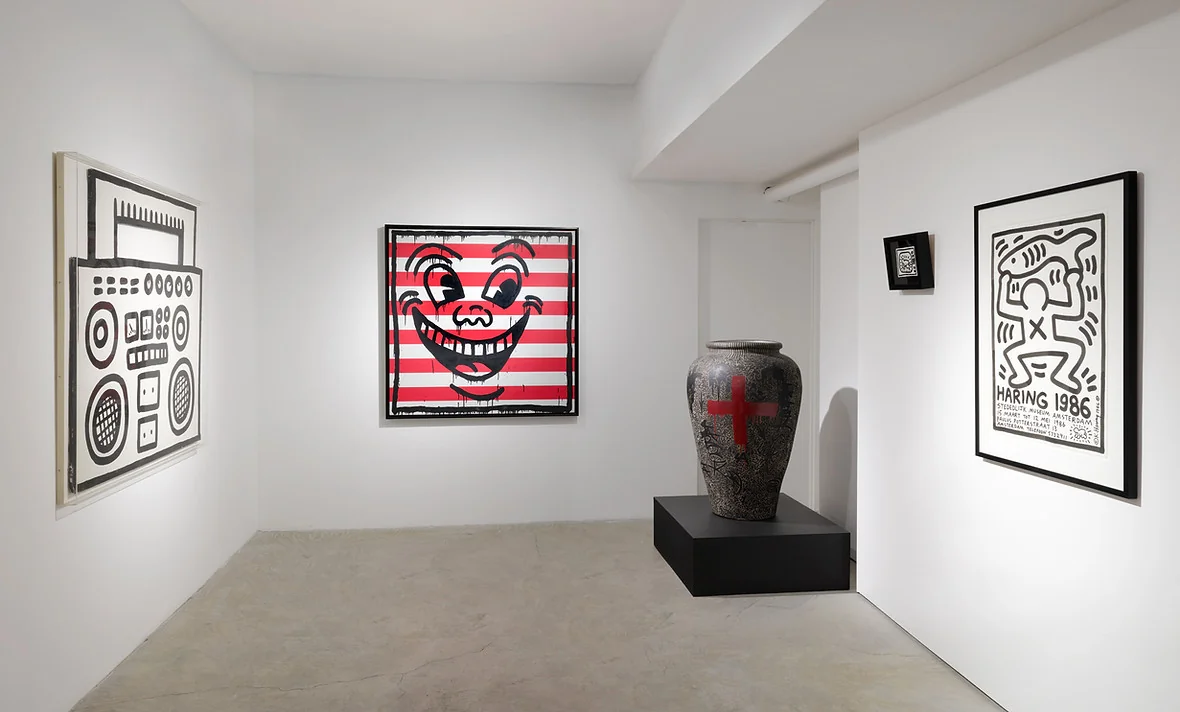
The exhibition photographs make its changes of scale visible. Individual works appear alongside walls, passages, architectural openings. That context matters when encountering Haring: a work is more than an image to inspect on a phone. It has physical dimensions and a particular distance from its viewer.
Begin by looking at the room as a whole, then move closer to one work. From a distance, the rhythm, main colour relationships and the way the image holds its surface become apparent. Up close, you can follow repeated contours, densely filled areas and changes in the direction of the line. Step back again: many small decisions form an image that can be read remarkably quickly.
Haring’s works should not all be understood as equally joyful. Simple human figures can express closeness, pressure, collision or dependence. Meaning emerges through their relationships. Notice posture, the direction of movement, distance and which figure becomes larger or more powerful than another.
It helps to consider familiar symbols within a particular work. A recurring motif changes its tone when transferred to another surface or placed beside a different figure. An exhibition makes those differences easier to notice than a selection of recognisable images viewed separately.
Inside the exhibition
A visual selection for the ArtComburo guide. Photographers and sources are credited below each image.
DV8: a mural returns to a social setting
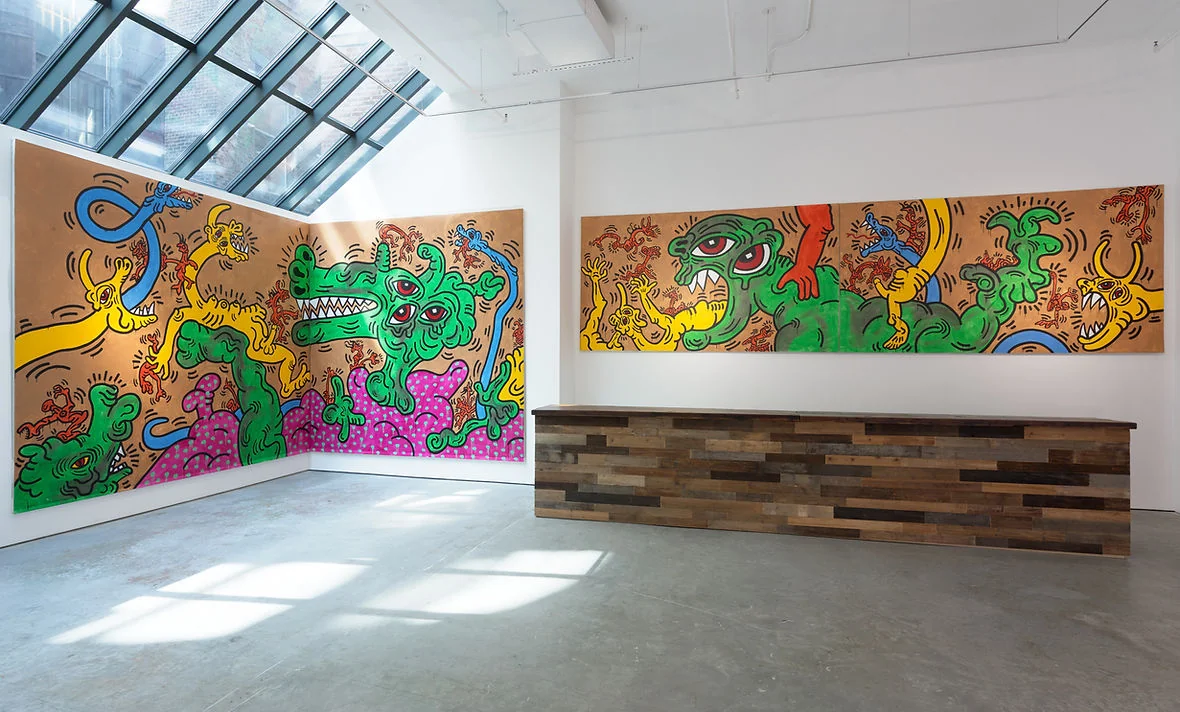
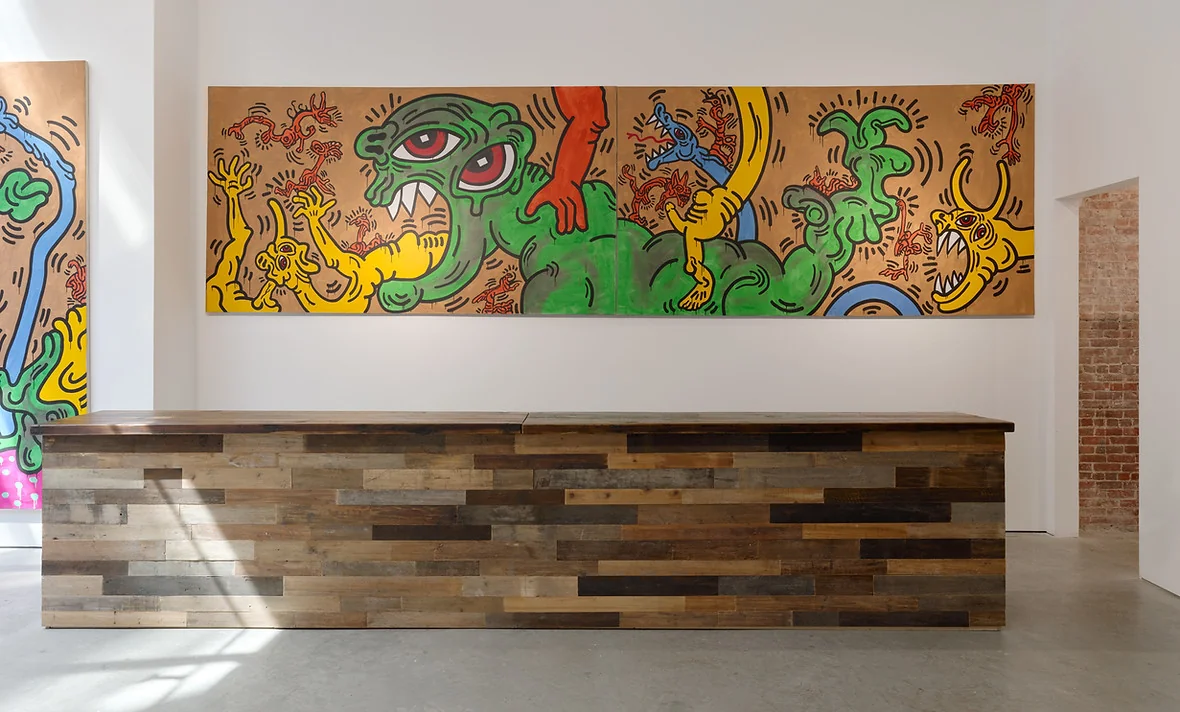
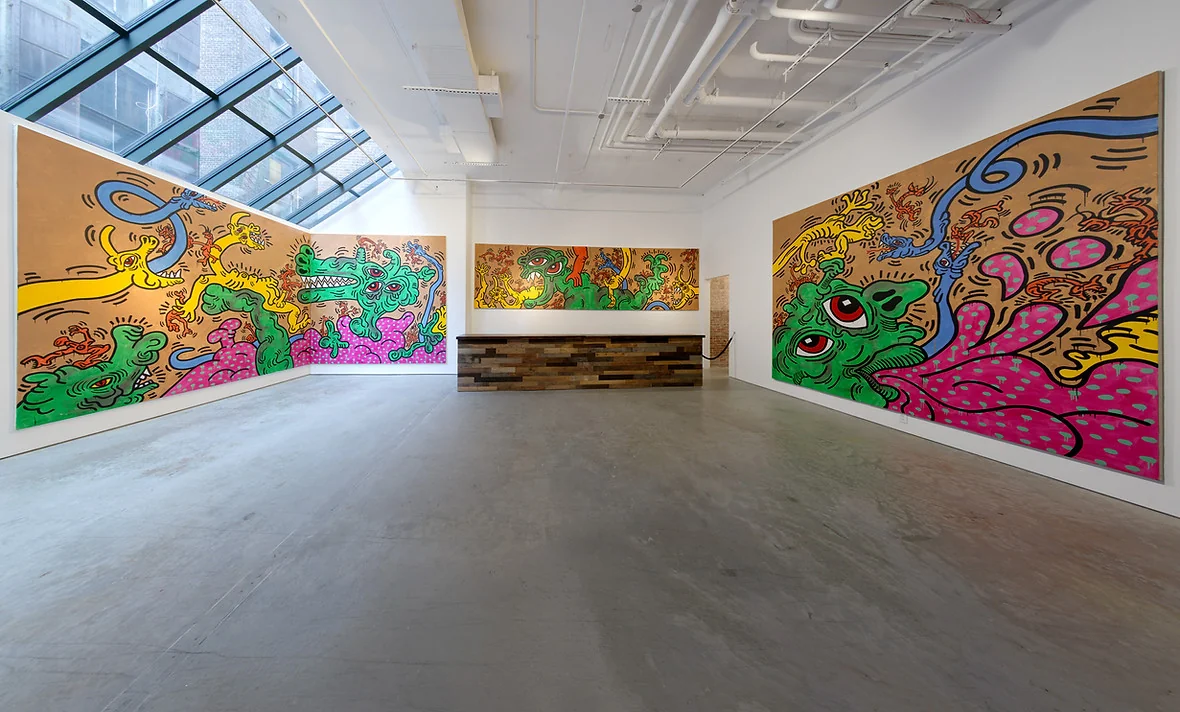
One of the principal sections of A World in Motion concerns DV8, a San Francisco nightclub. The gallery identifies the five-part mural of 1986 and the re-created club environment as central elements of the exhibition. This does not mean that the historic nightclub has reopened in Tribeca: the installation interprets a setting in which art met music, performance and nightlife.
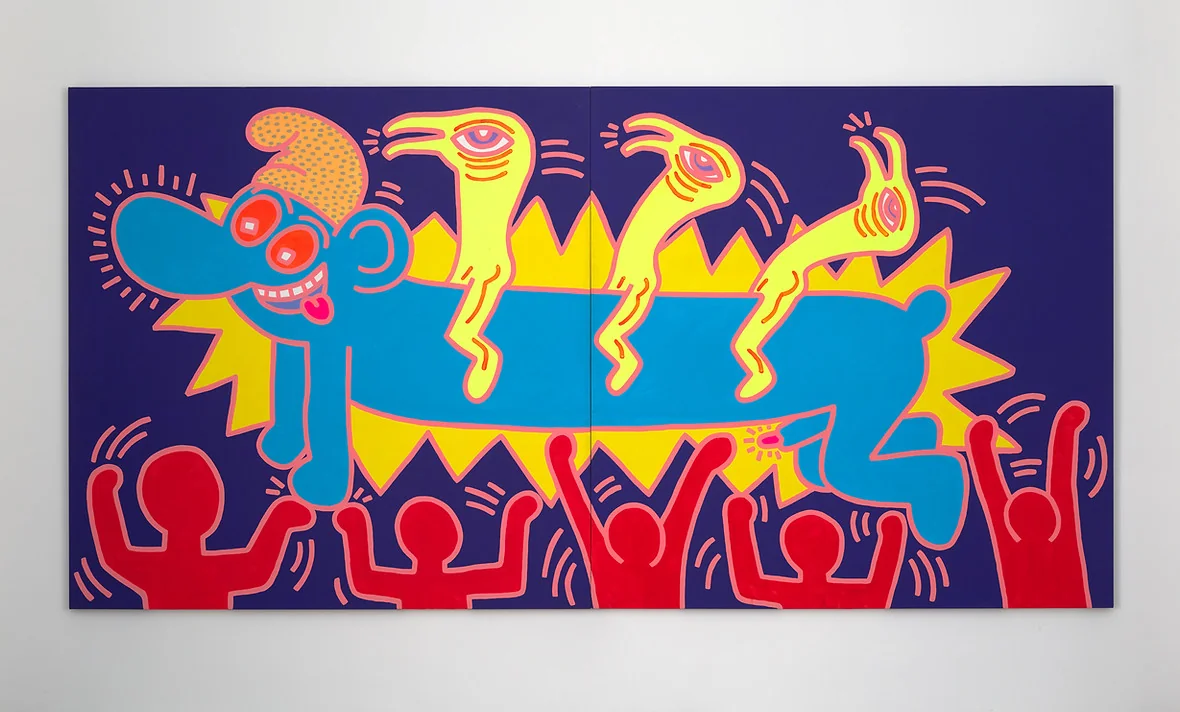
The Lio Malca catalogue entry identifies the work as Untitled (DV8), 1986. Executed in acrylic and oil on canvas, it comprises five panels: three measuring 120 × 120 inches and two measuring 72 × 120 inches. The work originally hung above the bar at Club DV8. This is a specific monumental artwork, rather than a contemporary decorative copy of a wall.
That distinction matters for understanding Haring. A club mural is encountered through the body: someone walks alongside it, turns, speaks to other people and hears music. Even when the image is still, its surroundings keep changing. The line becomes part of the room’s shared rhythm.
In photographs of this section, compare the overall view with a detail. One shows how the image encompasses the space; the other reveals the repetitions and contrasts that sustain its energy. A mural need not be reduced to one successful photograph. A multipart work invites you to move along it and compare neighbouring passages.
The club setting also helps explain why Haring did not separate art from community life. The exhibition’s official account brings Paradise Garage, dance and Grace Jones’s performances into the discussion alongside artistic projects. The Nakamura Keith Haring Collection also examines the artist’s relationships with music and dance. These connections do more than decorate a biography. They help explain why movement and collective experience return so often in his work.
The DV8 mural in the exhibition
A visual selection for the ArtComburo guide. Photographers and sources are credited below each image.
New York, Tokyo and Paris: three encounters with an audience
Several specific works anchor the international part of the exhibition. Keeping them in mind before a visit helps preserve a sense of history and place within the overall impression.
| Work or project | Date | What it helps reveal |
|---|---|---|
| Sister Cities, New York–Tokyo | 1985 | How an artistic image connects two cities |
| Drawing for the Paris Métro, Alma–Marceau station | 1984 | How a line operates within another city’s transport system |
| Five-part DV8 mural, San Francisco | 1986 | How a work becomes part of a nightclub environment |
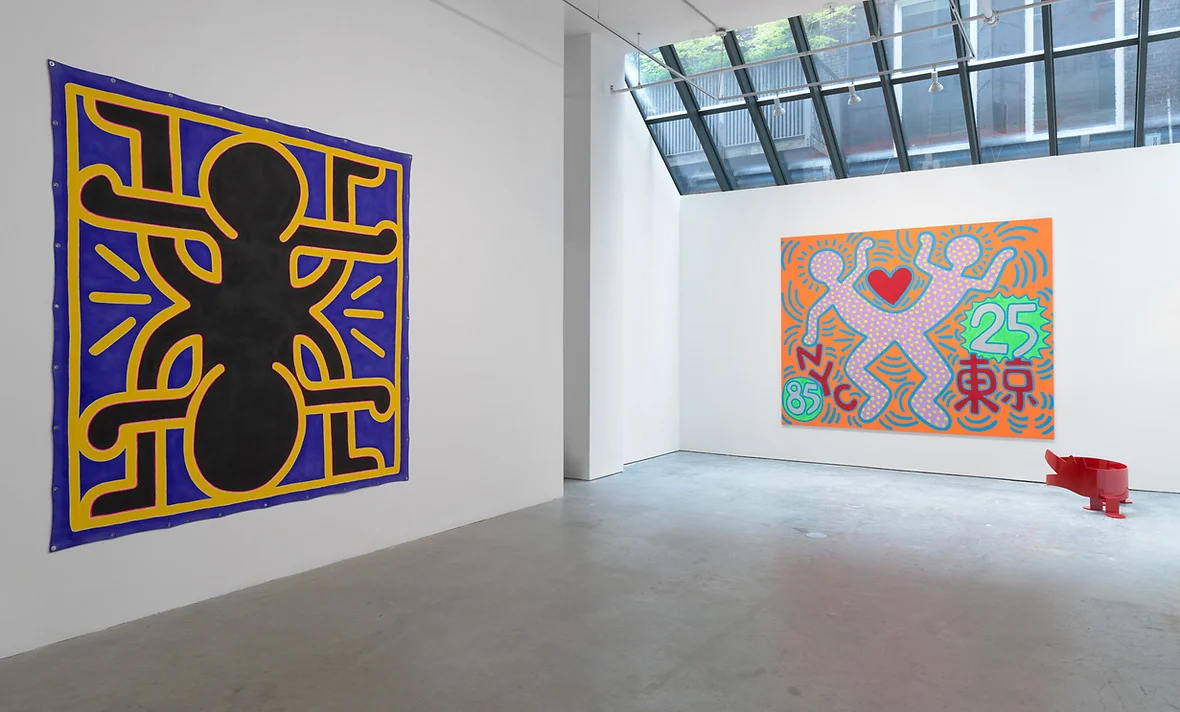
The gallery’s official page presents Sister Cities as a work of 1985 measuring 237 × 298 cm. This is a large format, worth considering in relation to the human body rather than as a small illustration. Its connection between New York and Tokyo shows how Haring’s accessible visual language could address an audience far beyond the American downtown scene.
The Paris episode concerns Alma–Marceau and is dated 1984. It should be distinguished from Haring’s New York subway drawings. The interest in public space and in viewers who have not necessarily come to see an exhibition remains, while the city, surface and circumstances differ.
Milan also belongs to the geography outlined by the gallery. The Foundation’s archive of solo exhibitions records Haring’s show at Salvatore Ala Gallery in Milan in 1984. It gives a sense of how early his practice became international. The city’s history provides context, while the individual works in the present exhibition can be explored through their own titles, dates and materials on the labels.
City projects and paintings
A visual selection for the ArtComburo guide. Photographers and sources are credited below each image.
Why the subway matters to Haring
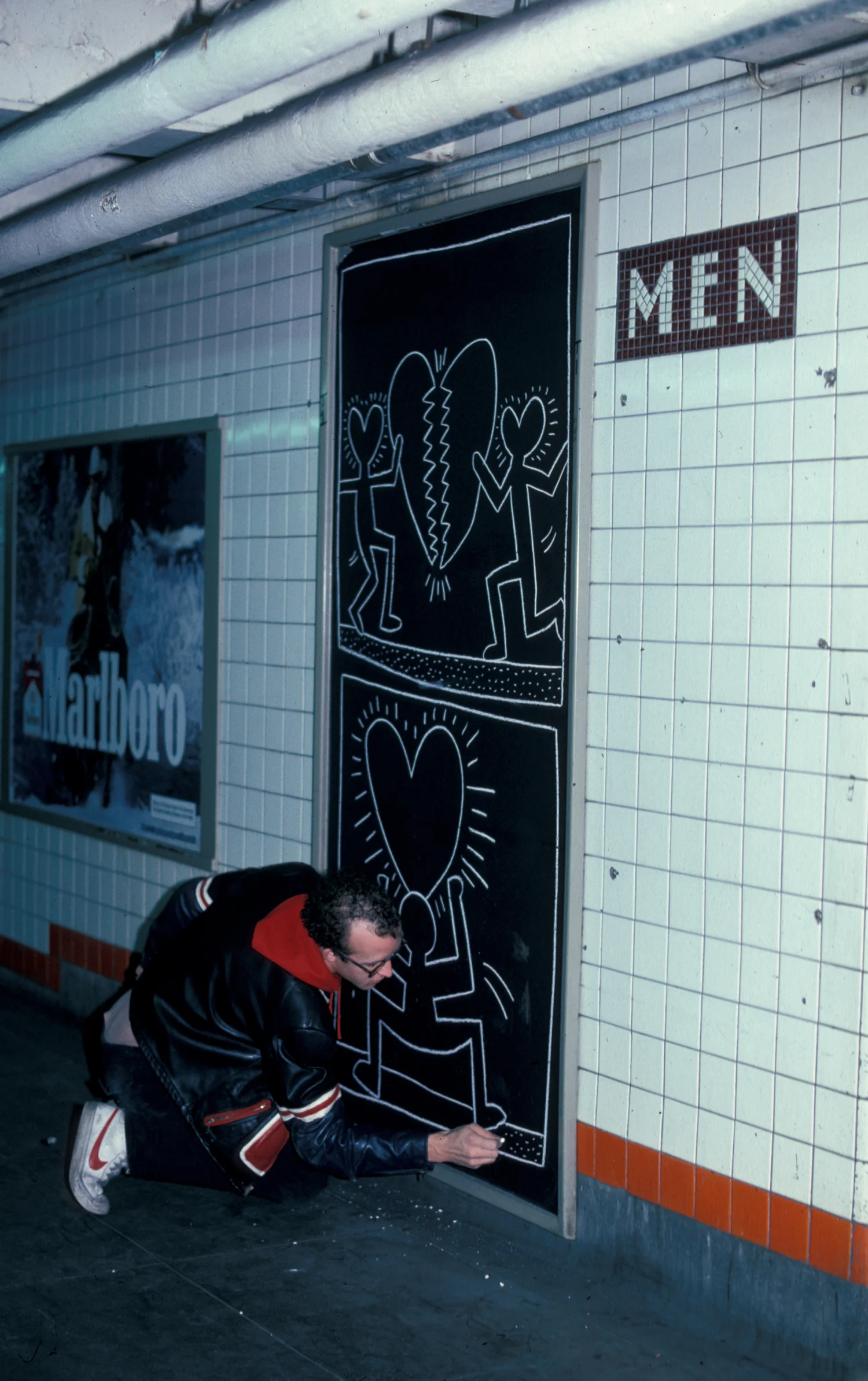
For Haring, a city’s transport network offered a place for direct communication. As the Keith Haring Foundation’s biography describes, his New York drawings in white chalk on black paper appeared along passengers’ everyday routes. Someone could encounter them on the way to work rather than on a day set aside for visiting a museum.
That experience helps explain the economy of his drawing. A subway viewer may have very little time. The contour must register quickly, while the composition holds attention among many other visual signals. Yet an apparently simple execution does not make the relationships between figures simple in meaning.
The gallery provides the opposite opportunity: to stop before an image associated with the city’s rapid movement. You can study the direction of lines, recurring signs and compositional density without hurrying for a train. A World in Motion offers that transition from a chance encounter to sustained looking.
Sculpture and the line in three dimensions
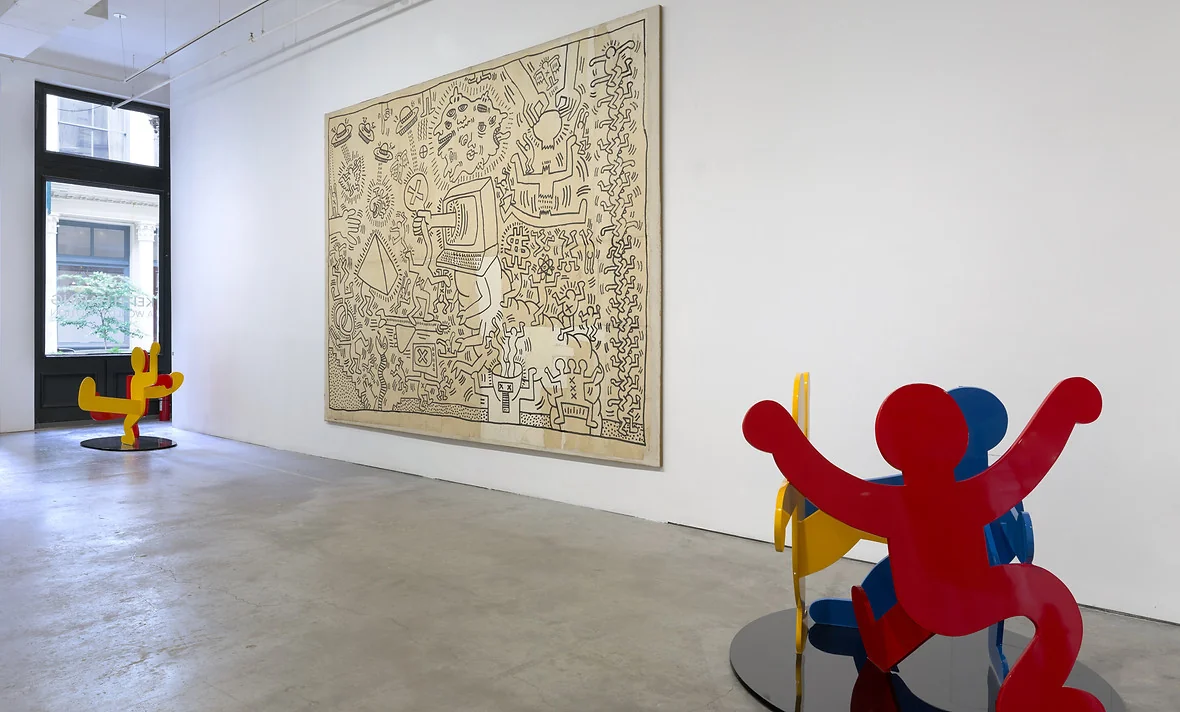
Three-dimensional works offer another way into a familiar artistic language. In a flat drawing, contour and the arrangement of figures establish movement. Sculpture adds a silhouette in space, openings, shadows and a changing viewpoint.
Take a few steps to the side. Look at how the parts connect, where space remains open and how the contour changes against its background. An image familiar from a flat surface becomes an object with its own mass and relationship to architecture.
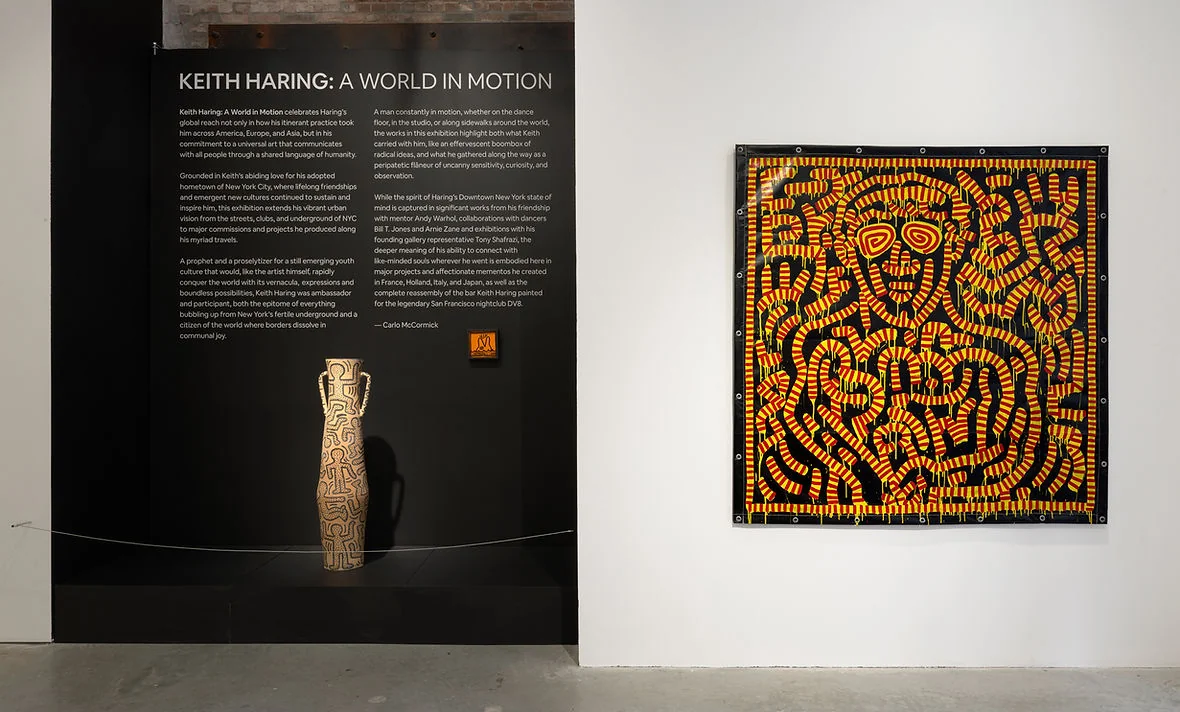
The sculptures on display should also be distinguished from contemporary objects reproducing Haring’s drawings. An artwork by the artist, a later edition and a licensed design object require different descriptions. For a collector, date, material, provenance and the artist’s documented involvement matter alongside the recognisable motif.
Sculpture and decorated objects
A visual selection for the ArtComburo guide. Photographers and sources are credited below each image.
Who was Keith Haring?
Keith Haring was born on May 4, 1958, in Reading, Pennsylvania, and grew up in nearby Kutztown. The Keith Haring Foundation’s biography traces his early interest in drawing to his father, cartoons and the popular culture around him. After briefly studying commercial art in Pittsburgh, he chose a different direction. In 1978 he moved to New York and enrolled at the School of Visual Arts. The move brought him into a scene where a drawing could meet an audience in a club, a subway station or the street as readily as in a gallery.
At SVA he experimented with performance, video, installation and collage while continuing to draw. Kenny Scharf, Jean-Michel Basquiat, musicians, dancers and graffiti writers belonged to the wider community in which his practice developed. Club 57 and other alternative venues gave artists places to organise exhibitions and performances themselves. That background helps explain why movement in Haring’s work feels social: a body is often doing something with, to or alongside another body.
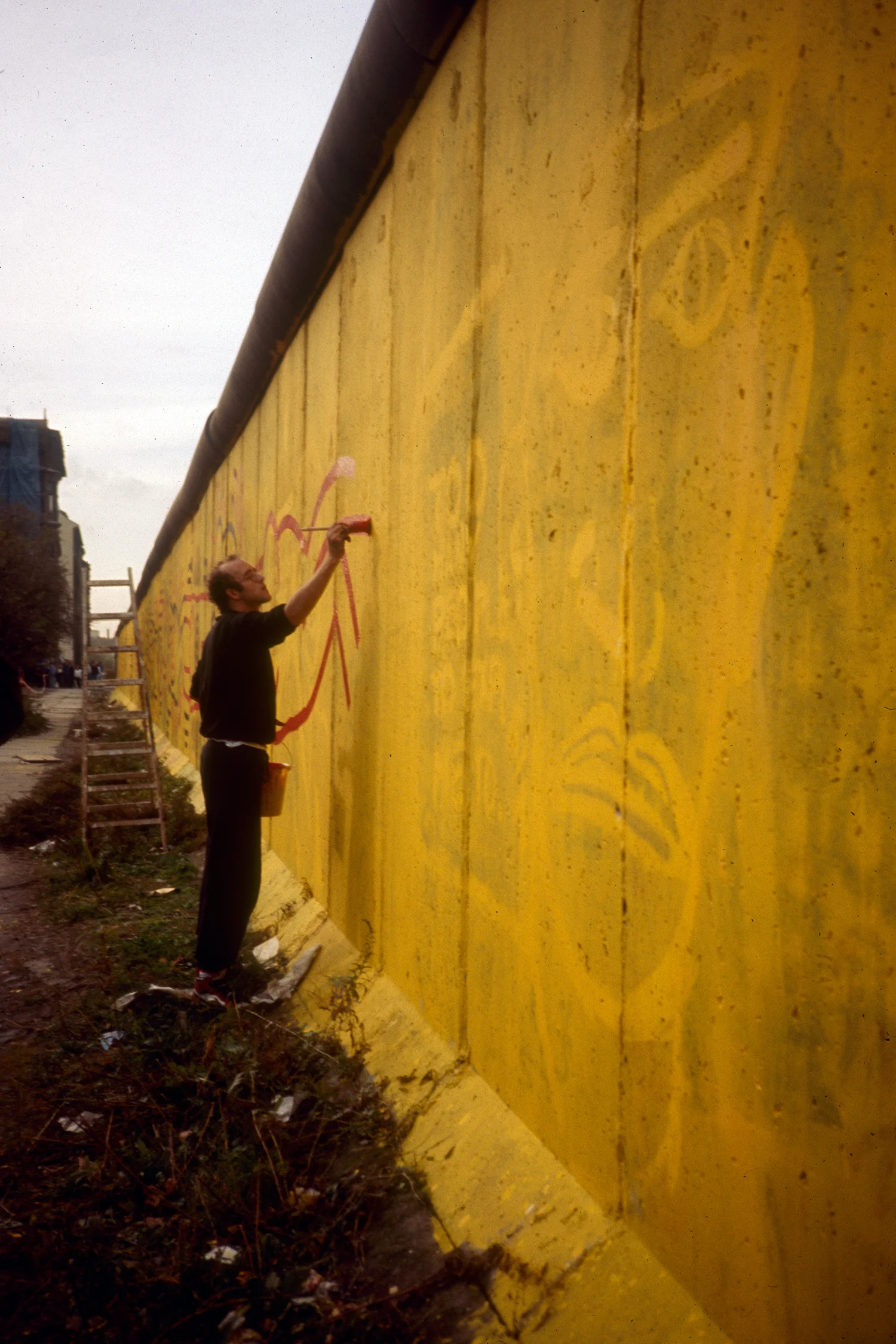
In 1980 he began drawing in white chalk on unused subway advertising panels covered with matte black paper. Between 1980 and 1985 he made hundreds of these public drawings. Commuters could watch, react or speak to him without entering an institution. The speed and clarity of the line answered that situation, but the audience was more than a test of instant recognition. A recurring image could become familiar through repeated encounters along someone’s daily route.
This is a useful way to approach Haring’s signs without turning them into a fixed dictionary. A crawling child, a barking dog, radiating marks or a dancing figure may be immediately recognisable; their function still depends on their setting. Look at who touches whom, which body dominates, where a line directs attention and whether repetition suggests shared energy or pressure. This is a reading of the pictures, rather than a claim that Haring supplied one universal translation for every symbol. The apparent simplicity makes relationships more visible, not necessarily less complex.
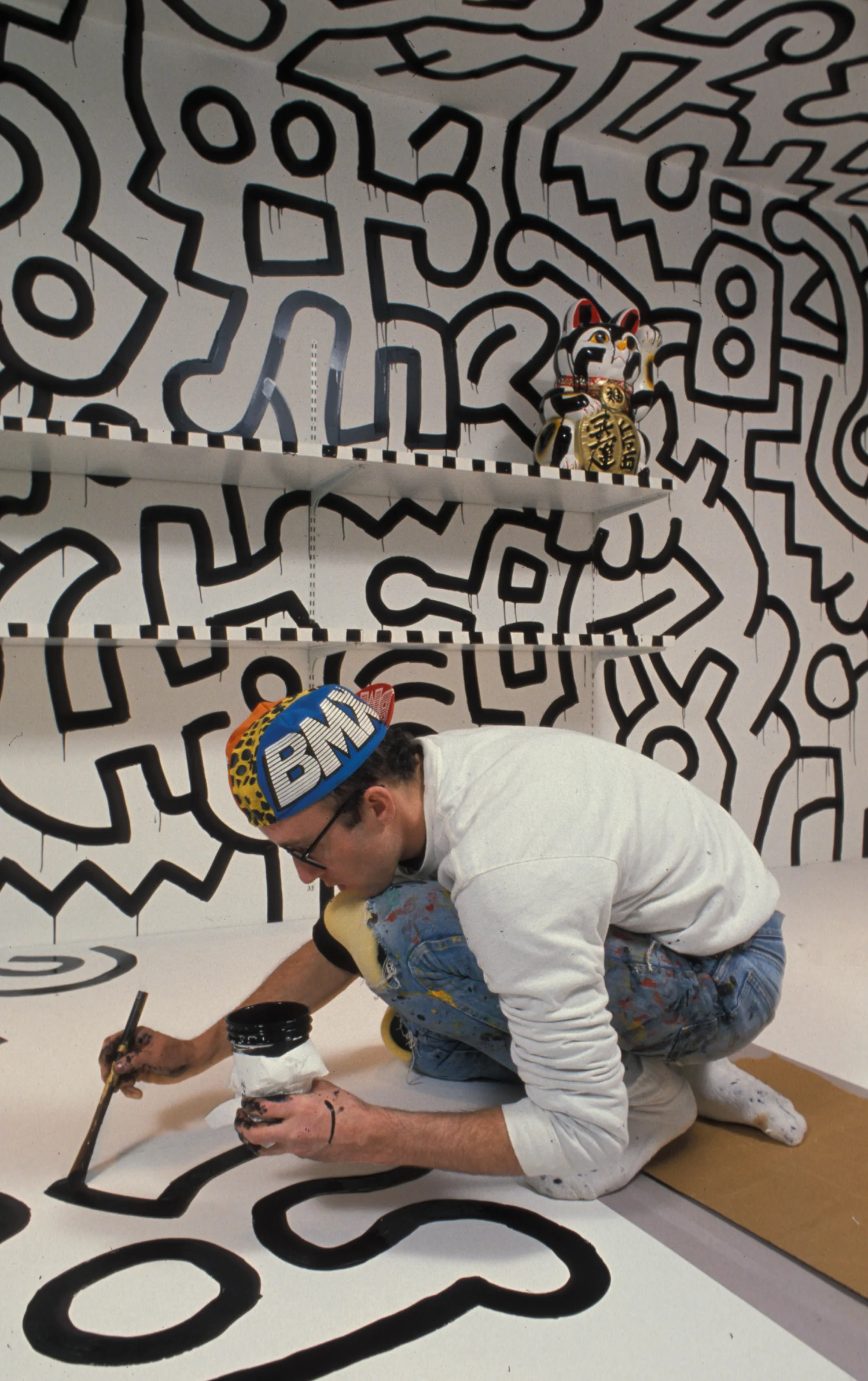
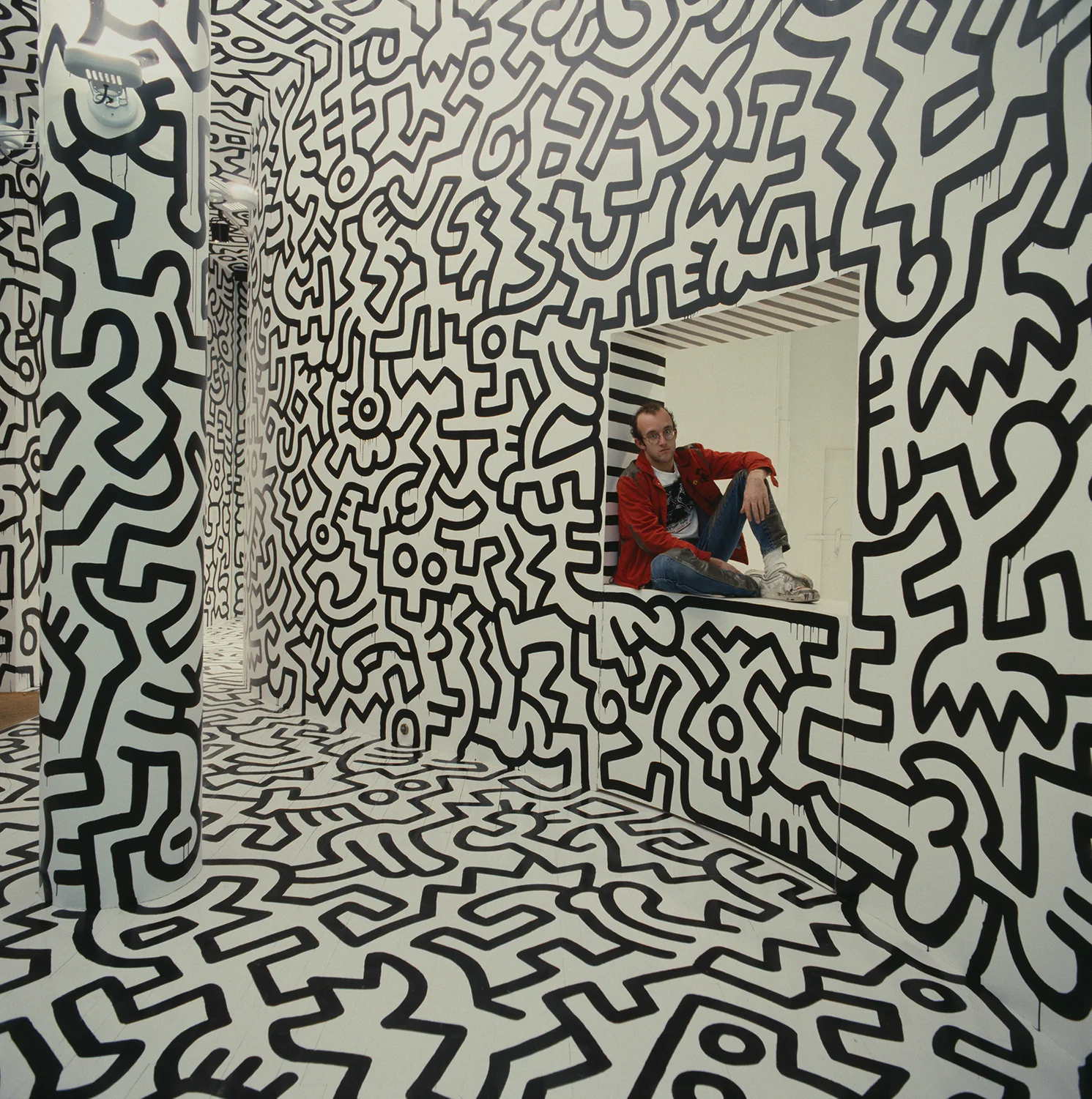
His growing gallery career did not end the question of public access. In April 1986 he opened the Pop Shop in SoHo, selling objects such as shirts, posters and buttons bearing his images. He also covered its interior with a black-and-white mural. The Foundation describes the shop as an extension of his practice intended to reach people who could not acquire an expensive artwork. The project attracted criticism within the art world and support from Andy Warhol. Its tension remains interesting: distribution could extend an image’s audience while raising questions about what happens when a visual language becomes a product.
Warhol mattered to Haring as an example of art intertwined with everyday life, not merely as a famous friend. Music and dance offered another form of circulation. His collaborations included Grace Jones and Bill T. Jones; the Nakamura Keith Haring Collection’s account places these interests within club culture and performance. Seen in this context, the DV8 mural belongs to a practice attentive to people moving together, not simply to a decorative style that happens to look energetic.
Public work also carried urgent social commitments. Haring made projects for children and public-service campaigns; the 1986 Crack Is Wack mural addressed drug use. Diagnosed with AIDS in 1988, he used imagery to support awareness and activism. In 1989 he established the Keith Haring Foundation to support AIDS organisations and children’s programmes and extend access to his work. He died from AIDS-related complications on February 16, 1990, aged 31.
That short life changes how the bright surfaces can be read. Joy and vulnerability, desire and unequal power can coexist in the same visual language. A World in Motion offers an opportunity to look for those tensions alongside the familiar figures. The Foundation preserves his legacy; the archival photographs of Haring below are presented separately from views of the current 60 White exhibition.
Keith Haring at work: archive photographs
A visual selection for the ArtComburo guide. Photographers and sources are credited below each image.

Planning your visit
| Question | Practical information |
|---|---|
| Exhibition | Keith Haring: A World in Motion |
| Venue | 60 White, Tribeca, New York |
| Address | 60 White Street, New York, NY 10013 |
| Dates | May 14–November 25, 2026, according to the current programme |
| Hours | Tuesday–Saturday, 10am–6pm |
| Admission | The littlebigworld.em announcement describes admission as free; confirm the arrangements with the gallery before visiting |
| Programme and contact | 60 White’s official contact page, +1 212 966 8854 |
The days and hours above come from the gallery’s current programme. Check its website before travelling: the exhibition is approaching its final days, so an older event description may be misleading. Information for this article was checked on November 20, 2026.
You can organise your viewing around three tasks: first take in the rooms and the works’ scale, then spend time with DV8, and finally compare the city projects and three-dimensional forms. This is a way of directing attention, rather than a prescribed route between floors. Choose a pace that leaves time to read labels and return to details that interest you.
If you go with someone who knows Haring only through familiar symbols, suggest a simple looking exercise: find where a line creates movement, where a group of figures becomes a community and where an image begins to feel unsettling. You do not need to know the artist’s whole history in advance.
What the exhibition offers a collector
A World in Motion helps restore context to the work. A large mural, a drawing for a public space and a separate object for an interior may use a similar visual vocabulary, but they establish very different relationships with their audiences. Comparing them makes it easier to ask precise questions: why was a work made, how was it intended to be experienced and what exactly is a particular example?
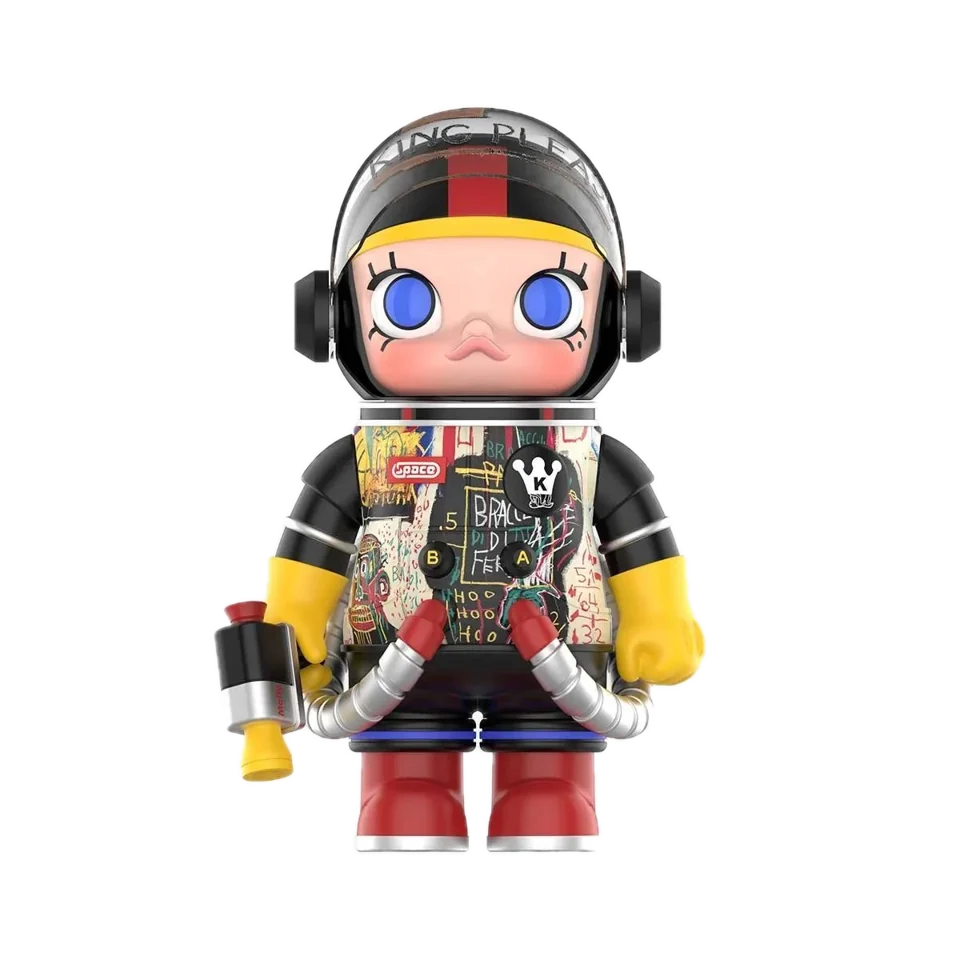
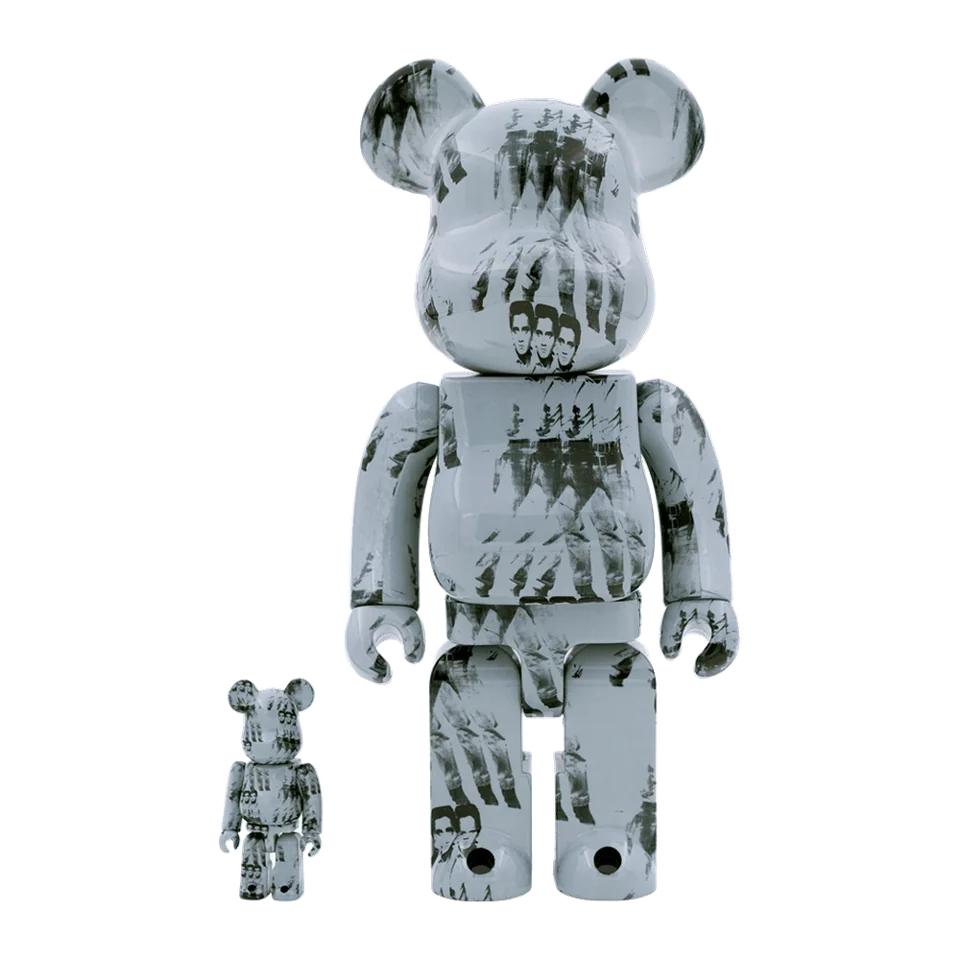
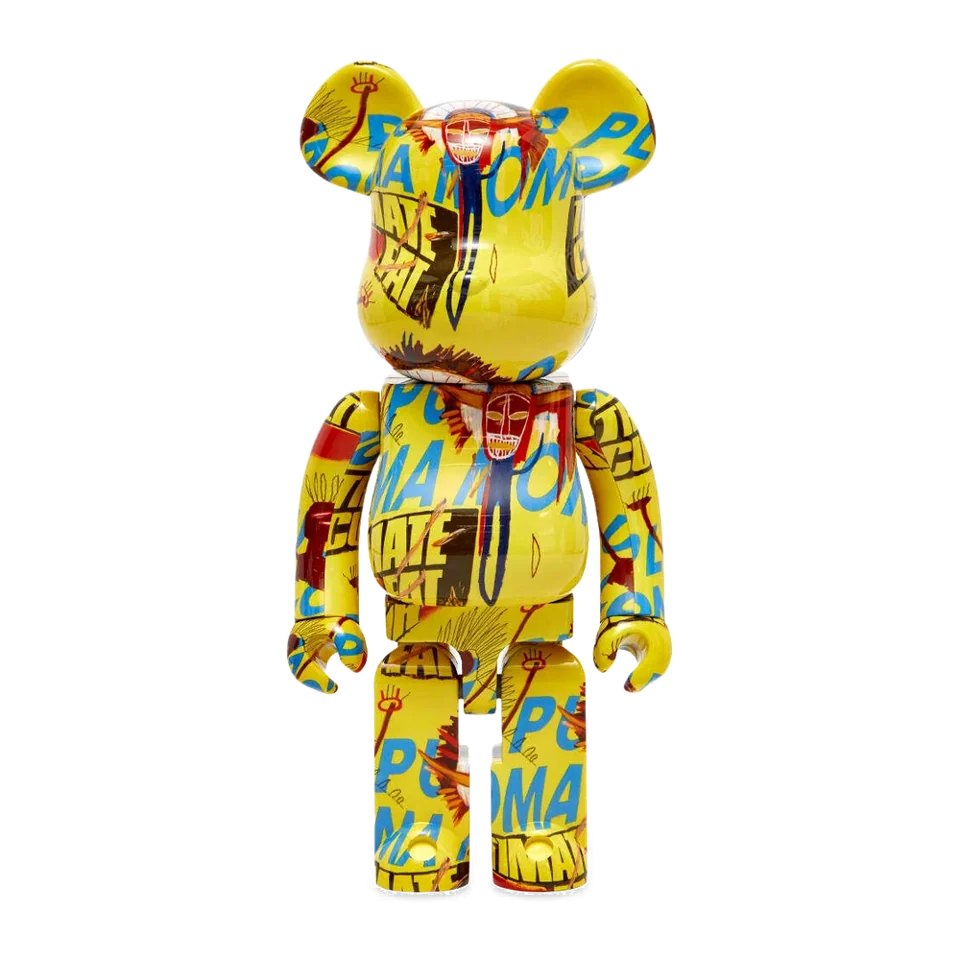
In ArtComburo’s catalogue, collectible objects associated with Andy Warhol and Jean-Michel Basquiat offer another way to explore New York’s artistic milieu. They are works connected with other artists and distinct releases; they are neither exhibits in A World in Motion nor substitutes for Haring’s artworks. Consider them as a separate collecting direction, retaining the distinction between an original work, an edition and a design object.