
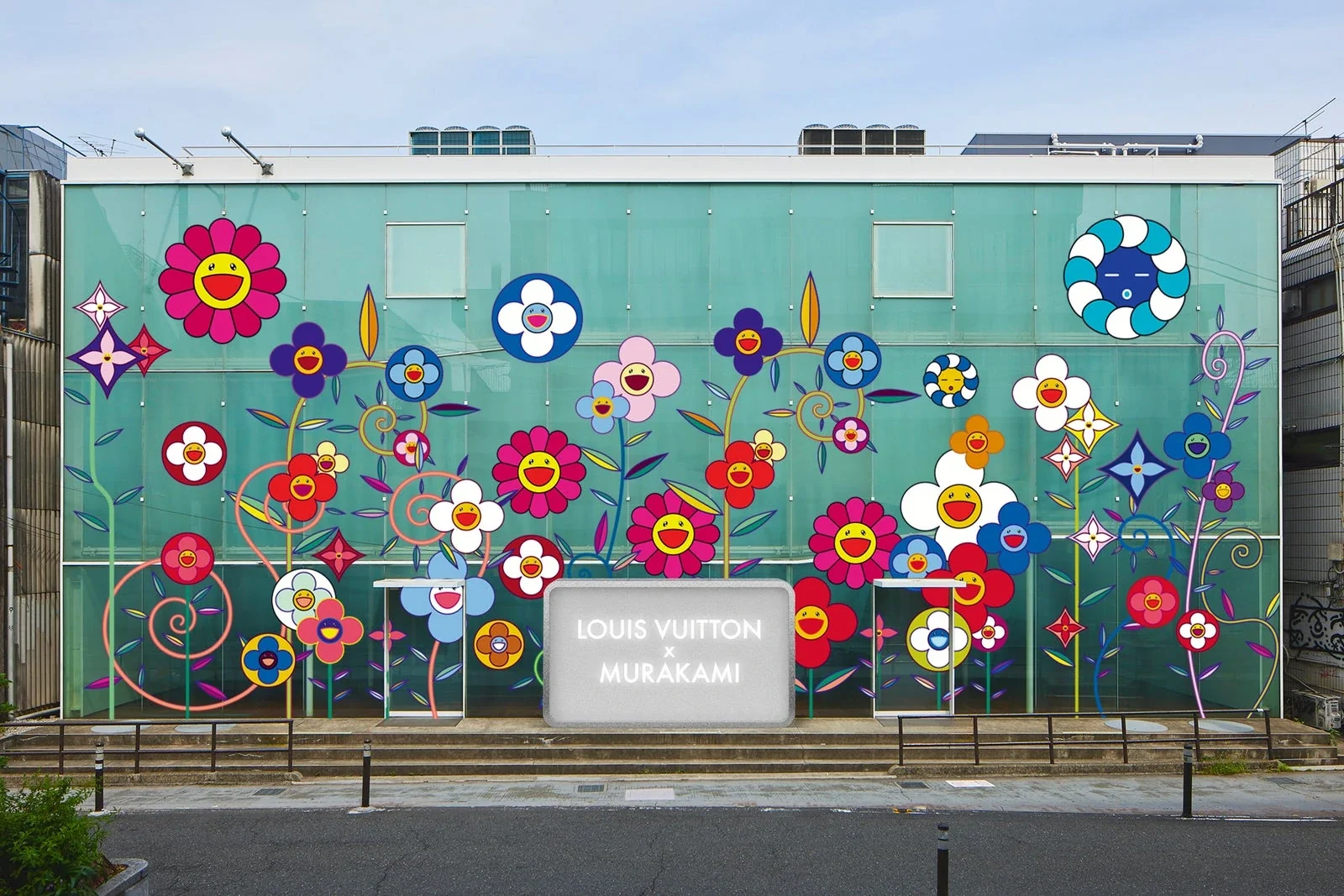
In this article
How it began: Murakami and Marc Jacobs
Louis Vuitton released its first collection with Takashi Murakami in 2003. Marc Jacobs, then directing the house’s artistic vision, invited the Japanese artist to work with one of fashion’s most recognisable visual codes. That encounter sits behind the familiar multicoloured monogram. The starting year is confirmed by LVMH.
Murakami did more than add his signature to a bag. He made a formal emblem feel playful, vivid and almost animated. For anyone familiar with his flowers, characters and paintings, the transition makes sense: an image becomes something you can carry through everyday life.
It helps to divide the story into two broad eras: the original releases beginning in 2003 and the project’s return in 2025. Each contains several stages, from Multicolore and cherries to sculptural bags wrapped in tentacles. Motifs, materials and the shape of the objects themselves changed as the relationship developed.
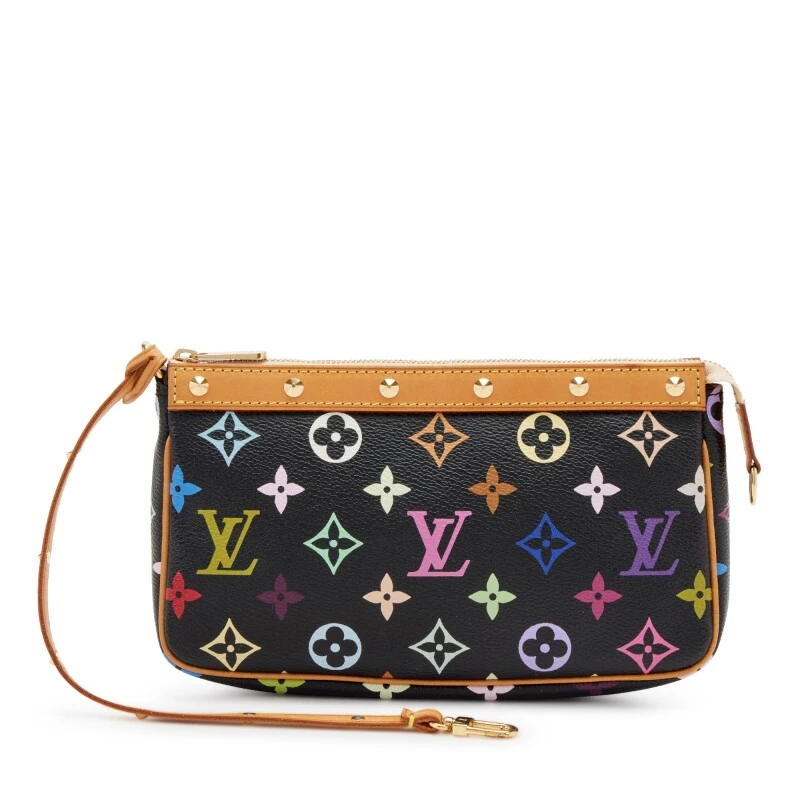
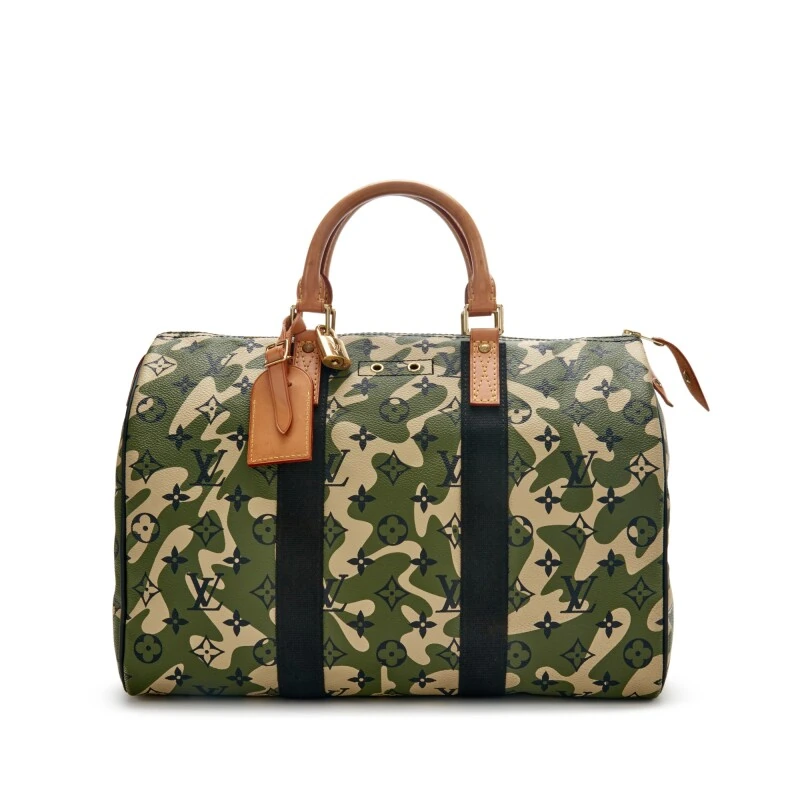
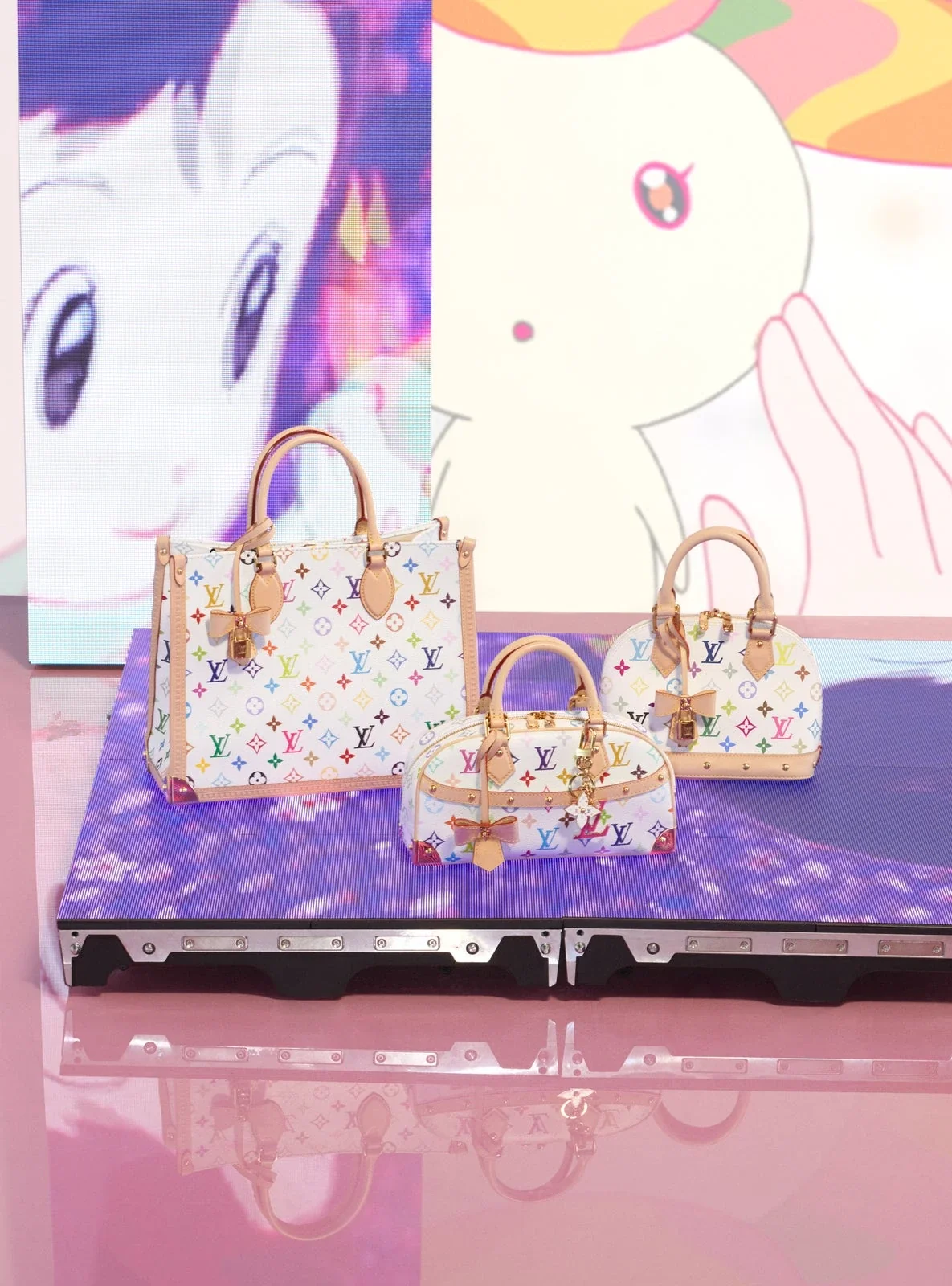
Multicolore, cherry blossoms, cherries and camouflage
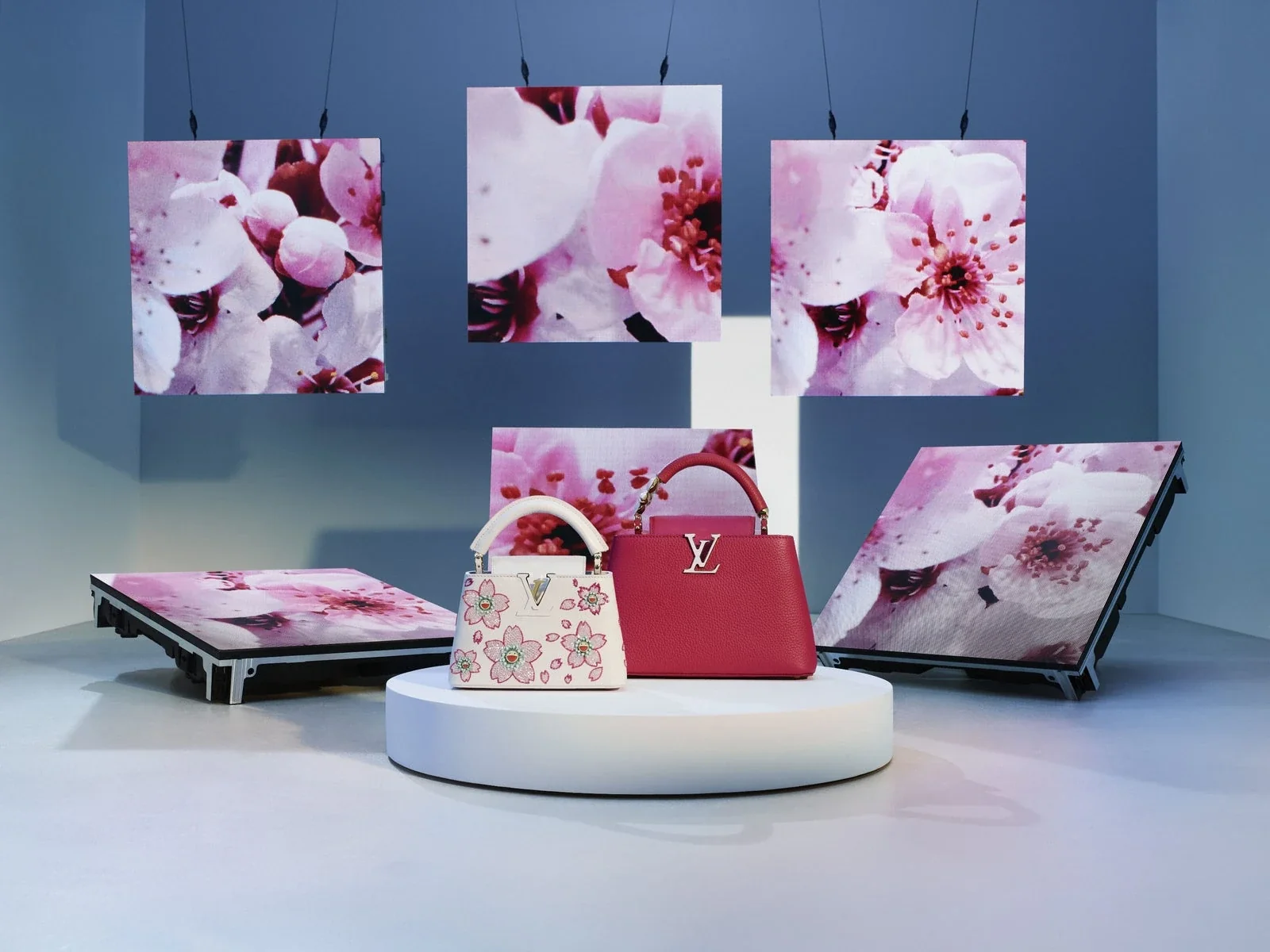
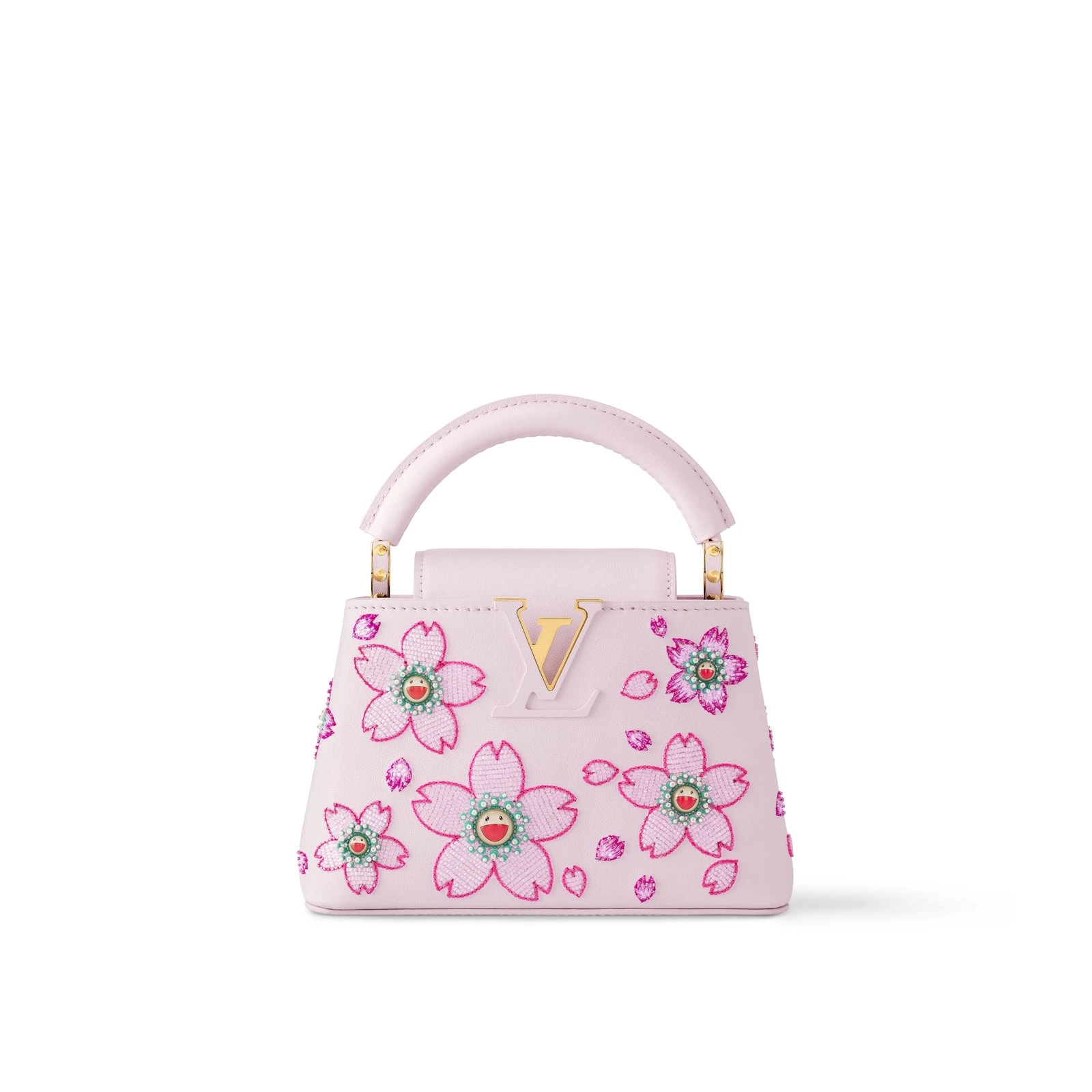
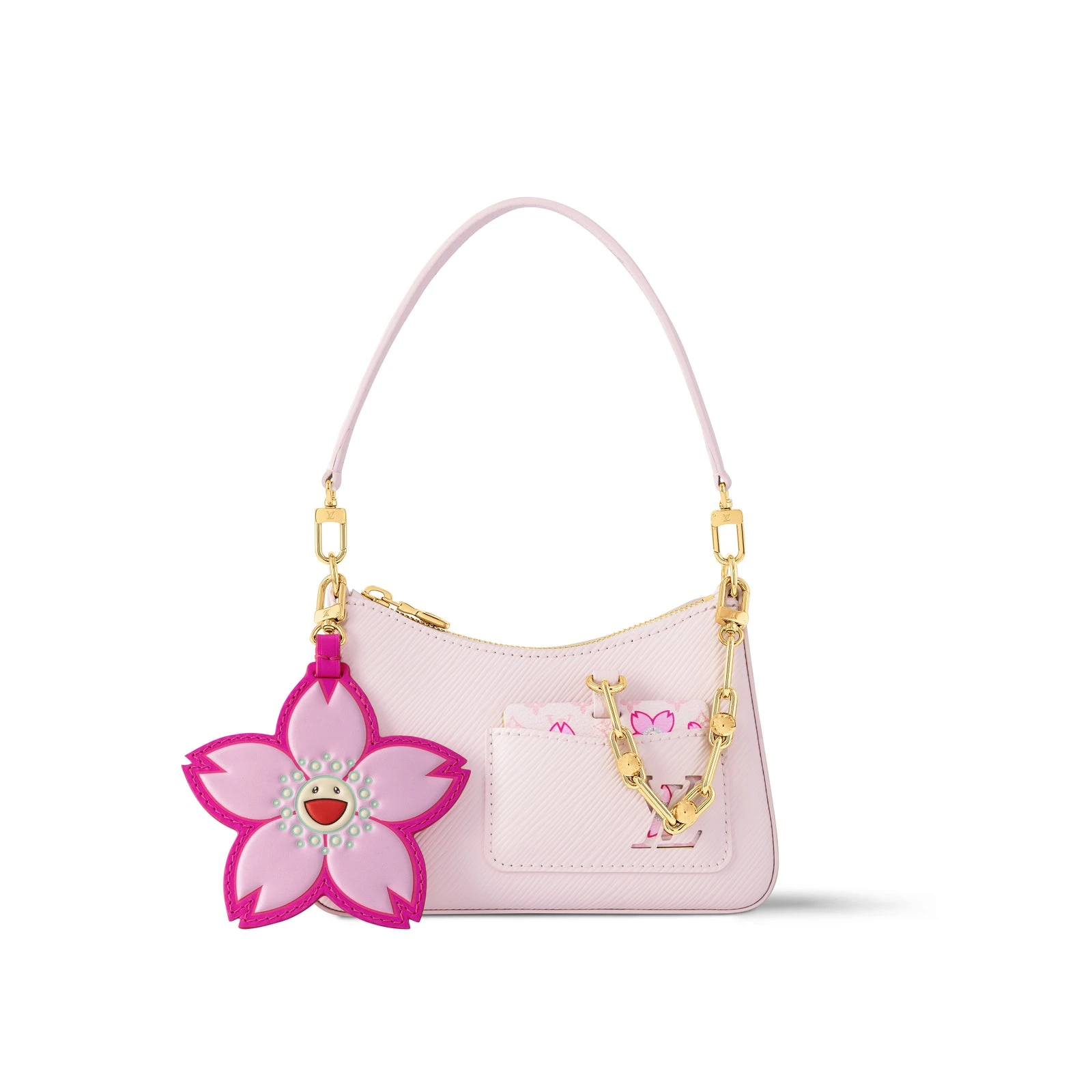
Following the motifs is an easier starting point than memorising bag shapes. Multicolore is recognised by its brightly coloured monogram letters and flowers against white or black. Cherry Blossom uses smiling blossom faces; a 2003 Pochette Accessoires appears in the Sotheby’s catalogue.
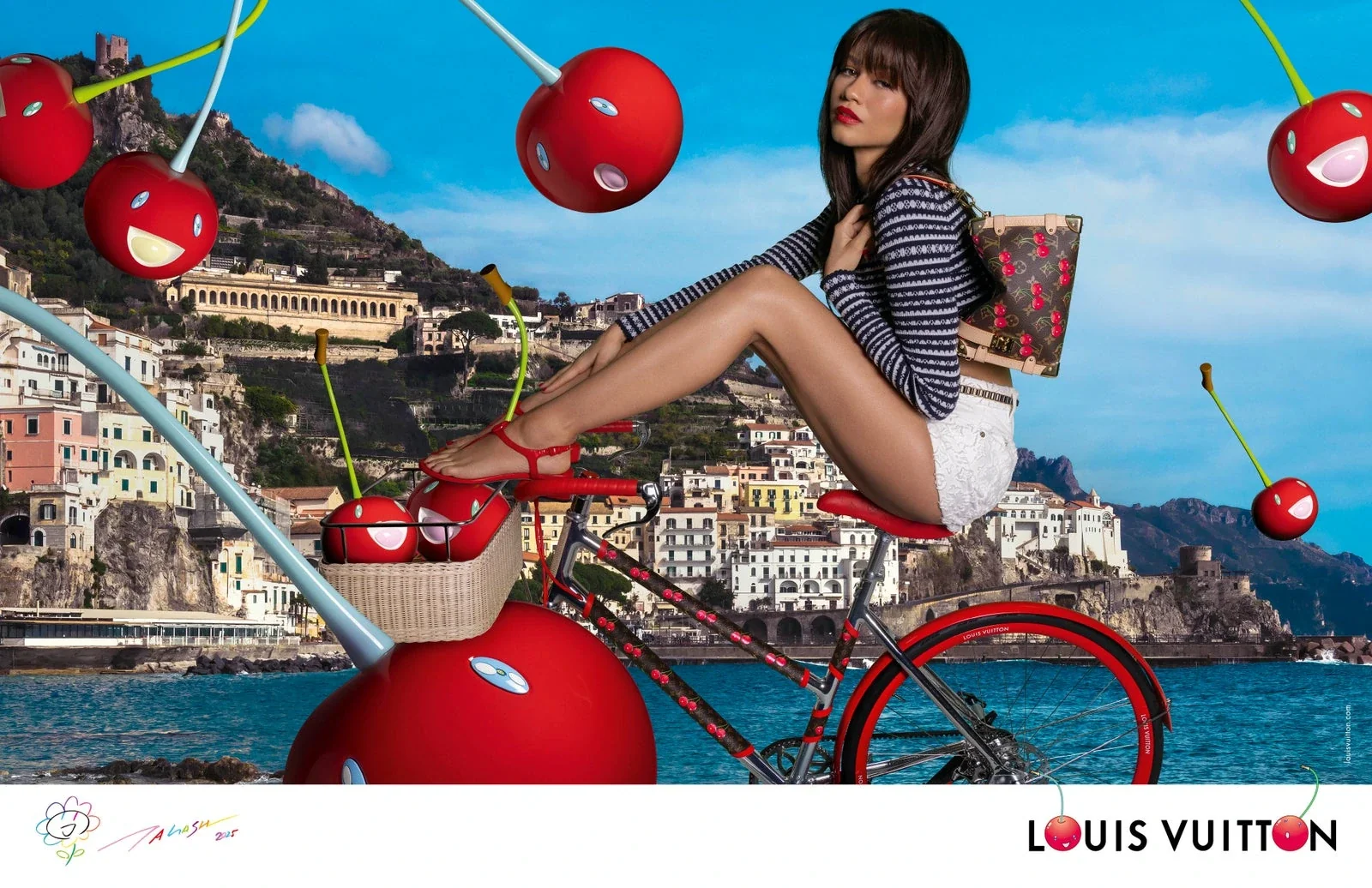
Cherry Blossom should not be confused with Cerises, where the fruit itself appears on the bag. A contemporary Moodie Davitt report describes that 2005 release. Monogramouflage takes another direction, bringing monogram and camouflage together. Sotheby’s dates one such piece to 2008.
These distinctions also make searching more productive. “Old Murakami Louis Vuitton flower bag” can lead to quite different objects. Identify the motif first, then the silhouette and size, before comparing condition and price. Similar colours do not establish an identical release, and a modern re-edition does not become an archival example because it shares an older design. A clear description should make the distinction easy to follow.
Three motifs from the early partnership
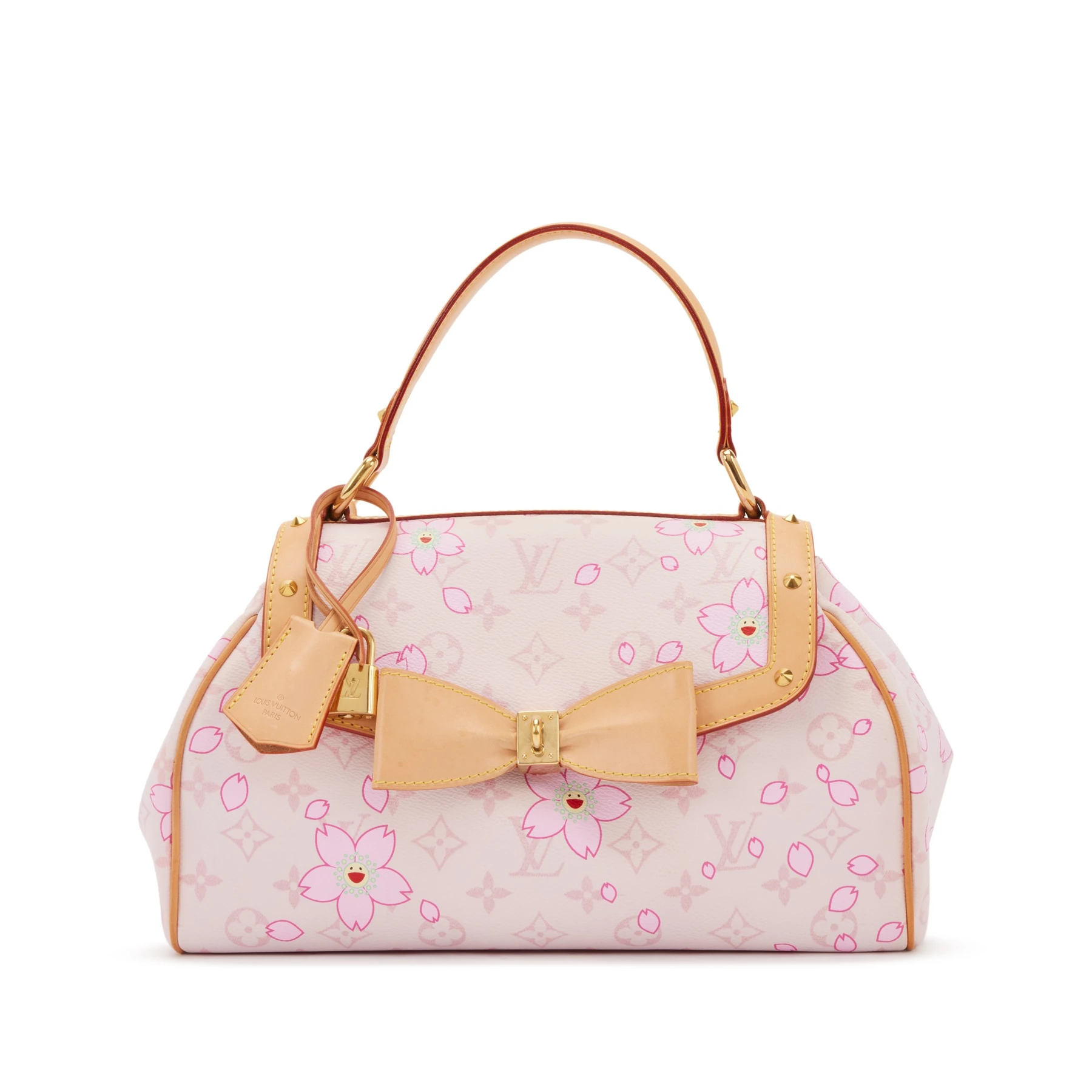
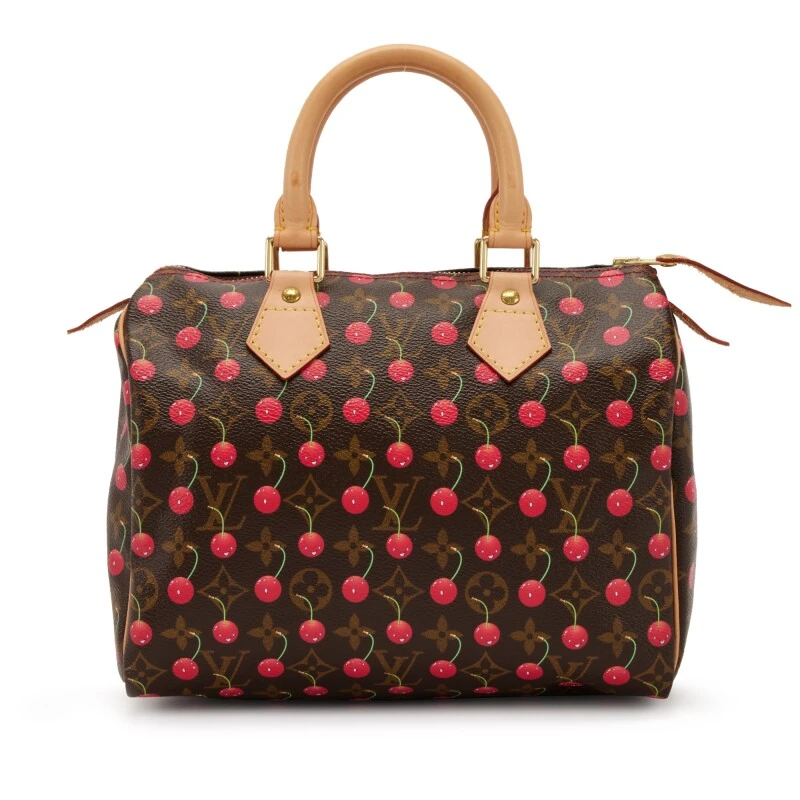
When a boutique became part of an exhibition
There is a museum chapter to this relationship. A fully functioning Louis Vuitton boutique operated inside ©MURAKAMI at MOCA in Los Angeles, an exhibition running from 28 October 2007 to 11 February 2008. The museum’s archive records the installation.
That arrangement helps explain why the collaboration interests people beyond fashion collecting. Visitors encountered artworks and a retail space within the same exhibition route. The boundary between art, a brand and the act of buying became part of what they experienced.
Museum context does not, however, turn every bag into a unique or strictly limited artwork. A collector still needs to identify the version, its history and its documentation. The artist’s involvement explains cultural interest; it does not independently establish a market value. That distinction is especially useful when an advertisement places “museum”, “rare” and “investment” beside one another without giving the precise release. A strong story is a reason to look closely, rather than a substitute for information about the actual object.
The 2025 return: familiar imagery reconsidered
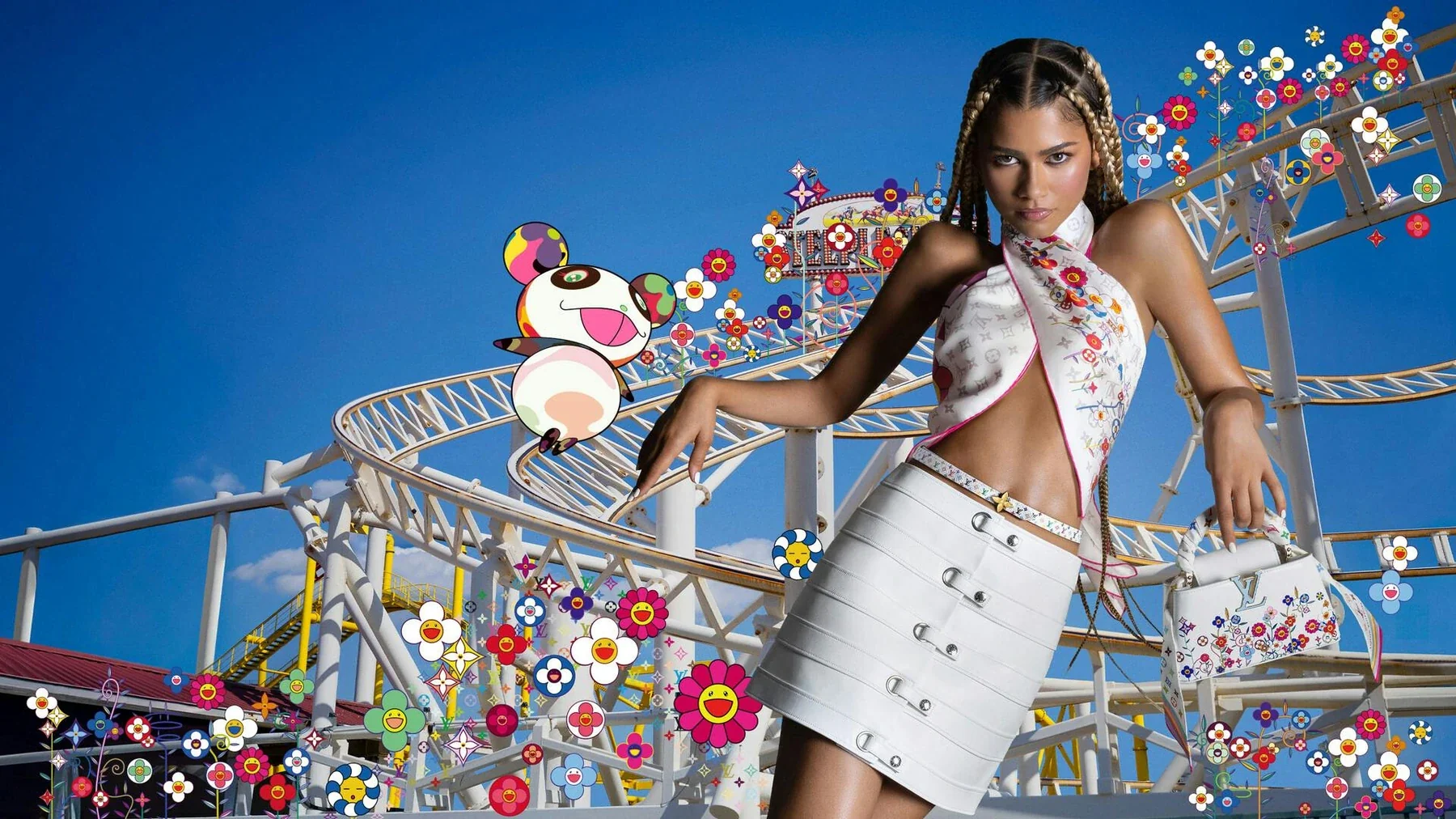
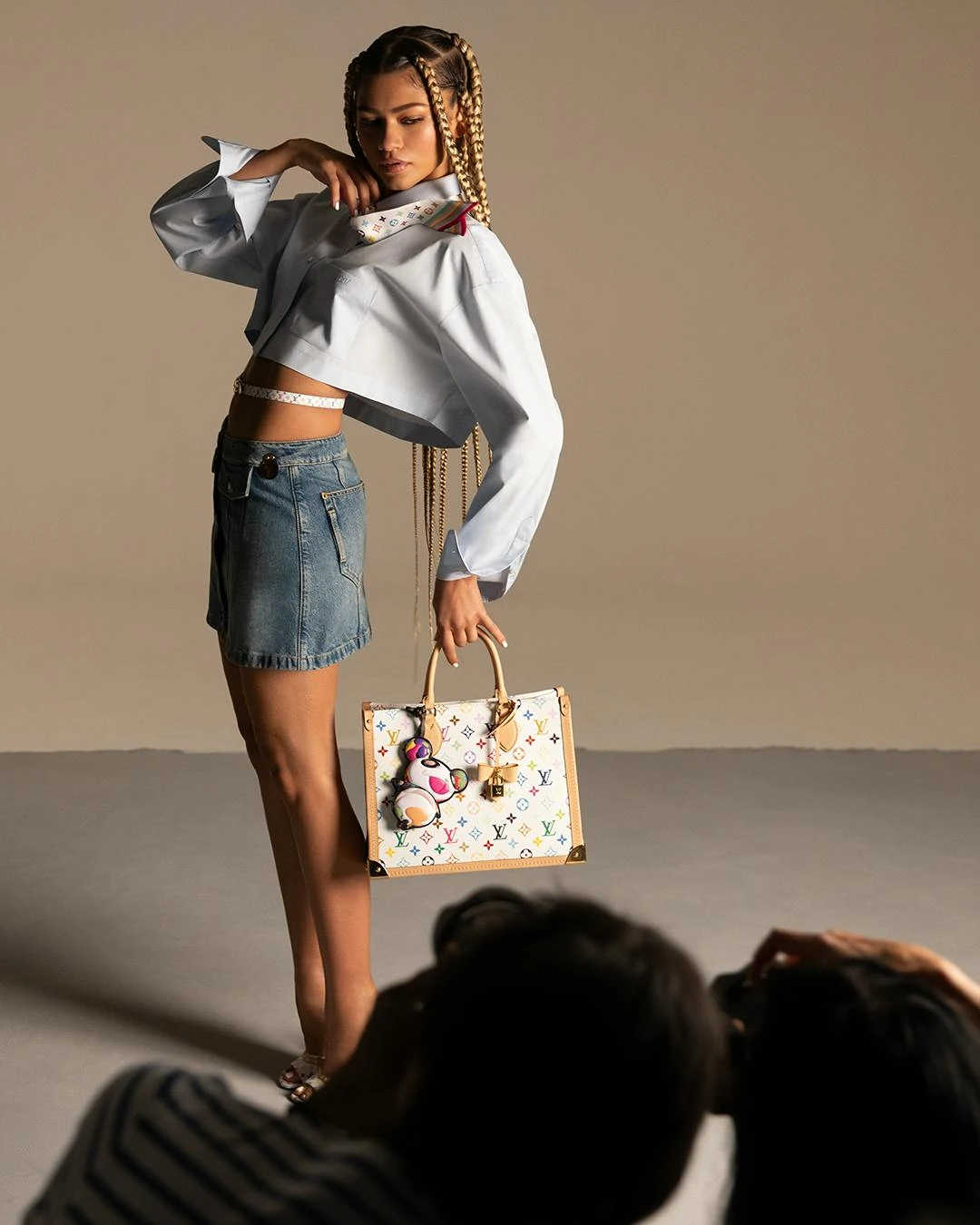
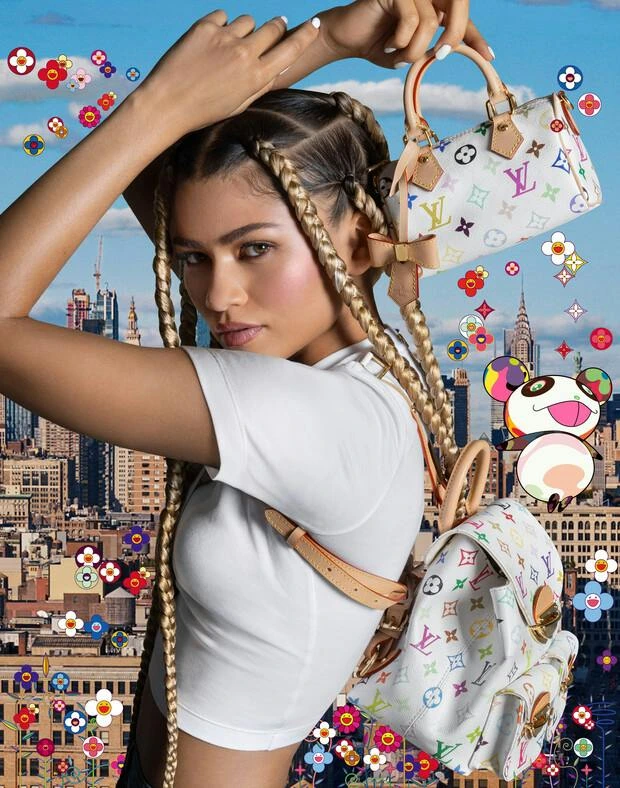
In 2025, Louis Vuitton returned to the visual language it had developed with Murakami. This was a re-edition and continuation more than twenty years later, rather than the artist’s first appearance at the house. Familiar motifs moved onto new objects and into a different advertising setting. Zendaya featured in the campaign; the return can be seen in an official Louis Vuitton film.
There are two useful ways to approach these pieces. For fashion history, compare an archival object with its new interpretation: proportions, scale of the pattern, hardware and placement of characters. For personal use, start with how the object works. A long collaboration does not remove practical differences between a compact handbag, a travel piece and an accessory.
Re-edition does not mean that the entire archive was reproduced literally. A familiar motif can connect different generations of products. Look for the collection, year and model in a description: Murakami alone is not a sufficiently precise identification.
The project extended beyond handbags to footwear, silk accessories, eyewear, jewellery, fragrance bottles and travel pieces. A single bag’s price cannot represent this much broader collection.
Multicolore returns in 2025
Three chapters: January, March and May
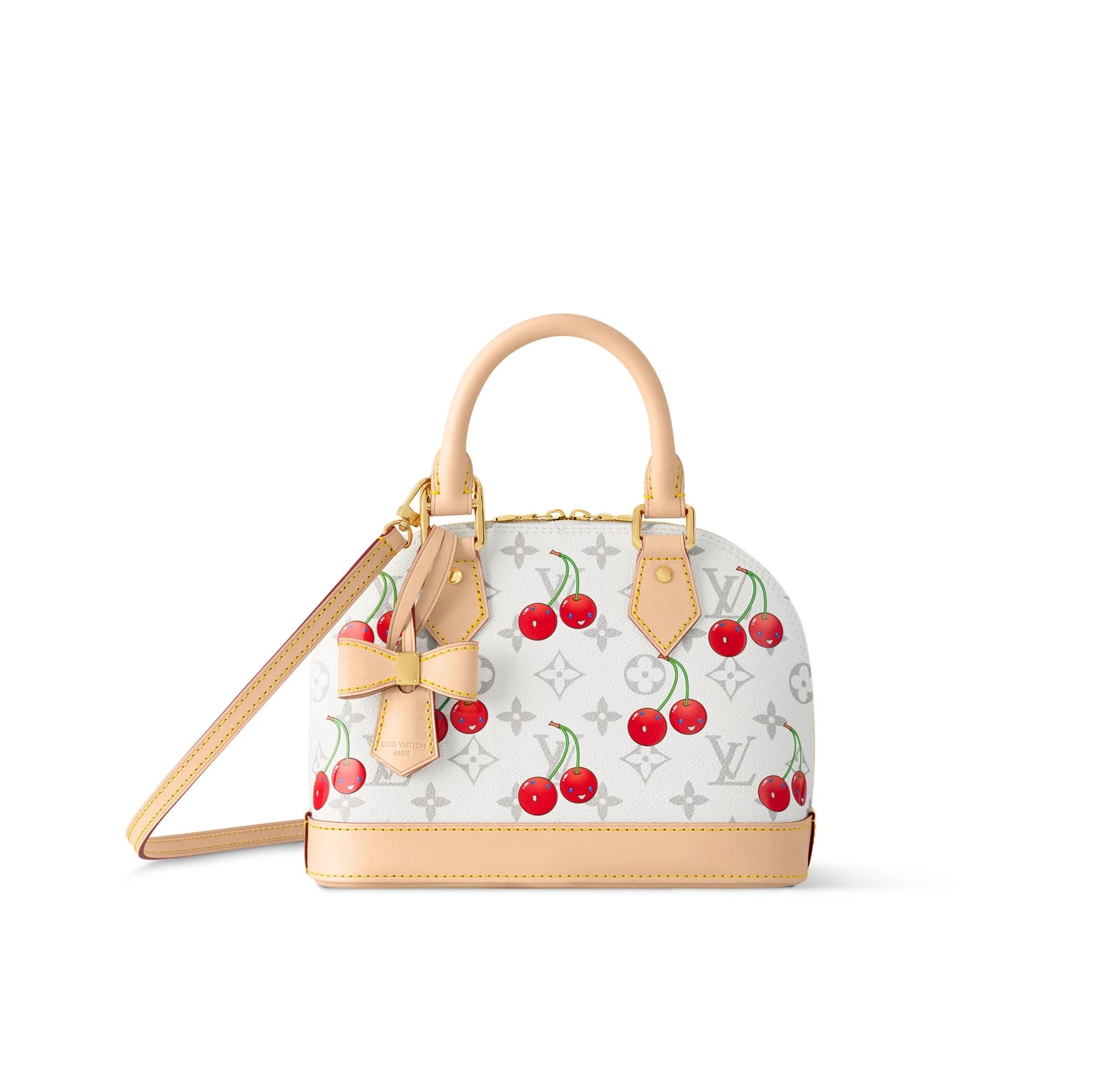
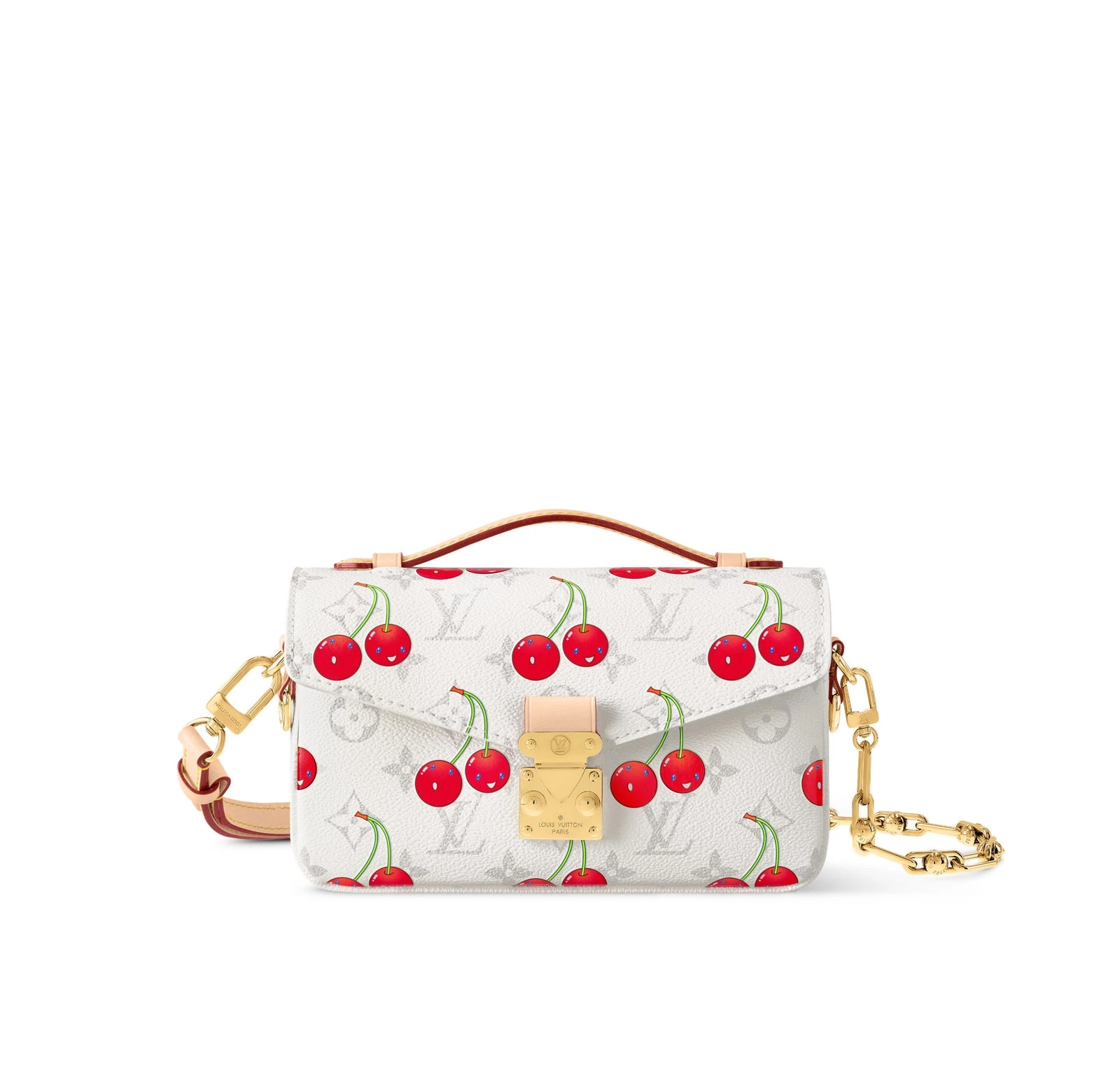
The spring project arrived in stages. January brought back the multicoloured monogram and associated characters. March centred on Cherry Blossom, while May turned to cherries. These were separate launches rather than a single release on one date.
For Cherry Blossom, the date depended on the purchasing channel: online and app access began on 14 March 2025, followed by worldwide stores on 21 March. Those dates appear in Louis Vuitton Japan’s announcement. The third chapter launched on 22 May, confirmed in a separate brand release.
This structure gives collectors a useful way into the collection. Delicate flowers against a quieter background suggest starting with Cherry Blossom. Cherries offer a more graphic, playful option. Multicolore has a different character again, with the coloured monogram itself taking centre stage.
The distinction is about more than shade. One motif behaves differently on a small bag and a large travel shape. Before buying, look at the whole object as well as close-ups of its print. Scale determines how prominent the pattern feels when the piece is actually used.
Cherry Blossom: the spring chapter
Cherries: the third chapter
Inside the shops and temporary spaces
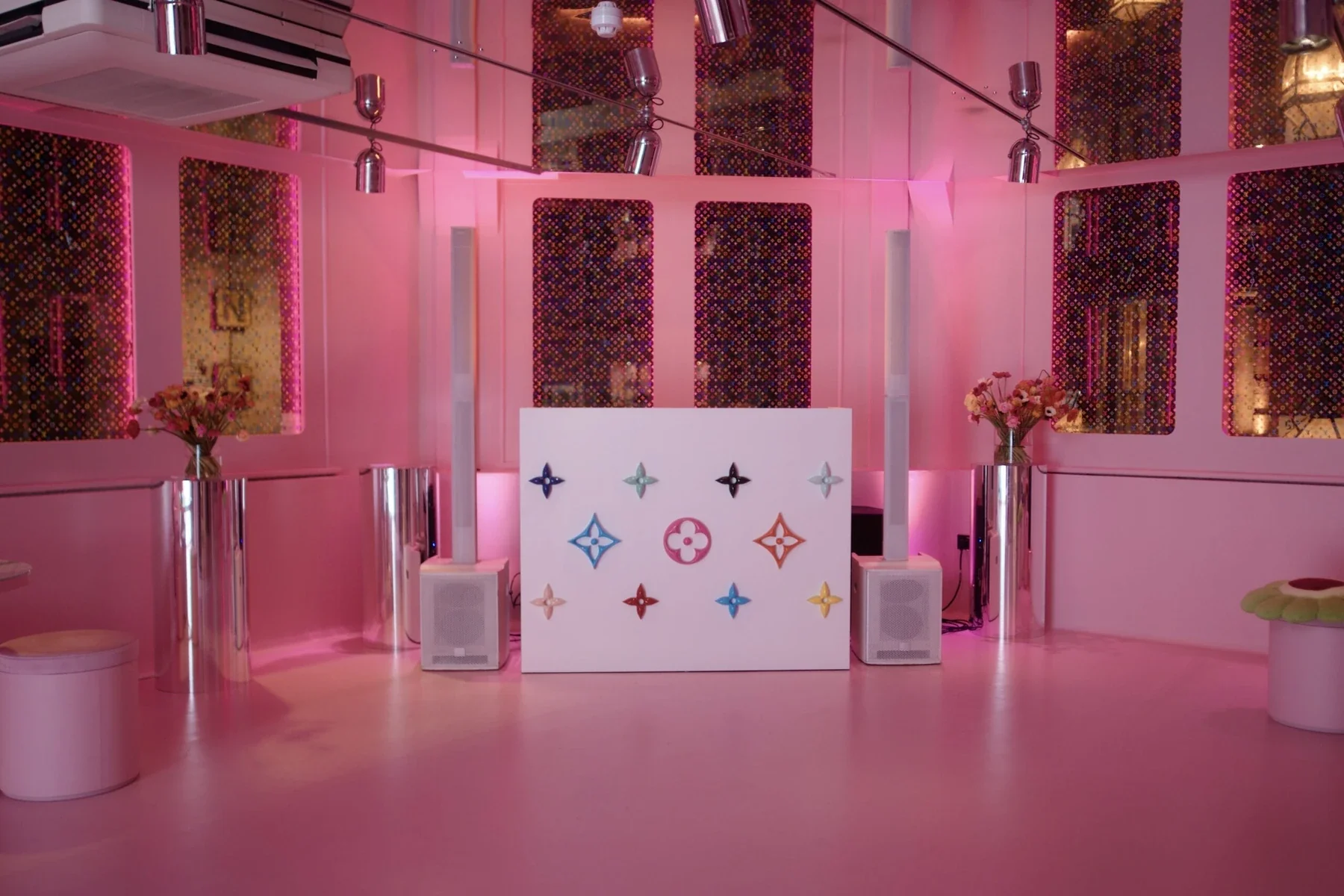
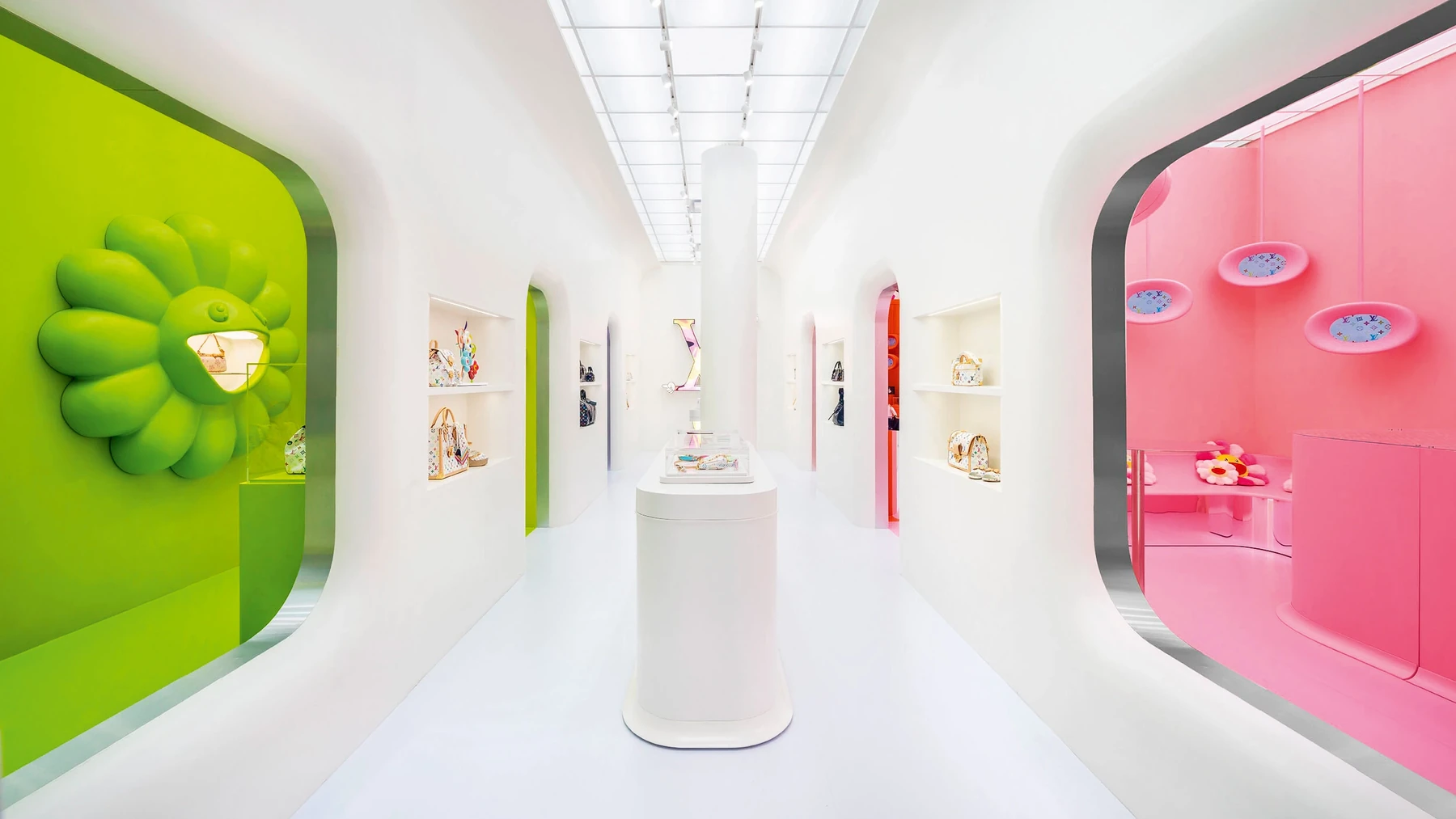
The 2025 pop-ups drew on Japanese capsule hotels. Louis Vuitton announced spaces in seven cities: Tokyo, New York, London, Milan, Seoul, Shanghai and Singapore. Archives, cinema, care services, cafés and retail could appear in different combinations; not every address contained every feature. The source is Louis Vuitton Japan’s official announcement.
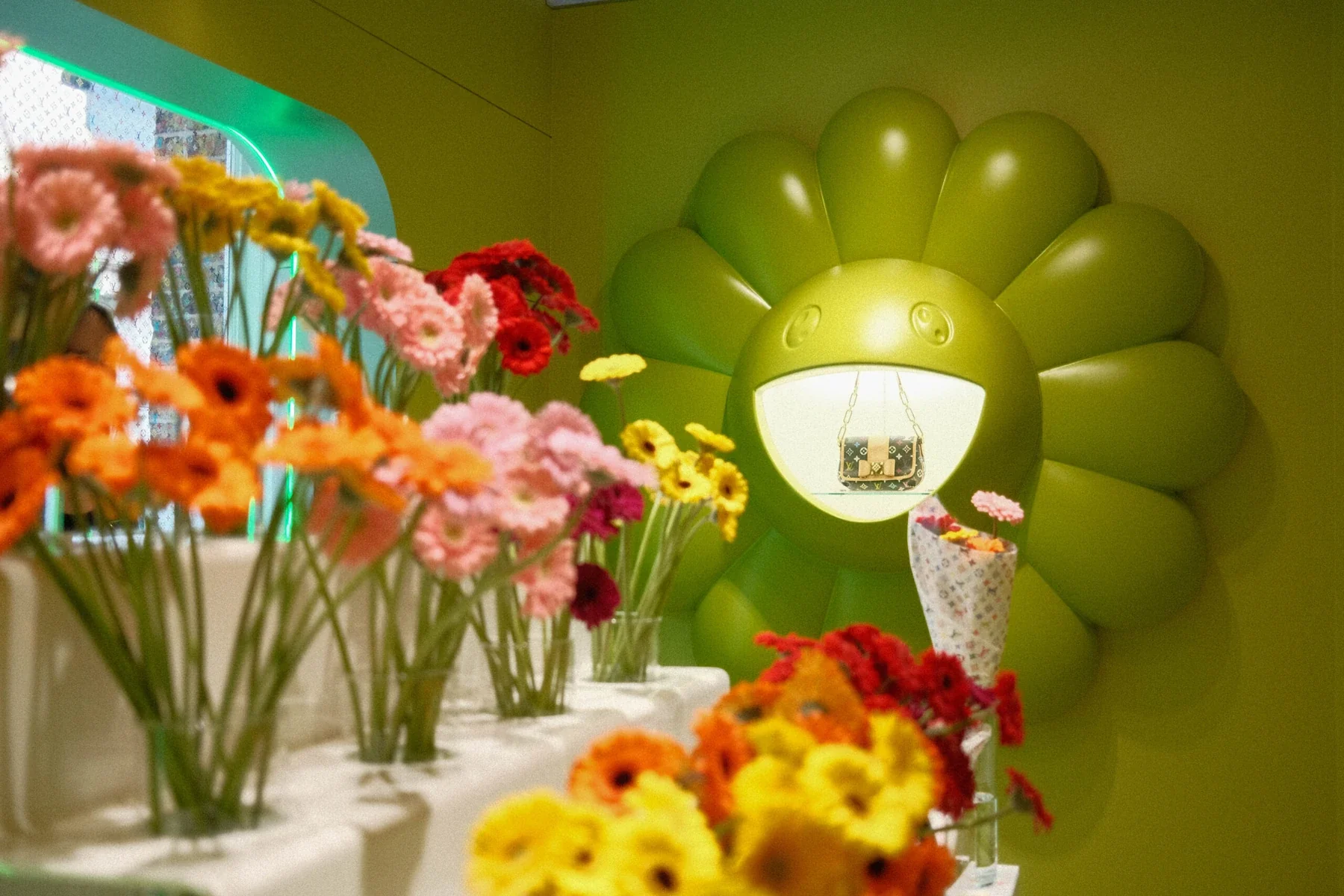
London’s Brewer Street space opened on 9 January. Wallpaper* described its café, archival objects and cinema setting. In photographs of these projects, the bags are only part of the picture: coloured modules, display cases and characters shape how the collection is encountered.
There is a useful lesson here for a home display. A complicated pattern becomes easier to appreciate when a little space remains around it. One vivid object is often easier to examine than several overlapping pieces. Shop photography and a collector’s interior nevertheless answer different questions: one shows the brand’s intended presentation, while the other shows how an object lives after purchase. Neither needs to be mistaken for the other to be interesting.
London: a flower and a pink interior
Artycapucines VII: a separate autumn project
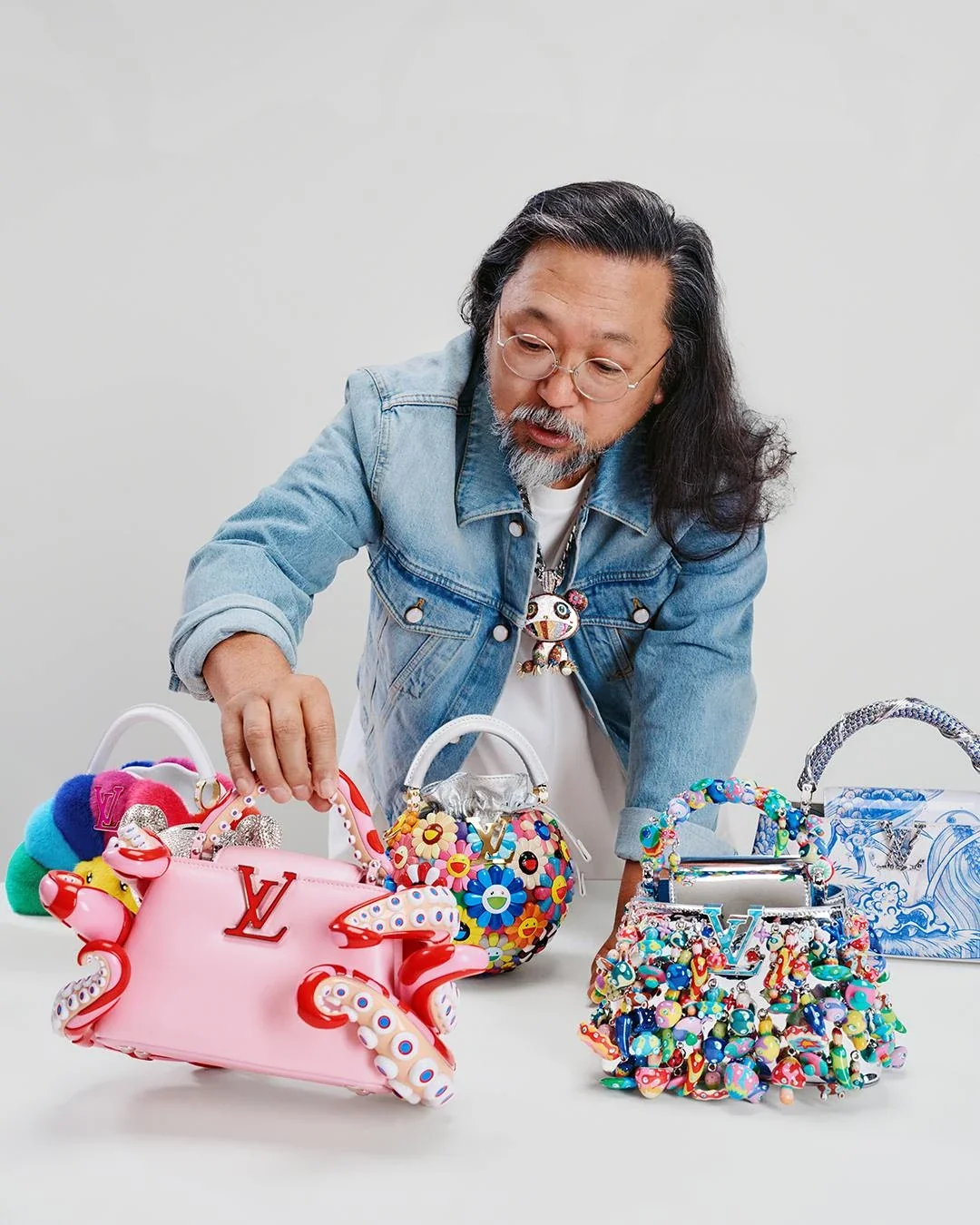
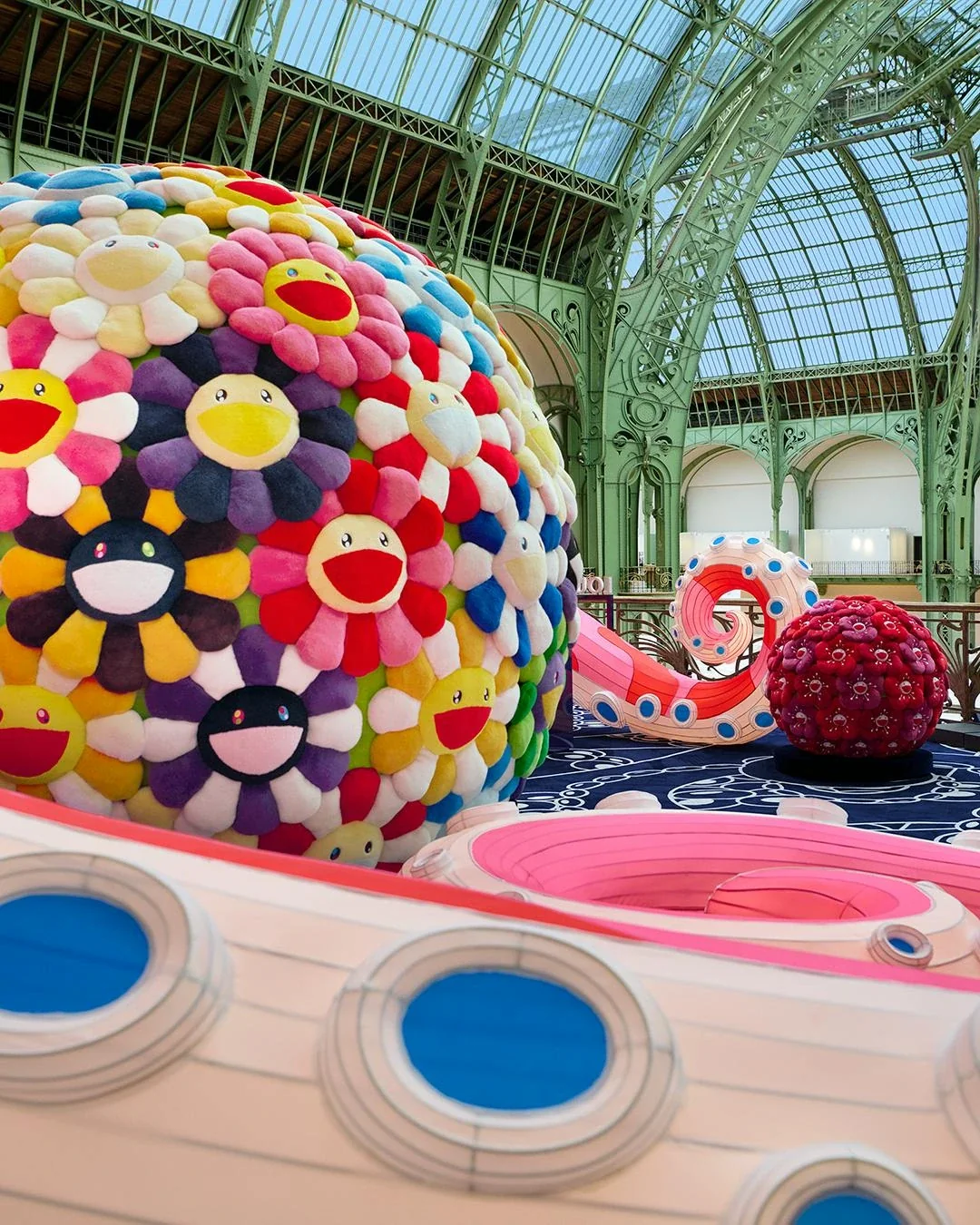
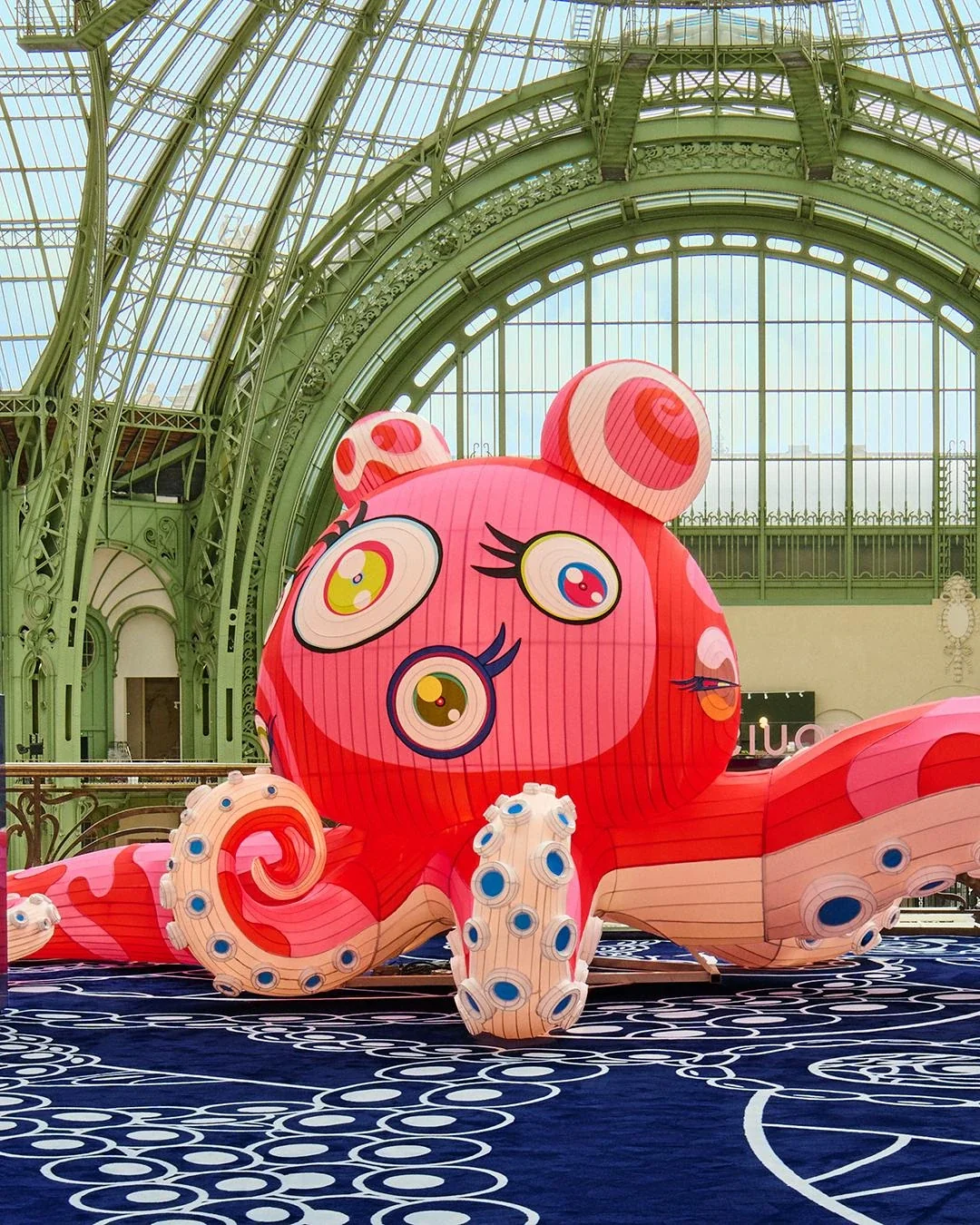
Autumn 2025 brought Artycapucines VII, another joint project that should be distinguished from the three re-edition chapters. It comprised 11 creations. At Art Basel Paris, they were presented with an eight-metre octopus in the Grand Palais, as described by LVMH.
Here the emphasis moves from an object’s surface to its construction. Capucines Mini Mushroom places more than a hundred hand-polished resin mushrooms against a mirrored base. Golden Garden combines gold-covered leather with floral marquetry and enamel details. These techniques are outlined on the official Artycapucines page.
Such pieces reward a view from every side. The handle, flank and back may be as important as the front. A small image can make a three-dimensional construction look like a flat illustration, even when projecting elements and material create the effect. An overall view reveals the silhouette and volume, while close-ups show the materials, attachment points and surface work.
Artycapucines at the Grand Palais
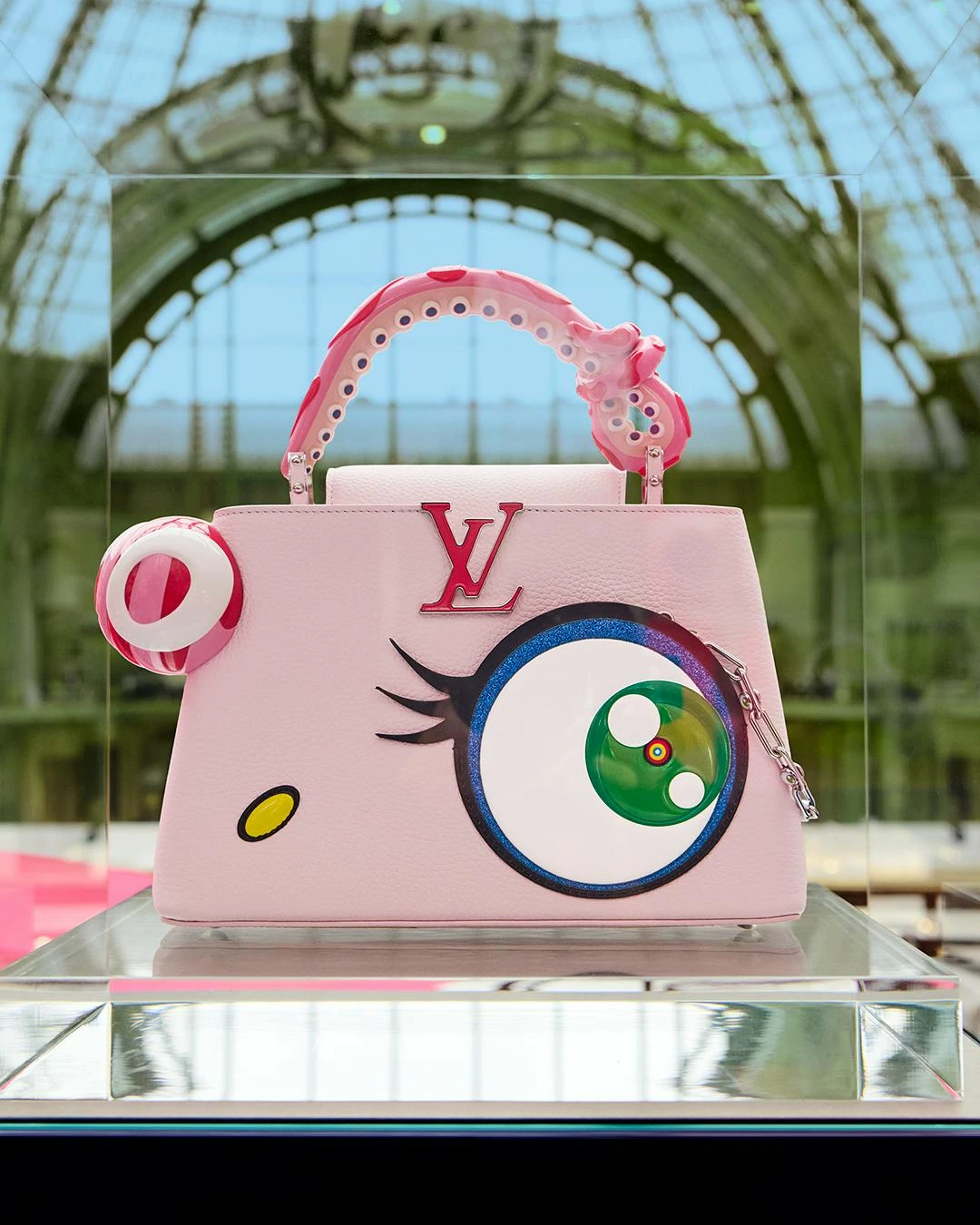
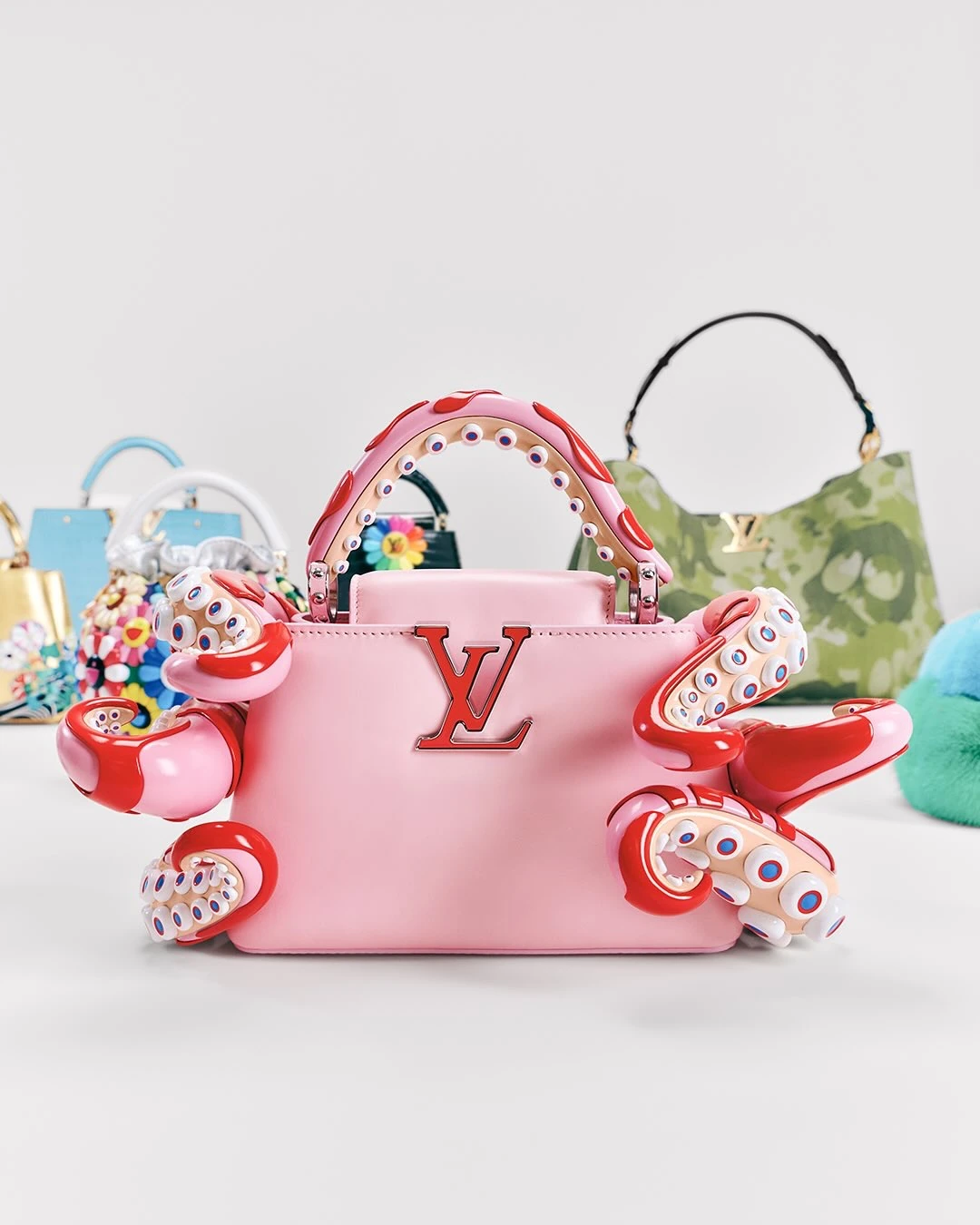
The pink Mini Tentacle: why two views matter
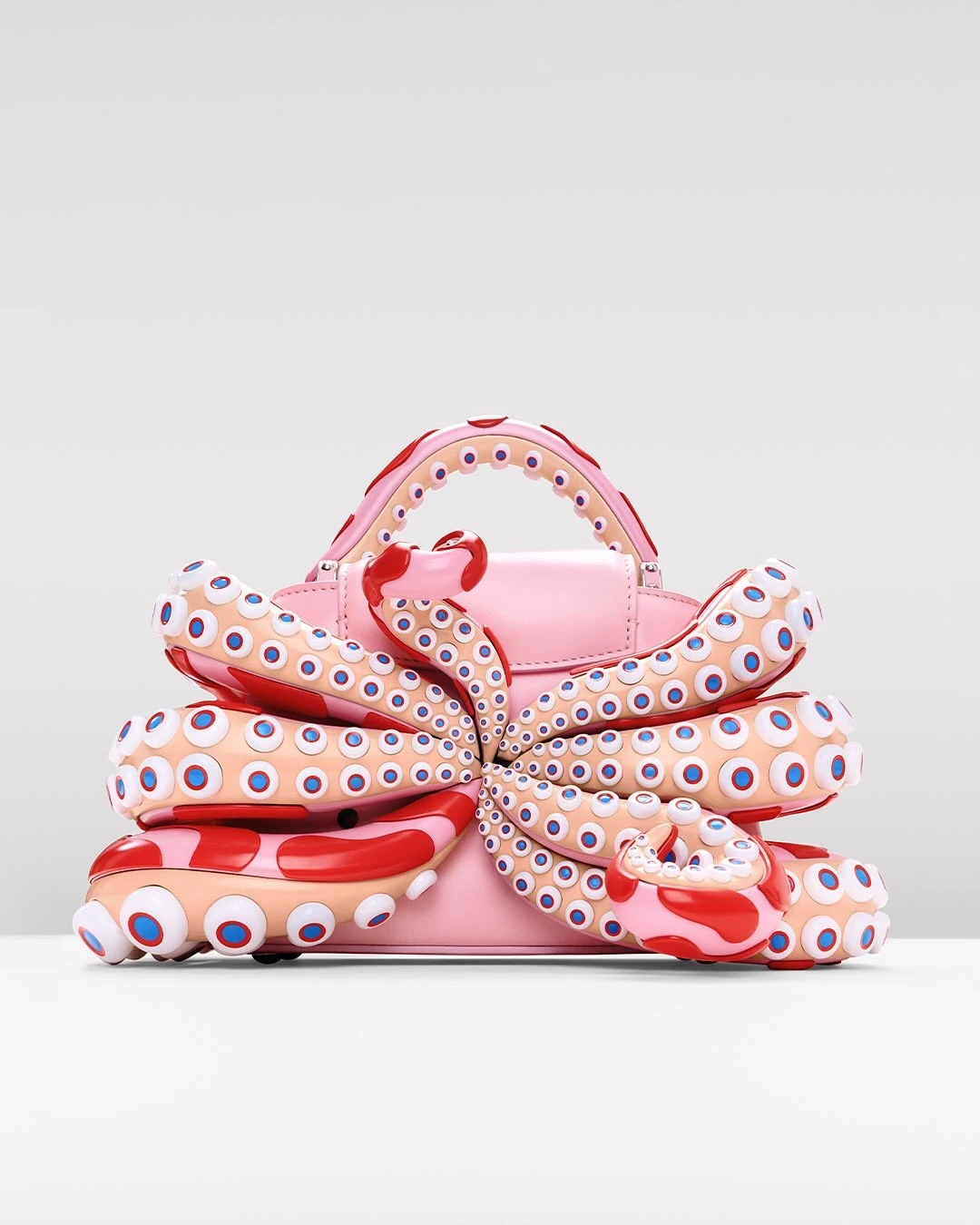
The pink bag shown here is Capucines Mini Tentacle. Its tentacles relate to Mr. DOB reimagined by Murakami as an octopus. A recognisable character becomes part of the construction, its forms moving from an image into three dimensions.
From the front, the sculptural elements frame the body and handle. The rear view explains the full composition. The tentacles are not a small ornament attached to a clasp; they wrap around the bag. Seeing both sides makes the idea easier to understand without speculation.
For a collector, this construction also raises additional condition questions. Request photographs of projecting details, attachment points, corners and the surfaces beneath them. This is general advice for examining a complicated object, not a claim that the model has a particular defect. Documentation and the complete accompanying set matter too. A single front-facing image cannot establish either overall condition or a complete ownership history, however attractive the image may be.
Capucines Mini Tentacle: front and back
Panda Clutch: crystals and handwork in close-up
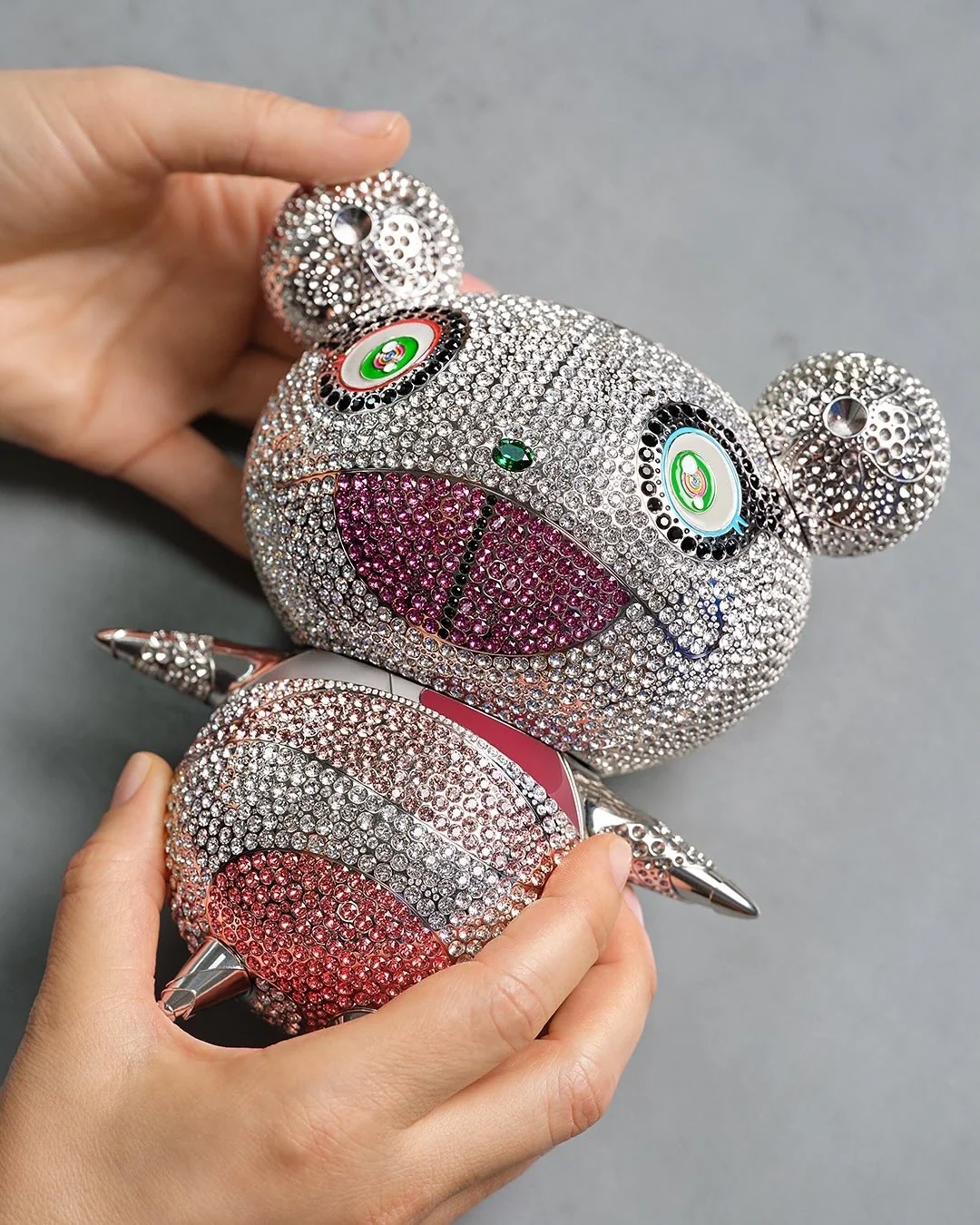
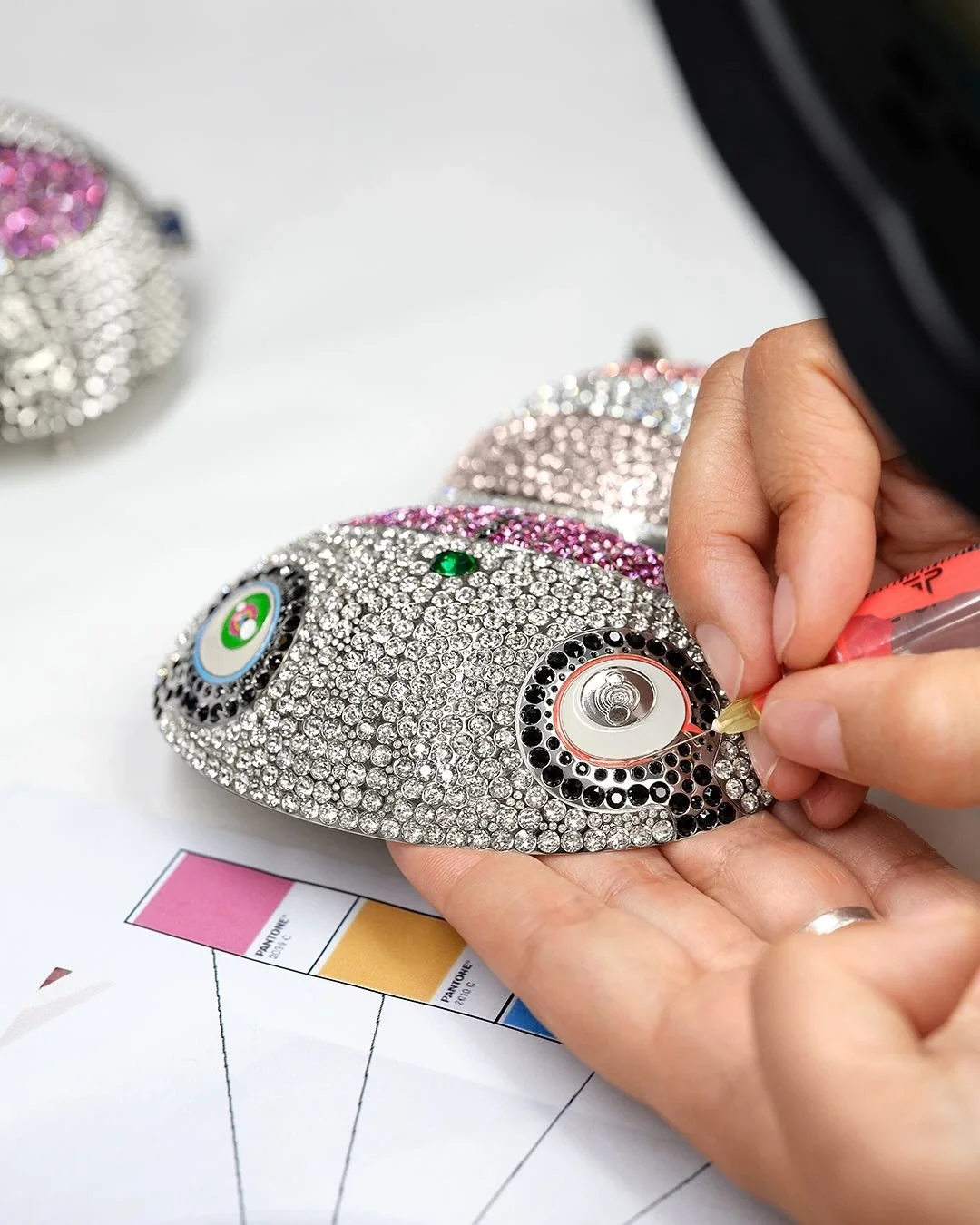
The Panda Clutch takes the shape of the character itself, rather than a conventional bag decorated with a panda image. A close look at the handwork reveals how the object gains its volume, shine and intricate surface.
A November Christie’s announcement describes an example from an edition of 130, with more than six thousand hand-set Swarovski crystals. The same announcement includes a Tentacle from an edition of 95. These figures concern two specific models, not the whole Artycapucines project. See the official Christie’s announcement.
Close-ups reveal details absent from an overall photograph: the meeting of enamel and crystals, the contours around the eyes and separate areas of the design. Sparkle does not replace a condition check. Anyone considering a purchase also needs to see areas outside the most photogenic view: the bottom, clasp, edges and interior. The aim is to understand the object as a whole rather than judge it from its brightest surface.
Panda: the object and the handwork
What the prices around $28,000 actually describe
Artycapucines East West Rainbow had a US retail price of $28,400, according to PurseBop’s October 2025 overview. The same article listed Mini Tentacle at $31,000 and Panda Clutch at $51,000. These are published US launch prices, rather than verified resale results or a current store quotation. The source is PurseBop.
| Model | US retail, 2025 |
|---|---|
| Artycapucines East West Rainbow | $28,400 |
| Capucines Mini Tentacle | $31,000 |
| Panda Clutch | $51,000 |
An auction estimate is a different kind of number. As of 16 November 2026, Christie’s had announced a sale scheduled for 25 November–10 December: Panda was estimated at $20,000–30,000 and Tentacle at $10,000–15,000, excluding buyer’s premium. That auction had not yet taken place, so these figures cannot be described as sale prices.
Comparing retail with a preliminary estimate proves neither appreciation nor depreciation. Such a conclusion requires a completed transaction and its terms. A seller’s listing likewise states an asking price until a purchase is confirmed. These distinctions are essential when a memorable headline figure becomes part of an object’s story.
Rarity, condition and value: what to check
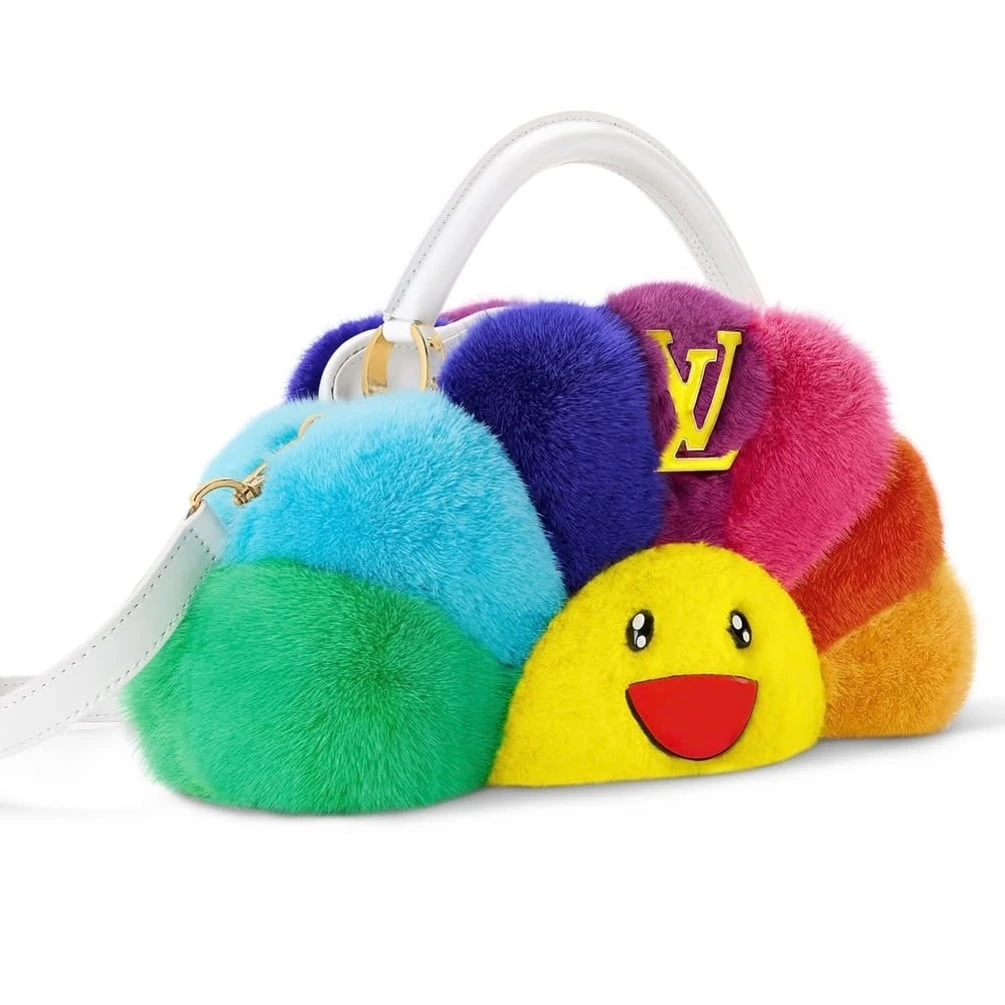
Rarity can mean several things. A specific model may have a limited edition, a colour may be difficult to find, or an archival object may survive in unusually good condition. These qualities can overlap, but they are not interchangeable. A small edition does not automatically create a queue of buyers.
Start with the exact name, year and accompanying set. Then examine the body, handles, corners, hardware and decorative elements. For a complex design, ask for a video showing the object turning: it helps reveal how its parts relate, although it is not an independent guarantee of authenticity.
Compare like with like. A small archival printed bag and a sculptural clutch carrying thousands of crystals occupy different segments. Read an auction lot’s description, condition, currency and fees, not just its largest number. With a seller, establish whether the price refers to an available object or a completed transaction.
A purchase may have collecting appeal and market potential, but an artist’s fame cannot establish future returns. Understanding the object is a more reliable starting point for discussing its price.
Finding your own route through the collaboration
If Murakami’s graphics draw you in, begin with motifs: Multicolore, cherry blossoms, cherries and camouflage. If volume and materials interest you more, study Artycapucines separately. This approach makes similar names easier to navigate and keeps everyday accessories distinct from rare sculptural models.
It is also worth looking at other parts of the artist’s practice. The Takashi Murakami page at ArtComBuro provides another route into his work, while our guide to limited-edition prints explains how editions are read and why two similar images can have different collecting histories.
The strength of the Louis Vuitton–Murakami relationship lies in how many ways it works with one recognisable world. On one object, a small cherry is enough. On another, the artist changes the bag’s entire silhouette. There is no compulsory ladder from one to the other based on “better and more expensive”. They are different design decisions, worth examining closely before choosing the one that interests you.
For another meeting of art and music, explore the Cactus Jack × Murakami collaboration.