In this article
Authentic and counterfeit labels follow the source authors’ attribution. Source photographs are linked below each comparison.
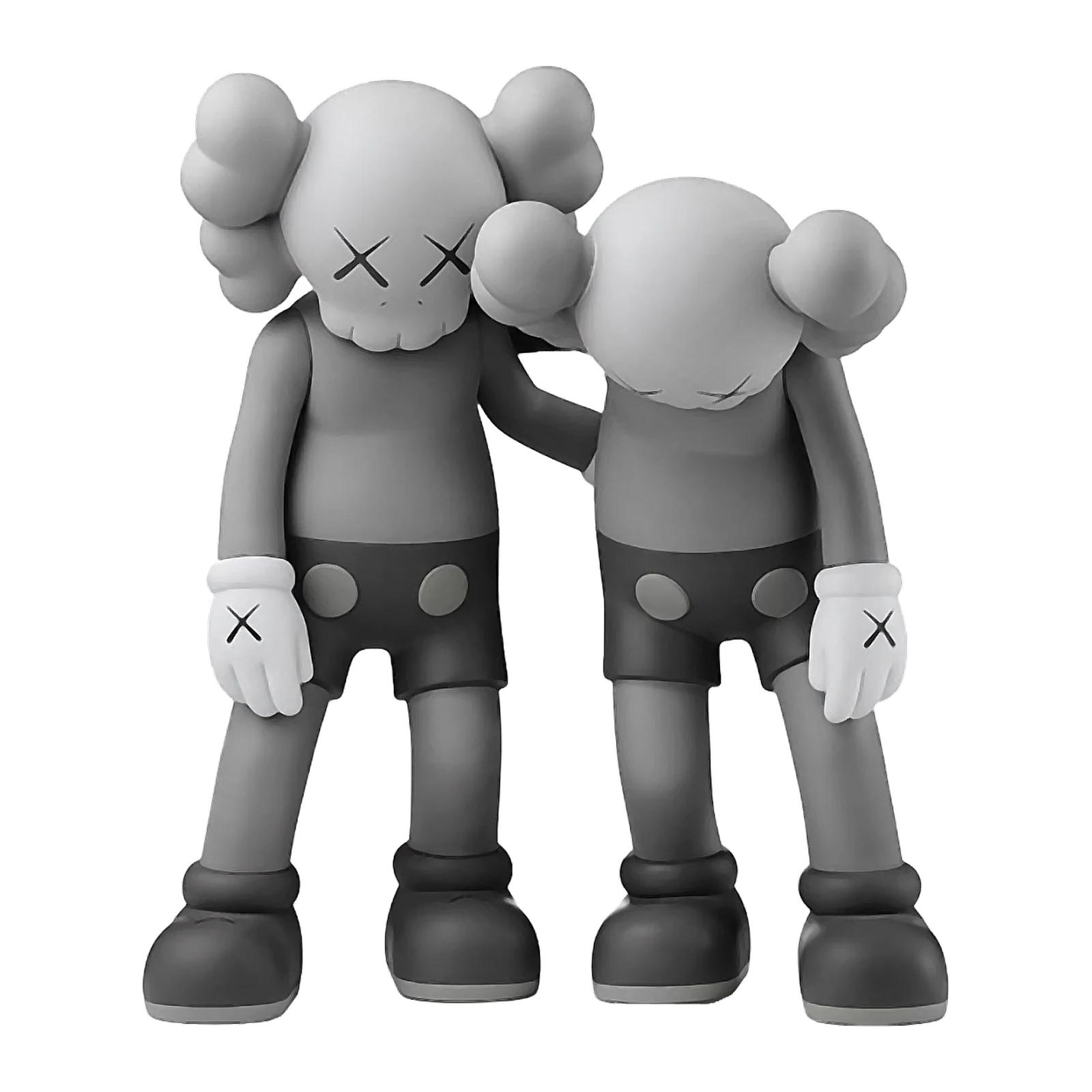
Original, replica and OriginalFake: start with the names
A convincing counterfeit can have a box, a label and a neat-looking foot stamp. Checking a KAWS figure therefore starts with identifying its exact release, followed by several independent comparisons. An attractive logo does not explain an object’s history. The word “replica” in a listing does not make an item authorised either: a seller may simply be using a softer description for an unofficial reproduction.
There is an important naming trap here. OriginalFake was a genuine brand associated with KAWS; NGV’s exhibition labels document its operation from 2006 to 2013. The name does not mean the item is an “original fake”. Whether the branding belongs on a particular object depends on its model and release history, alongside the remaining markings. Our guide to KAWS characters is a useful starting point for identifying names and poses.
Identify the release you are actually being offered
Write down the figure’s name, colourway, size, material and claimed release year. Then find images from the producer, release organiser or museum shop. Compare the same version. A small vinyl COMPANION, a large sculpture and a plush figure need different reference points; sharing a character does not promise the same construction, weight or packaging. Studio lighting can also change how a colour appears.
Ask the seller to measure the height and photograph the front, back, sides, both soles, every side of the box and the internal packaging. You need recent images of the item being sold. Another shop’s catalogue pictures help identify a design, but tell you nothing about this example’s condition or provenance. If the exact name is unknown, establish that before trying to decide authenticity from a single close-up. A short video can help connect the different views of one physical object.
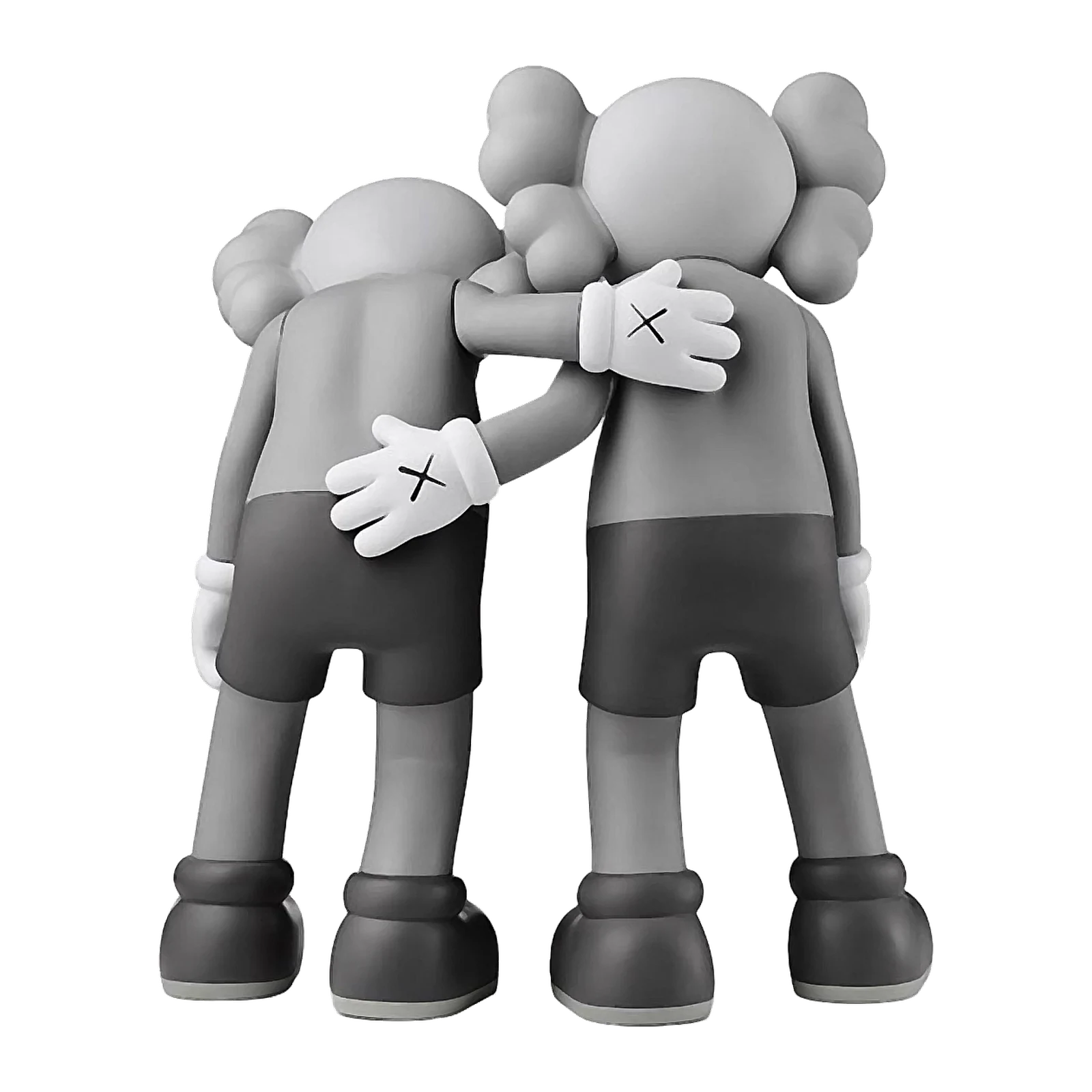 Open and inspect details
Counterfeits were being discussed long before the current market
TOYSREVIL’s publication of 11 April 2012 already presents KAWS counterfeit comparisons attributed to collector LMF Michael. It is early evidence, not a date for the first copies.
In 2013, a bootleg also reached the news: Hypebeast corrected a preview of a black seated COMPANION after the artist identified it as unofficial. That episode explains why a familiar publication or a confident caption is insufficient on its own. The release and the origin of its photographs still need to be checked.
There are also identified sellers against whom judgments have been entered. A U.S. federal court awarded KAWS $4.4 million against Jonathan Anand on 24 November 2025. This documents a specific case and defendant, rather than establishing who made the first counterfeit. The available material does not establish a single start date for counterfeit production or identify its first factory.
Shape: read the silhouette before the small details
Place two images side by side at matching angles. First compare the head’s height relative to the body, the torso’s width, arm length and leg position. On a seated figure, the pose and bend angles are especially important; on a standing one, look at the spacing of the feet and the position of the hands. Different lenses and overhead views can distort proportions, which is another reason to request several angles or a short video.
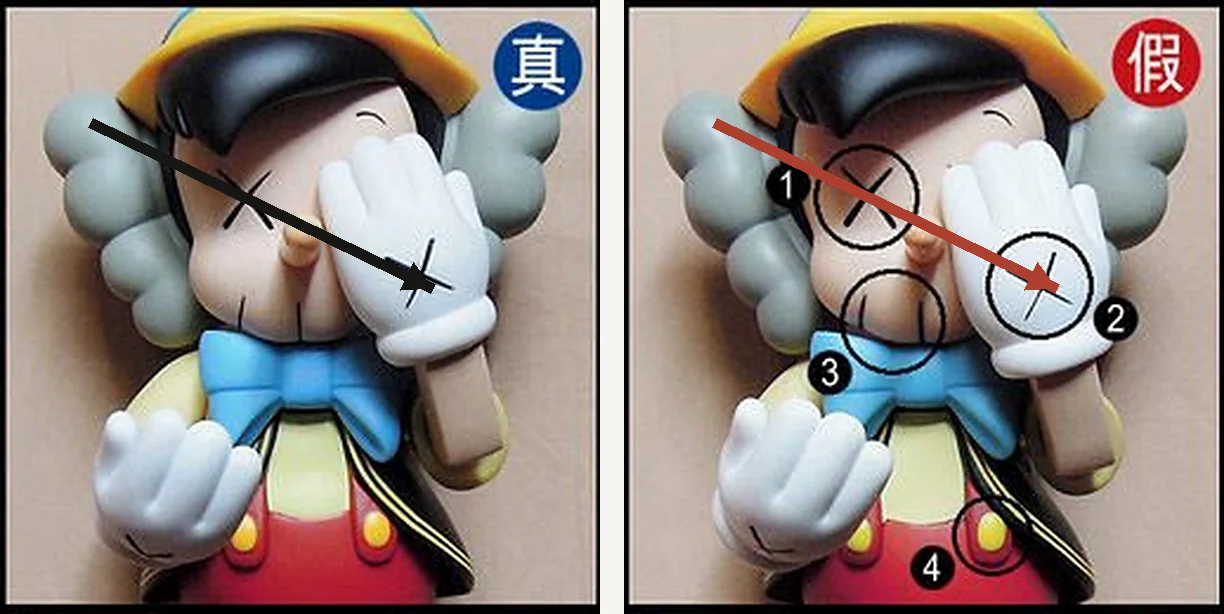
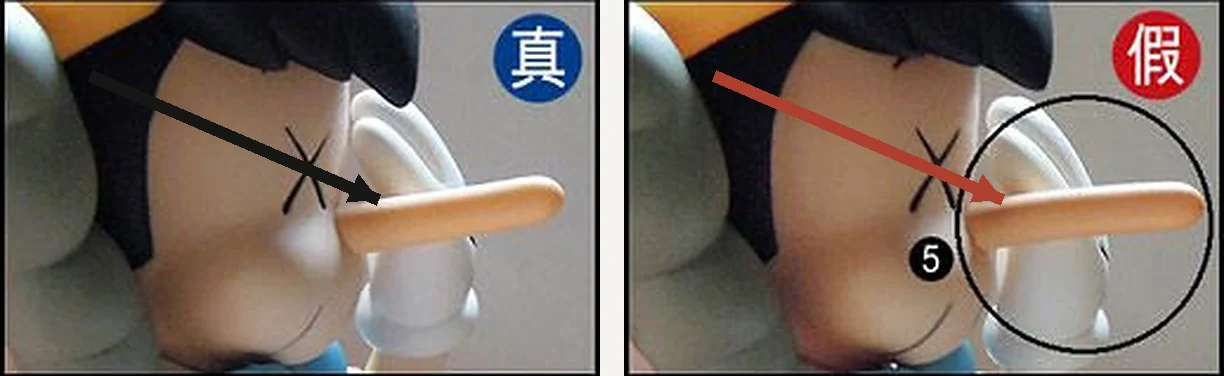
Now examine the head shape, side protrusions, nose, X eyes and fingers. These are separate comparison points rather than one general test for a “correct face”. Match thickness and placement against the same release. Advice that every X must be identical does not account for KAWS’s different sculptural designs. It is more useful to check whether the complete geometry fits the specific model, including areas that a front-facing product photograph normally hides. A discrepancy becomes meaningful in the context of that reference.
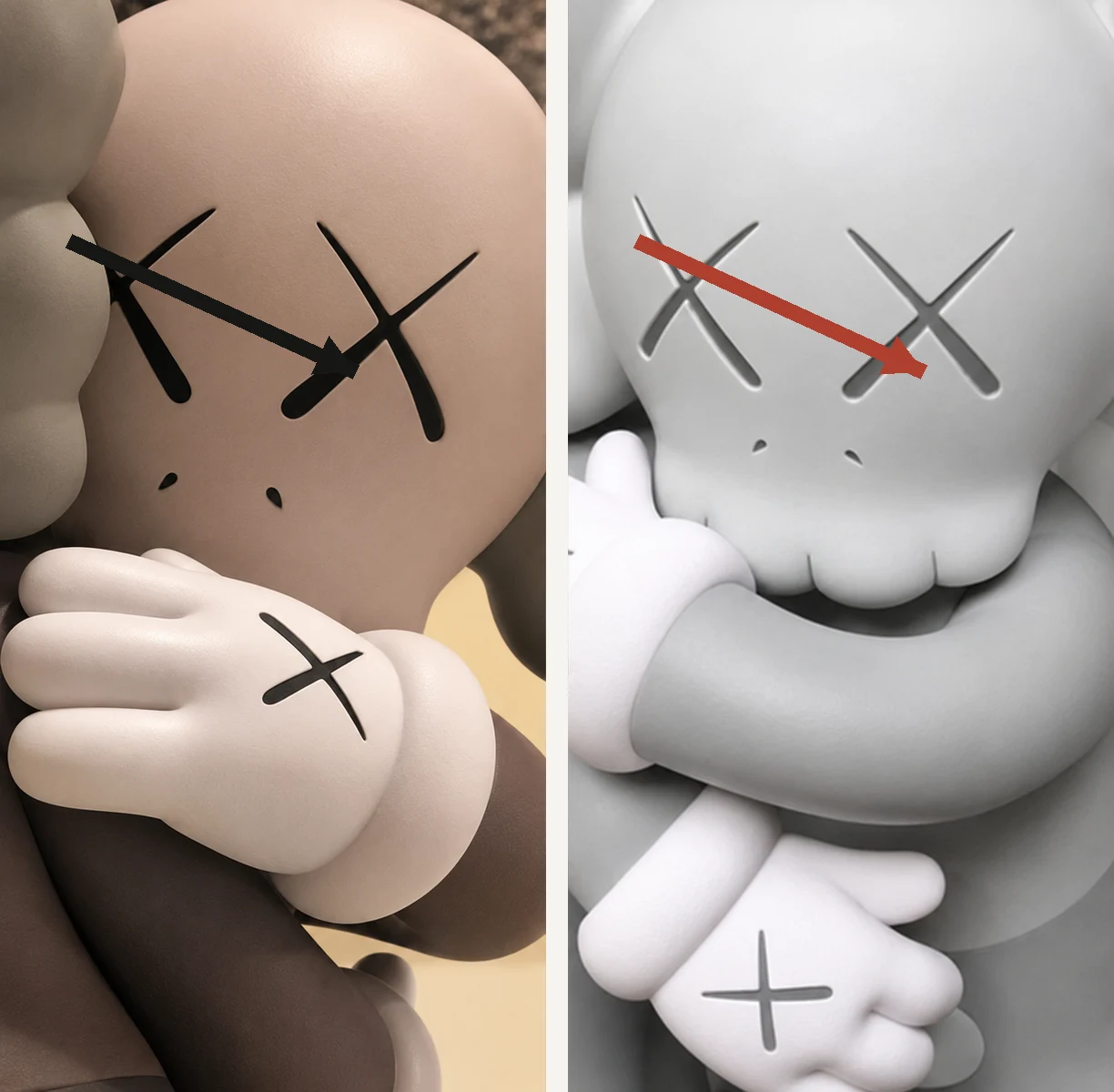
Illustration based on archival photographs.
Compare the sculpted features, rather than the brown and grey colours.
Source comparisonPaint, surface finish and joins
Under clear, diffuse light, examine colour boundaries, the finish around the eyes and the joins between parts. A drip, rough seam or substantial mismatch in shape deserves another question and a comparison with the reference. An isolated flaw does not explain an object’s origin: a preowned figure may show storage damage, an impact, a repair or repainting. Those issues should be described separately from the question of authenticity.
Check matte or glossy finishes against the relevant edition. The shine in one photograph is a poor rule for an entire range, because lighting and image processing affect it. If a seller explains major discrepancies as a rare factory error, ask for documentation supporting that particular history. An explanation should account for the object in front of you. The phrase “factory sample” is something to investigate, rather than evidence that a questionable feature is legitimate.
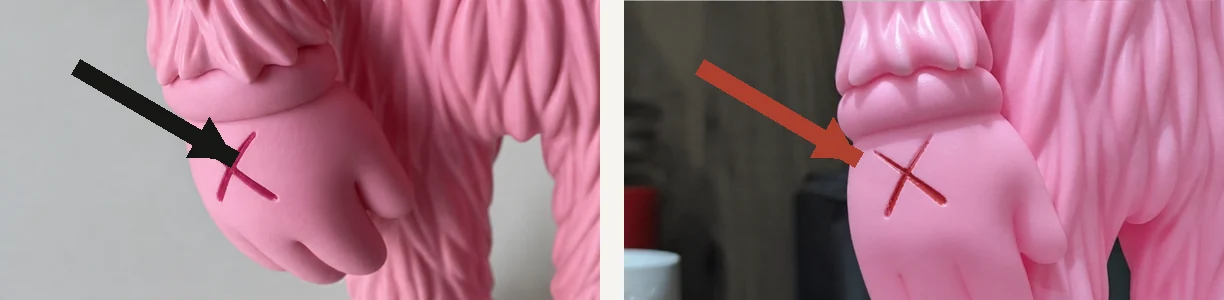
Illustration based on archival photographs.
This pair shows differences in the X outline and paint fill.
Source comparison Open and inspect details
 Open and inspect details
Foot markings: check both the wording and the form
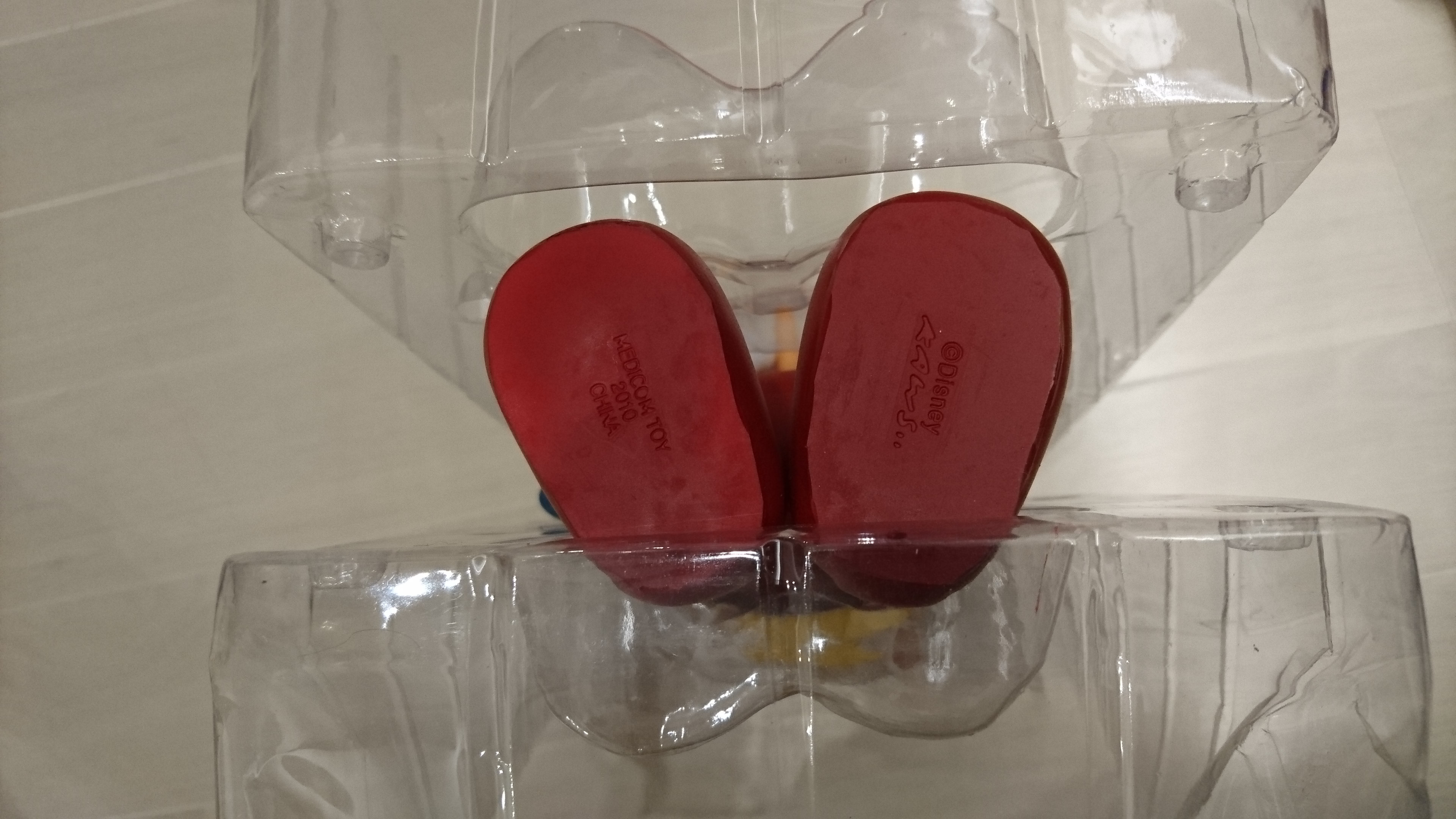
Photograph both soles straight on, under ordinary and raking light. Compare the text, line placement, letter shapes, spacing and relief against a documented example of the same release. The manufacturer’s name, copyright statement and date should fit a plausible history of that model. A copyright year is not necessarily the year in which this particular box was purchased at a shop, so the dates need to be read in context.
Do not test a marking by rubbing it. That can damage a genuine object too, and marking techniques vary between editions. Existing wear describes the surface’s condition; without a reference, it does not provide a reliable verdict on origin. A useful principle in 1stDibs’ interview with collector Selim Varol and gallery director Jay Rutland is to learn the specific model and its markings. It should not be turned into one universal stamp that every KAWS figure must carry.
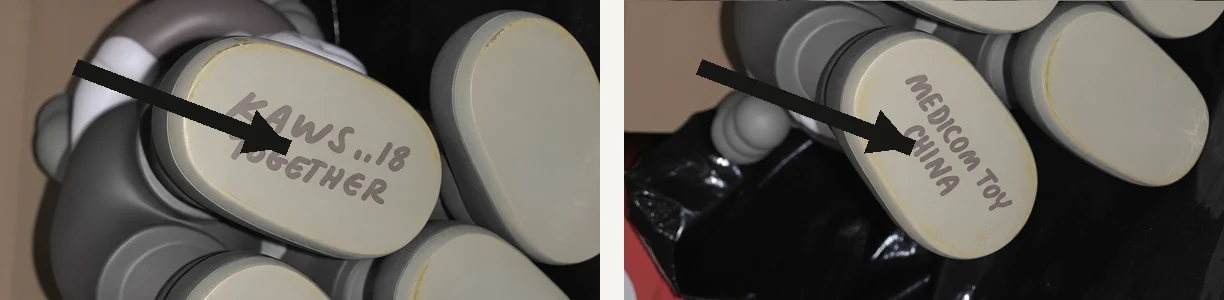
Illustration based on archival photographs.
These markings belong to this release, not every KAWS figure.
Source comparisonThe box and insert should fit the figure’s release
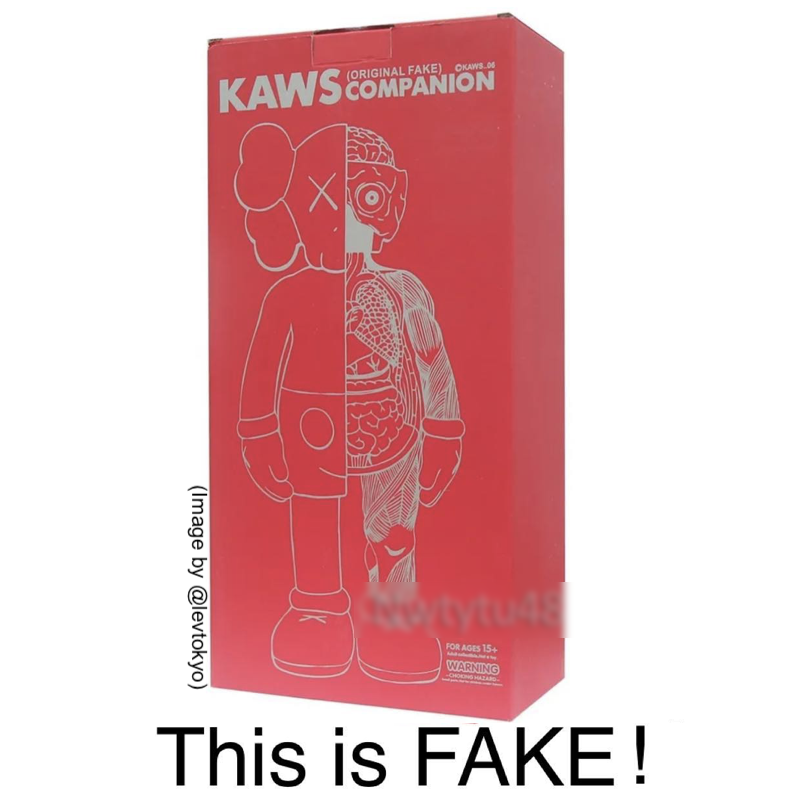
Examine packaging as carefully as the object: images, edition name, layout, type size, spacing, rights-holder credits and print quality. Compare the internal tray or blister as well. Its shape should correspond to the claimed figure and the documented packaging version. An additional angle often reveals information hidden by a good-looking box front. Ask to see the exterior and interior clearly, rather than accepting a distant photograph of a sealed package.
A genuine box can be paired with a different object, while a genuine figure may be sold without its packaging. The box adds evidence but does not replace examining the figure. Damaged cardboard, faded printing and missing film first call for a clearer storage and unboxing history. An age-related change alone should not become a final verdict. It is especially useful to see the figure and its actual box together, rather than receiving unrelated catalogue pictures.
Pinocchio and Jiminy Cricket: a closer comparison
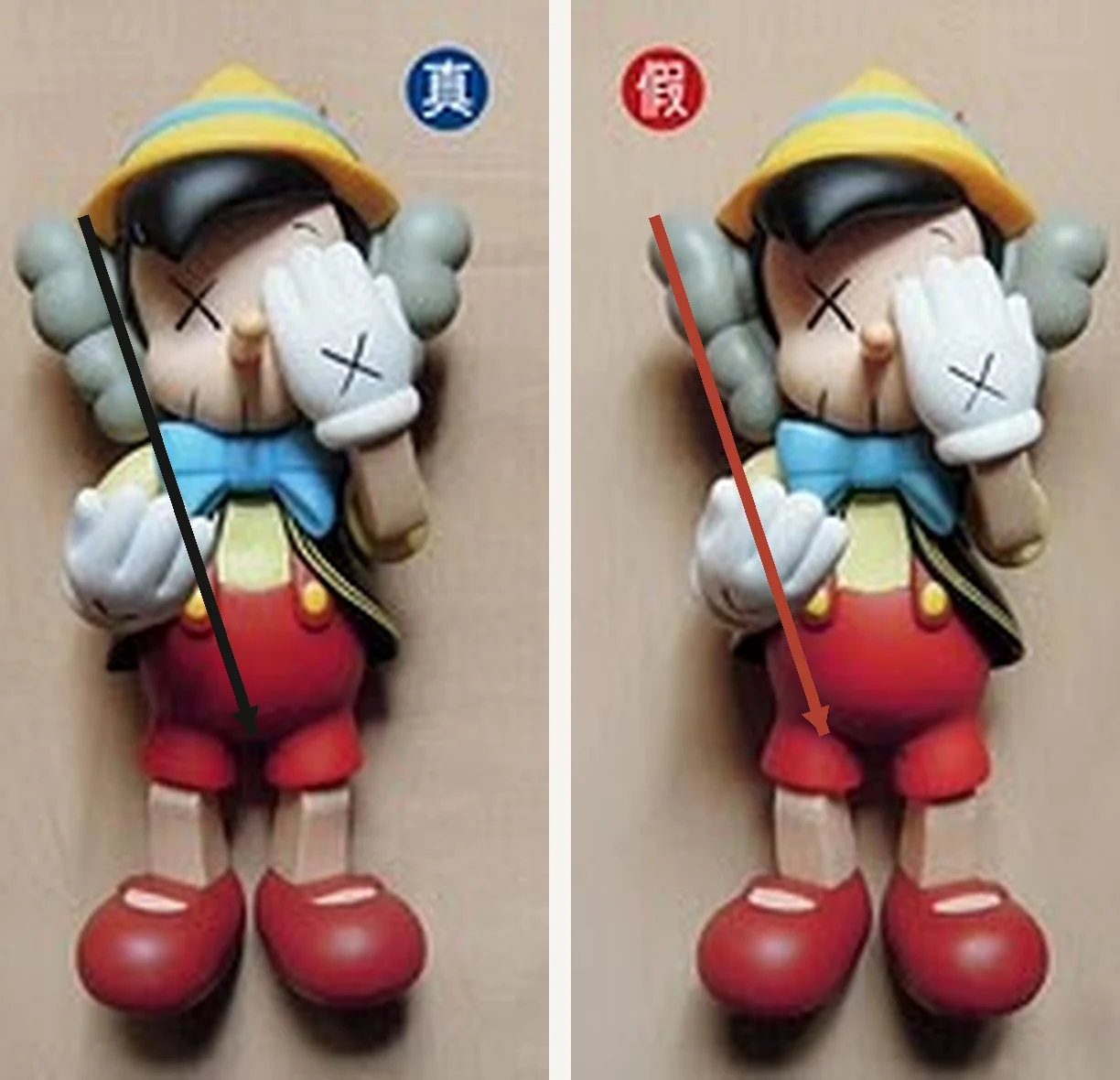
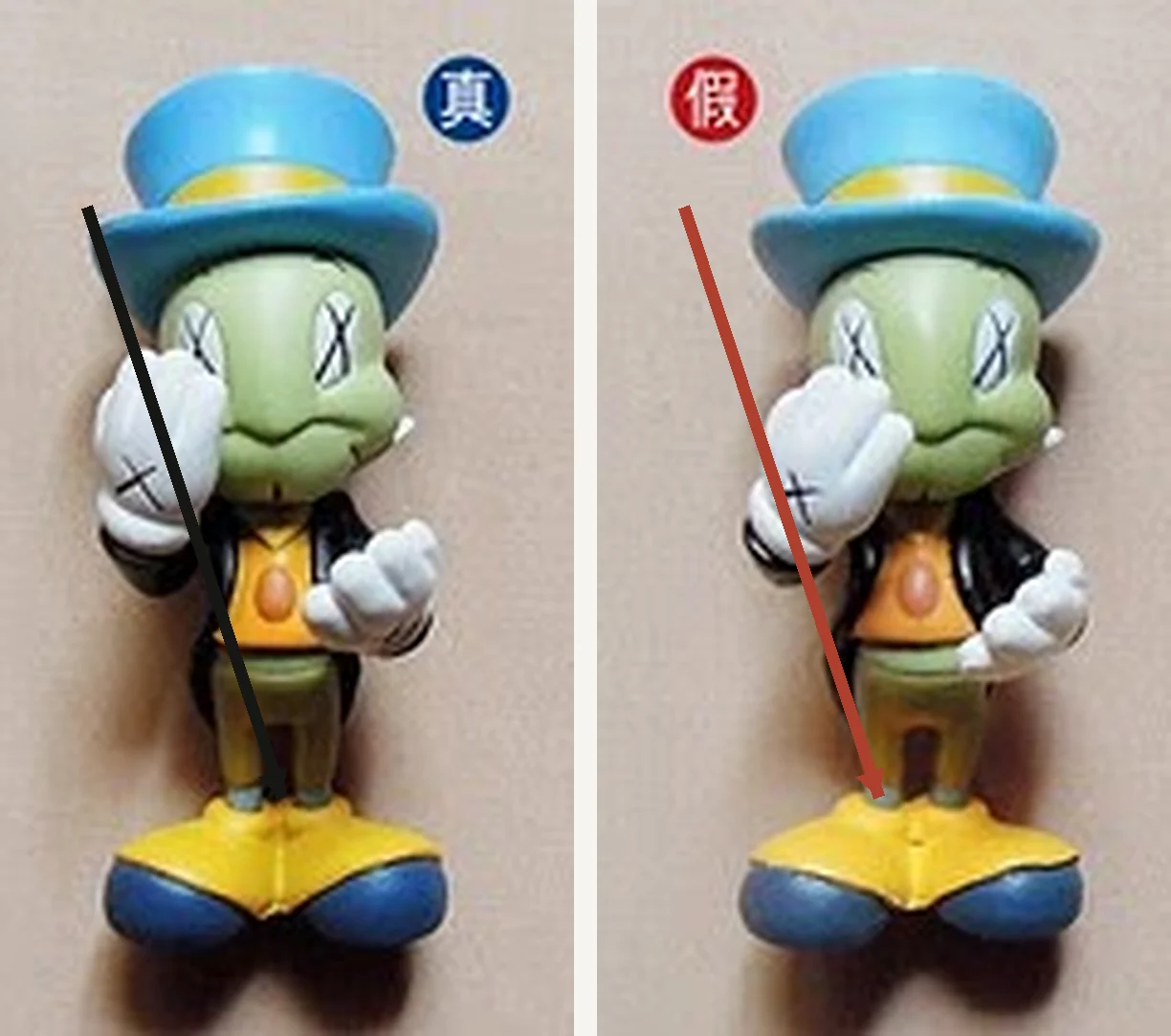
Pinocchio & Jiminy Cricket (2010) is a set of two vinyl figures. Sotheby’s documents Medicom Toy production, underside markings and the original packaging. Check more than Pinocchio’s familiar nose: the face, gloves and shoes must correspond to the same release. Examine the smaller Jiminy separately.
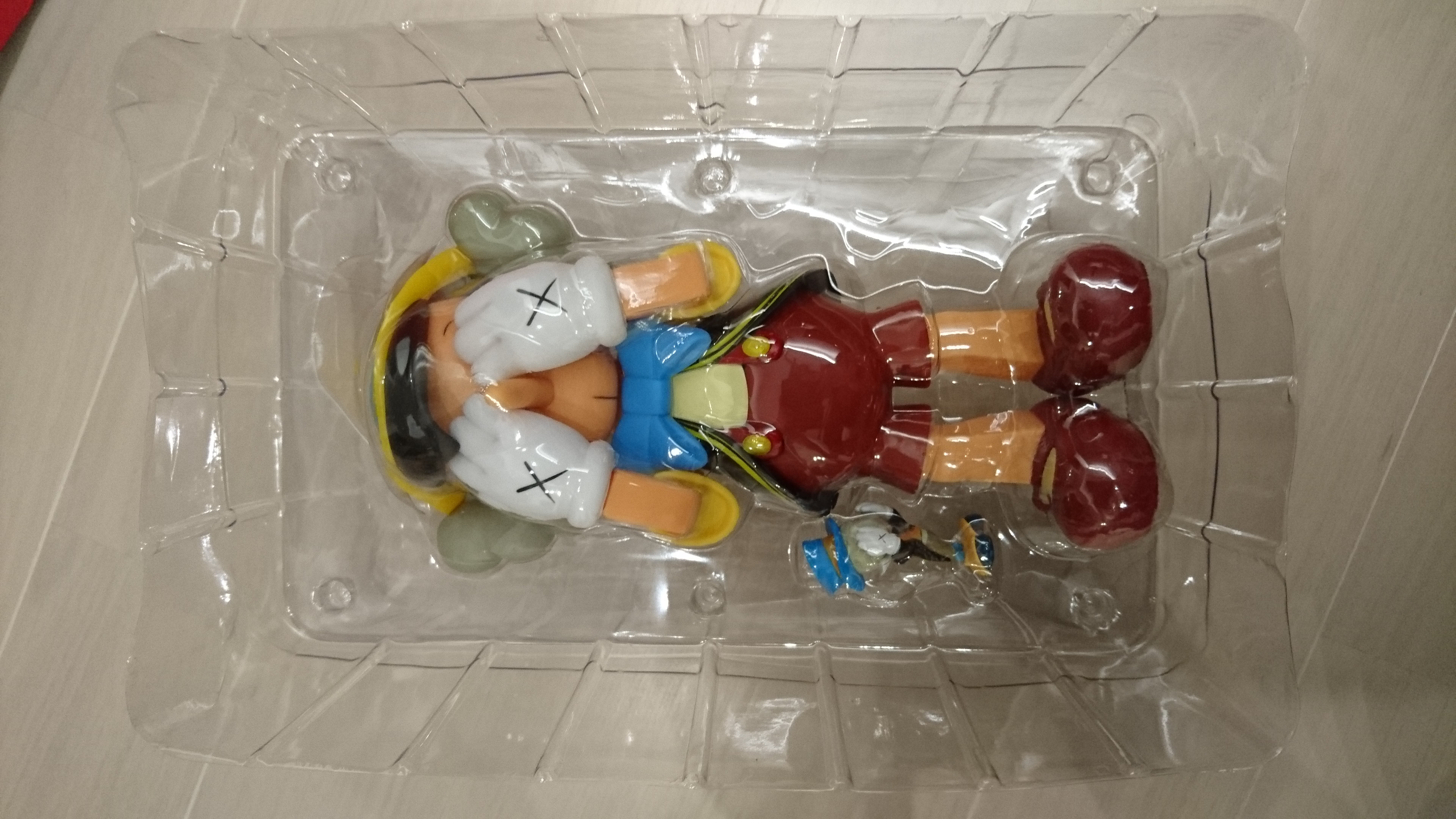
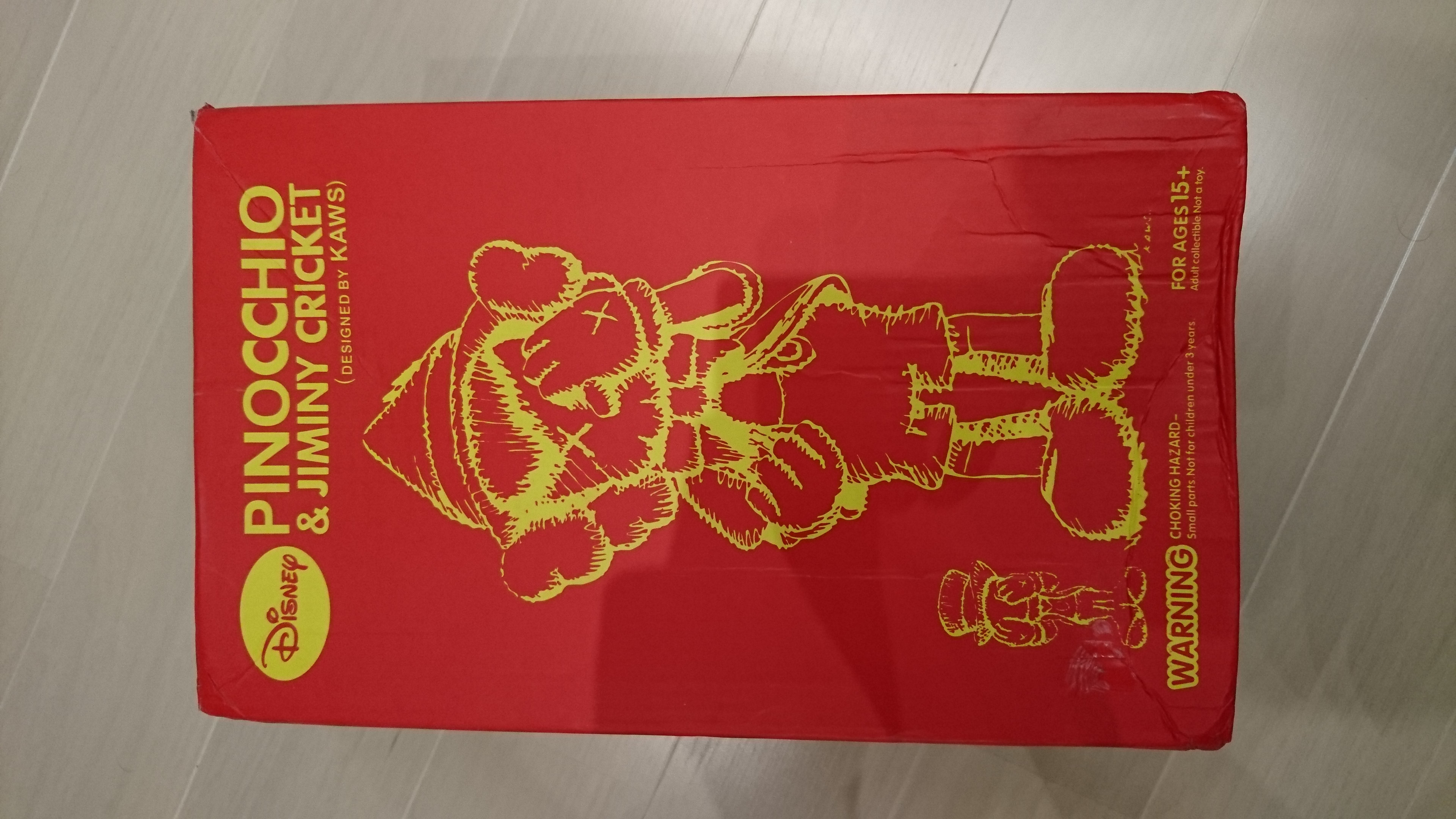
The first large photograph below shows a counterfeit specimen documented by Maniac Selection. The archival authentic/counterfeit pair that follows allows a detail comparison. These are separate sets of photographs: the archival authentic figure is not presented as another view of that same specimen.
 Open and inspect details
The Maniac Selection author bought this specimen for inspection.
Authentic and counterfeit labels follow the source authors’ attribution. Source photographs are linked below each comparison.
Pinocchio: overall silhouette
Archival photograph
Jiminy: hat, face and shoes
Archival photograph
Face and glove: X marks
Archival photograph
Nose: profile and join to the face
Archival photograph
Soles: markings are copied too
Archival photograph
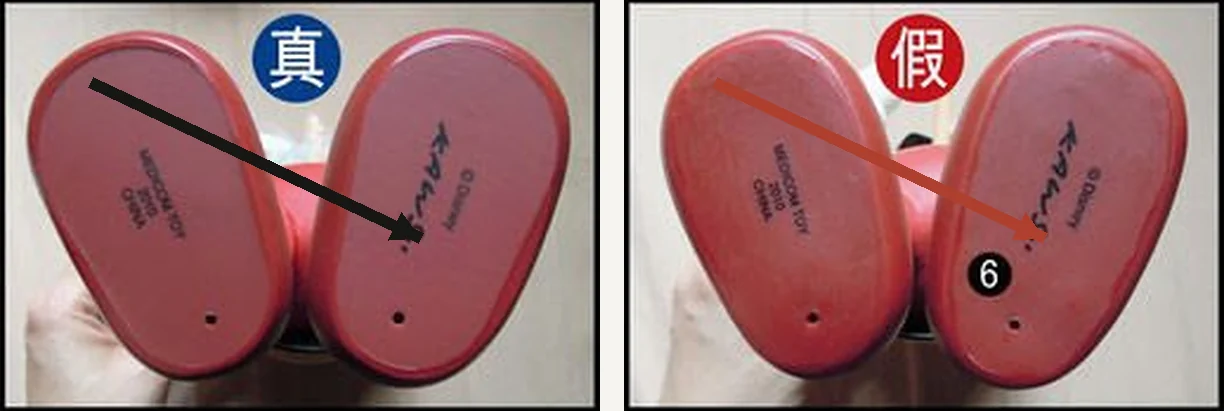
 Open and inspect details
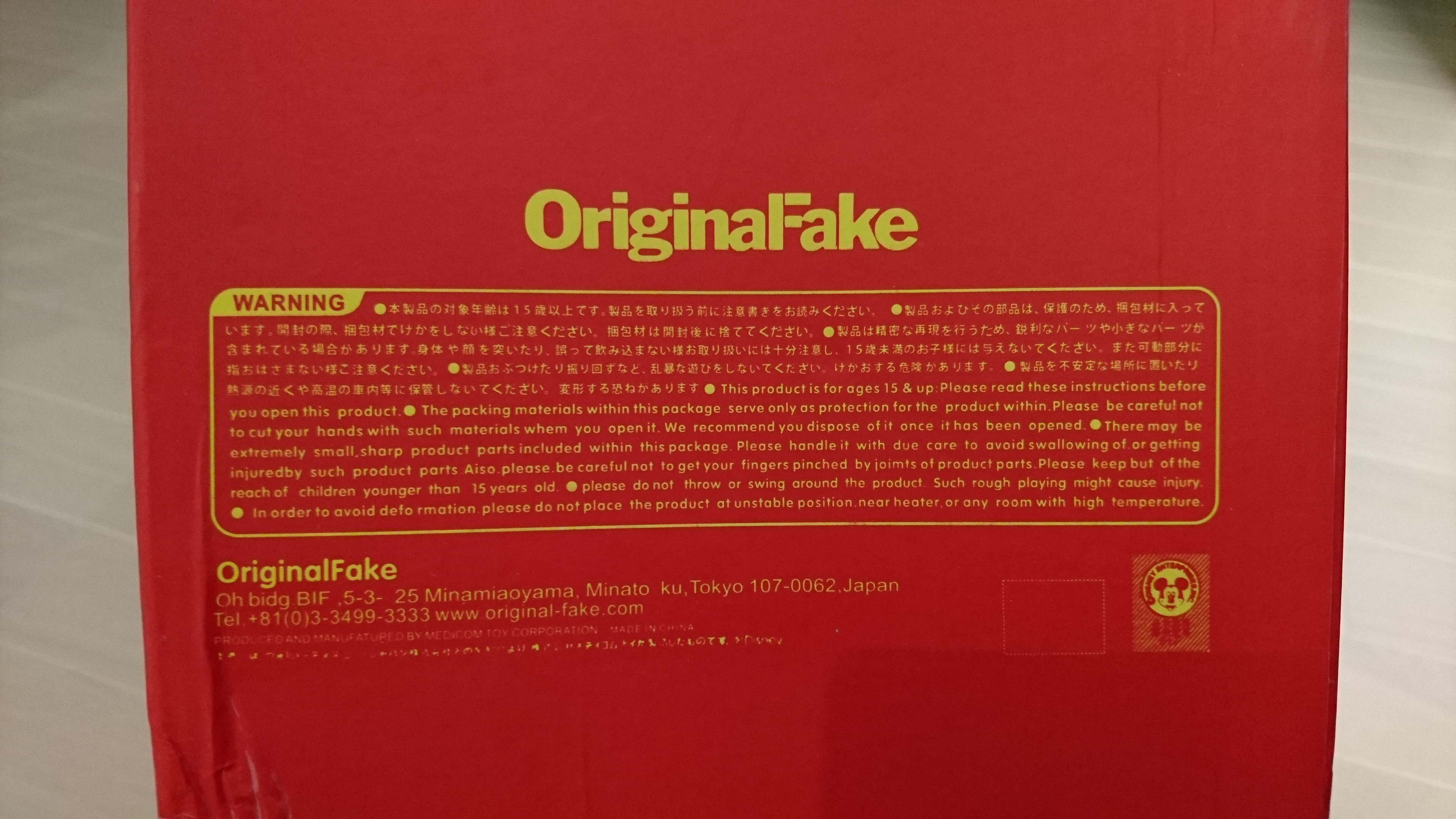
This counterfeit carries branded markings too: a logo alone is insufficient.
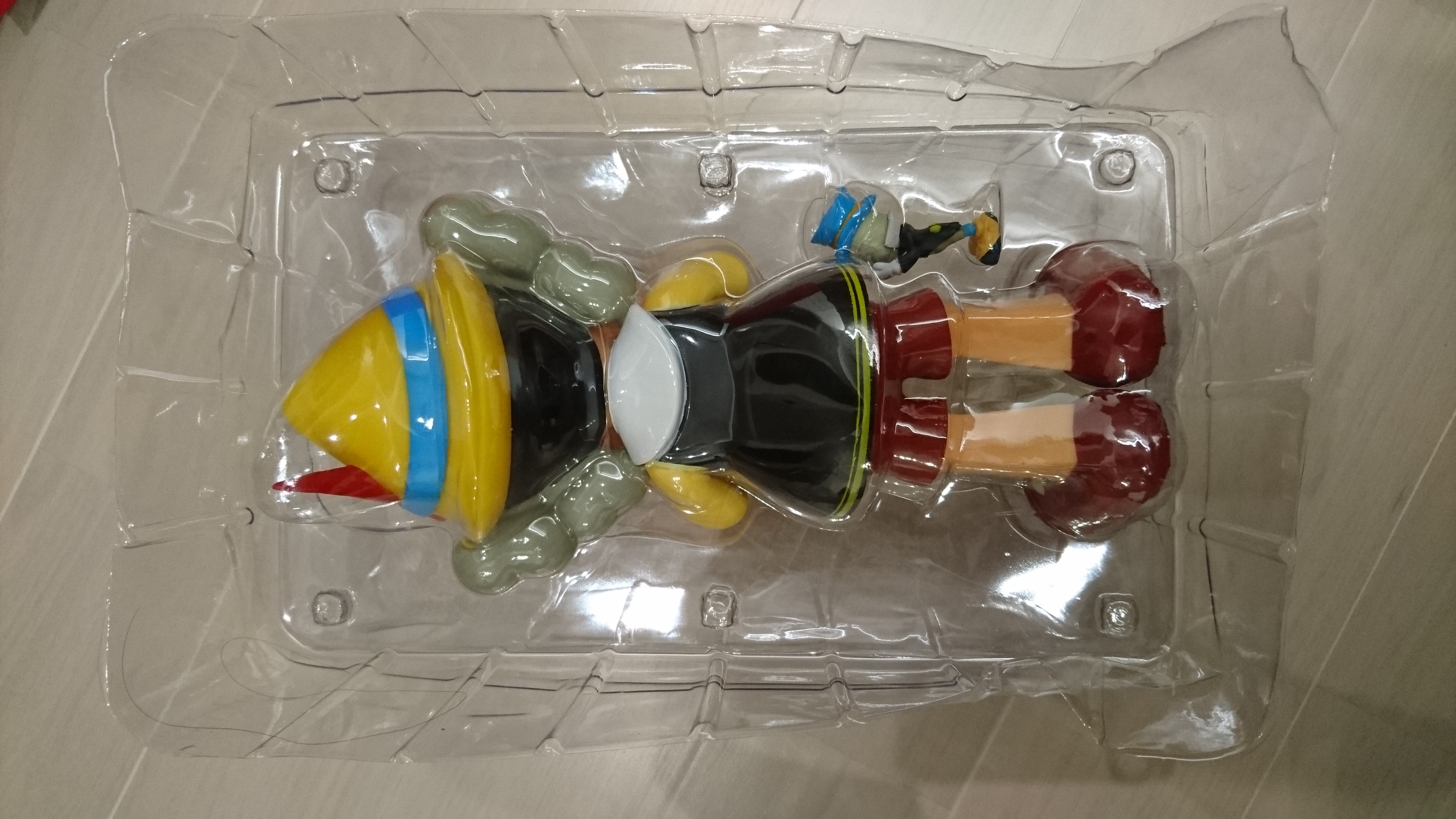 Open and inspect details
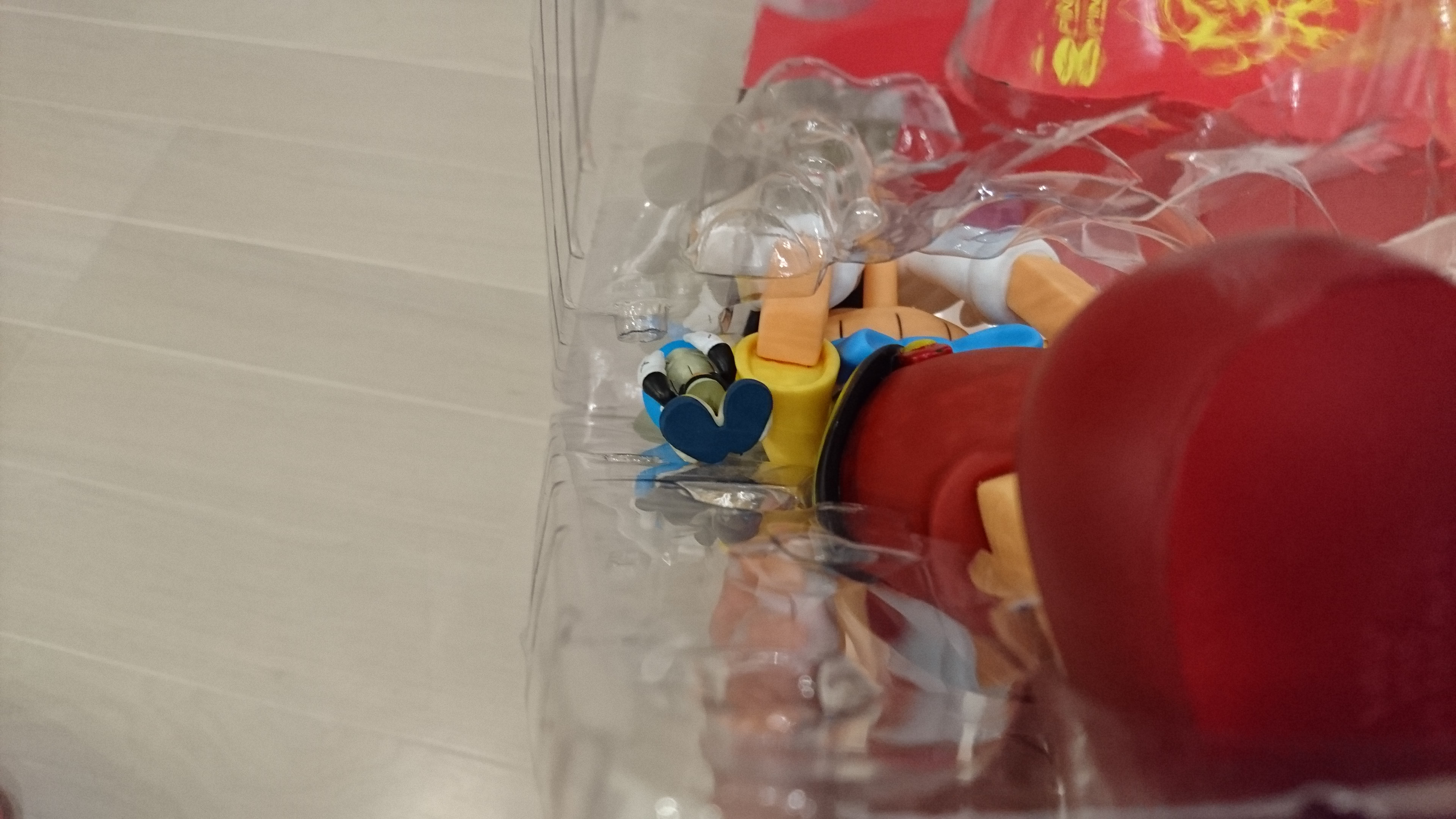 Open and inspect details
 Open and inspect details
 Open and inspect details
Zoom reveals “Aiso”, “joimts” and “MANUFATURED”: several errors in one warning.
 Open and inspect details
 Open and inspect details
 Open and inspect details
 Open and inspect details
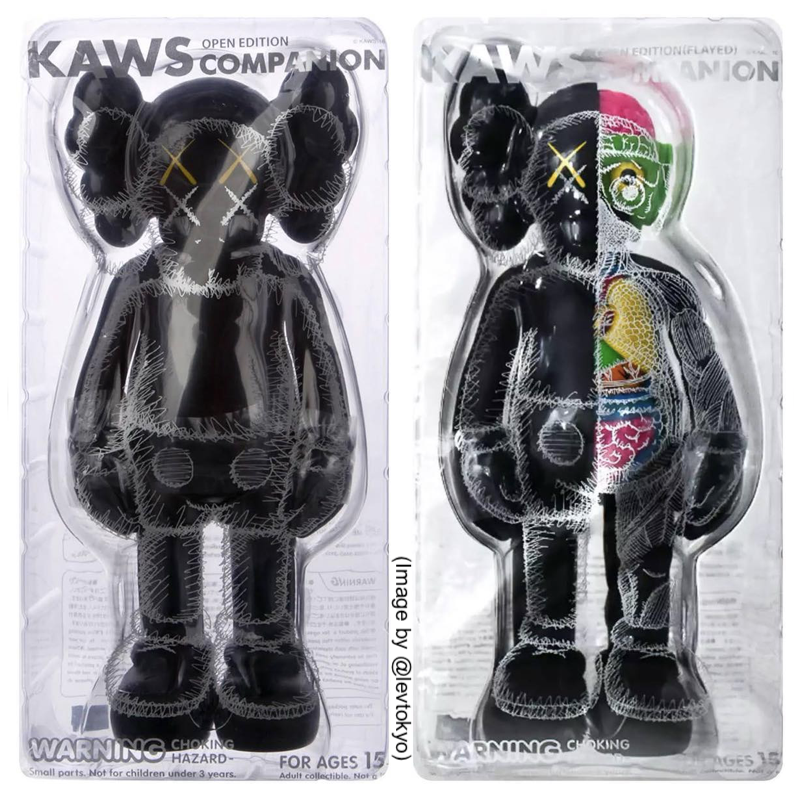
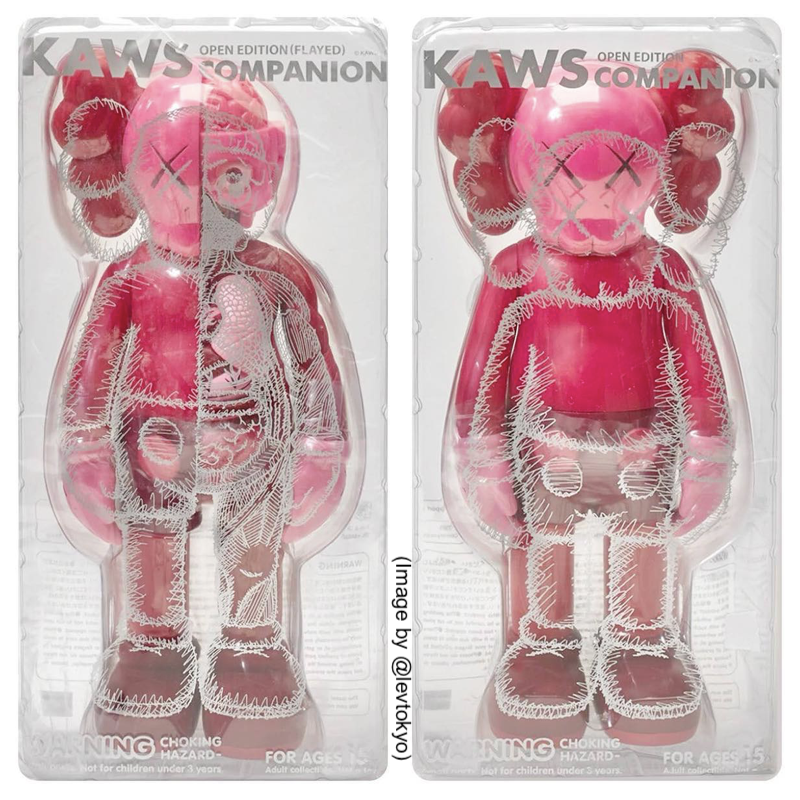
Match packaging to the specified Open Editions, rather than all KAWS releases.
What a hologram can tell you
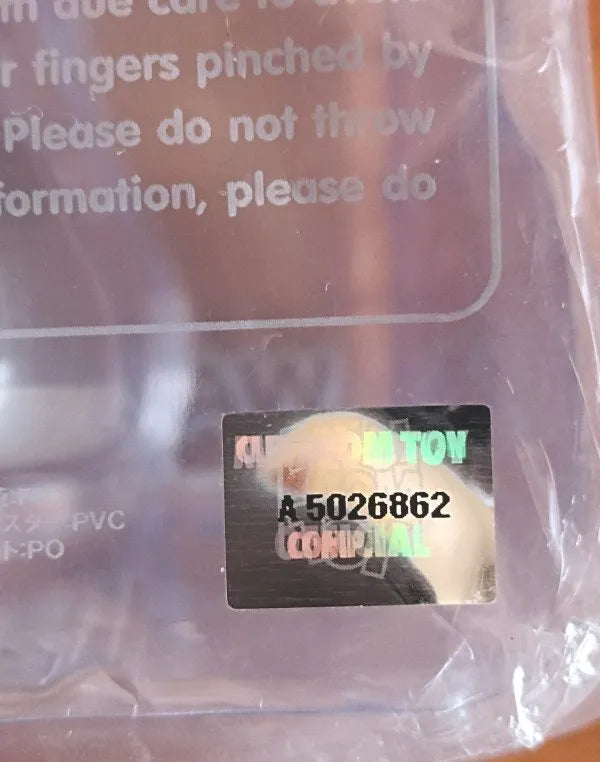
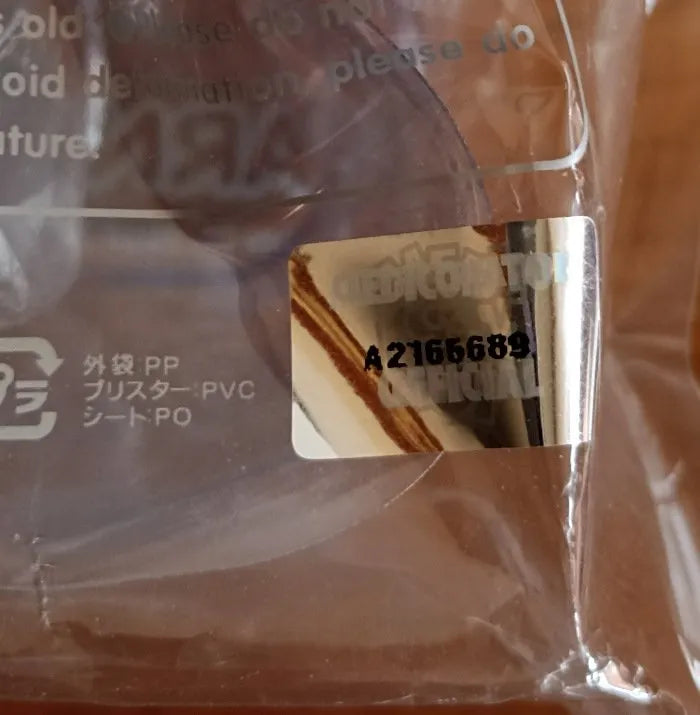
First establish which security marking belongs to the release. Packaging, labels and verification methods differ between years and producers. If a holographic element is expected, compare its design, position and appearance at different angles with a reliable reference. The presence of a shiny label alone cannot establish that the object inside the box is the corresponding genuine figure.
AllRightsReserved provides an official NFC authentication app for compatible products. This is a particular system for supported items, rather than a compulsory chip in every KAWS figure. Follow the producer’s instructions for the specific release. An app, an arbitrary QR code and a photograph of a label are different things. A successful screen also needs to make sense alongside the physical figure and its provenance; it should not end the comparison prematurely.
 Open and inspect details
 Open and inspect details
Genuine objects age too
The promise that a genuine figure never darkens or fades is convenient, but unsuitable for polymer objects. The Canadian Conservation Institute describes how light and ultraviolet radiation can cause yellowing and colour changes in plastics. Storage conditions and material composition matter for genuine items too. A discoloured patch alone cannot identify an artist or manufacturer, and a colour difference should be considered together with the item’s history.
Compare colour under similar lighting, without filters, ideally against a neutral background. Record scratches, tackiness, fading, restoration and damage separately: these condition issues affect a purchase even once authenticity is established. Avoid solvent, heat, scratch and vigorous rubbing tests. A buyer needs photographs, documentation and informed examination. Damaging a figure for a home experiment will not make the resulting opinion more reliable, and can make later assessment and conservation more difficult.
How to read the close-ups
These close-ups document distinct cases: BFF Pink, TOGETHER, Pinocchio packaging and Open Edition releases. Original and counterfeit labels are attributed to the source authors; different models and colourways are not presented as identical pairs.
Dissected Companion: what to compare
Authentic and counterfeit labels follow the source authors’ attribution. Source photographs are linked below each comparison.
Dissected Companion: full silhouette
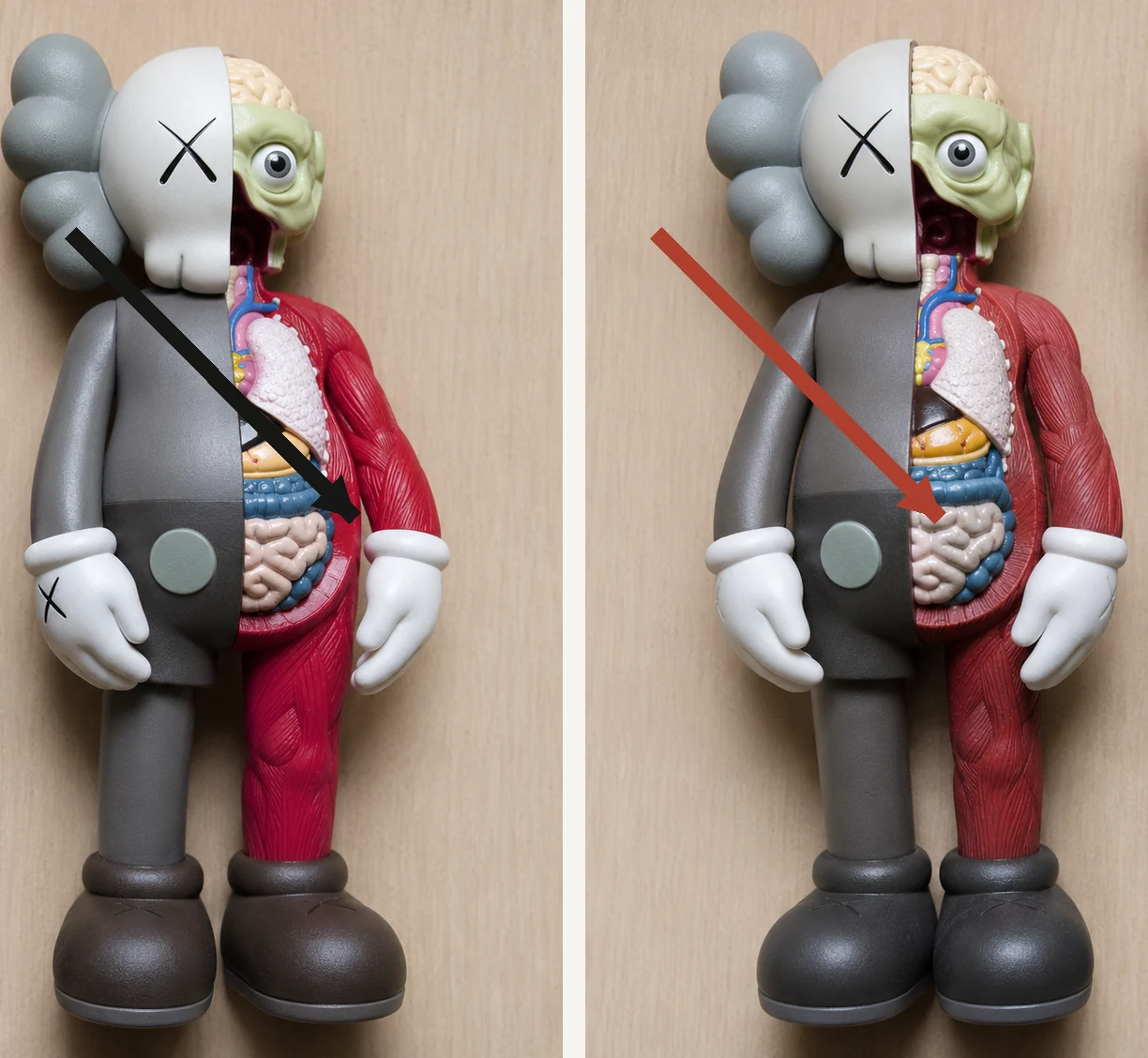
Illustration based on archival photographs.
Torso: boundaries and relief
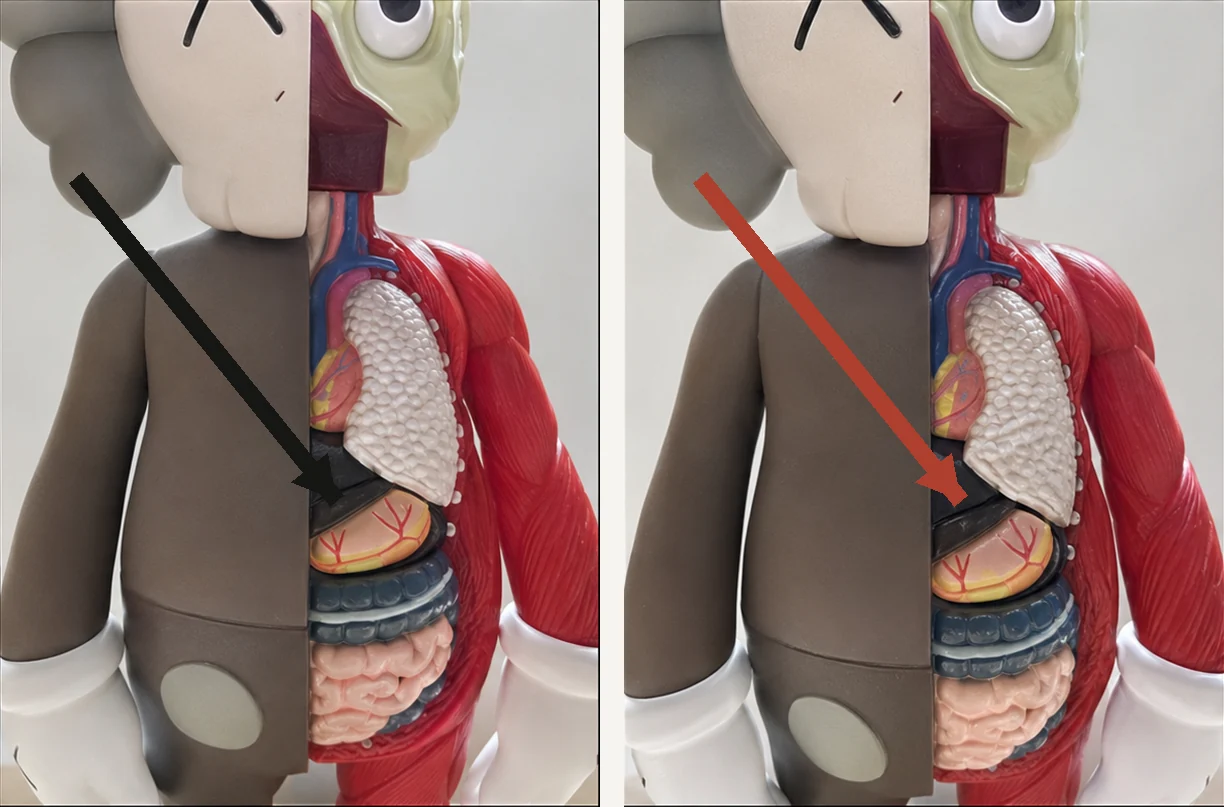
Illustration based on archival photographs.
Protective wrapping on the torso
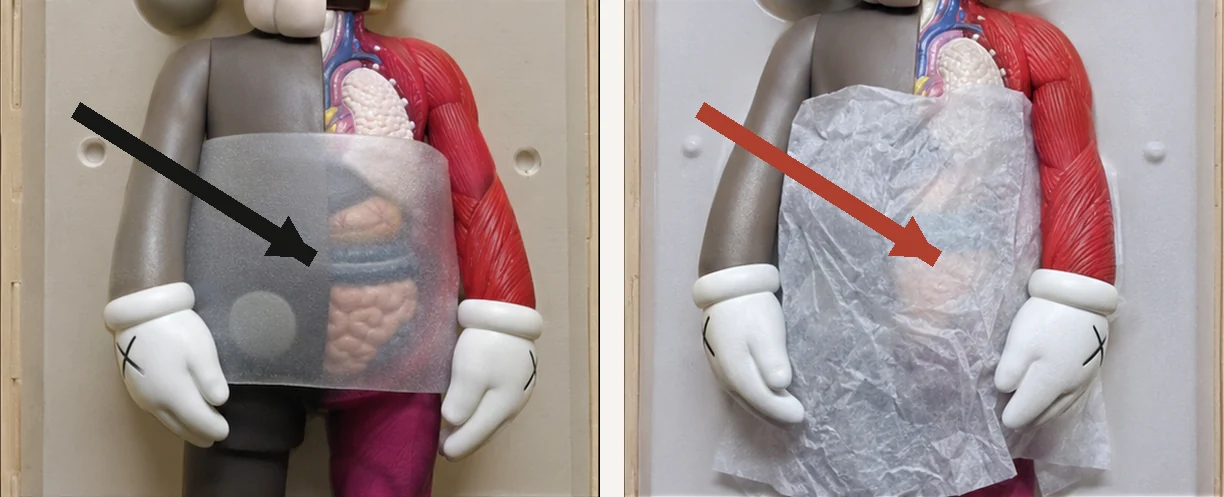
Illustration based on archival photographs.
Inner tray
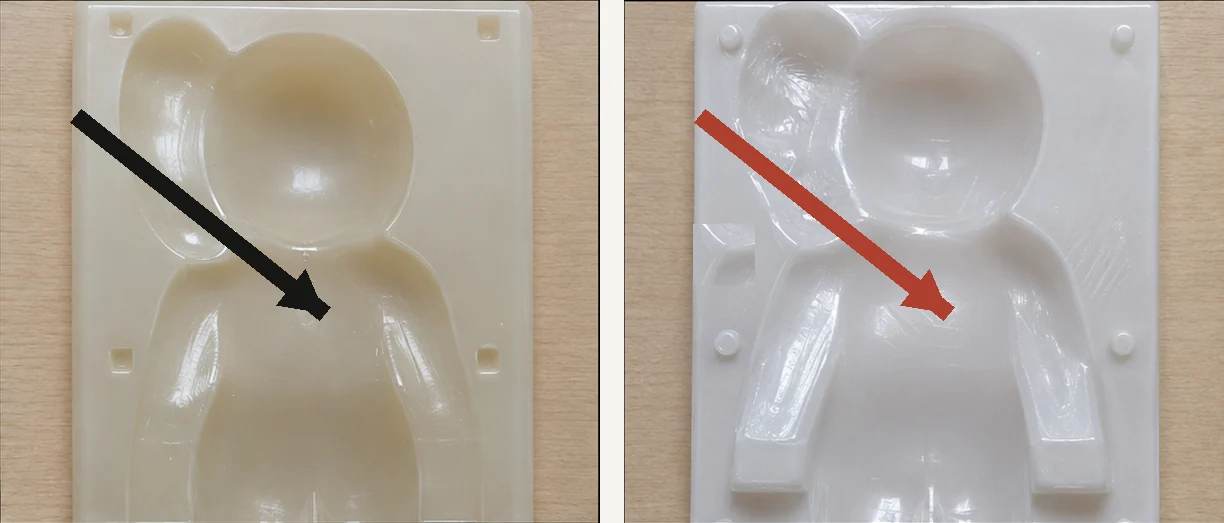
Illustration based on archival photographs.
Legs and shoe shape
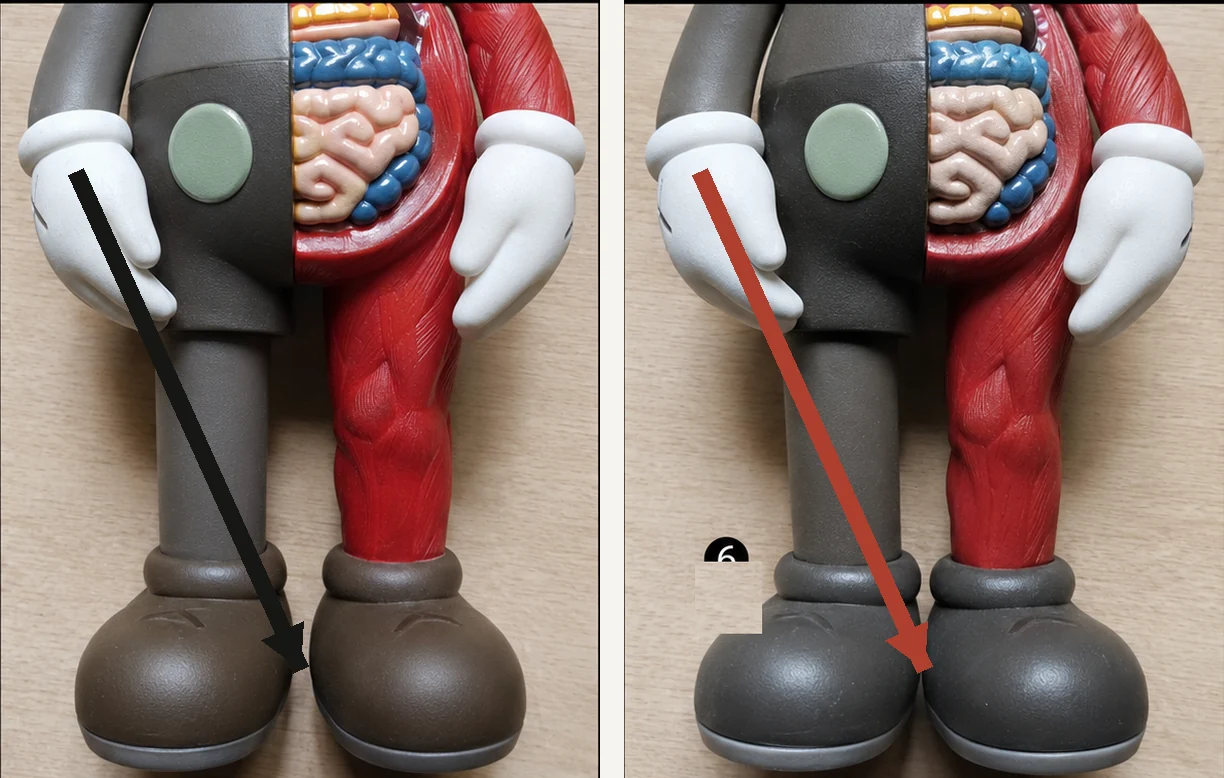
Illustration based on archival photographs.
KAWS × Robert Lazzarini: deliberately distorted forms
Authentic and counterfeit labels follow the source authors’ attribution. Source photographs are linked below each comparison.
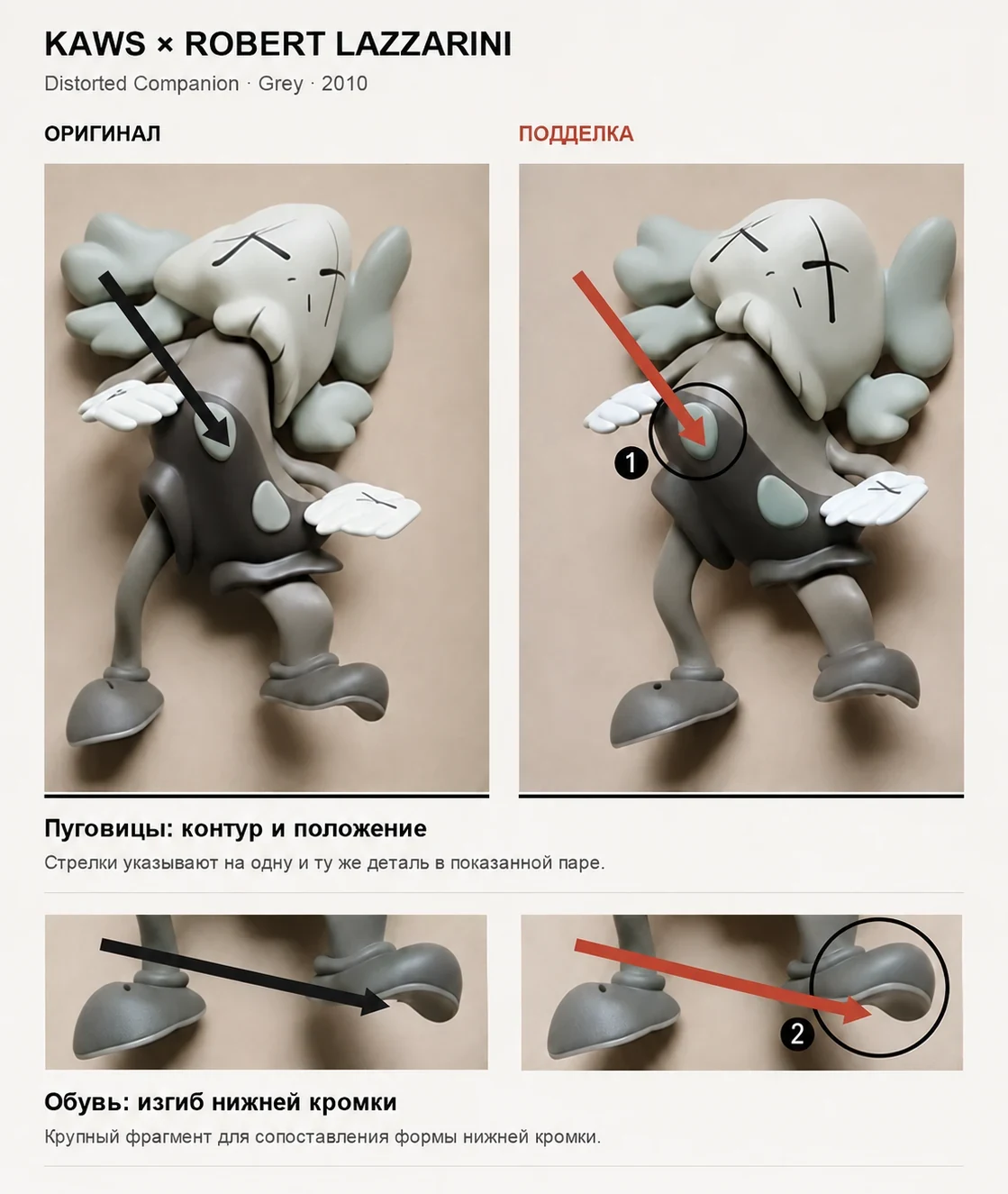
KAWS × Robert Lazzarini — Distorted Companion, 2010
Lazzarini Grey: buttons
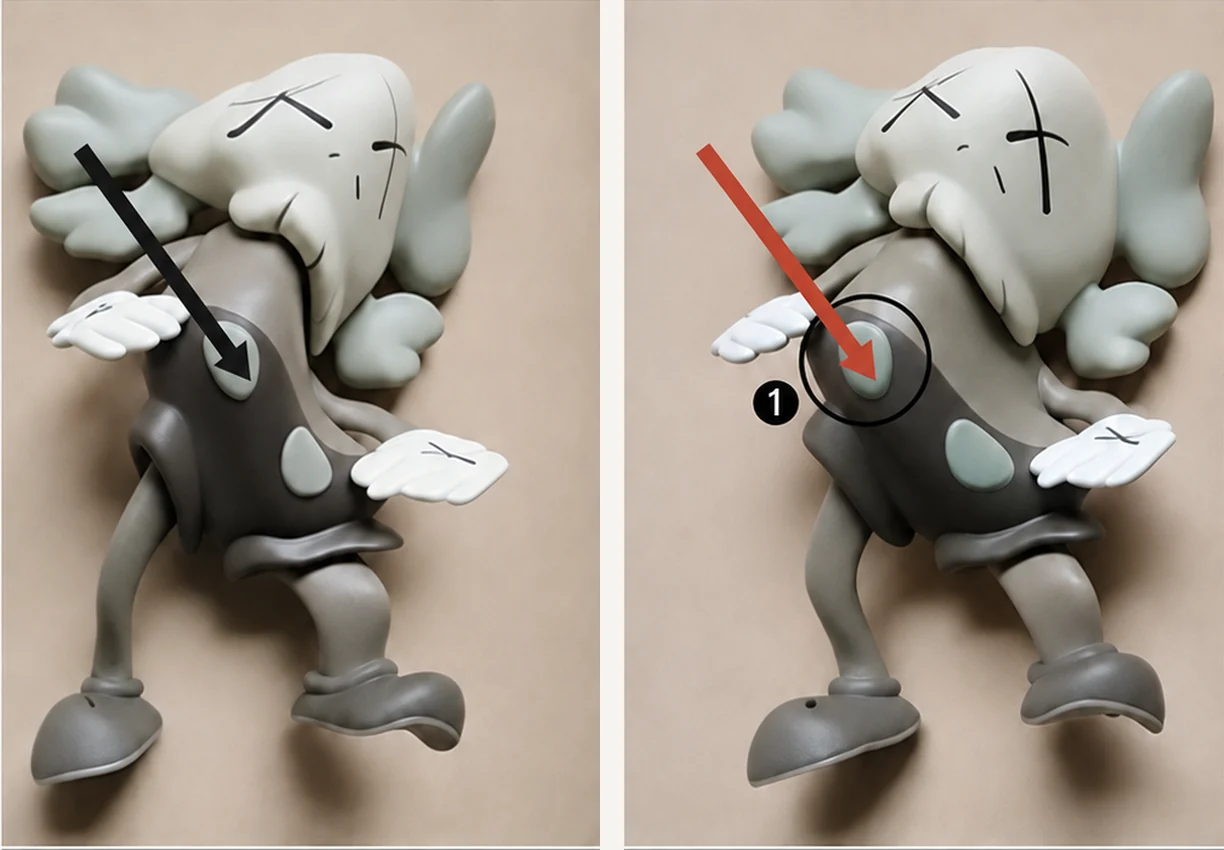
Illustration based on archival photographs.
Lazzarini Grey: shoe curvature

Illustration based on archival photographs.
Lazzarini Grey: another view
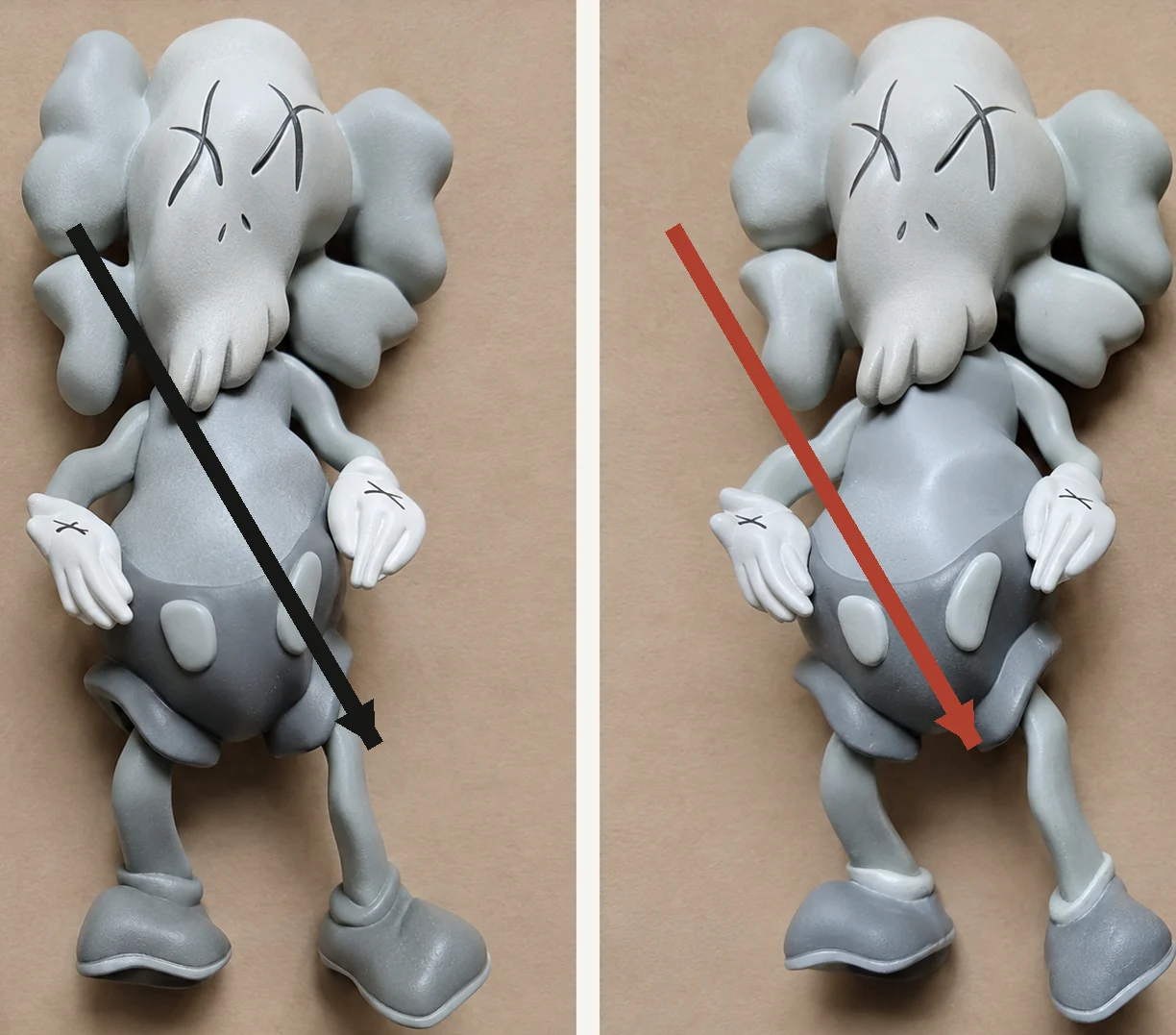
Illustration based on archival photographs.
Shoes from another angle
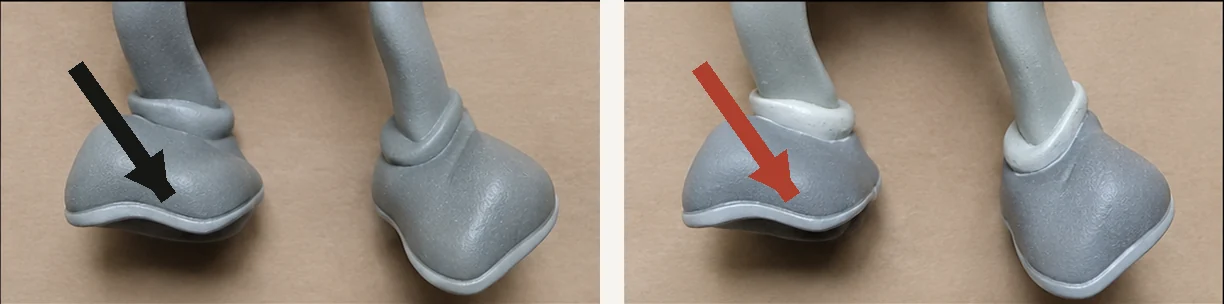
Illustration based on archival photographs.
Lazzarini Black: its own reference
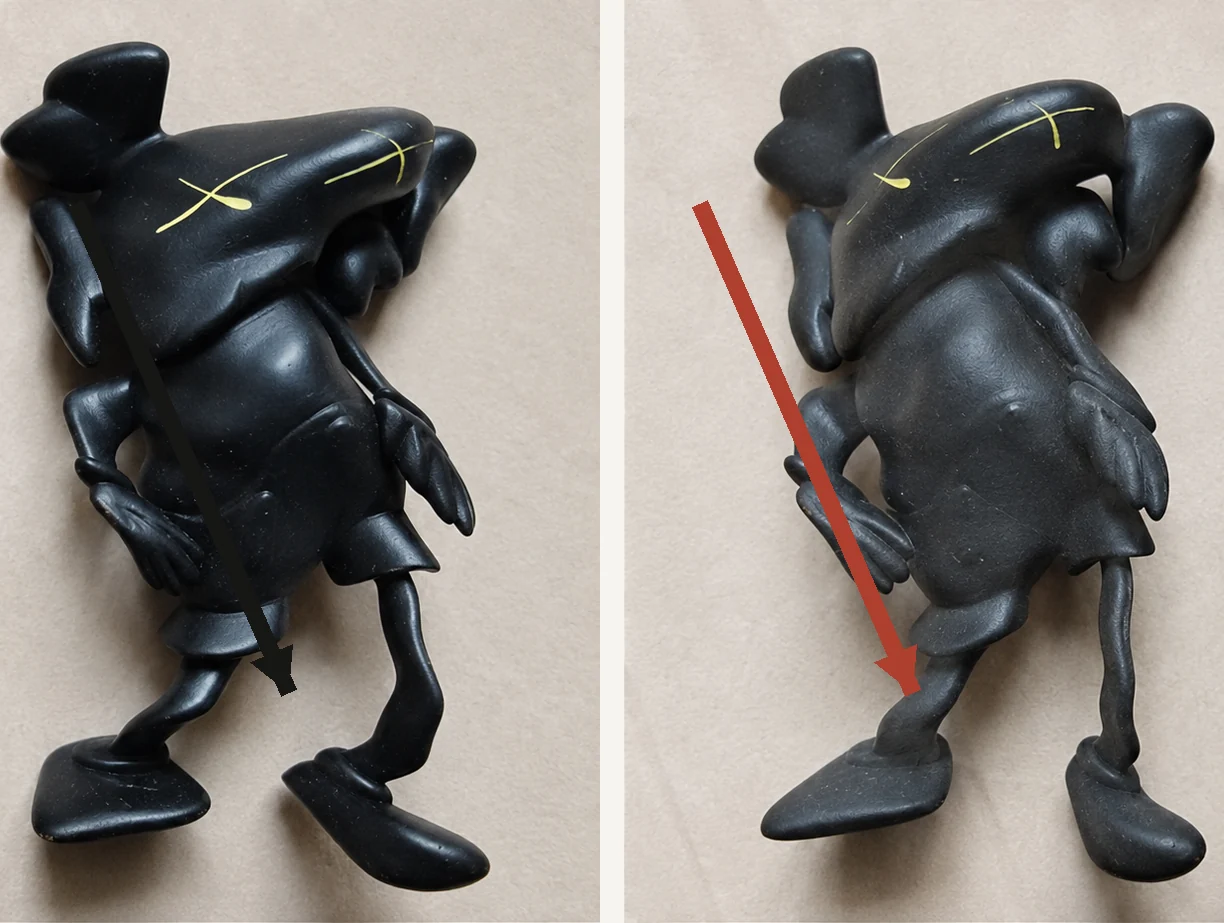
Illustration based on archival photographs.
Black: the shoe edge
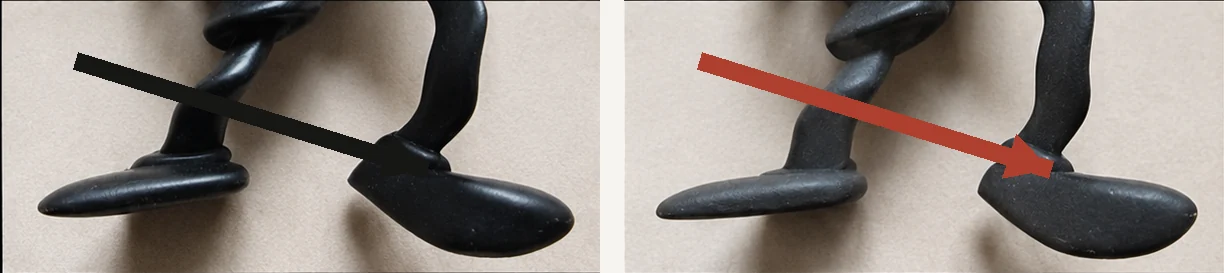
Illustration based on archival photographs.
Lazzarini: comparison of details
Illustration based on archival photographs. LMF Michael / TOYSREVIL.
Stormtrooper: helmet and body
Authentic and counterfeit labels follow the source authors’ attribution. Source photographs are linked below each comparison.
Stormtrooper: helmet lines
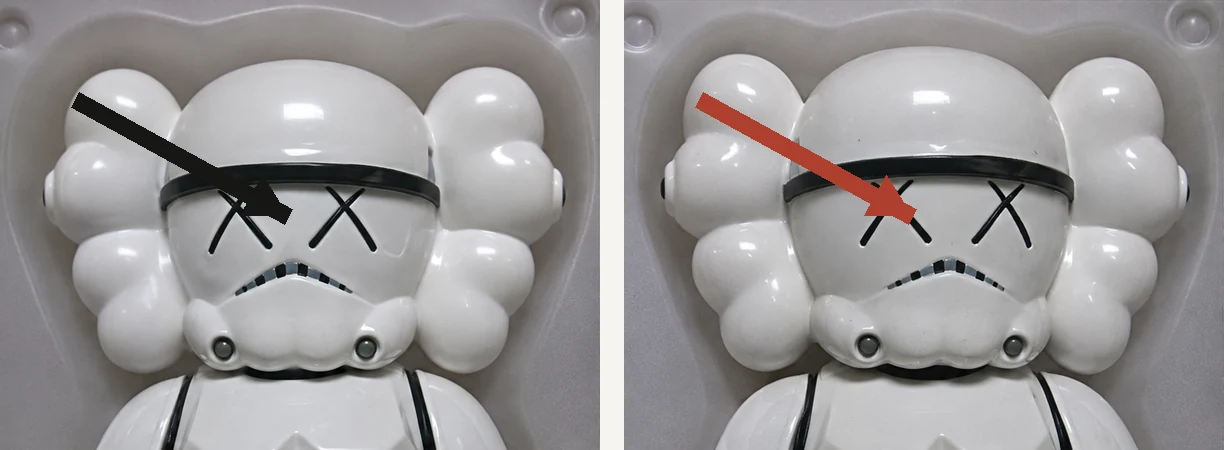
Illustration based on archival photographs.
Stormtrooper: back of the helmet
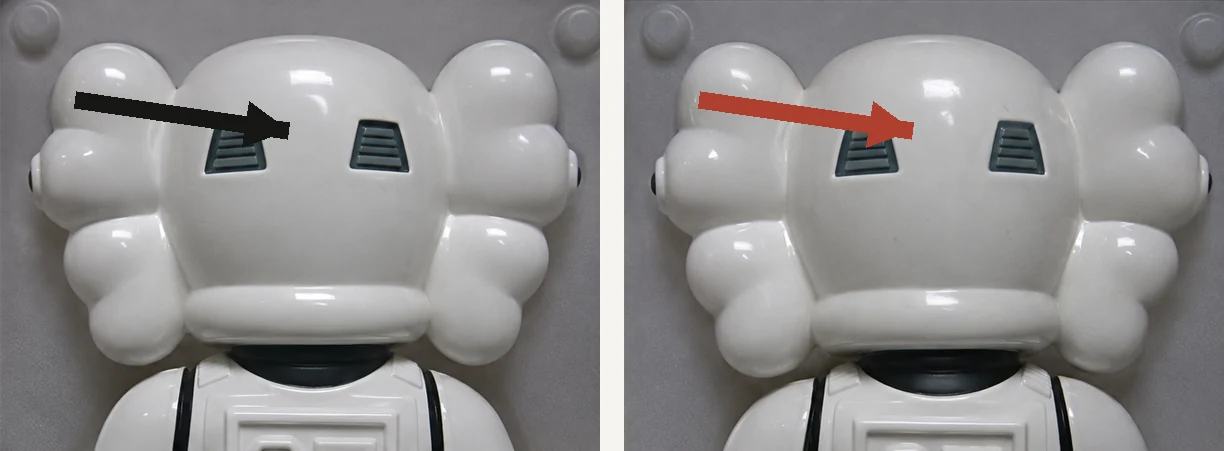
Illustration based on archival photographs.
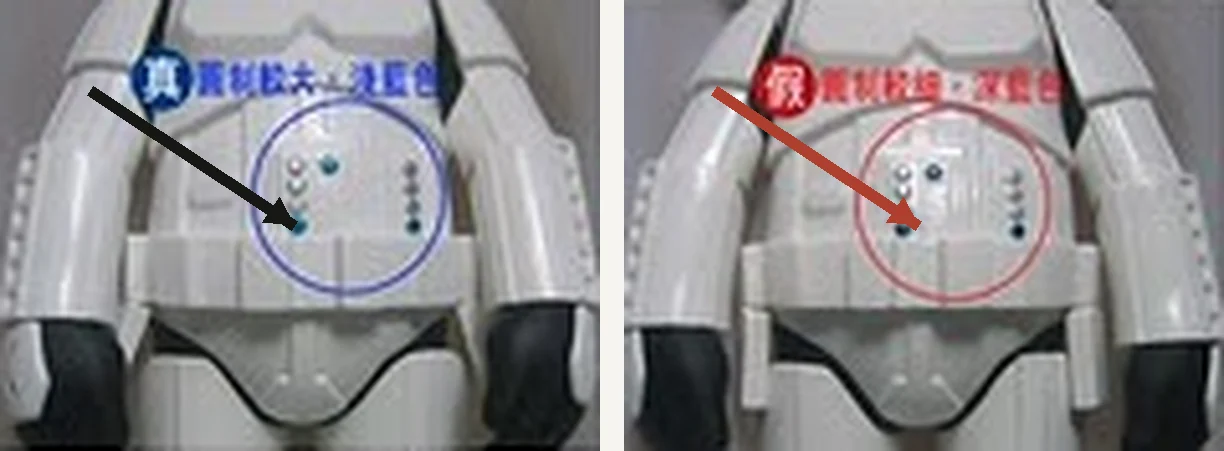
Stormtrooper: body
Archival photograph
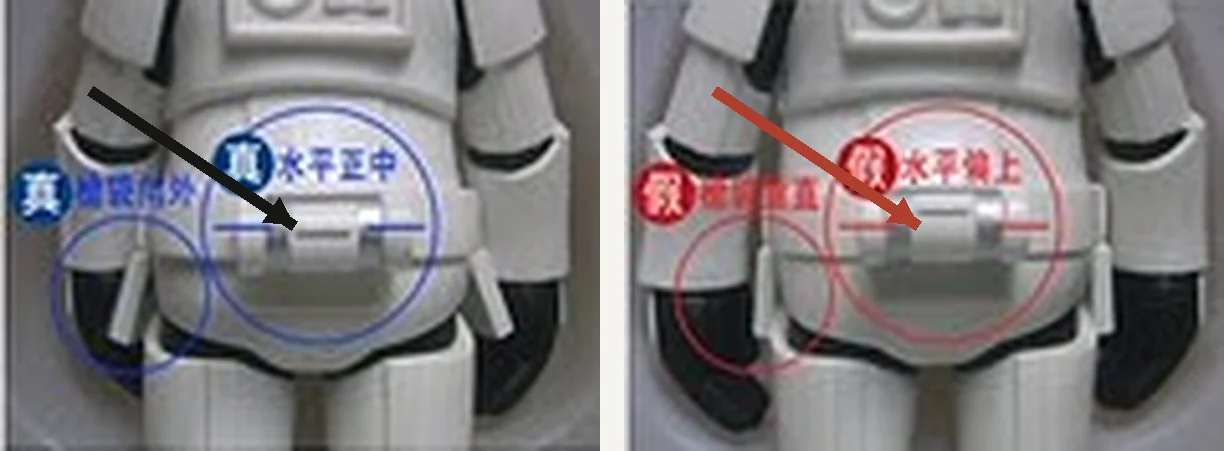
Stormtrooper: waist
Archival photograph
What to request before buying
Build a small evidence set: the exact release name, recent photographs from every side, dimensions, images of markings and packaging, the purchase source and any surviving paperwork. A receipt can help trace history, particularly when it can be connected to this object, but should still be considered with the remaining evidence. It is useful when a seller answers specific questions calmly and explains the return conditions and dispute process in advance.
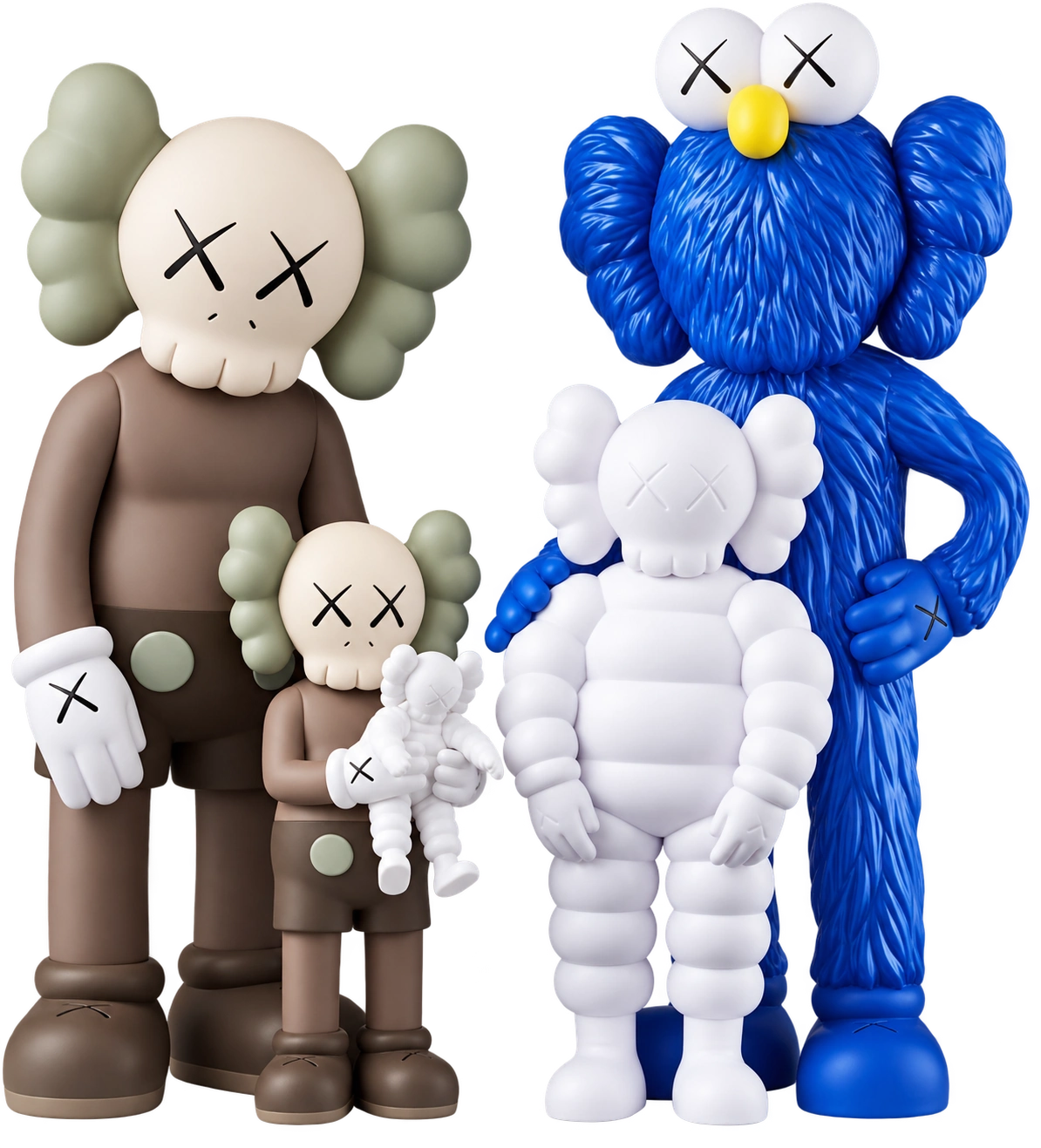
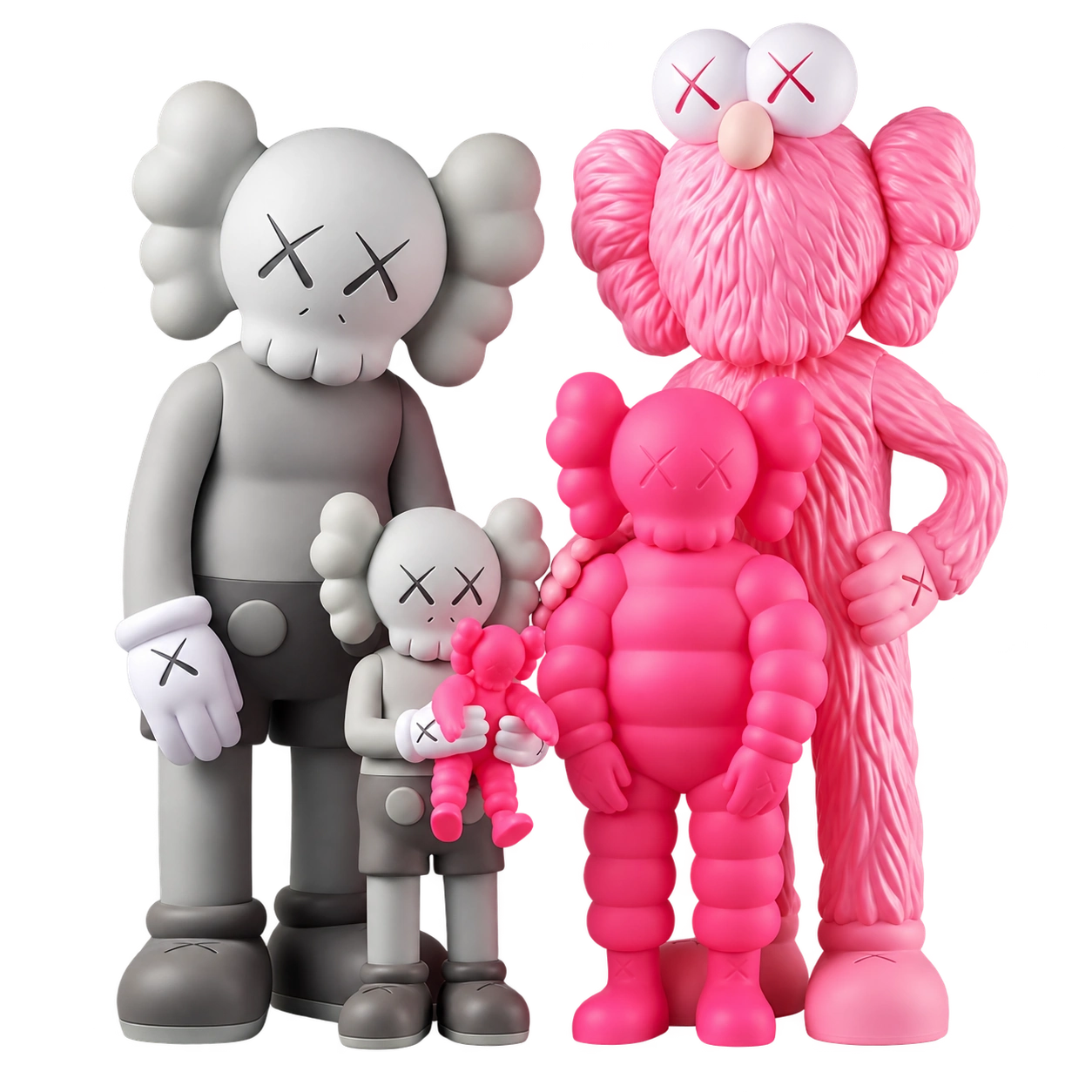
For a costly purchase or substantial discrepancies, seek an assessment from a specialist familiar with the release. A random account’s confident “legit” comment is no substitute for an explained opinion. Our KAWS category can help with model names, while our KAWS FAMILY history shows how one set exists in different official colourways. Focus on a specific figure with a clear history and condition, so that the decision rests on information you can actually check.