In this article
Who belongs to FAMILY, and why the count can be confusing
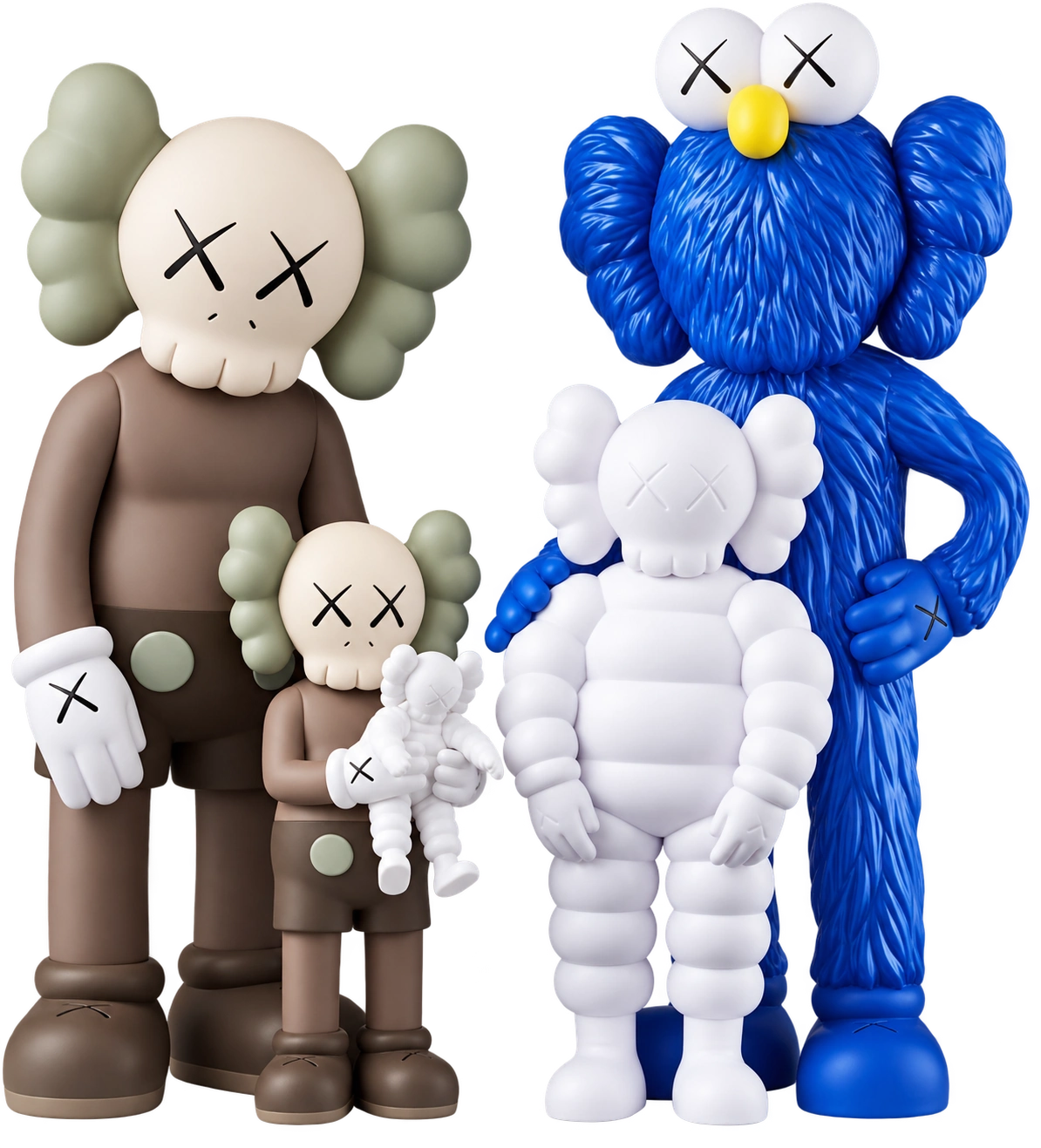
KAWS FAMILY brings familiar characters into a single scene. It includes two COMPANION figures of different sizes, one BFF and two CHUM characters, including a tiny one held by the smaller COMPANION. That makes five characters, although a quick glance can suggest only four standing figures. The Sotheby’s catalogue describes this arrangement too. The miniature CHUM is an essential part of the composition, rather than an incidental detail in the photograph.
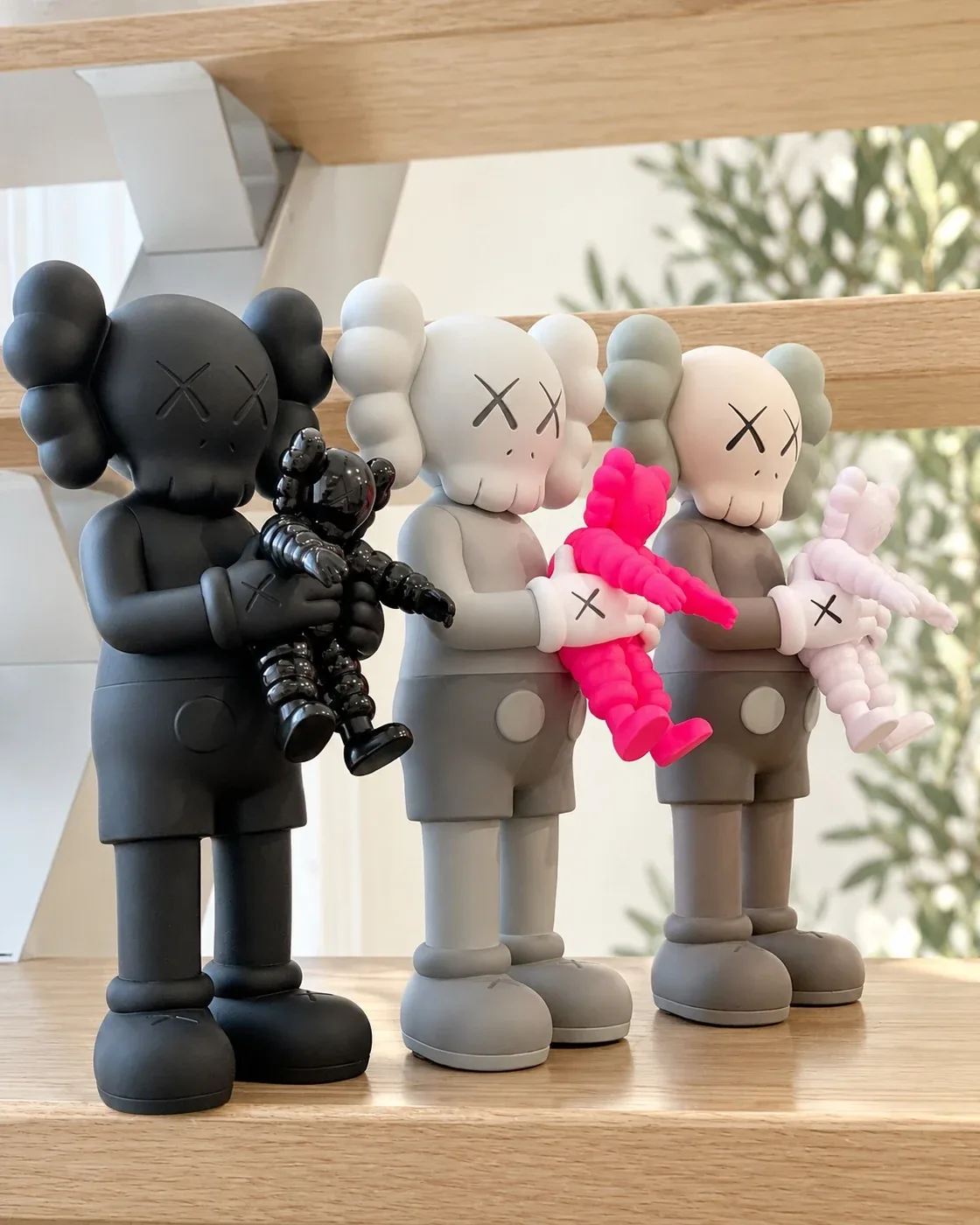
Each character has its own physical language. COMPANION has a head with bone-like projections and crossed eyes. BFF has a rounded outline and a textured surface suggesting fur; CHUM is built from gently inflated segments. Placed together, these forms remain distinct even when their colours are similar. A larger figure establishes the height, smaller ones draw attention downwards, and the tiny character held in someone’s arms connects several scales at once.
The family reading comes from how the bodies relate: who stands beside whom, who holds someone else, and how close the hands are. It does not require assigning fixed roles or identifying portraits of the artist’s relatives. Those relationships make FAMILY a work in its own right, rather than simply a box containing familiar names.
2021: a release connected to KAWS TOKYO FIRST
The first colour versions have a specific exhibition context. The official MEDICOM TOY announcement lists FAMILY BROWN/BLUE/WHITE and FAMILY BLACK as KAWS TOKYO FIRST commemorative products. The exhibition ran at Tokyo’s Mori Arts Center Gallery from 16 July to 11 October 2021. This answers the question of what the release marked: there is a documented exhibition connection, rather than an imagined family celebration.
Different dates in listings can reflect different sales stages. The manufacturer’s September announcement concerned a 25 September launch; MEDICOM later announced a separate online sale on 27 November. The date of one particular sale therefore does not necessarily establish the model’s first appearance worldwide. For a collector, keeping the event and colourway names straight is more useful than forcing the whole story into a single date.
FAMILY is also distinct from BE@RBRICK. These are not designs applied to one standard bear-shaped body. Each character keeps its own proportions and gesture. It offers another way into collecting KAWS: through the interaction between recognisable forms.
Photographs
Brown/Blue/White: three colours that describe the group
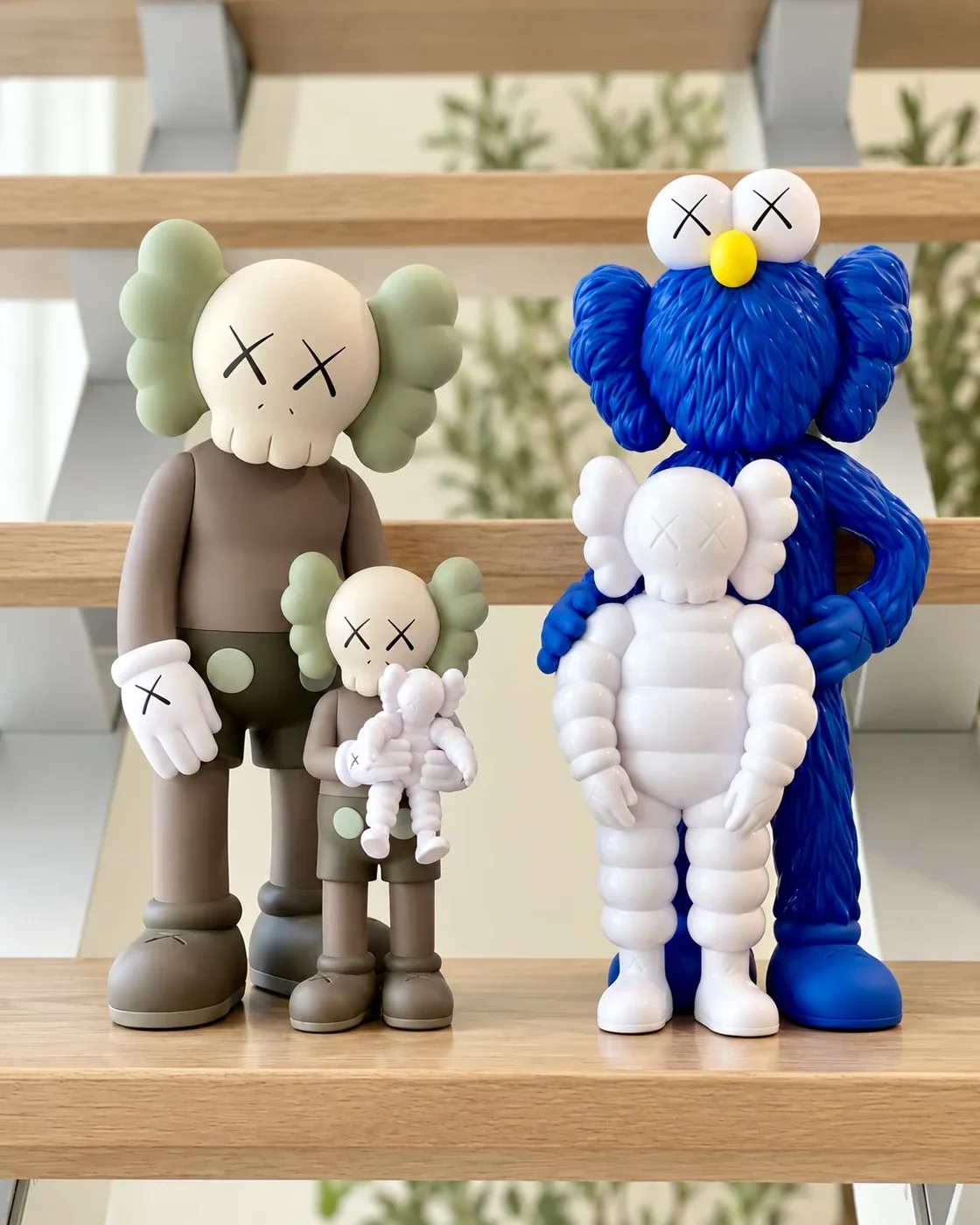
The full colourway name is BROWN/BLUE/WHITE. It works as a small map of the composition: brown COMPANION figures, a blue BFF and white CHUM characters. Our catalogue calls the model FAMILY Brown & Blue. The shorter name does not change the set’s composition, but the full wording helps when searching for a particular version or comparing photographs.
Colour makes the individual characters easy to separate. The blue BFF creates a vertical element of its own; white CHUM forms stand out beside the brown COMPANION bodies. On a shelf, the eye moves between several points rather than settling on the largest silhouette. This can be a useful choice if you want the different participants in the family scene to be legible immediately, including from a little further away.
In a room, the palette can connect with timber, books and a calm, pale background. There is no need to match the entire space to the blue figure. Giving the group a distinct place and keeping neighbouring objects away from the smallest characters usually matters more. Compare several views before judging the shades: warm light can change the appearance of brown and white quite noticeably.
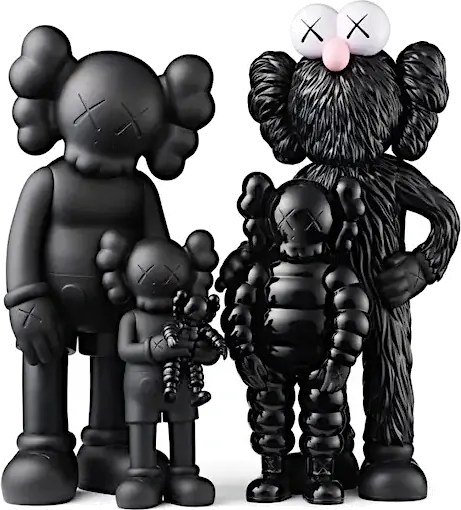
Black: looking at outline and texture
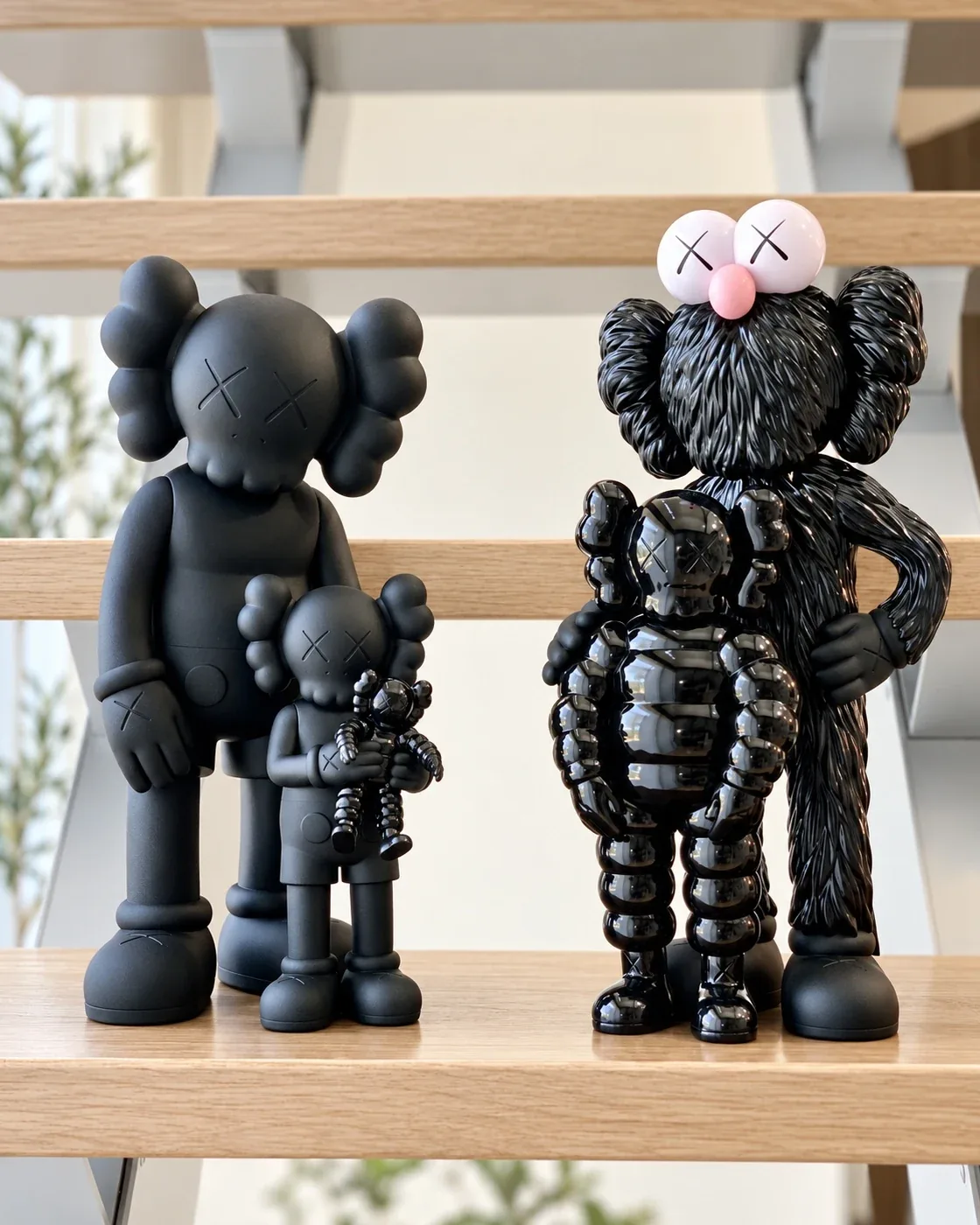
In FAMILY Black, the dark palette takes the lead. Lighter facial and eye details remain visible, while outline and relief do more of the work of separating the characters. You begin to notice the different construction of BFF’s surface, COMPANION’s smooth body and CHUM’s segmented form. Black identifies the colourway; it does not mean that every last detail has an entirely black finish. Our photographs of the black version show the contrast particularly clearly: matte COMPANION figures beside the glossy surfaces of BFF and CHUM.
Try imagining the group somewhere with good side lighting or soft, diffuse light. Some outlines may disappear against a very dark shelf, even if a large studio photograph made everything look clear. A pale wall behind the work helps distinguish the figures without strong display lighting. Consider the position from which you will normally see it too: an arrangement at eye level reads differently from one on a low cabinet.
Sotheby’s describes Black as an open, non-numbered edition. Claims of a fixed production run of a few hundred therefore need separate evidence. Calling an example rare does not replace information about its edition, condition or the completeness of the particular set being offered.
Photographs
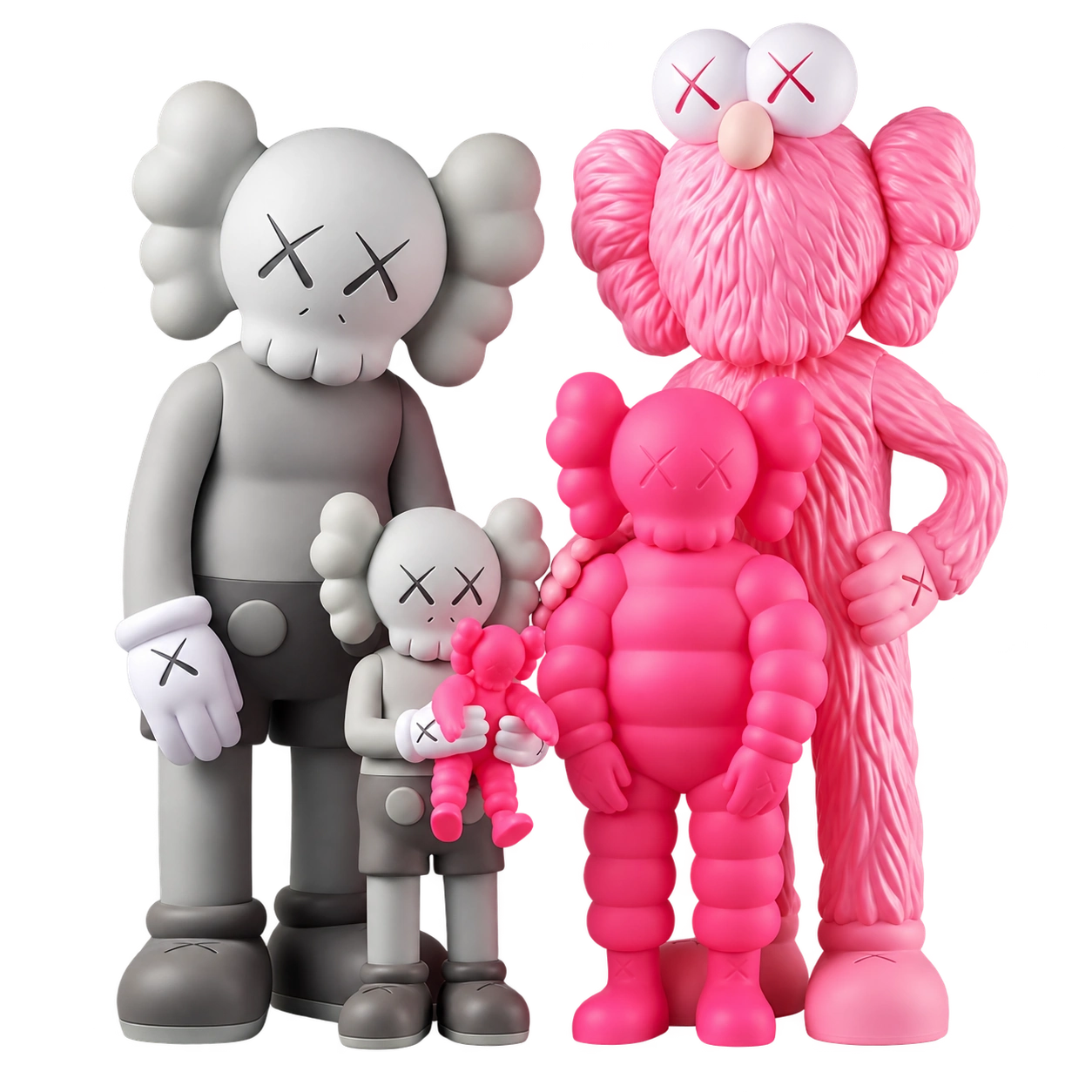
Grey/Pink: the February 2022 release
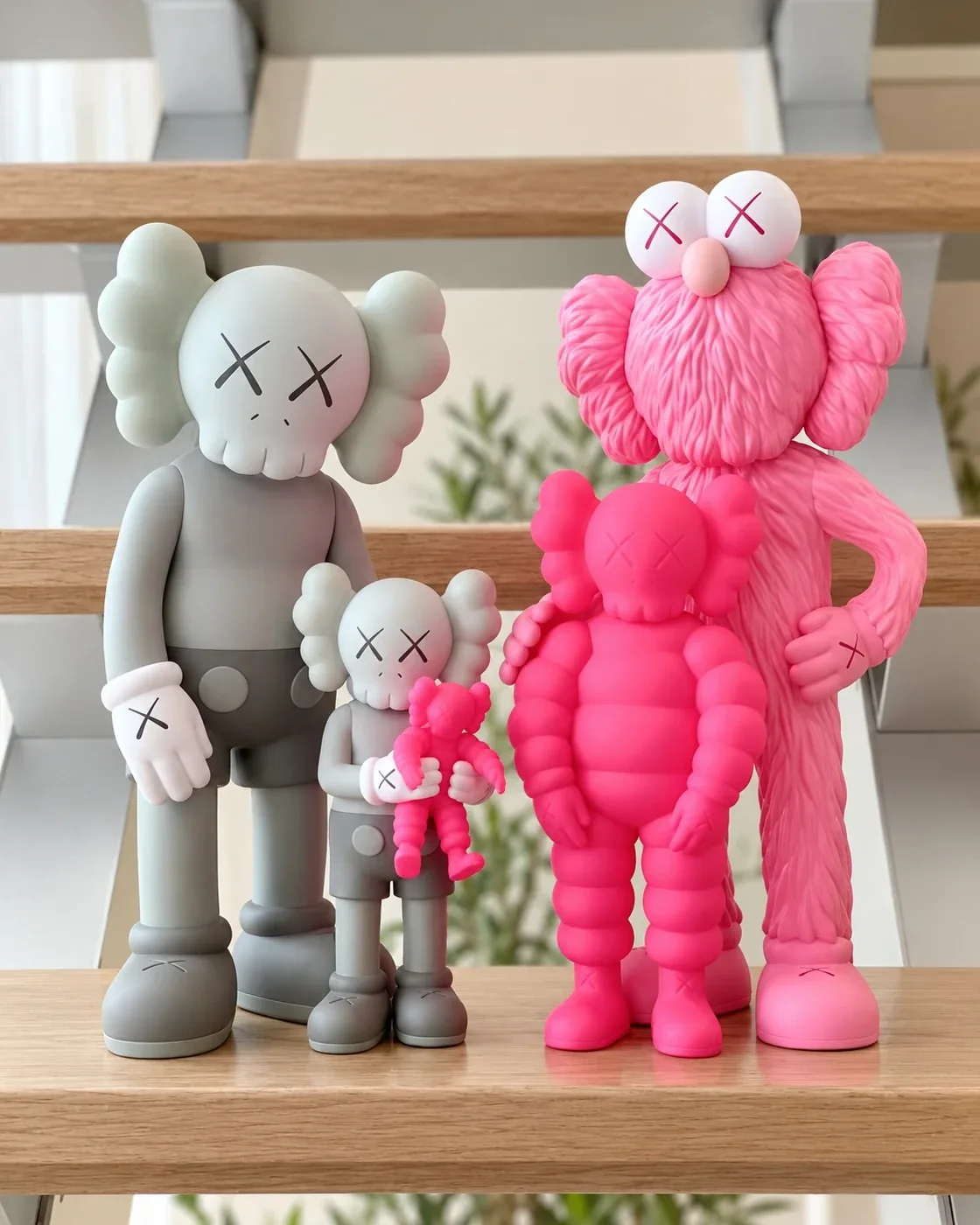
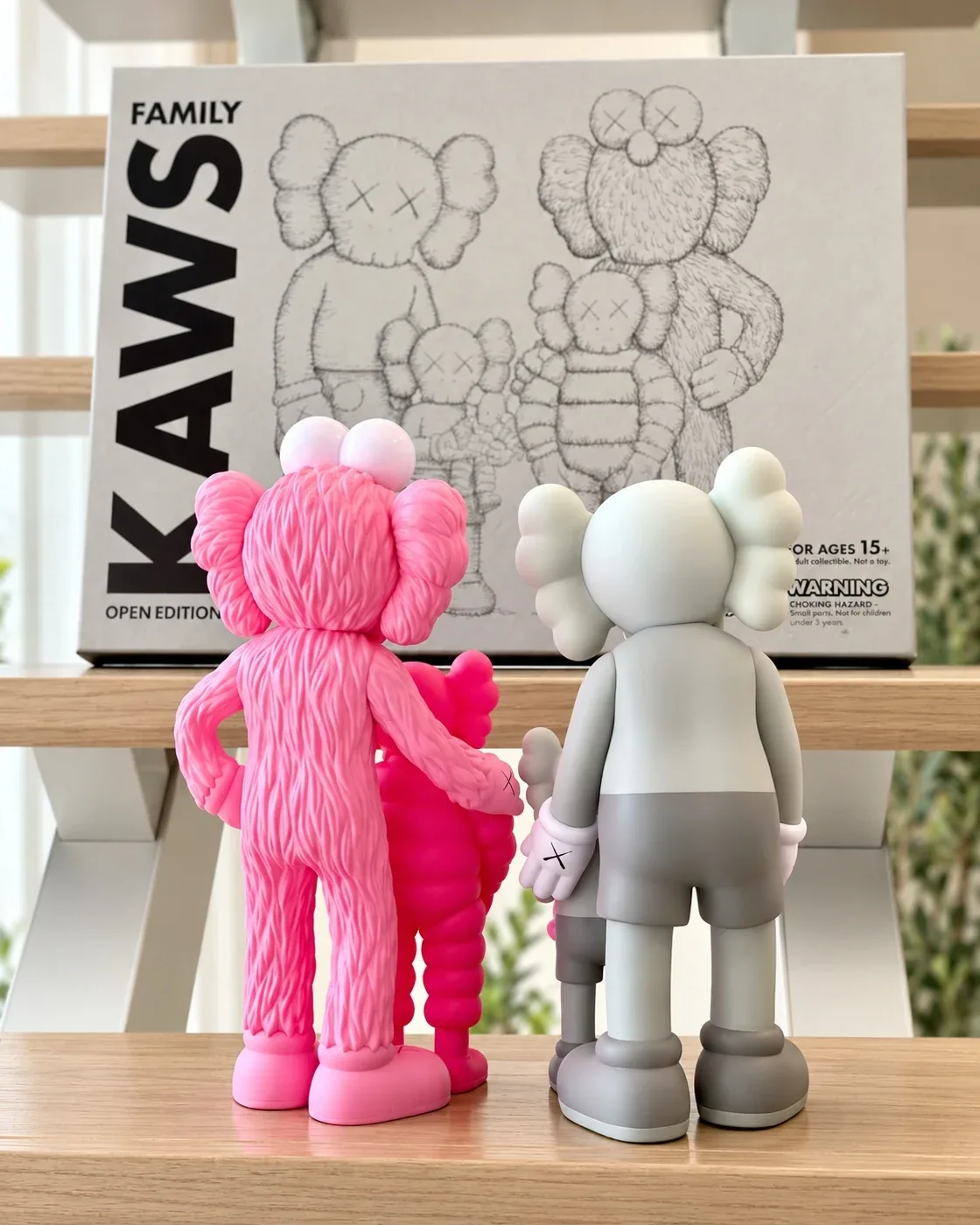
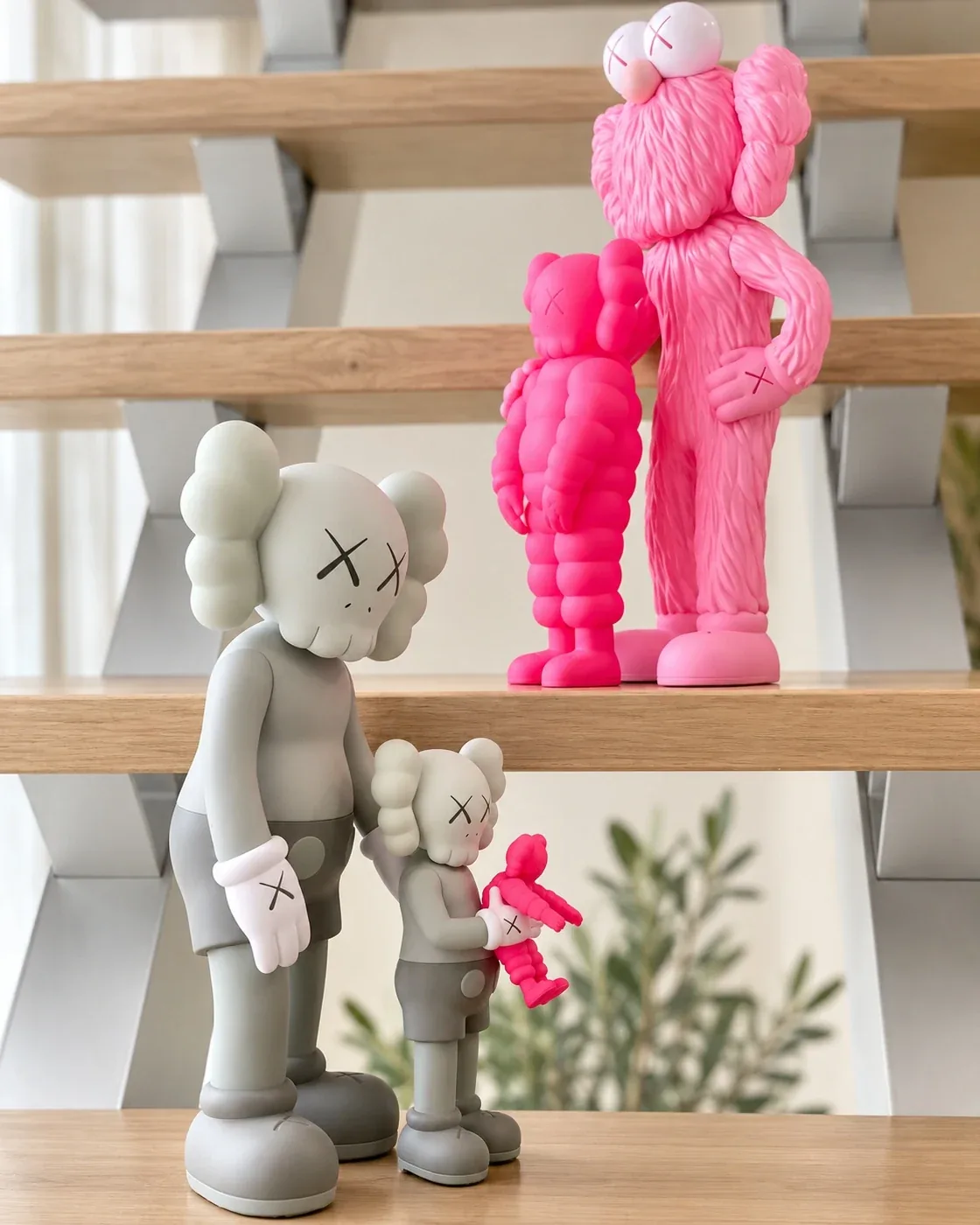
The grey-and-pink version pairs grey COMPANION figures with pink BFF and CHUM characters. In our catalogue it is FAMILY Pink/Grey. MEDICOM uses the fuller name GREY/PINK/FLUORO PINK. This acknowledges the different pink tones rather than identifying another, separate cast of characters.
Vinyl Pulse announced the KAWSONE release for 14 February 2022 and read the pink palette as a nod to Valentine’s Day. That association is easy to see in the photographs, where quiet grey COMPANION figures sit alongside vivid pink forms. The family scene still extends beyond a romantic couple: different sizes, a supportive gesture and the smallest character’s presence all contribute to its meaning.
Japanese sales had their own schedule: MEDICOM announced a store release on 26 February and a subsequent online sale on 12 March. These stages help explain the different dates found in sources. Nor does a later exhibition using the name FAMILY make that exhibition the occasion for the original pink release.
From vinyl to museum-scale bronze
The name FAMILY also belongs to a large museum sculpture. The Art Gallery of Ontario identifies the 2021 work as painted bronze, measuring 219.1 × 207 × 95.6 cm. Those are not the material or dimensions of the tabletop vinyl set. A shared motif can exist in different formats, and familiar characters do not turn two objects into the same edition.
That museum work became central to KAWS: FAMILY at SFMOMA, which ran from 15 November 2025 to 3 May 2026. The exhibition has ended. It followed the first vinyl FAMILY releases by several years, so it should not be presented as the occasion for all the 2021 sets.
A change in scale changes the encounter itself. You can take in a small group almost instantly, then return to the tiny CHUM. Beside a bronze at human scale, you begin to relate your own body to the characters. That shift helps explain how a collectible figure and a museum sculpture can speak the same visual language while remaining different objects.
Photographs
Three details worth a closer look
The first is the tiny CHUM held by the smaller COMPANION. It brings two body types and two scales together. Looking only at the tallest BFF makes it easy to miss the gesture connecting the group. The second is the spacing between characters. A few centimetres on a shelf can make the scene feel crowded or pull it apart into unrelated objects.
The third is texture. BFF’s relief does not turn a vinyl figure into a plush toy; it represents a soft surface in another material. CHUM’s repeating segments create their own rhythm, while COMPANION makes the position of the arms and turn of the head particularly clear. These observations apply whether the chosen version is black or multicoloured.
The AGO’s museum resource suggests a related way of looking: following lines, poses and connections between figures. We prefer to leave several readings available here. Family might suggest care, closeness or simply the habit of being beside someone. A precise biographical explanation is not required to respond to the scene.
Displaying FAMILY at home
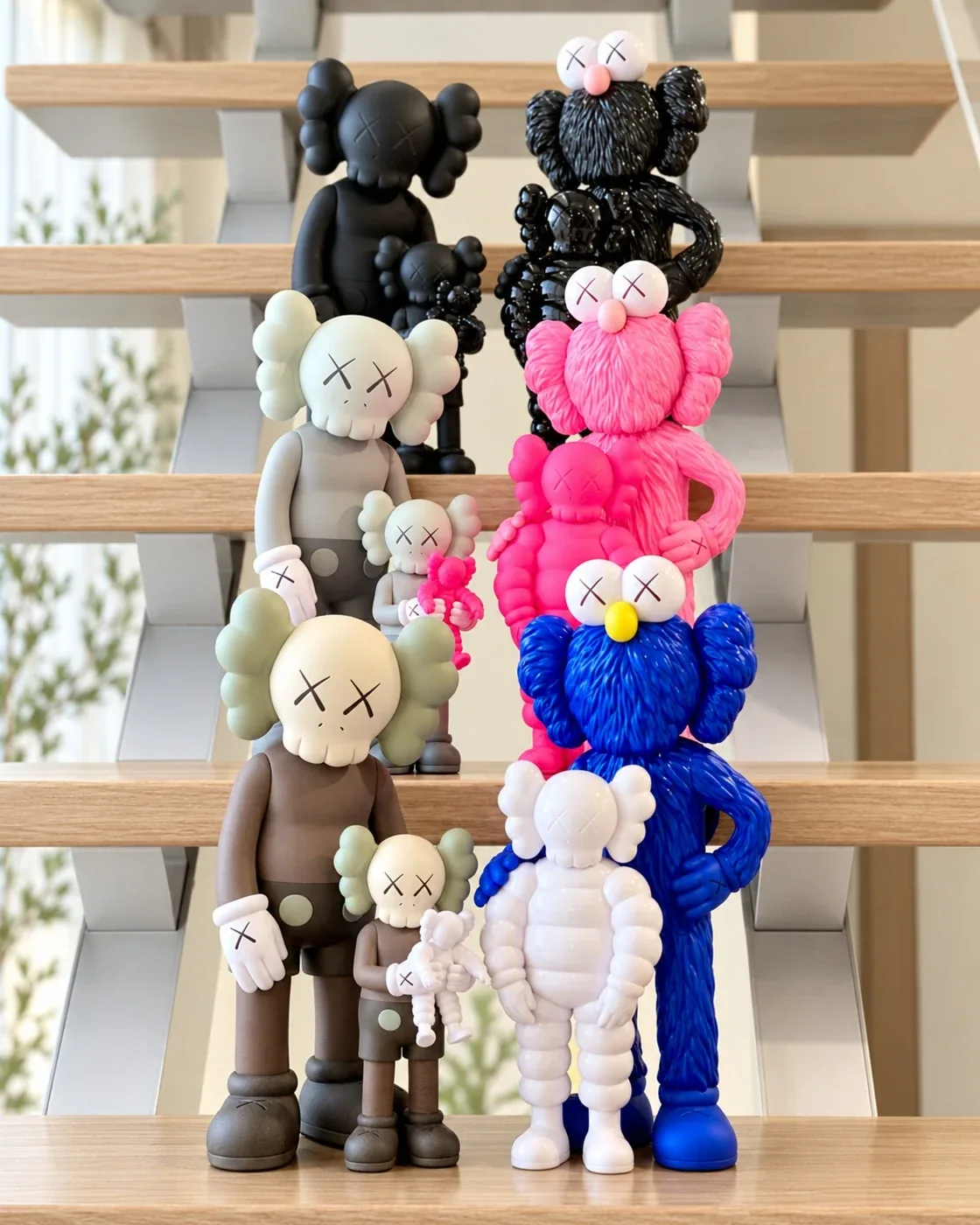
The group needs more than enough height: it also needs a clear view in front of the smallest characters. A deep shelf edge can conceal them, and a crowded arrangement can put books or a vase in the way. Start by positioning the set so all five characters can be seen, then look from both a seated and a standing position. If the miniature CHUM disappears, a different display height may help.
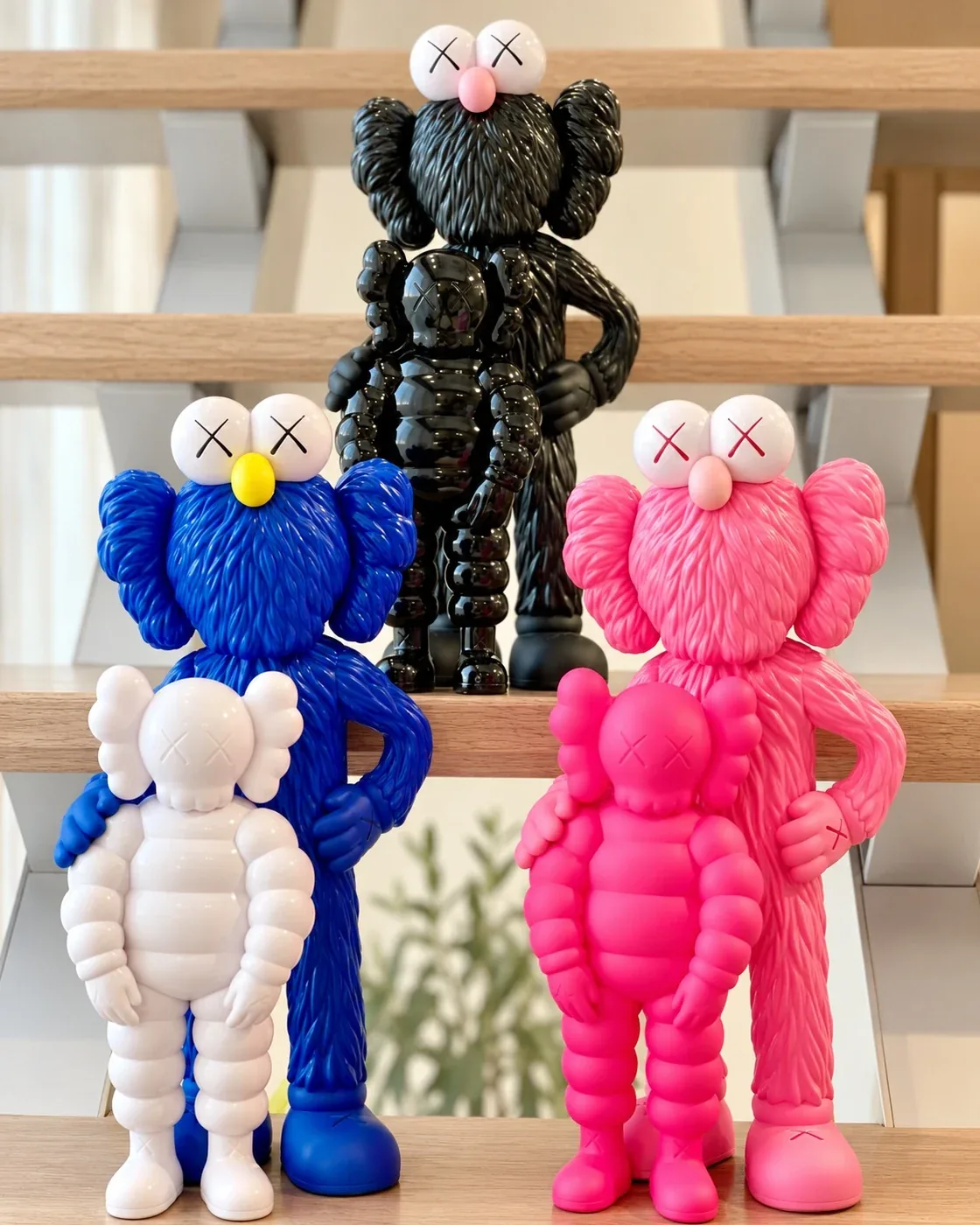
Choose the colourway alongside its surroundings. Brown/Blue/White makes the differences between figures clear; Black gives more importance to lighting and silhouette; Pink/Grey introduces a stronger colour accent. These are ways of trying an arrangement, rather than rules excluding pink from a quiet room or black from a light one. A successful display usually leaves some space around the work.
For a broader context, see our article on art toys in interiors. Our guide to KAWS characters is useful for getting to know the individual figures. FAMILY is especially rewarding after looking at COMPANION, BFF and CHUM separately: their familiar forms start to behave differently as a group.
Choosing your colourway
Start with the impression you want to live with each day. In the multicoloured set, your eye can move between blue, white and brown; in Black, it can follow boundaries and texture; in Pink/Grey, it can return to the contrast between quiet grey and vivid pink. For a gift, consider where the group will stand as well as the recipient’s favourite colour.
Our KAWS FAMILY selection lets you compare the three versions and open the individual product pages. Check the description, contents, condition and current purchase details for the specific model. Front and rear views tell you more than one dramatic photograph. When comparing measurements, establish whether a figure refers to the tallest character, the box or the entire arrangement.
There is no need to buy every colour simply to feel that a collection is complete. One chosen set already contains contrasts of scale, character and surface. Its interest extends beyond release status: it is a small scene you can revisit, noticing a hand gesture, a face or the unexpectedly important presence of its smallest participant.