In this article
A print can be an original work
A Keith Haring image can appear on a signed screenprint, an exhibition poster or a recently licensed product. The drawing may look familiar in all three cases, but the objects have different histories. Recognising the image is only the beginning of identifying the work.
An original editioned print is not automatically a reproduction of a painting. Printmaking can be the process through which the artist conceived and issued the work itself. The technique, paper, publisher and edition help explain what you are looking at.
This distinction matters particularly with Haring, whose imagery circulates so widely. A clear description should identify the specific print and edition, rather than assume that a recognisable dancing figure establishes its authorship or date.
From public drawing to works on paper
Keith Haring lived from 1958 to 1990. His figures reached people through public drawing, murals and many forms of printed imagery. A forceful line could communicate quickly, but the apparent simplicity of the image did not make every object carrying it the same kind of work.
Prints allowed that visual language to exist in multiple impressions while retaining a defined edition. Scale, paper and the relationship between the black contour and areas of colour could be considered specifically for the printed sheet.
Look at the entire work before concentrating on the signature. The empty paper, the position of the image and the way the border contains movement all contribute to the composition. They are part of what a cropped online photograph can fail to show.
The Pop Shop was a place, not one print edition
Haring opened the New York Pop Shop in 1986 at 292 Lafayette Street. The Keith Haring Foundation’s account describes it as an extension of his work: a place where people could encounter his imagery through accessible objects and an immersive painted interior.
The shop’s name also appears in the titles of editioned prints. Those are related histories, but not interchangeable categories. A T-shirt sold at the shop, a shop poster and a signed Pop Shop screenprint each need their own description.
This is an especially useful boundary when looking through an archive or a seller’s photographs. The words “Pop Shop” establish a connection, not the technique, signature, edition size or condition of the object in front of you.
Pop Shop I–IV: four portfolios with their own records
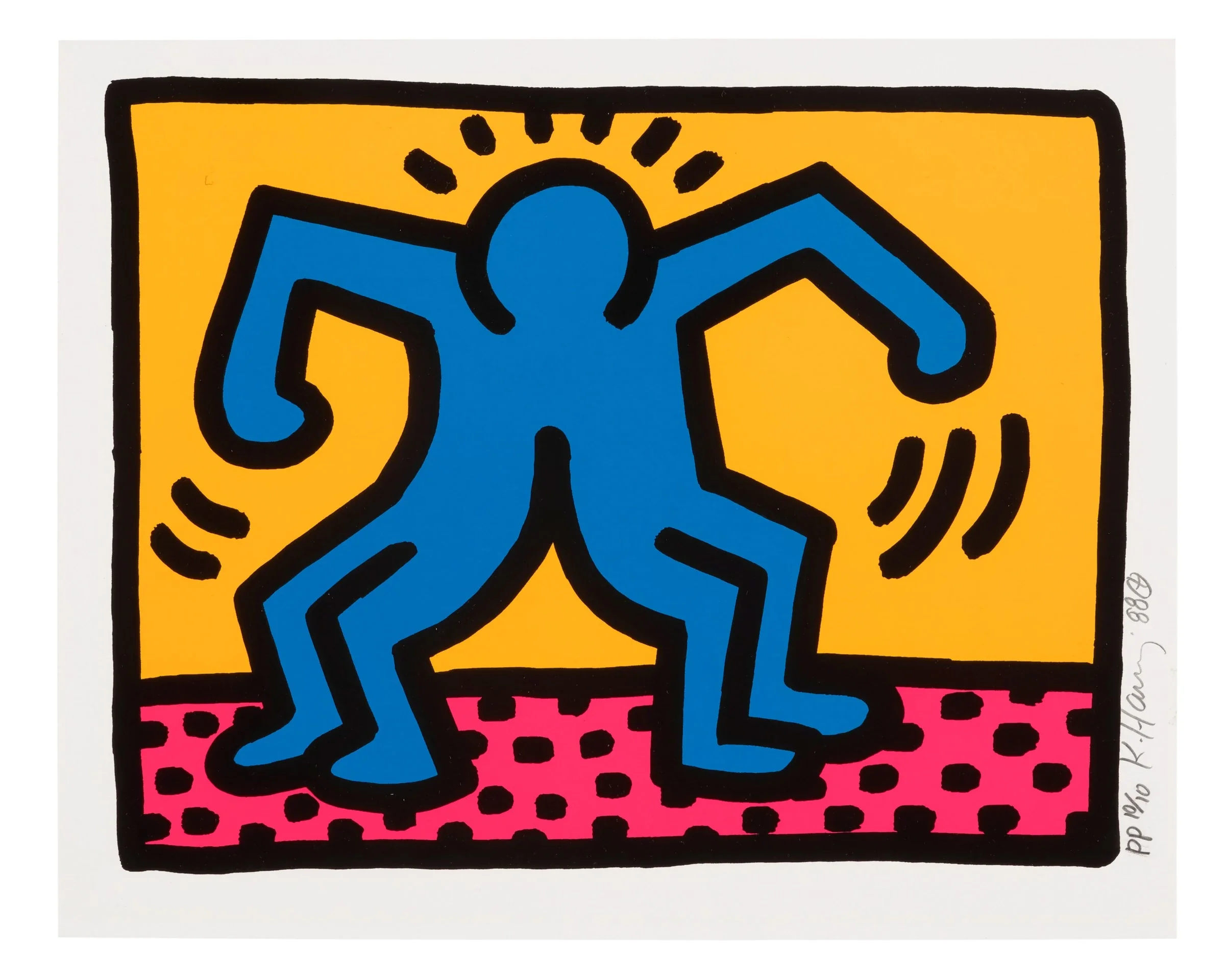
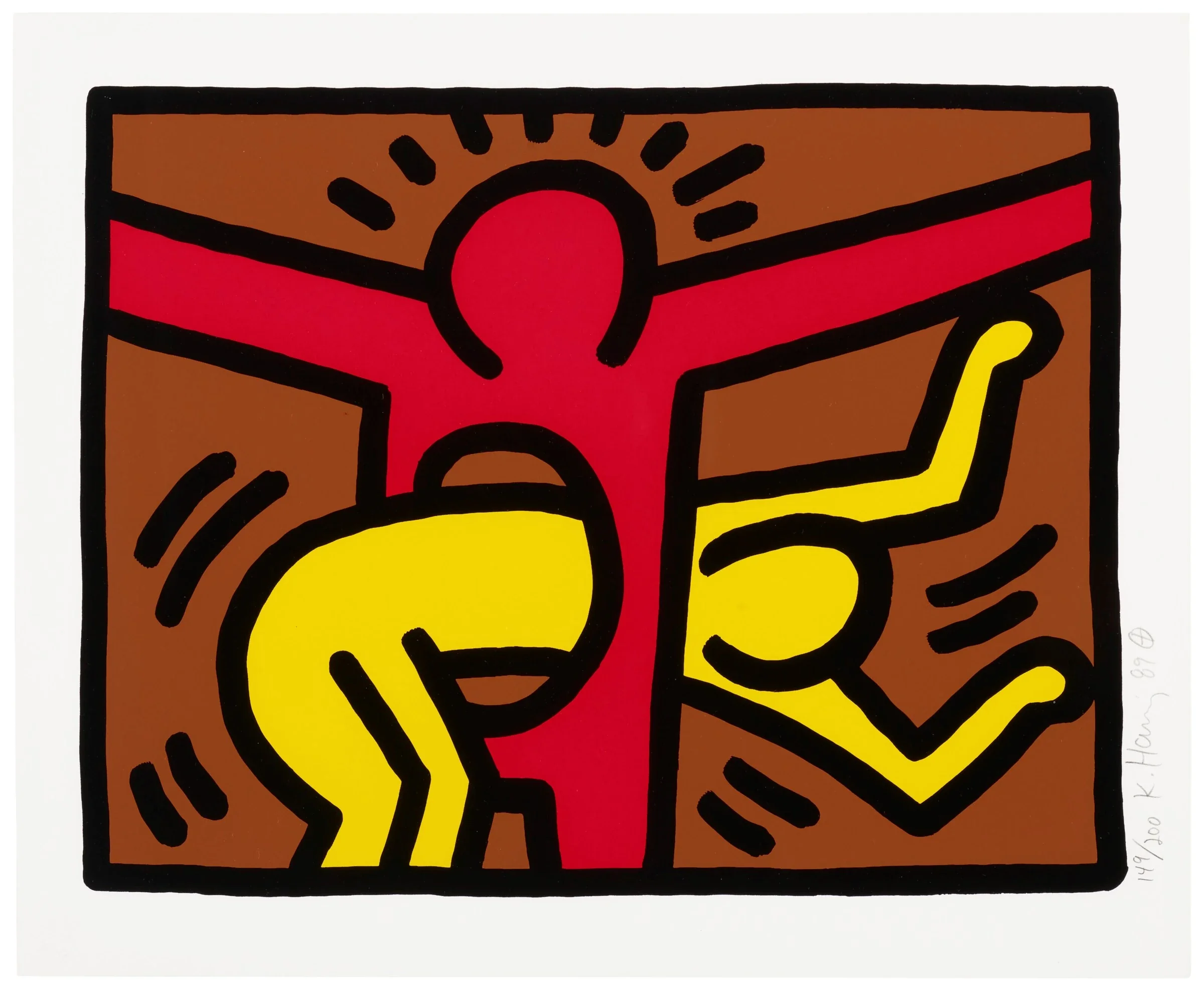
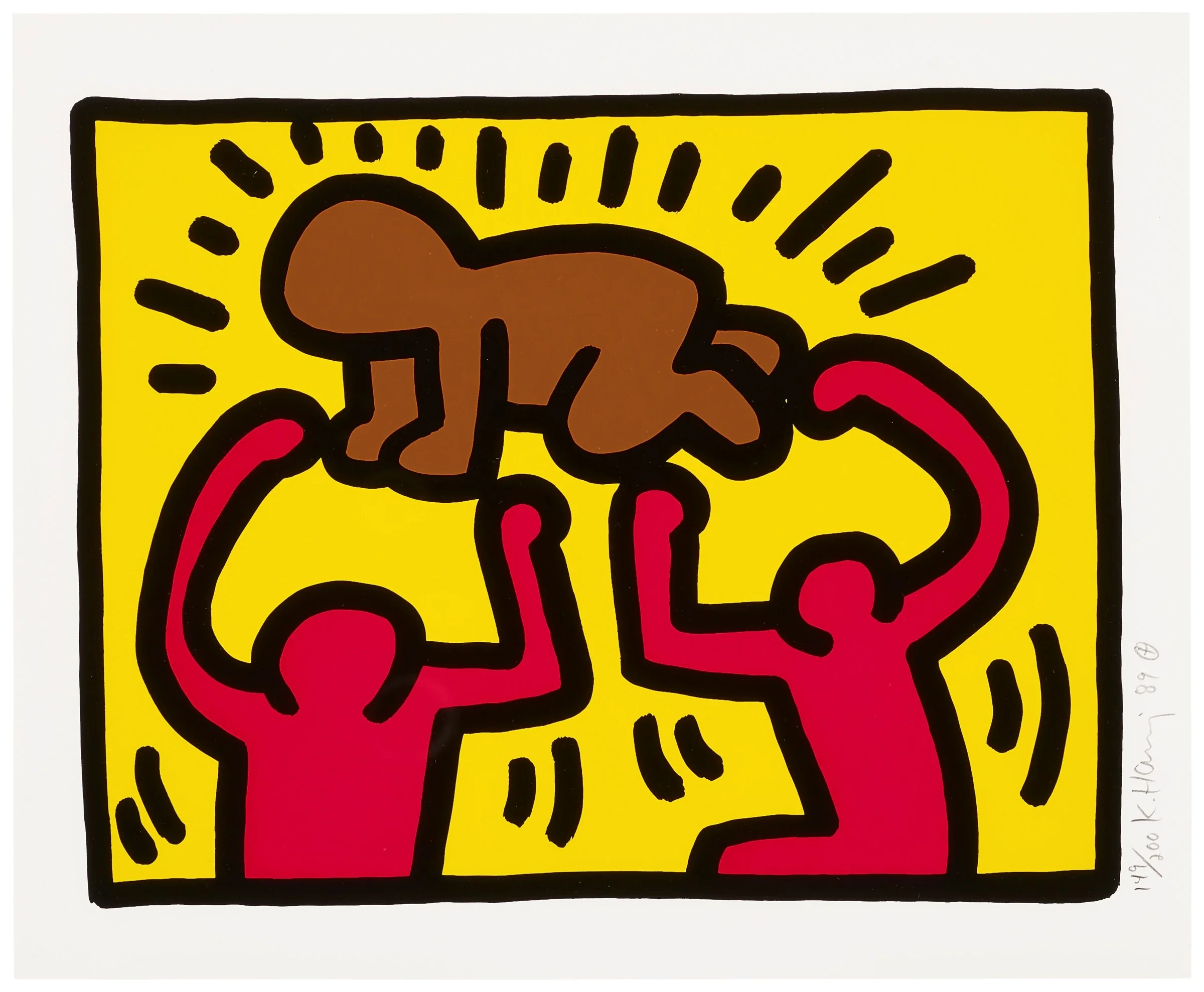
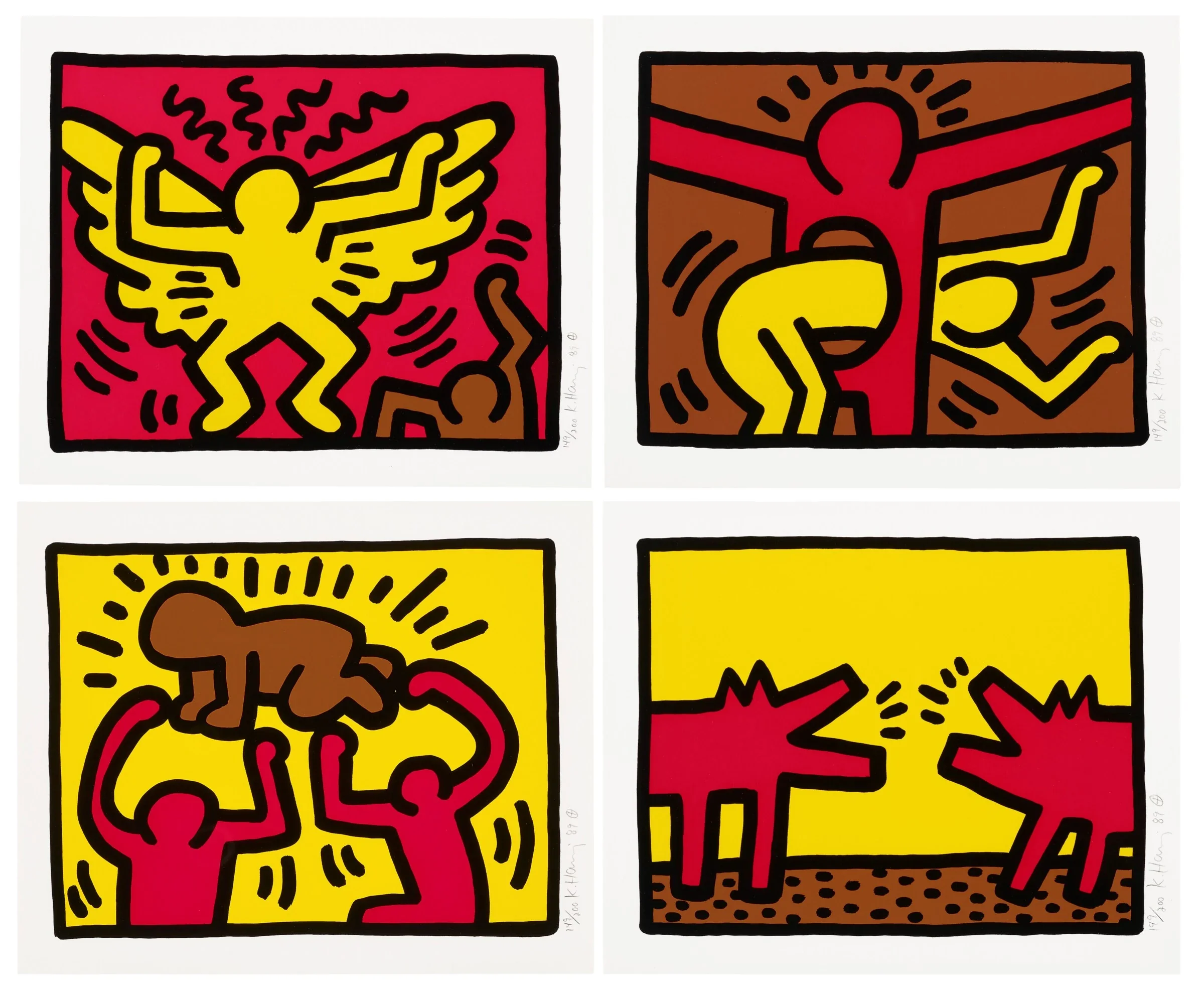
The numbered Pop Shop portfolios are documented as sets of four screenprints: Pop Shop I from 1987, II from 1988, and III and IV from 1989. Auction catalogues describe editions of 200 for these portfolios, while artist’s-proof allocations vary between the particular records.
For example, Phillips’s Pop Shop I entry identifies the technique, edition and accompanying details. The same level of identification is needed for each later portfolio rather than borrowing information from the first.
A complete four-sheet portfolio, a single plate and a work titled Pop Shop Quad are different objects. Their names can be similar, but the number of sheets and the edition are not interchangeable. Always read the full catalogue description.
Pop Shop II: four sheets
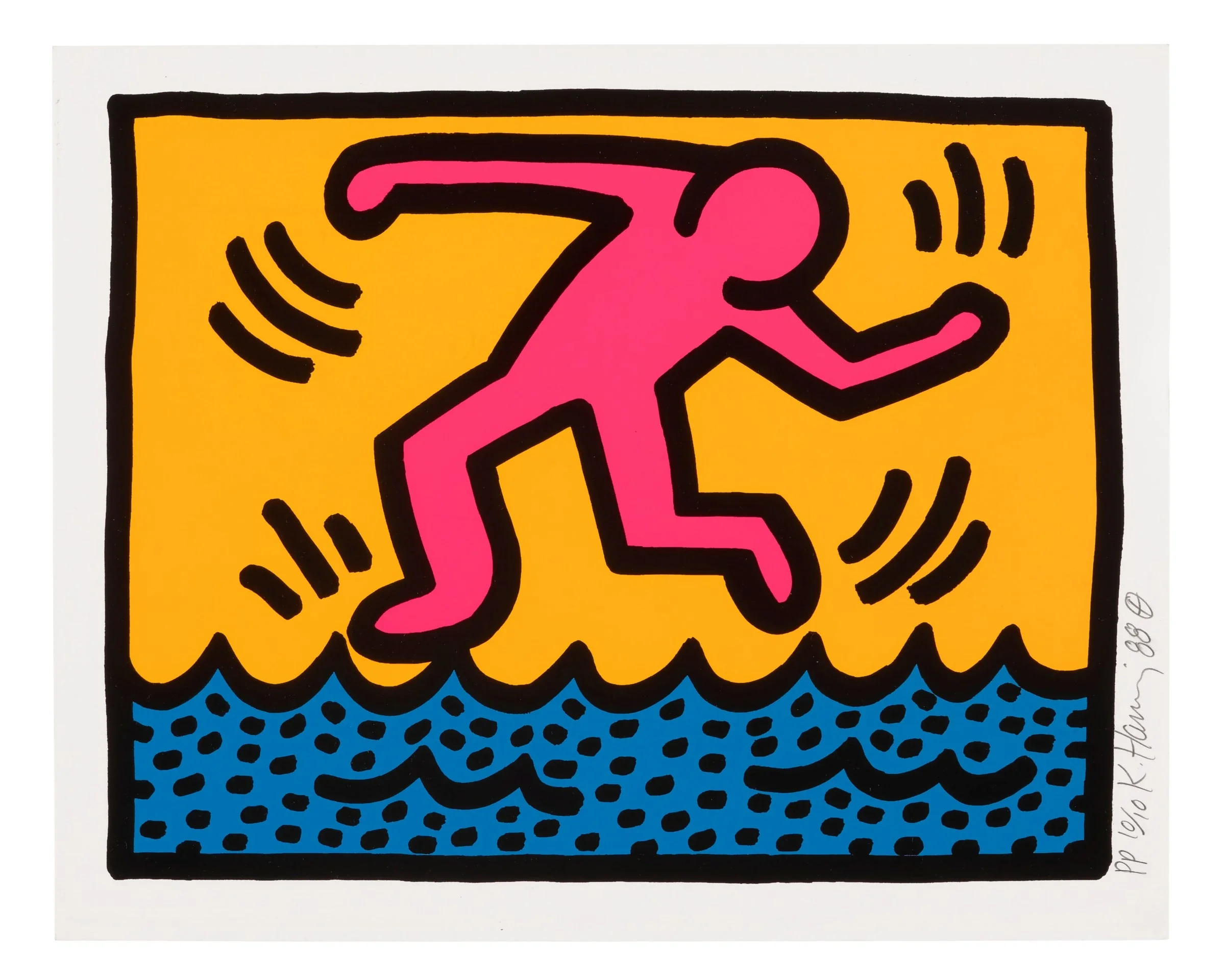
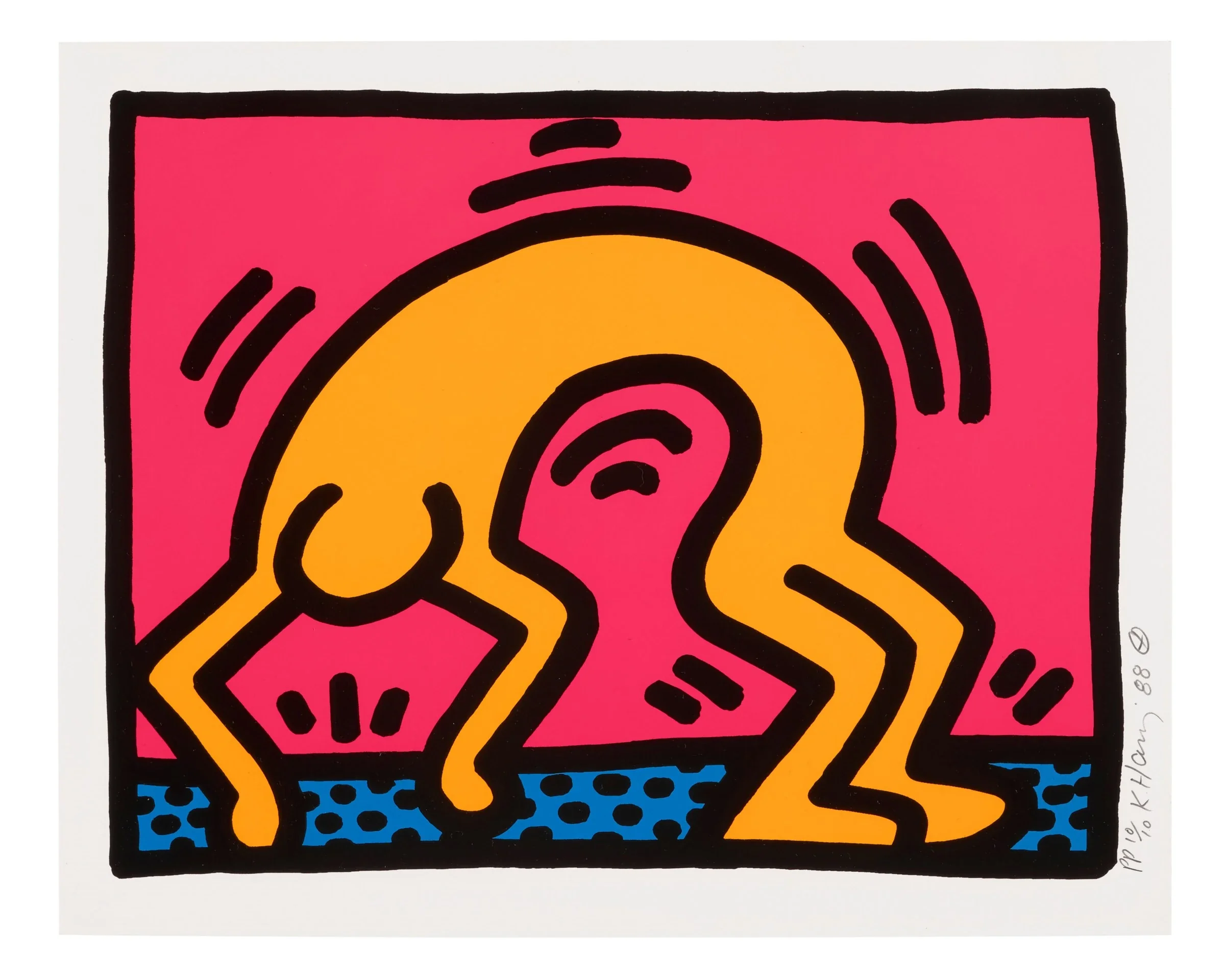
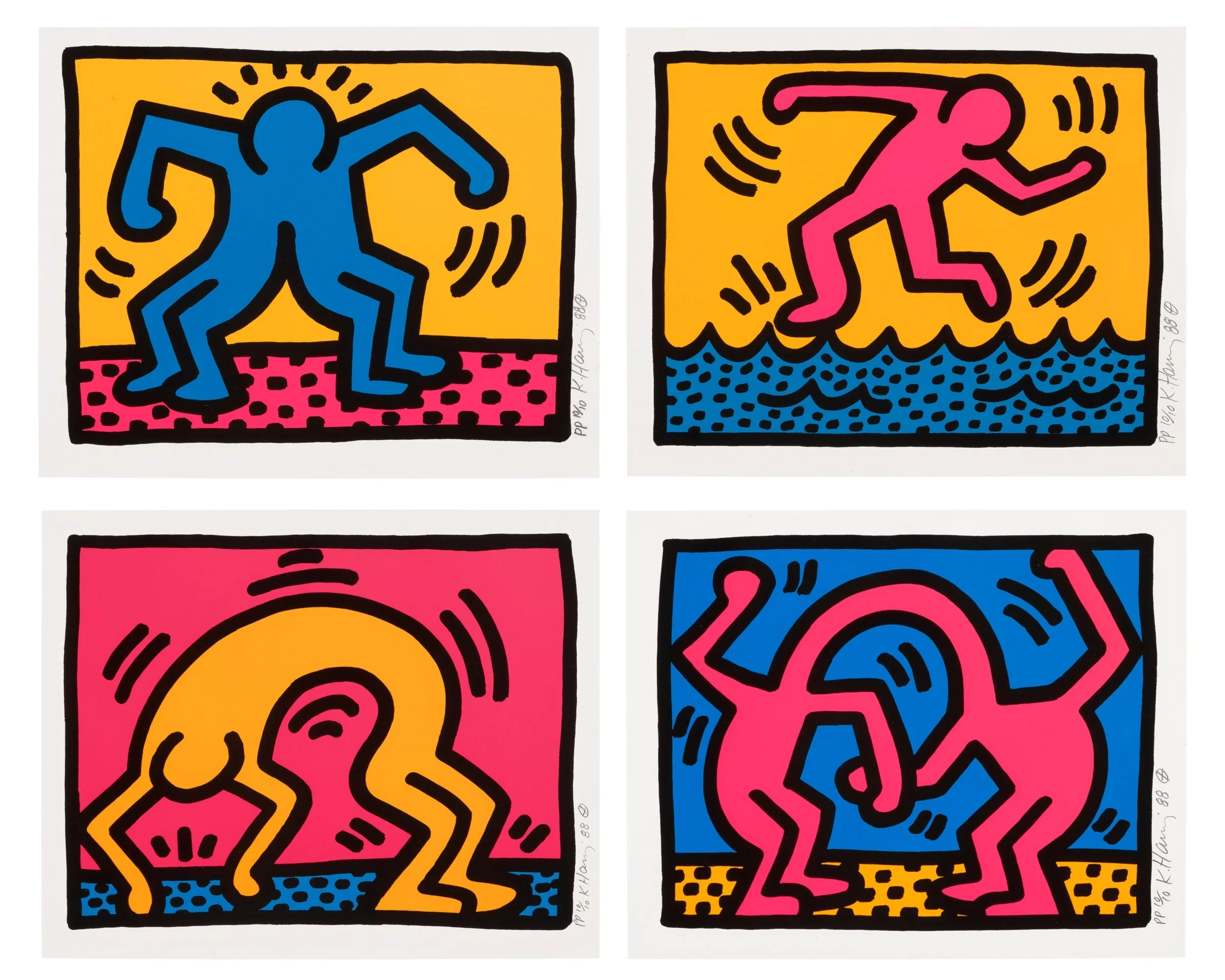
Pop Shop IV: four sheets
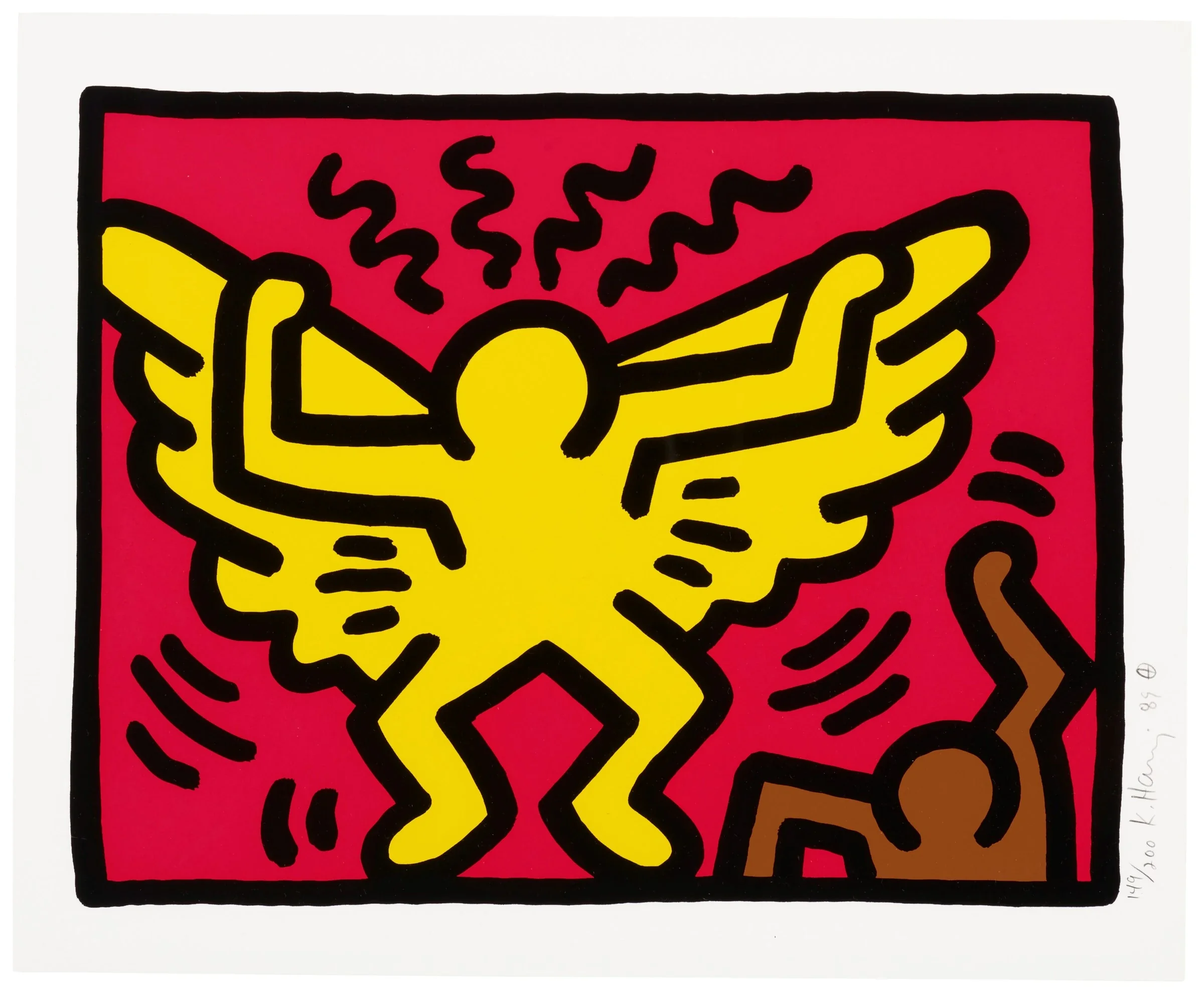
Andy Mouse: Haring looking at Warhol
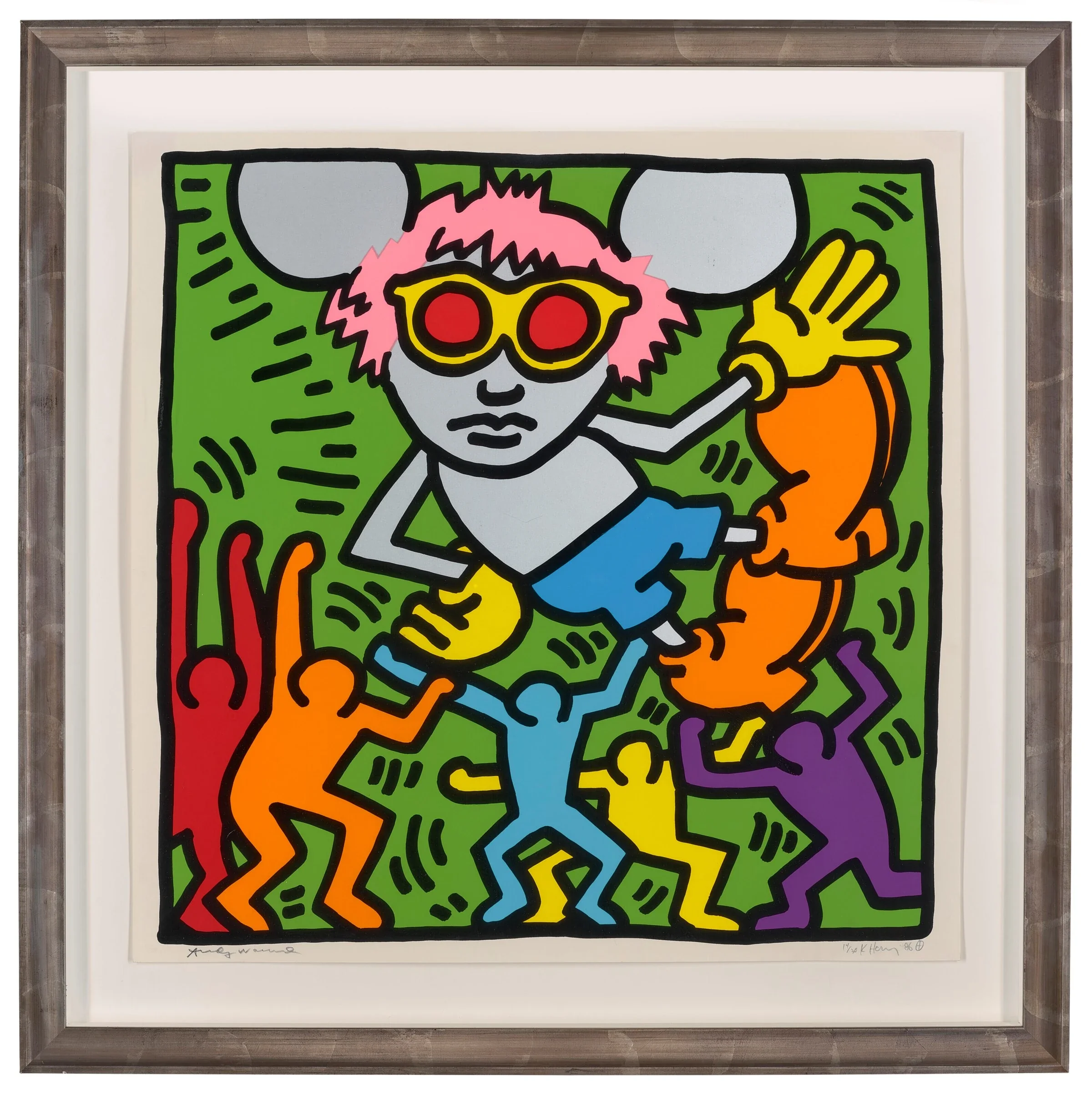
Andy Mouse brings Andy Warhol into Haring’s own visual world through a mouse-like character. The 1986 portfolio contains four screenprints, issued in an edition of 30 with ten artist’s proofs. Catalogue records identify signatures by both Haring and Warhol.
These details make it a very particular edition, rather than any image of a cartoon mouse associated with Pop Art. The subject’s resemblance to a familiar cartoon tradition should not be turned into an unsupported claim about a Disney-licensed product.
The figures, money imagery and repeated character invite a reading connected with art, celebrity and commerce. That interpretation is more useful when kept alongside the concrete object: which plate, which impression, which signatures and what history of ownership.
Andy Mouse

Free South Africa: printmaking and a political message
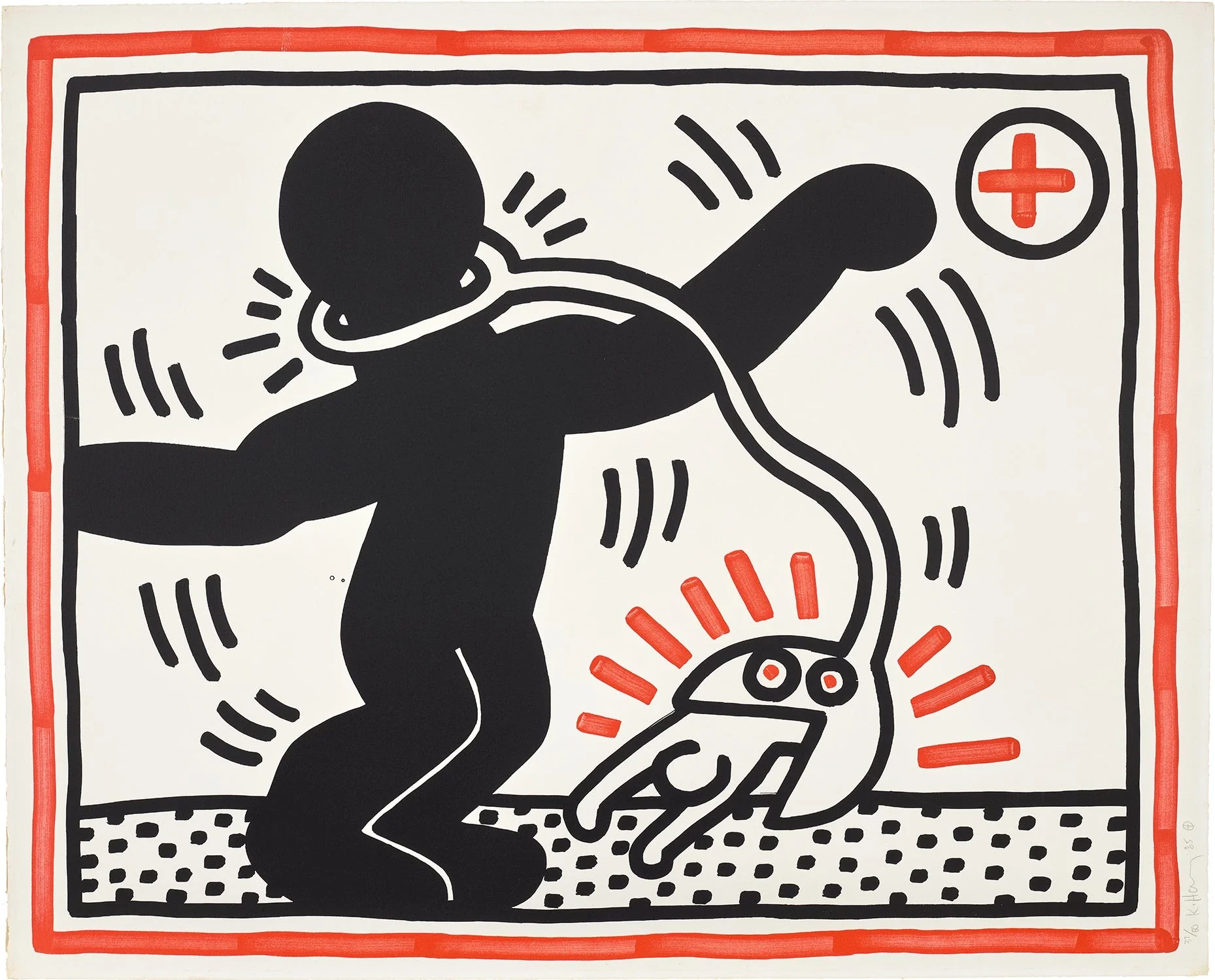
Haring’s printed work was not confined to light-hearted scenes of movement. Free South Africa places his visual language within an explicit political context, confronting apartheid rather than simply offering a decorative arrangement of figures.
Phillips describes the 1985 portfolio as three lithographs in black and red, from an edition of 60 plus fifteen artist’s proofs. The technique matters: it should not be relabelled a screenprint simply because other famous Haring editions use that process.
The contrast of the colours and figures gives the work an immediate visual force. Its title also asks the viewer to recognise the historical struggle to which it refers. Separating technique, context and edition gives a fuller account than treating all Haring prints as one collecting category.
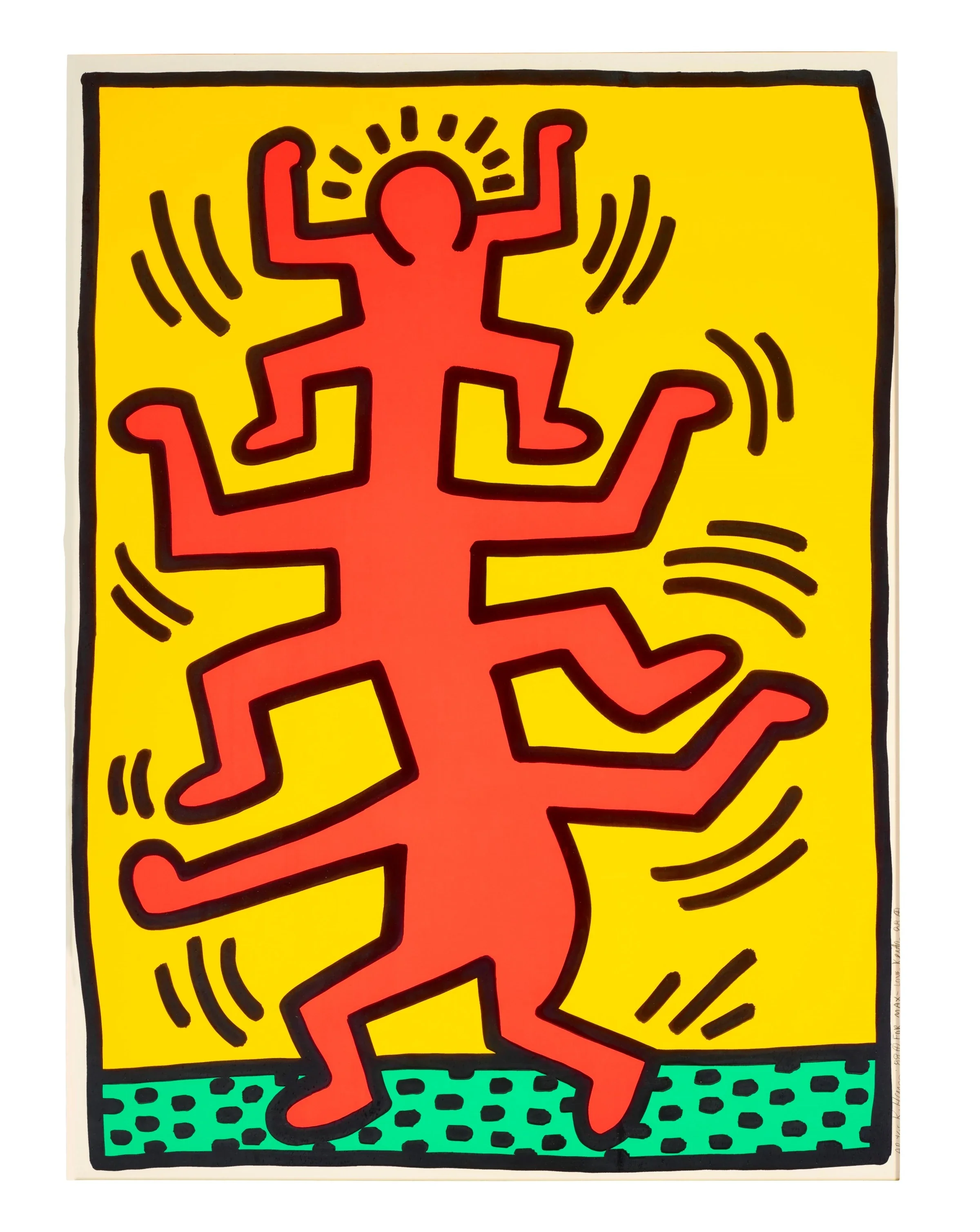
Growing / Free South Africa
Signature, number and paper margins
A fraction such as 14/30 identifies an impression within a stated edition. It does not reveal the complete publication history on its own. Artist’s proofs may exist outside the numbered run, and the publisher, date, technique and catalogue reference remain important.
A signature should also be read rather than merely located. Is it in pencil, printed as part of the image, or attributed in the catalogue to an estate representative? Those descriptions mean different things. One photograph of a name cannot answer every question about an impression.
Keep the full sheet visible in photographs. Paper margins, the reverse, stamps and condition details can be essential to identification. Whitening, trimming or removing those areas to make an image look cleaner would discard information about the actual work.
Lifetime editions, estate-authorised works and posters
Haring’s death in 1990 creates an important chronological boundary, but not a shortcut for judging every later object. A lifetime edition bearing the artist’s signature, an estate-authorised publication and a licensed poster should be identified separately. “Posthumous” does not automatically mean counterfeit.
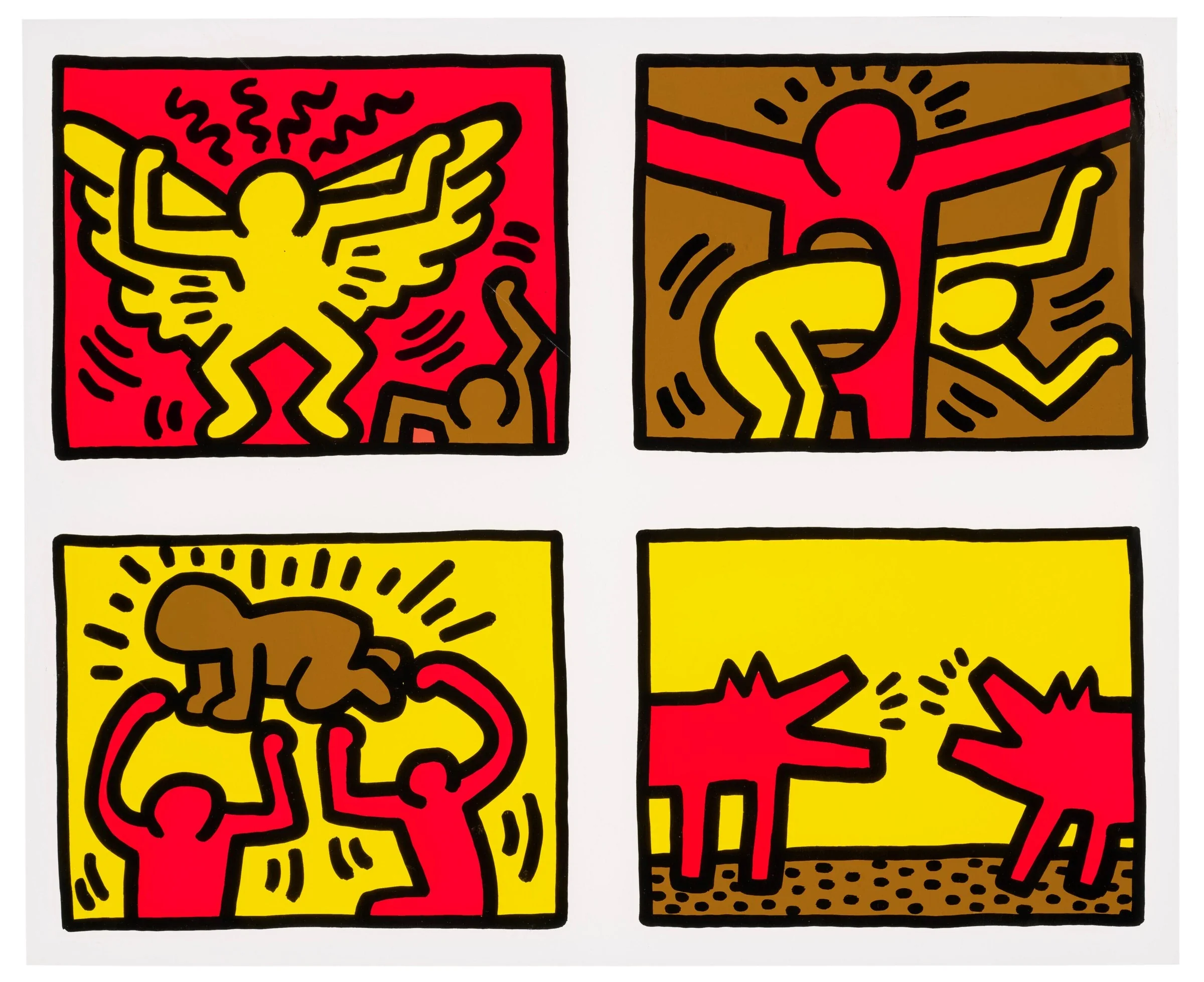
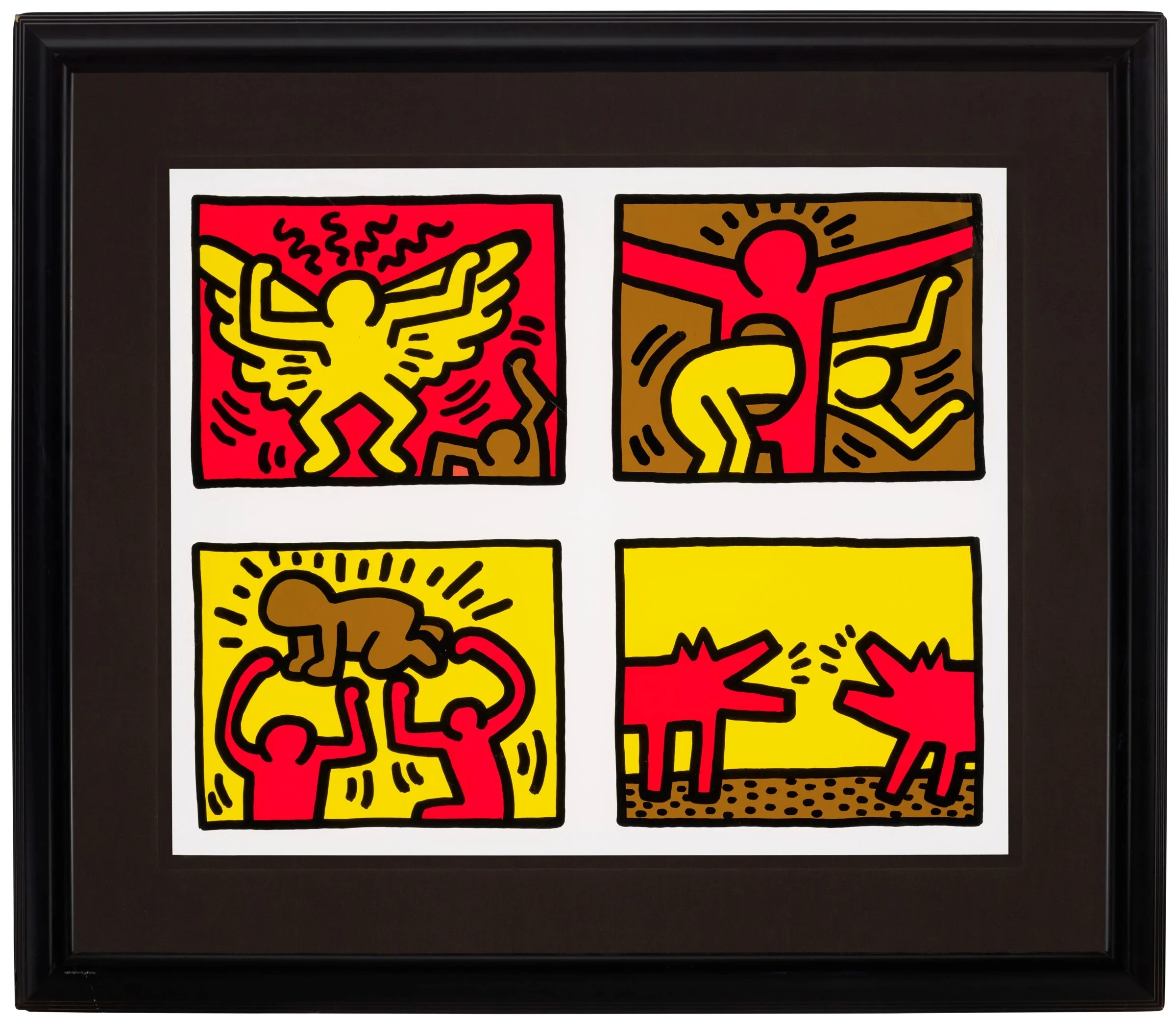
A useful example is Christie’s Pop Shop Quad IV description. It records an edition signed on the reverse by Julia Gruen, executor of the estate, and describes the relevant estate and publisher markings. That is not the same signature claim as “hand-signed by Keith Haring.”
The responsible approach is to establish who authorised the edition and what the documentation actually says, without promoting one type of object under another type’s description.
Pop Shop Quad IV
A recorded sale means a specific work at a specific time
Christie’s results report for 26–27 April 2016 records $209,000, including buyer’s premium, for one Andy Mouse print from 1986. That result concerns a single sheet, rather than the complete four-print portfolio.
Such records demonstrate collector interest without establishing a guaranteed value for another example. Condition, provenance, the specific plate and the circumstances of the sale can change the comparison. The history of an individual impression remains central.
Choosing a print to live with
Begin with a work you want to see regularly, then investigate its edition. Ask for the complete title, publication details, photographs of the full sheet and reverse, a condition report and the available ownership history. Framing should help preserve the paper rather than conceal questions about its edges.
Our guide to limited-edition prints explains the broader vocabulary. You can also explore prints in our catalogue to compare other specific works; that link does not imply a particular Haring edition is available.
A print’s importance is not confined to its market record. The chosen image, its scale on the wall and the integrity of the actual sheet are what you will continue to encounter after the purchase.