In this article
Which small KAWS figures achieved high prices?
We begin with small objects. Individual figures and sets of two or three are treated separately: a set’s total cannot be presented as the price of a single example. Wood and bronze are also distinguished from vinyl.
This is a selection of high documented results, not a claim to absolute world records. Every lot has a date, currency and condition. Asking prices, estimates and completed sales are different measures.
Small figures: prices for one example
The table below covers individual plastic and vinyl figures. Results belong to specific sold examples, rather than a model’s average price today.
| Figure and release | Height | Sold for | Date and lot photograph |
|---|---|---|---|
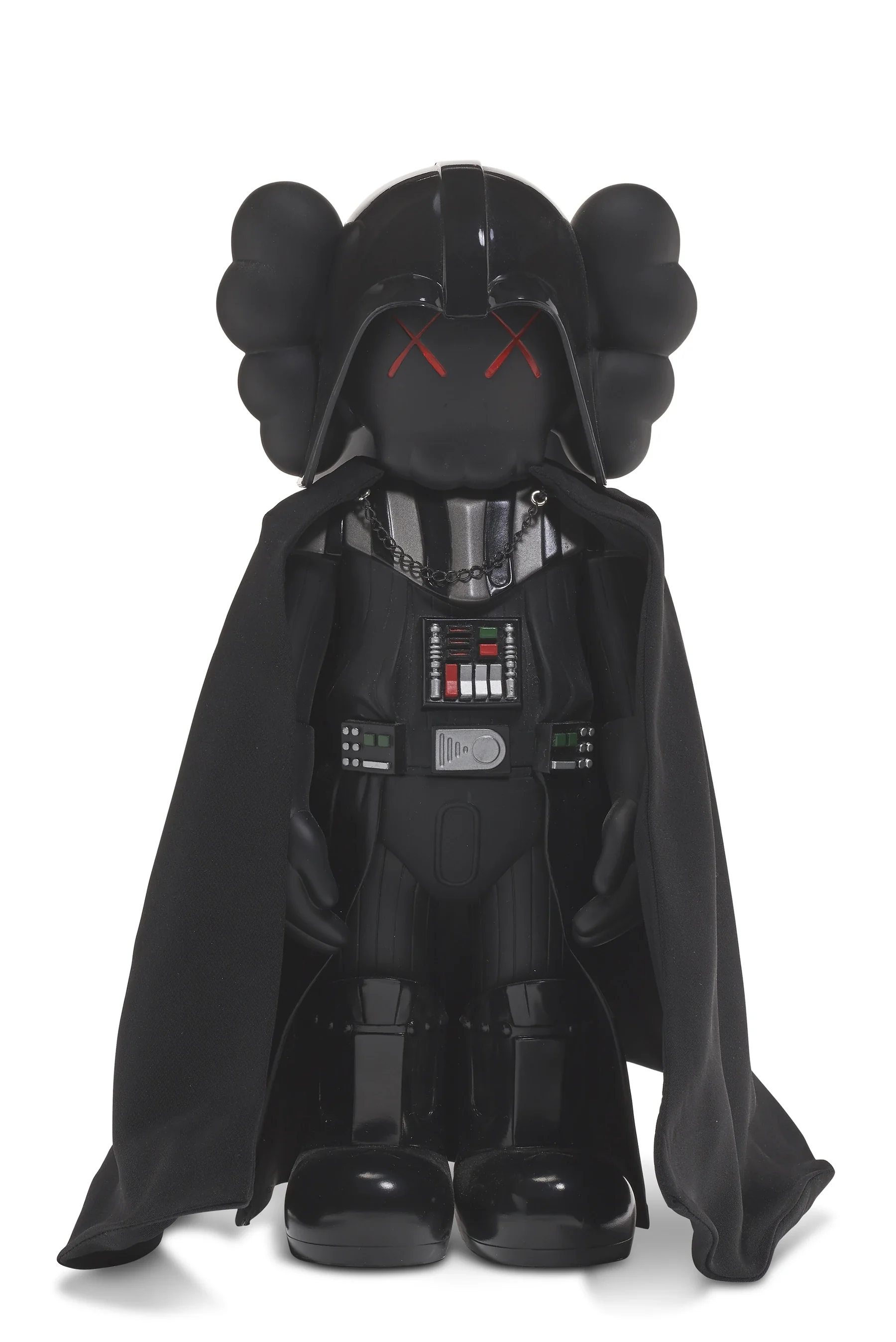
| DARTH VADER (2007) | 25.4 cm | $15 000 | 19.08.2020 · Lot and photo |
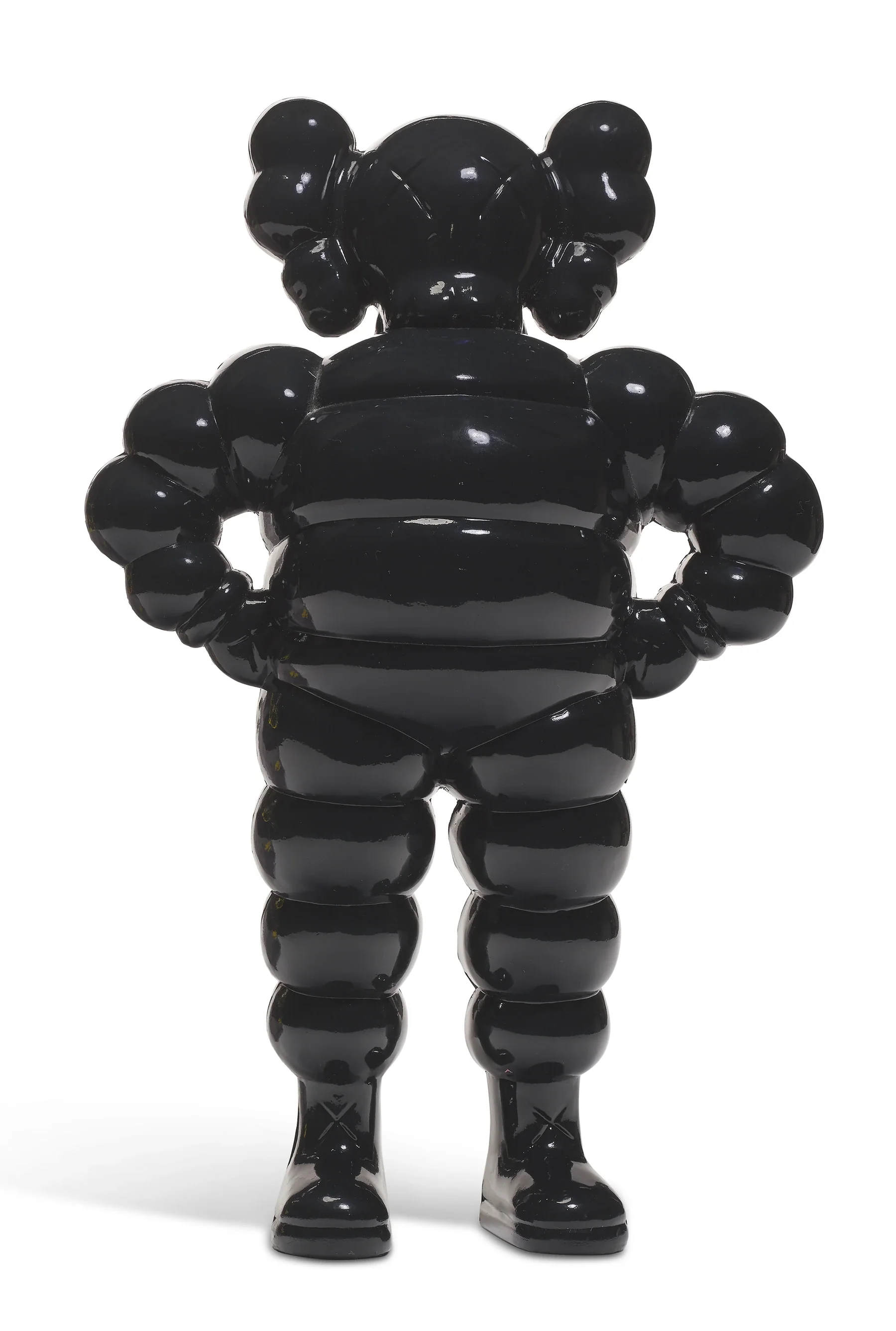
| CHUM (2002) | 33 cm | $7 500 | 19.08.2020 · Lot and photo |
| BOBA FETT (2013) | 24.1 cm | $6 875 | 19.08.2020 · Lot and photo |
| Companion (Brown) (1999) | 19.1 cm | $3 750 | 09.09.2019 · Lot and photo |
The 2007 Darth Vader stands 25.4 cm tall and has a fabric cape. Christie’s recorded US$15,000 for one example. The 2002 CHUM has a different silhouette and an edition of 500; the selected lot achieved US$7,500. A 24.1 cm Boba Fett from 2013 achieved US$6,875.
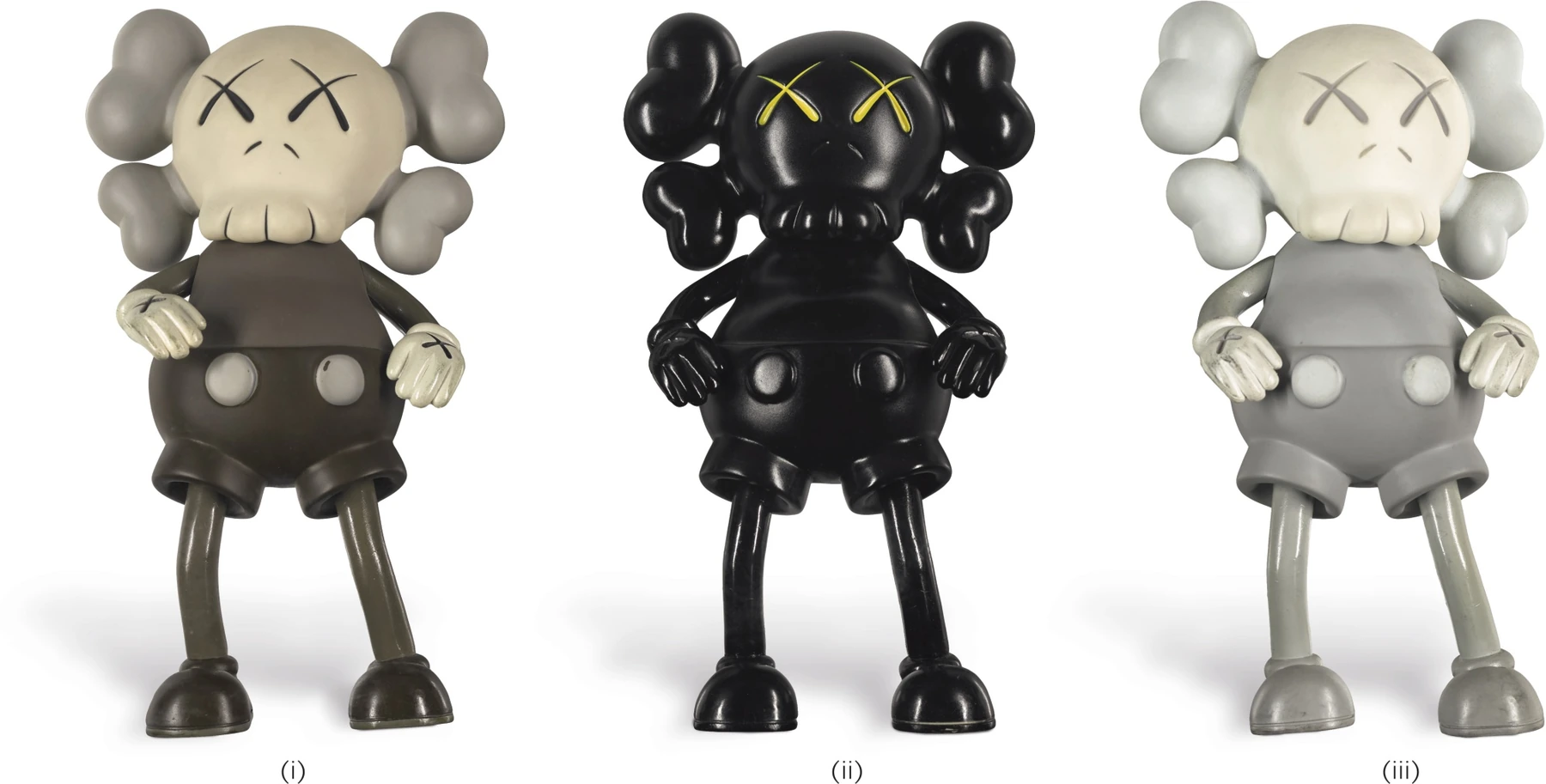
For the original 1999 Companion, the table includes an individual Heritage sale at US$3,750 as early-release context, not a record claim. The photograph of three early colourways below belongs to a different Sotheby’s lot and illustrates their designs.
Christie’s publishes completed sale results; taxes and delivery are separate. Heritage states that published realized prices include buyer’s premium. These are historical transactions, not promises of a price today.
Darth Vader and CHUM
Expensive sets: the total for the whole lot
Sets have a market of their own. These totals cover every object in the lot. Dividing a total by the number of figures does not create a documented individual auction result.
| Set | Objects | Total for the lot | Date and lot photograph |
|---|---|---|---|
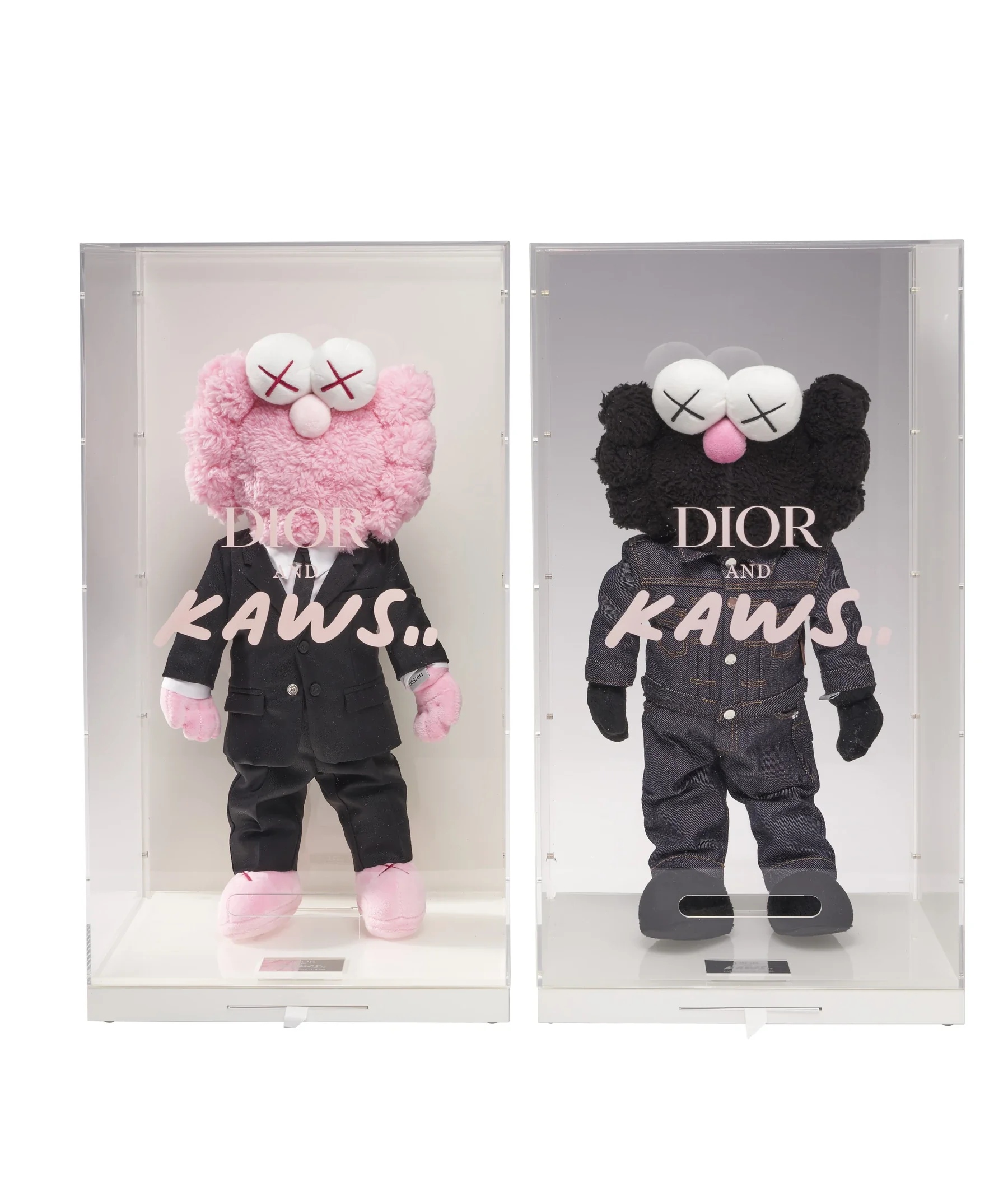
| Plush BFF x Dior (Pink and Black) (2019) | 2 | $25 000 | 30.09.2020 · Lot and photo |
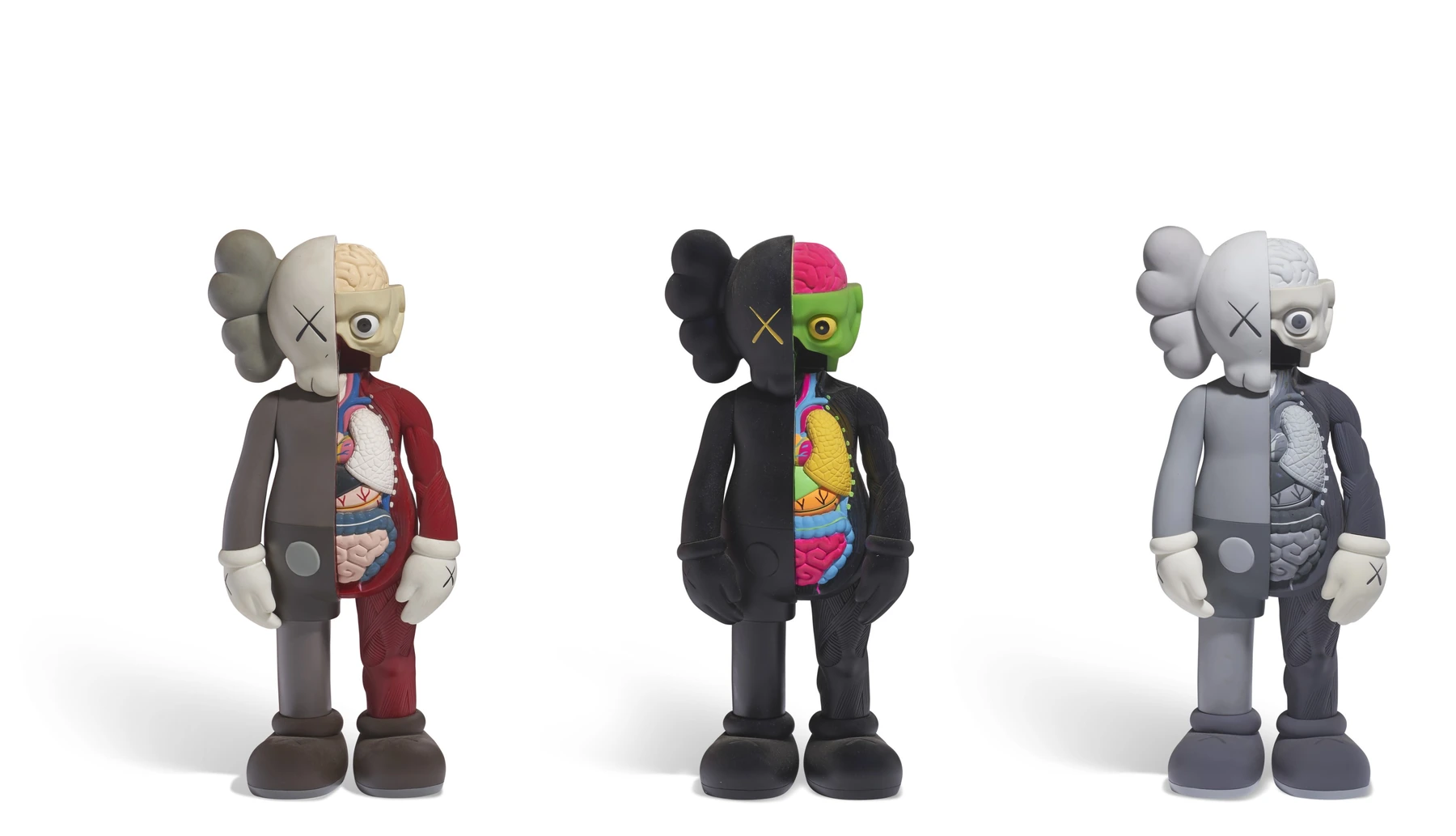
| Dissected Companion (Brown, Black, Grey) (2006) | 3 | $20 000 | 19.08.2020 · Lot and photo |
| PINOCCHIO & JIMINY CRICKET (2010) | 2 | $10 625 | 19.08.2020 · Lot and photo |
| Companion (Robert Lazzarini Version), Grey/Black/Brown (2010) | 3 | $10 625 | 19.08.2020 · Lot and photo |
The Brown, Black and Grey Dissected figures from 2006 interpret the exposed half of the body differently. Each colour is catalogued as an edition of 500; Christie’s sold the three together for US$20,000. The plush Dior BFF pair is a different material and format: each is 45.7 cm tall, and US$25,000 covers both.
The table also includes Pinocchio with Jiminy Cricket and three distorted Companions made with Robert Lazzarini. In both cases, US$10,625 is a set total, not the price of one figure.
The Dior BFF pair and Dissected trio
How a small Companion became a large sculpture
The story began before the million-dollar sales. The Art Gallery of Ontario traces Companion to KAWS’ collaboration with Japan’s Bounty Hunter in 1999. Sotheby’s catalogues early figures as editions of 500 in each colourway. The same character therefore existed in distinct colour editions from the beginning.
Proportions, poses and materials evolved. The large Four Foot releases of 2007 and anatomical Dissected figures of 2009 are particular stages in that history, not interchangeable factory enlargements of any Companion. Scale changes the encounter: a shelf figure is an object to examine, while a nearly human-sized figure shares the room with its owner.
One collector may seek an early release as a document of that beginning; another wants a large edition for its physical presence. Age alone does not guarantee a high price. Its significance depends on the release, available supply, condition and documented history.
Early releases: Companion in 1999 and Accomplice in 2002
Companion appeared in 1999, so the history of KAWS figures does not begin in 2007. Four Foot is a later, larger format of an established character.
Another early example is the long-eared Accomplice. NEW AUCTION’s catalogue for the black 2002 release specifies 23.5 cm and an edition of 500. Its published result on 28 September 2024 was ¥276,000. This is a tabletop vinyl figure, rather than the three-metre sculpture discussed below.
Colour matters too: Artcurial describes its pink 2002 Accomplice as an edition of 1,000. An edition size attached to one colour should not be applied to another. When researching early figures, establish the year, colour, packaging and condition rather than relying on the word vintage.
Expensive tabletop KAWS: wood and bronze
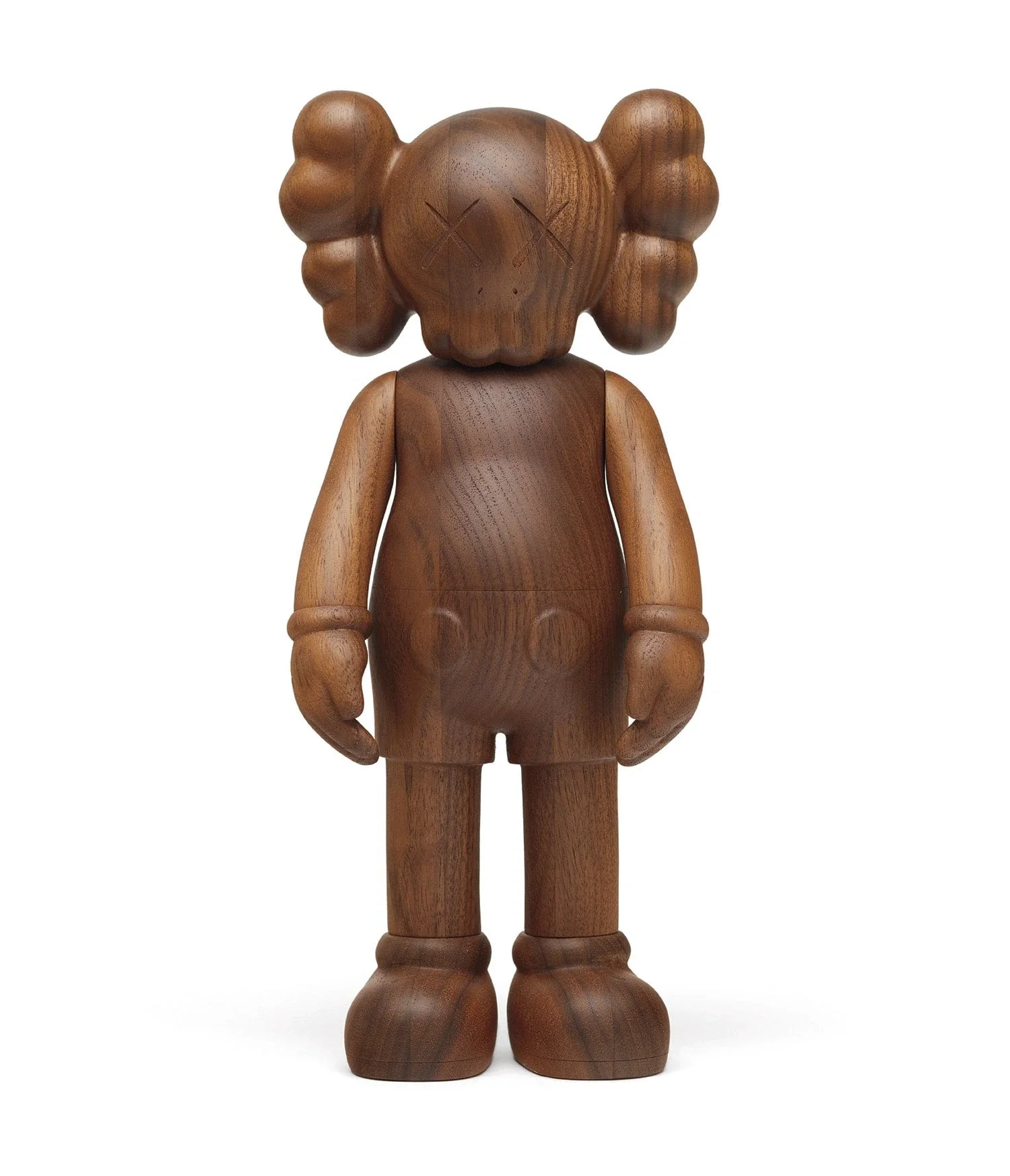
A 2011 COMPANION (KARIMOKU), just 27.4 cm tall and numbered 48/100, achieved HK$2,000,000 at Phillips Hong Kong in May 2019. A wooden figure can exceed many large vinyl editions in value: the particular edition and demand matter more than centimetres.
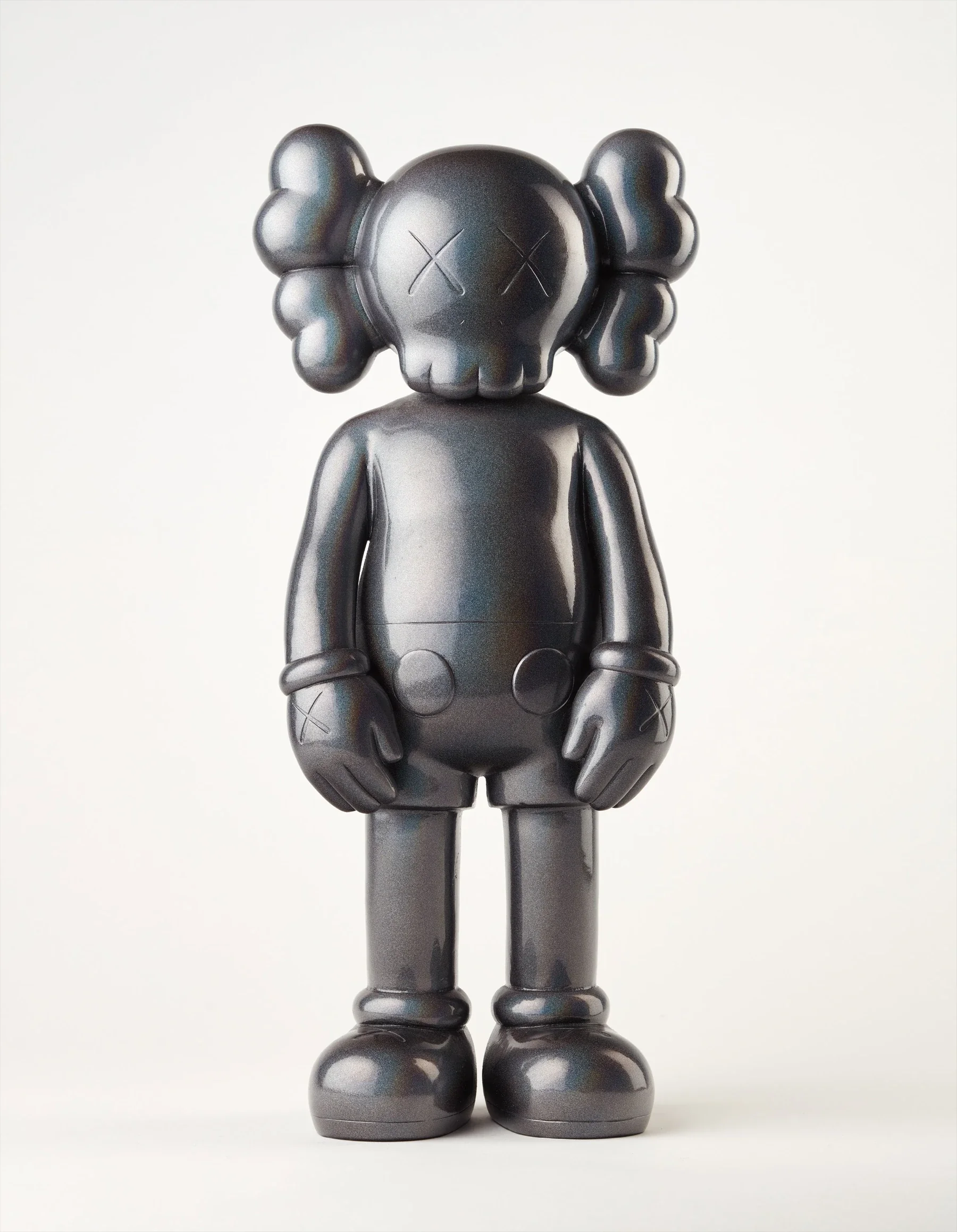
The bronze (FIVE YEARS LATER) COMPANION, 2008, 39.6 cm and numbered 4/10, sold on 27 May 2018 for HK$1,250,000. Its catalogue records an OHWOW Gallery certificate. This result cannot be assigned to a similar-looking vinyl Companion with a different material and edition.
Small sculptures in wood and bronze
NO FUTURE COMPANION: rarity need not be large
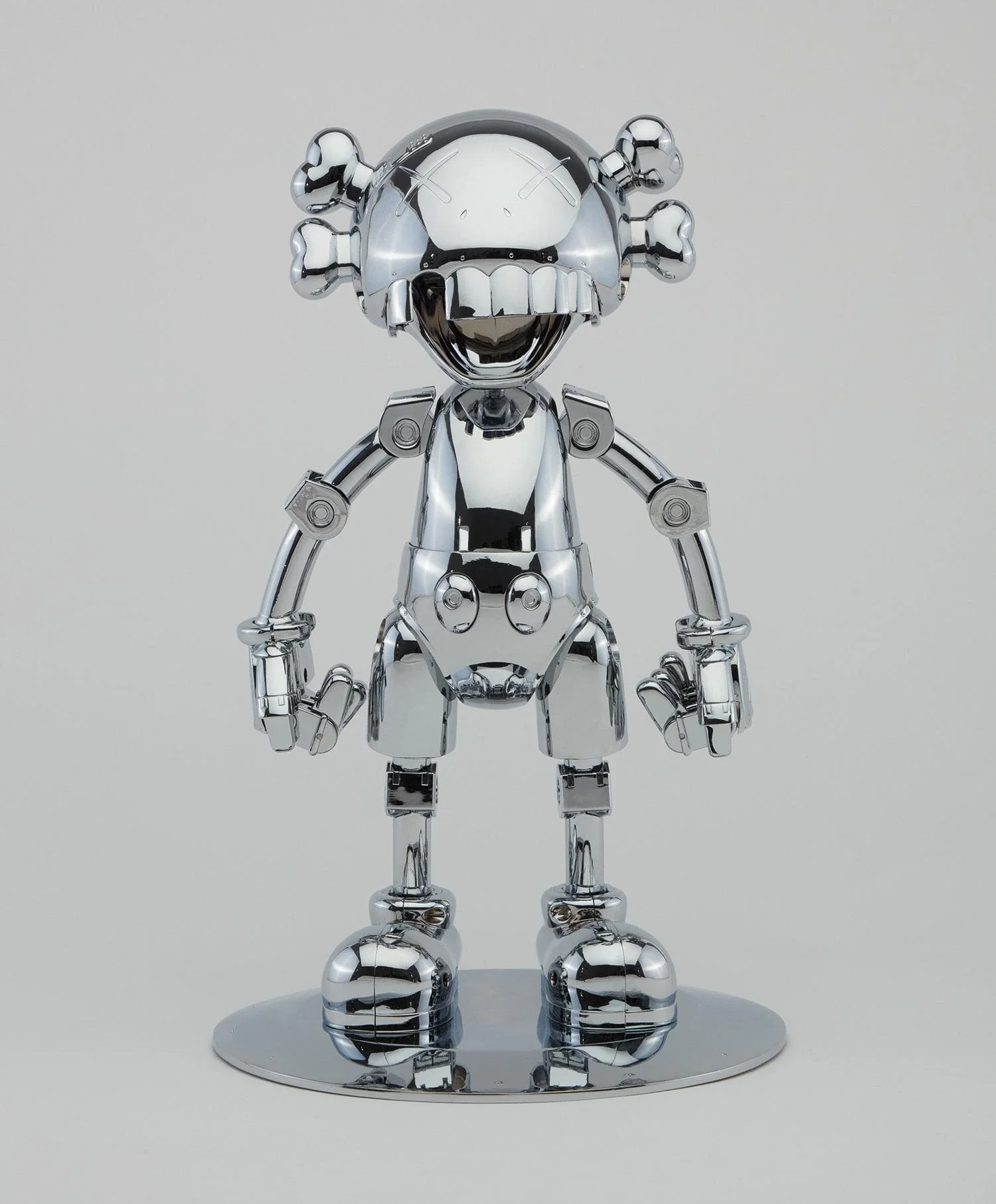
KAWS and Hajime Sorayama transformed Companion into a chrome robot. NO FUTURE COMPANION (Silver Chrome), 2008, number 299/500 and 31.5 cm high, sold at Phillips on 26 November 2018 for HK$175,000. It shows that a substantial price does not require human scale.
Mirror surfaces and small components deserve close inspection. Different auction houses have used differing construction descriptions for NO FUTURE, so the word chrome alone should not be used to identify the underlying material or describe every example. Christie’s records this specific number, 299/500, and its provenance through that auction.
Six Companions together: full and anatomical versions
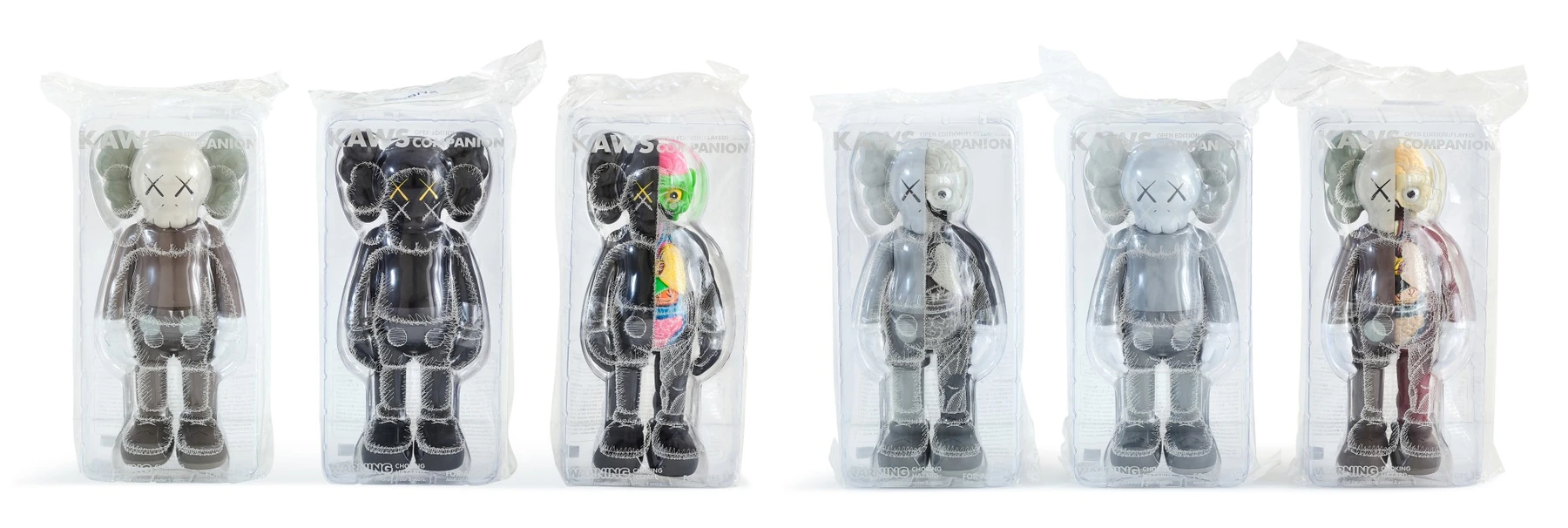
The group photograph shows three regular Companions and three Flayed versions in brown, grey and black. These are the 2016 open edition, not the 2006 Dissected edition of 500. The Sotheby’s catalogue shows all six in their packaging.
SBI sold a similar six-figure Companion and Flayed set on 10–11 April 2026 for ¥437,000 including buyer’s premium. It is a different auction example. This is a comparison: a complete set does not itself turn an open edition into an early limited release.
GONE: a familiar composition at different scales
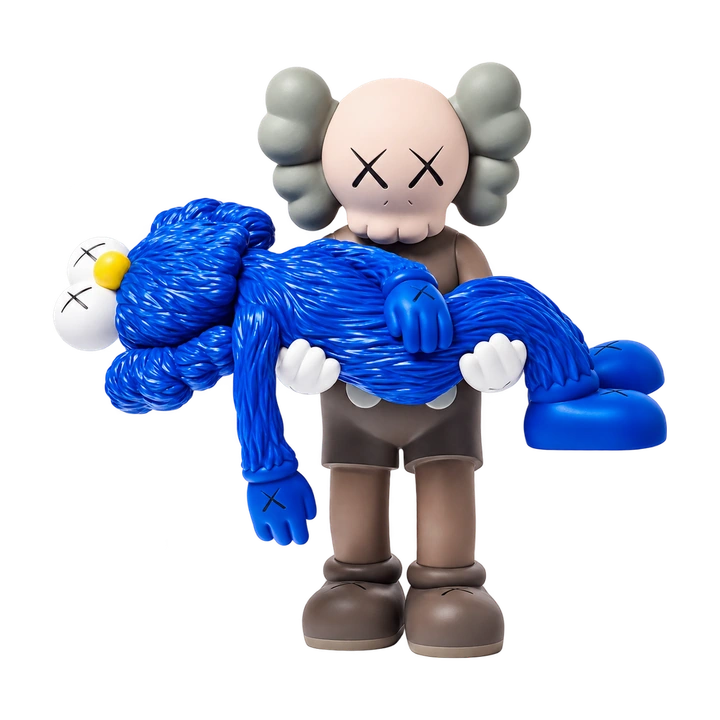
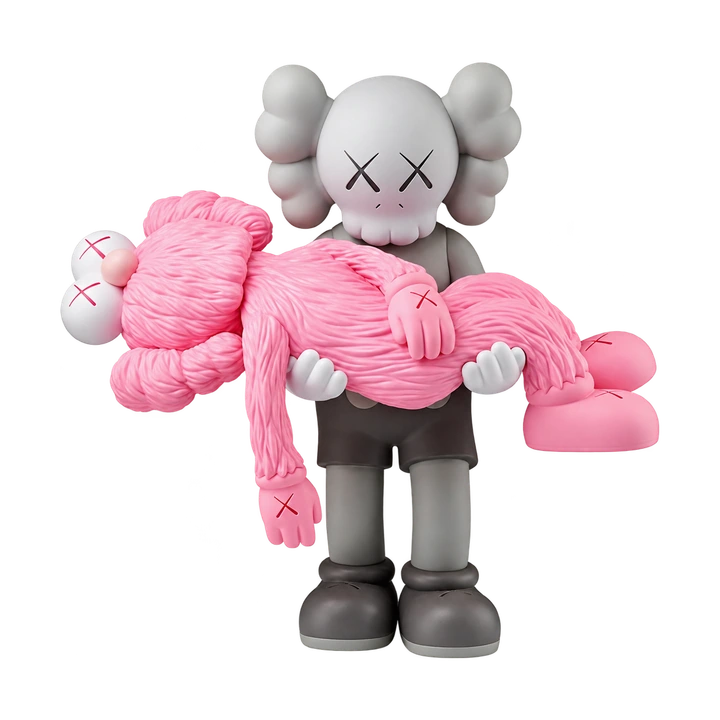
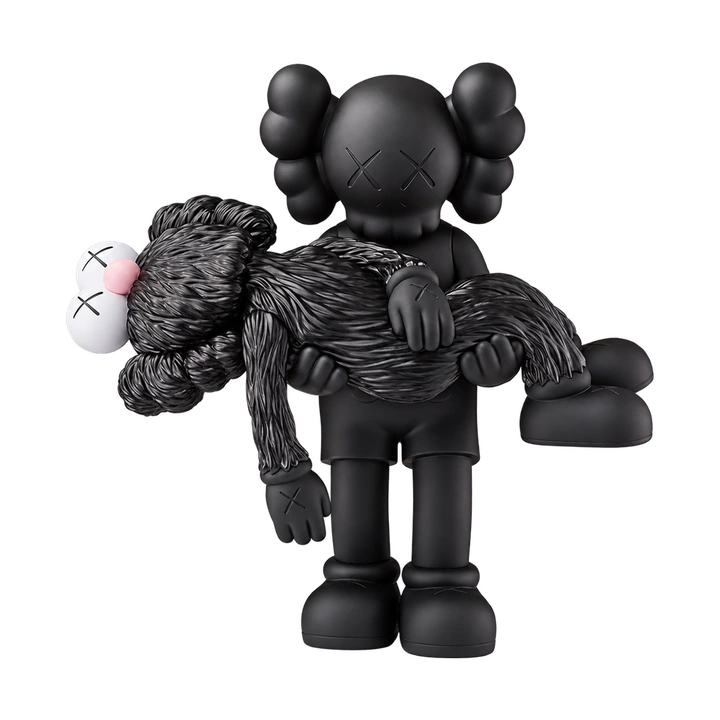
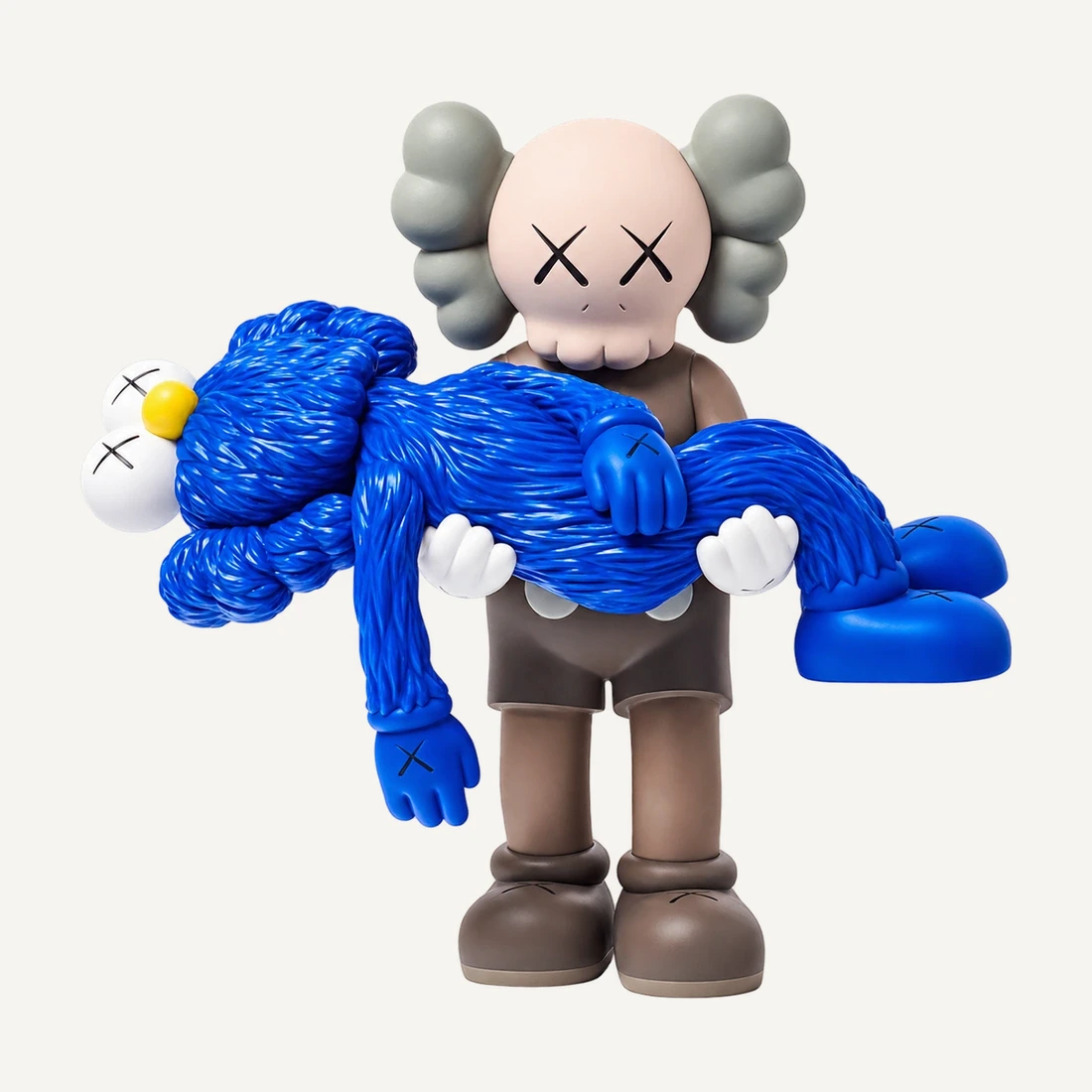
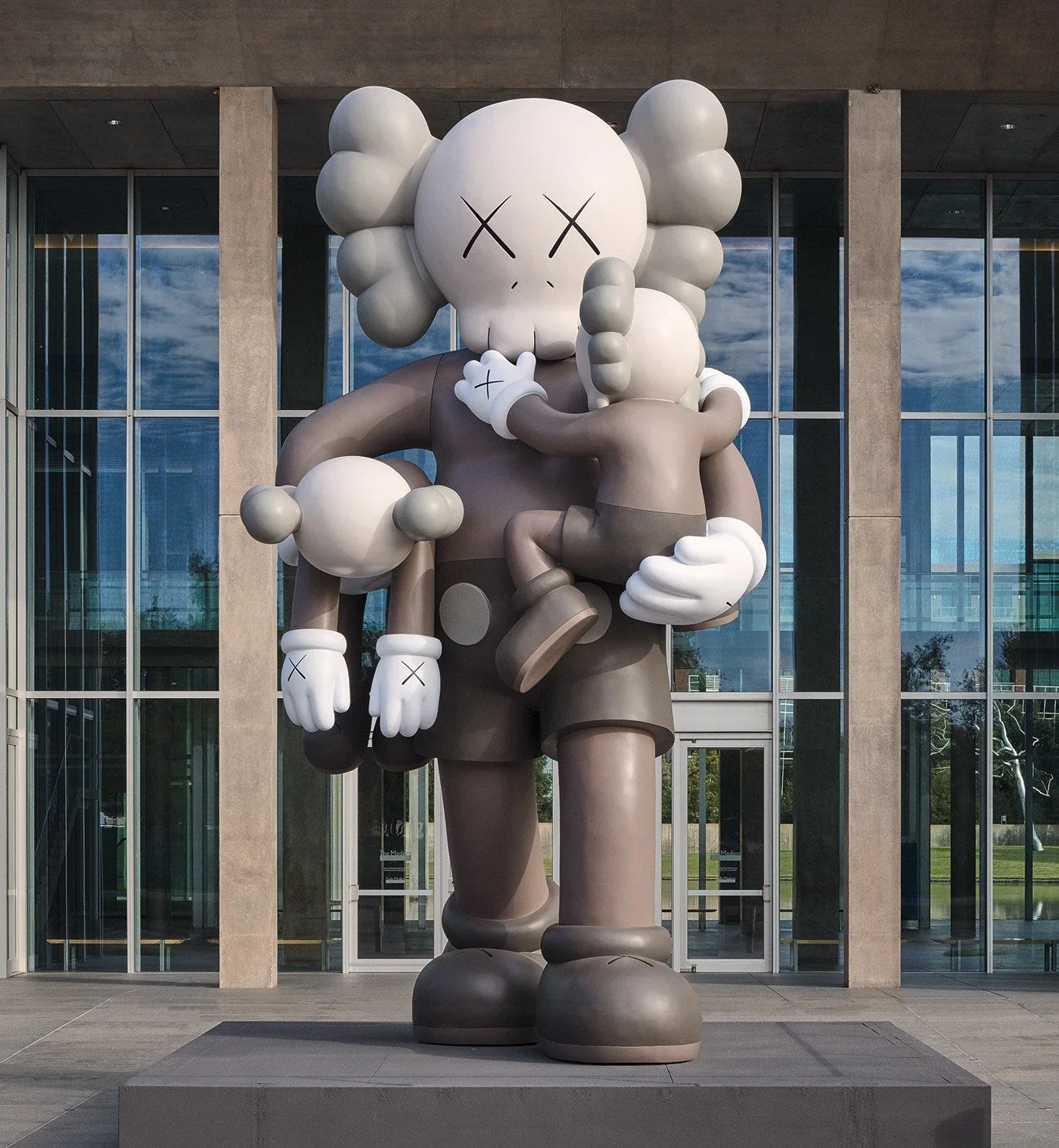
In GONE, Companion carries BFF. The scene is recognisable both as a small figure and as a monument. The National Gallery of Victoria holds a bronze GONE from 2019, measuring 700 × 710.5 × 294 cm. It is a distinct museum sculpture.
The tabletop GONE is a separate 2019 vinyl release, also illustrated in the official NGV magazine. It brings the composition to a domestic scale. A shared design does not make it a smaller example of the museum bronze’s edition.
Our catalogue includes GONE Brown Blue, Pink Grey and Black. Confirm the availability and condition of the particular item separately. We do not assign a finite edition size to this vinyl release without evidence: collector interest and a small numbered edition are different things.
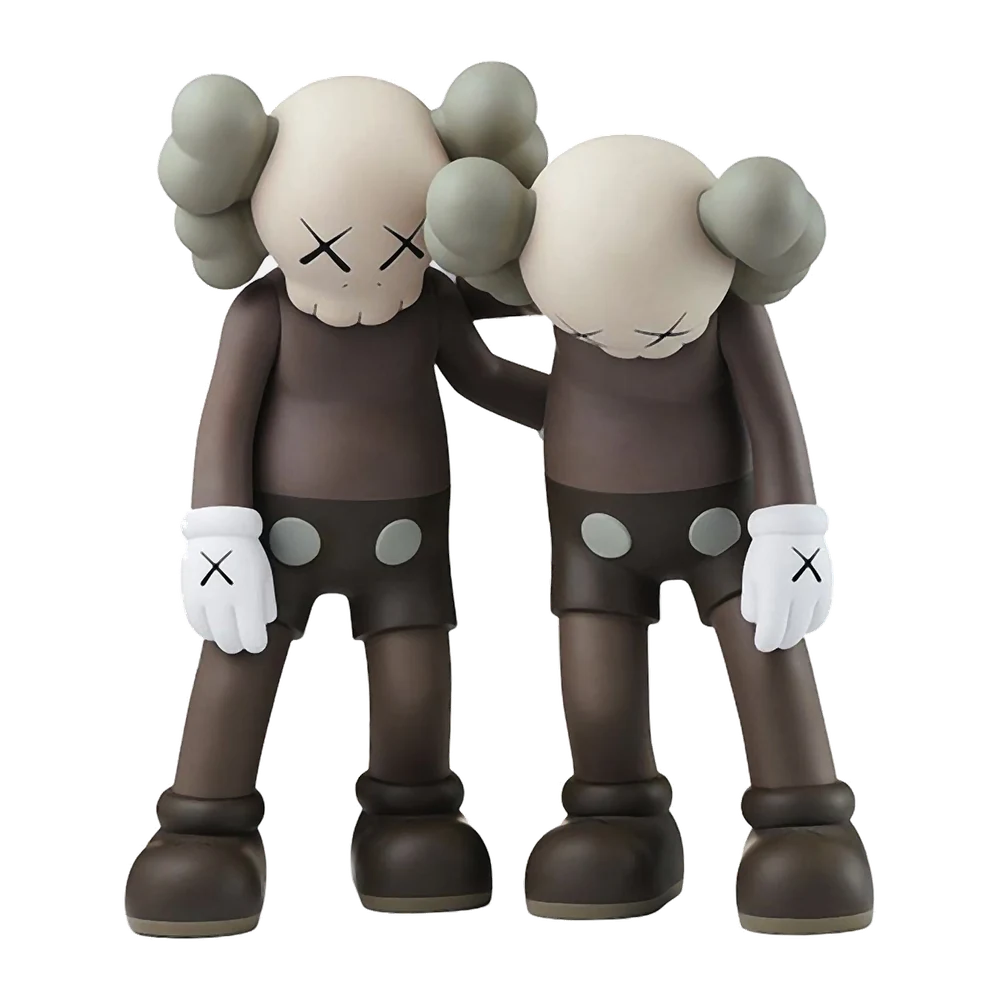
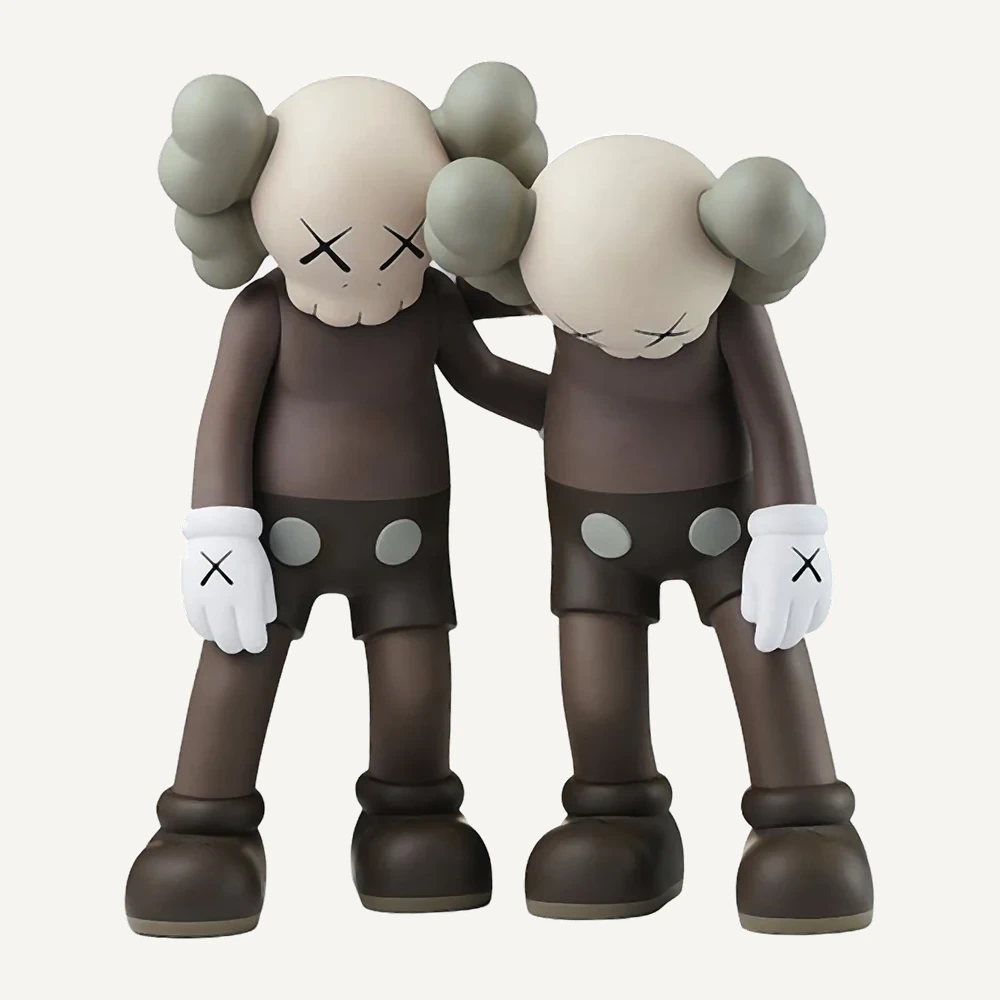
For a different composition, see ALONG THE WAY Brown, where two Companions support each other. A collection can follow the character of a scene, as well as auction results.
GONE and ALONG THE WAY from our catalogue
Four Foot Companion: large vinyl figures
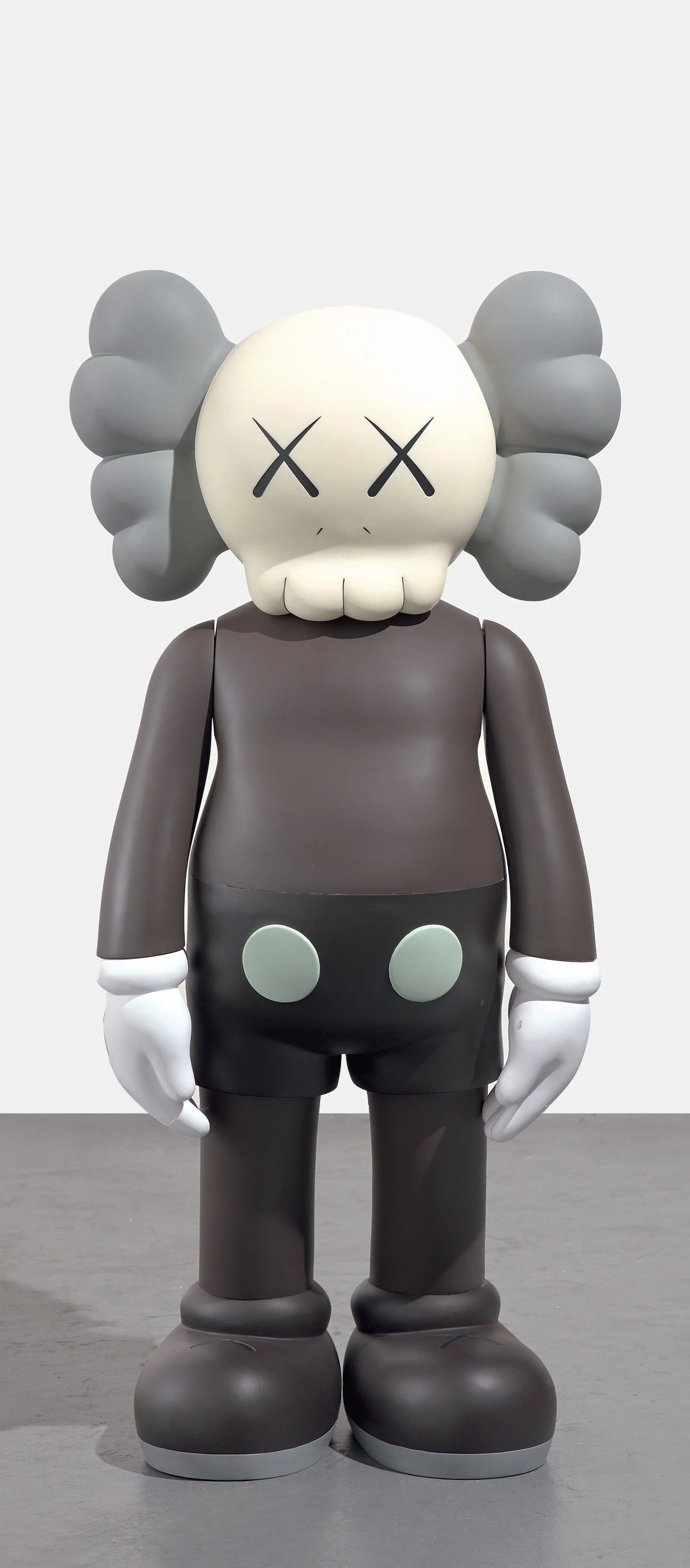
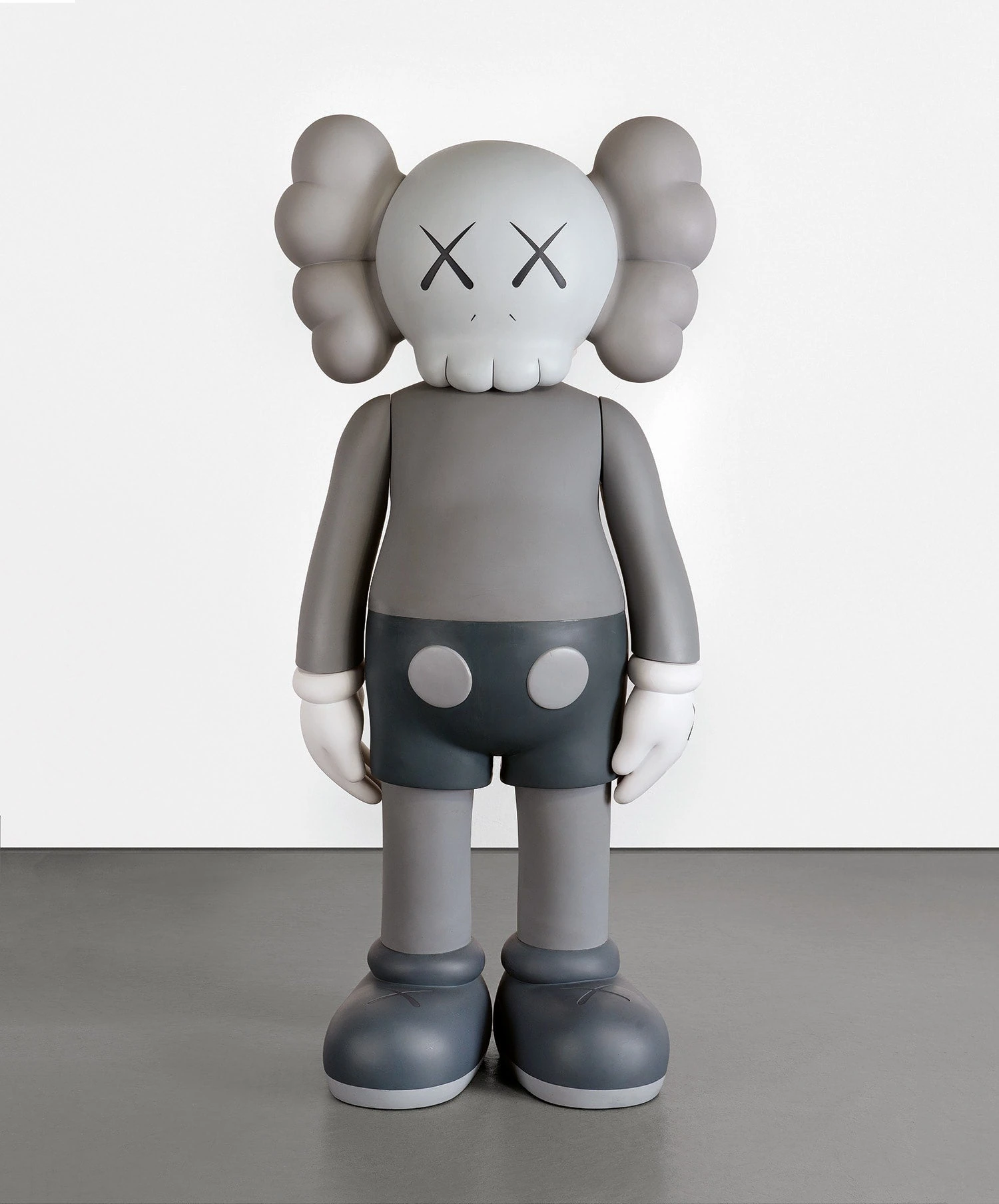
Four Foot Companion: nearly 130 centimetres, an edition of 100
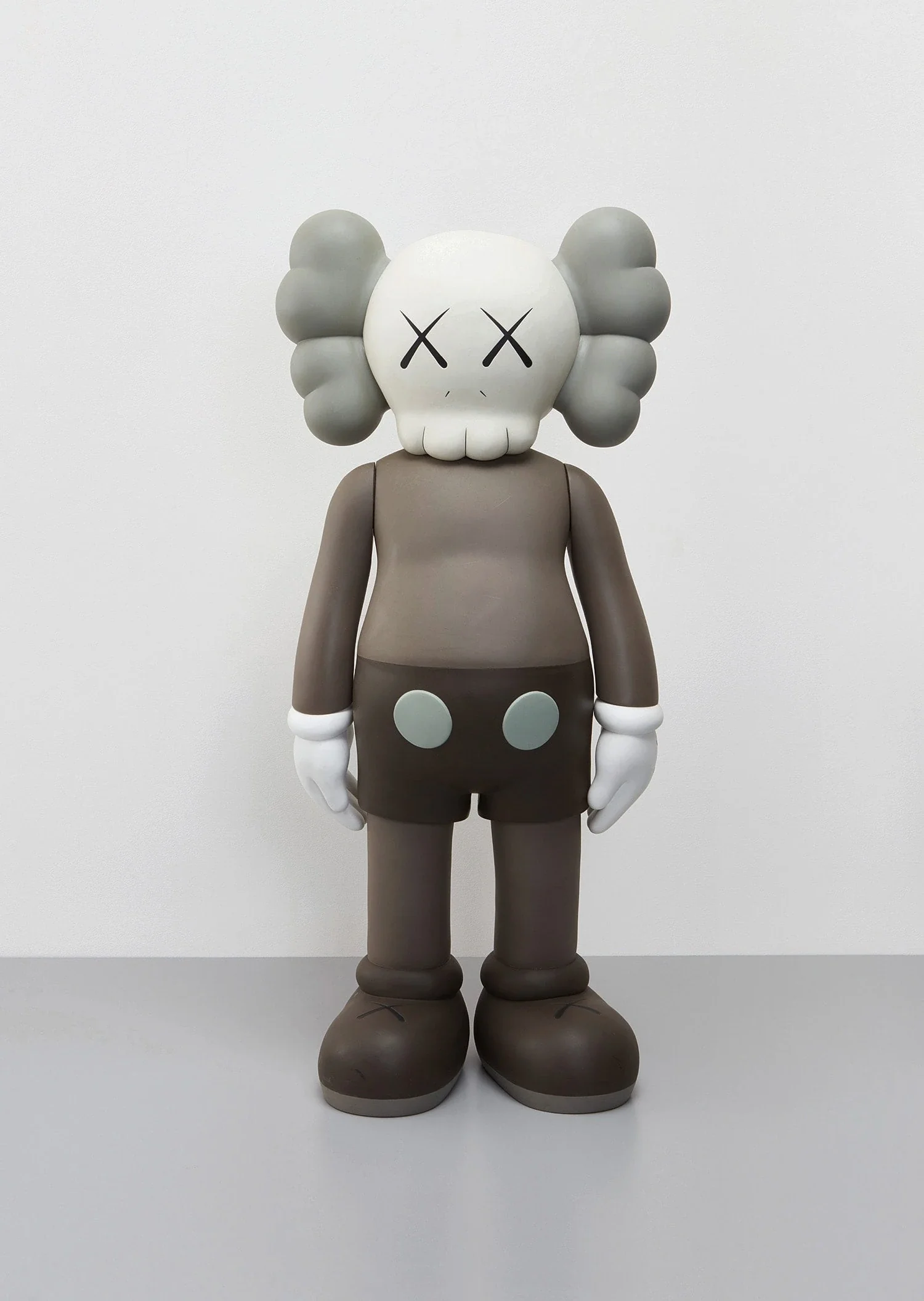
Four feet converts to about 122 centimetres, but that is not a reliable measurement for arranging delivery. Auction catalogues describe individual Four Foot Companions at 127 or 128.2 cm. Use the dimensions of the particular object you are buying.
Four Foot Companion (Brown), 2007, sold at Phillips in New York on 26 September 2018 for US$150,000. The catalogue records painted cast vinyl, a height of 127 cm and an unnumbered edition of 100. At this scale, the familiar figure has the physical presence of a freestanding sculpture.
Unnumbered does not mean unlimited. The catalogue explicitly identifies a finite edition. Equally, a number on another object does not establish comparable rarity. That edition refers to this release, not to every Companion KAWS has ever made.
Why different Brown Companions achieve different prices
Another Four Foot Companion (Brown) sold at Phillips Hong Kong on 25 November 2019 for HK$937,500. Its catalogue gives 128.2 cm, 2007 and an edition of 100. Christie’s on 22 March 2021 reported HK$875,000 for a 127 cm Brown Companion from the same year and edition size.
These are separate lots. They cannot be turned into an investment return for a single owner. Surface condition, completeness, provenance, bidders and timing all affect a sale. Nor should a historical result be converted at today’s exchange rate and presented as the dollar price paid at the time.
Dissected Companion: anatomy, colour and completeness
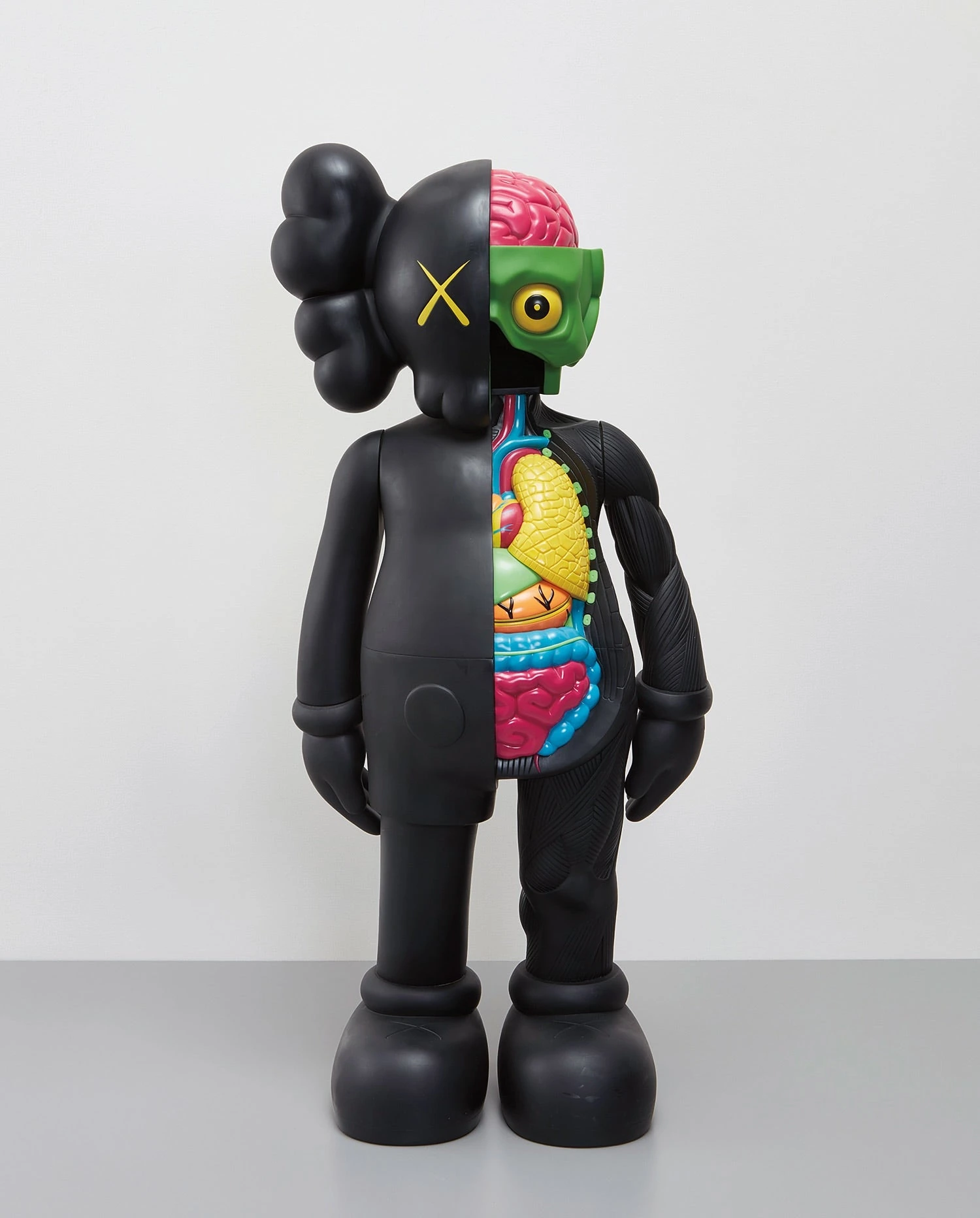
Dissected Companion exposes one side of the body as a colourful anatomical diagram. At four-foot scale the contrast becomes particularly strong: a quiet outer silhouette sits beside dense internal detail. For a market comparison, however, colour, year and scale matter as much as the character.
Four Foot Dissected Companion (Black), 2009, 128.2 cm high and from an edition of 100, achieved HK$1,000,000 at Phillips Hong Kong on 25 November 2019. The listing records its original box and OriginalFake hologram card.
Packaging helps document the history and protect the object in transit. It does not replace an inspection. A large figure needs photographs of seams, projecting parts, impact damage and any repairs; a frontal image cannot reveal everything.
Large Companion and Dissected figures
Large sculptures: a different scale and market
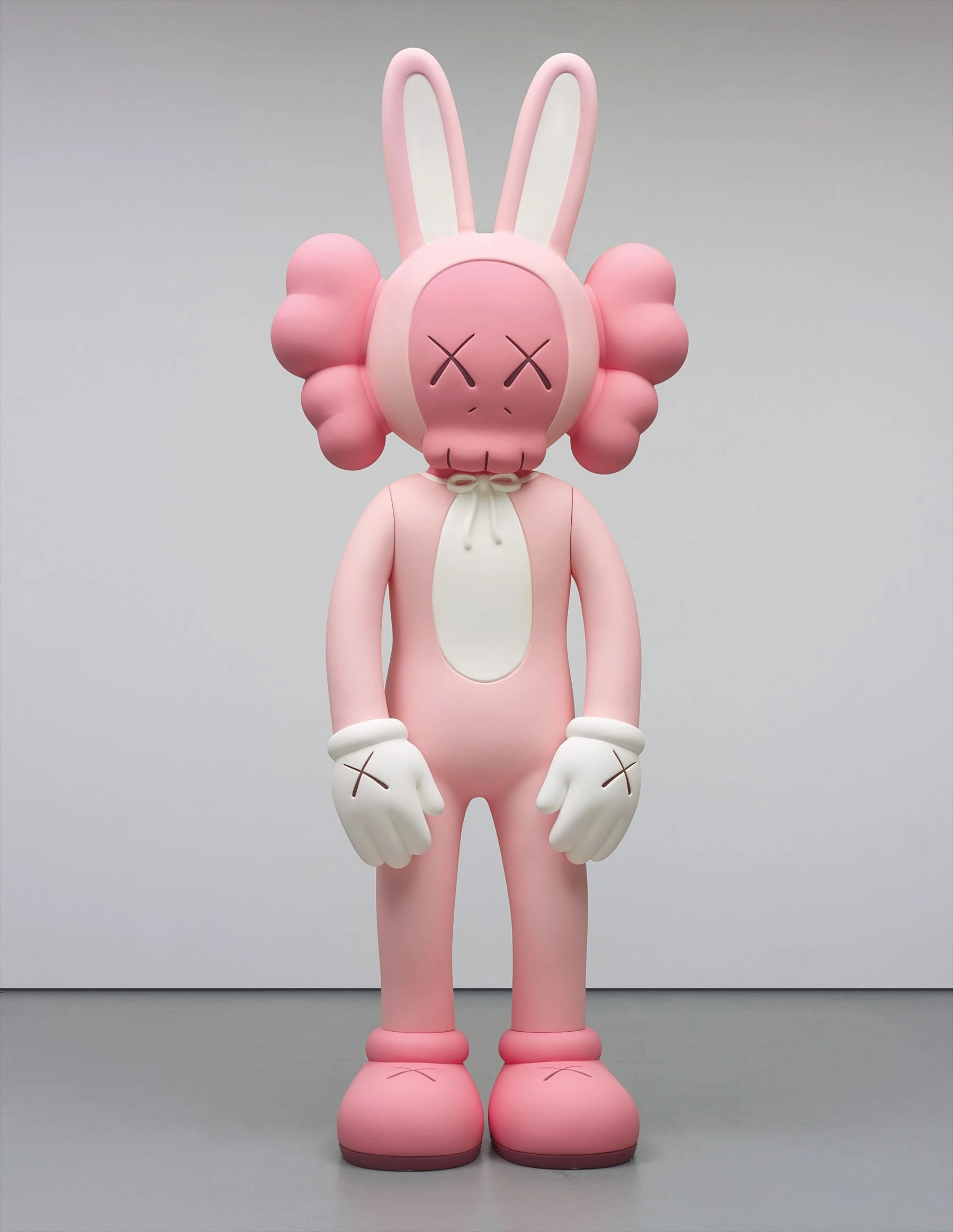
Accomplice: three metres and an edition of three plus one AP
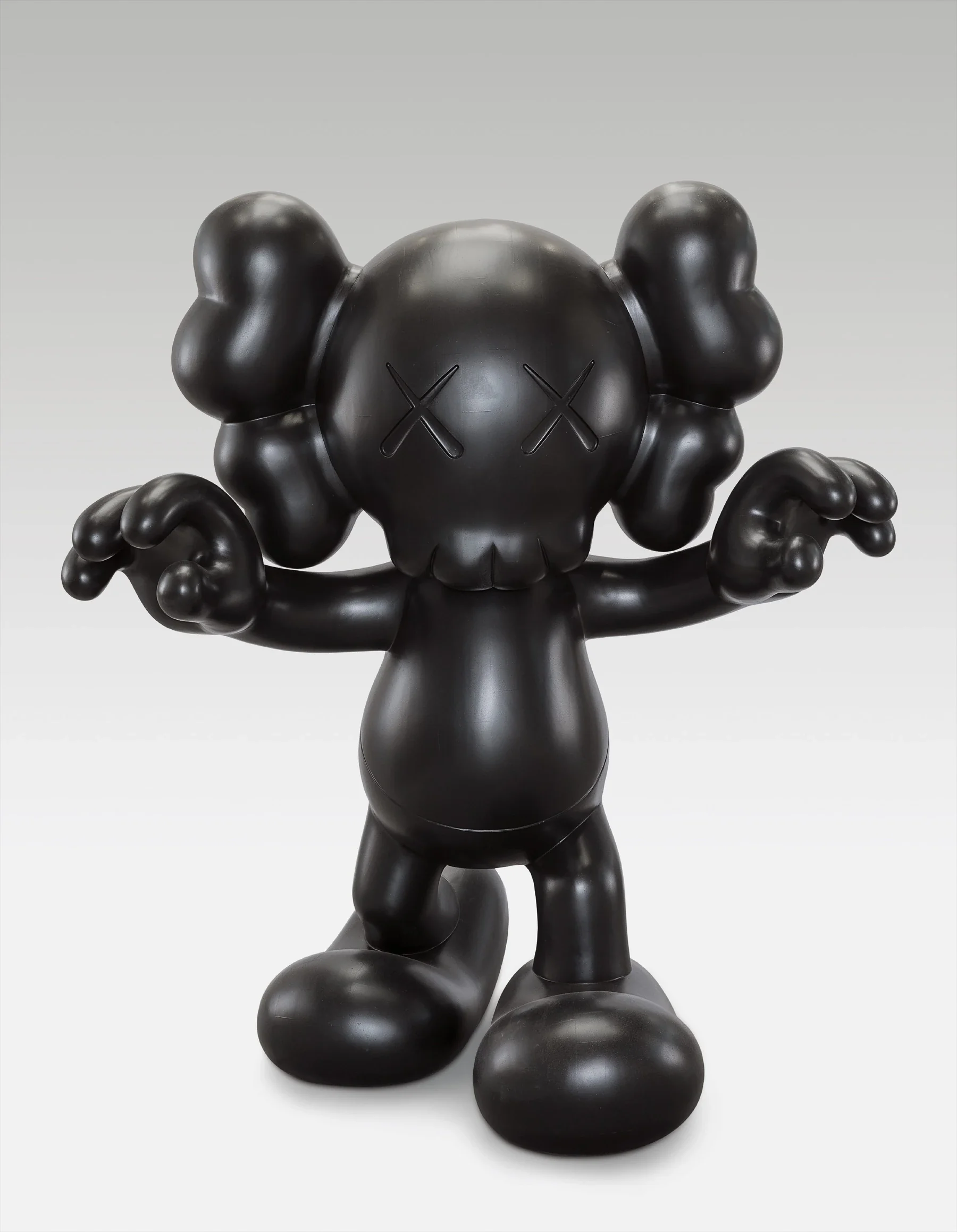
The Accomplice sold by Phillips belongs to a different scale: 305 × 121 × 63 cm, fibreglass resin and rubberised paint. Lot 47 achieved £266,500 in London on 15 October 2014. It was number three from an edition of three plus one artist’s proof.
This is an independent sculptural edition, rather than a larger price attached to the small vinyl Accomplice. Three plus one AP means four authorised examples of this edition, not four Accomplices across the artist’s entire career. Recognisable rabbit ears do not make unlike objects valid price comparisons.
FINAL DAYS: wood and a small sculptural edition
The wooden FINAL DAYS, 2014, 210 cm high, achieved HK$5,620,000 at Phillips Hong Kong on 27 May 2018. The catalogue identifies afrormosia wood and number two from an edition of three plus two artist’s proofs.
This character is distinct from Companion. Volume, wood grain, finish and physical scale contribute to its presence. A buyer needs information about cracks, surface changes, repairs and storage conditions. FINAL DAYS also exists in other sizes and materials: its title alone determines neither edition nor price. Sotheby’s describes a separate 2016 version with its own dimensions and edition number.
AT THIS TIME: a wooden Companion at £1.455 million
Another upper-market example is AT THIS TIME, 2013, sold by Phillips in London on 2 October 2019 for £1,455,000. The 264 × 112 × 100 cm afromosia-wood work was artist’s proof number two from an edition of three plus two proofs. It was accompanied by a certificate signed by the artist.
The figure covers its face, but the gesture is only part of the encounter: natural wood and substantial volume change its presence in the room. This edition has its own market. Its result cannot establish the price of a small bronze or vinyl AT THIS TIME.
CLEAN SLATE at US$1.995 million: beyond the tabletop figure
CLEAN SLATE, 2014 sold at Phillips New York on 15 November 2018 for US$1,995,000. The sculpture measures 700.1 cm high, or 749.9 cm overall with its base. It is made from fibreglass, a metal structure and paint, and is described as one of three unique colour variants.
This is a monument: a large Companion carries two smaller figures. Its result cannot be assigned to a tabletop CLEAN SLATE. Even bronze does not automatically mean a higher price bracket: a 14.5 cm Clean Slate (Bronze), 2022, from an edition of 250, sold at Tate Ward on 19 June 2024 for £2,750 including premium. Edition, scale and history change the comparison entirely.
Passing Through: one gesture, different objects
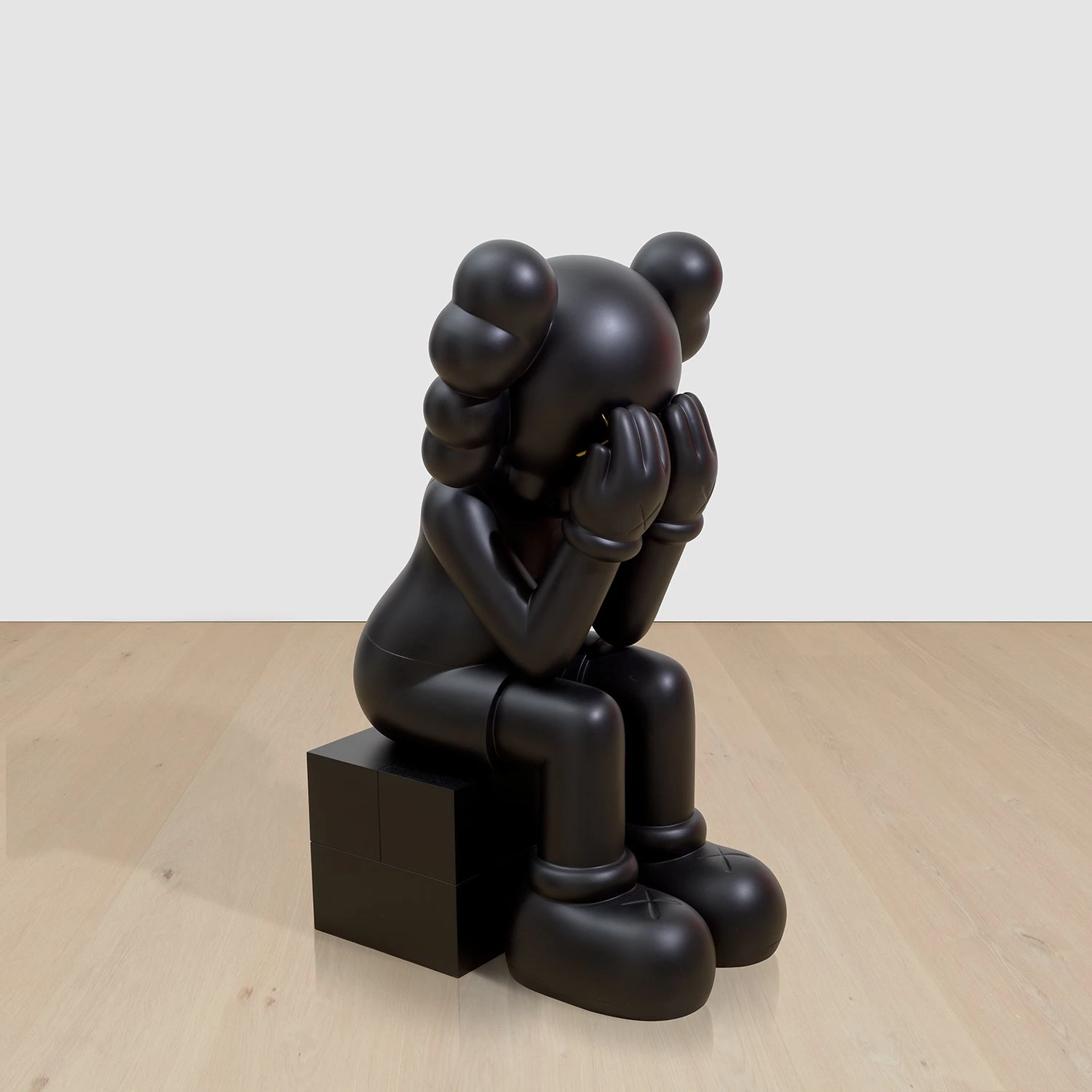
At Phillips London on 11 October 2024, COMPANION (PASSING THROUGH), 2011 achieved £406,400. The official results sheet expressly states that prices include the buyer’s premium.
The seated figure covering its face also appears in smaller editions. A 29 cm Passing Through (Black), 2013, sold at Tate Ward on 13 August 2026 for £750 including premium. These are different works, rather than inexplicable prices for the same toy. Compare year, scale, medium and edition before comparing the totals.
Monumental editions
Why rare examples are difficult to buy
An edition of 100 does not mean 100 available listings. Some examples remain in long-held collections; others lose their packaging or suffer damage. A buyer needs the desired release, acceptable condition, documented provenance and an owner willing to sell. The scarcity of a good available example can therefore feel greater than the edition number suggests.
Start with the exact title, colour, year, dimensions and material. Then request purchase documents, photographs of every side and markings, a condition report and restoration history. Before bidding on a four-foot figure, confirm transport packaging, access to the room and insurance. A monument adds base, installation and site requirements. Practical feasibility belongs in the purchase decision.
An auction result is also not a complete acquisition budget. Phillips’ published prices include buyer’s premium, as its explanation confirms. Taxes, shipping, insurance and installation depend on the transaction. An estimate is an expectation, not a completed sale; the seller’s net proceeds after costs are another figure again.
Choosing a KAWS work for your collection
A collection does not need to begin with the highest auction price. First decide which character and scale suit you, then compare documented sales of that specific release. A rare object still needs space, safe handling and appropriate storage.
Explore KAWS in our collection and the story of FAMILY. When considering a particular figure, our KAWS authenticity guide helps frame questions for the seller. A high-value work ultimately needs assessment of the object, its documents and appropriate specialist expertise.
For a comparison with a tabletop format, see our FAMILY Black and FAMILY Pink Grey product pages. These are different releases, rather than smaller examples of the auctioned sculptures described here.