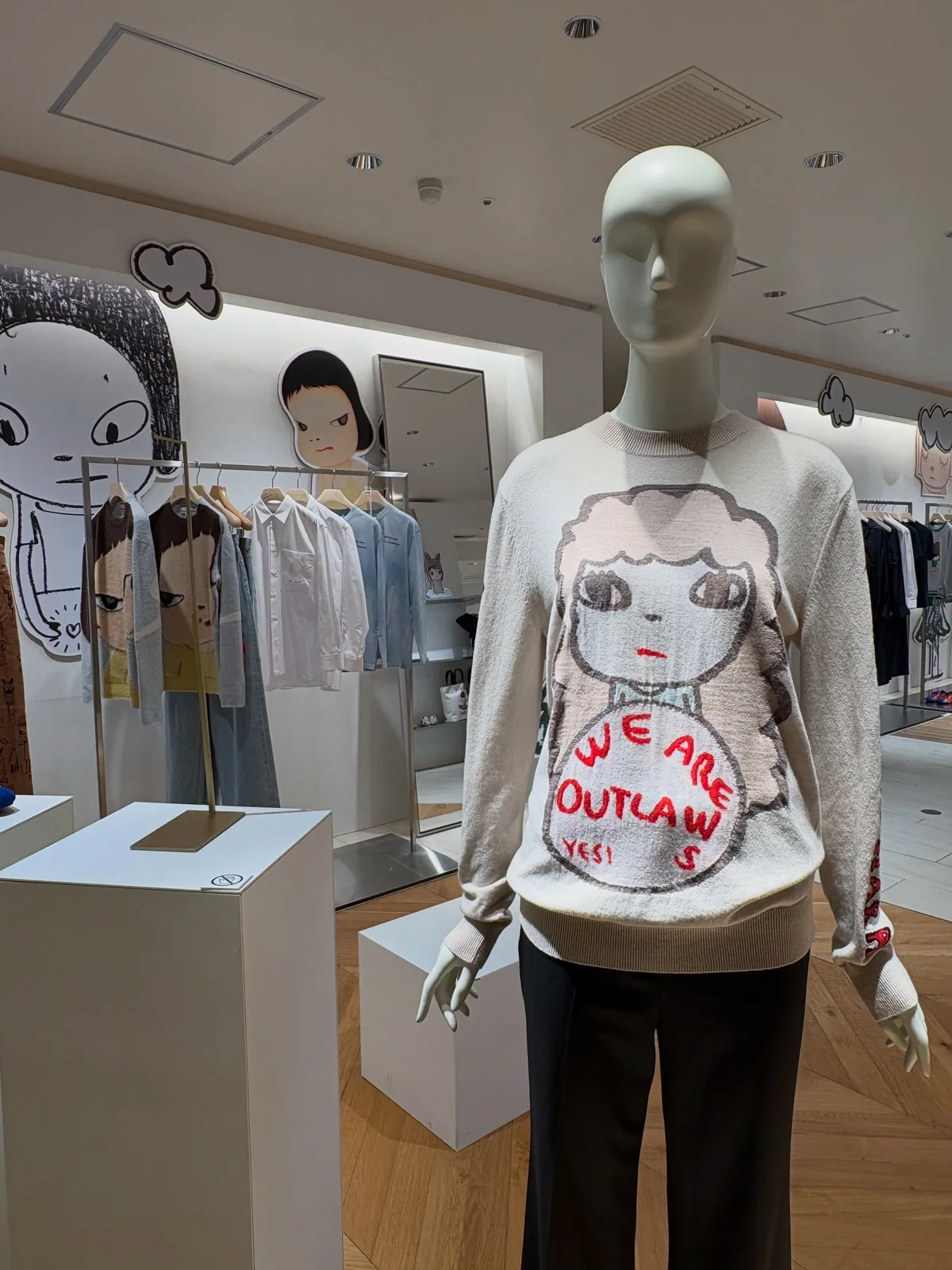
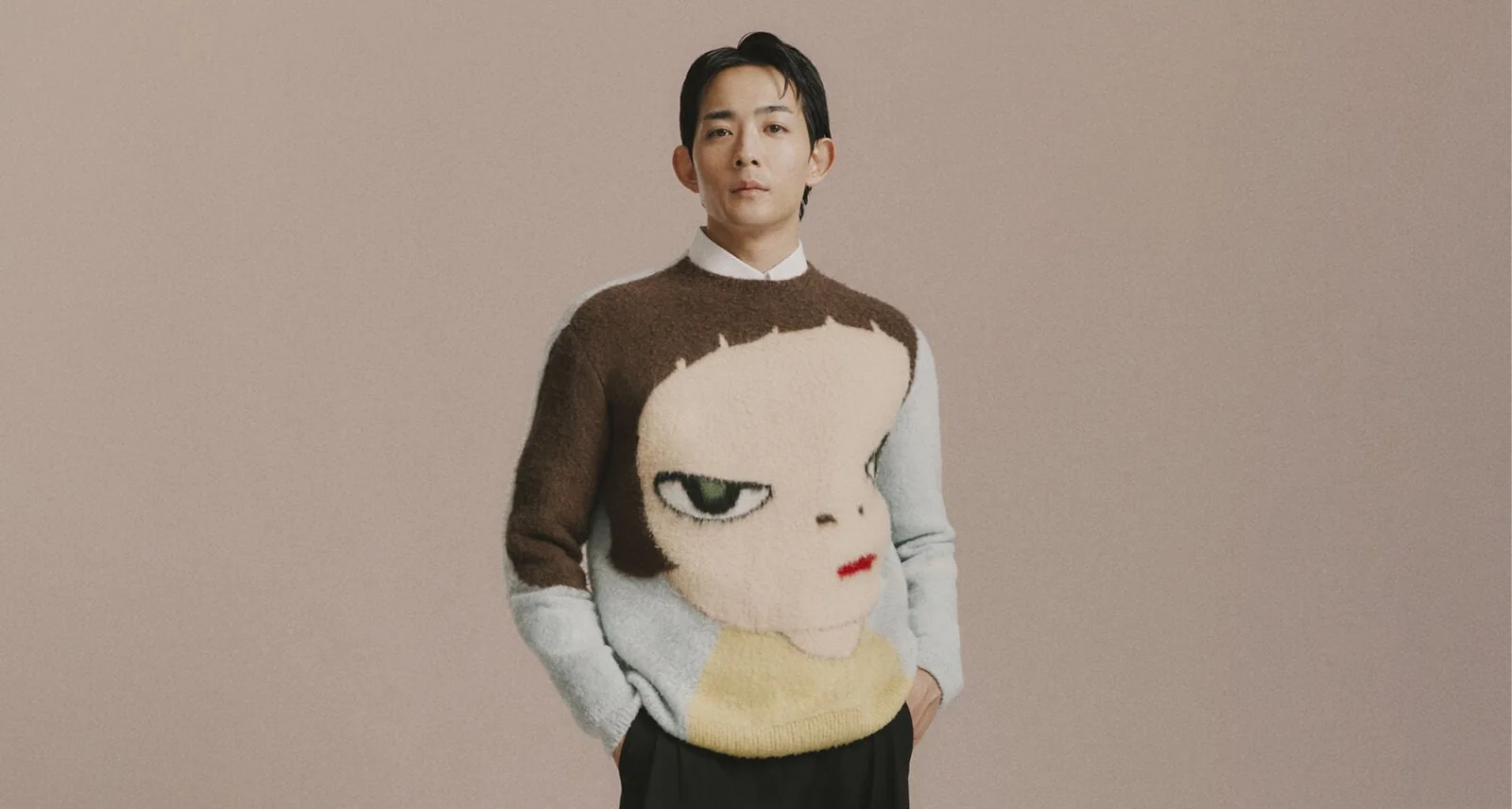
That shift—from an image we face to an image we carry—is the most interesting part of Stella McCartney and Nara’s third collaboration, A Rock’n’Roll Forest, introduced in November 2026.
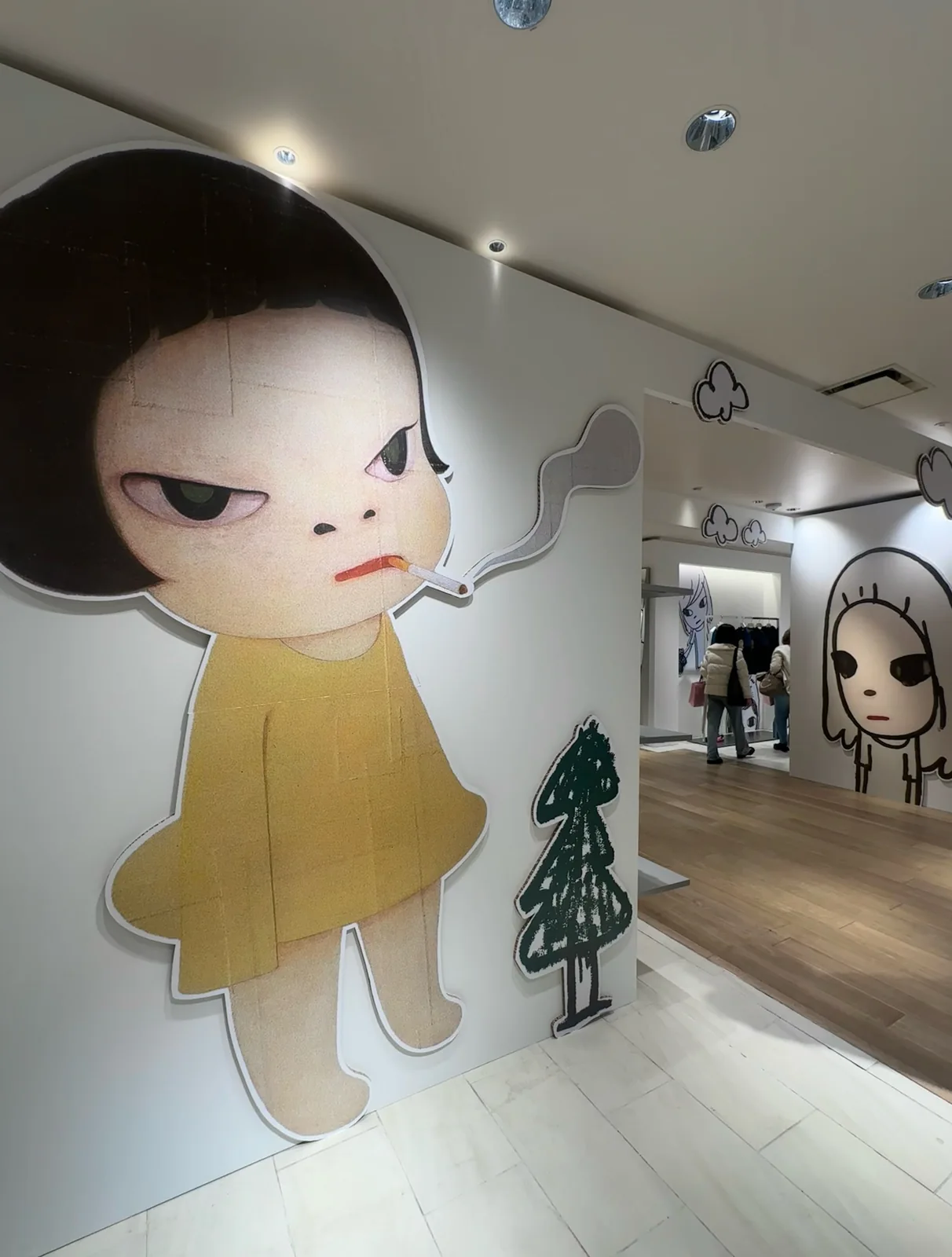
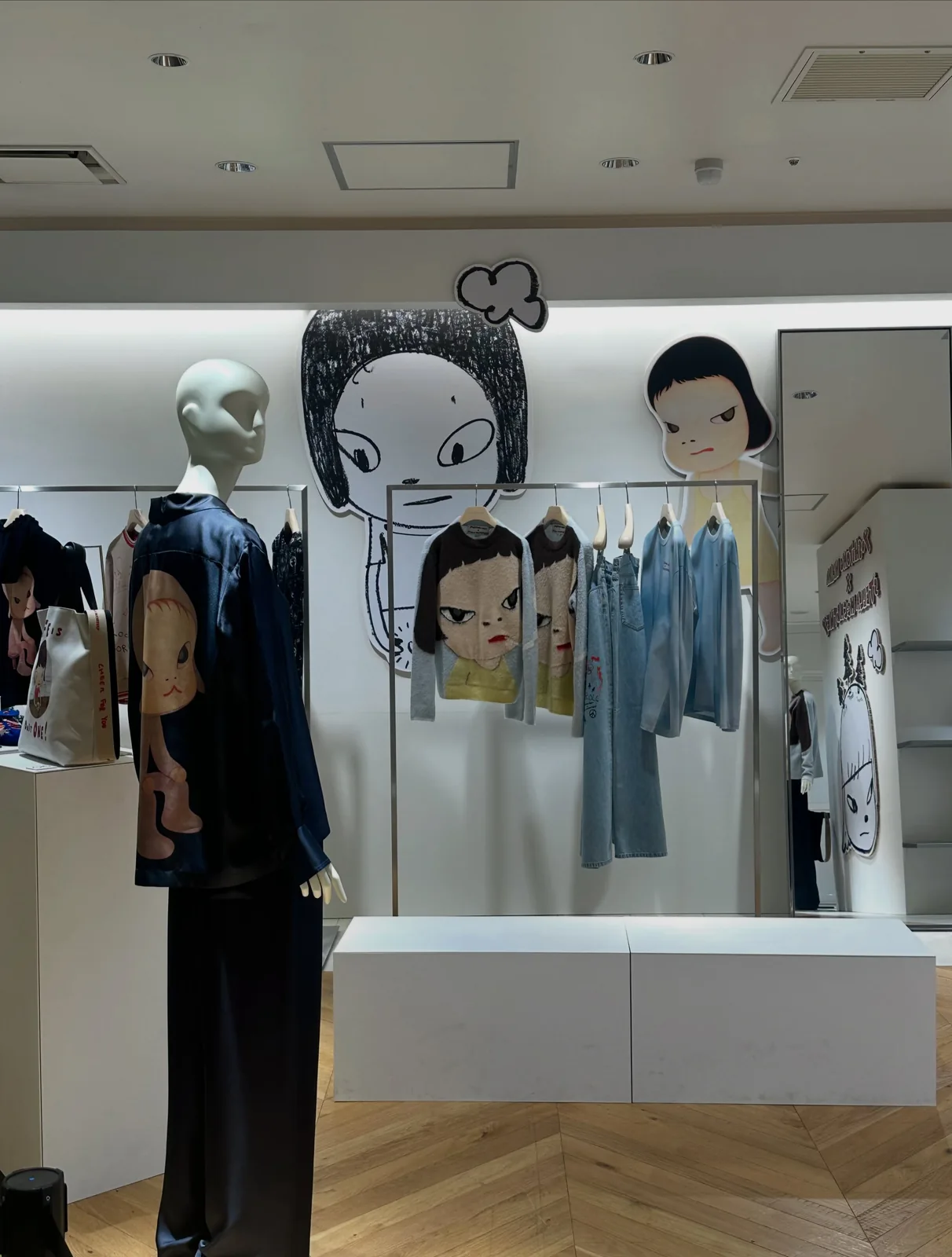
The collection brings Nara’s drawings into clothing, bags, footwear and accessories. Its Tokyo presentation, open at Isetan Shinjuku from 11 November to 8 December 2026, extends that exchange into a walk-through environment, with oversized character cut-outs, hand-drawn trees and illustrated objects. Rather than treating the artist’s work as a decorative logo, the strongest pieces let a drawing alter the personality of an otherwise familiar shape. The brand’s collection announcement connects the project to nature, music and individual expression: themes that already run through Nara’s art.
Why Nara’s characters belong in a rock’n’roll forest
Nara’s children and animals are immediately recognisable, but recognition is only the beginning. Their expressions can suggest resolve, irritation, vulnerability or quiet resistance. The apparent simplicity of a face leaves room for the viewer to decide which emotion is closest. That ambiguity is easily lost if the work is reduced to the idea of a cute character. Our feature on Yoshitomo Nara at David Zwirner in New York offers another setting in which to consider his images beyond fashion.
Born in Hirosaki, Japan, in 1959, Nara has worked across painting, drawing, sculpture and installation. Music provides an important way into that practice. LACMA’s introduction to its retrospective describes his sources as childhood memories, literature, his years in Germany from 1988 to 2000, encounters with different cultures and, especially, music. The museum framed the exhibition through this longstanding musical interest.
The collaboration’s rock’n’roll language therefore has a foundation beyond fashion styling. Words, private feelings and an independent attitude can coexist in one small image. A forest is also an apt setting for characters that seem to inhabit a world just outside ordinary adult rules. That open-ended quality helps the characters move between a painting, a drawing and a garment without becoming a single fixed story.
Three collaborations, with three different moments
The relationship began with Stella Shared Spring/Summer 2021, a unisex capsule. In its original introduction, the fashion house described the project as Nara’s first fashion collaboration. Its emphasis on youthful self-expression made sense for Shared: the drawings gave casual clothing an individual voice, rather than imposing a formal, gallery-like presentation.
The second chapter belonged to Spring/Summer 2023, but its release began in December 2022. These are different kinds of dates: one identifies the fashion season, the other the start of availability. The Japanese launch announcement specified an Aoyama launch on 2 December 2022. The Summer 2023 runway account placed Nara’s imagery at the Centre Pompidou in Paris, moving it into a more expansive ready-to-wear setting.
That second capsule combined characters with statements about change, peace and the urgency of living. Its range extended from jersey and denim to bags. The distinction matters when looking at resale listings or older photographs: a piece labelled “Summer 2023” may have first appeared at the end of 2022, and it should not automatically be grouped with the 2026 release.
A Rock’n’Roll Forest, the third chapter, arrives in November 2026. It develops the relationship across multiple categories and through a physical presentation. The collection is described by the brand as limited edition, but that wording should be understood in a fashion context, rather than as evidence of a numbered fine-art edition.
Five ways the drawing becomes a wearable object
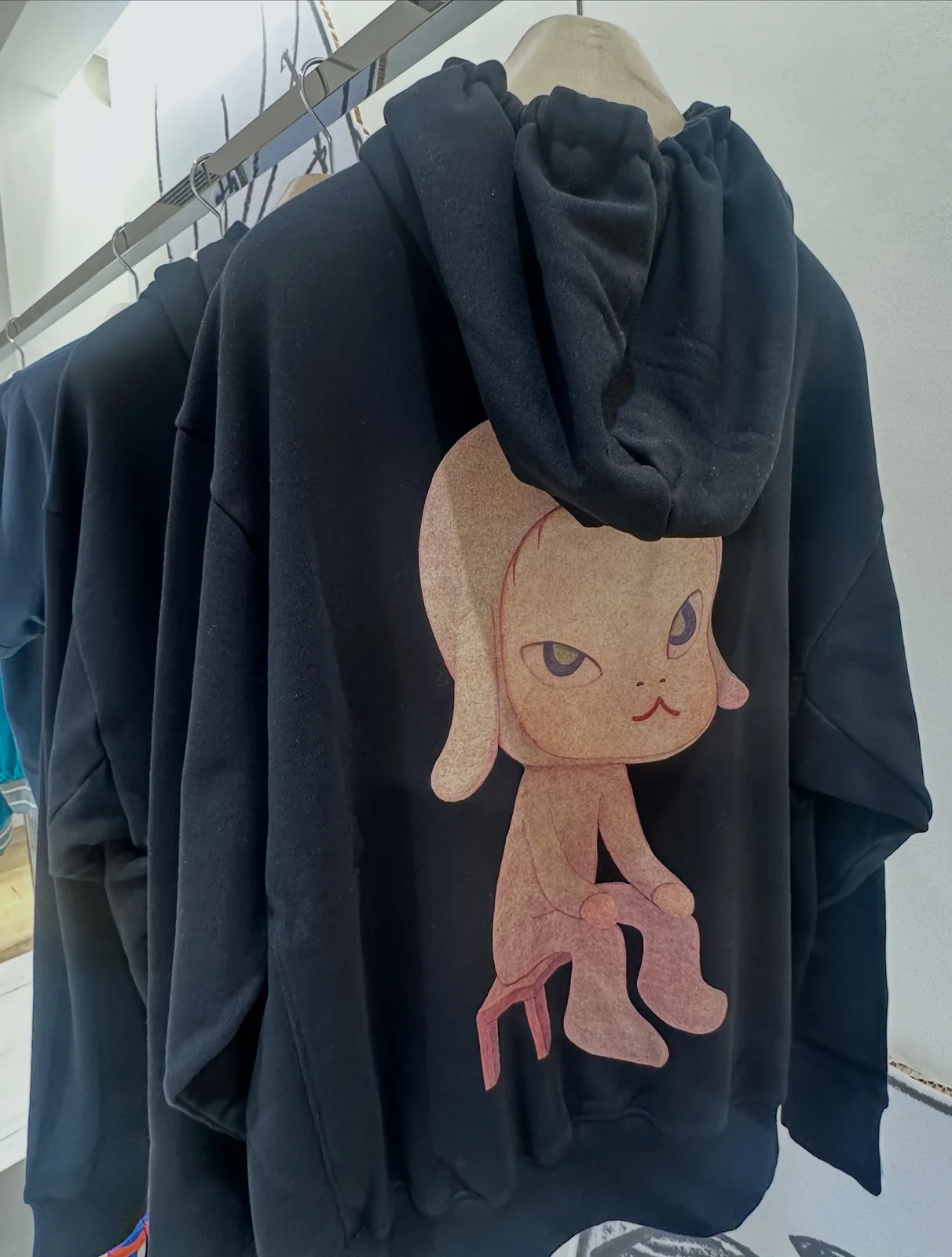
Hoodie: a character carried on the back
The ‘Sleepless Night’ Hoodie is one of the clearest points of entry. The official product record identifies black organic cotton, a relaxed silhouette and a Sleepless Night graphic. Its composition is listed as 100% cotton.
In the Tokyo display photographs, a large pale-headed, pink-bodied figure occupies the back of a dark hanging hoodie. The scale gives the image a different relationship to a person than a small chest emblem would have: the wearer carries the character behind them, while other people encounter it almost as a portrait. The surrounding dark fabric preserves the figure’s outline and isolation.
The uninterrupted back panel gives the character room to stand alone. Its pale head and pink body read as one figure against the dark fabric, while the hood and sleeves retain the familiar outline of an everyday sweatshirt.
Souvenir jacket: drawing translated into stitching
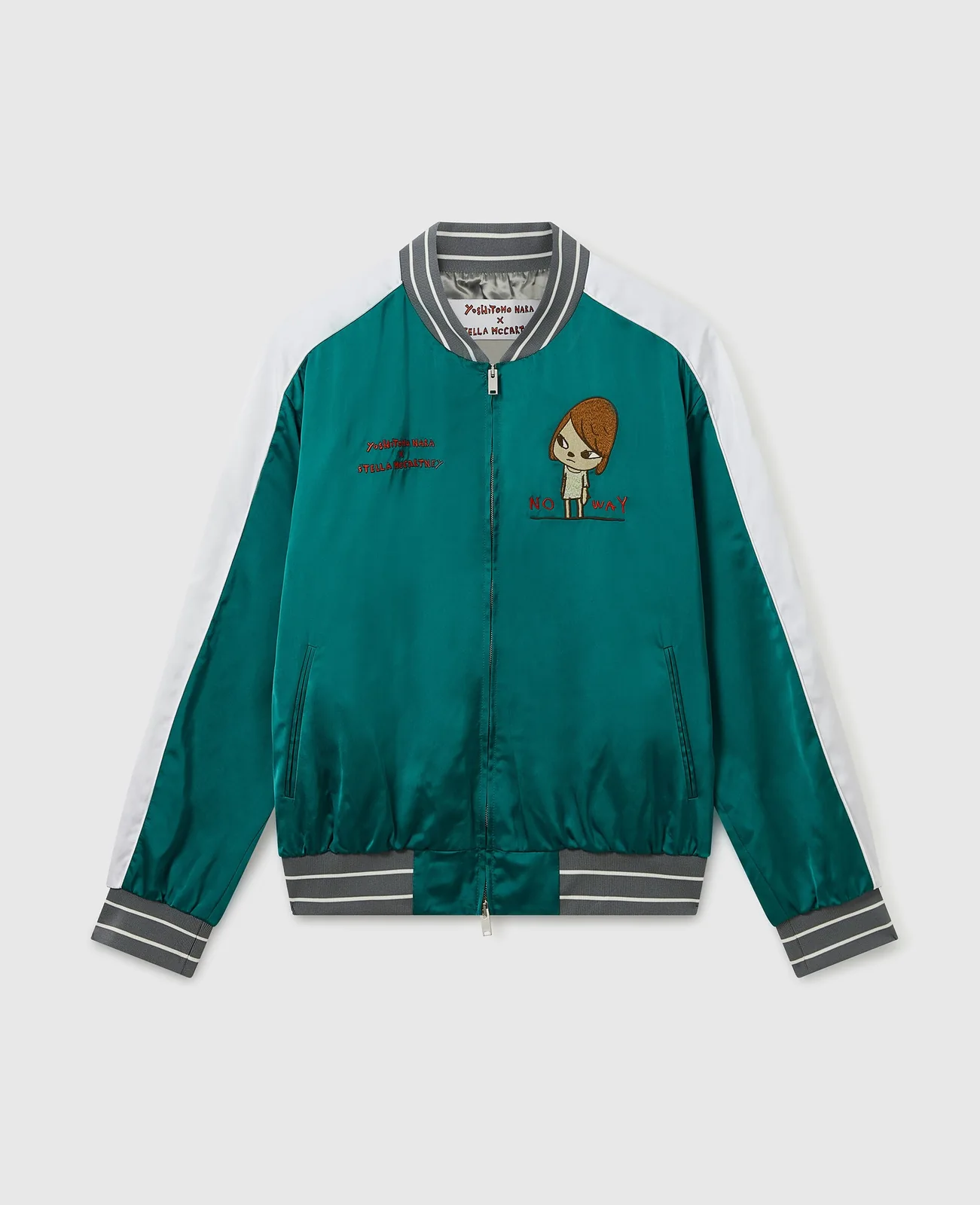
The ‘Sleepless Night’ Satin Souvenir Jacket makes a different material proposition. The brand lists a satin finish, a zip fastening, ribbed trims and embroidered artwork, including red “Rock n Roll World Peace” lettering. Its stated composition is 100% viscose: satin describes the fabric’s finish or construction here, and should not be confused with silk.
Embroidery gives a drawn mark another physical presence. Thread, seams and the jacket’s moving surface become part of how the image is read. The souvenir-jacket format also carries its own associations with a remembered place or event, making it an effective setting for a collaboration built around personal expression.
There is a useful earlier comparison in the Spring/Summer 2023 Patch Embroidery Bomber Jacket, whose description explicitly identifies Lonesome Puppy artwork on the back. The two records show an ongoing interest in stitched imagery, without implying that their fabrics, characters or construction are identical.
Embroidered jeans: several encounters rather than one central picture
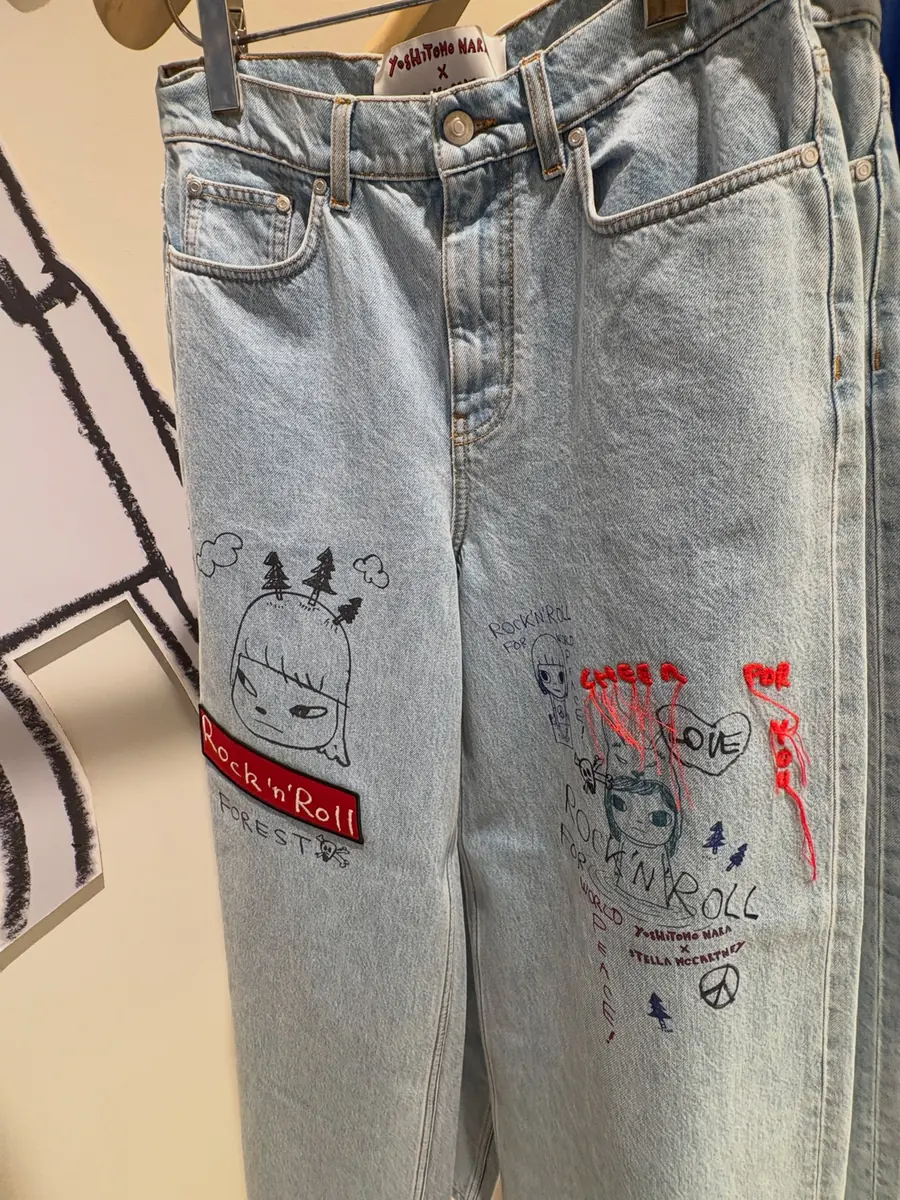
The Graphic Embroidered Jeans combine a familiar straight-leg, five-pocket shape with graphic print and embroidered details. The official description specifies organic cotton denim and a 100% cotton composition. It distinguishes the two treatments; it does not describe every illustrated element as embroidery.
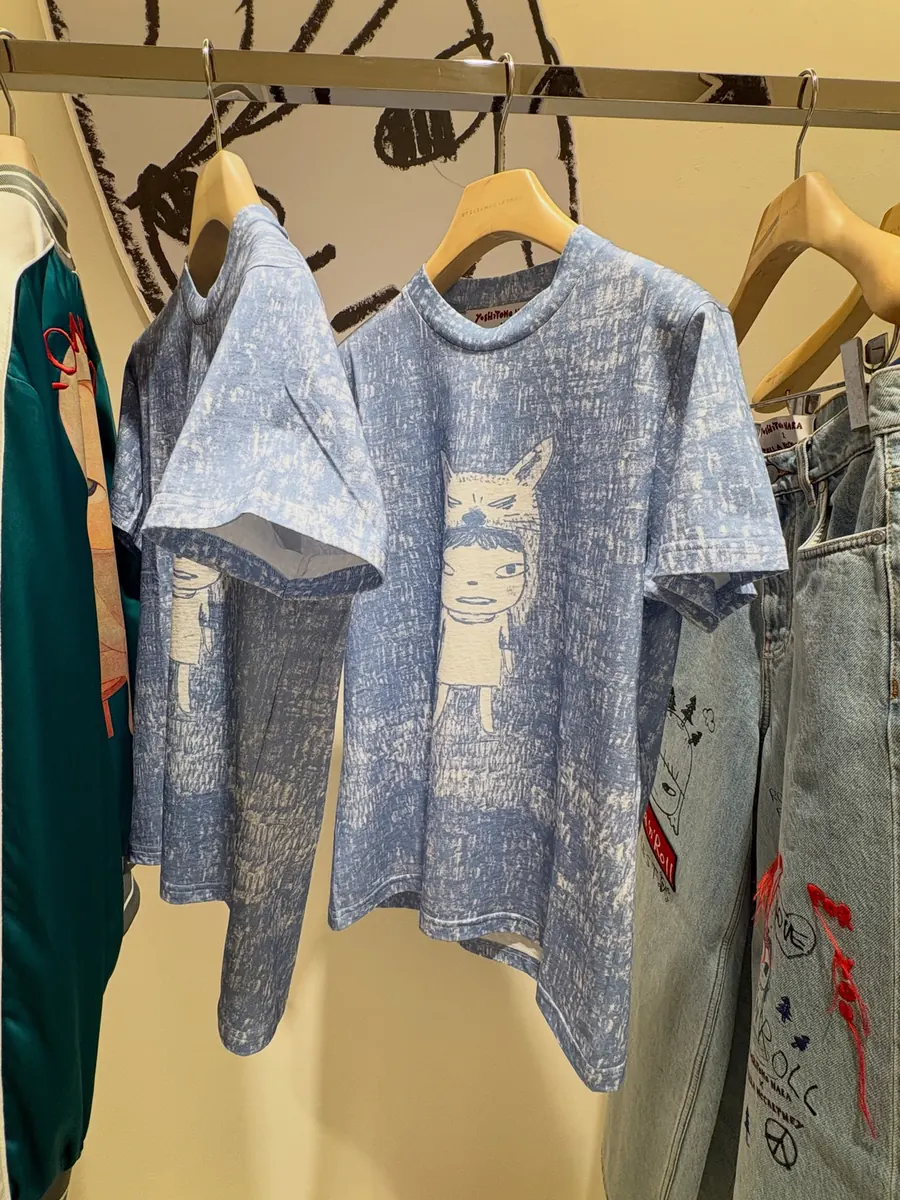
The photographed denim detail shows small figures, lettering and red accents distributed over the legs, rather than one image filling a large rectangular area. That distribution changes the viewing experience. A person may notice one motif first, then another as the garment moves or is seen from a different angle. The jeans behave more like a collection of fragments than a single poster transferred to fabric.
For anyone comparing pieces, that distinction is useful: a quieter, scattered arrangement can feel very different to a large back graphic, even when both use the same artist’s visual vocabulary. The subject is not simply how much artwork is present, but how it meets the body.
Crossbody bag: when a face becomes the object’s identity
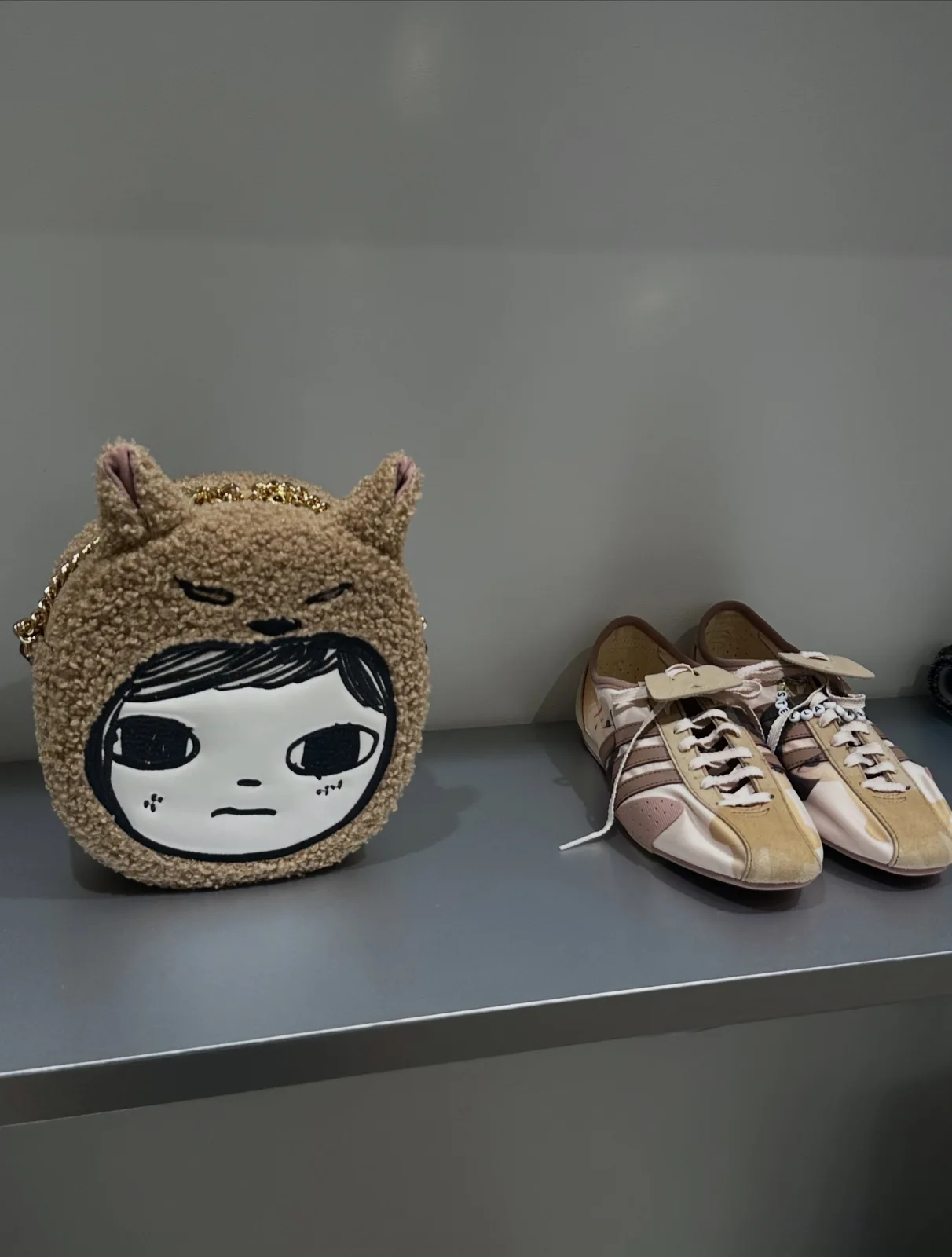
The Graphic Textured Crossbody Bag moves the collaboration from clothing into a small, independent object. The product description identifies nappa-effect patchwork and embroidered details, using vegan leather alternatives. “Nappa-effect” describes an appearance; it should not be read as a claim that the bag is made from animal nappa leather.
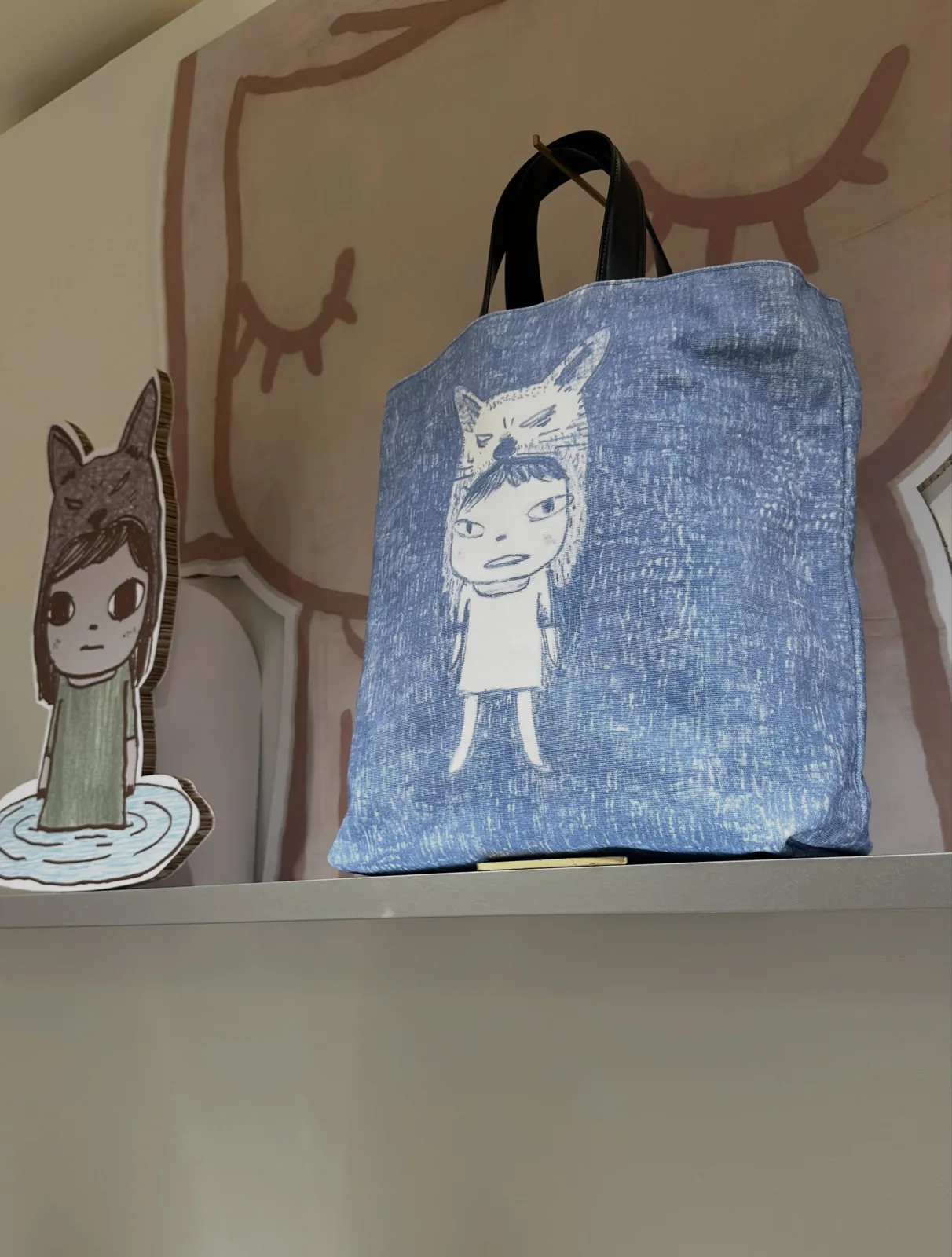
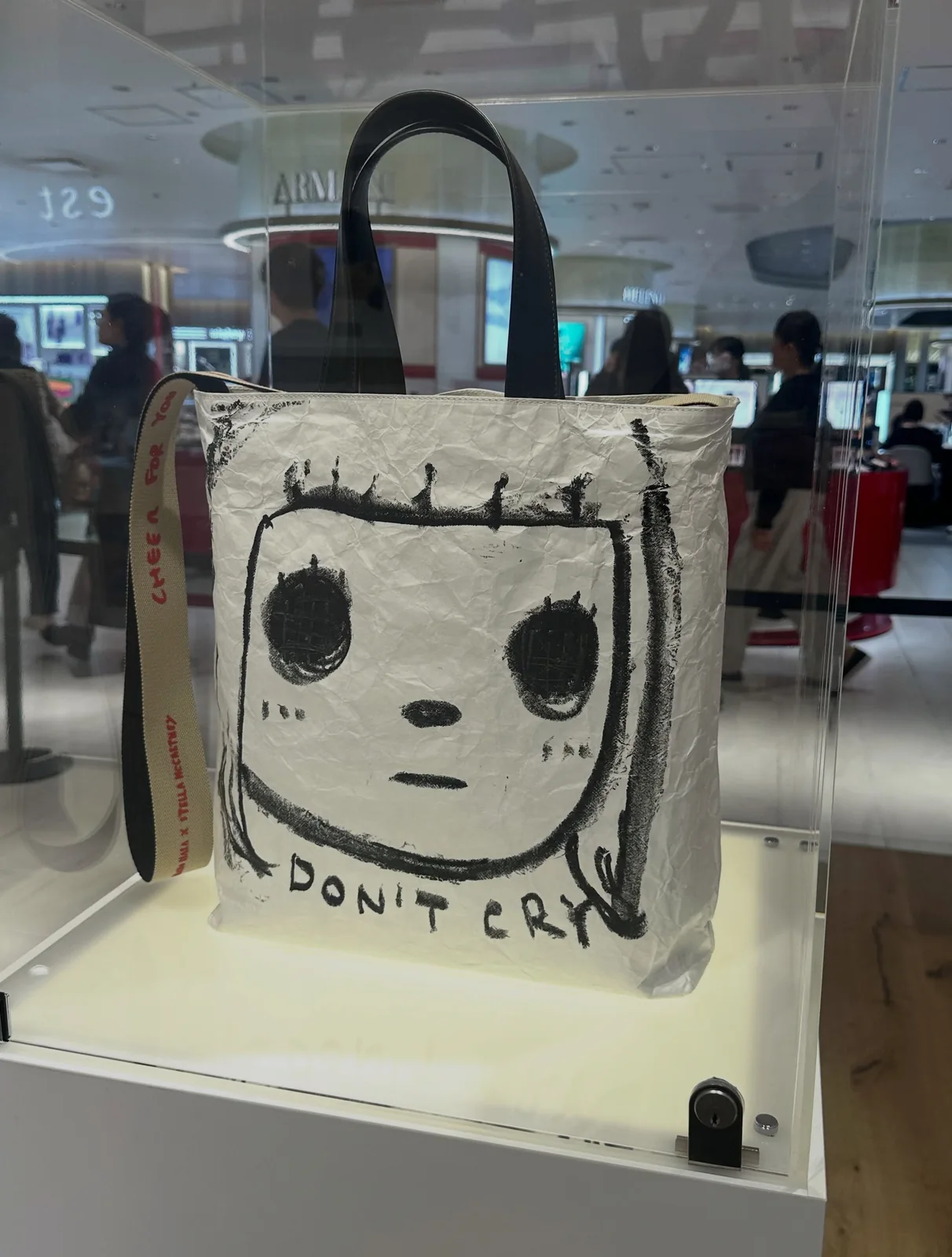
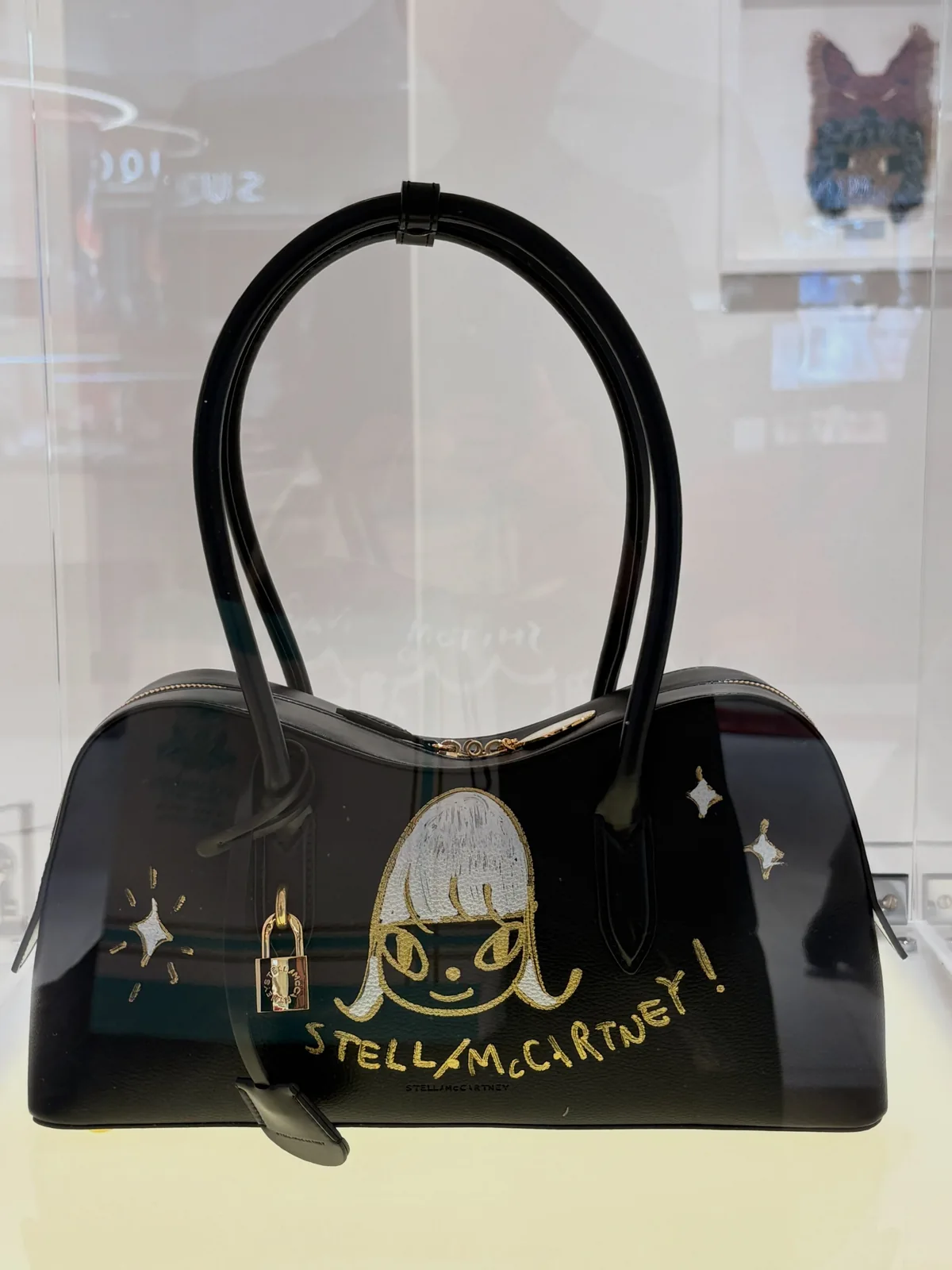
The Tokyo photographs reveal several approaches to carrying an image: a face across a light tote, a pale figure on a denim-look tote, and characters against a dark bag. A face occupying the front of a bag creates an especially direct encounter. Instead of being an illustration on an anonymous accessory, it becomes the feature by which the object is recognised.
The pop-up also has a specifically identified exclusive bag. That exclusivity belongs to the model named by Isetan, not automatically to every bag in the collaboration or to every visually similar product photographed in the store.
Tokyo trainers: Nara, Stella McCartney and adidas
The Tokyo Graphic Print Trainer brings a third collaborator into the conversation: adidas. The official description identifies the low-top Tokyo silhouette, printed artwork and Alter Suede, the brand’s vegan alternative to suede.
A trainer offers a smaller, more interrupted surface than a sweatshirt. Panels, laces and the low profile break up the available space, so artwork becomes part of a wearable design rather than a large frontal image. The result also places the collaboration in a different daily setting: a pair of shoes can sit below otherwise restrained clothing, allowing the graphic element to appear in a more incidental way.
Material descriptions should remain specific to the item. The collection announcement mentions organic cotton, responsibly sourced wool and vegan bags, but those claims do not mean that every piece shares one composition or one manufacturing process.
Tokyo’s pop-up turns the collection into an environment
The official Isetan announcement places the presentation at Isetan The Space, second floor of the Isetan Shinjuku Main Building, from 11 November to 8 December 2026. The address is 3-14-1 Shinjuku, Shinjuku-ku, Tokyo. Isetan identifies a knit and a bag as Shinjuku exclusives; its luxury listing names the knit as ‘Too Young To Die’ and the bag as an Alter Shearling and Alter Mat patchwork Face Bag with embroidery.
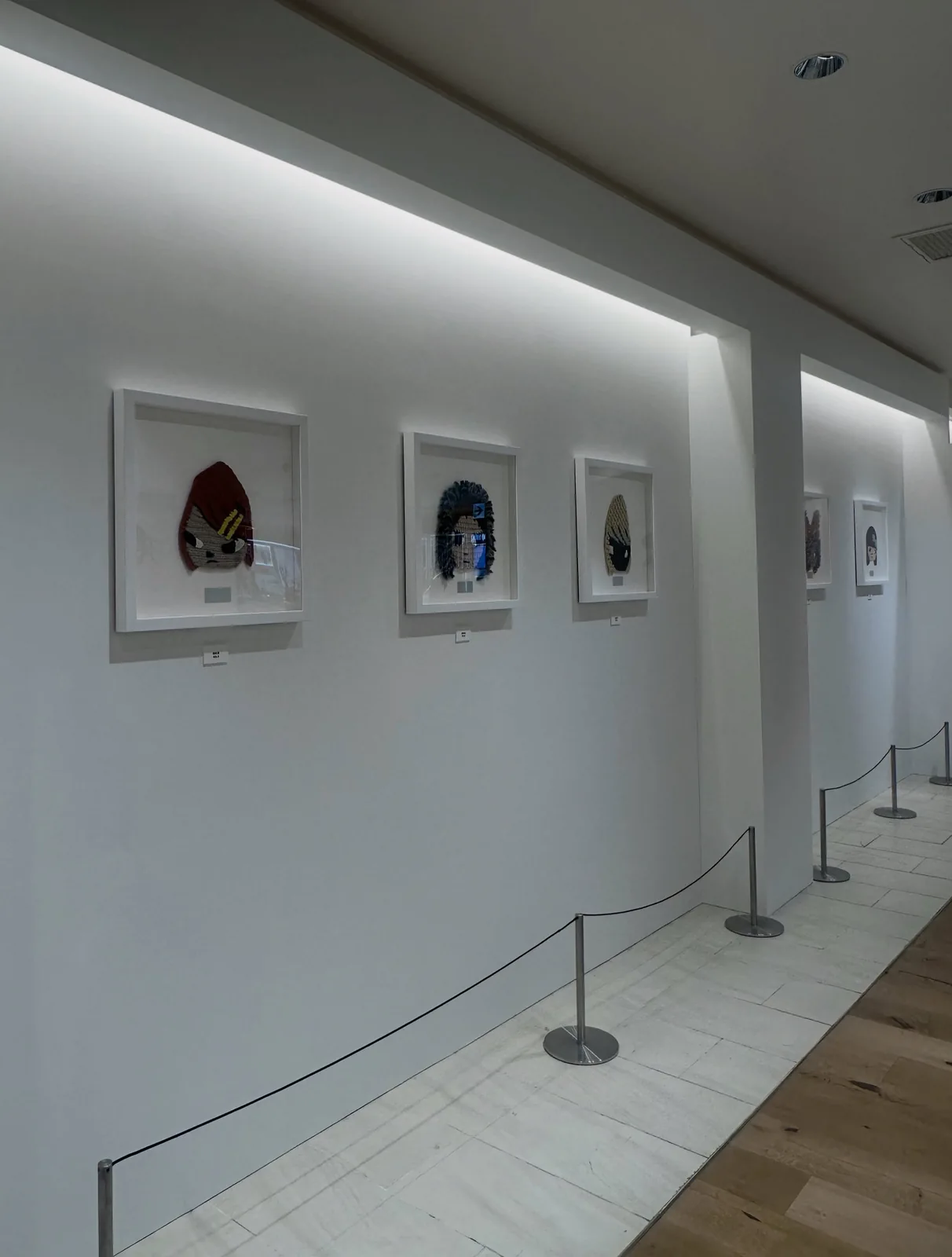
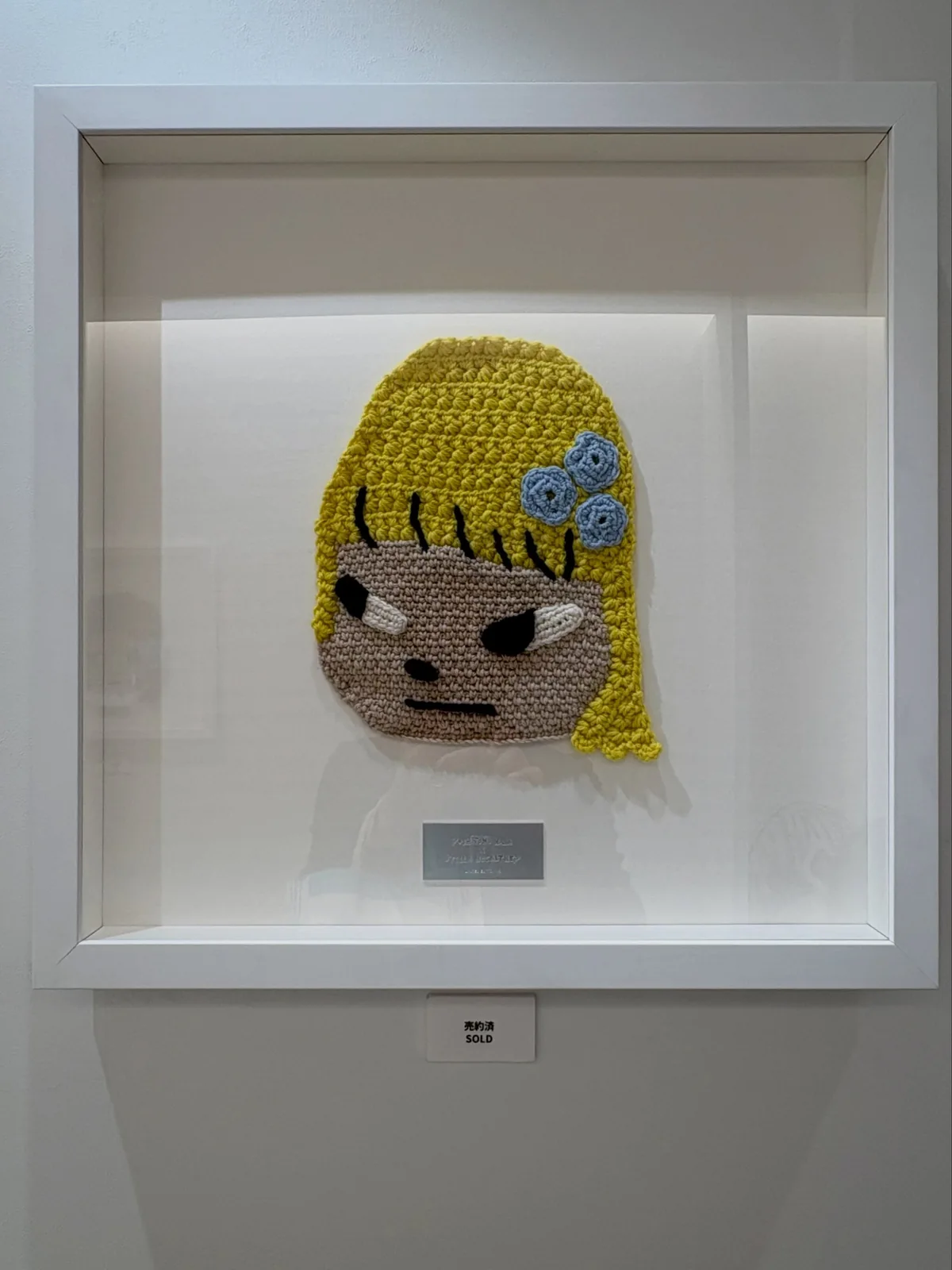
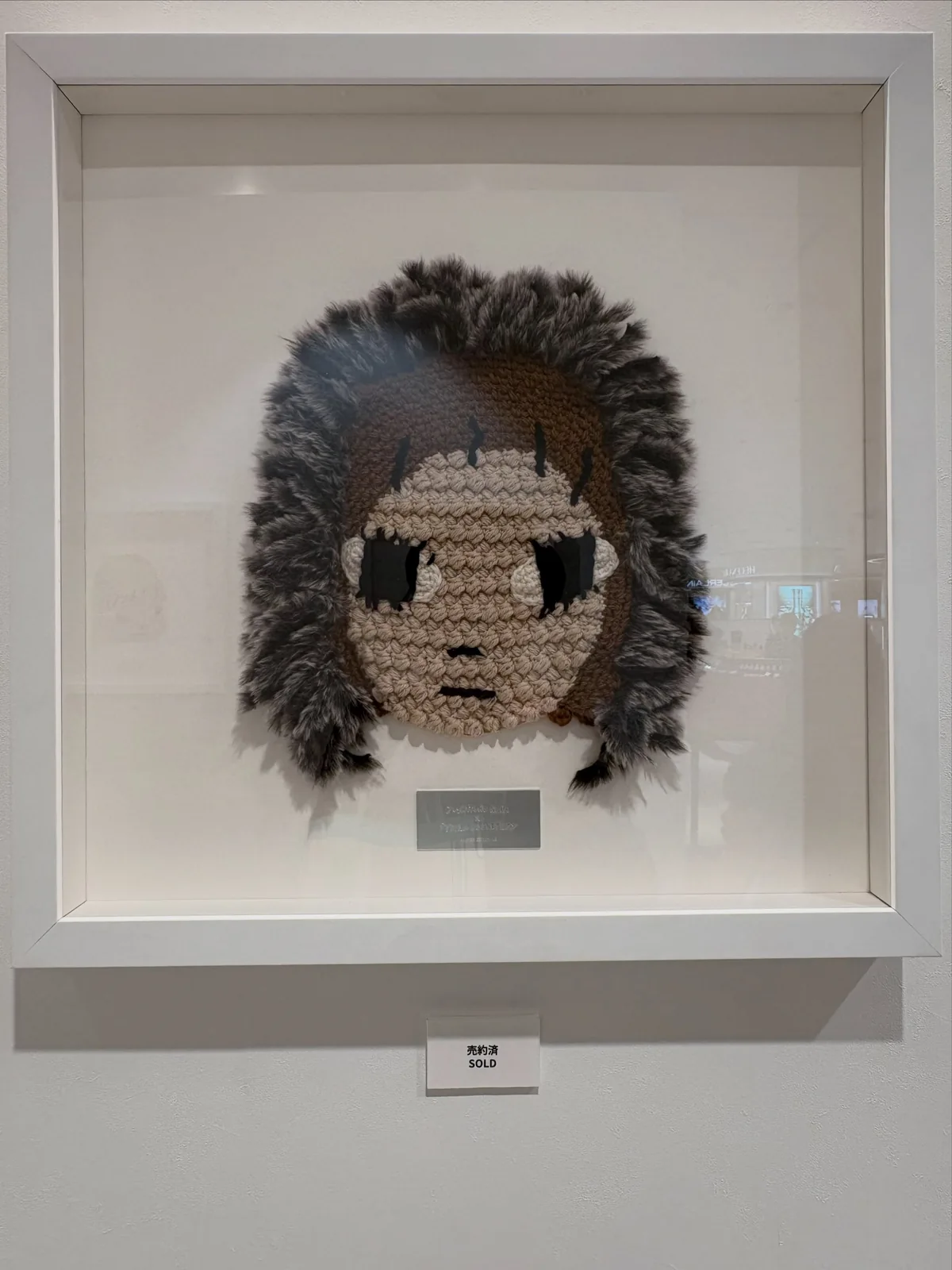
In the display photographs, oversized character cut-outs stand beside rails and shelves. Drawn trees, clouds and handwritten-style collaboration lettering carry the same language across the walls. Framed, textile-like faces introduce another change of scale. A visitor can move between a large figure, a garment-sized image and a face held in the hand.
This makes the presentation worth examining as exhibition design as well as retail. The setting lets the collection’s imagery occupy real space without suggesting that the shop is a museum retrospective. Isetan’s special admission arrangements were published for opening day; they should not be treated as standing rules for every day of the pop-up.
The November launch dates need a regional distinction
There are two dates in the brand’s announcements. The English-language collection page gives 11 November 2026 for worldwide availability. The Japanese announcement instead describes an advance Aoyama release on 11 November, followed by worldwide availability on 25 November.
The Tokyo opening on 11 November is confirmed by Isetan; the two regional brand announcements give different dates for the wider rollout. For a purchase outside Japan, the relevant local boutique or regional product page is the practical reference. The Japanese announcement also lists a Hankyu Umeda pop-up from 25 November to 1 December, extending the collection’s presentation beyond Tokyo.
The campaign gives the drawings another kind of movement
The campaign has a further life on screen. FORMAT.LDN, the studio responsible for its motion work, describes a process involving motion design, animation, compositing and edits. Its account explains that early experiments brought illustrations into fashion sequences, before developing standalone character teasers. It also records short campaign films and individual look vignettes.
That approach makes sense alongside the clothes. On a garment, the wearer supplies movement; in the campaign, animation can give a small gesture its own timing. FORMAT describes an effort to preserve the drawings’ simplicity and personality. The credit belongs to this production process, rather than implying that Nara personally animated every sequence.
How to look at the collaboration as a collector
A fashion collaboration offers a particular relationship with an artist’s imagery: it can be worn, handled and integrated into daily life. That is a different proposition from owning a painting, an authorised print or a numbered sculpture. A garment’s authenticity, composition, size, condition and original product identification matter in their own right.
The limited-edition description does not establish a signed edition, an individually numbered object or a disclosed production total. Nor does it establish future resale demand. The more rewarding question is which translation of Nara’s drawing holds your attention: the isolated character on a hoodie, lettering made tactile through embroidery, scattered denim motifs, or a bag that seems to have a face of its own.
A Rock’n’Roll Forest is strongest when those differences remain visible. It provides several ways to live with an image, rather than one image repeated on interchangeable merchandise. The clothing, objects, physical setting and animation each change how we meet Nara’s characters—and how those characters seem to meet us.