
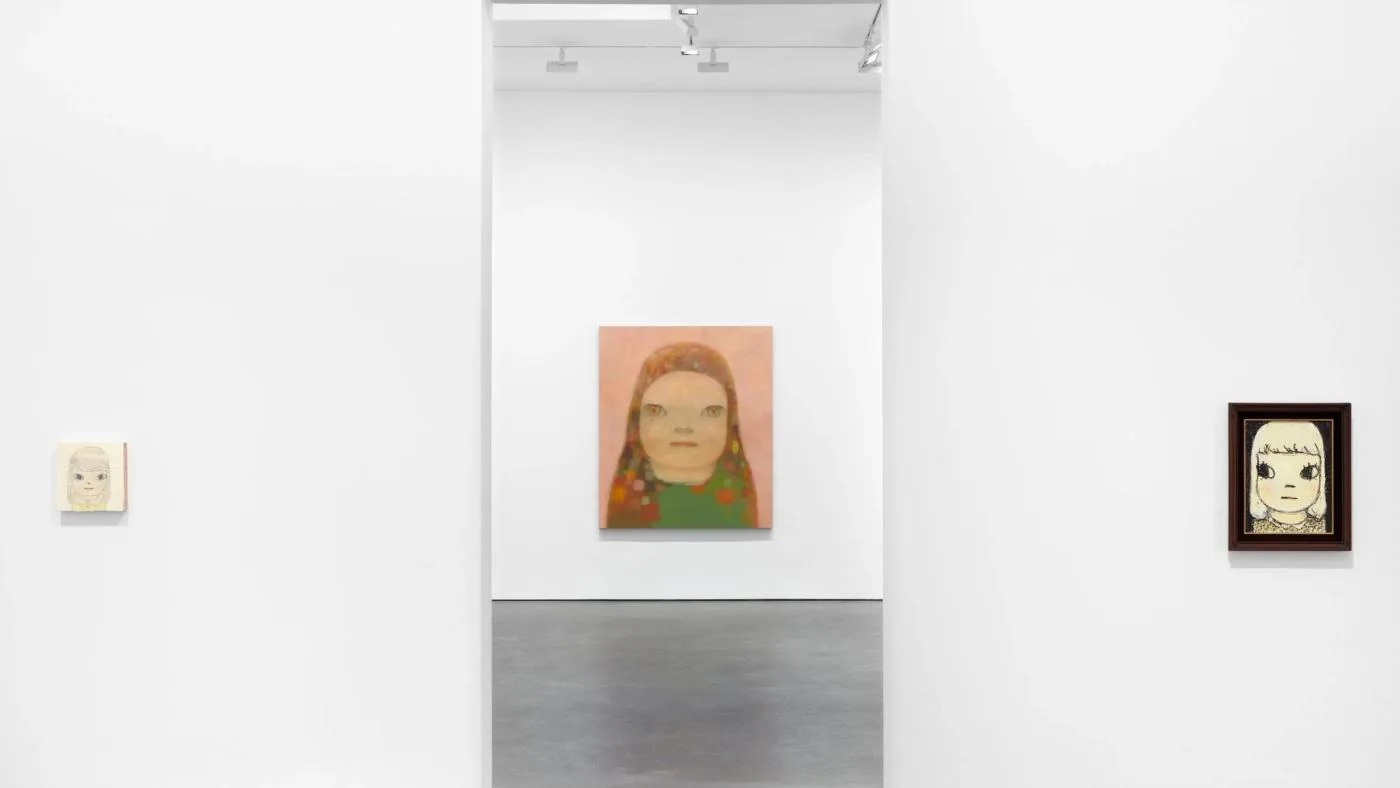
From November 5 to December 12, 2026, David Zwirner is showing nearly one hundred works by Yoshitomo Nara across two Chelsea spaces. It is his first solo exhibition with the gallery and his first major New York solo show in nearly a decade. Start with thirteen white bronze heads on West 19th Street, then walk to West 20th Street for paintings and drawings.
West 19th Street: thirteen heads in bronze
The thirteen sculptures date from 2024. Their white surfaces come from urethane paint applied to bronze. The gallery connects them to the snowy forests of Mount Hakkōda, near Nara’s hometown of Hirosaki. For Nara, the snow covers a living landscape in which trees, rocks and water are connected. In the gallery, walking around the heads lets you see how shadows change the expression on a smooth white surface.
Compare Sleepy Eyes, at 146.5 cm high, with the 137.2 cm Round-Eyed Head. The titles direct attention to lowered eyelids in one and wide-open eyes in the other. Smiling spans 184 cm, while Both Side Now stands nearly 160 cm tall. The checklist records each of these works as an edition of three plus two artist’s proofs.
Gallery press release · Works, materials and dimensions
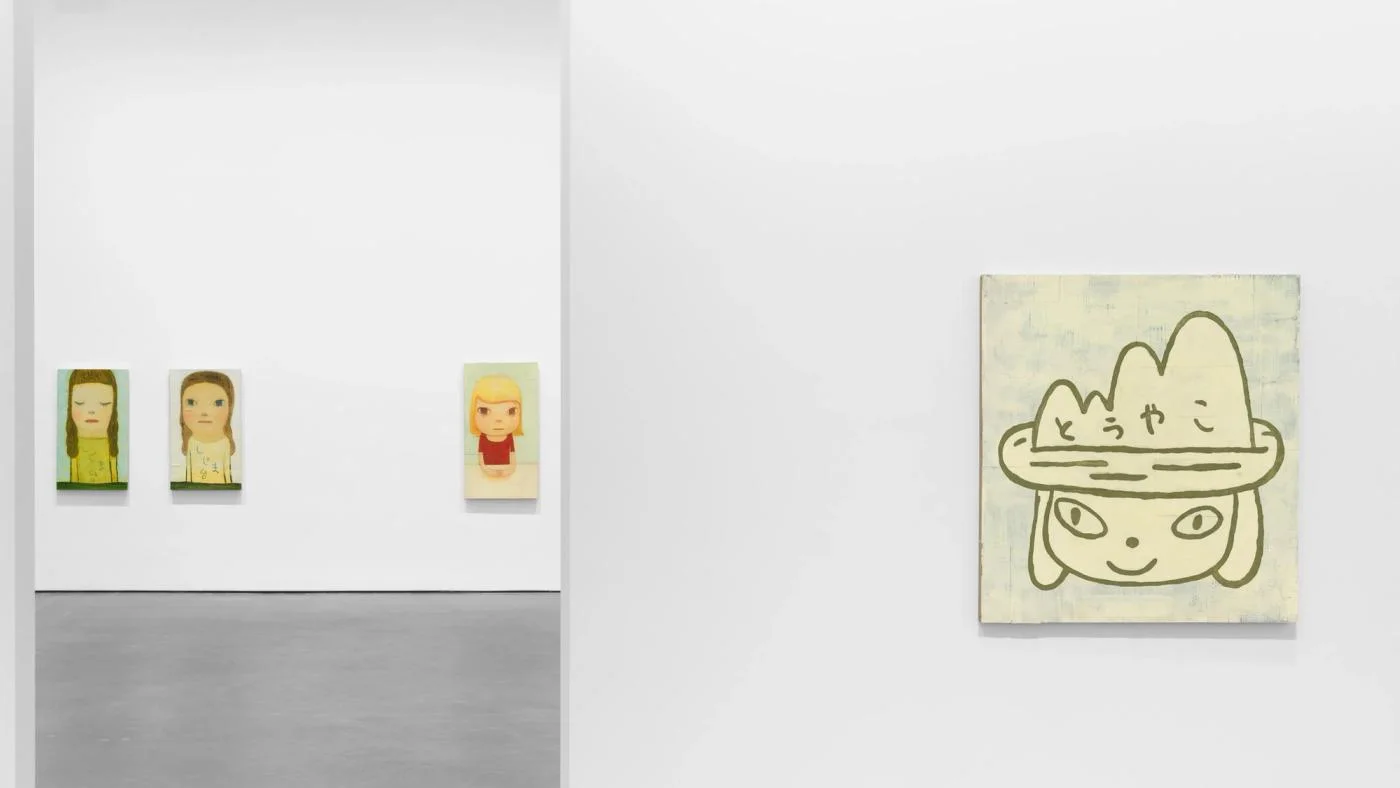
West 20th Street: from a paper envelope to a seven-foot canvas
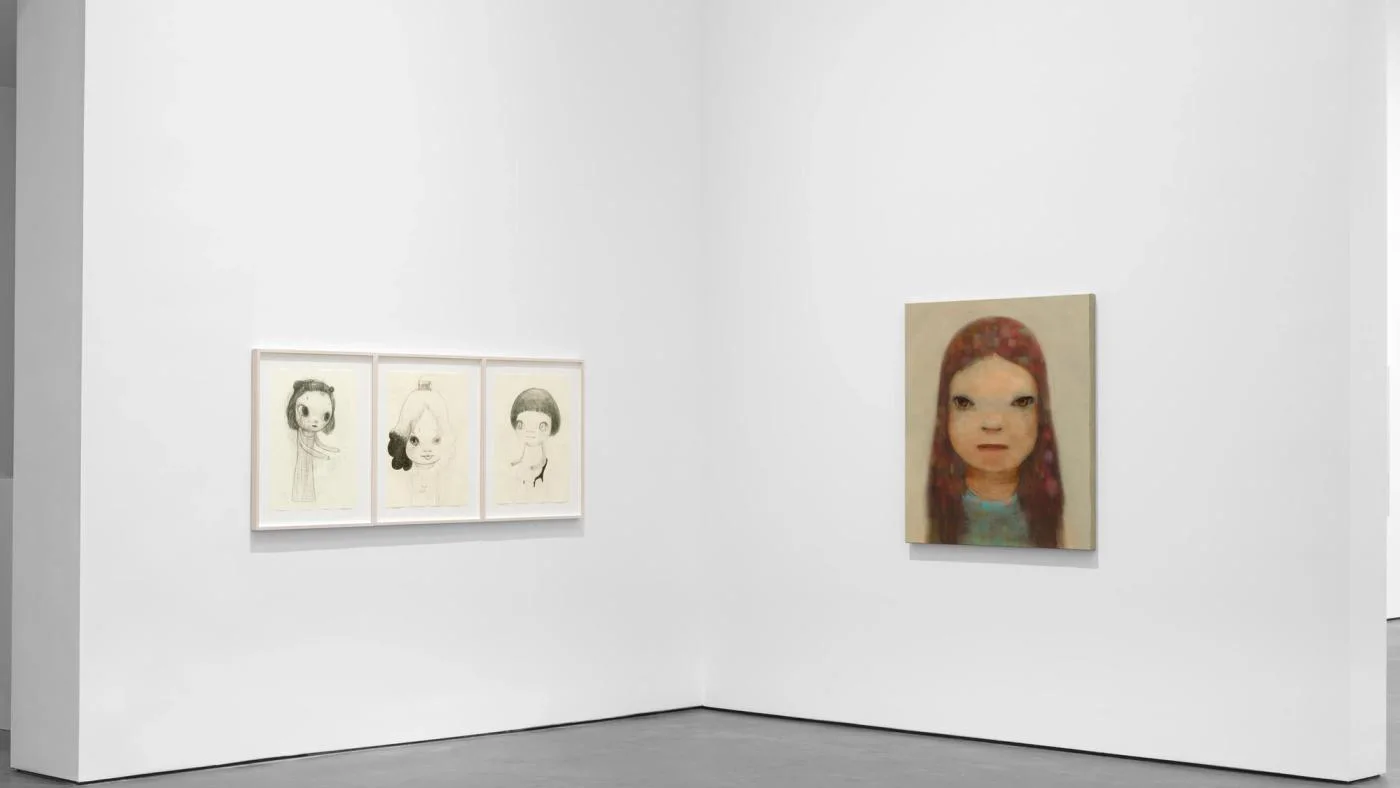
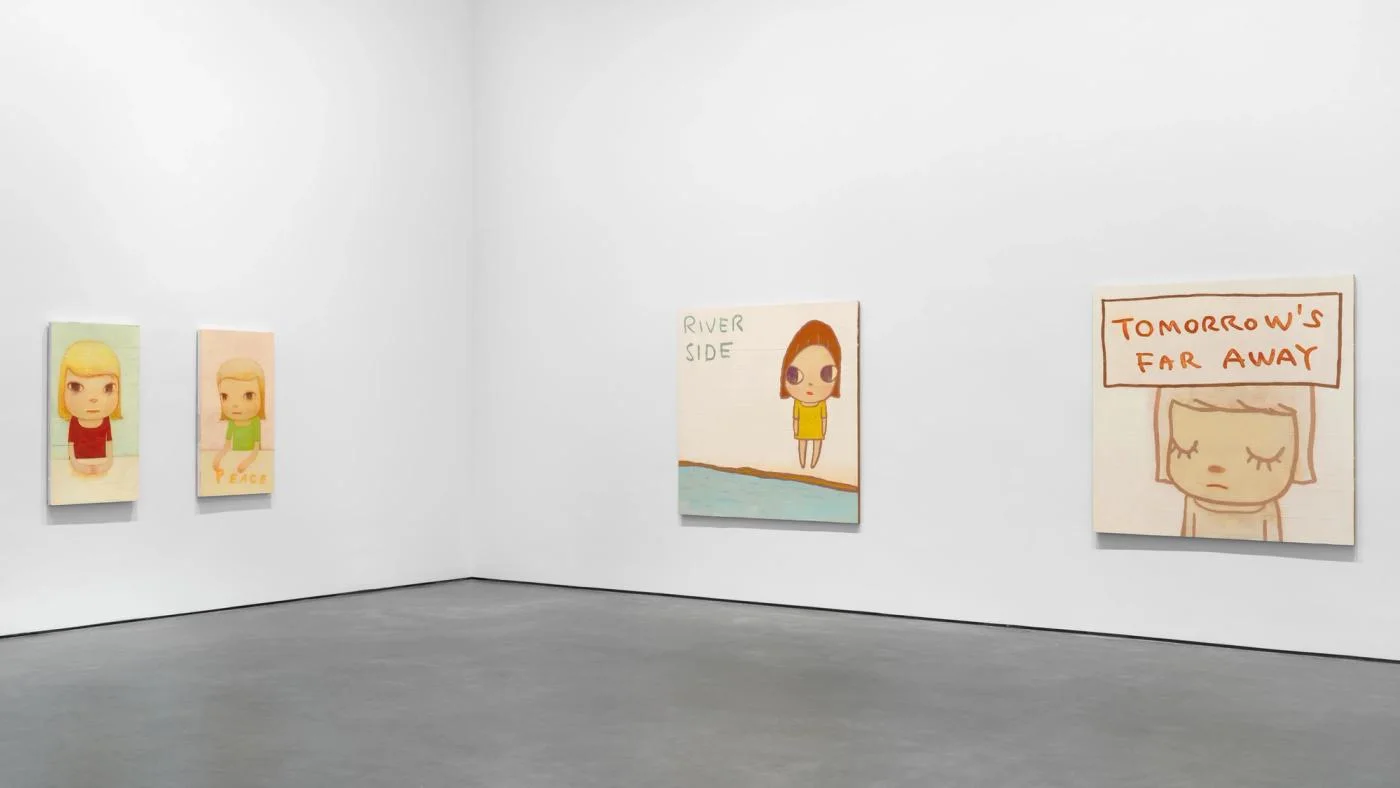
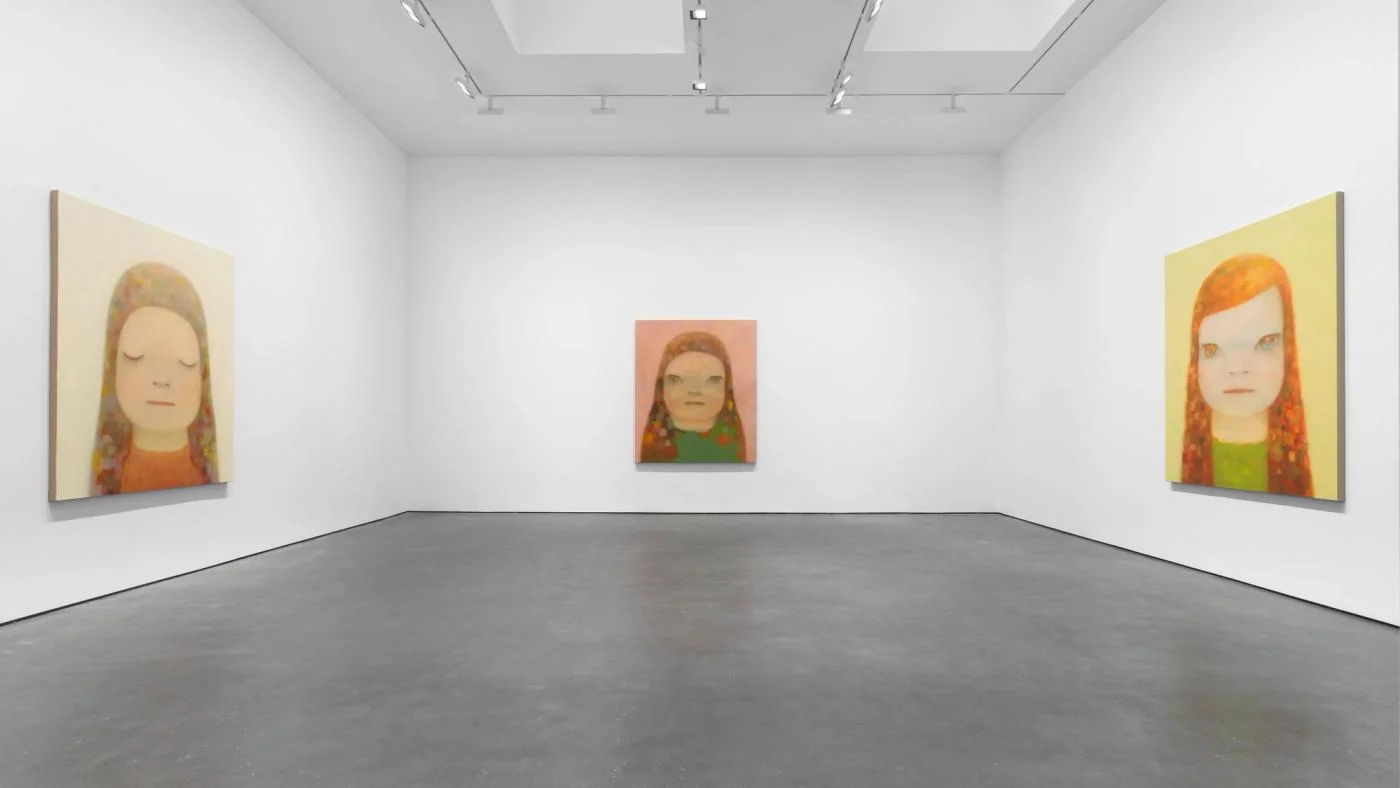
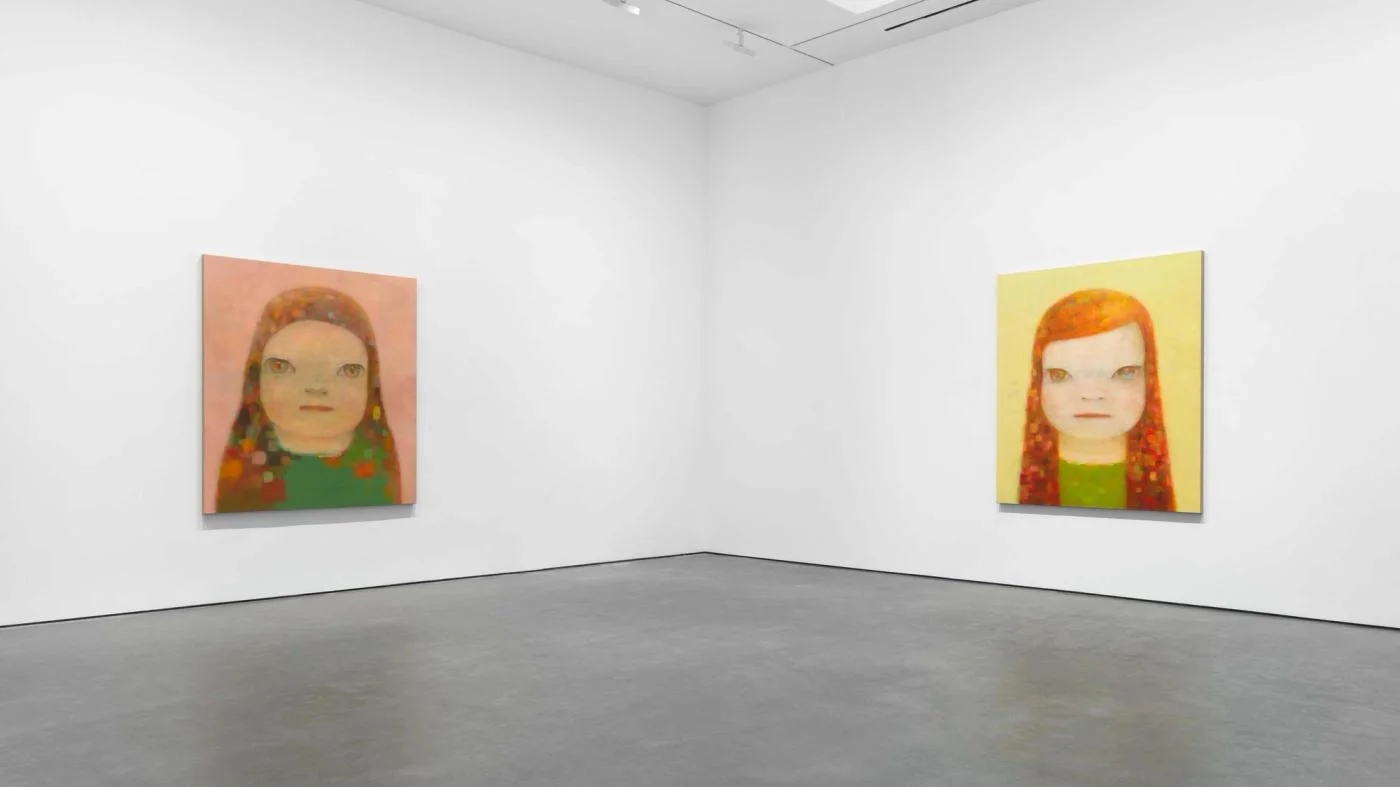
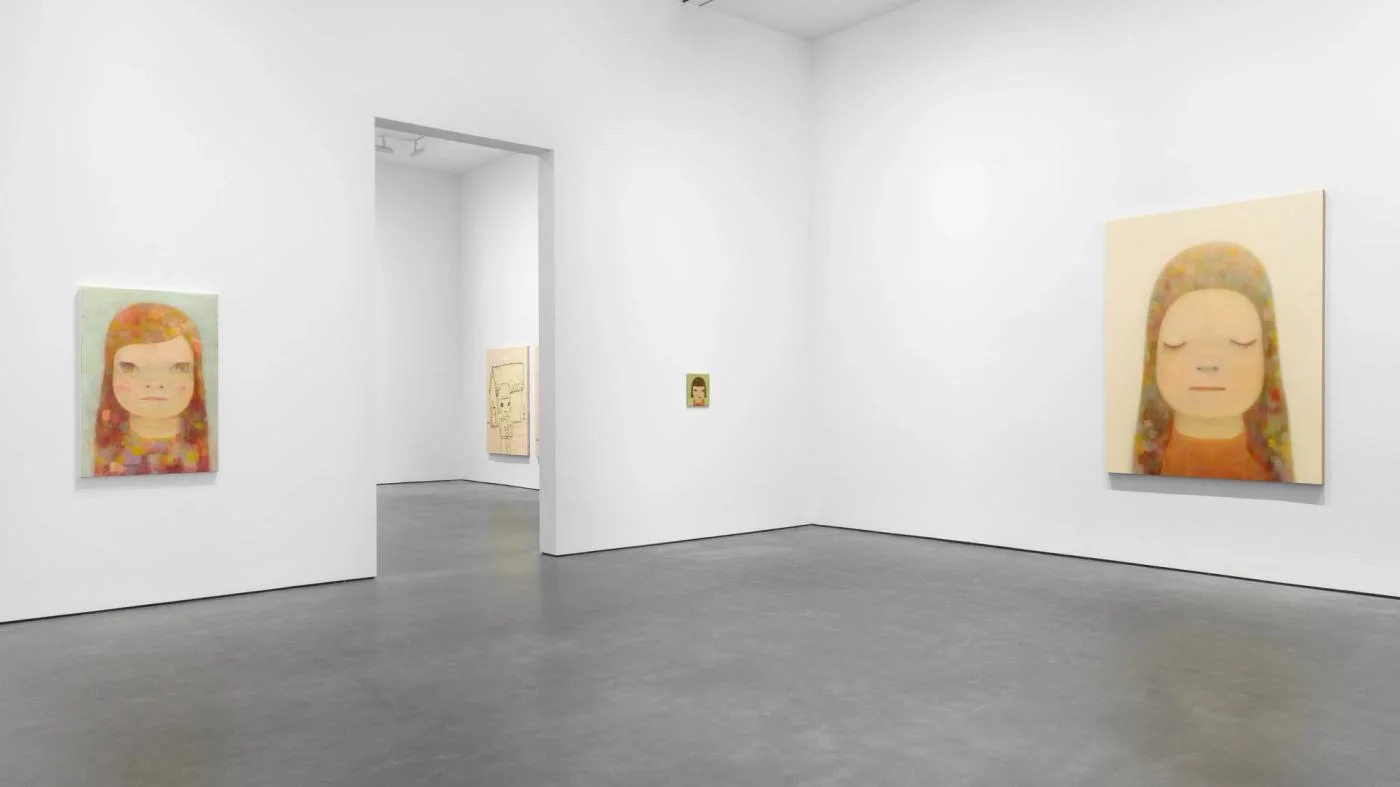
Two paintings made in 2026 make a good comparison. Young Yayoi is an acrylic on canvas measuring roughly 33.5 by 33.6 cm. Matryoshka measures 220.5 by 195.2 cm, as does Foggy Tale. After the Tears, at 120 by 109.5 cm, sits between those extremes. A small portrait draws you close. A large one gives you room to step back and see how the face is placed within the whole composition.
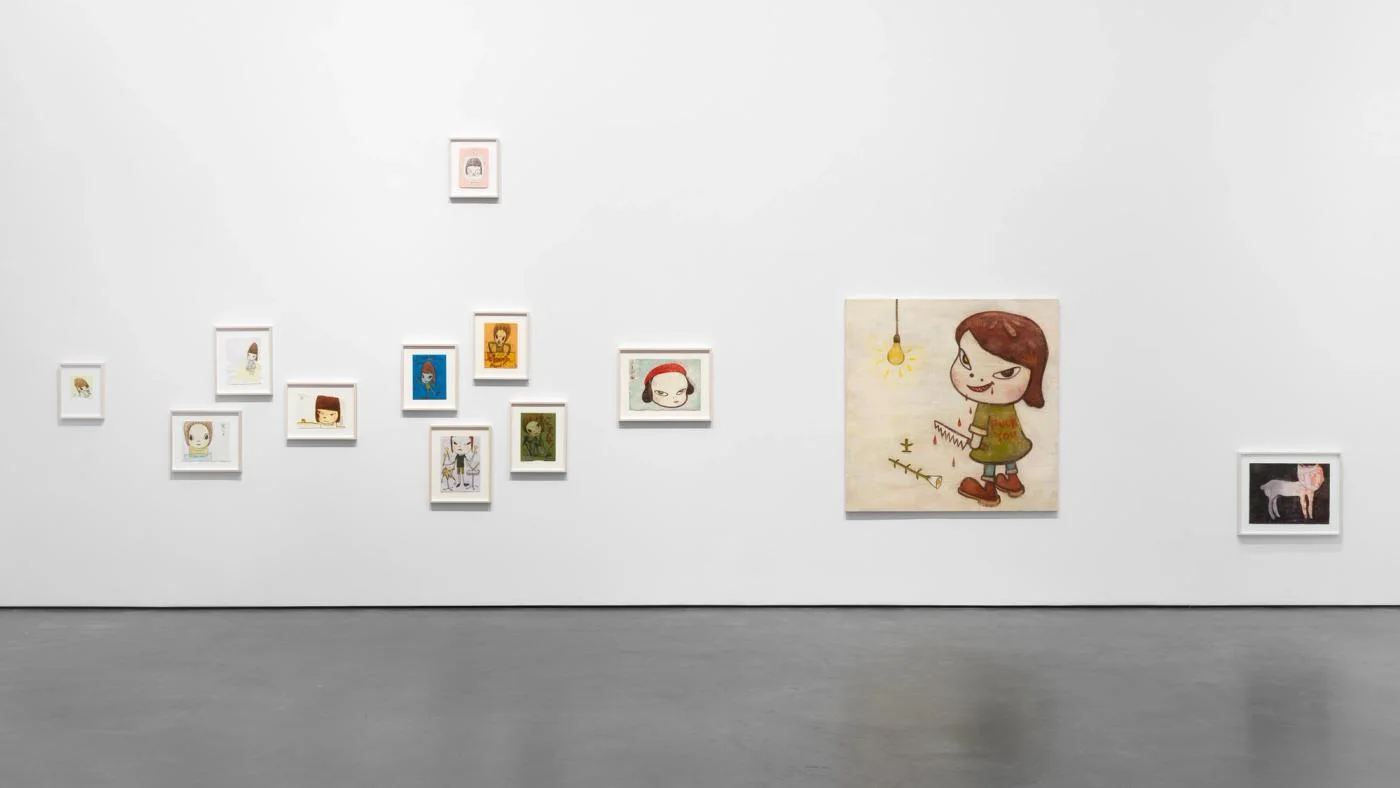
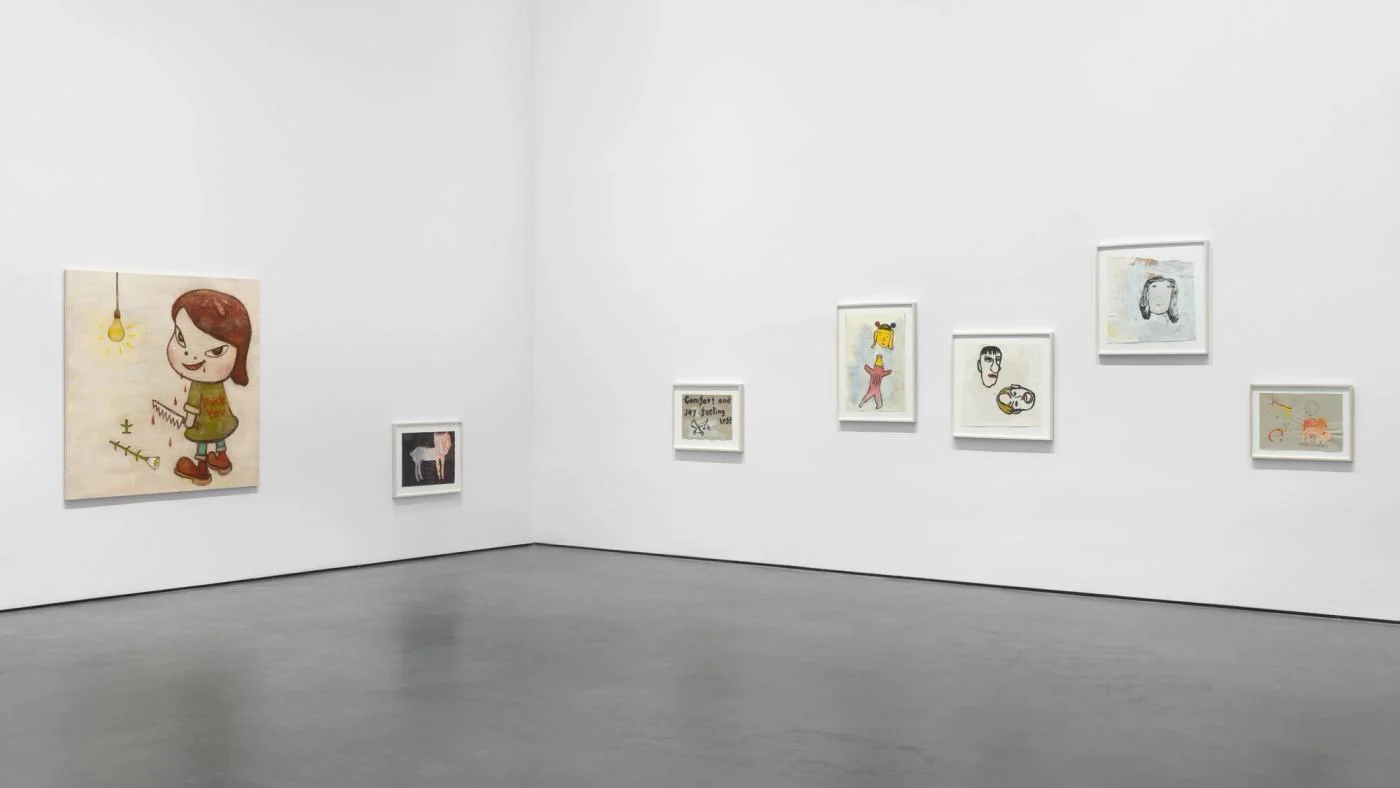
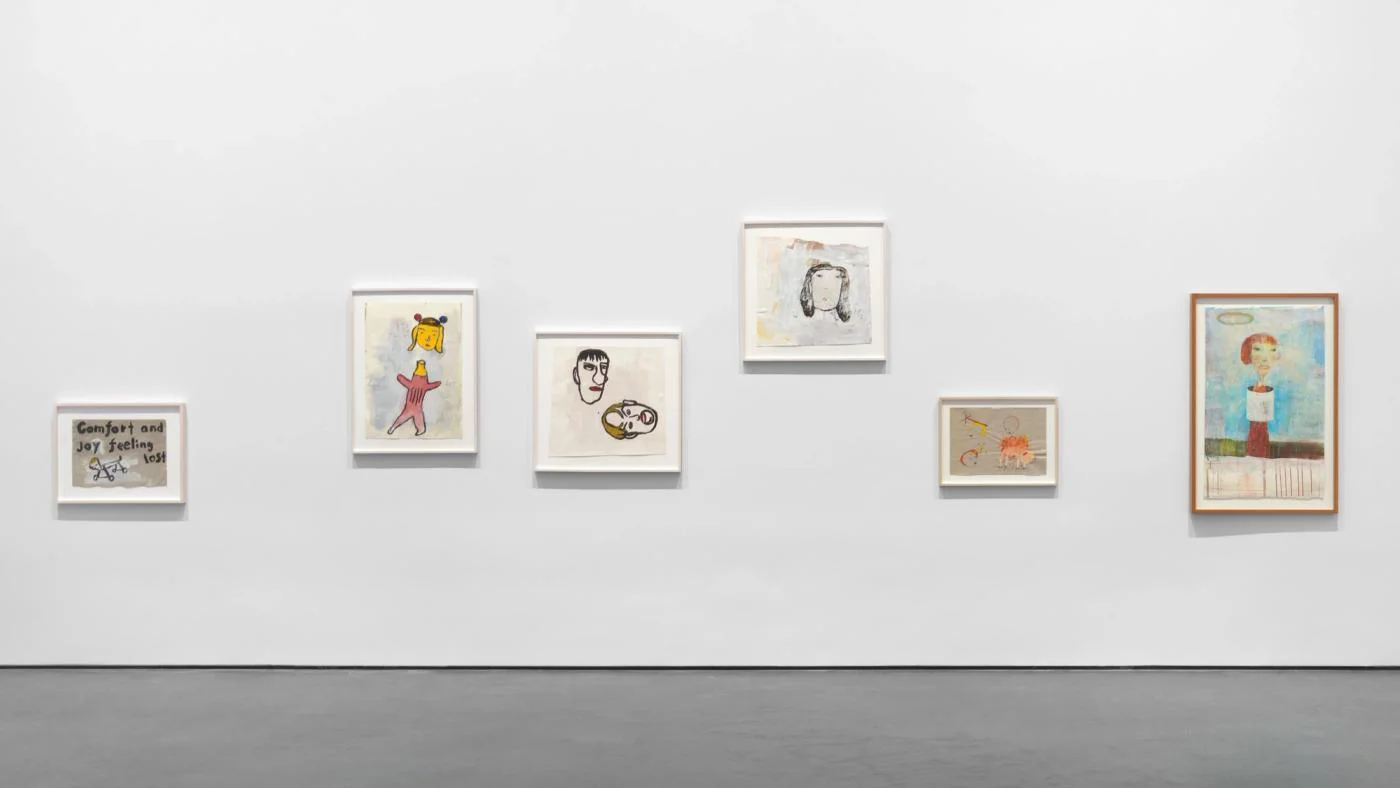
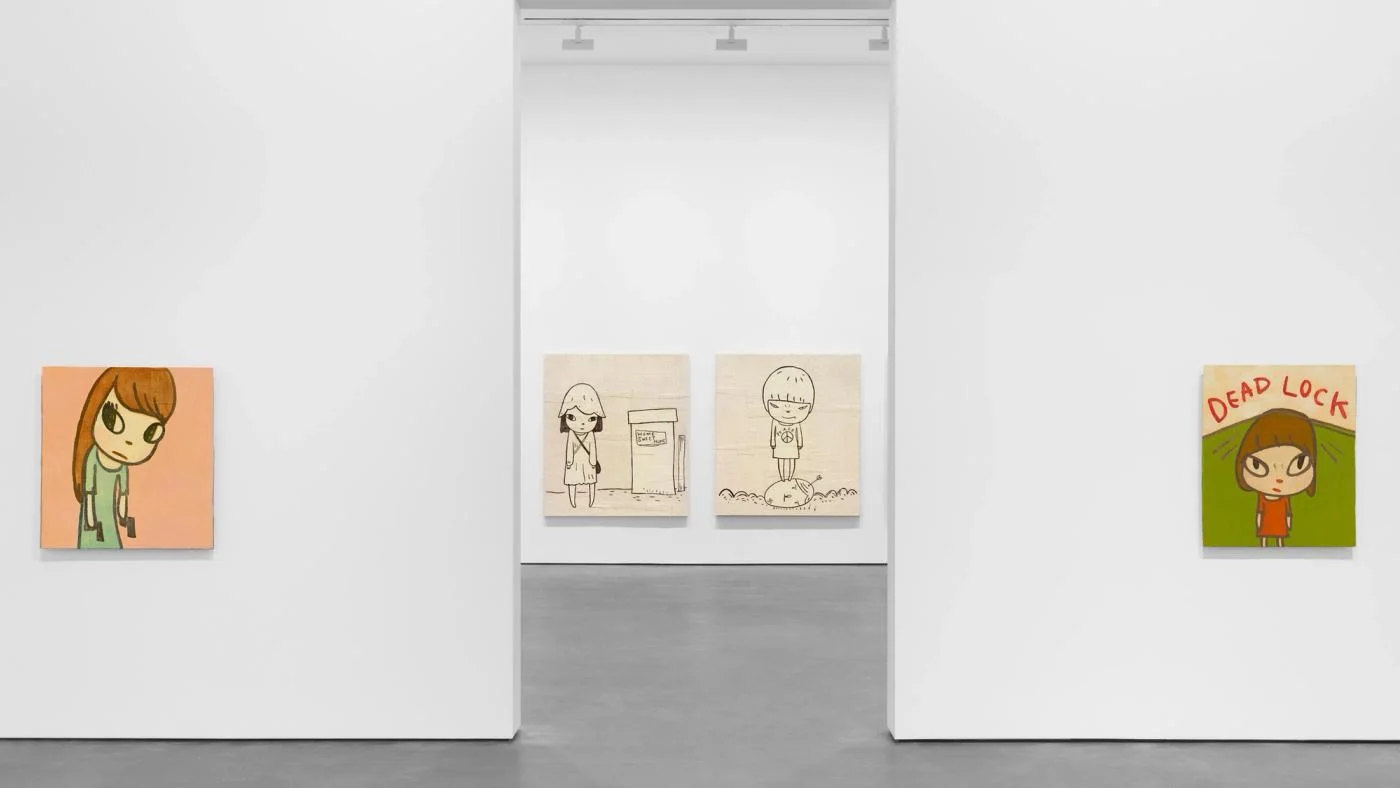
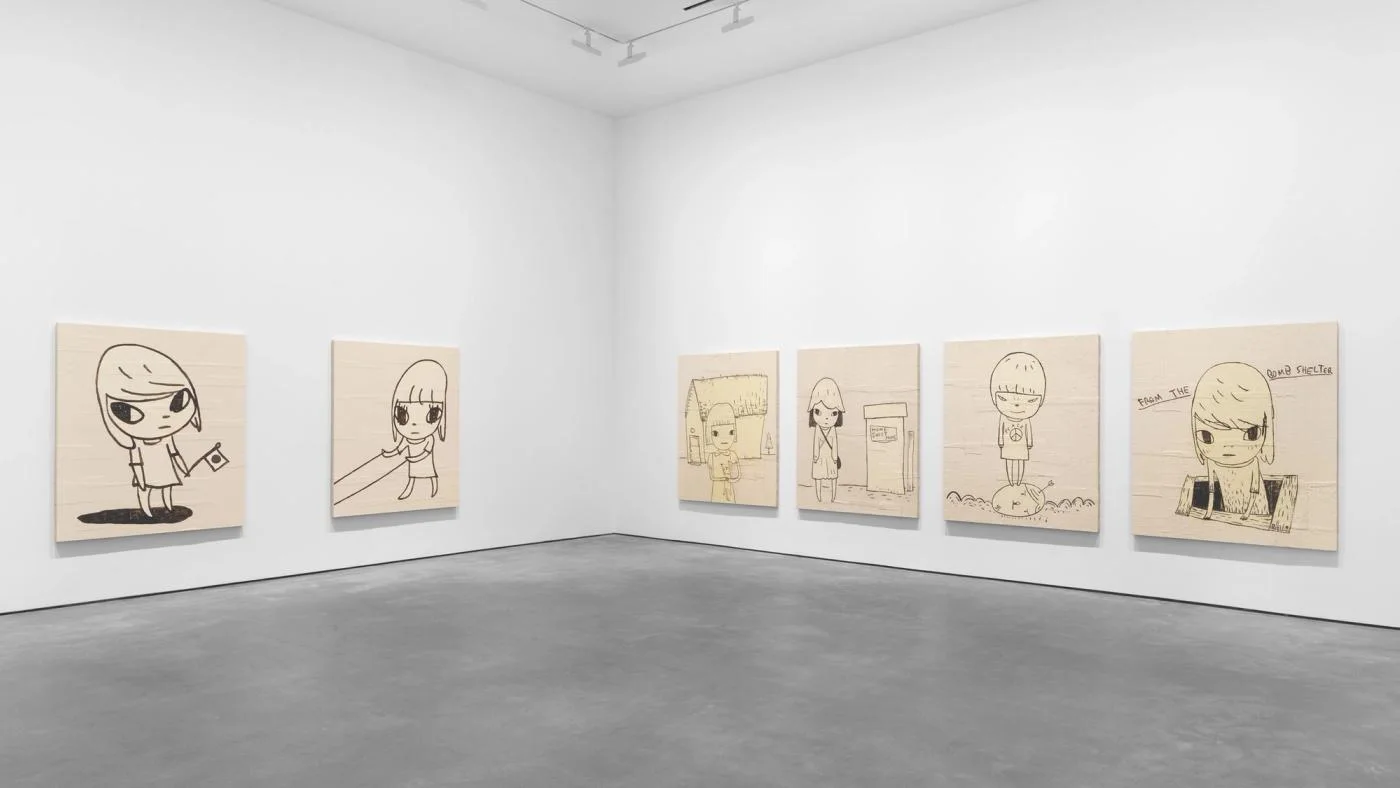
In Little Patriot and Little Leader (2026), Nara paints in acrylic over jute fabric collaged onto wood panels. An earlier example is Home; Sweet Home Gate; Peace Girl; From the Bomb Shelter, a four-part work made between 2017 and 2019. For Burn (2022), he instead used coloured pencil on a paper envelope with an adhesive label. Cloth, canvas and an everyday envelope give each image a different surface before you even consider its subject.
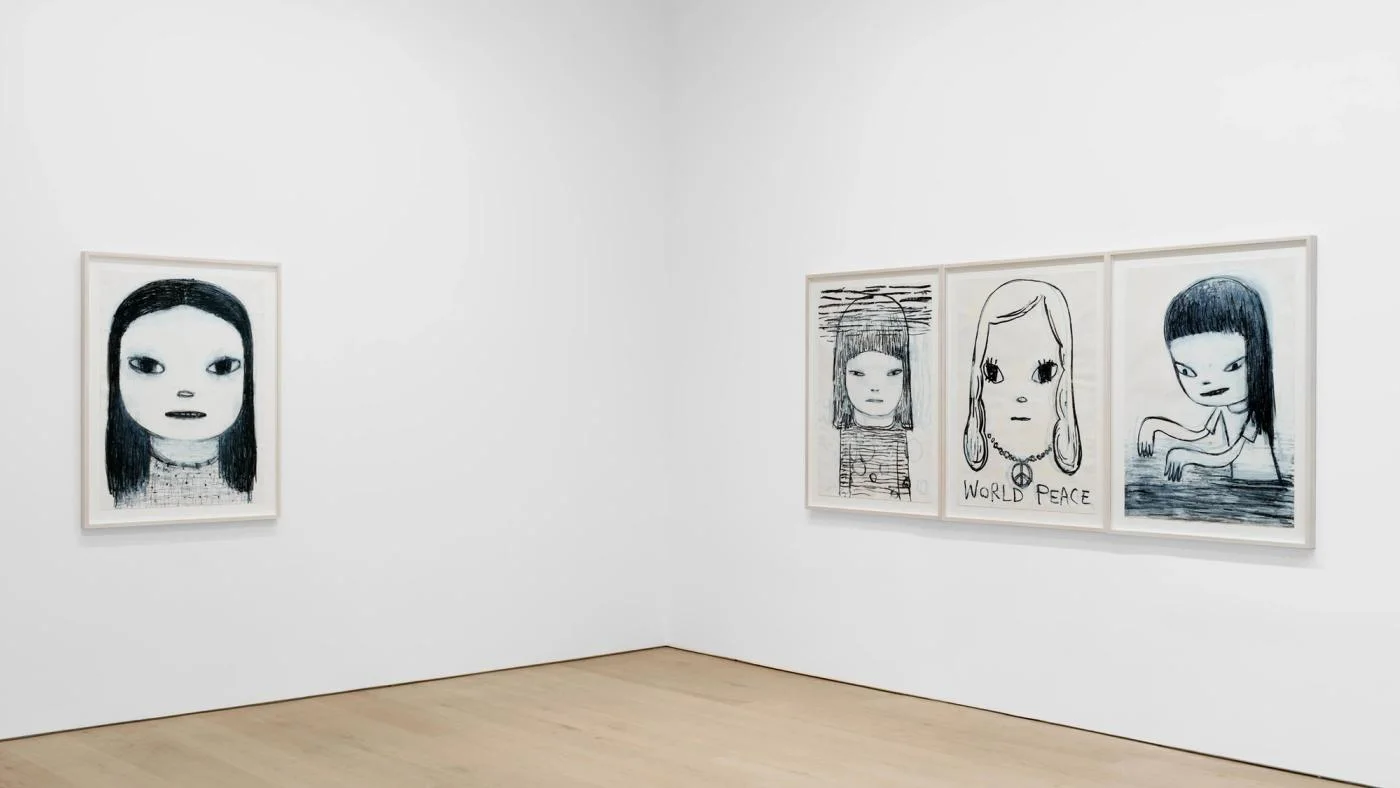
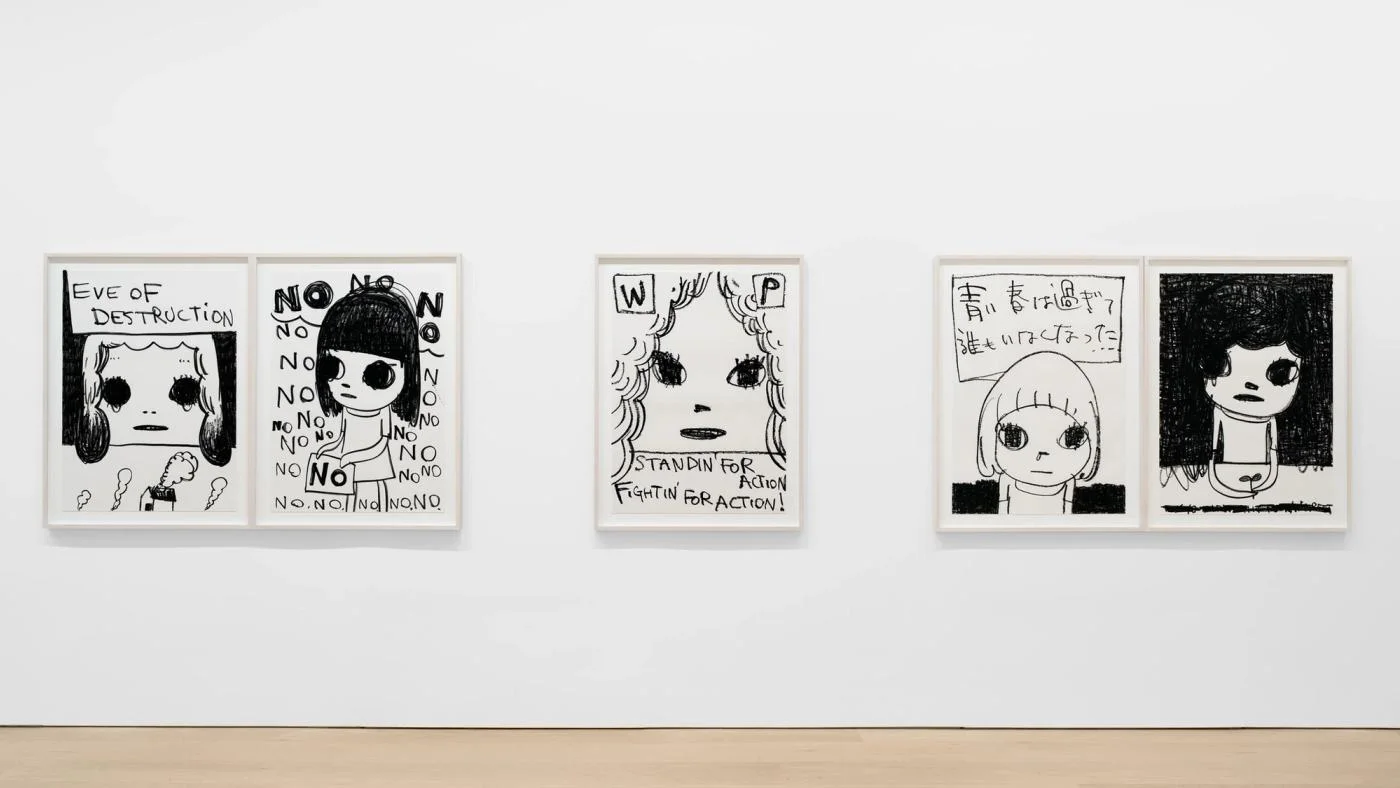
For a new group of monochrome drawings made in 2026, Nara used industrial oil-based paint sticks. Their broad, opaque lines offer a comparison with the coloured pencil marks in Burn. The gallery notes that a melody or lyric can give Nara the impulse for a drawing.
Aomori, music and the line
Nara was born in 1959 in Hirosaki, Aomori. As a child he heard folk, country and soul on US military radio. Years later, at the Kunstakademie Düsseldorf, his teacher A. R. Penck encouraged him to bring the freedom of drawing into his painting. These threads meet in the exhibition. The simple contour comes out of a way of working, and the rhythms of the line sometimes begin with music. Nara made a playlist for the New York show and suggests listening on shuffle.
Photographs, video and how to visit
The galleries are open Tuesday through Saturday, 10 am to 6 pm. Visit 533 West 19th Street for sculpture and 537 West 20th Street for painting and drawing. Admission is free. David Zwirner has published installation photographs and an illustrated checklist. The @artasform reel shows the New York preview. The footage in @p_a_p_a_y_a’s reel was filmed in Baden-Baden and Miami in 2025.
From Hirosaki to Düsseldorf
Born in Hirosaki, Aomori, in 1959, Nara earned his BFA at Aichi University of the Arts in 1985 and his MFA in 1987. He studied with A. R. Penck at the Kunstakademie Düsseldorf from 1988 to 1993. The gallery identifies this period with the development of his distinctive painting language. In the early 1990s he simplified compositions and allowed his brush the freedom he had already found with pencil and pen. That development helps explain why drawing, painting and sculpture form a connected story in the current exhibition.
What to examine in the photographs
Start with the space between the sculptures: the white setting lets each silhouette stand out. Compare shadows inside the eyes and beneath the chin. In the paintings, follow the boundary between a face and its background. Look for the support and joins in works incorporating jute fabric. Finally, compare each image with its catalogue dimensions: Young Yayoi and Matryoshka can appear similar in size on a screen, although their heights differ by more than a factor of six.
Selected works, materials and dimensions
The following details come from David Zwirner’s official exhibition checklist. Measurements are in centimetres, with sculptures listed as height × width × depth.
| Work | Year | Medium | cm |
|---|---|---|---|
| Young Yayoi | 2026 | Acrylic on canvas | 33.5 × 33.6 |
| After the Tears | 2026 | Acrylic on canvas | 120 × 109.5 |
| Matryoshka | 2026 | Acrylic on canvas | 220.5 × 195.2 |
| Little Patriot | 2026 | Acrylic on jute fabric collage on wood panel | 180.5 × 160.5 × 4.8 |
| Burn | 2022 | Colored pencil on paper envelope with adhesive label | 24 × 33 |
| Sleepy Eyes | 2024 | Urethane on bronze | 146.5 × 155.2 × 152.4 |
| Round-Eyed Head | 2024 | Urethane on bronze | 137.2 × 141.2 × 131.7 |