In this article
Why a flat work looks like a sphere
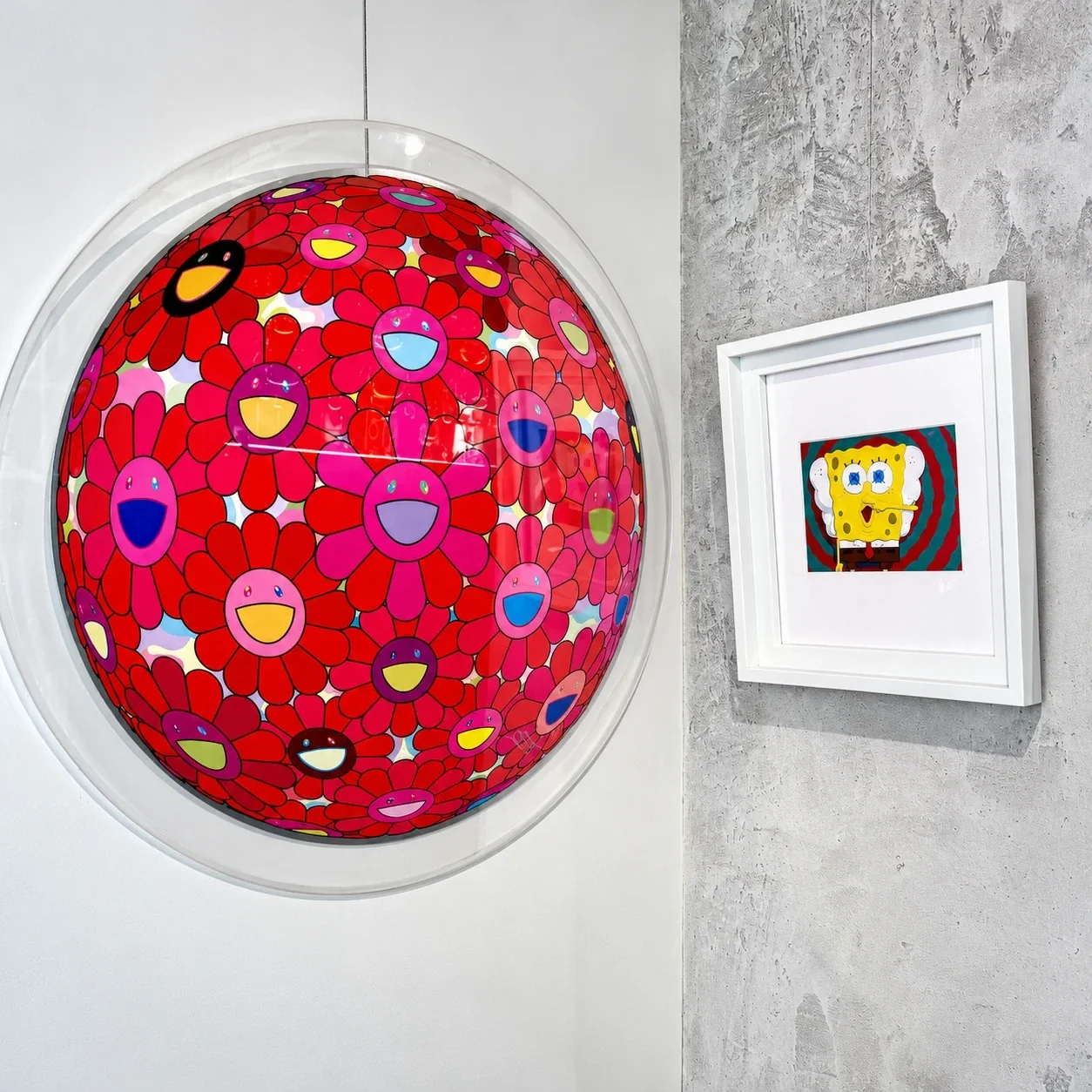
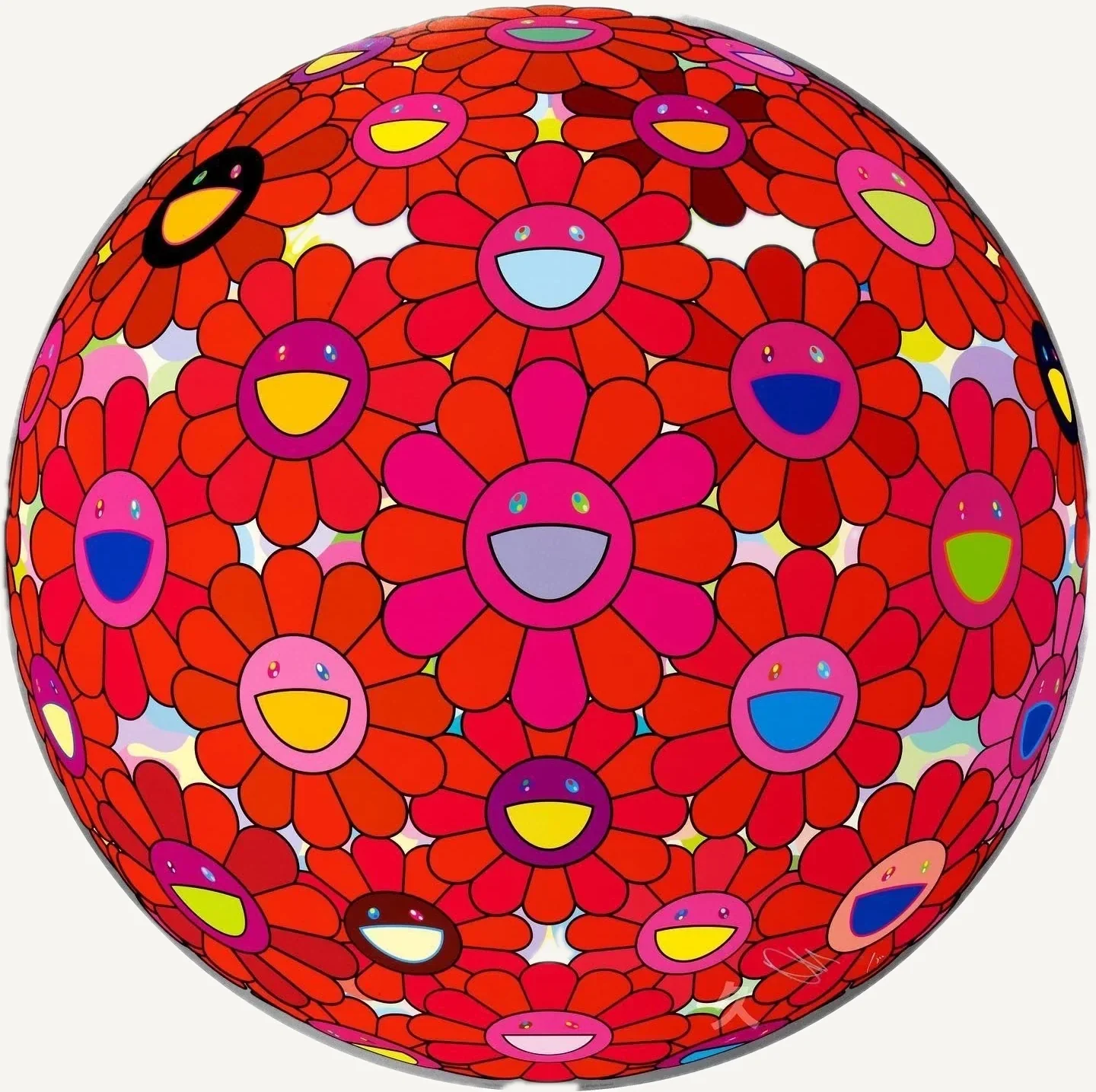
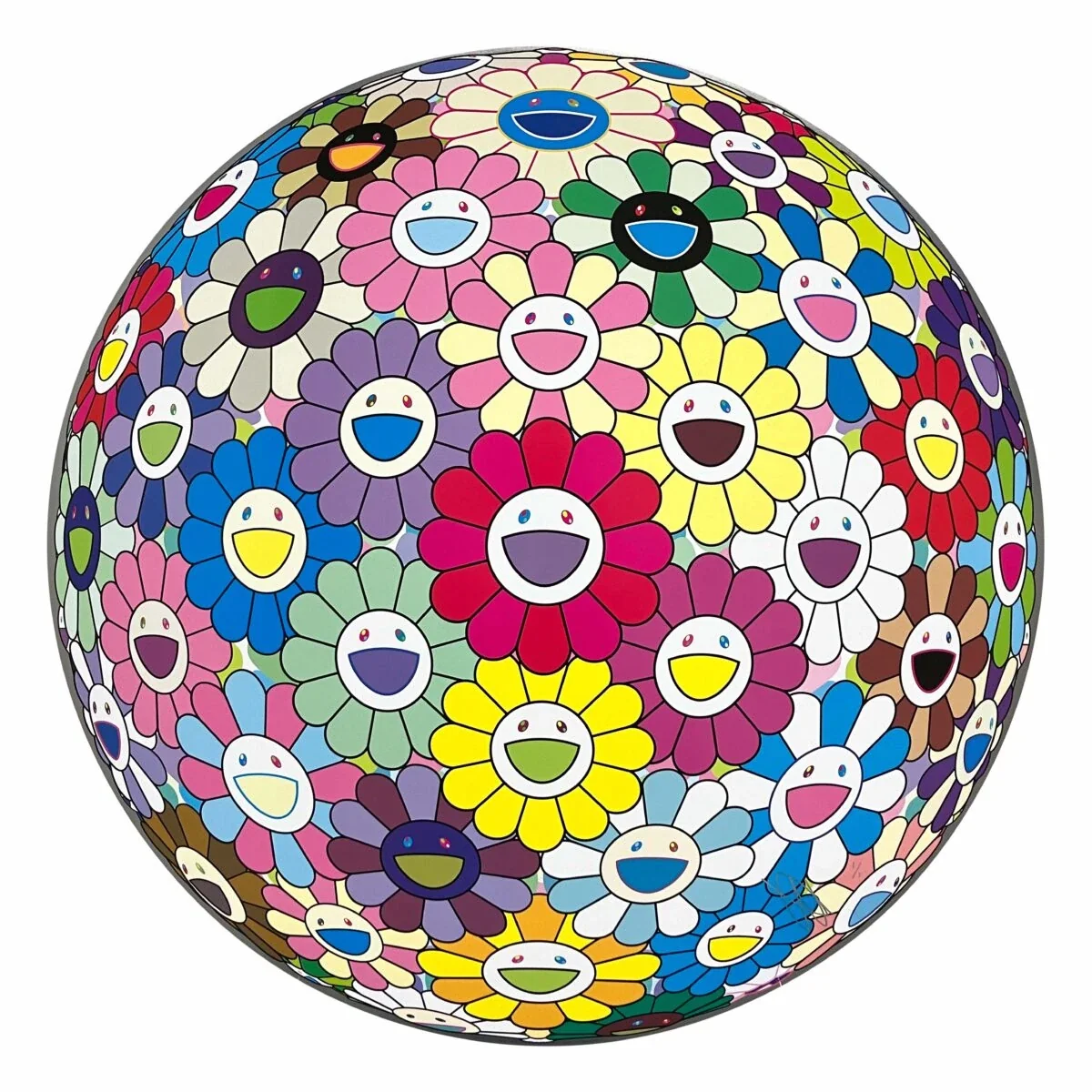
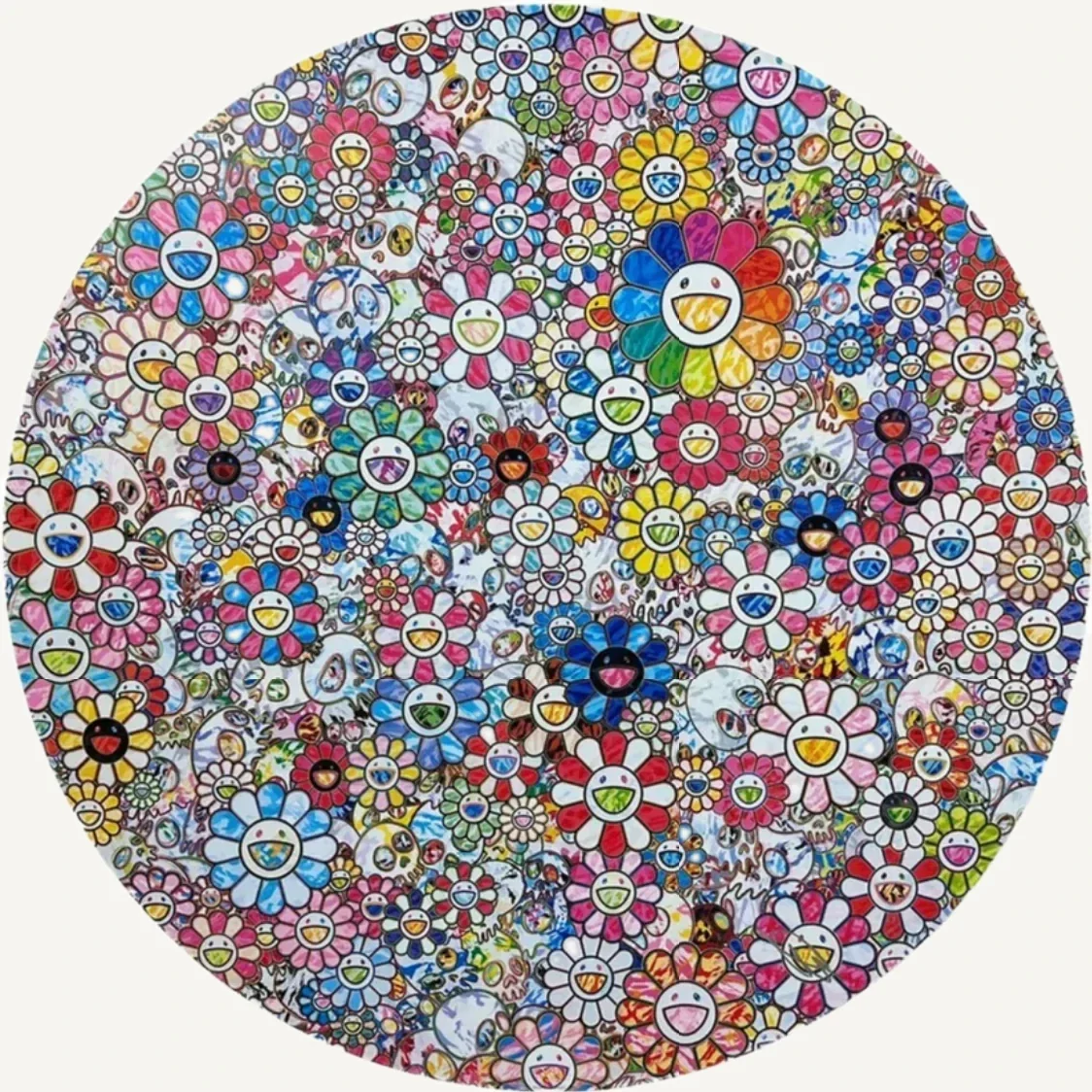
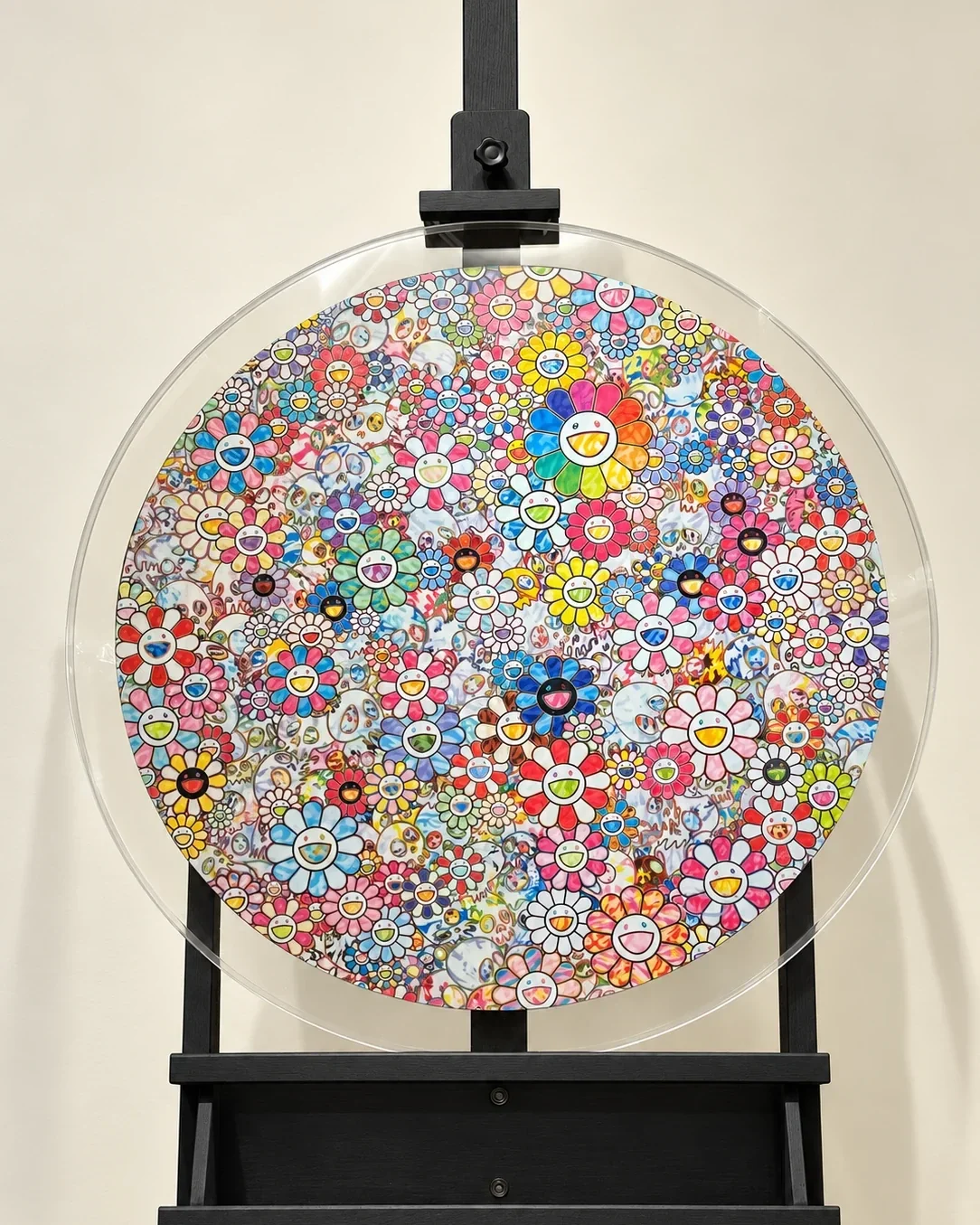
Flower Ball is built from a dense field of flowers. Changes of scale and orientation suggest a rounded surface. The eye notices individual faces while drawing them together into an overall shape, allowing the work to hold attention both nearby and from across a room.
The image has an early museum history. Seattle Art Museum holds Flower Ball from 2002, an acrylic painting on canvas approximately two and a half metres in diameter. The museum describes its illusion of a three-dimensional floral sphere. This painting is a distinct work from later editioned prints.
The distinction helps explain the wider series. A motif can appear in a large canvas, a print edition or a three-dimensional object. Each has its own material and construction, even where a familiar composition connects them.
A family of individual works
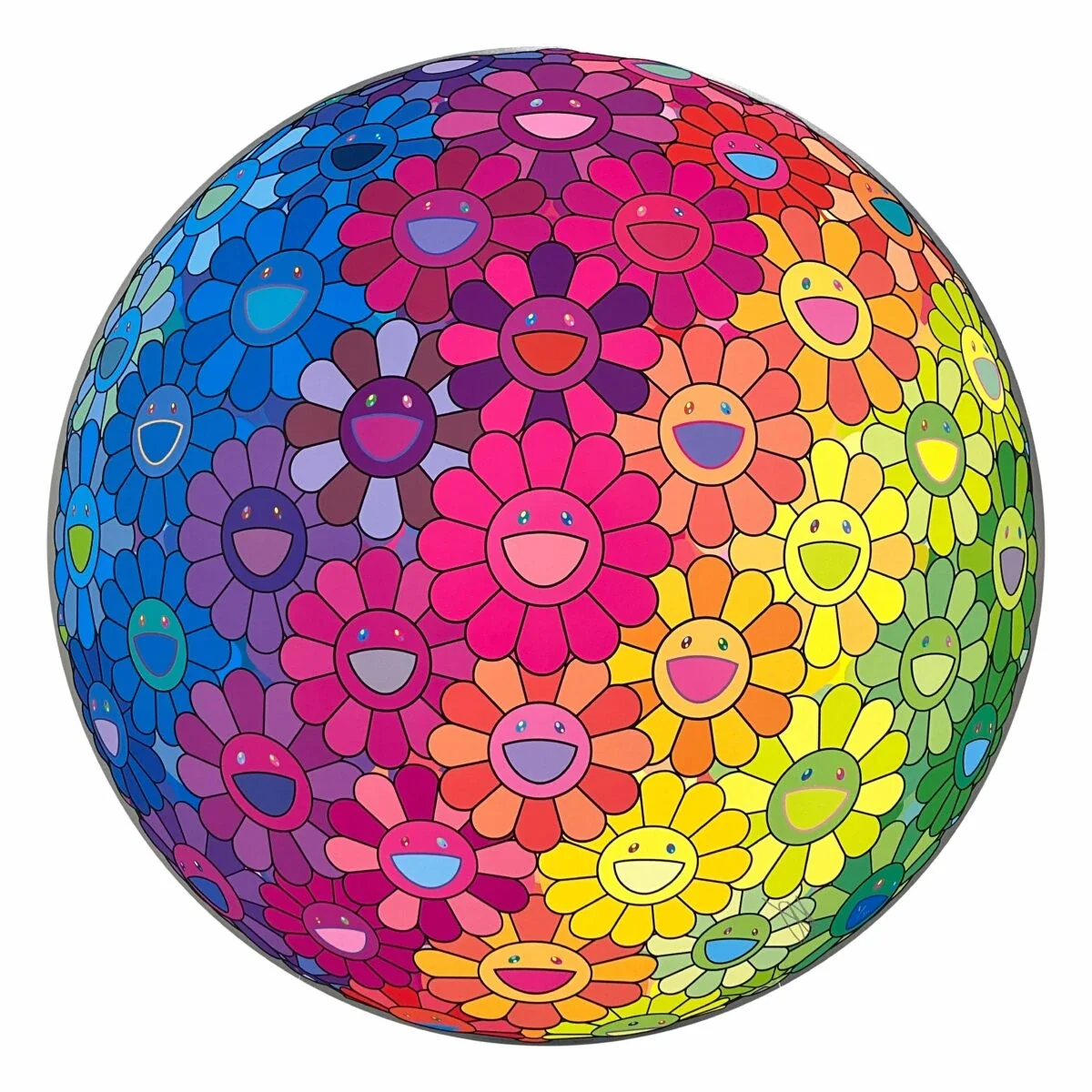
The series name leaves room for individual titles. Flowerball: Colorful, Miracle, Sparkle and Inside the Rainbow’s Heart belong to a recognisable world, with their own names and colour arrangements. Within a collection, these differences can matter more than the overall resemblance.
A December 2024 Zingaro sales announcement specifically draws attention to variations in faces, eyes, mouths and petals. It suggests an engaging way to look: take in the overall impression, then select a few details to compare between versions.
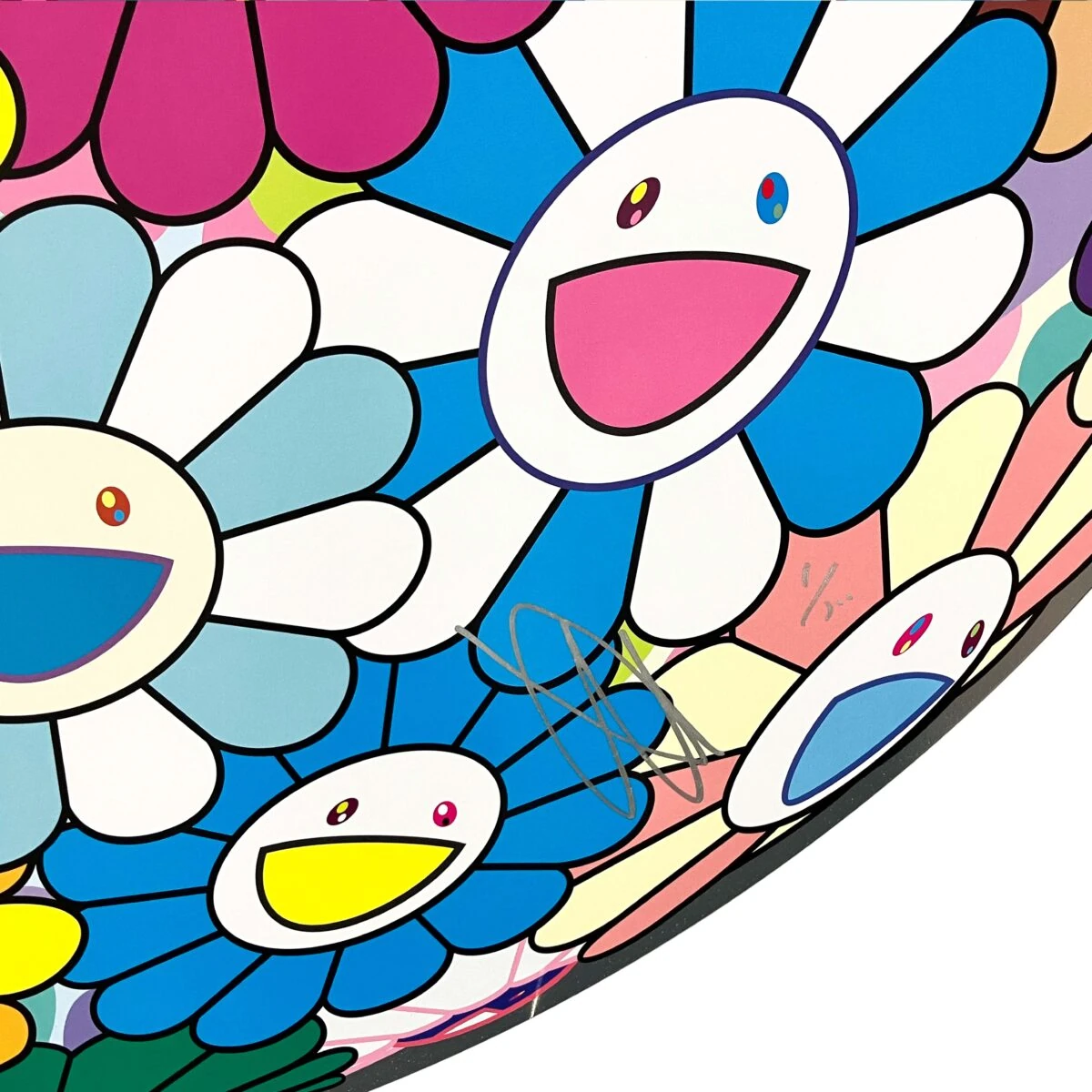
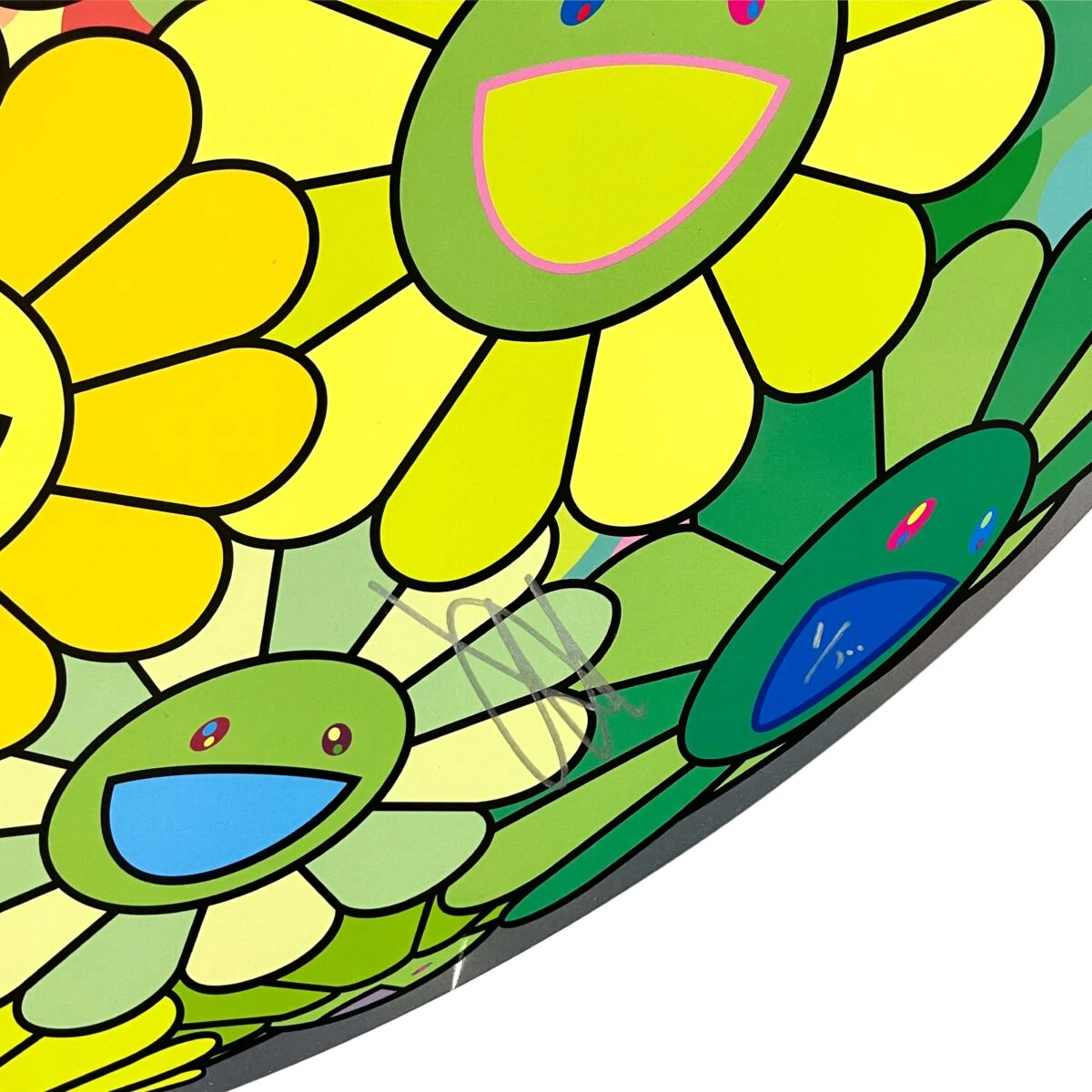
Small previews can make different works appear almost interchangeable. A larger detail reveals rhythm, density and mood. It is often there that a preference becomes clearer—why one version feels like something to live with, while another remains an appealing image on a screen.
Colorful, Miracle, Sparkle: the specifications
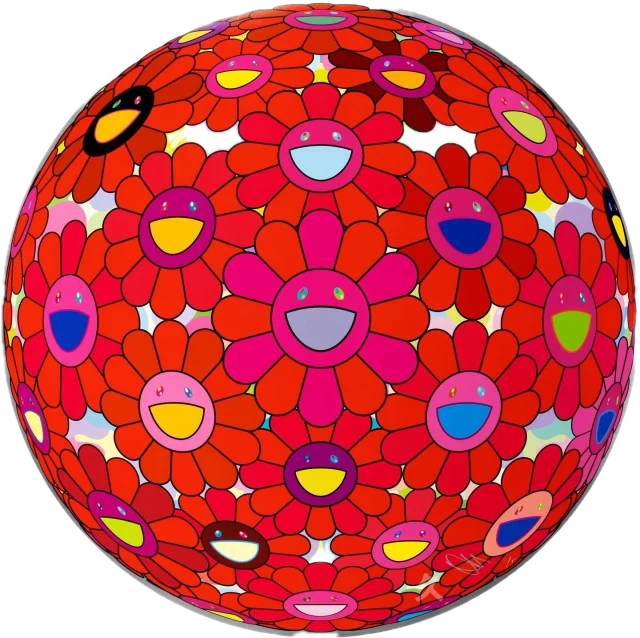
The official catalogue records Flowerball: Colorful, Miracle, Sparkle with a diameter of 710 millimetres and an edition of three hundred. Its technique combines four-colour offset printing, foil and a varnish coating. The page carries a 2022 copyright date.
Each part of the description helps establish the object. Diameter determines its place on a wall, edition size belongs to this release, and technique explains why the surface may be more complex than a flat reproduction suggests. Direct frontal lighting can conceal some of those effects in a photograph.
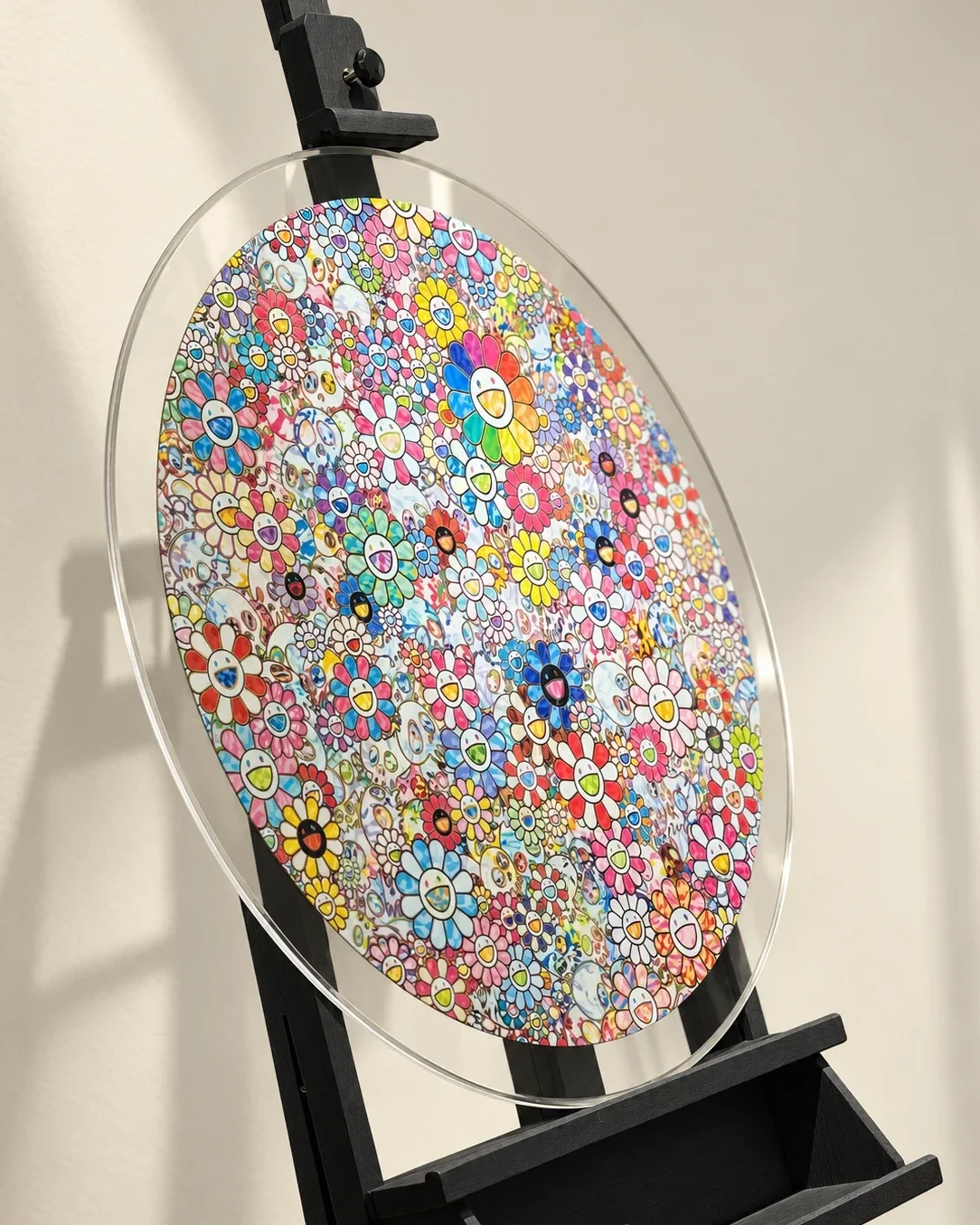
An overall view and a detail taken in side light help reveal the surface without artificial effects. To test scale, a paper circle of the same diameter can be placed against the intended wall and viewed from an ordinary position in the room.
Colorful, Miracle, Sparkle
Inside the Rainbow’s Heart: comparing the same format
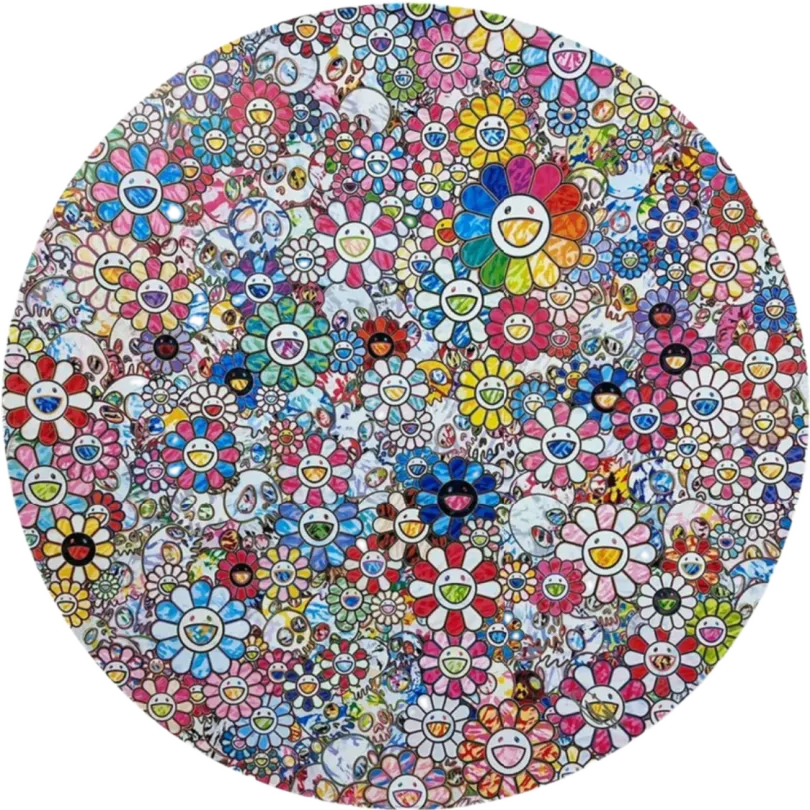
Inside the Rainbow’s Heart is also listed at 710 millimetres in diameter, in an edition of three hundred, with four-colour offset, foil and varnish. The shared specifications make the comparison especially interesting: composition and colour shape the response while physical parameters remain similar.
When choosing between two such works, attention can shift to the distribution of vivid and quieter areas. Which faces attract the eye? Which colour appears first from a distance? These observations can turn a general preference for flowers into a choice of a particular composition.
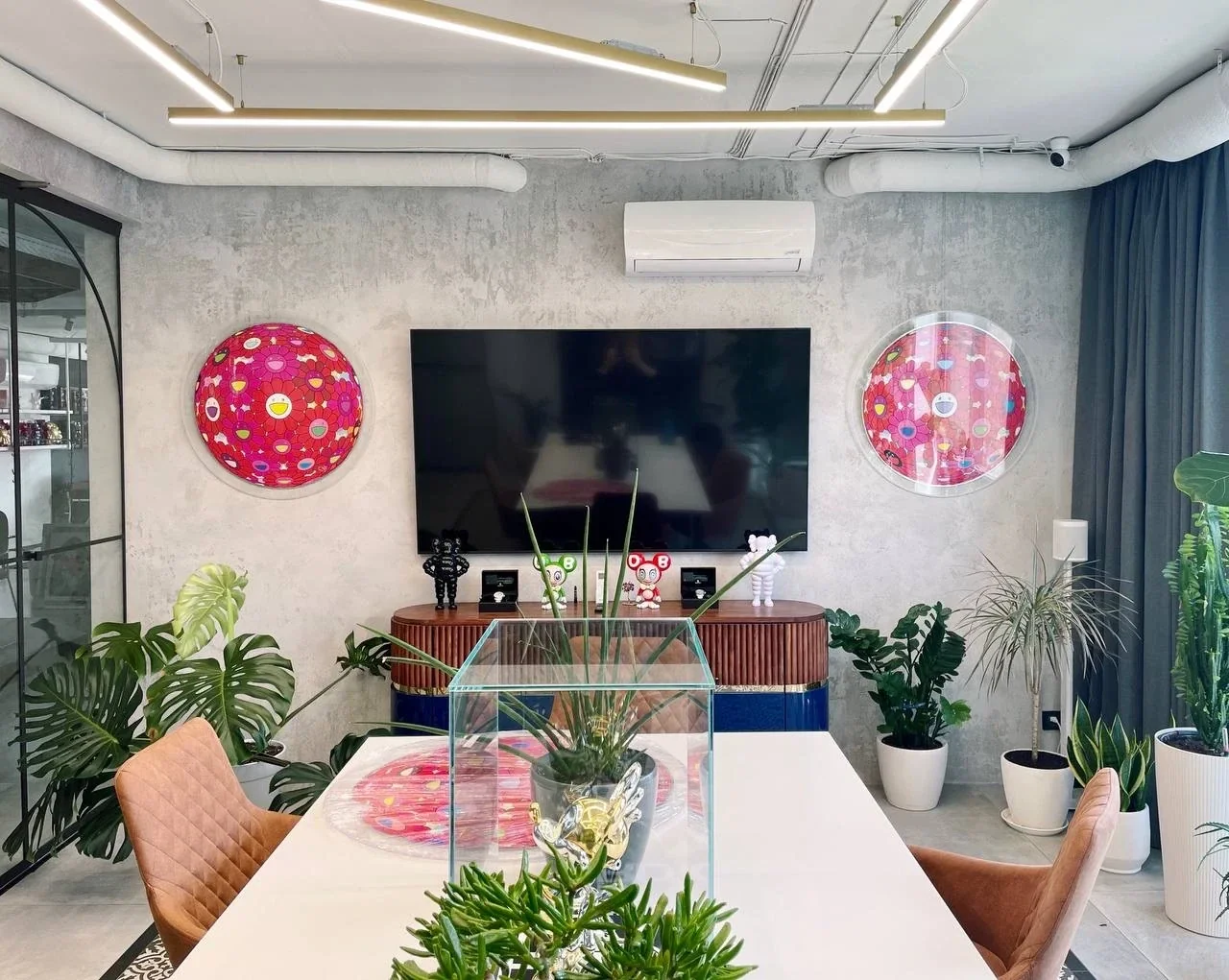
A pair on a wall also needs enough space for each circle to read individually. Related formats can form a quiet sequence, while a narrow gap can make them merge into one dense area. Testing the dimensions in place helps resolve the arrangement before framing.
Inside the Rainbow’s Heart
Offset, foil and varnish
“Offset” identifies the process used to print the image. Foil and varnish describe further elements of the surface. Two works with similar flower imagery may therefore offer different effects within the broad category of prints.
The full technical description belongs to the chosen release. An SBI catalogue, for example, lists Flower Ball (Algae Ball) from 2013 with four-colour offset and a special silver colour, while neighbouring works have different finish descriptions. Keeping that detail preserves more information than reducing everything to a single technique name.
The differences become visible in light. Some areas appear even, others catch a highlight or change as the viewer moves. They invite close looking rather than an automatic ranking of one technique above another. The surface that appeals most may also depend on the place where the work will hang.
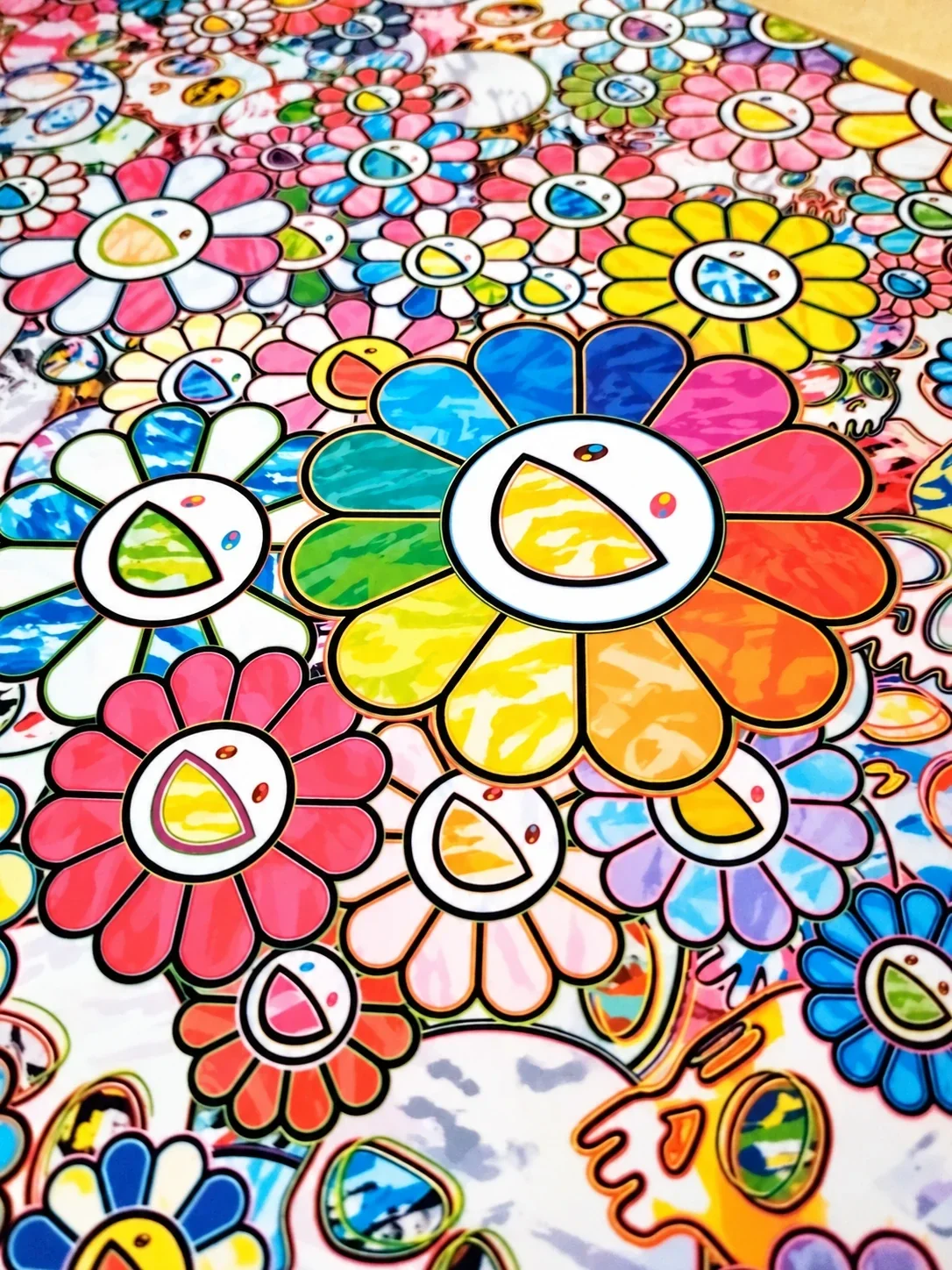
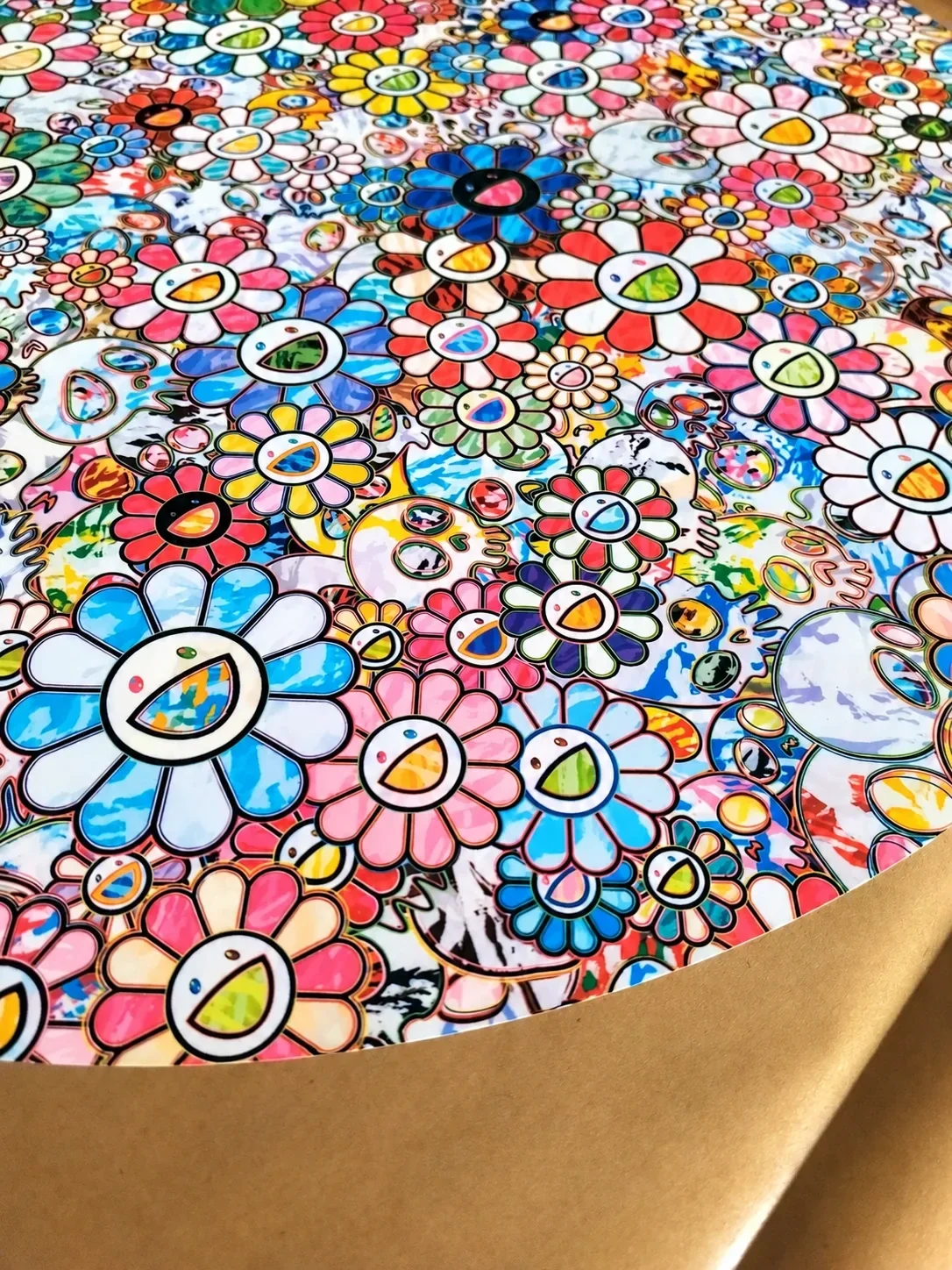
Paradise in a Flower Field
Different diameters and different walls
Flower Ball has no single size that applies across its history. The same SBI catalogue gives Algae Ball a diameter of 46 centimetres, compared with 71 centimetres for Brown and Red Cliff. A family name alone therefore does not establish how much room an individual sheet needs.
A smaller circle can work within a narrow wall section or an intimate group. A larger one can become a focal point. The final framed dimensions will also depend on the frame, any surrounding margin and the chosen mounting approach.
Measuring the wall and looking from the expected viewing distance helps establish the relationship. The circle needs room alongside shelving, a doorway or the back of a piece of furniture. A few centimetres of clear space can change the whole arrangement while the print itself remains exactly the same.
Compare our Let Us Devote Our Hearts and Paradise in a Flower Field listings through full views, framed photographs and details.
Paradise in a Flower Field
The work’s date and a later sale announcement
A shop announcement is one moment in a longer release history. In September 2022, Zingaro announced four new flower editions, each signed and numbered in an edition of three hundred. Its December 2024 announcements separately described sales from archive stock.
A later appearance of Colorful, Miracle, Sparkle in the news therefore does not establish a new 2024 edition. A clear description keeps the title, the work’s year and a particular shop offer’s date separate.
This also helps when comparing secondary-market descriptions. One seller may foreground the purchase year, another the edition year. Preserving both details makes those differences easier to understand without assuming a new release or another edition size.
Flower Rainbow Ball in 2026
In July 2026, Tonari no Zingaro presented Flower Rainbow Ball. The announcement describes a new signed and numbered print in an edition of three hundred. It distinguishes the original painting, one and a half metres in diameter, from the smaller print intended for domestic display.
That relationship shows how moving into print involves a separate consideration of format. The circular composition remains available to explore as a whole in a more compact object. The source painting’s measurements describe a different work from the editioned sheet.
The announcement gives 26 July 2026 as the start of sales, with dispatch planned from November. These describe different stages of the release. Keeping the information alongside the work’s record helps document its history, while the actual example’s condition and contents remain separate questions.
Not every circle of flowers is Flower Ball
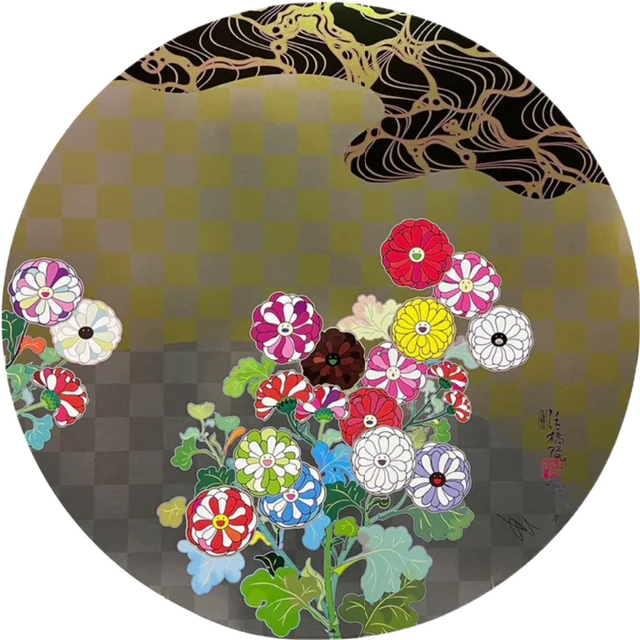
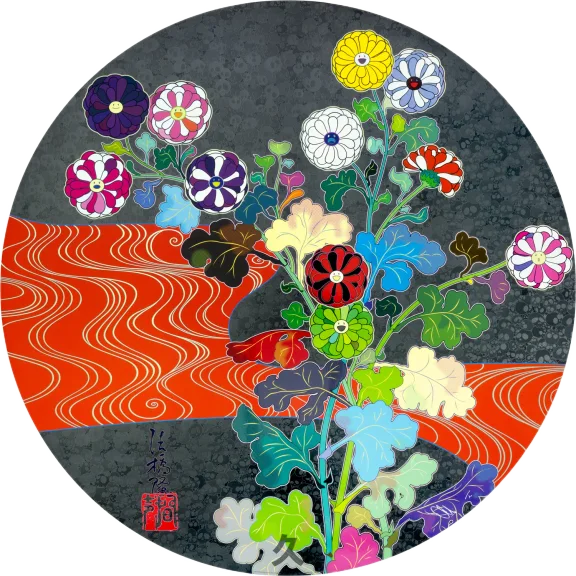
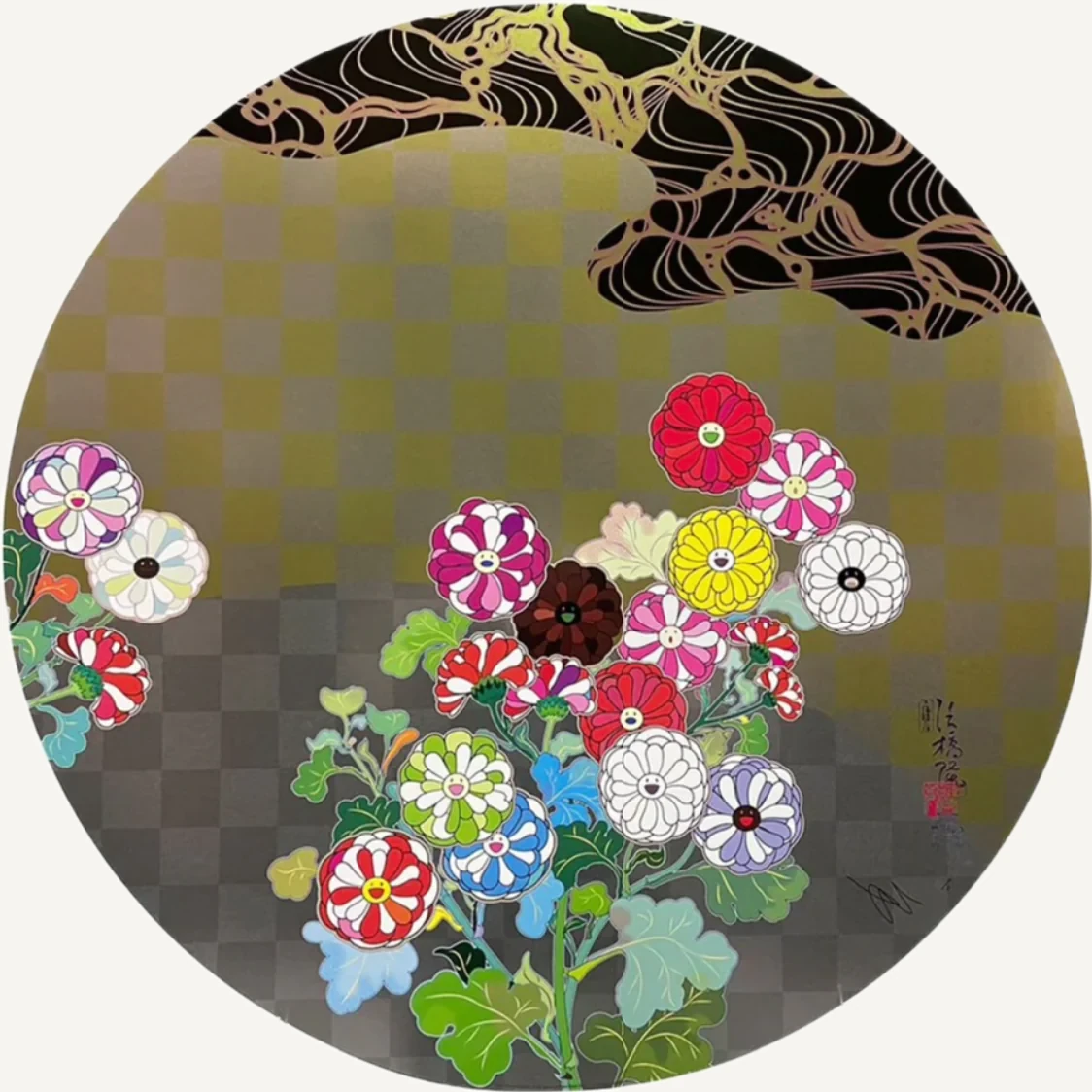
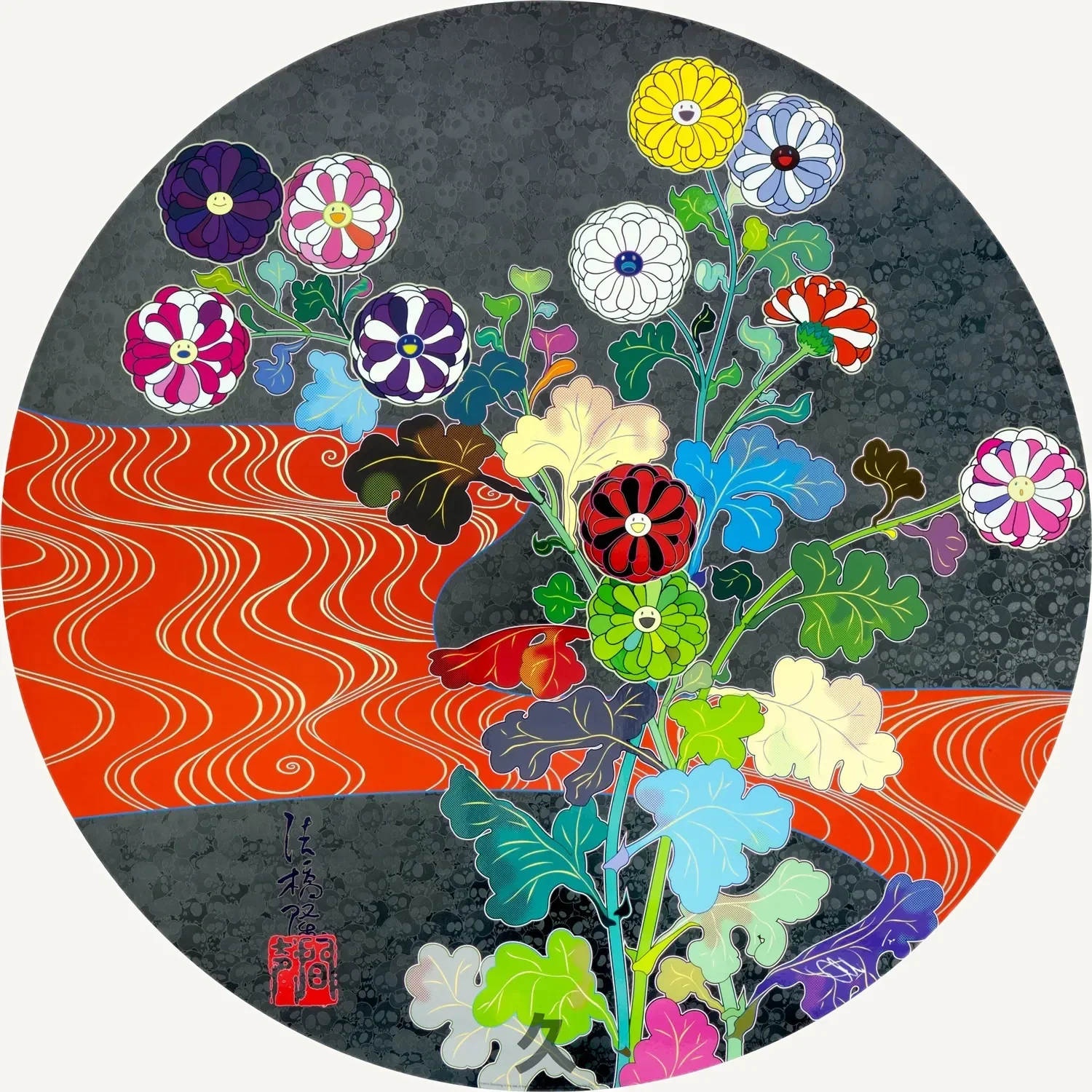
Murakami’s work includes other flower families. The official catalogue separately names Kōrin’s Flowers and Water, for example. A round format and smiling flowers are not enough to identify it as Flower Ball.
This matters when planning a pair or a series. A collector might deliberately combine different motifs or look for continuity within one family. Both choices can be interesting when each object retains its own name.
“3D” also needs its context. In a print title, it can describe the impression of depth. Plush Flowerball is a three-dimensional object with a different material and construction. Identifying a sheet, canvas or sculpture first makes the remaining details easier to interpret.
For other circular compositions, explore Korin: Flower and Water and Flower Blooming in the Isle of the Dead. These works retain their own titles and distinct histories.
Kōrin
Numbering, signatures and the word “poster”
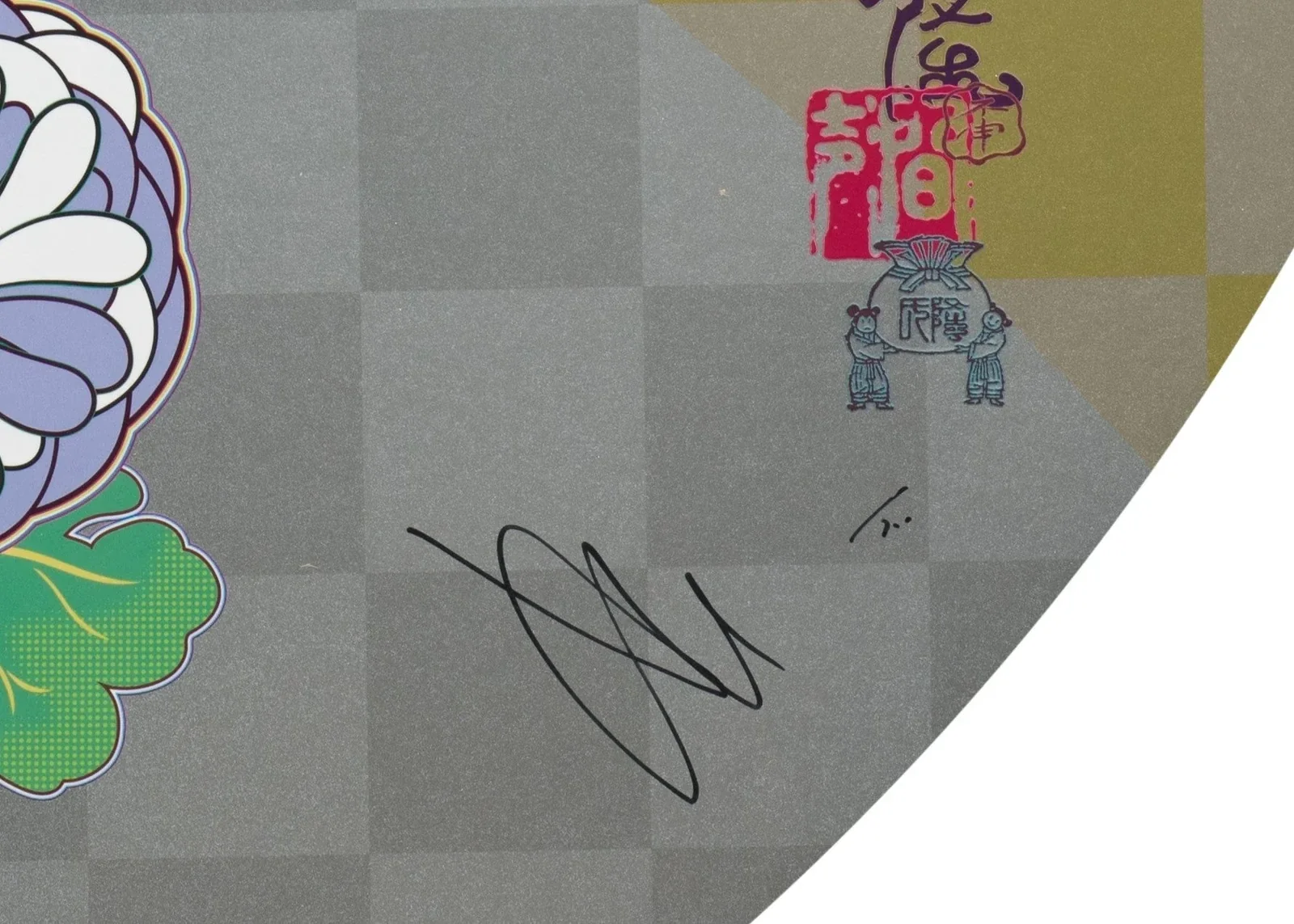
Official Zingaro announcements call these signed works edition prints, noting that “posters” was the earlier term. In this setting, an older use of “poster” need not mean an ordinary unsigned reproduction.
For an individual sheet, compare the full title, image, technique, diameter, signature and number. A fraction identifies an example within its corresponding edition. These details work together to describe the object, rather than leaving one number to establish everything.
Before framing, keep photographs of the full sheet, edges, reverse and markings. If the work is already behind glass, establish the visible measurements and what is known about its condition beneath the frame. This keeps attention on the example being offered as well as its familiar image.
Choosing your Flower Ball
Begin with the overall colour from a distance. Then move closer to the faces, transitions and petal patterns before comparing technique and size. This preserves the initial response while explaining which particular object creates it.
At home, test the scale and lighting, and discuss framing with someone experienced in works on paper. A position away from direct sunlight and pronounced damp is worth considering. A vivid circle can work with a simple backdrop, allowing its details to reveal themselves gradually.
A rewarding choice invites repeated looking. Flower Ball’s overall impression arrives quickly, while small differences emerge over time. That combination turns a recognisable motif into a work that can remain engaging in everyday life.
Our limited-edition prints guide explains the basics, while the Murakami collecting guide explores his other formats.
Takashi Murakami