In this article
Choose the setting before the release
Picture the object at home before settling on a title. Will you see it from across the living room or examine its details beside your desk? Do you want a single accent or the beginning of a group that might gradually fill a shelf? These questions often provide a more useful starting point than searching for the best-known release.
For a wall piece, consider the available area and viewing distance. Sculpture needs sufficient width and depth, a suitable backdrop and room to see it from the side. With a cushion, the scale of the chair or sofa matters, along with its relationship to the other textiles.
This leaves room for personal taste. A small figure can be the right beginning even if flowers first drew your attention; a restrained print can appeal more than a rainbow composition. The first object suggests a direction without committing the collection to repeating one image forever.
Why Murakami works in so many forms
Takashi Murakami works across painting, sculpture, prints and objects that enter everyday life. This breadth connects with his concept of Superflat. The Mori Art Museum explains it through relationships between traditional Japanese painting and the visual language of anime and manga.
A flower on paper and a flower on a sofa can therefore belong to the same artistic world while remaining different kinds of object. They share a visual language, with distinct techniques, edition structures and uses. A cushion can be an engaging part of that history on its own terms.
Murakami’s world also extends beyond smiles. Characters, mushrooms, skulls, references to Japanese painting and more unsettling images coexist within it. A collection can develop through these connections, gradually revealing other aspects of the artist.
Cushions: a flower to live with
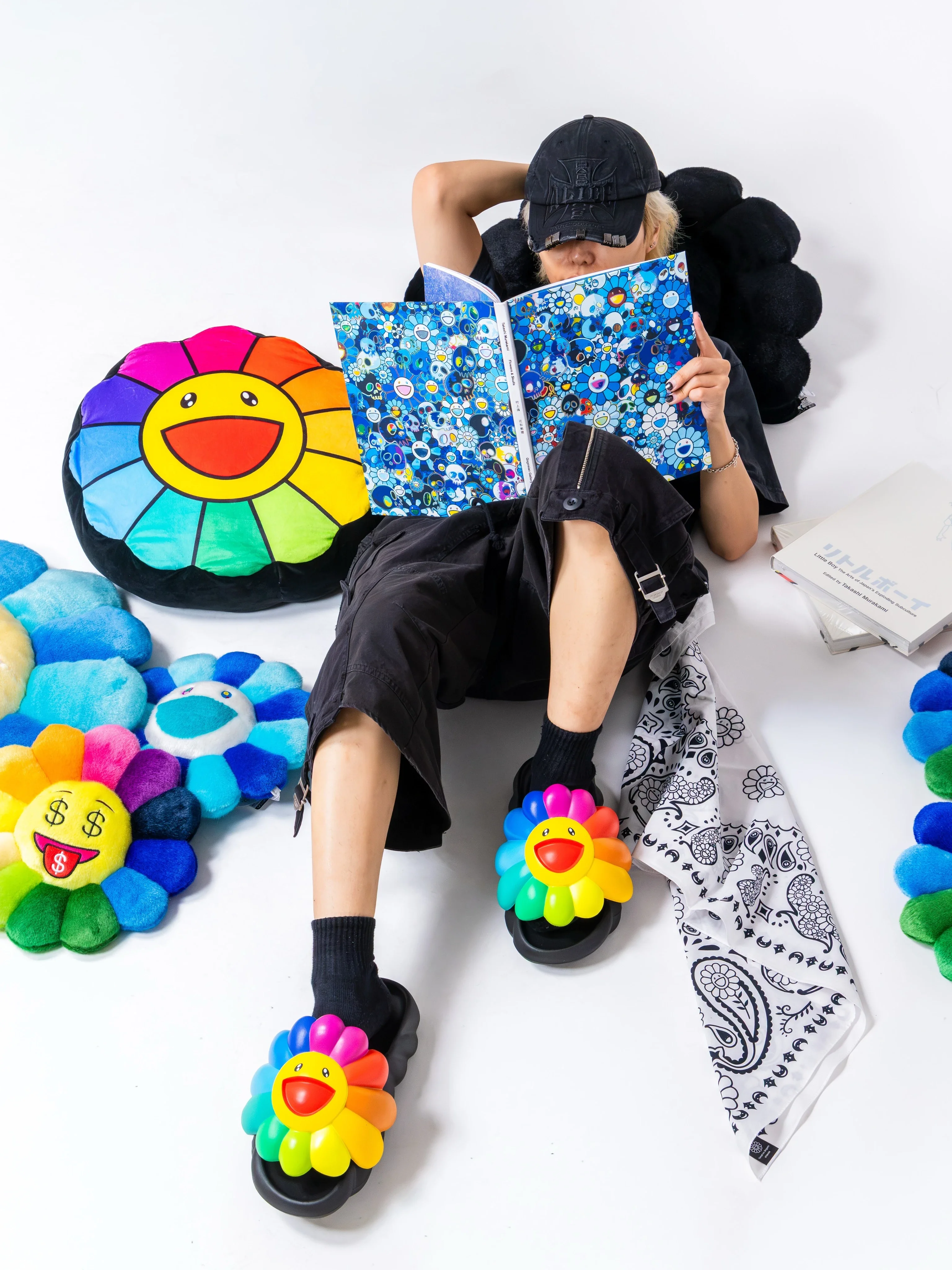
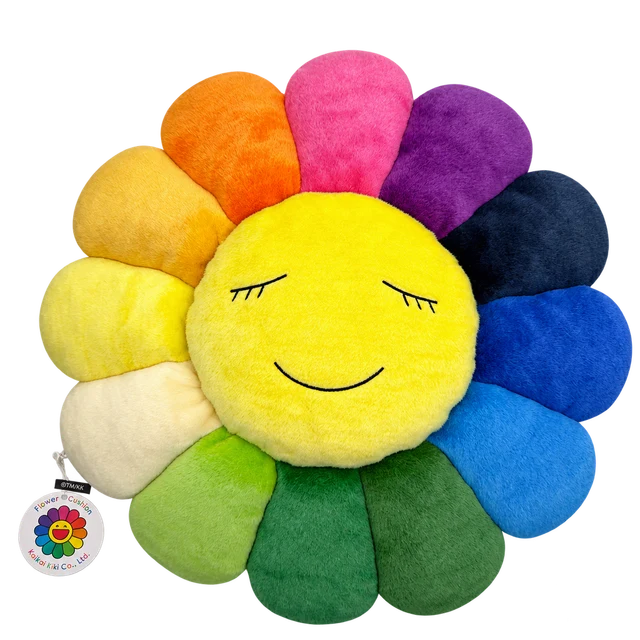
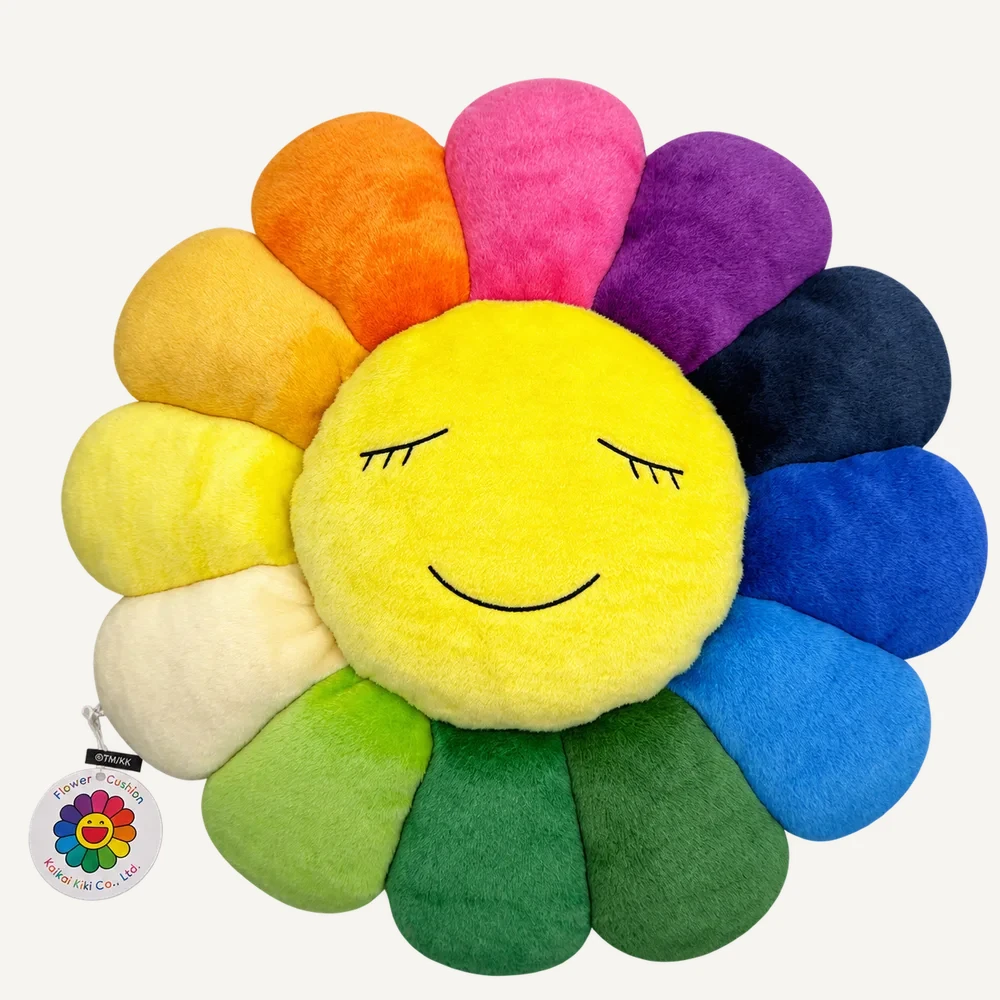
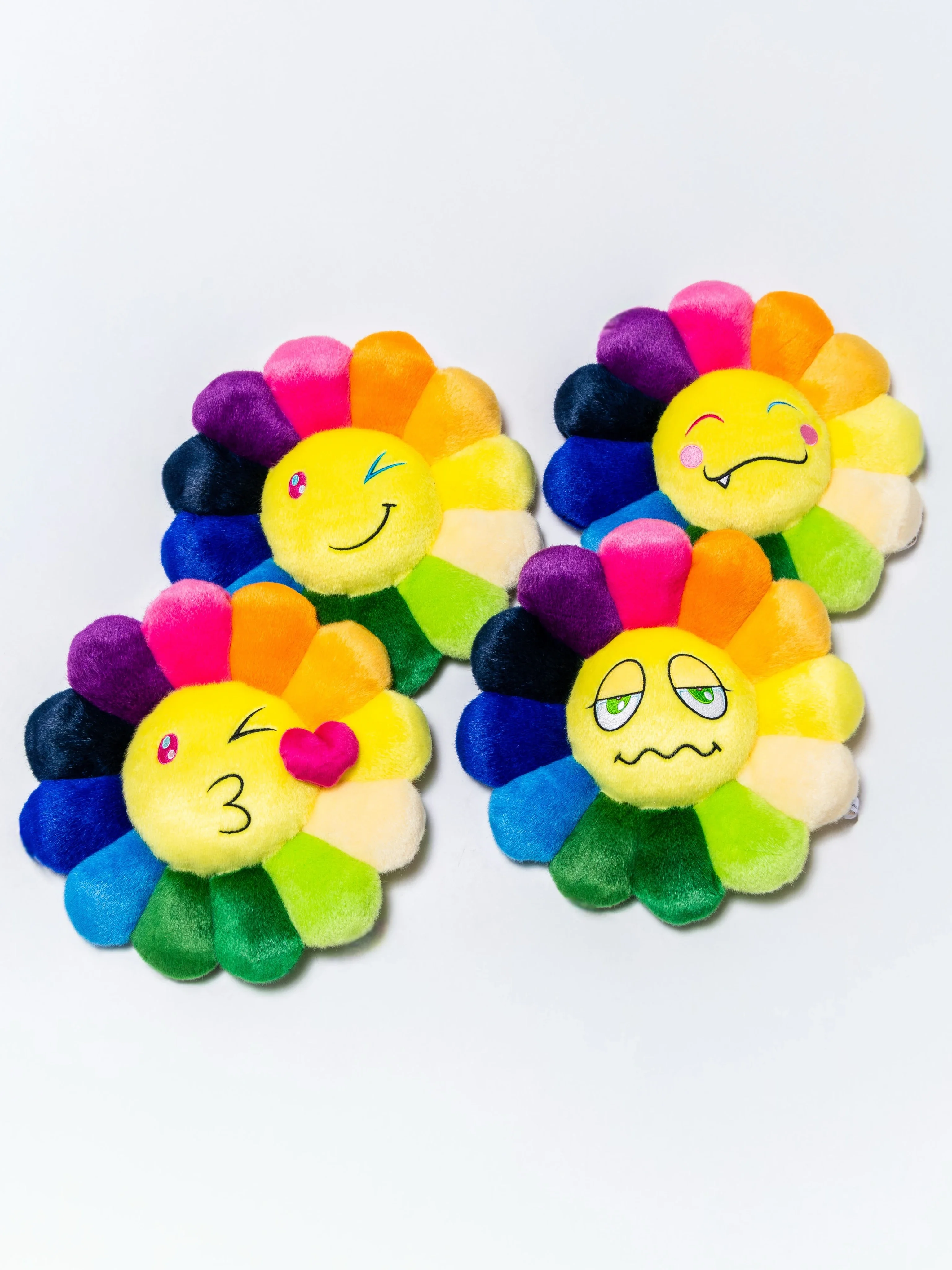
A Flower Cushion offers an immediate way to bring Murakami’s imagery into a room. Petal shapes, expression, colour and fabric texture all contribute to its character. Its presence differs from a smooth printed surface, and it can move between an armchair, sofa and open shelf.
A Tonari no Zingaro archive announcement from 2020, for example, shows thirty-centimetre Rosered, Black and Pink&Blue cushions. These are particular versions, rather than a universal size for every flower cushion. The diameter and photographs of the chosen model are the useful reference.
One clear colour choice can be enough for a first purchase. A bright flower can anchor a neutral sofa; in a more colourful interior, a quieter version can connect other objects. The cushion’s wider history and individual collaborations offer further routes to explore once the format appeals.
Explore our rainbow Flower Pillow and grey and black version. For the story behind the motif, read our Murakami cushions article.
Flower Cushions

Sculpture: seeing the character from every side
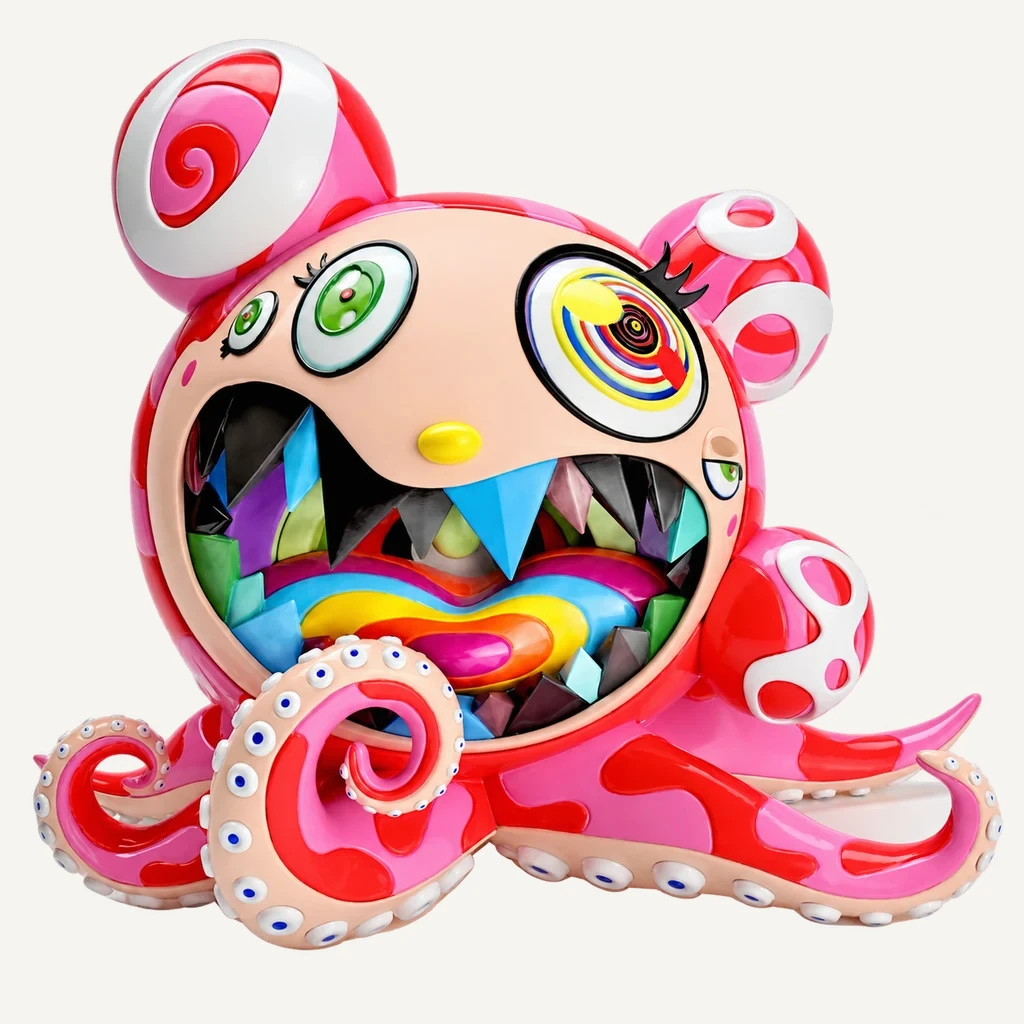
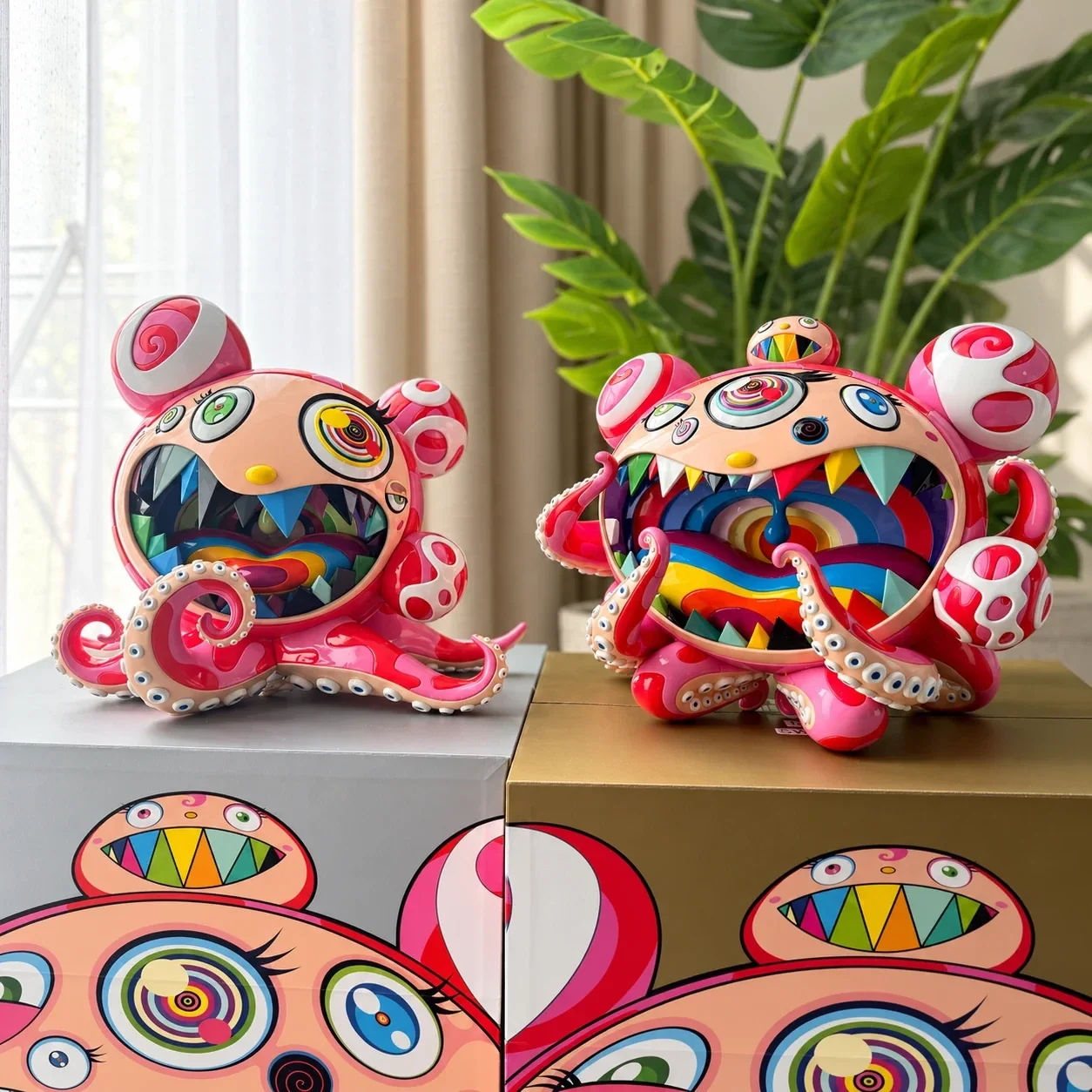
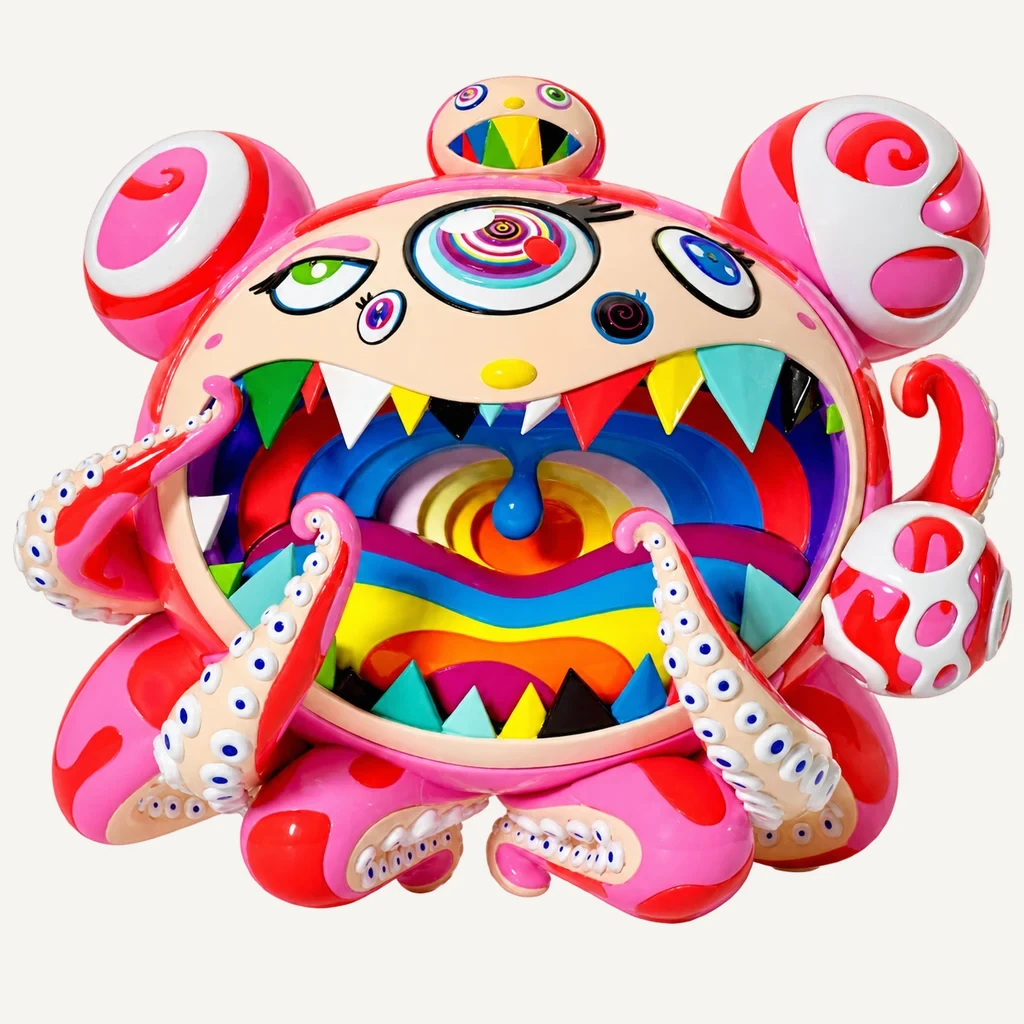
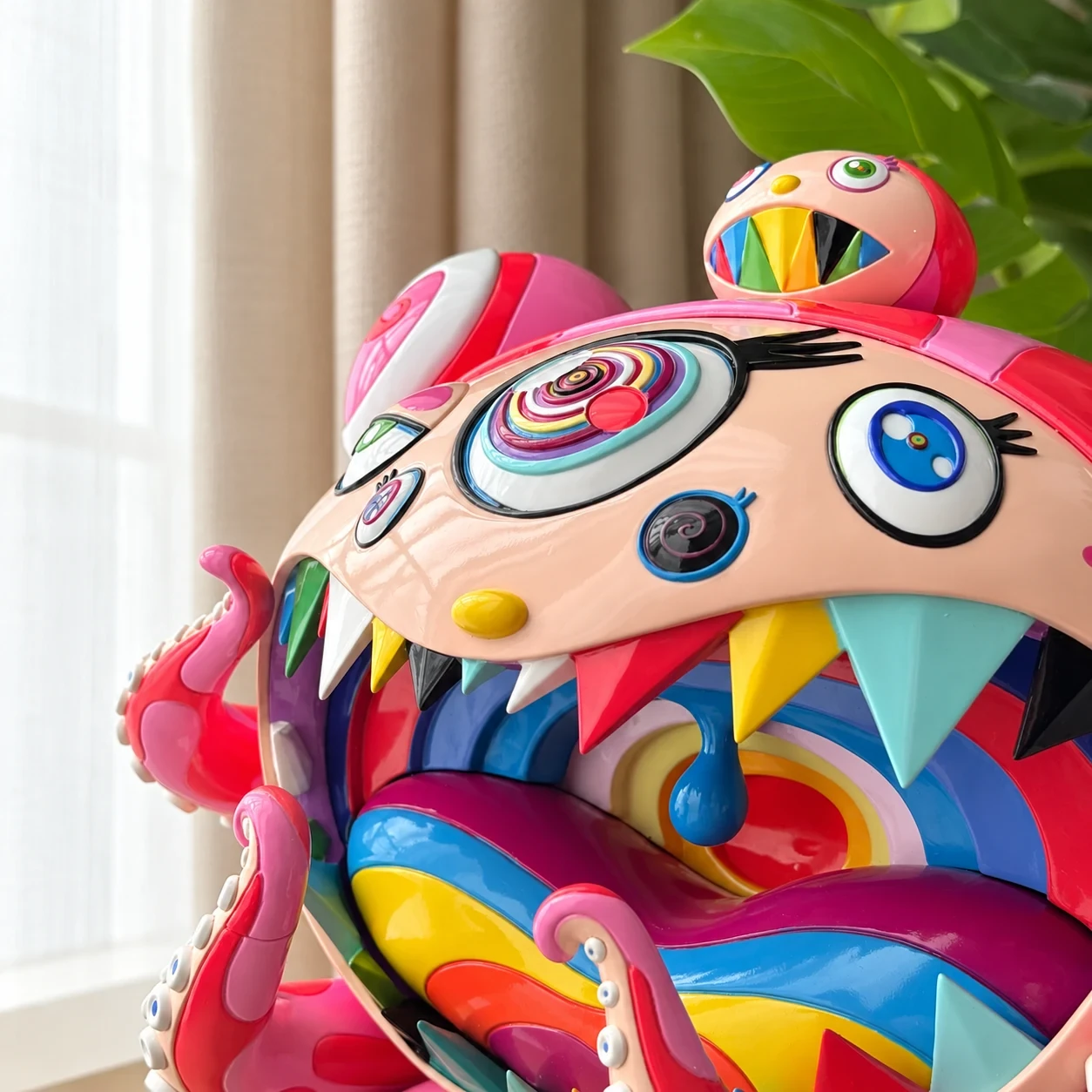
A three-dimensional object changes our relationship with an image. It has a back, a shadow, projecting details and a position within the room. The same character can feel quite different in a frontal photograph and on a shelf.
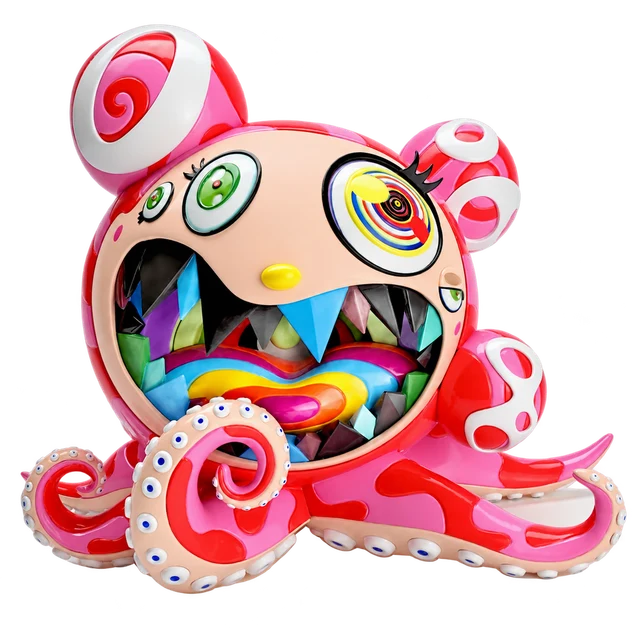
Murakami’s figures belong to several different families, so “sculpture” opens the conversation rather than completing the description. Manufacturer, title, material, height and contents help identify the piece. A plastic figure, a wooden object and a large gallery sculpture have different properties even where a shared character connects them.
Side views are especially useful when planning a display. A shallow shelf may not suit every composition, and long details can extend beyond its edge. A good first choice has a stable place waiting for it and remains enjoyable to look at without constantly rearranging the surrounding objects.
Our DOBTOPUS A and DOBTOPUS B pages include full views and detail photographs, helping you compare silhouettes and plan space around each figure.
DOBTOPUS
DOB and Inochi: different moods for a collection
Characters offer a route beyond the flower. DOB can appear friendly, tense or almost melted; changes of expression and shape transform an object’s mood. A small group of different interpretations of one character can already form a thoughtful collection.
Inochi introduces a stranger, fragile-looking figure with an enlarged head. The documented Inochi Doll: Yamamoto release from 2009 uses ABS and NP-PVC plastics, fabric and other materials. This particular figure is recorded as 37 centimetres tall, in an edition of two hundred, accompanied by a signed and numbered certificate.
These details make it possible to compare actual objects as well as artists’ names. One collector may choose a brightly graphic DOB, another the unusual character of Inochi. Both provide a coherent route into Murakami without turning the collection into a checklist of everything ever produced.
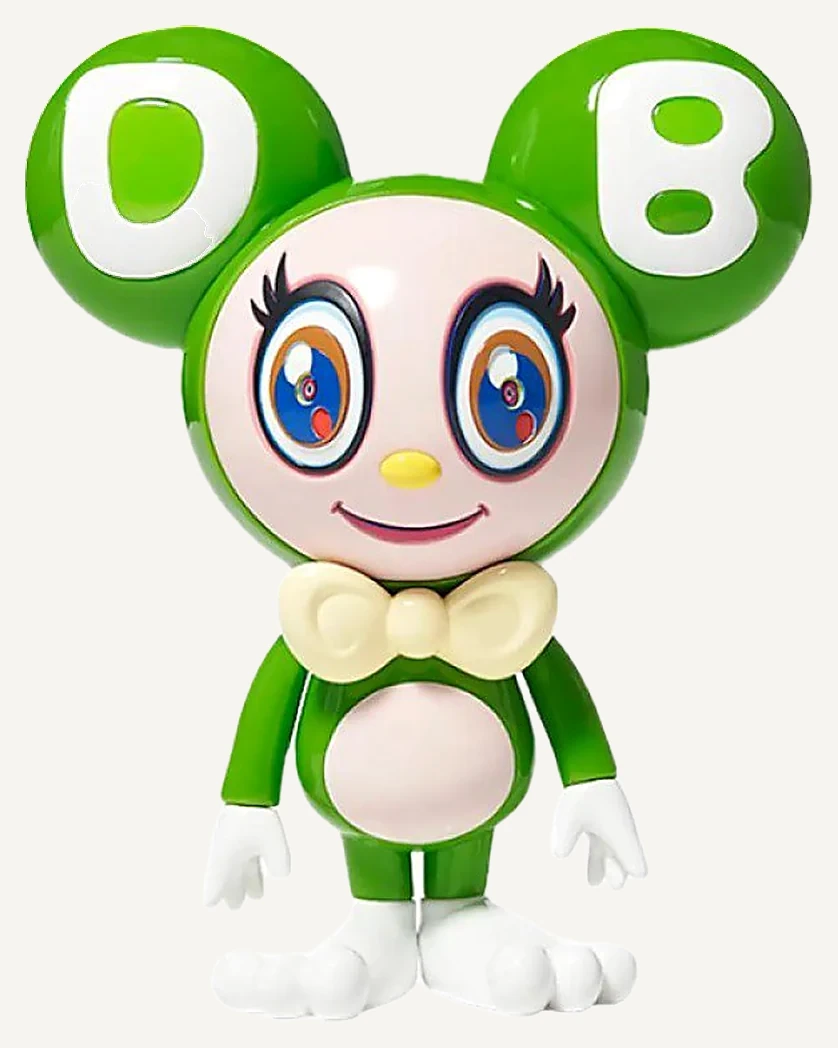
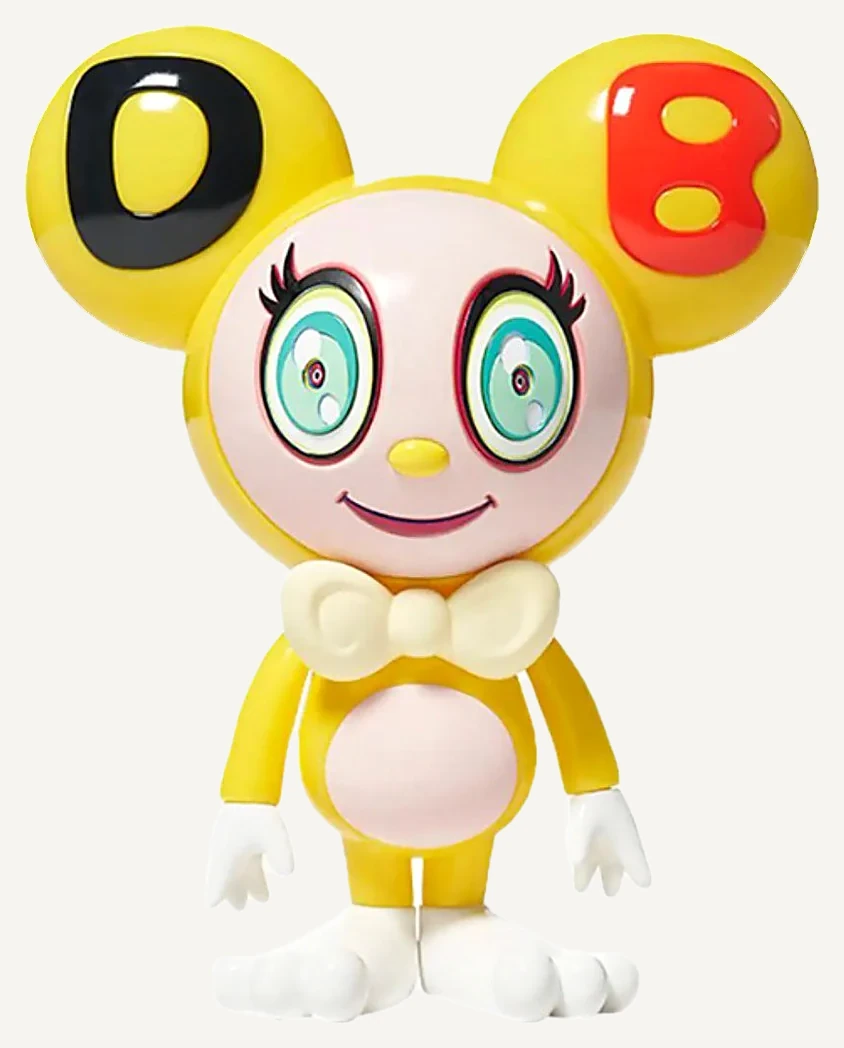
Compare the colourways through DOB-kun Camellia Red, Green Green and Yellow.
DOB-kun

How material changes a familiar image
Sometimes the discovery lies in a material rather than a new character. Karimoku MELTING DOB has a body made from Juglans nigra, or black walnut. Its flowing form meets the natural grain of wood, giving the familiar image a different presence from a brightly painted version.
The official description lists the sculpture and wooden box dimensions separately. The figure is approximately thirty centimetres high, while its packaging is considerably larger. The object’s measurements help determine its position at home; storage planning needs to take both into account.
Material can also become a collecting theme: smooth painted surfaces, wood, textiles and paper. Texture then provides a connection alongside the flower motif or DOB’s name. The exact material description belongs to the particular release and is worth keeping with its record.
A print as a work for the wall
A print offers a way to live with an image on the wall every day. It can be a distinct artwork issued in an edition. As the V&A explains, the impression itself can be the work of art, rather than only the surface from which it was printed.
The particular edition matters most: full title, technique, year, sheet and image dimensions, and the signature and numbering where applicable. Two similar compositions can be separate works with very different surfaces.
The most complicated technique need not be the starting point. Liking the image and understanding its release history already provide a good foundation. Comparing sheets in side light can reveal what a screen loses: gloss, matte areas, metallic effects and differences between layers.
Flower Ball: a round image can be a flat print
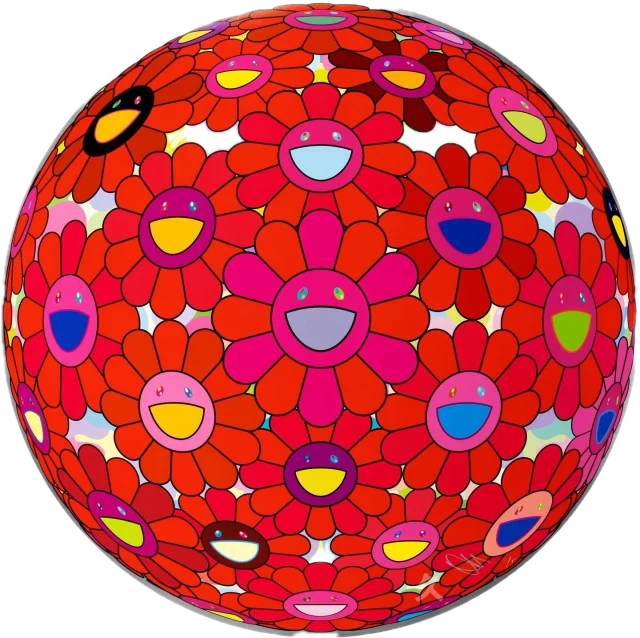
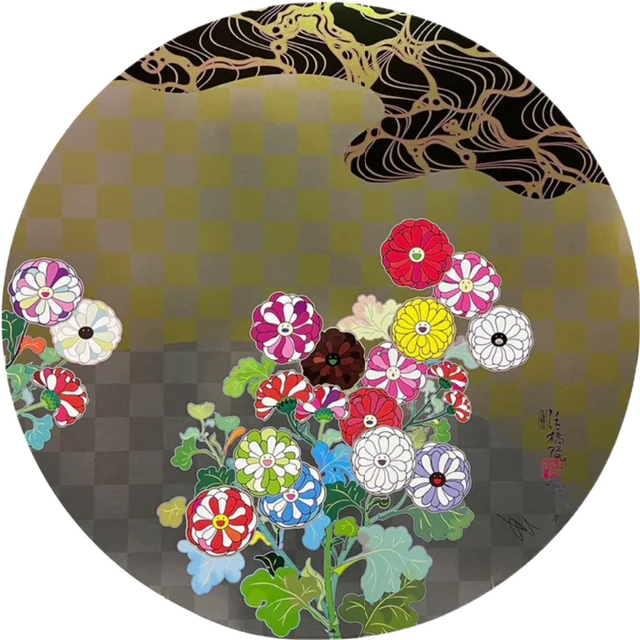
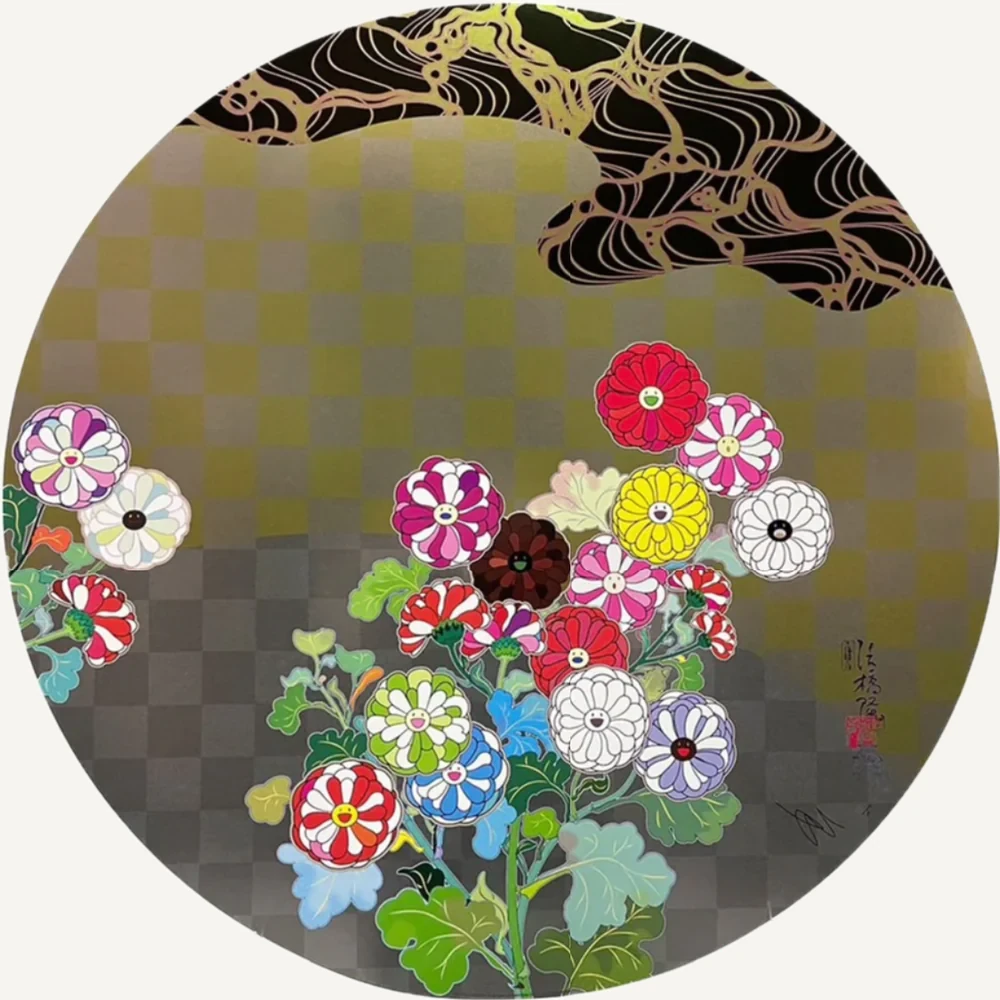
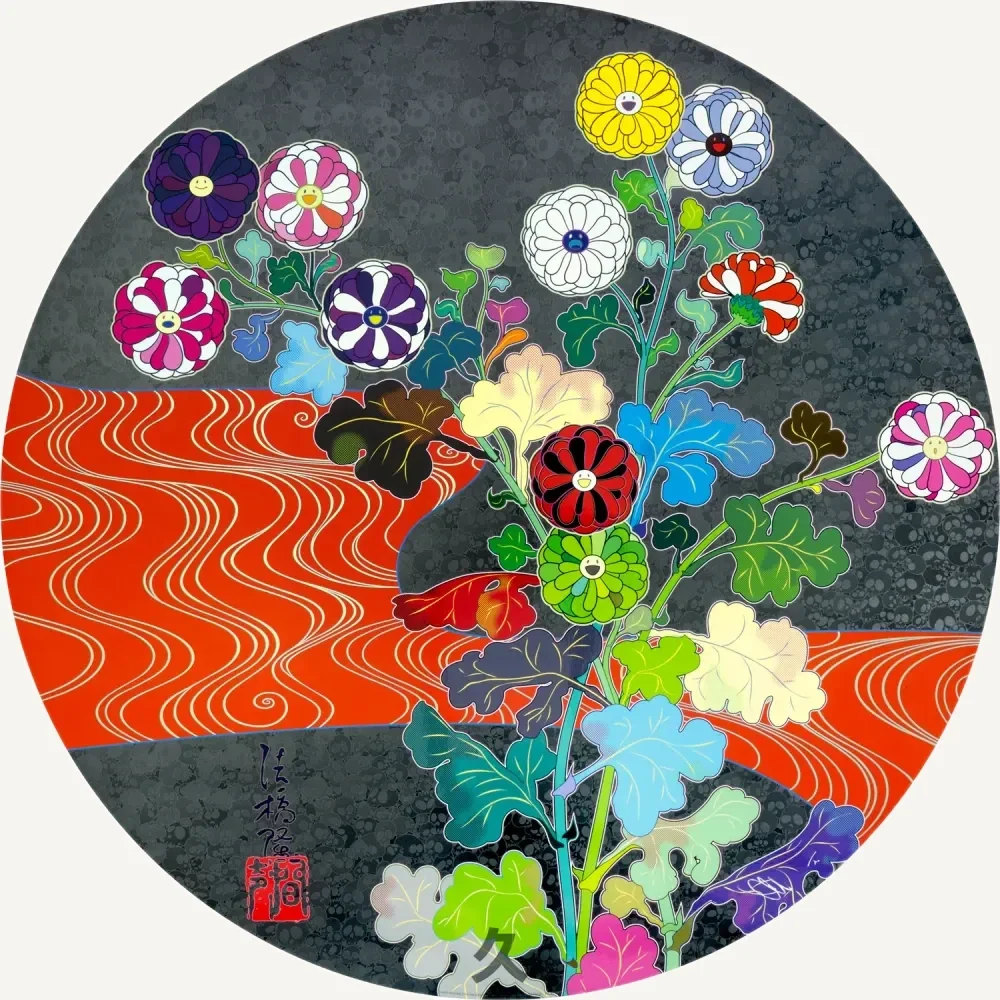
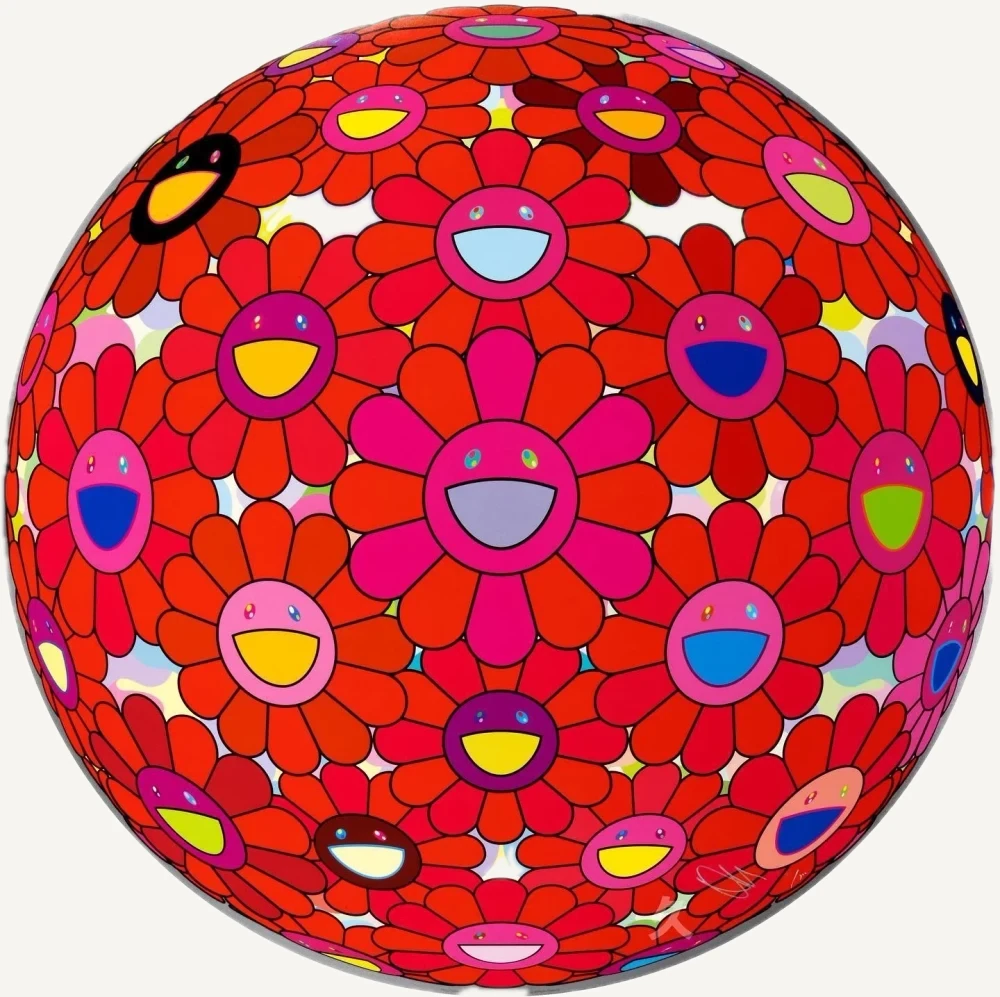
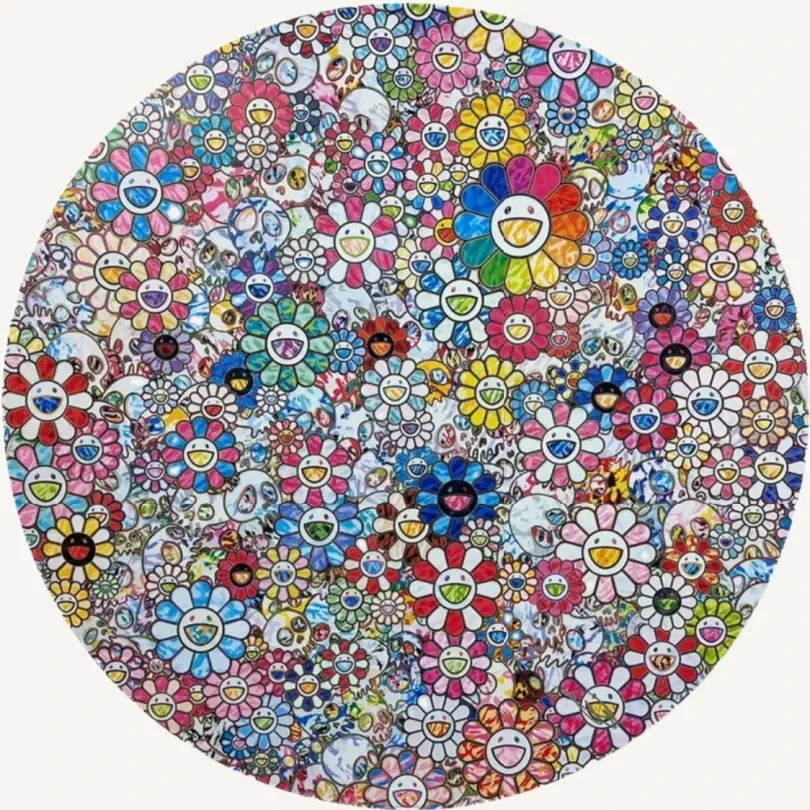
The name Flower Ball invites a literal interpretation, but it also refers to circular prints on paper. A dense field of flowers creates the impression of a sphere while the object remains a flat sheet. Technique and dimensions reveal the format more clearly than the name alone.
For Flowerball: Colorful, Miracle, Sparkle, the official catalogue gives a diameter of 710 millimetres and an edition of three hundred. Its technique includes four-colour offset printing, foil and varnish. These are the specifications of this work, rather than every Flower Ball.
On a wall, the circle can form a composition in its own right. Cutting a paper circle to the stated diameter and placing it in the intended spot is a simple way to assess scale. It also helps you picture how the eventual framing and flower-filled surface will relate to the furniture.
Explore Let Us Devote Our Hearts and Paradise in a Flower Field in our catalogue. Korin: Flower and Water offers a quieter composition.
Murakami’s circular prints
Offset, screenprint and combined techniques
A technique line describes what contributes to the surface. Offset names a printing process; additions such as cold stamp, foil and varnish describe further effects. So Much Fun from 2020, for example, is documented as an offset lithograph with cold stamp, in an edition of three hundred signed and numbered sheets.
Screenprinting uses a stencil and mesh, allowing ink through the open areas. MoMA also gives silkscreen and serigraphy as names for the process. In Murakami’s work, it can appear in combination with another printing method.
July Night from 2019 combines pigment printing and silkscreen. It is a useful example of how the finished appearance can come from several processes rather than one broad category. Choose through looking, and keep the full technical description with the work’s other details.
What the number, signature and title reveal
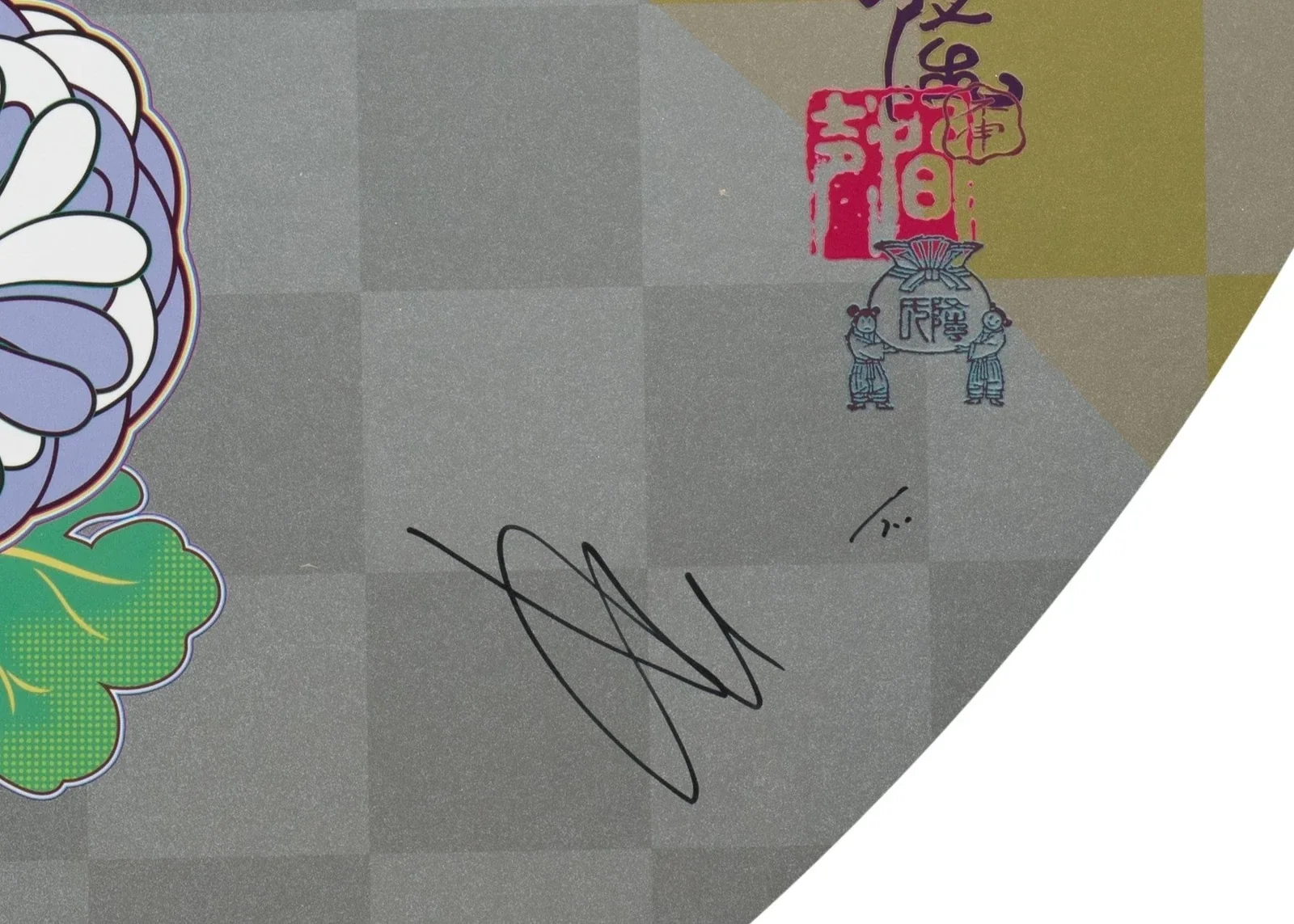
A number such as 42/300 usually identifies a particular example within the corresponding main edition. It helps describe the object alongside its title and provenance. Establishing whether two works belong to the same edition makes any comparison more meaningful.
Terminology also changes over time. A 2024 Zingaro announcement calls signed Flower Ball works “edition prints”, noting that they were previously described as posters. An older official use of “poster” in Murakami’s work therefore need not mean an ordinary unsigned reproduction.
Sculptures may carry their signatures and numbers in different places from prints. Information might appear on a base or in accompanying documentation. Learning how the chosen release is identified, and retaining photographs of those details, keeps its history clear as the collection develops.
Our limited-edition prints guide explores original printmaking and reproductions in more detail.
Completeness and condition: what to examine
For a print, useful photographs show the whole sheet, signature, number, edges and reverse. If it is framed, establish whether the entire sheet is visible and what is known about its condition beneath the frame. Image and sheet measurements can differ: July Night lists them separately, which matters when planning its presentation.
With a figure, look at its surface, base, joints and projecting parts. Textiles invite attention to shape, fabric, embroidery, seams and the labels supplied by the manufacturer. Different materials call for different close views; a single overall image may not reveal everything relevant.
Compare the contents with the original release: box, inserts, additional elements and any certificate that was supplied. The certificate documented for Inochi Doll does not establish that every Murakami object came with the same paperwork. Receipts and a purchase history add to the record, maintaining a connection with the piece’s provenance.
Bringing several objects together at home
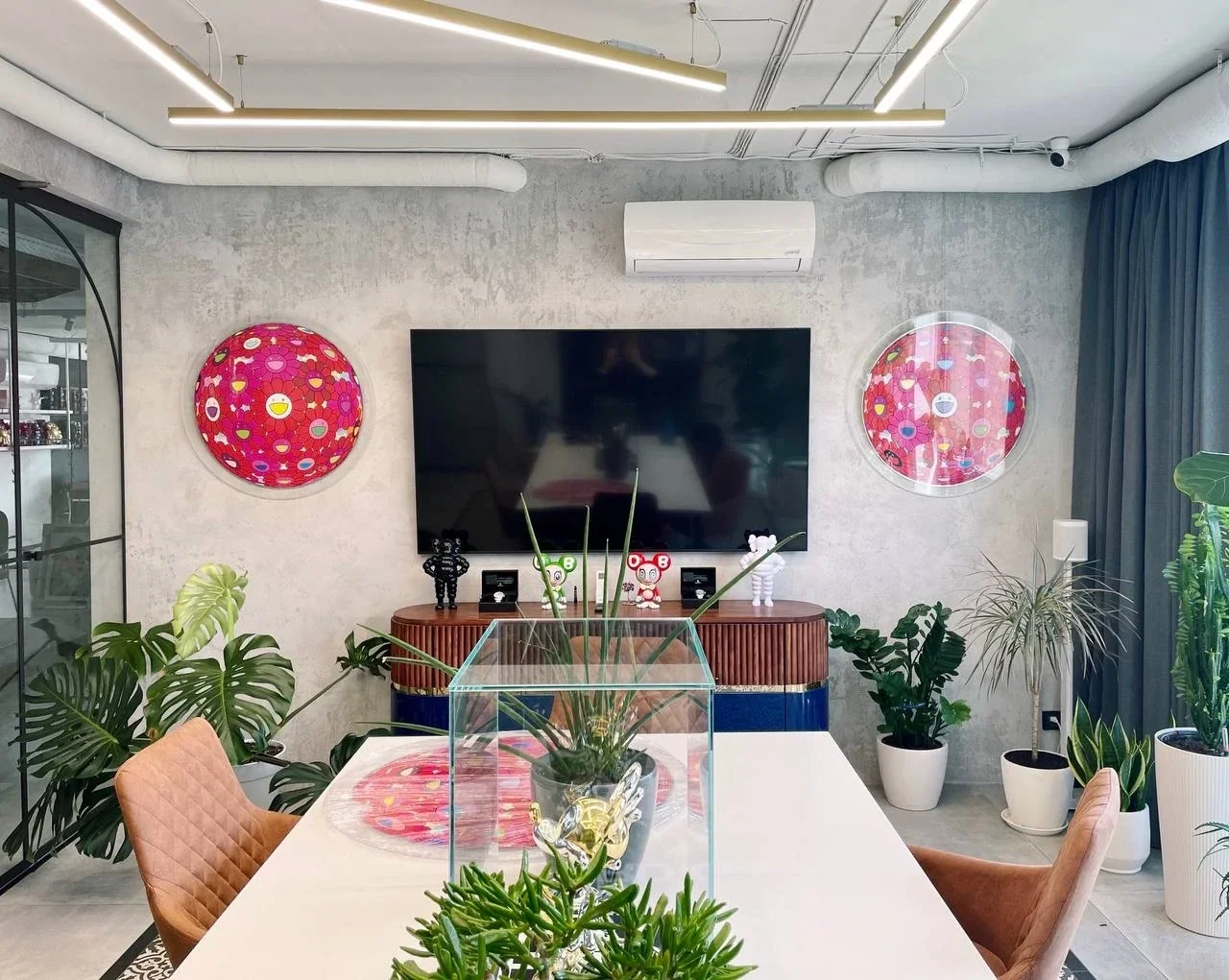
One leading motif can establish a display. A print might set the colour palette, while a cushion repeats a shade through a different texture. A nearby figure adds volume without needing to stand directly beneath an image of the same character.
A quieter palette can also connect several different images. Colour, spacing and background then provide the relationship. Leaving some room between objects makes individual forms easier to appreciate, especially where strong patterns or complex silhouettes already attract attention.
For a work on paper, discuss suitable mounting materials with the framer and choose a position away from direct sunlight and pronounced damp. A sculptural composition needs a stable surface and space around its details. These choices help a collection become a comfortable part of the home.
Collaborations as another collecting route
Louis Vuitton and Cactus Jack open up Murakami’s connections with fashion and music. They can be rewarding directions when a particular project, graphic language or performer appeals. They offer their own collecting stories alongside cushions, prints and figures.
An exact title and object type remain useful within a collaboration. One image may appear on clothing, in a print and as a three-dimensional object; each format has its own identity. The detailed stories of these projects deserve separate articles, leaving a broader guide free to concentrate on choosing a format.
Accessories also belong to Murakami’s wider world, while an artist’s complete practice and a particular shop’s selection are different things. A collection can grow from real objects with clear specifications, without needing to encompass everything the artist has made.
For a closer look, read our Louis Vuitton × Murakami story and Cactus Jack × Murakami article.
The first purchase and the next step
One object you want to see every day is enough to begin. A flower cushion brings the image directly into a room. A print offers a relationship with composition and surface. Sculpture lets you explore a character in space. The choice starts with the experience that interests you.
Before buying, put together a brief record: title, artist, manufacturer or publisher, material or technique, dimensions, edition information, contents and condition. Photographs and documents can join it. This becomes a small history of the object, ready to develop with the collection.
The next piece can continue a motif, introduce another technique or reveal an unexpected side of Murakami. An established artist or a limited edition alone cannot guarantee future value. A stronger foundation is understanding each choice: why the image appeals, what makes this version interesting and where it belongs at home.