In this article
How a flower became something to live with
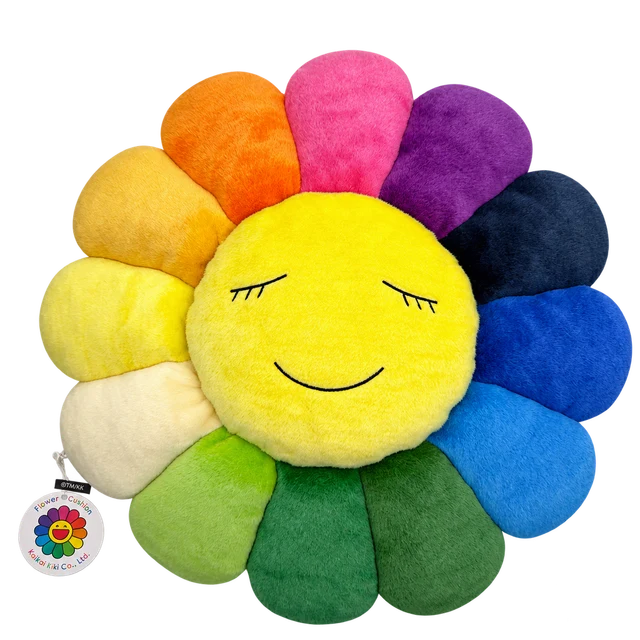
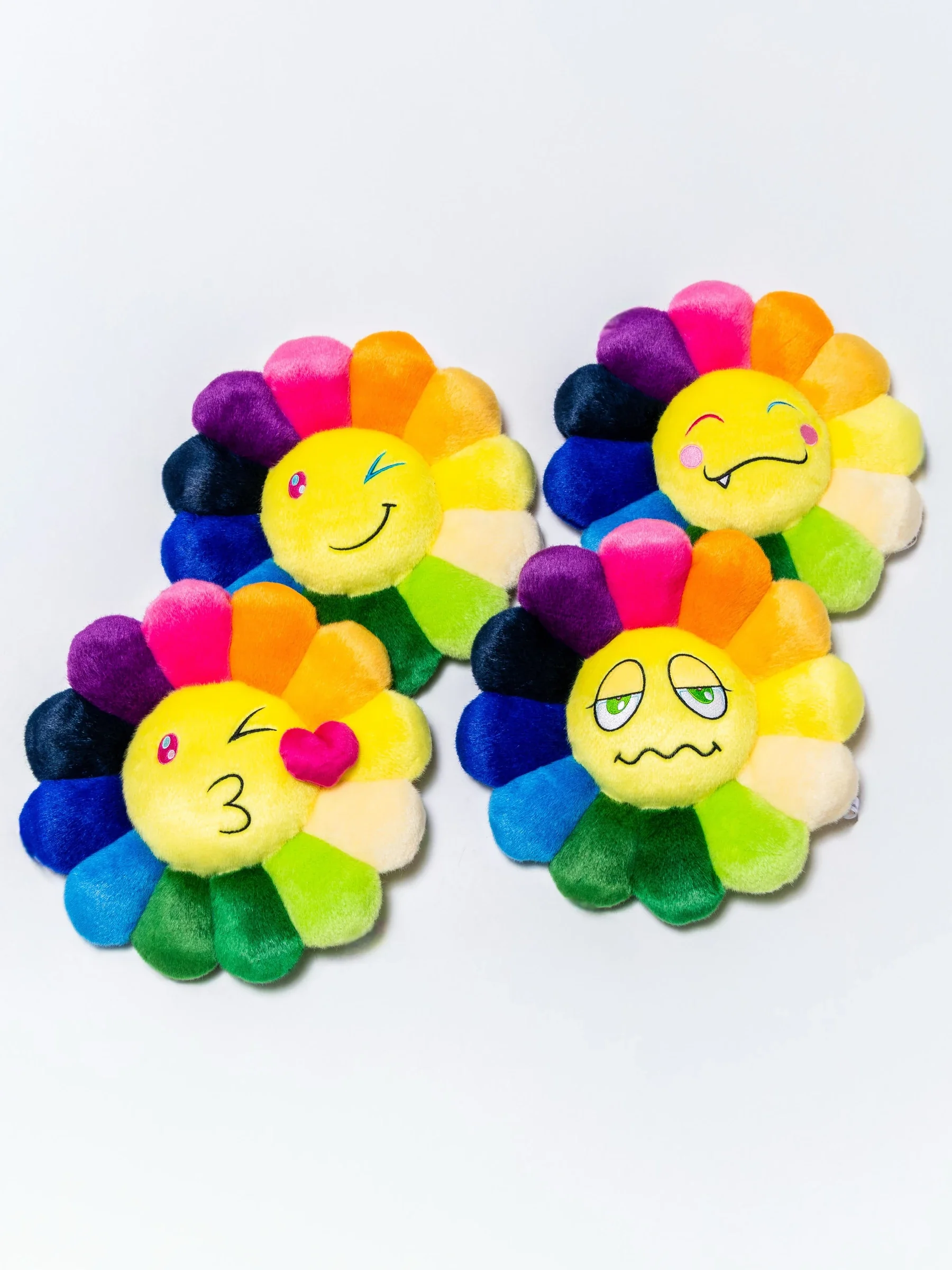
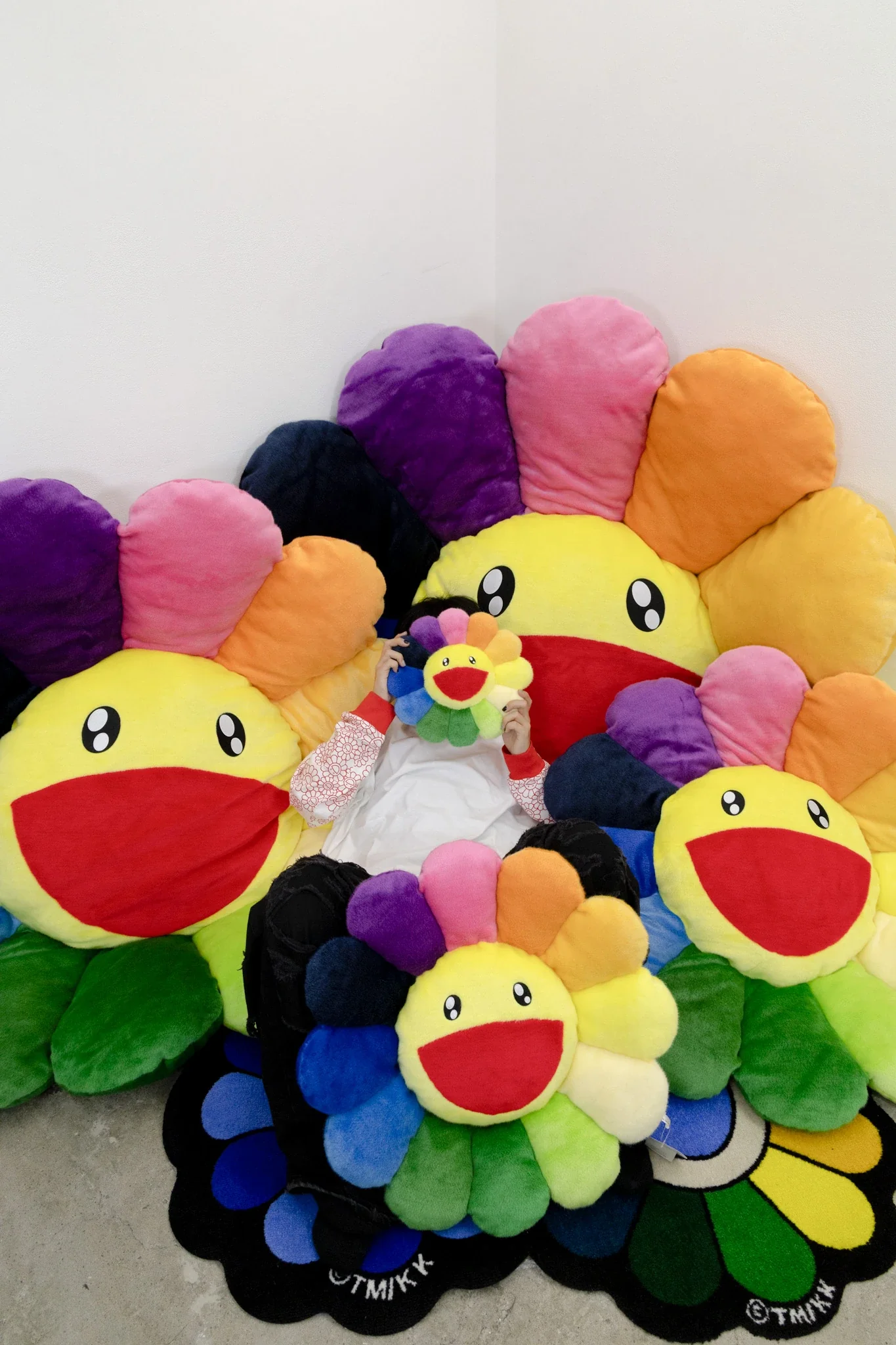
The pillow retains the face, surrounding petals and clear outline that make Murakami’s flowers recognisable. What changes is the encounter: you can turn it over, put it on an armchair or hold it. An image becomes a physical presence among everyday things.
Where did the flower itself come from? Murakami trained in Nihonga and studied historical Japanese flower painting, a connection explained by Boston’s Museum of Fine Arts. He also spent nine years teaching floral drawing at a preparatory school. In his recollection reproduced by Sotheby’s from the 2002 Serpentine catalogue, sustained observation brought both affection and unease: individual flowers seemed to have different personalities.
The face became a way to connect cultural languages. In his GLORY interview, Murakami explained that he drew on Japanese art history while giving the flower human features that a Western audience could recognise. Its smile therefore has a more complicated emotional background than a purely decorative sign of happiness.
It belongs to an established part of the artist’s practice. Gagosian documents more than twenty years of Murakami plush creations. The cushion offers another way to encounter a motif that also appears in his paintings and other work.
Flower Cushion and Flower Pillow are often names for the same kind of object. Neither identifies an exact model. When comparing two listings, look for the colour, dimensions, release and photographs of both sides. Those details usually matter more than which English word the seller prefers. A familiar outline is a useful beginning, but it is not a complete description of the piece.
Who is Takashi Murakami?
Takashi Murakami is a Japanese artist born in Tokyo in 1962. His academic background matters alongside the recognisable characters: he received his doctorate in Nihonga, traditional Japanese painting, from Tokyo University of the Arts in 1993. His official Kaikai Kiki biography also presents him as a curator, collector, film director and founder of the company that grew from his studio.
His idea of Superflat operates on two levels. One concerns the picture plane and connections between historical Japanese painting, anime and manga. The other challenges a strict hierarchy between museum art and popular culture. Yokohama Museum of Art explains that it is a way of considering different genres and periods, as well as a visual language.
The flowers are therefore one motif in a wider world that includes DOB and Kaikai Kiki, large paintings, sculptures, films, prints and everyday objects. Gagosian considers these strands together. A pillow offers a domestic introduction, while retaining its own materials, release and purpose.
Rainbow, Grey & Black and special releases
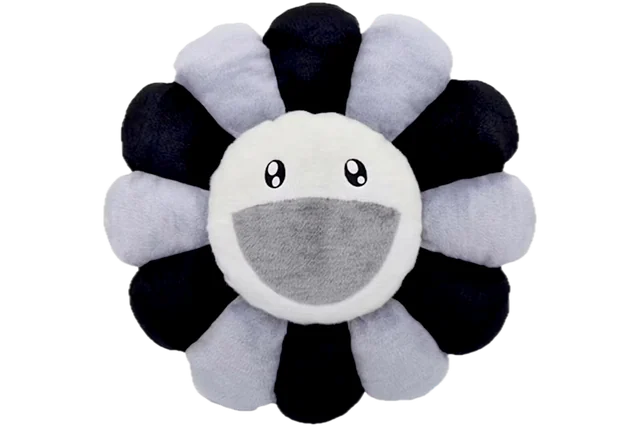
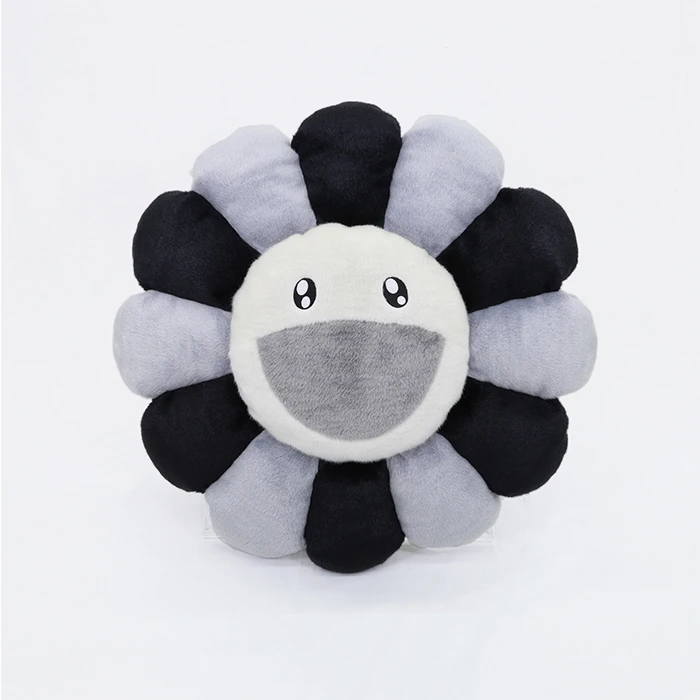
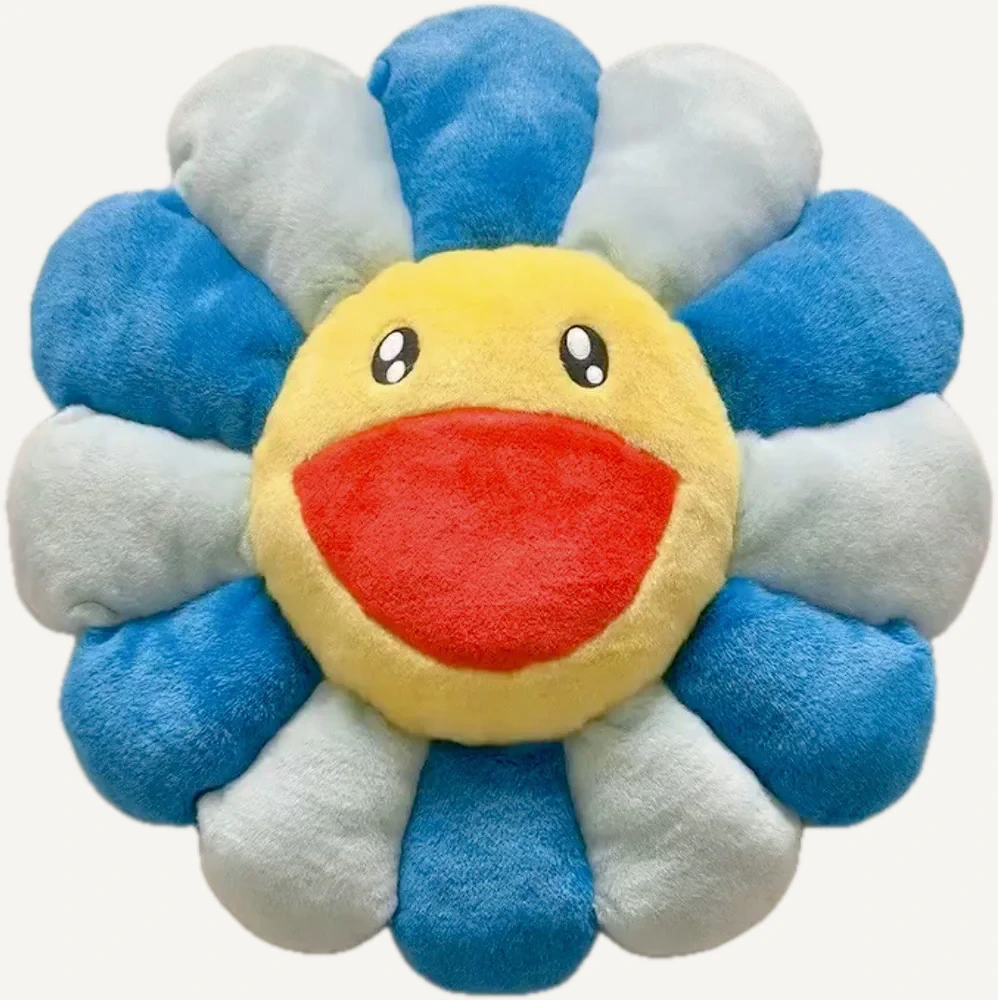
Rainbow is an obvious starting point if you want multicoloured petals. Quieter palettes keep the outline while changing its character. The official Grey & Black release has a particular connection: it was made for MURAKAMI vs MURAKAMI at Hong Kong’s Tai Kwun in 2019. That exhibition history distinguishes it from a generic grey version of a rainbow cushion.
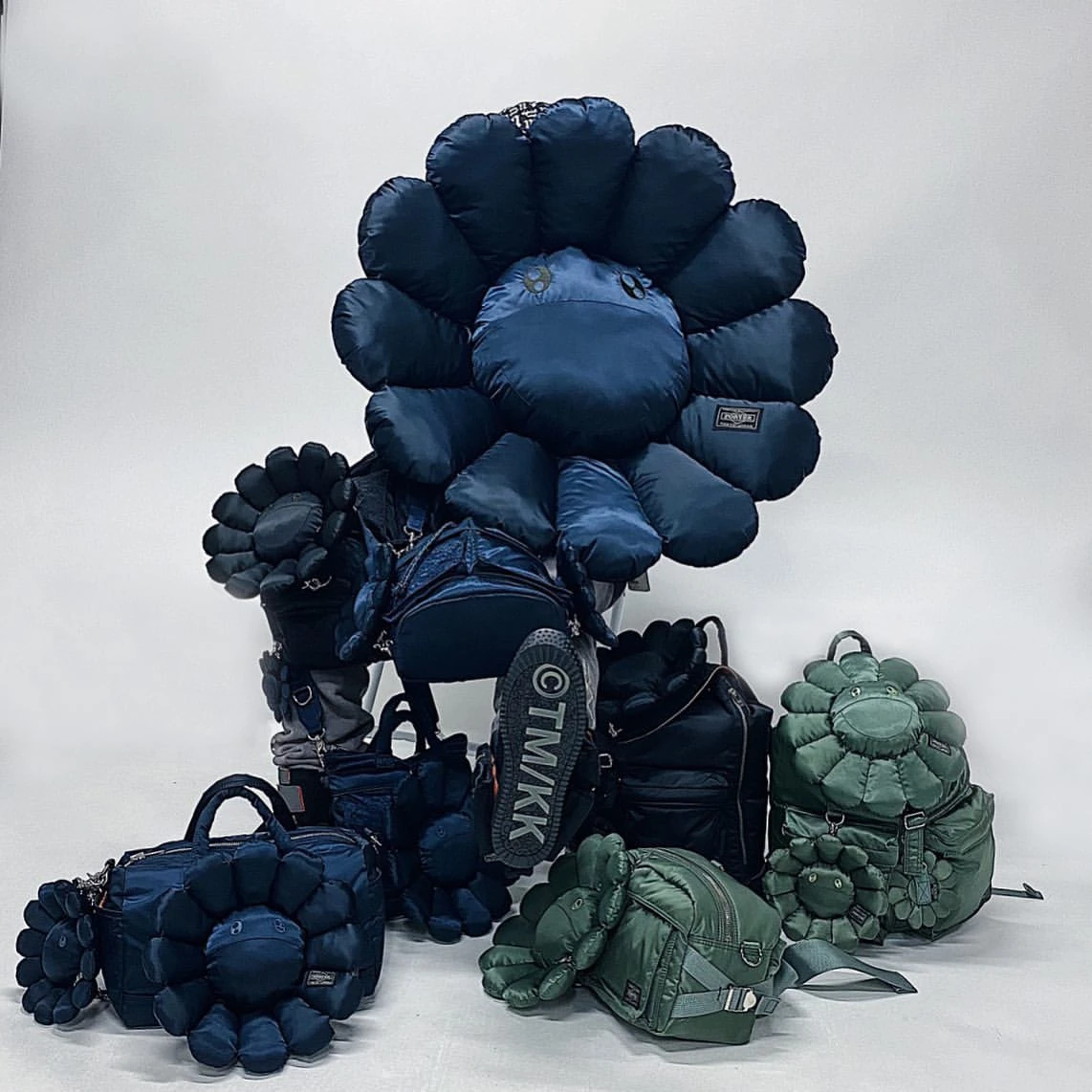
The PORTER collaboration takes a different approach. Its 2021 Sleeping Face cushions use Tanker fabric, with Navy and Sage Green versions. The familiar shape should not lead you to assume that every release uses the same fluffy textile.
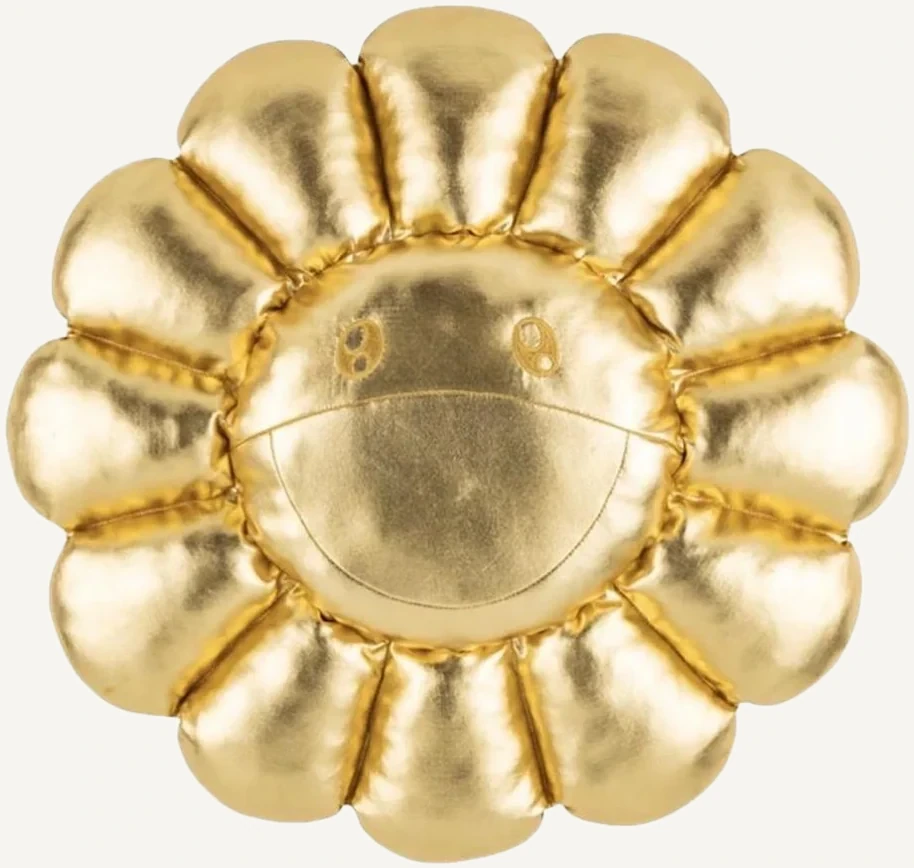
Another family is Murakami.Flowers #0000 Cushion, a 40 × 40 cm square with a pixel image. It is different from a flower with projecting petals. Names such as Silver & Gold and Gold describe appearance, rather than establish that precious metal is present.
An exhibition release and a collaboration
Choosing the size as well as the colour
Diameter changes how the same image feels. In a Tonari no Zingaro announcement, 30 cm cushions are suggested for a sofa or shelf, while 60 cm versions provide a larger, huggable presence. It is a useful starting point, but your own furniture should settle the question.
| Size | What to check at home |
|---|---|
| 30 cm | Whether the flower will remain visible among other cushions and objects |
| 60 cm | How much seating remains and whether all the petals can be seen |
| 100 cm | Whether there is a broad support and space around the cushion |
| 150 cm | Whether the room and delivery route can accommodate a large object |
Japanese partner cherry Fukuoka documents 150 cm versions. This establishes an available scale, not every colour in every size. Our Rainbow product page offers 60 and 100 cm choices; check the specific listing before making plans around a measurement.
Faces, the reverse and surface texture
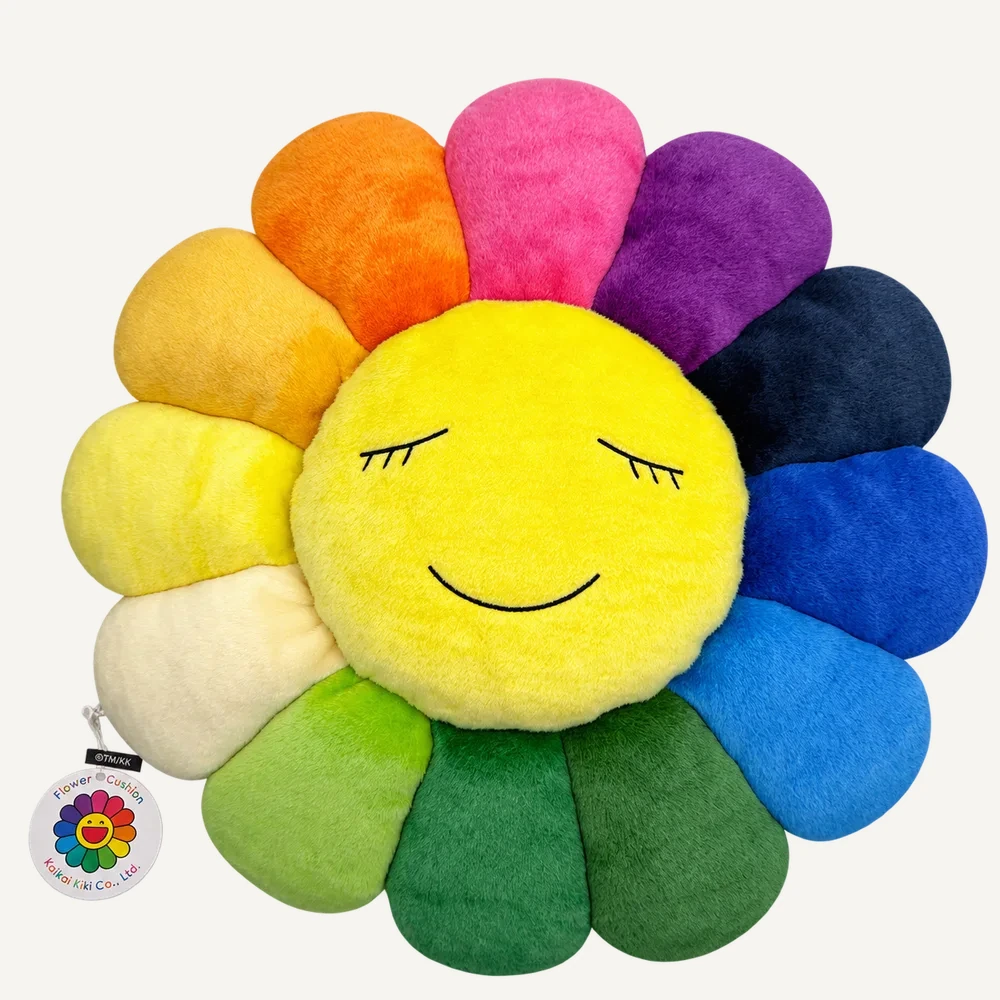
A cushion deserves more than a distant photograph. Look at the eyes and mouth, the way seams meet between petals and the reverse. These details affect how you will display it, particularly if it can be viewed from both sides.
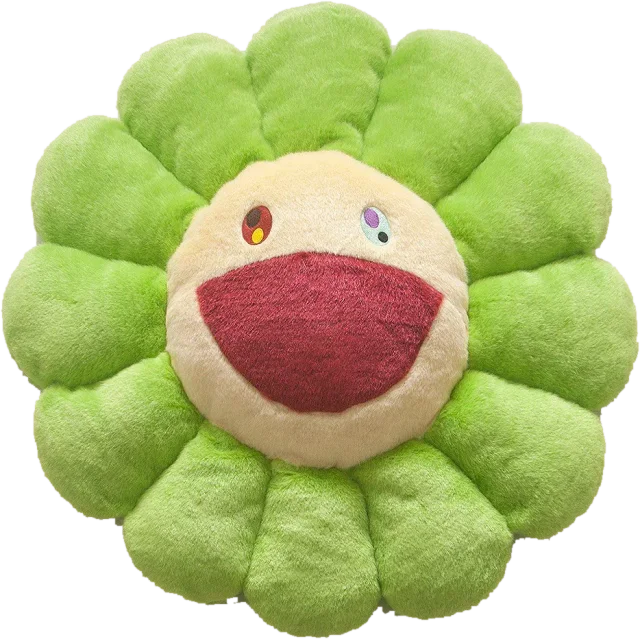
Gagosian’s Pure Green has awake and sleeping faces. The listed materials for that model are an acrylic-fibre exterior and polyester filling. They should not become a blanket specification for every Murakami pillow: special textiles and shiny surfaces need their own descriptions.
When buying online, ask for close views and photographs in ordinary light. Pile and sheen can change the apparent shade, and a screen can introduce further differences. Several angles are more useful than a single heavily processed image. The colour name helps locate a model; photographs help you assess the actual object. Neither should replace the other.
Texture and facial expression

A real home, with flowers among the collection
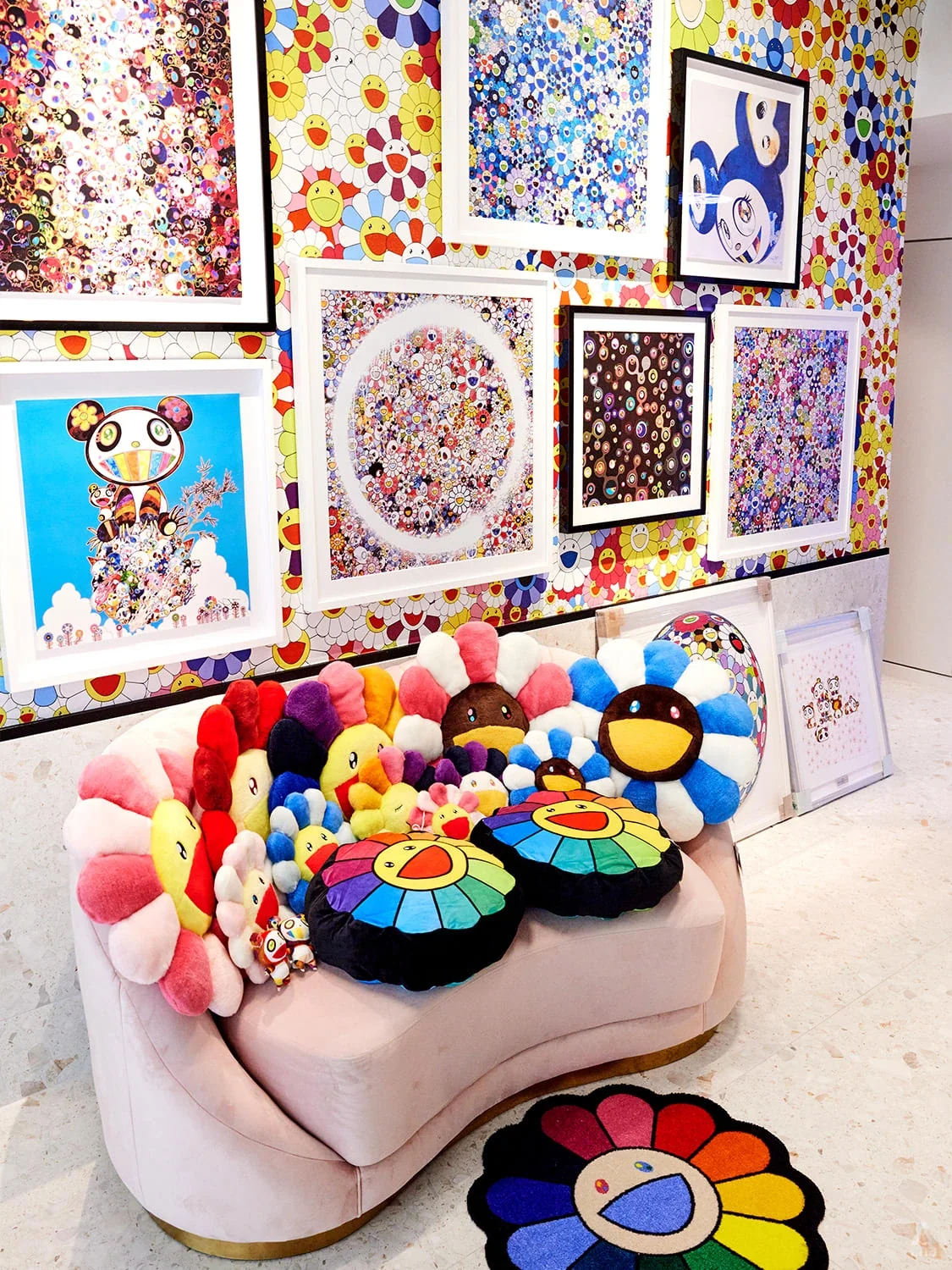
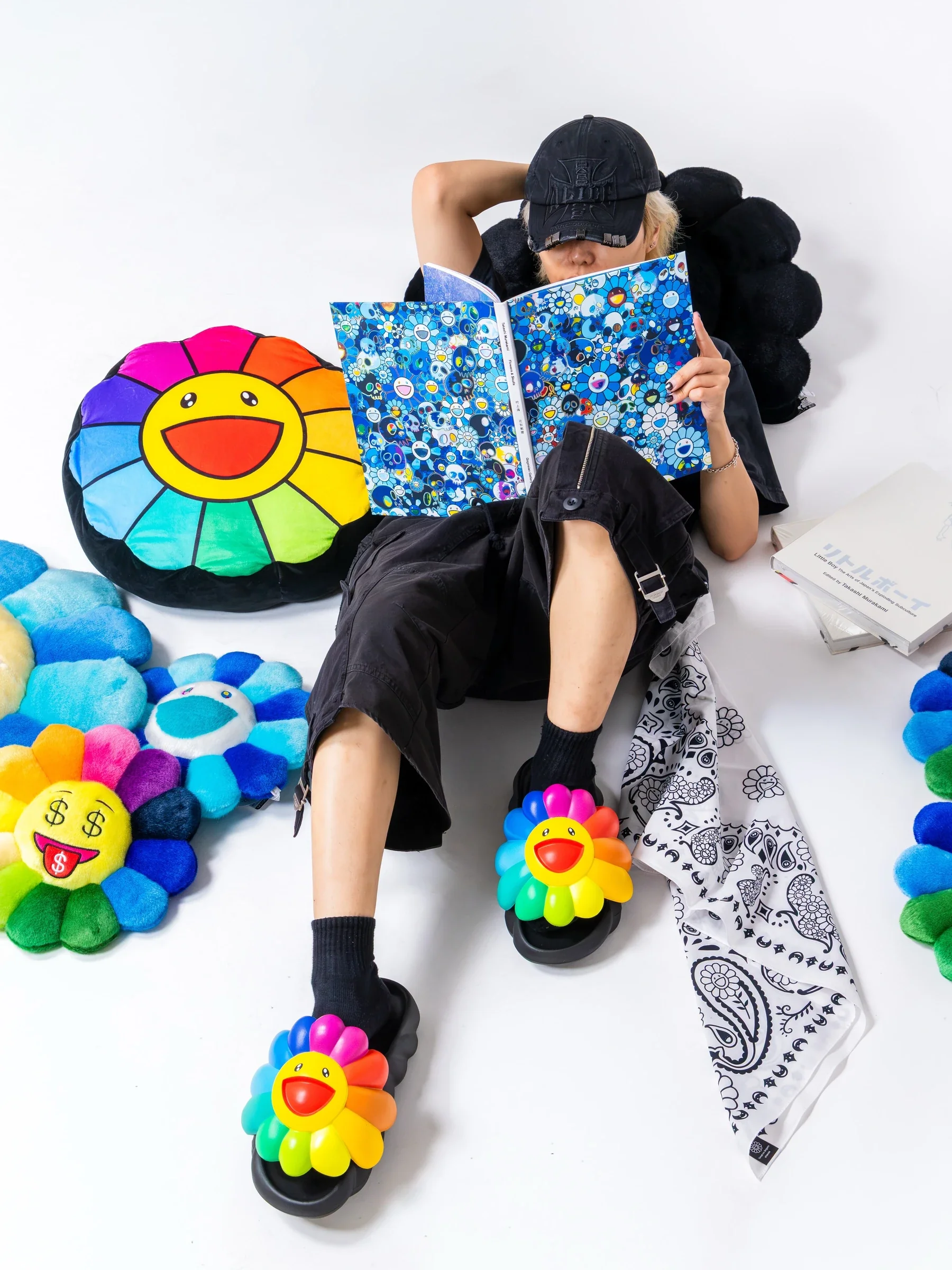
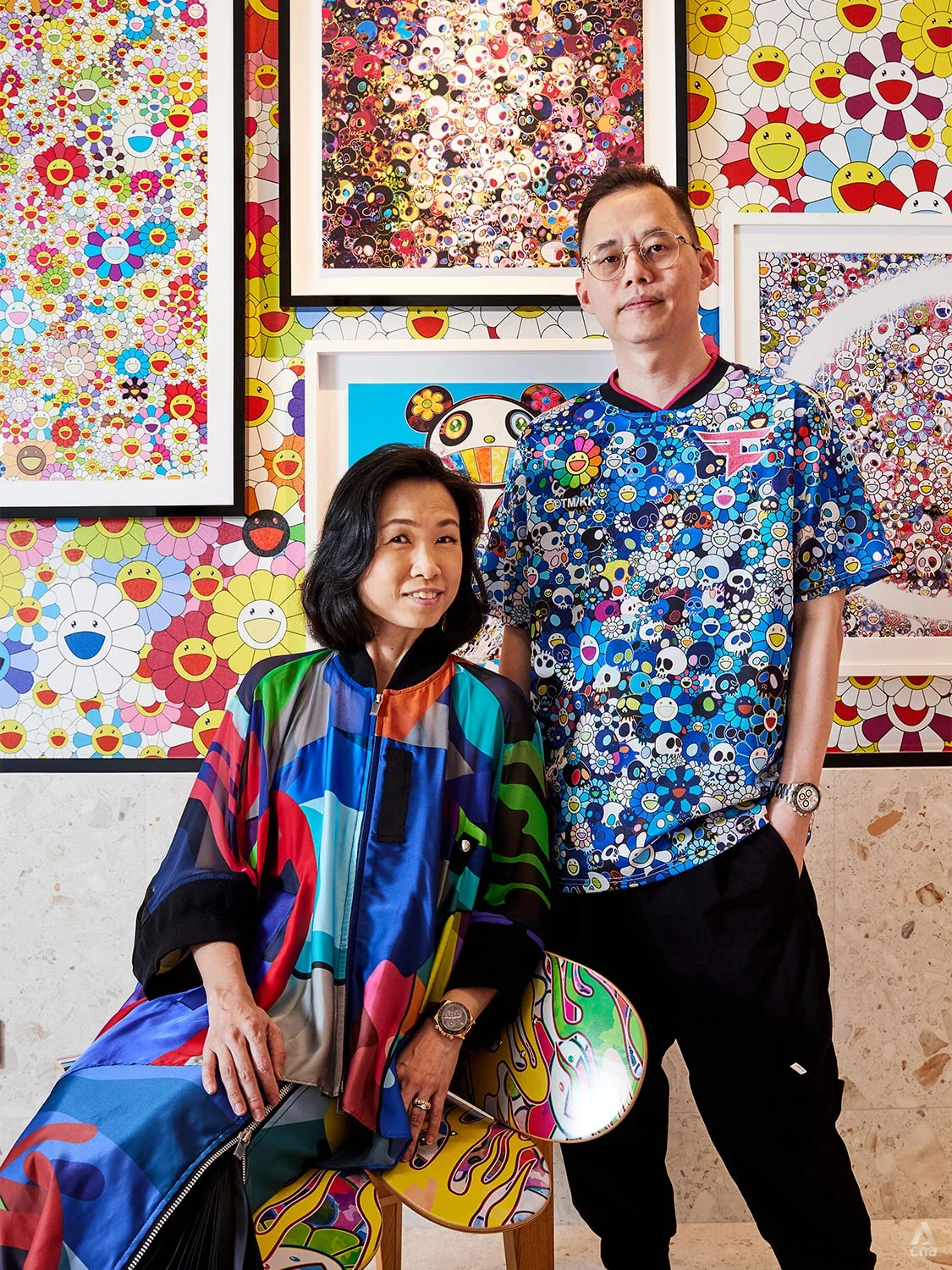
Bryan Lee and Sharon Cheong’s Singapore apartment provides a clear example in CNA Luxury’s home feature. Their collection includes prints, figures and flower cushions, with the latter on the sofa while other objects occupy display cabinets.
That movement between different ways of showing objects is useful at home. A soft piece can connect a painting’s colour to the seating and still belong to a place for relaxing. Everything does not have to go behind glass, and every surface does not need to become an exhibition.
Look at the space between objects as well as their number. Where a wall already holds several colourful works, one flower might connect them to the furniture. Beside a restrained collection it might stand alone as an accent. These are possible arrangements to try, rather than a formula every room must follow.
At home with collectors in Singapore
Finding a convincing place for the cushion
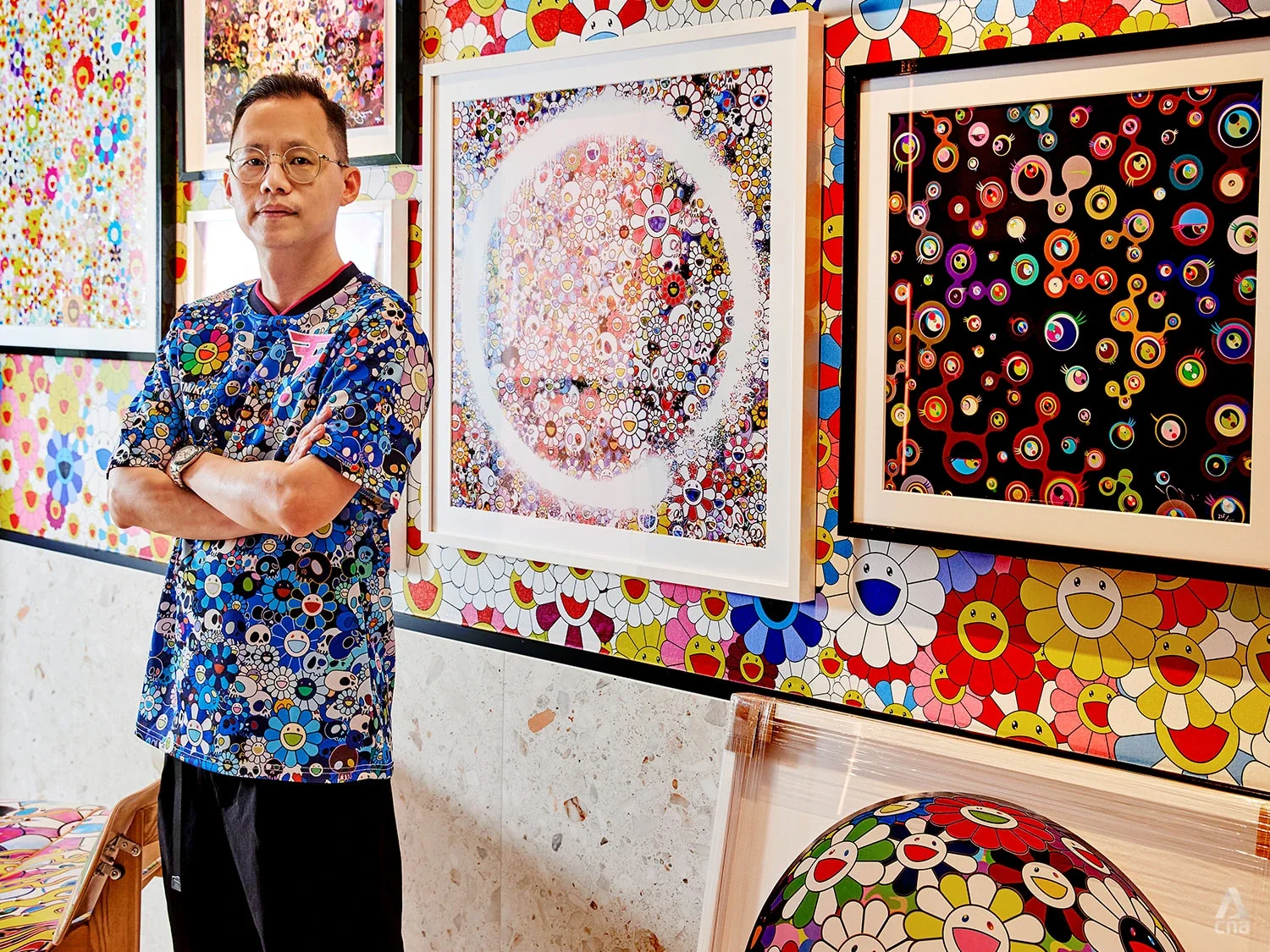
Begin with where you actually want to see it. A large flower can remain visible against the back of a deep sofa; in a small armchair it may occupy nearly the whole seat. A shelf needs enough depth and support to avoid leaving the petals hanging or constantly compressed.
Choose a colour in relation to one existing element, such as a print, rug or nearby object. There is no need to repeat the whole rainbow throughout the room. Grey & Black keeps the strong outline in a quieter palette, while Green introduces one main colour.
For two cushions, compare their scale first. Matching forms create a rhythm; different diameters can make the group feel looser. Keep at least one face and its edges visible. Our guide to art toys at home considers more ways of arranging a collection.
Colour and texture
Why the flowers became so recognisable
Different audiences have found their way to Murakami. In his Numéro interview, he connected some of his recognition to working with Kanye West and to sneaker fans’ interest in his plush toys and merchandise.
There are documented personal stories too. Vogue reported in January 2018 on a stack of flower cushions Murakami had given Drake. A famous owner, however, does not explain the quality of every similar-looking product or make every flower rare.
A commercial interior provides another example: Architectural Digest documented Murakami cushions in Pharrell Williams’s Billionaire Boys Club flagship, designed by Snarkitecture. This was a shop, rather than his living room.
The image also works at home without that background: a clear outline, an expressive face and many colour combinations are easy to respond to. Learning about the artist adds another layer. Someone might begin with a colour that suits a sofa and later become interested in the prints or other works. The object does not require that journey, but it can open the door.
Travis Scott × Murakami: a flower in the world of Cactus Jack
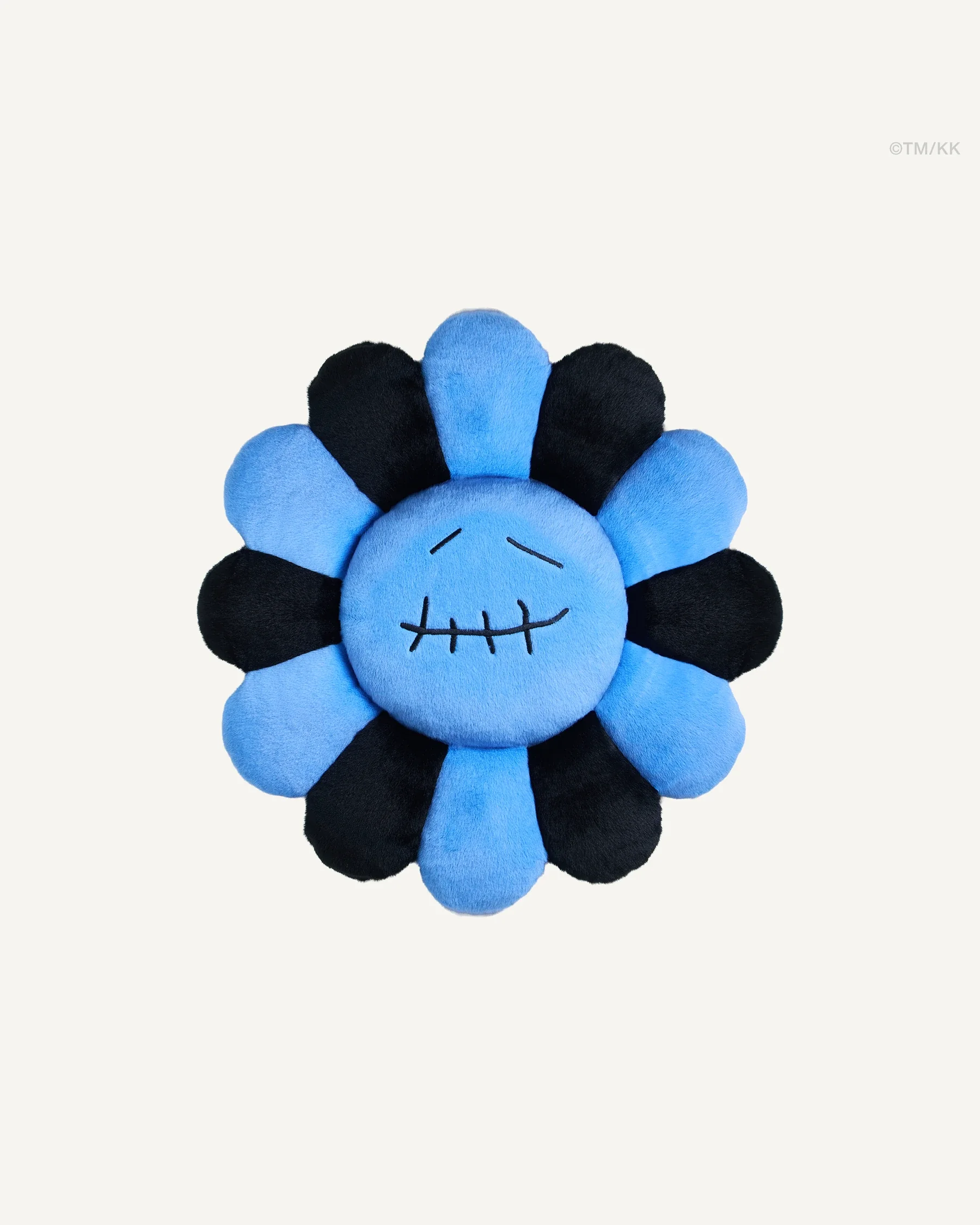
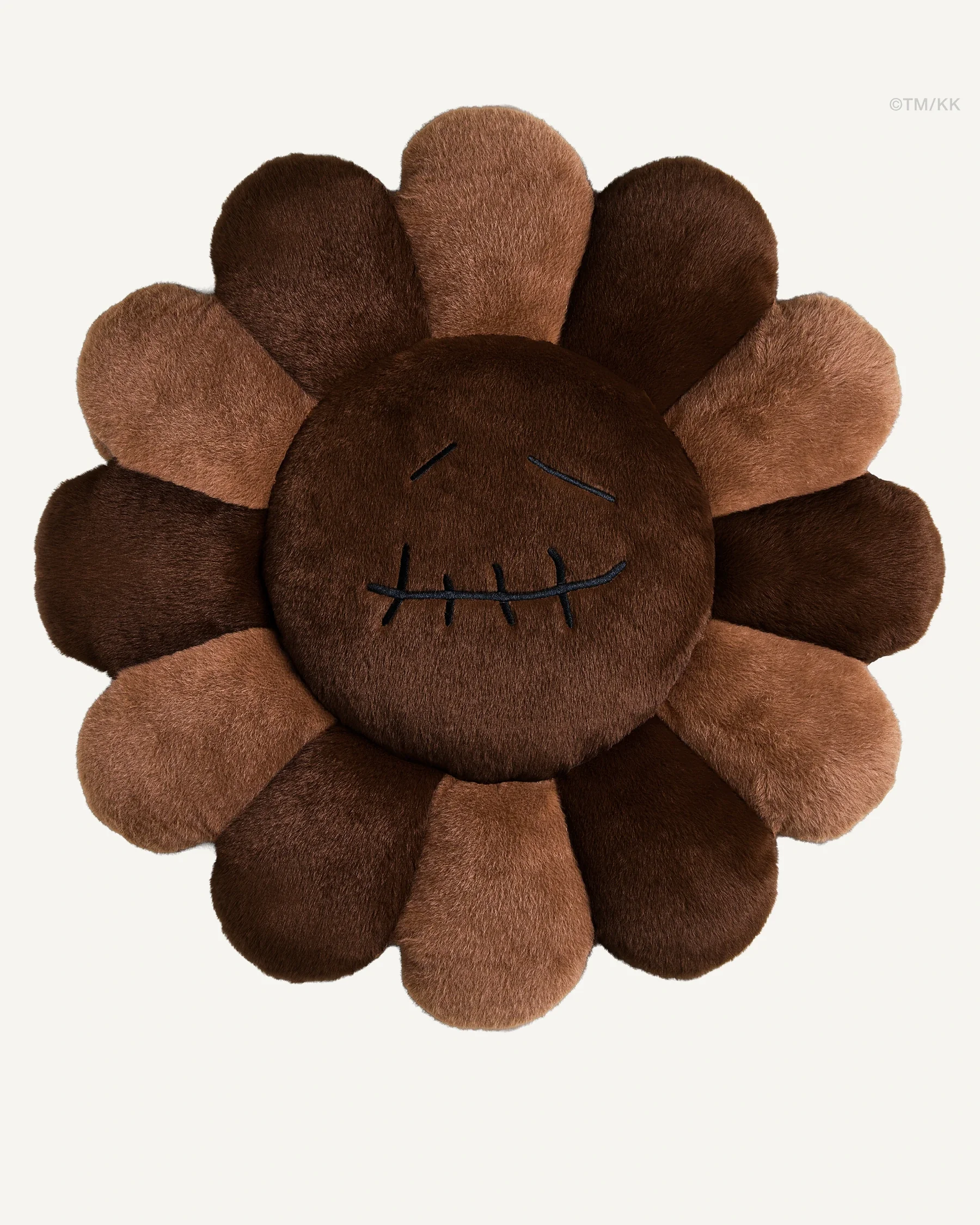
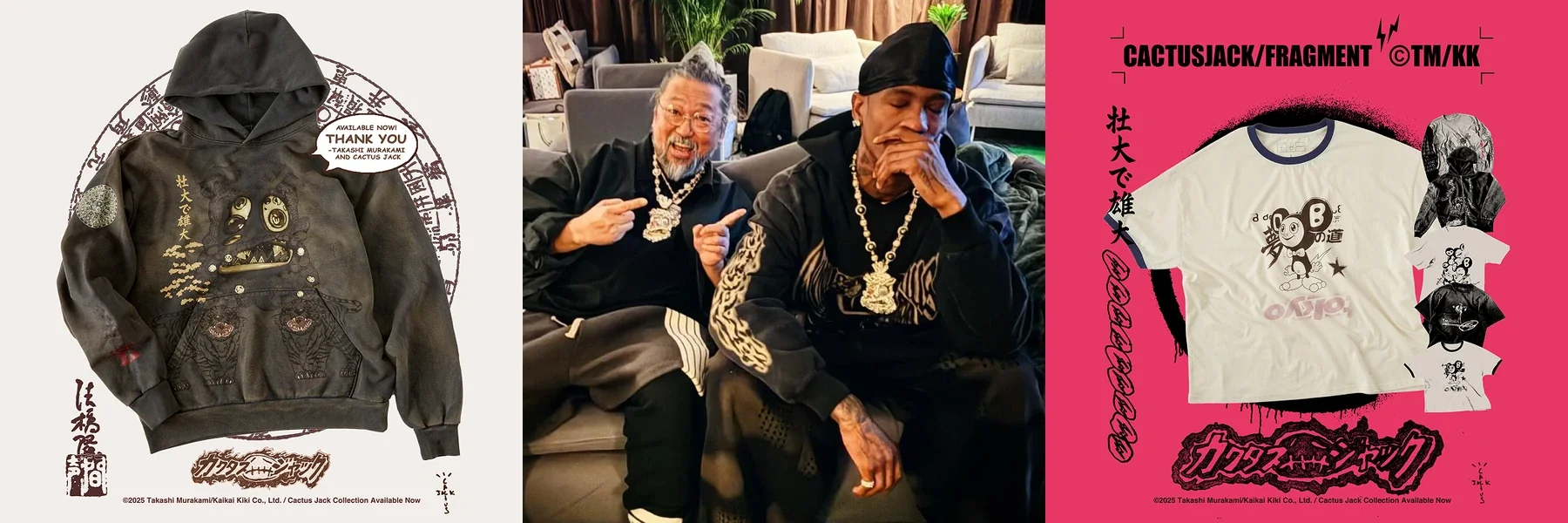
The collaboration with Travis Scott offers another way to see the familiar flower change character. Cactus Jack × Takashi Murakami includes a distinct Flower Plush line. For example, Blue, dated 2025, is described as a 60 cm cushion with an embroidered Cactus Jack logo and a joint woven label on the back. This is a specific collaborative version, distinguishable from a regular Rainbow cushion by its design and labels.
Here clothing, music and a collectible object for the home meet. A collaboration can give a familiar form a new context; the object itself still deserves attention — its colour, scale and place in a room. A musician’s name alone establishes neither a numbered edition nor a promise of rising value.
Two Cactus Jack formats
A collectible object and its price
Price belongs to a particular model, size, condition and release. An exhibition connection or collaboration helps explain the object, but does not prove a numbered edition. If a seller uses limited edition, ask what documents the quantity and whether individual numbering exists.
There are also very different objects. Sotheby’s catalogued T.O.P’s specially commissioned pillow, with silkscreen, a signature and an acrylic box. It would be misleading to compare that directly with a regular plush flower.
A cushion, sculpture and flower print should likewise be kept distinct. A shared motif does not establish the same medium, edition or storage needs. Our article on limited-edition prints explains signed and numbered works on paper. Choose a pillow as the particular object you want to live with, without relying on a promise of future returns.
What to establish before buying
Keep the complete name and your preferred size. Then inspect both sides, the petals, pile, seams and label. For a used piece, ask specifically about stains, smells, repairs and surviving packaging. Photographs should show the actual example being offered.
Care depends on the version too. Do not assume the cover comes off or can go into a washing machine: follow the label and instructions for that item. At home, choose a position where surrounding objects will not keep squeezing it and people passing through will not constantly catch the petals.
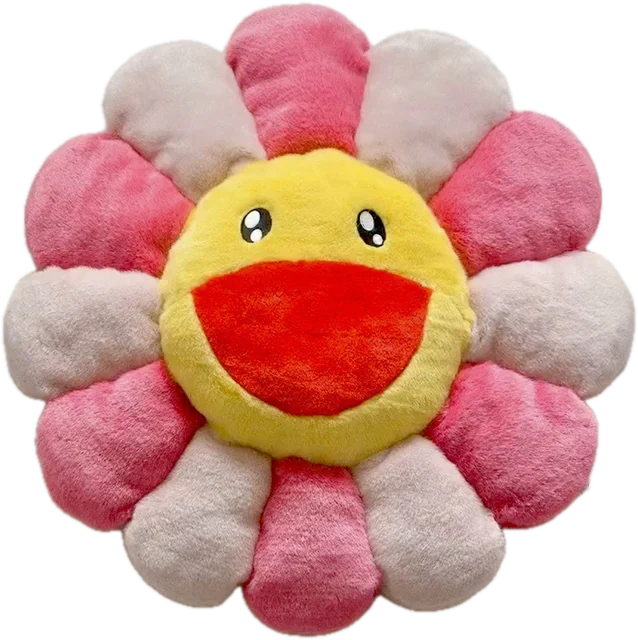
Our Takashi Murakami pillow selection lets you compare Rainbow, Gold, Blue and Pink. Decide on the shape and scale for the room, then the shade and exact release. That gives the flower a place from the start, rather than leaving it as a purchase still waiting for a spare corner.