In this article
KARIMOKU begins with a furniture maker
Pick up the name first: KARIMOKU is a Japanese furniture company with a long woodworking history. Its official timeline traces the workshop to Kariya, Aichi, in 1940 and records the company’s establishment in 1947. On a BE@RBRICK, the name identifies a maker and a particular approach to production. It helps explain why the familiar bear can feel closer to a small piece of furniture than to another printed collectible.
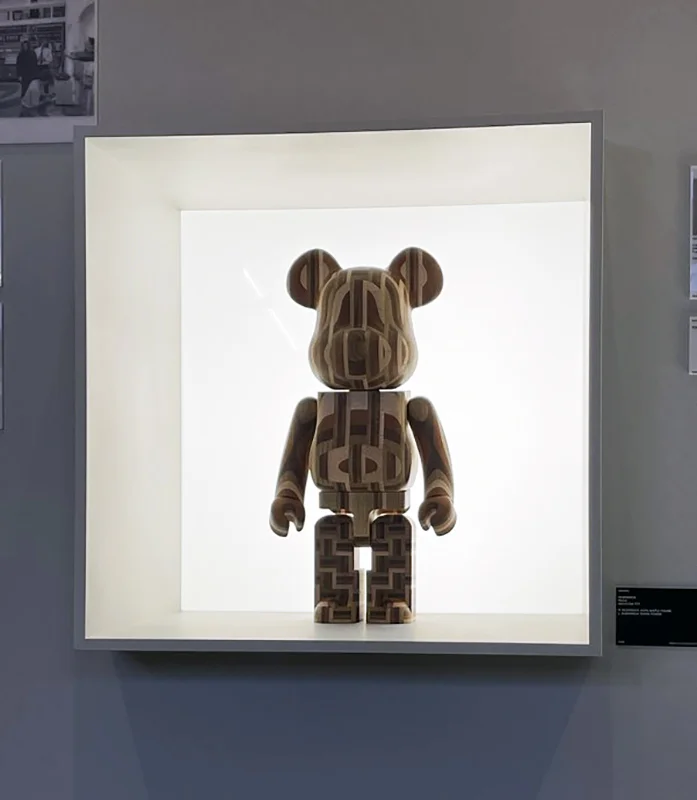
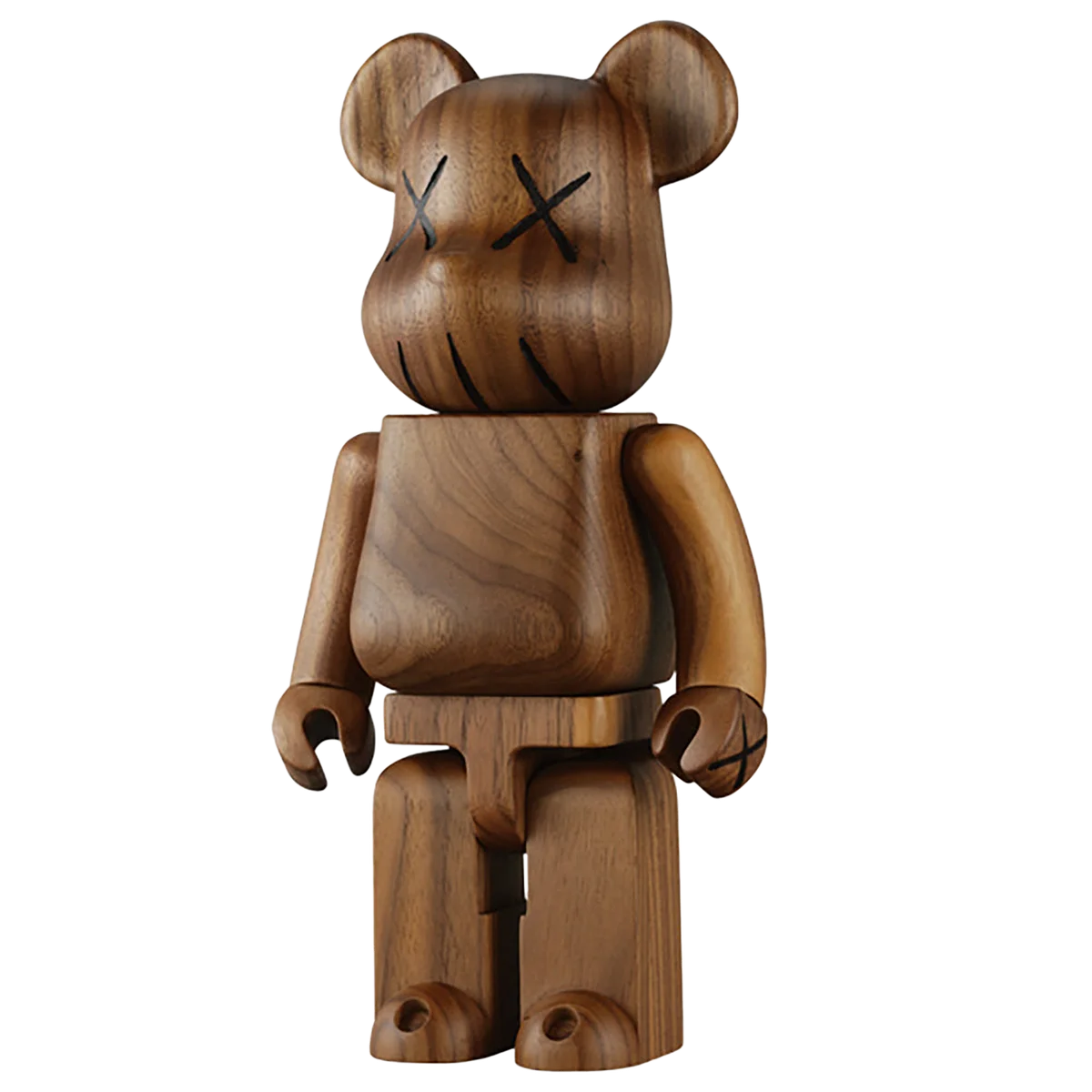
A good introduction starts with the object itself. Look at the light running across a cheek, the grain meeting a joint and the way the arms sit beside the body. The silhouette may already be familiar, so the pleasure comes from noticing how another material changes it. A wooden bear gives the eye something to follow even when it carries very little colour or graphic decoration.
That is also why “wooden BE@RBRICK” is only a beginning. Different timbers, assembled patterns, painted finishes and collaborations create distinct families. Choosing between them means deciding what you want to keep looking at: the timber, the construction, the artist’s image or the balance between all three.
A familiar shape becomes a woodworking problem
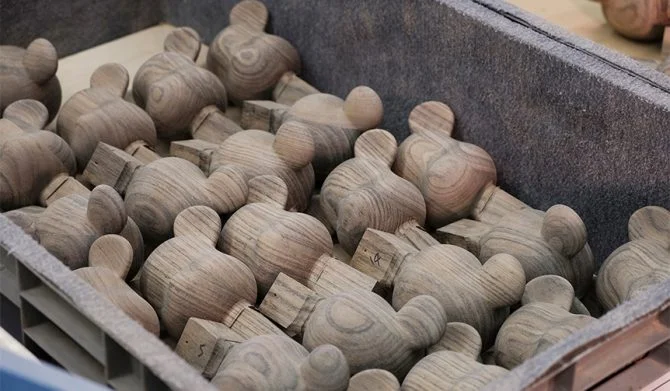
An ordinary printed figure and a wooden version share an outline, but their production demands are different. A carved form has to emerge from the material that is available. Once too much wood has been removed from a small curve, the shape cannot simply be restored by the next pass. This makes the nose, ears and transitions between surfaces useful places to look when studying a finished example.
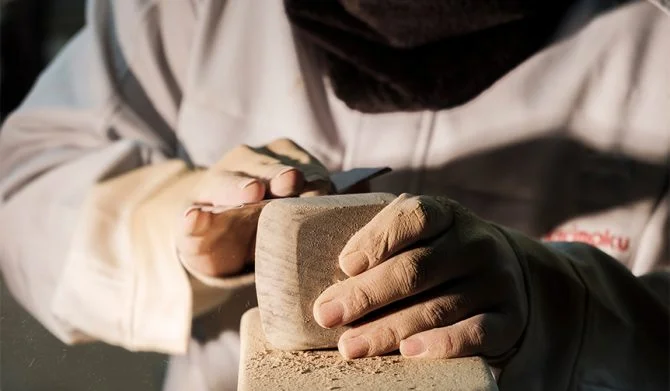
The OPENERS factory report follows machine shaping, grain selection and hand finishing of OVANGKOL 400%. A craftsperson describes around half an hour refining a head after machining, with particular attention to the nose.
Precision machinery and a craftsperson’s decisions belong in the same explanation. A machine can repeat a shape; someone still has to assess the piece of wood, judge the surface and decide whether it is ready. For the reader, the useful question is how those stages affect what can actually be seen on the finished bear.
Photographs
Why the surface matters as much as the silhouette
Wood invites close looking. Lines can widen around the belly, become tighter near the edge of a head and change direction when one part meets another. On a photograph, ask whether the image lets you follow those transitions. A front view tells only part of the story; a side view can reveal a much stronger grain pattern or a noticeably different tone.
OPENERS’ factory report describes clear urethane and five to six finishing stages for BE@RBRICK. HINOKI instead specifies hinoki oil: the finish depends on the model.
A quiet-looking finish can take considerable effort to achieve. There is no busy illustration to distract from an uneven curve or an awkward transition. The simpler the surface appears, the easier it is to notice its small decisions. That does not establish the quality of a particular object from a screen, but it explains why plain timber can reward just as much attention as an elaborate design.
For a collection, it is worth photographing the front, back and both sides under similar light. Strong warm lighting can make pale wood look amber; a cold image can mute its colour. Use photographs to understand the arrangement of the grain, then ask for an honest description of the actual finish and condition.
CHESS, BRICK-STYLE TILES, HORIZON and YOSEGI
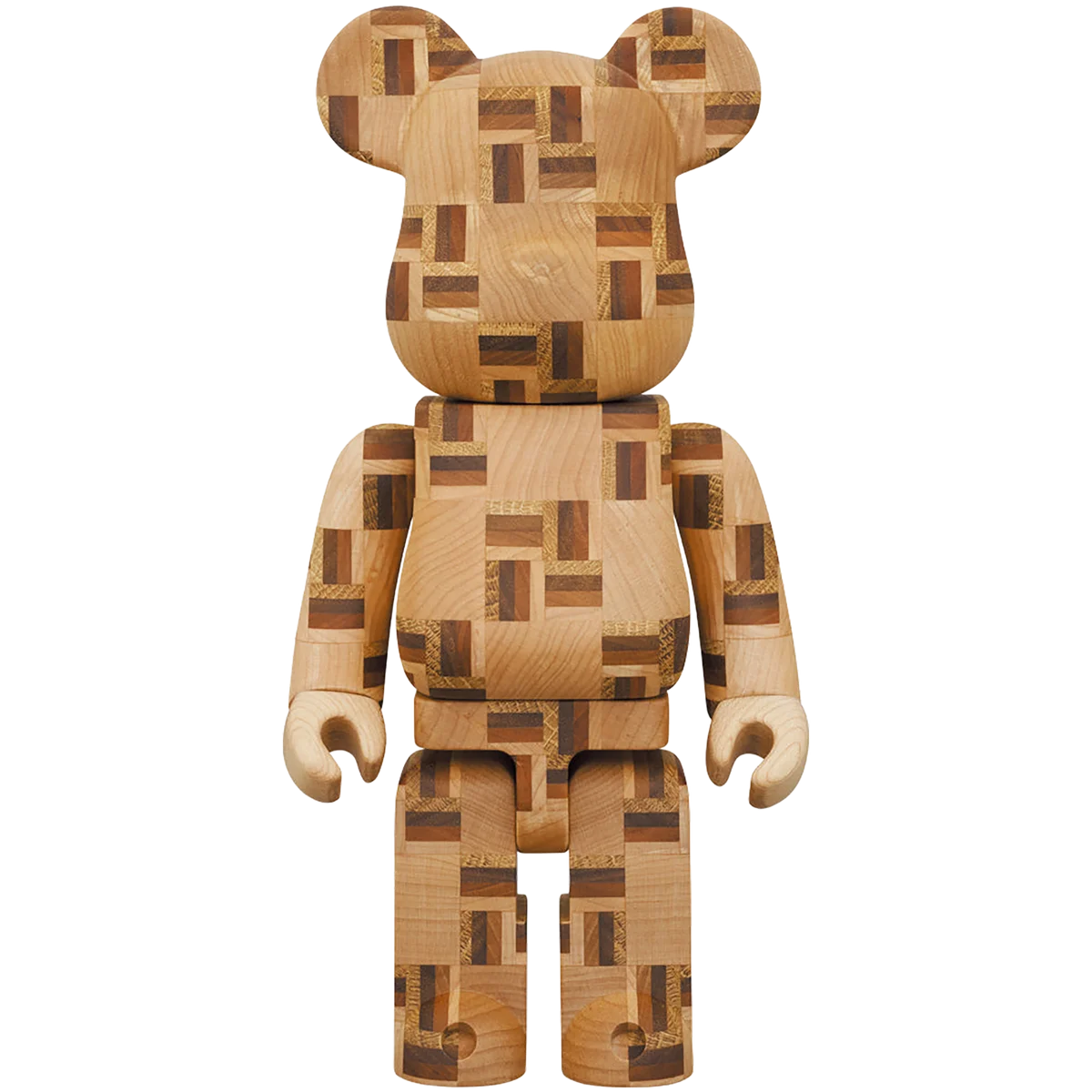
The factory interview identifies CHESS 400% from June 2010 and BRICK-STYLE TILES 400% from June 2014. These designs begin with joined wooden blocks before carving. Their appeal lies in seeing an assembled pattern travel across a three-dimensional body: the rhythm has to remain convincing as a flat-looking design turns around the bear.
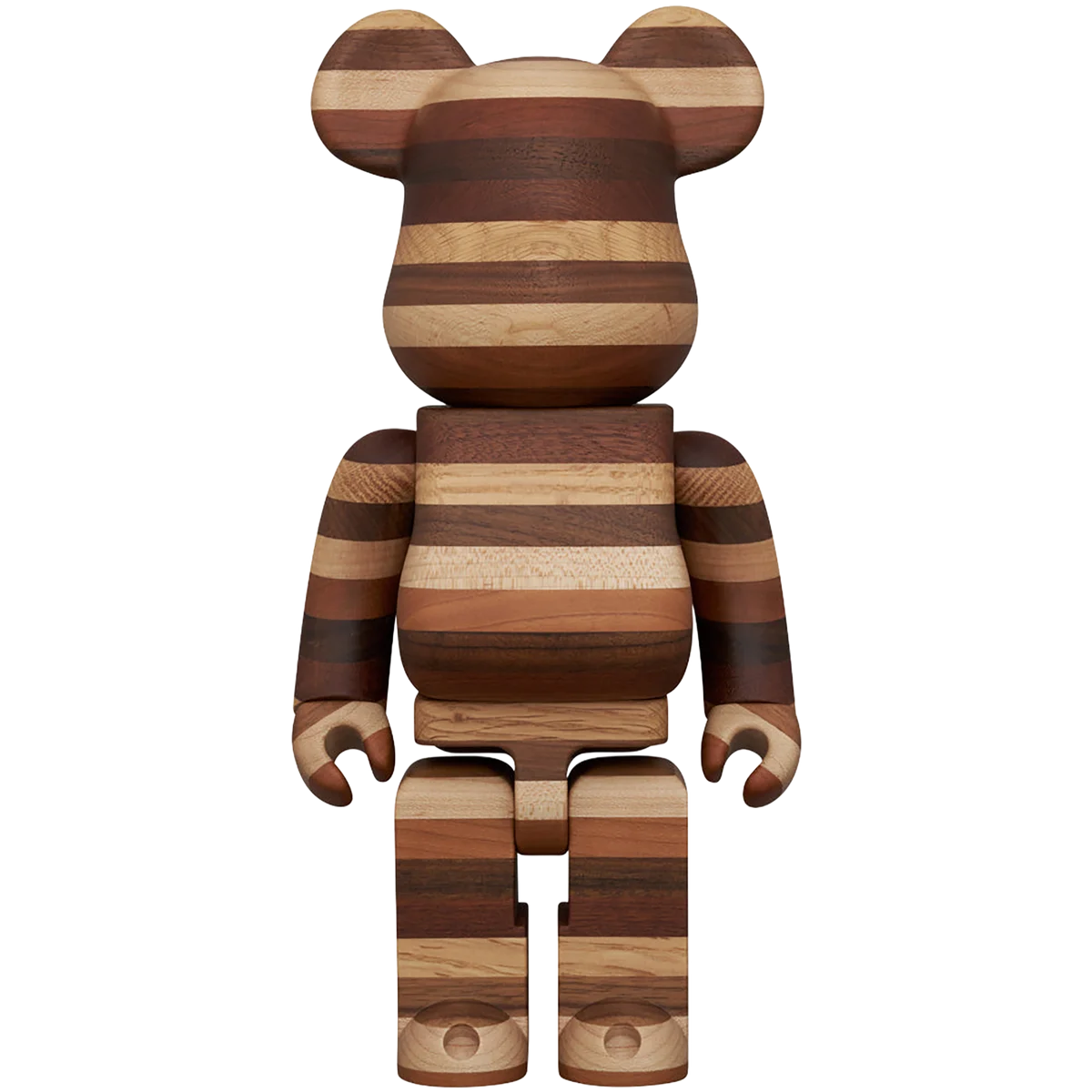
HORIZON 400% is documented in July 2011. HORIZON 1000% was scheduled to ship in January 2018. Its broad horizontal bands offer a different visual rhythm. YOSEGI 1000% followed in July 2021, with a second version in July 2022. These are useful landmarks for understanding the range, rather than a complete catalogue of every wooden release.
When comparing them, begin at room distance. Horizontal bands can read as large, calm divisions; a smaller repeating arrangement may create a more active surface. Then move closer and look at the relationship between pattern and joint. Two bears can share a palette yet feel entirely different because one invites you to read the whole body while the other keeps drawing your eye into its construction.
Photographs
The polygon versions make every plane visible
The fragmentdesign polygon HORIZON 400% release is documented for July 2018. In the factory interview, the polygon model required dedicated jigs and a specialist project team. A rounded cheek lets light move continuously; a faceted cheek breaks that movement into separate planes. The geometry becomes part of the experience.
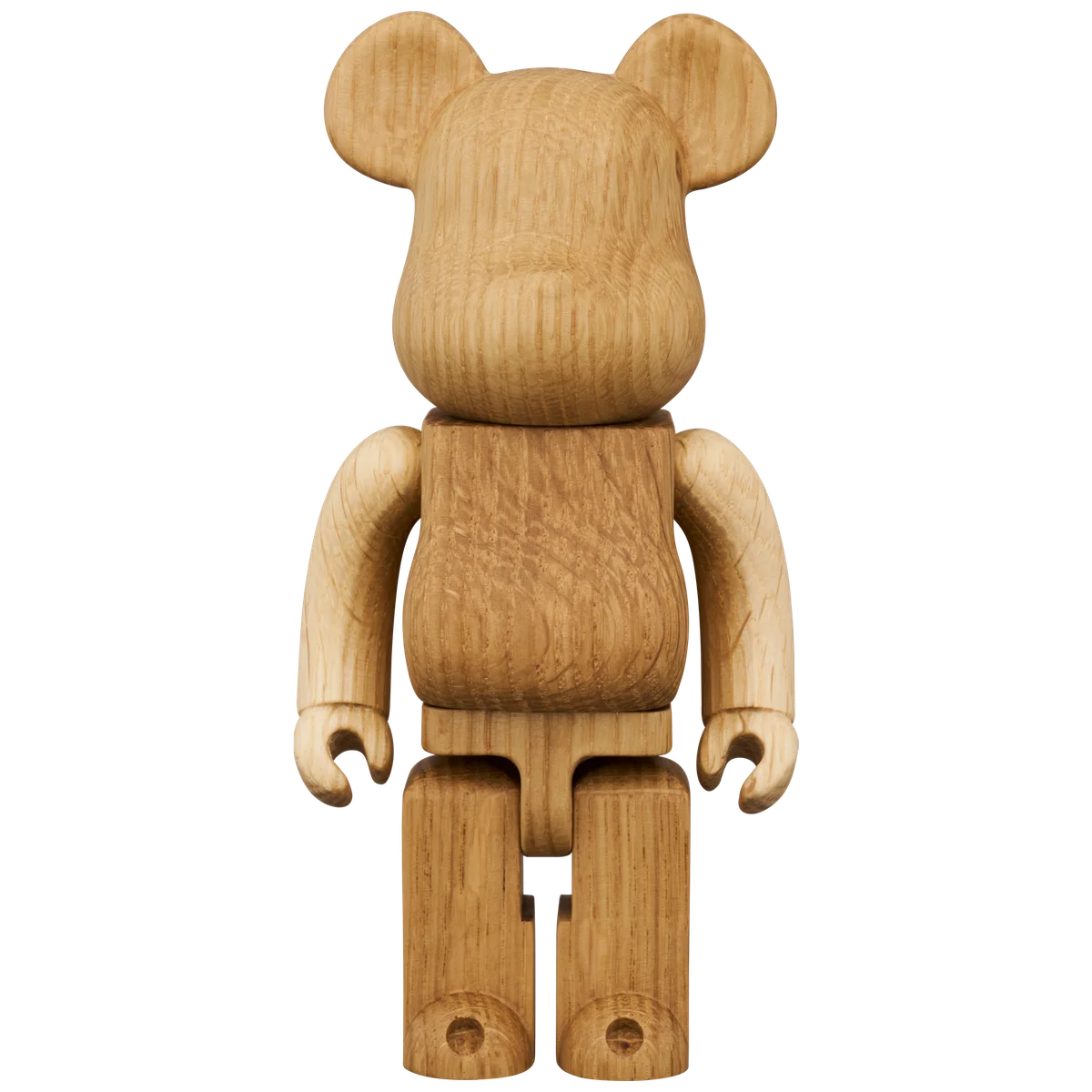
This is especially interesting beside a smooth wooden bear. Similar height and colour can disguise a major difference in how an object catches daylight. On a shelf near a window, the faceted figure may look quite different in the morning and later in the day. That is a reason to examine it from several angles before deciding which surface you prefer.
Photographs should preserve the edges clearly. Heavy contrast or aggressive sharpening can make a facet look harsher than it is, while flat lighting can nearly erase it. The best comparison uses similar distance, background and light for both versions.
Photographs
KAWS, BABY MILO and Haroshi: three different directions
The WORLD WIDE TOUR KAWS 400% archive records real-wood construction by KARIMOKU, a 2005 copyright and January 2006 shipping. Its restrained character treatment makes an interesting starting point for a wood-focused collection. We explore the wider relationship in our BE@RBRICK × KAWS history.
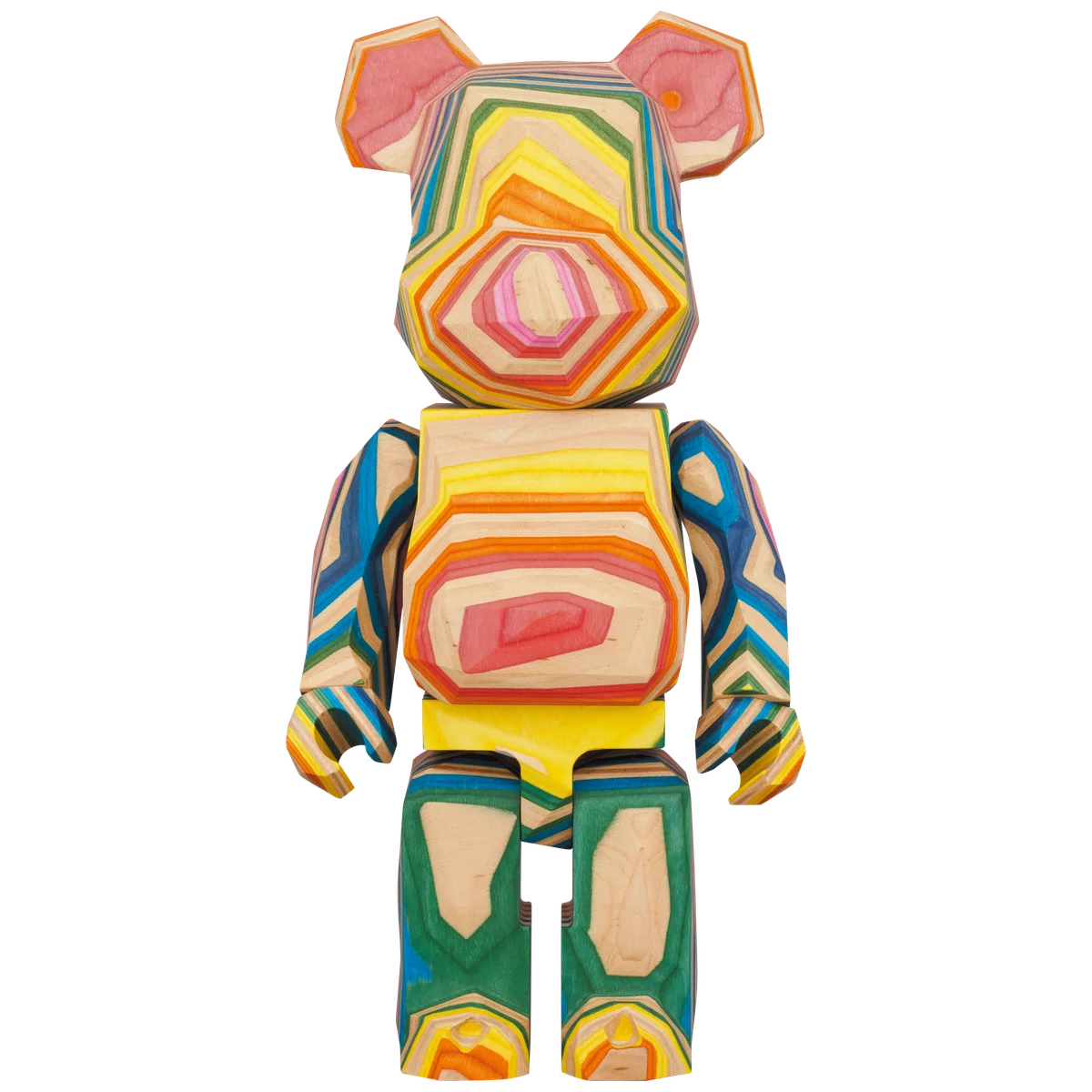
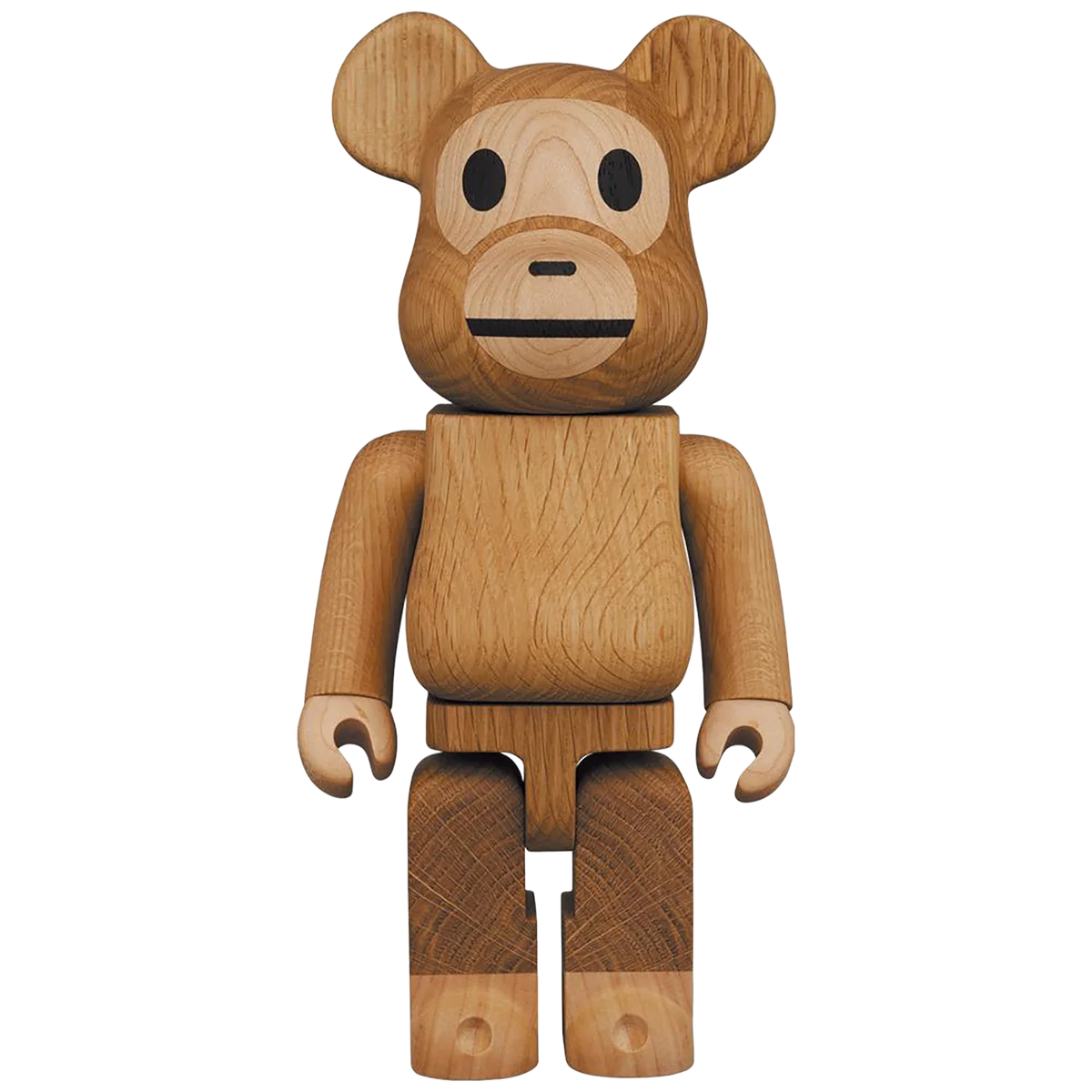
BABY MILO HORIZON 400% was released in August 2022. Here the layered timber supports a recognisable BAPE character, giving the familiar face another way to sit on the bear platform. Haroshi’s 400% collaboration, documented in December 2019, offers another distinctive family to include in a survey.
With Haroshi, the material has a history too: Christie’s describes a 2019 example made from repurposed maple skateboard decks. Its coloured layers connect the object to the material’s earlier life.
An artist’s name is useful, but it should not replace looking. Ask what the collaboration actually changes: the face, the arrangement of wood, the colour, the outline or the surface treatment. A collection becomes more personal when the reason for choosing a model can be described without starting and ending with the logo.
Photographs
A working map of the main families
The range is easier to understand as several overlapping directions. There are timber-led models where grain and tone carry the design; constructed patterns such as CHESS, BRICK-STYLE TILES, HORIZON and YOSEGI; faceted polygon versions; and collaborations where another artist or brand changes the reading of the bear. These categories help organise a collection without pretending that every release fits one box.
The material-led branches include HINOKI CYPRESS 400%, documented in June 2013 with a hinoki-oil finish. The rare-wood series includes PADAUKU, WENGE, SAPELE, IROKO, curly MAPLE, PAOROSA and OVANGKOL. These names invite comparison of individual timbers; they do not mean all the trees were grown in Japan.
Other useful names are BAMBOO 400%, fragmentdesign polygon-LATTICE PATTERN and the smaller Ebony and Paulownia 200% models. Bamboo is a separate material direction, while the smaller formats show that the range extends beyond the familiar 400% and 1000% scale.
The OPENERS interview also records Kokebrick 400% in December 2018. It adds painted decoration to the discussion and shows how broad the possibilities become once wood is treated as more than a neutral base. The point of this survey is to give a reader names to explore and differences to notice.
Keep the full model name when saving an image. “KARIMOKU bear” is not enough to distinguish a smooth HORIZON from a polygon collaboration, or an early release from a later variation. A useful personal record includes size, exact title, documented year, material description and the source of the photograph.
What can make a wooden BE@RBRICK expensive?
There are several layers to the price. Production involves material selection, shaping, finishing and assembly. A patterned version adds the challenge of building a convincing arrangement before the final form is complete. A collaboration may add a distinct design history and collector demand. These factors can work together, but they do not contribute in identical proportions to every release.
A larger figure also changes the practical demands of making, packing and moving an object. That does not mean the price can be calculated from height alone. Two equally tall bears can involve very different surfaces and construction. Compare like with like: exact version, size, documented condition, packaging and the terms of the sale.
It is more useful to understand what you are paying for than to accept the word “rare” as an explanation. Ask which part of the object matters to you. If the answer is the timber and workmanship, a quiet model may be more satisfying than a busier collaboration. If the design history is central, the specific release may matter more than the colour of the wood.
Expensive examples need actual sale records
A documented example is BE@RBRICK KARIMOKU HAROSHI 400% at Christie’s: the sale closed on 13 December 2022 with a published price realised of HK$60,480. This is a result for one lot, not a universal value for the series or a claim that it is the most expensive wooden BE@RBRICK ever sold.
At SBI Art Auction’s 2–3 April 2021 sale, HAROSHI 400%, lot 298, realised ¥2,242,500 including buyer’s premium. For a separate measure of expensive original releases, the official YOSEGI 1000% and YOSEGI 2nd 1000% archives list ¥880,000 and ¥990,000 including tax respectively. Those are historical retail prices, not auction results.
Asking prices tell a different story from completed sales. An auction estimate is another separate figure again. Before comparing amounts, note the currency, date and whether the published sum is a hammer price or an auction house’s price realised. We retain Christie’s own label here instead of presenting the number as a current market quote.
KAWS also made other wooden works with KARIMOKU, including COMPANION and PINOCCHIO. Their auction results belong to those objects. They cannot be inserted into a ranking of BE@RBRICK simply because the artist and woodworking company are the same. A careful comparison starts by identifying the bear platform.
Choosing a piece to live with
For a home interior, begin with the place where the bear will stand. A calm background makes a constructed wood pattern easier to read; a busier setting may suit a quieter timber surface. This is a compositional starting point, not a rule about which object belongs to which style. Books, stone, painted walls and other wooden furniture can all change how the same figure feels.
Check the depth and width as well as the height. A bear that looks comfortable in a gallery photograph may fill a narrow console at home. Try a paper outline or a simple volume in the intended place, then look from the doorway and from where you usually sit. Think about a stable surface, daylight and how you will reach the object for normal care.
Our BE@RBRICK size guide in Ukrainian helps compare the formats; the 400% and 1000% categories show the different scales. For arrangements with other artworks, continue with art toys at home. A good choice should remain interesting after the first surprise has passed.