In this article
What is happening at Space K Seoul
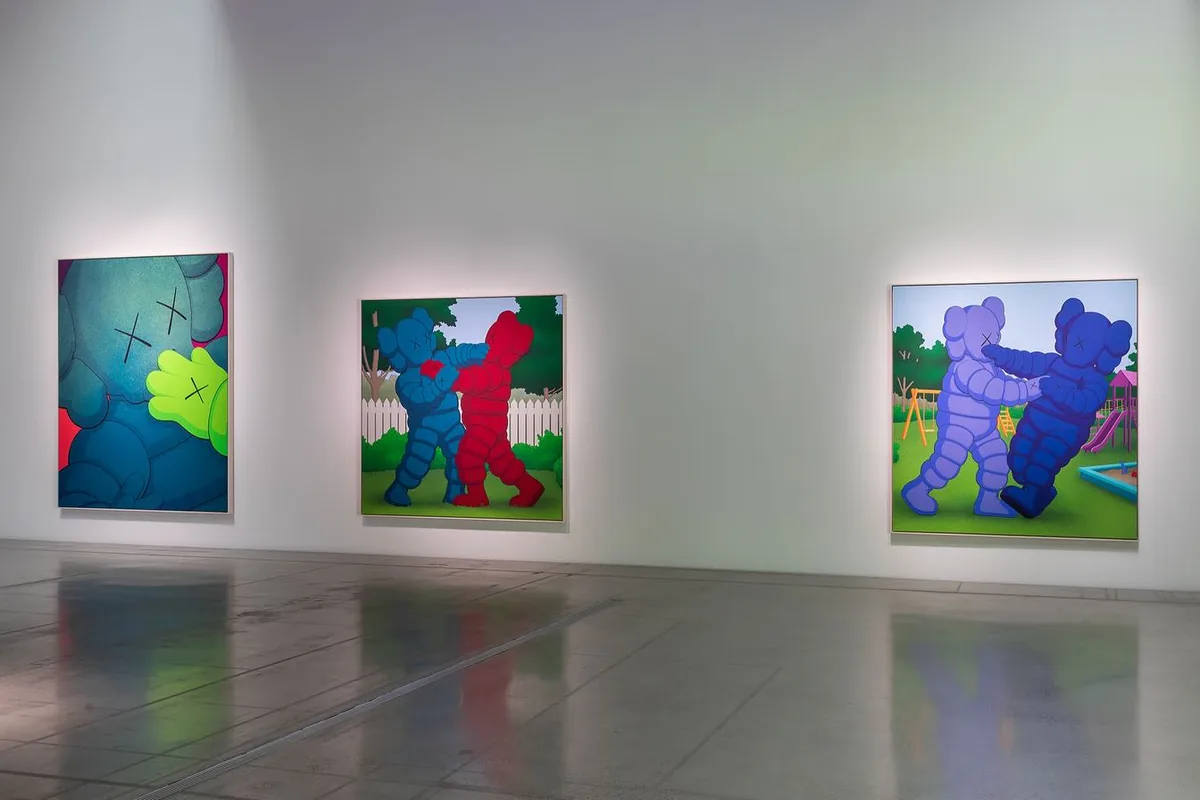
KAWS: FRIENDS AND NEIGHBORS is scheduled at Space K Seoul from 23 July to 27 December 2026. The gallery’s exhibition announcement identifies it as the artist’s first institutional solo exhibition in Korea. That distinction matters: it describes a museum-scale presentation, rather than claiming that KAWS has never exhibited or appeared in the country before. The exhibition brings familiar characters into a setting where the relationships between works matter as much as individual identities.
The presentation brings together approximately twenty works, including new paintings and sculptures. It also includes earlier work, so its contents should not all be dated 2026. This illustrated overview draws on museum information, published installation photographs and reporting from the press preview.
Friends are chosen; neighbors arrive with the address
The title sets up a useful distinction. Friendship suggests a relationship we have chosen; a neighbor may simply be someone with whom we share a wall, a street or a daily route. Either relationship can contain affection and irritation. In the exhibition introduction, proximity becomes something more complicated than a guarantee of belonging.
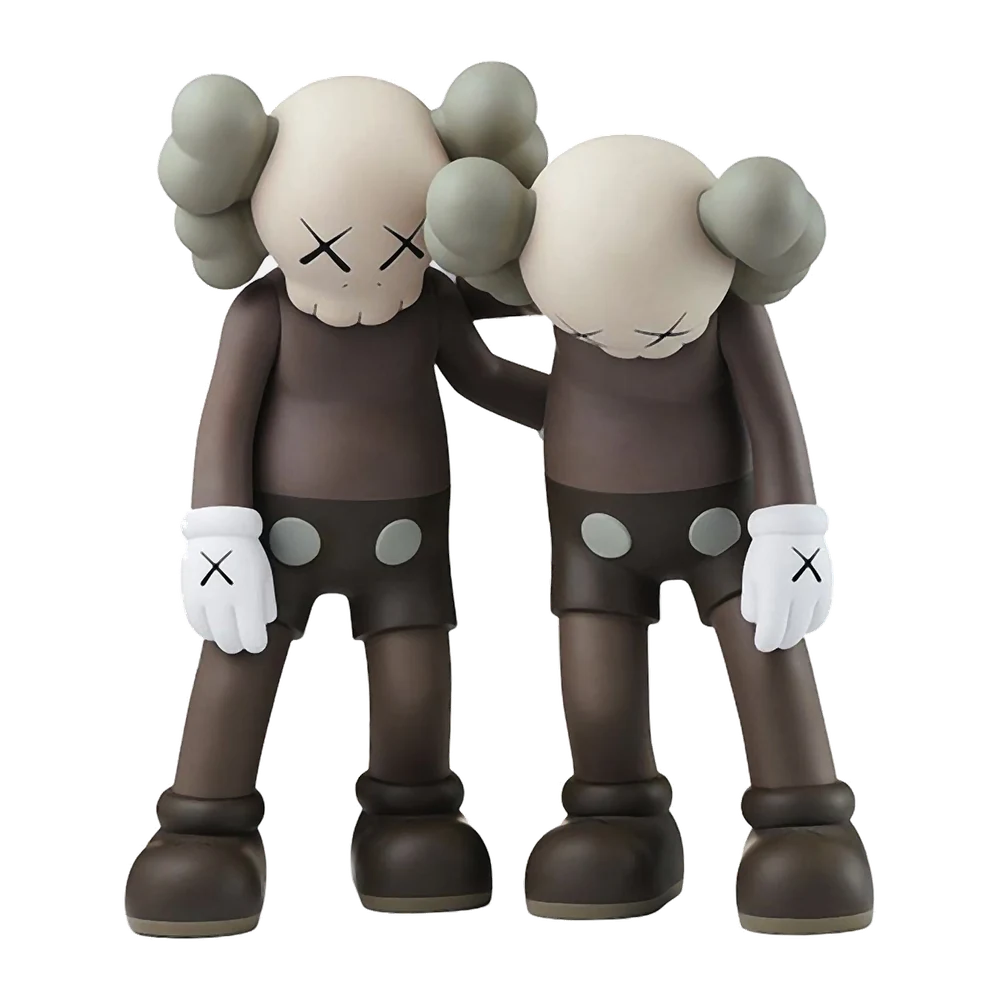
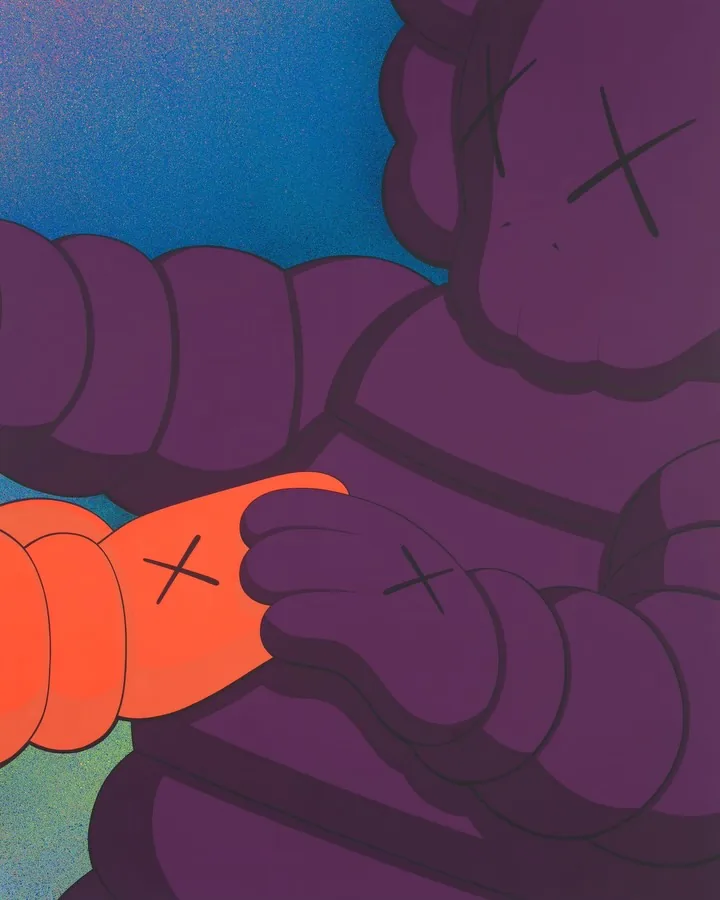
CHUM is especially effective here. Its rounded, inflated-looking body appears approachable before we have decided what its hands are doing. Two similar figures might seem to embrace, restrain one another or compete for space. KAWS leaves room for those readings to coexist. A repeated character can therefore carry a scene without needing the facial expressions or dialogue that would settle the relationship immediately.
NECK AND NECK: closeness with an uncertain edge
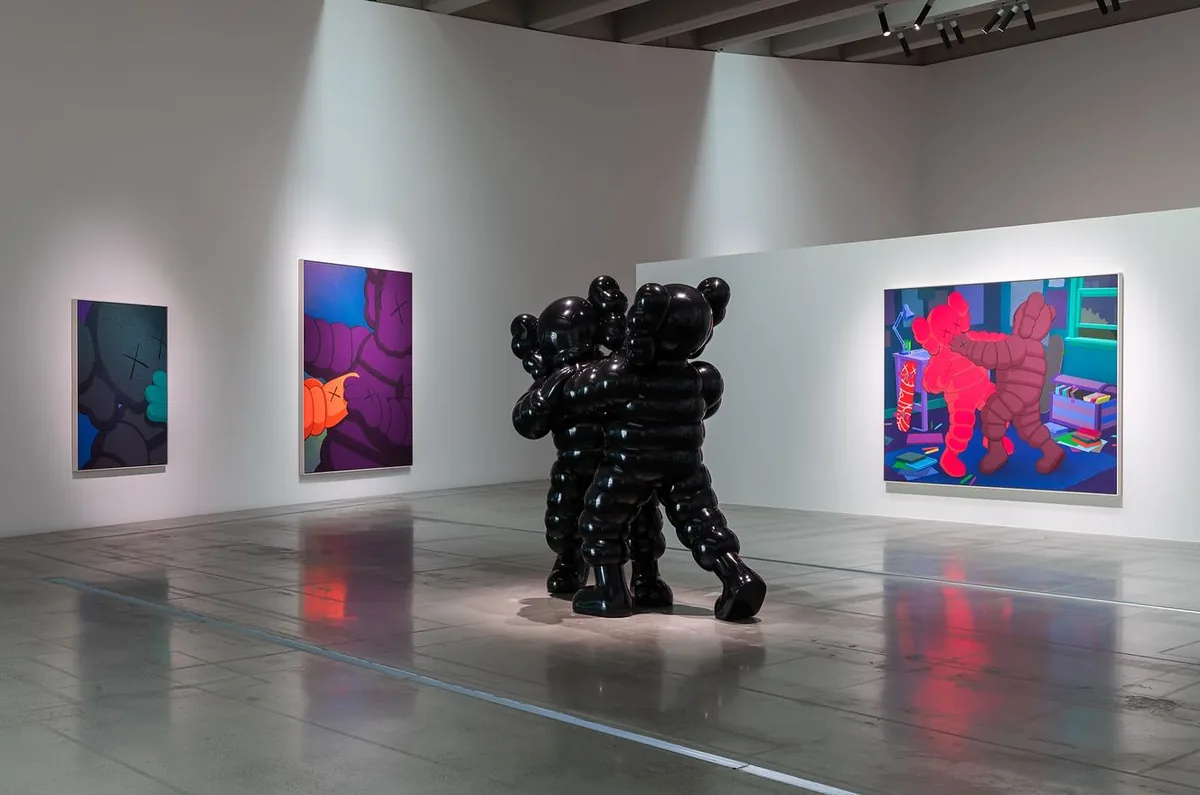
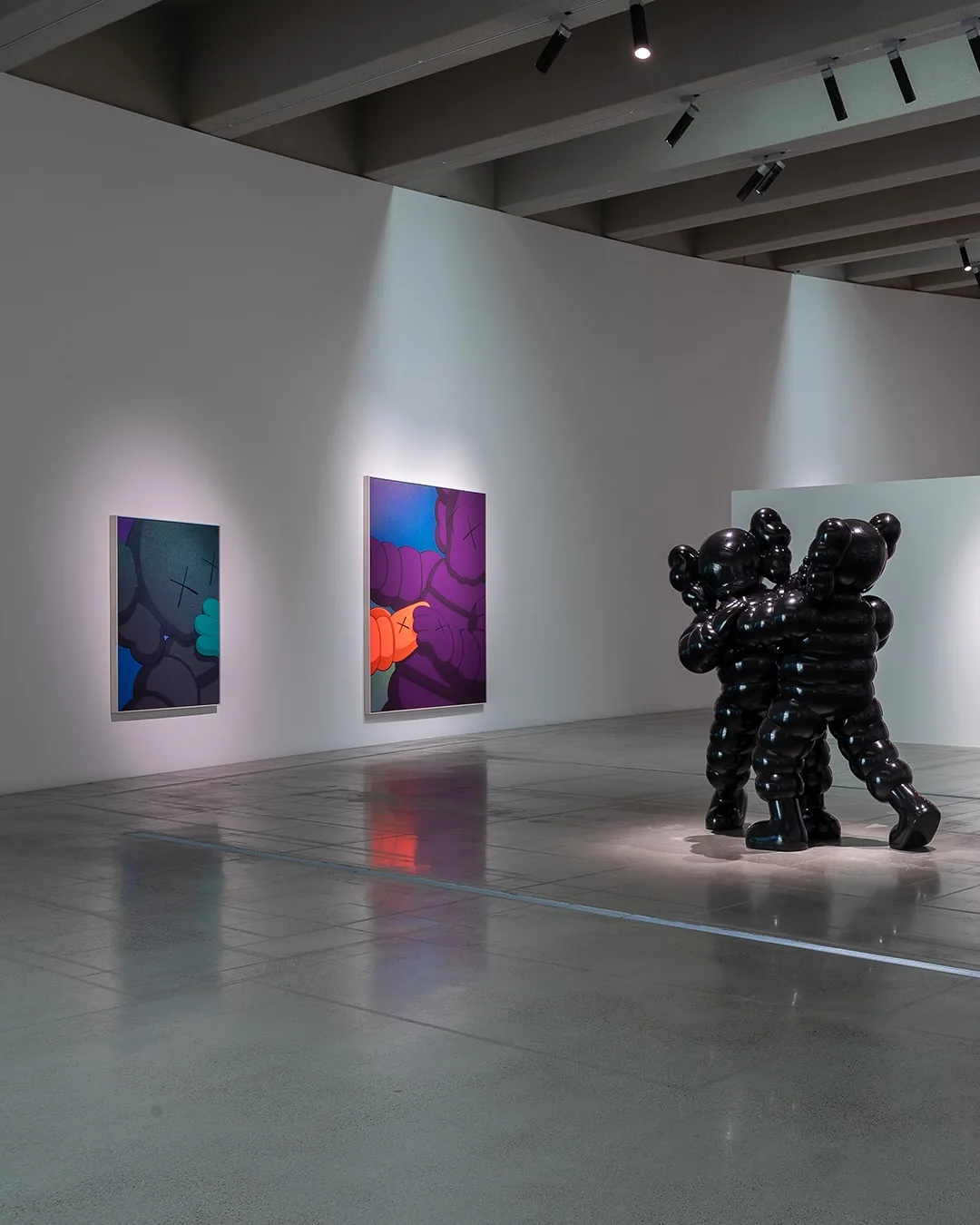
NECK AND NECK (2026) places two CHUM figures in direct physical contact. Their arms reach around the upper body and neck area, producing a knot of rounded limbs. The title brings the language of close competition into an encounter that could initially appear affectionate. Looking at the hands becomes more revealing than identifying the familiar crossed eyes.
The Kiaf exhibition essay lists the sculpture as bronze, measuring 231 × 208 × 124.5 cm. That material is worth holding in mind: its appearance recalls something inflated, but the object is heavy, rigid and larger than a person. The tension between a soft-looking outline and an immovable body gives the encounter a physical force that a photograph of a small vinyl figure cannot communicate in the same way.
Photographs
THE RED BALL moves the encounter to a playground
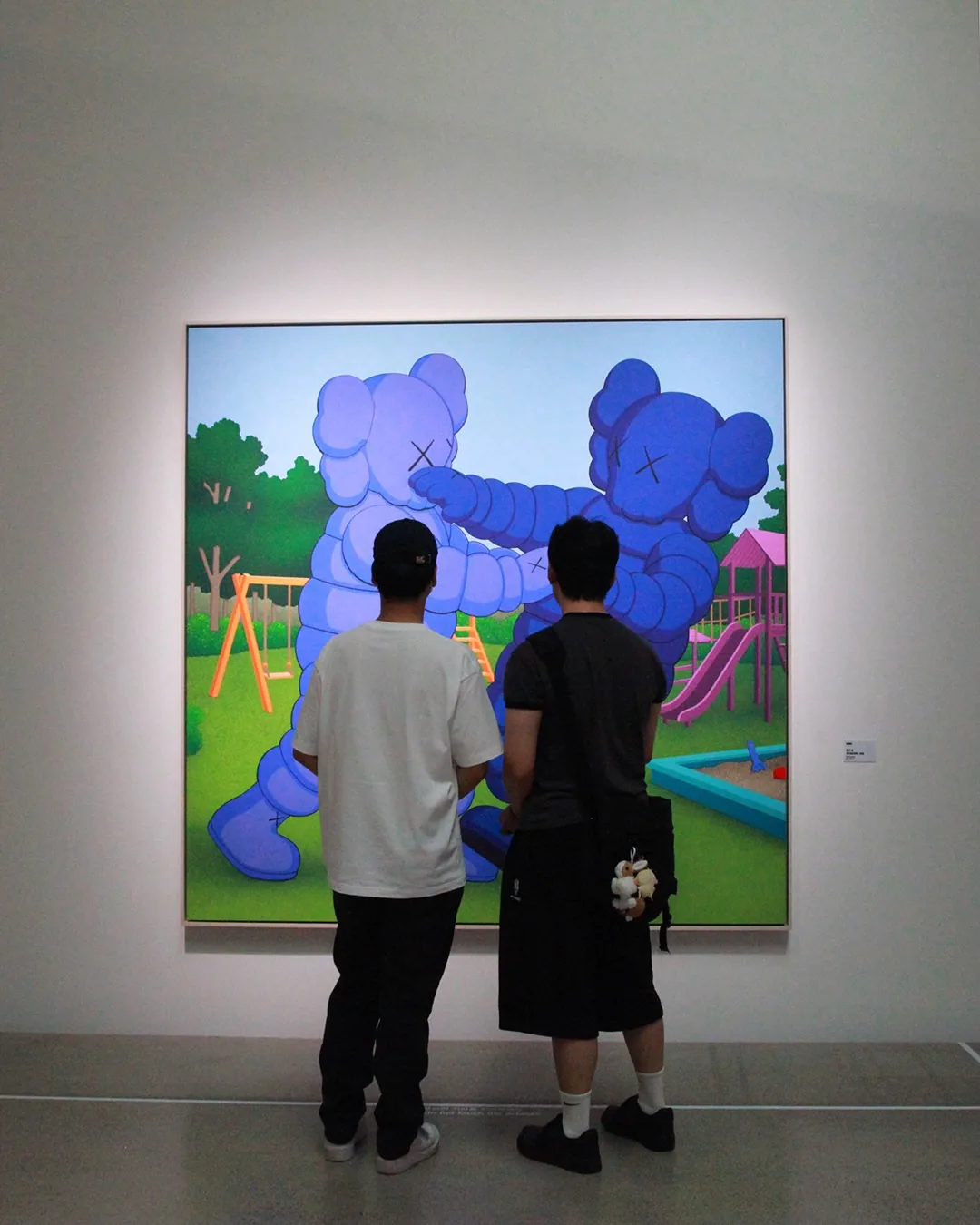
In THE RED BALL (2026), two figures occupy a playground-like setting. The work is acrylic on canvas, 218.4 × 218.4 cm, according to Space K’s description. The red ball provides an immediate point of attention, while the figures’ contact makes the mood harder to fix. Play and a dispute can begin with almost the same movement.
The photograph with visitors supplies useful evidence of scale. This is a substantial square painting, with space to see the characters first as a whole and then return to the junctions between their bodies. A playground normally promises a shared activity. Here it also raises a practical question: who gets to occupy the space, handle the object or determine how the game proceeds?
THERAPY: many characters making one view
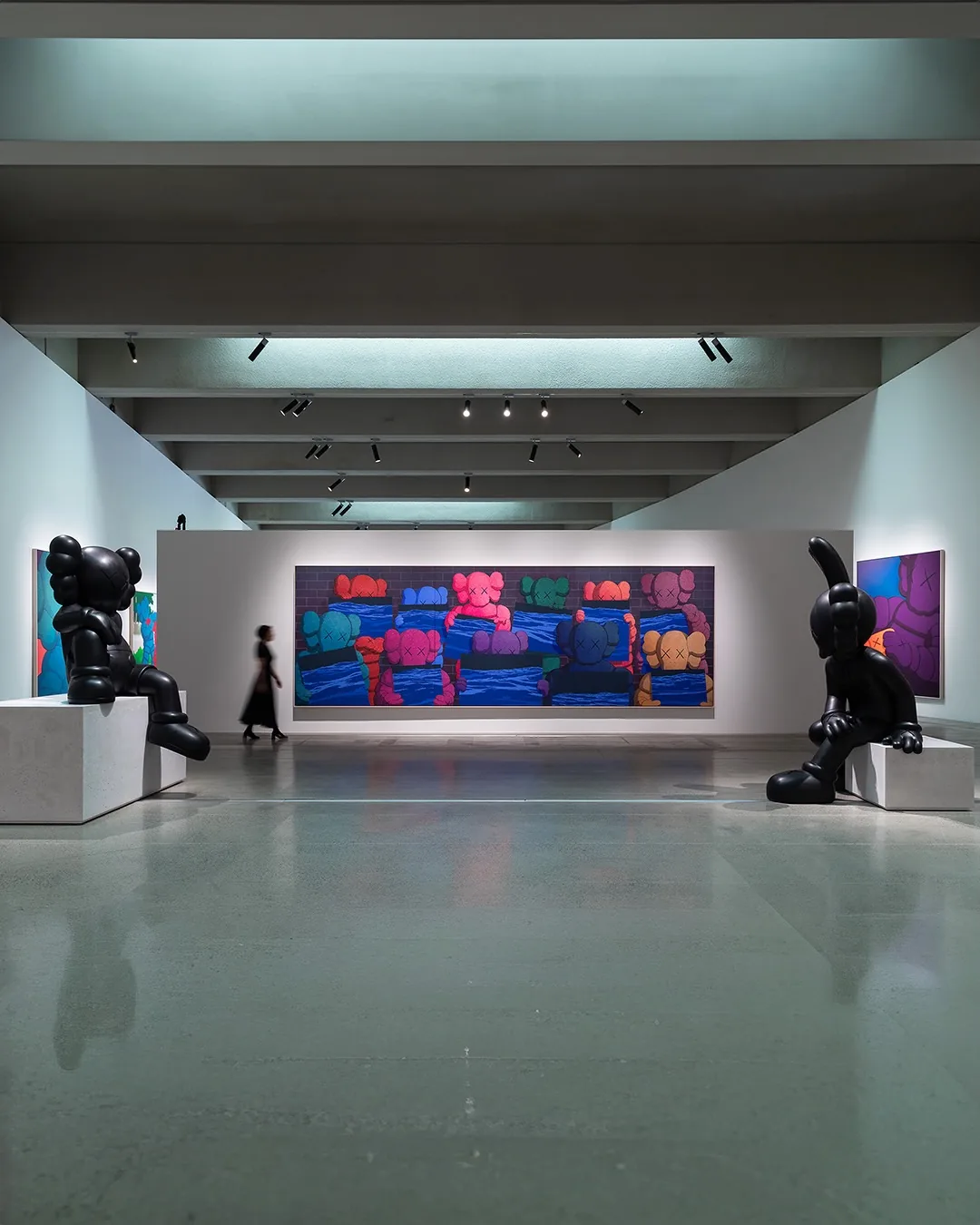
THERAPY (2025) extends across three canvases, together measuring 218.4 × 655.3 cm. Eleven CHUM figures hold painted panels that form a seascape. Their separate bodies support a continuous horizon, making cooperation visible through the structure of the picture. A viewer can read the water first and only then notice the labor required to assemble the view.
In reporting from the July press conference, KAWS explained the connection to an image of an art class and the comforting possibilities of water and the horizon. What matters within the painting is the contrast between many individual participants and one image they temporarily hold together. Against the more ambiguous physical encounters elsewhere, this offers another form of shared space.
Photographs
A seated COMPANION, and a different figure nearby
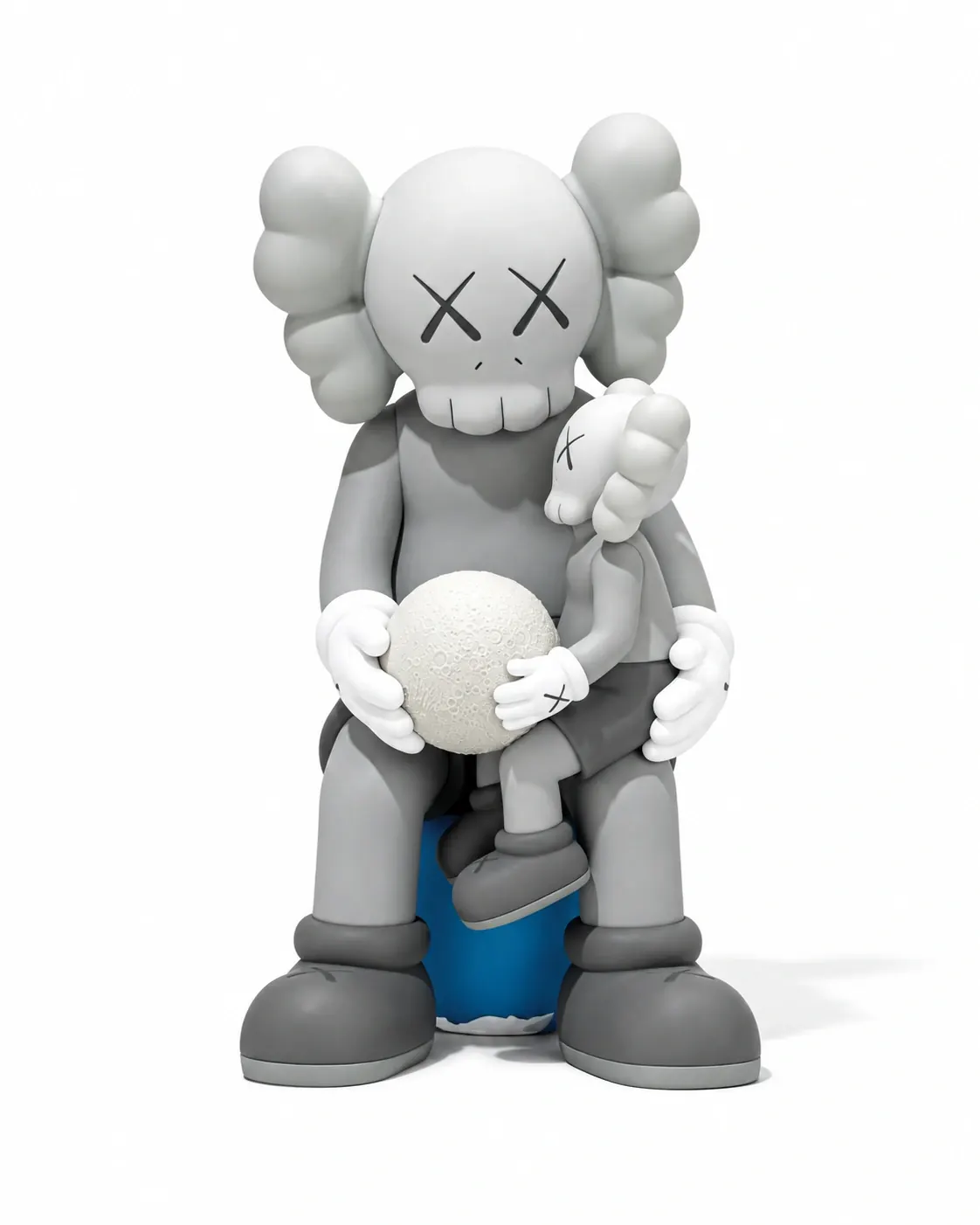
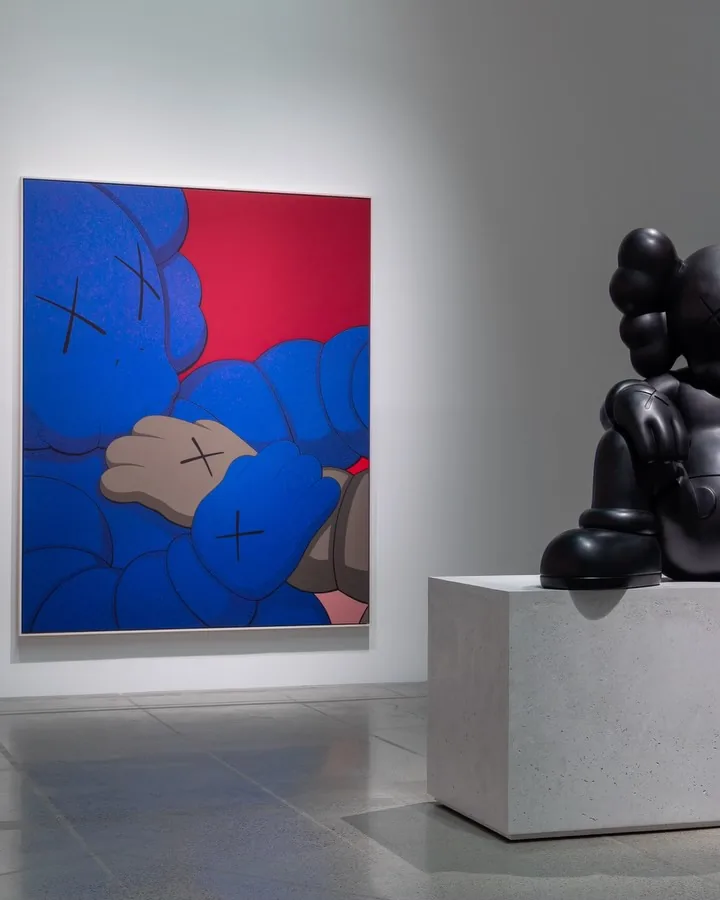
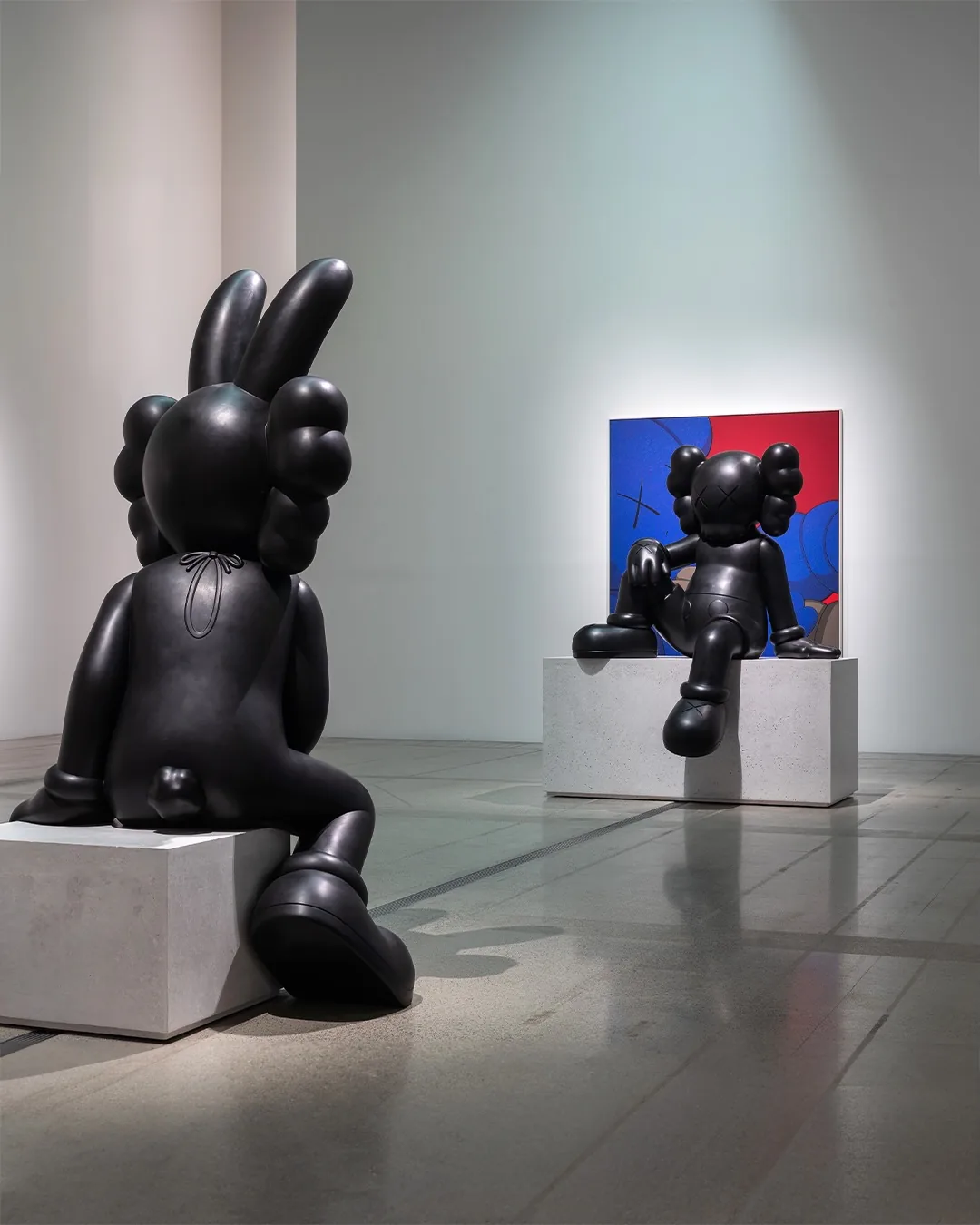
THE LONG VIEW (2026) is a seated COMPANION made from bronze and concrete, 243.8 × 195 × 122 cm. Space K’s dedicated publication draws attention to distance and time in the title. The plinth changes how the figure meets the room: the body is recognisable, but its elevated position and downward posture create a pause in the movement of the exhibition.
MEASURING SHADOWS (2026) is a separate sculpture featuring ACCOMPLICE, the character with long rabbit-like ears. It is also bronze and concrete, measuring 243.8 × 134.5 × 162 cm. These identities should not be collapsed into a generic “KAWS figure.” Comparing their positions and the empty space around them is more useful than assigning a single, fixed emotion to the crossed eyes.
The paintings deserve more than a character check
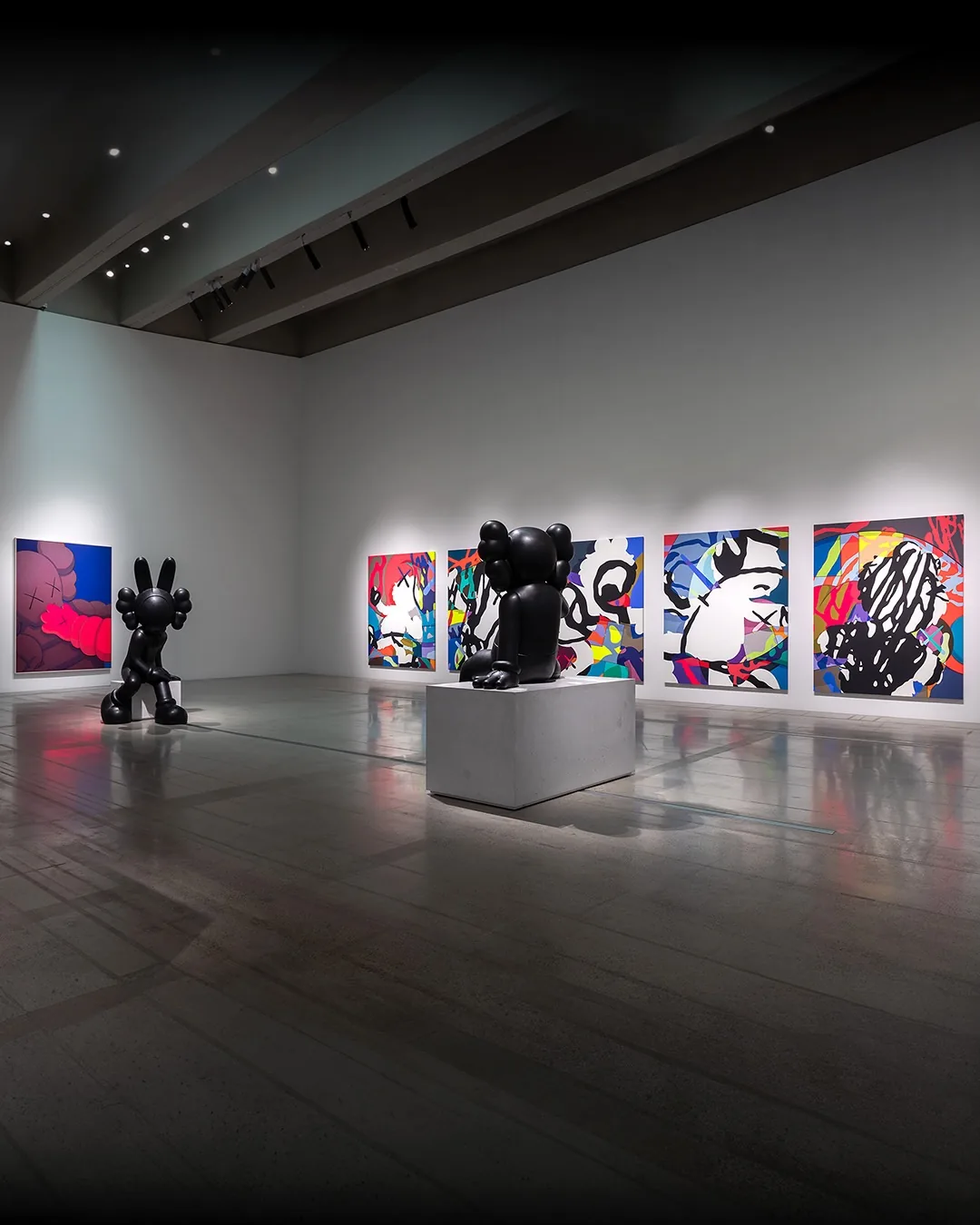
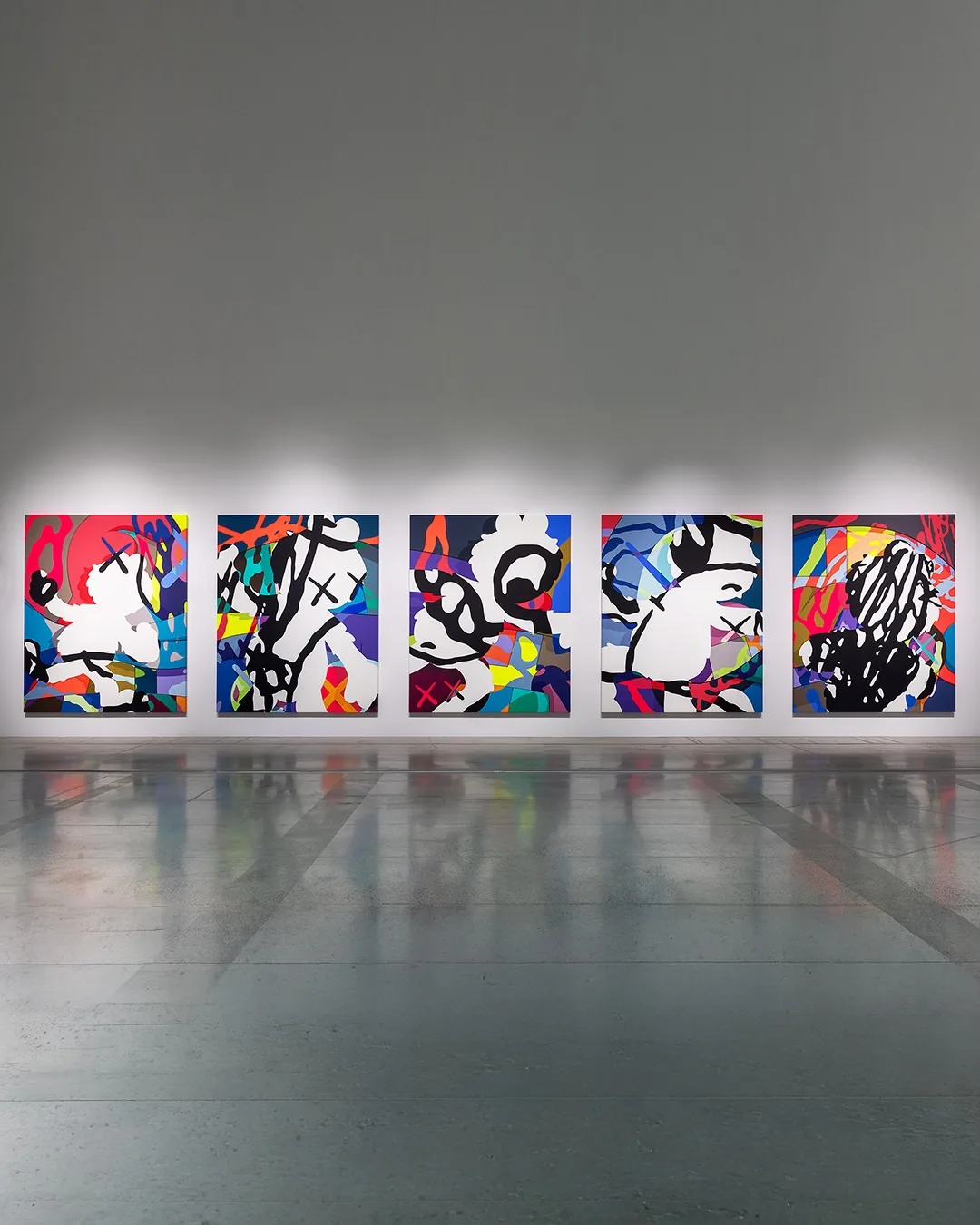
FINAL WARNING is one of the works highlighted by Space K’s exhibition posts. CHUM may make the image immediately identifiable, but recognition is only the beginning. The amount of space between bodies, a cropped limb or the way a rounded form meets a hard boundary can change the scene. Those relationships reward a second look after the first recognition of the character.
The museum also identifies SURVIVAL MACHINES as a painting from 2015, in contrast with the recent works. Its inclusion prevents the exhibition from becoming a simple catalogue of new releases. Across the installation photographs, painted surfaces, edges and shifts of scale remain important. The same face can recur while the construction of the picture changes; that is precisely why the works benefit from being seen as paintings rather than illustrations of collectible names.
Photographs
The preview, the opening and the later collaboration
The reported press preview took place on 21 July 2026, two days before the public opening on 23 July. These are distinct dates. The contemporary press report records the artist discussing the exhibition, including the relationship between its title and works.
A separate development arrived on 15 October: Kolon FnC announced an exhibition-related Kolon Sport capsule. It comprised four styles, including a jacket, graphic T-shirt, packable bag and padded muffler. This belongs to the wider life of the exhibition, showing how its characters and ideas circulate beyond the gallery.
What the exhibition changes for a collector
If your starting point is a small figure, this exhibition offers a way to look beyond colorways. Ask what happens when the character sits above eye level, touches another body or is repeated across a canvas. Material and scale are part of the work, not merely different sizes of the same product. A bronze sculpture, a painting and an editioned vinyl figure require different descriptions and expectations.
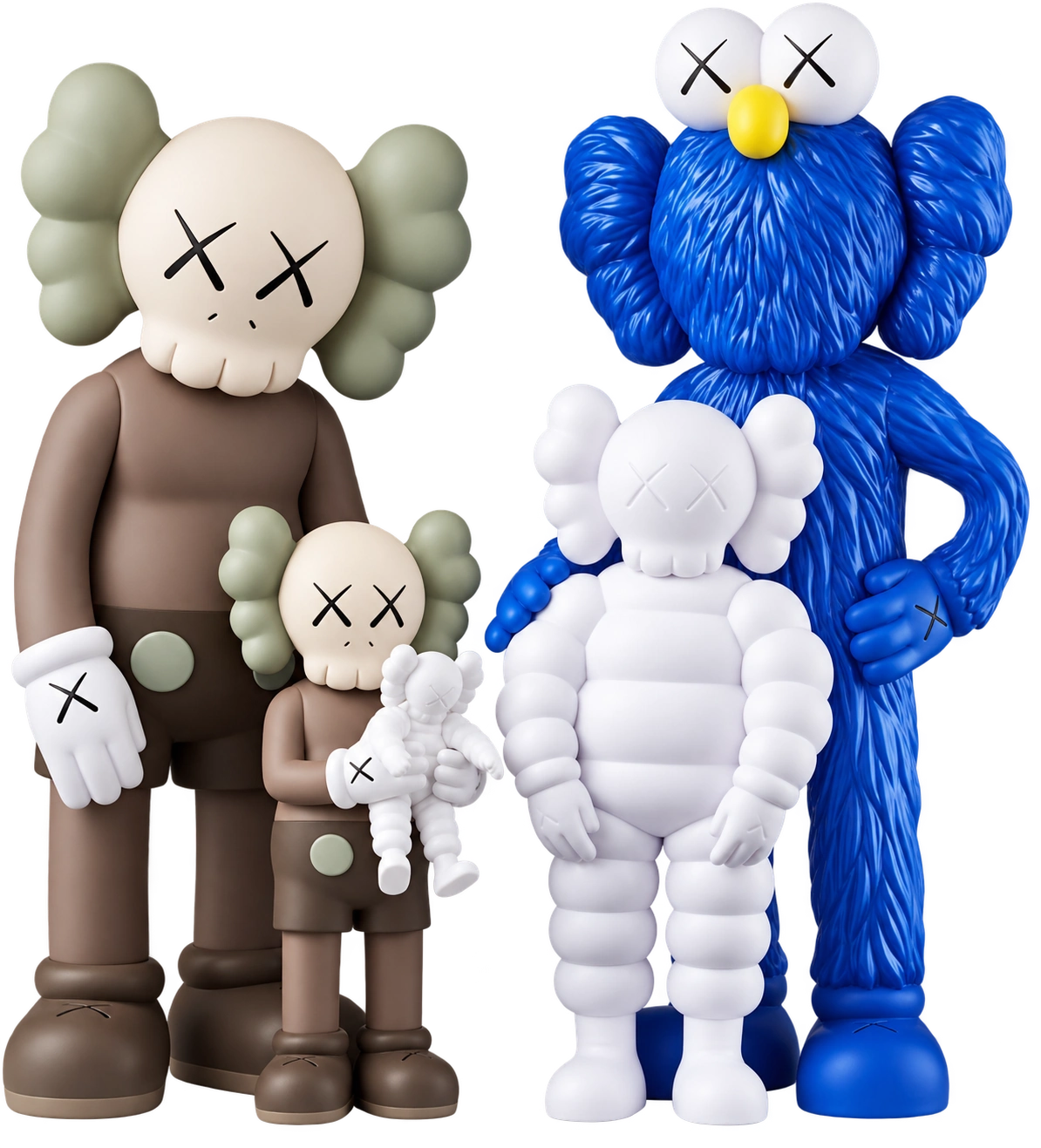
Our guide to KAWS characters explains the differences between COMPANION, CHUM and BFF. The KAWS FAMILY article considers how several characters form one composition. For available collectible formats, the KAWS category is the relevant starting point; the works in these exhibition photographs should not be read as catalogue stock.
Photographs
Dates and a useful way to read the photographs
For a visit, check the current information from Visit Seoul and Space K before travelling. The exhibition is in Seoul’s Magok district and is scheduled to close on 27 December 2026. Opening arrangements and admission details can change, so the official listing is more useful for planning than an undated social-media repost.
For an online reading, alternate between a room view and a closer image. The wide photograph reveals how much space separates figures; the closer one makes a hand, surface or painted boundary legible. Together they explain why FRIENDS AND NEIGHBORS works as an exhibition: the question is not only who these characters are, but what happens when they have to share a space.