In this article
One bear, many different collections
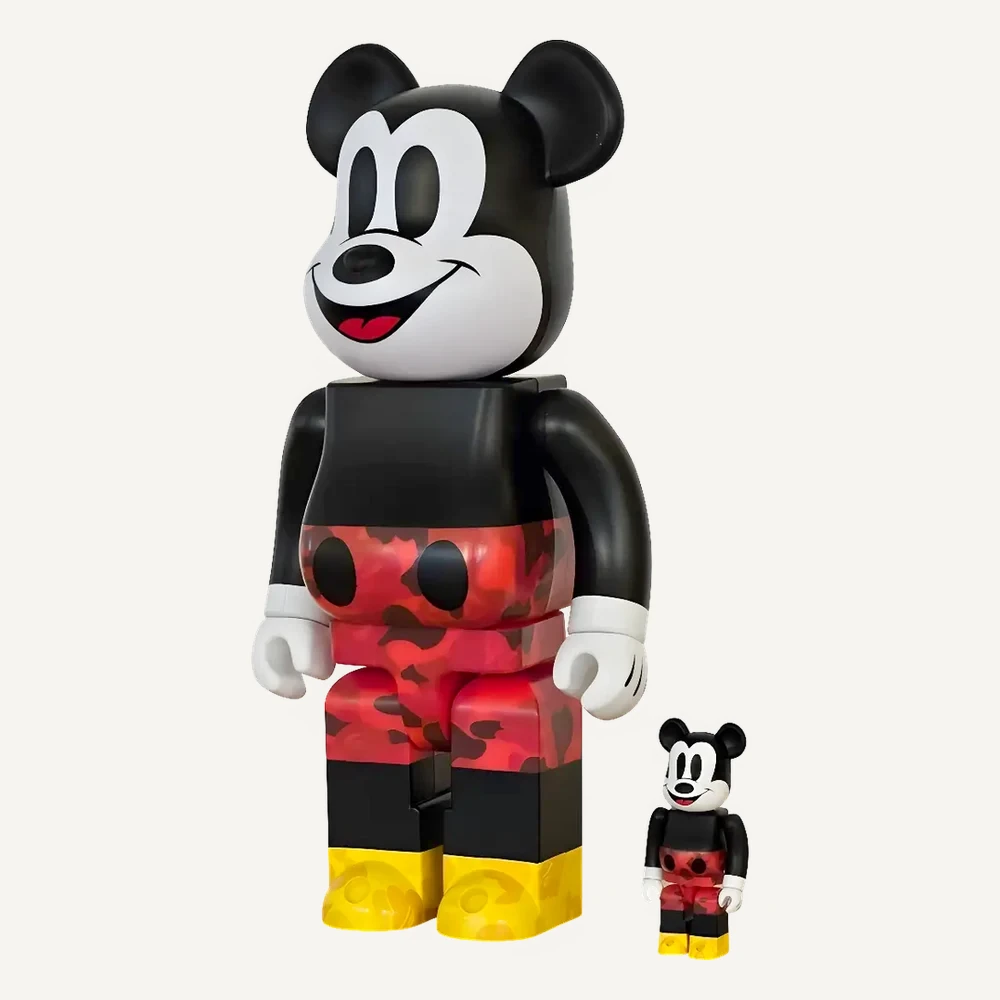
BE@RBRICK is recognisable by its round ears, rounded stomach and movable arms and legs. MEDICOM TOY’s official description describes a bear assembled from nine parts. The stylised name is BE@RBRICK, although Bearbrick is common in conversation and search.
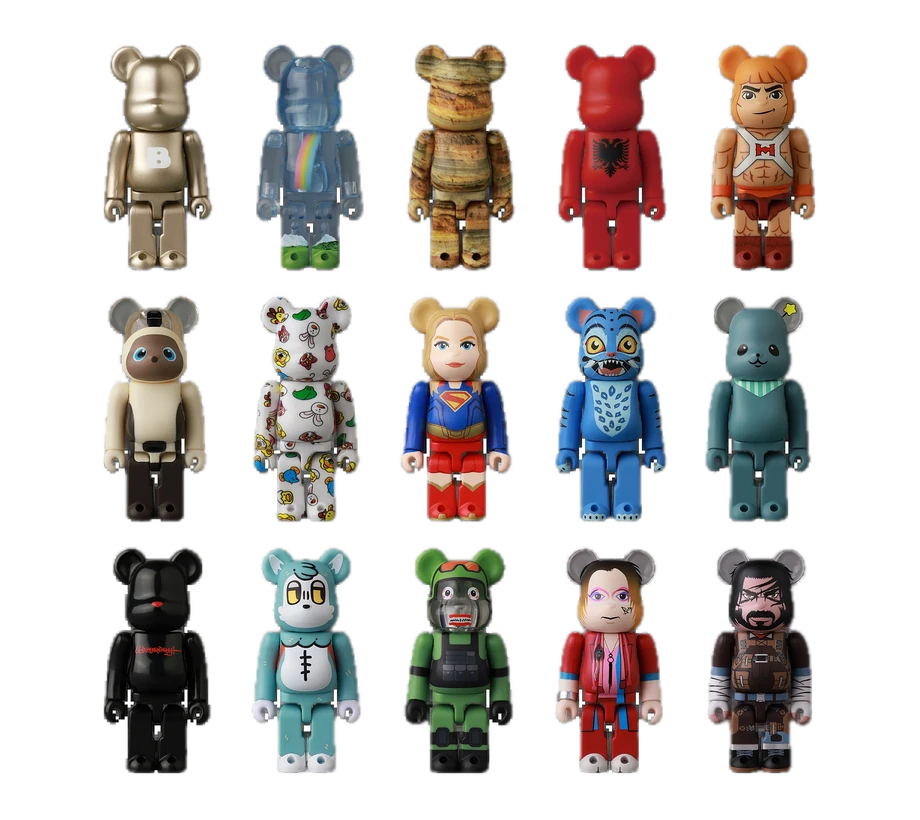
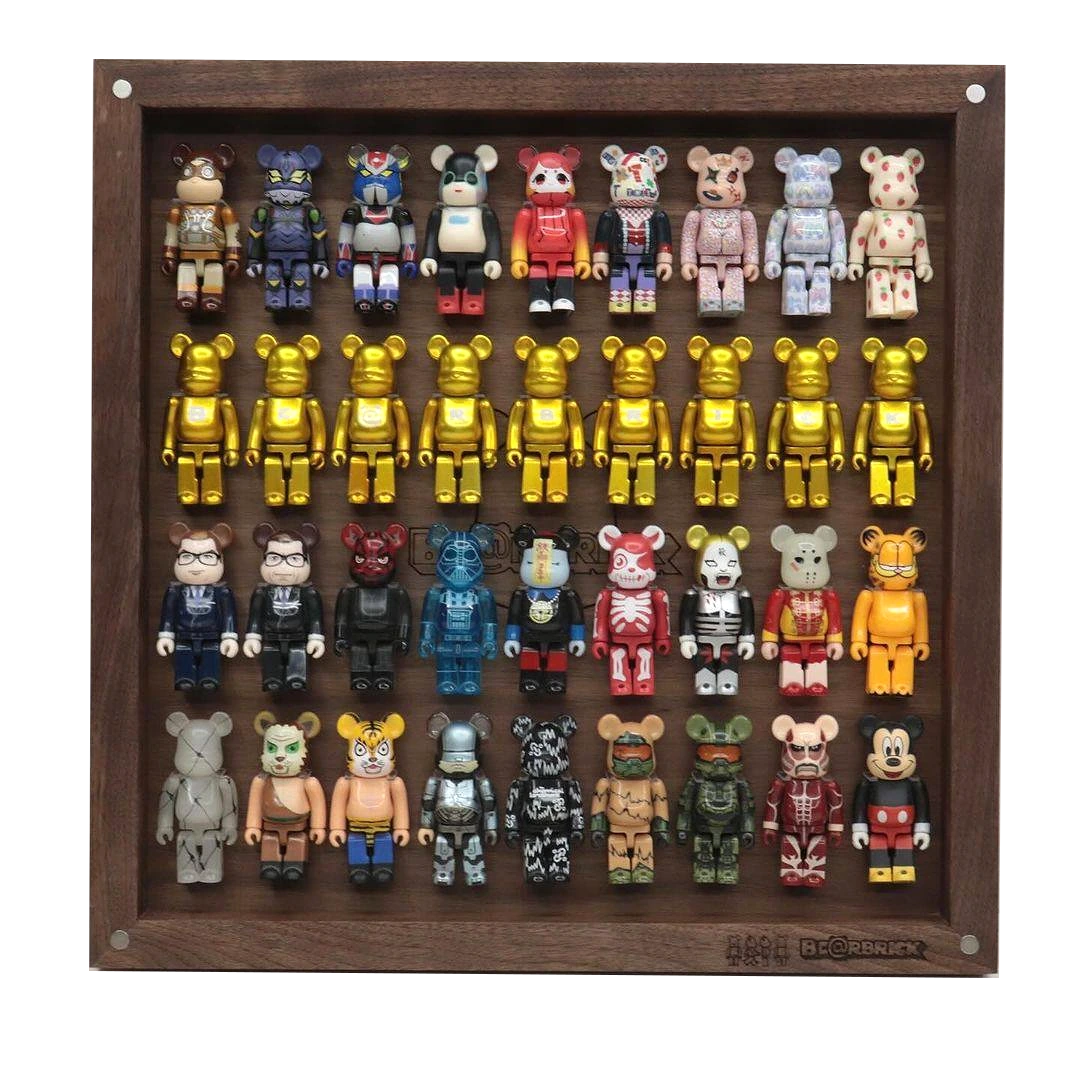
Think of identical book covers with very different books inside. The principle is similar: a shared shape makes the differences easier to see. One bear carries an artist’s drawing, another a superhero’s costume; on a third, the interesting part is the wood and how it has been worked. They still share a silhouette when placed together, even though they tell different stories.
BE@RBRICK is a MEDICOM TOY line in its own right. Its block-like body sometimes brings LEGO to mind, but it is not a kit assembled from building bricks. It is a finished collectible figure.
A shared shape, different identities
How it began in Japan
MEDICOM TOY was founded in 1996. In the company’s history, BE@RBRICK follows KUBRICK, a line of block-type figures introduced in 2000. The bear arrived in 2001. The first BE@RBRICK, the white 000W WCC12, was distributed at World Character Convention 12 in Tokyo; an archive example appears in DEEPTOKYO’s feature with the company’s founder.
In an interview with BAIT, founder Tatsuhiko Akashi recalls developing KUBRICK and looking for a new take on the teddy bear. Rather than continually changing the construction, the bear offered a shape that could be reinterpreted through graphics, colour and collaborations.
This explains why an early BE@RBRICK and a recent one look related. Themes, techniques and scale change, while the silhouette connects the editions into a continuing story.
Why a shared shape does not make every figure the same
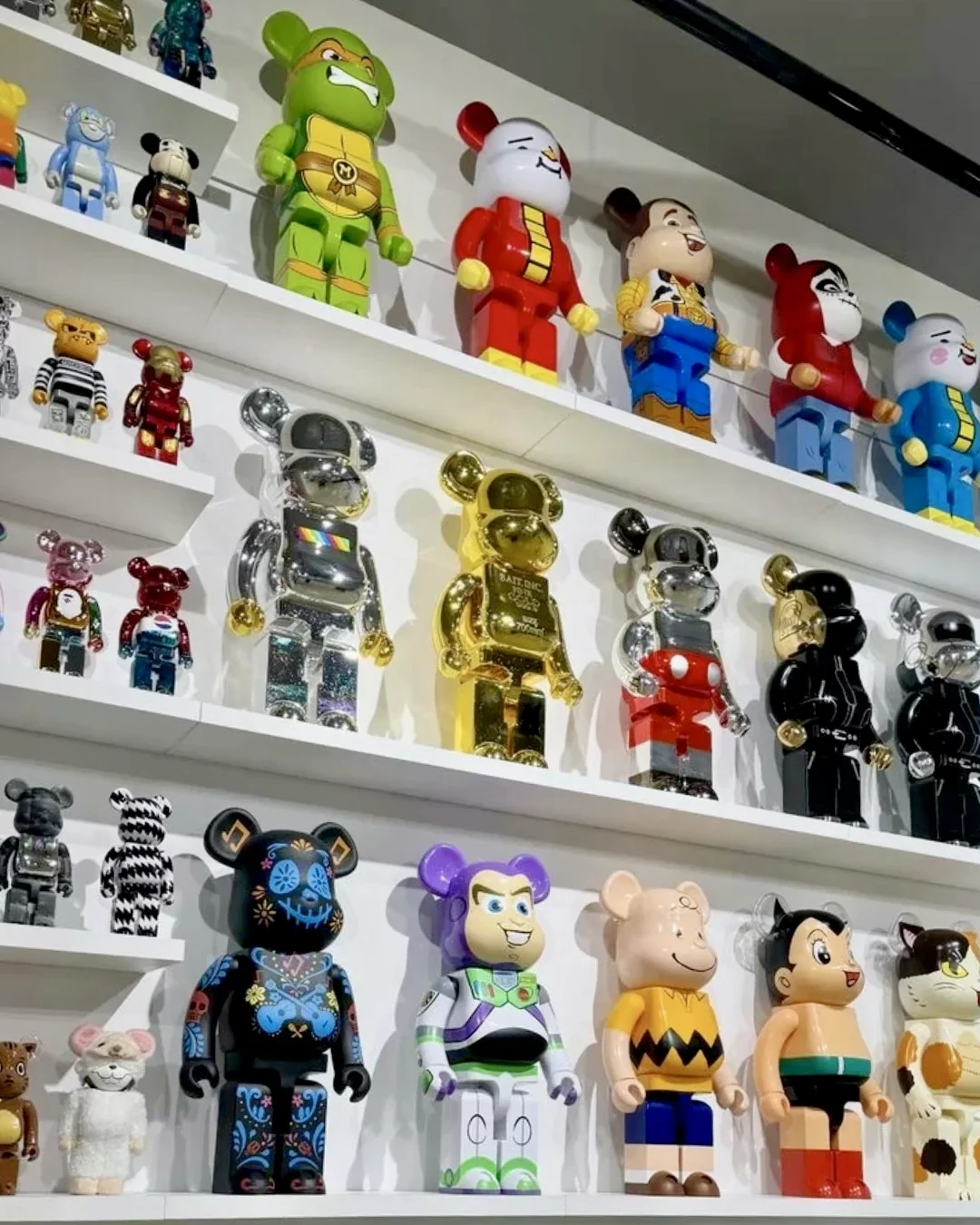
Some collectors discover BE@RBRICK through an artist; others arrive through clothing, music or film. That makes a useful starting point for a first collection. You do not have to know the whole catalogue to find a subject you care about.
There are also releases reproducing work by artists from the past. For example, MoMA offers a BE@RBRICK featuring Salvador Dalí’s The Persistence of Memory. This is a reproduction of the painting on a figure, rather than a personal collaboration between Dalí and MEDICOM TOY. That distinction matters when understanding an object’s story.
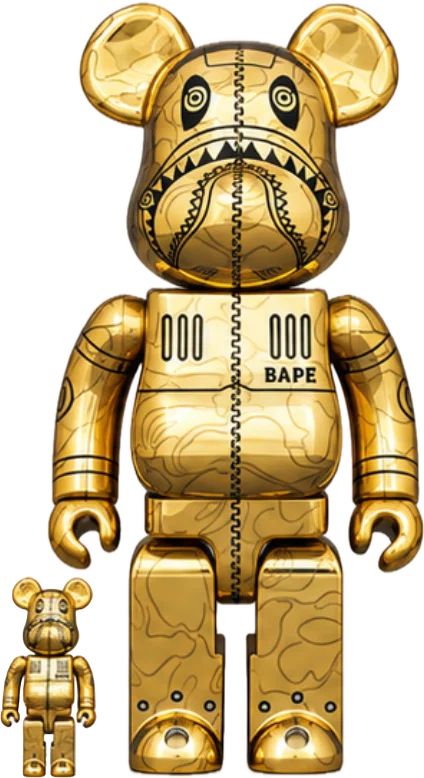
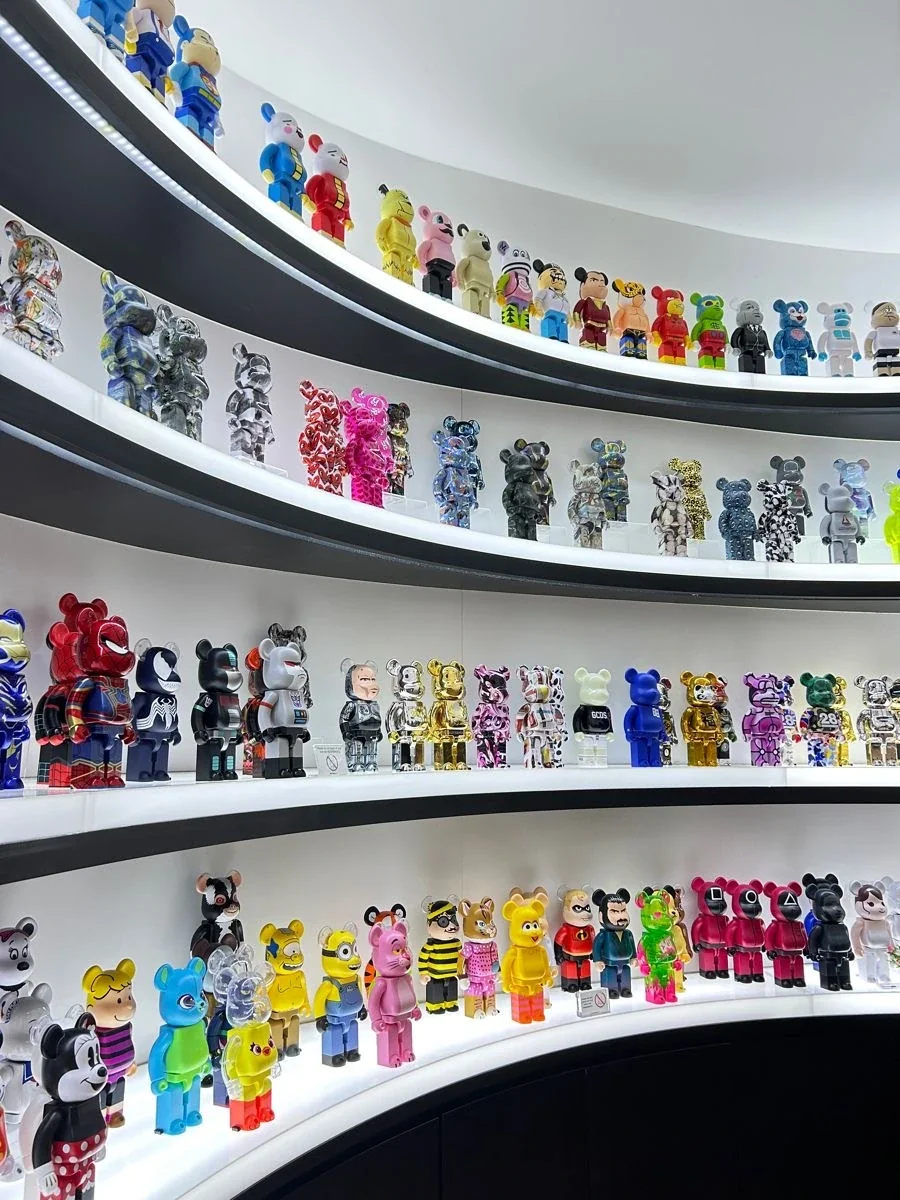
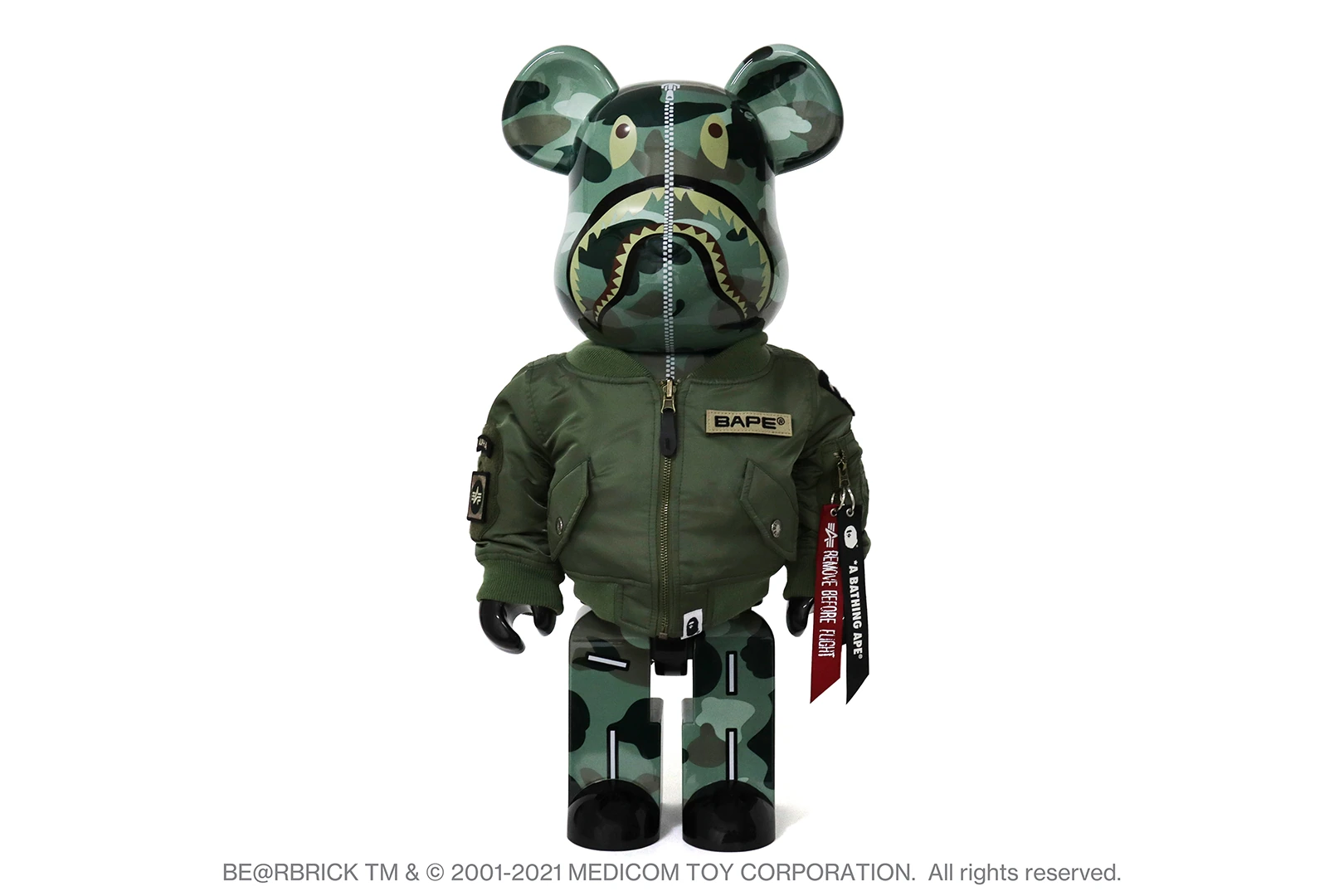
KAWS brings his characteristic crossed-out eyes and graphic treatment; BAPE brings camouflage and its characters. Disney and Marvel offer another route, translating familiar characters onto the bear’s shape. An official collaboration still means a particular release, size and year, rather than any figure carrying a similar image.
We have separate articles on BE@RBRICK × KAWS, BAPE and Baby Milo, Disney and Marvel. They are useful next reads once an artist, brand or fictional world catches your attention.
How collaborations change the details
What do 100%, 400% and 1000% mean?
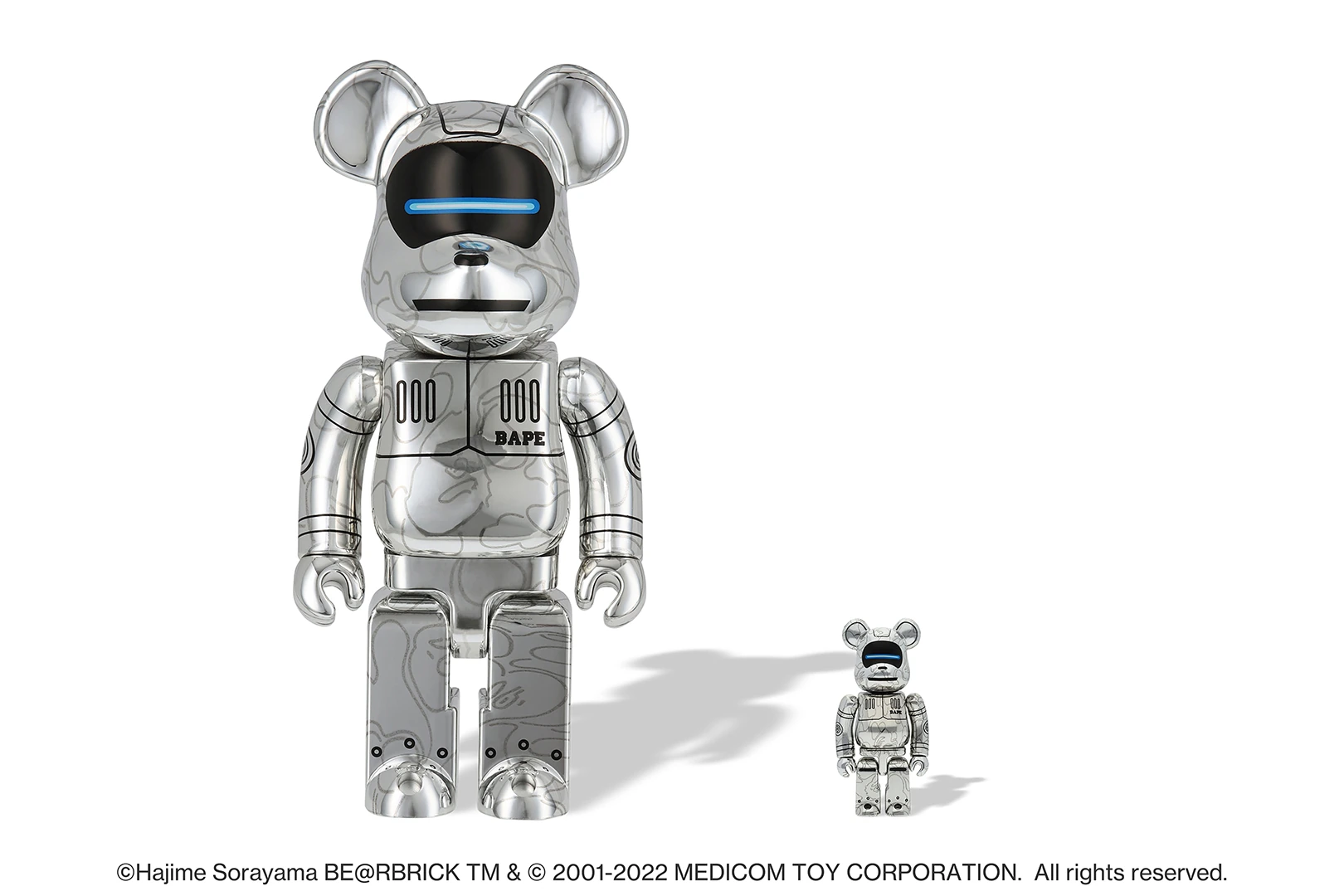
The percentage identifies the figure’s format. It is not a discount, a quality grade or a measure of rarity. The small 100% is the reference size, at roughly 7 cm tall. A 400% is usually around 28 cm, and a 1000% around 70 cm. For example, the official Chompers 1000% listing specifies approximately 700 mm.
The 70, 280 and 700 mm formats also appear in an official PARCO announcement about BE@RBRICK.
| Format | Approximate height | What to check before buying |
|---|---|---|
| 100% | 7 cm | How small details will read and where several figures might sit |
| 400% | 28 cm | Shelf height and depth, with room around the figure |
| 1000% | 70 cm | A stable position, delivery access and packaging dimensions |
These are guides: clothing, accessories and special constructions can affect the dimensions. A 400% + 100% set generally contains two figures of different sizes, rather than one intermediate size. Check the contents of the particular release.
Our BE@RBRICK size guide offers a closer comparison; it is currently in Ukrainian. For a larger figure, marking its height on a wall is a useful way to test the space before ordering.
Plastic, wood and actual clothing
Many BE@RBRICK figures are made from plastic, but it would be a mistake to assume every example is a plastic toy. Check the manufacturer’s description: even a familiar design can appear in different materials.
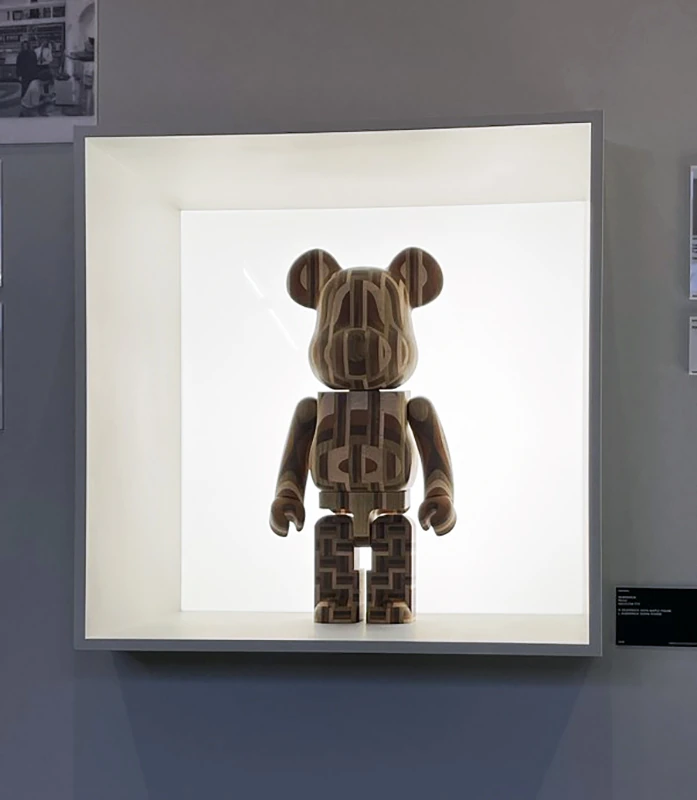
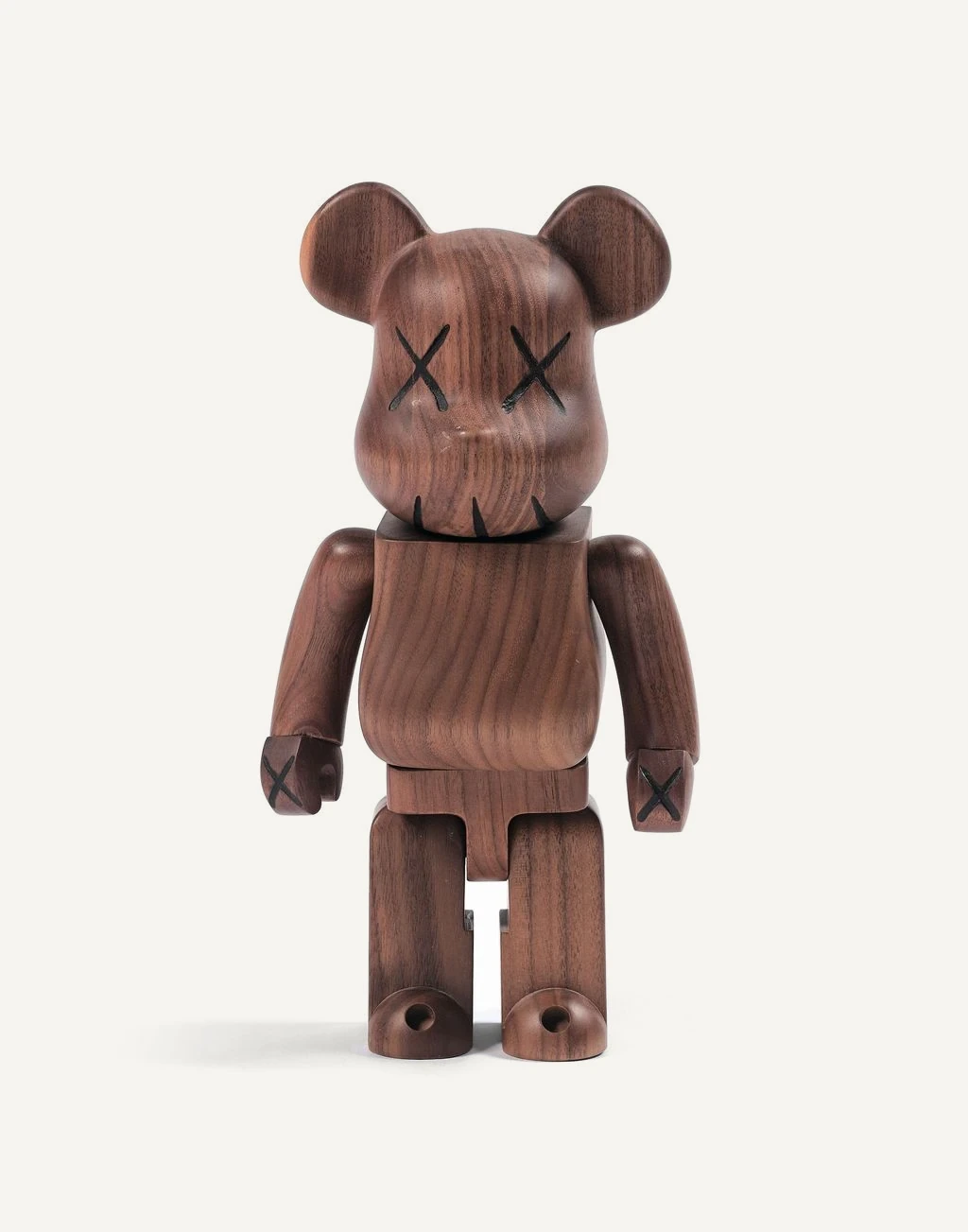
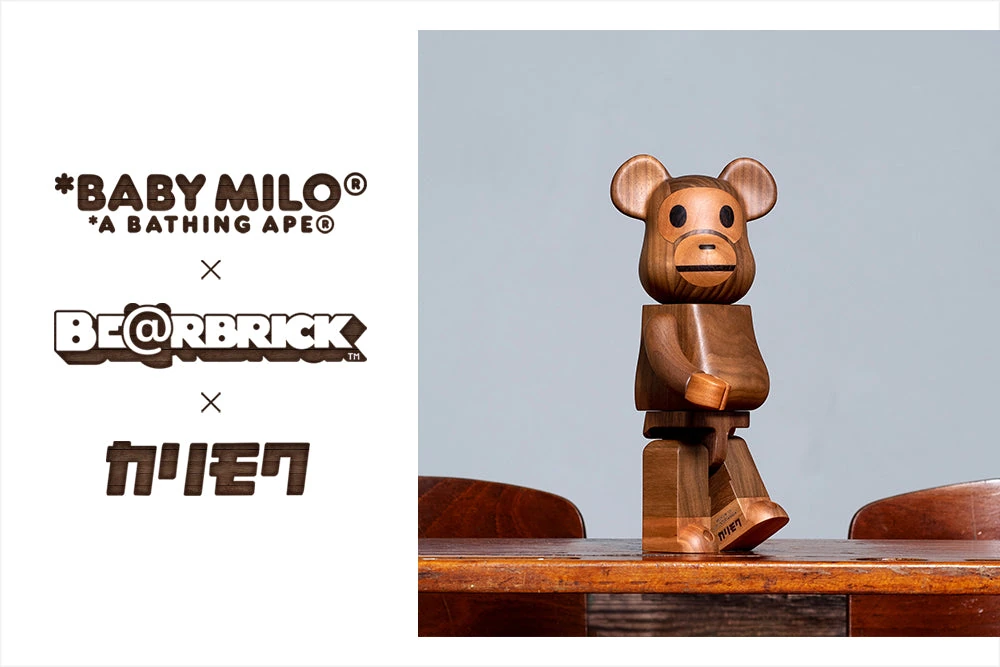
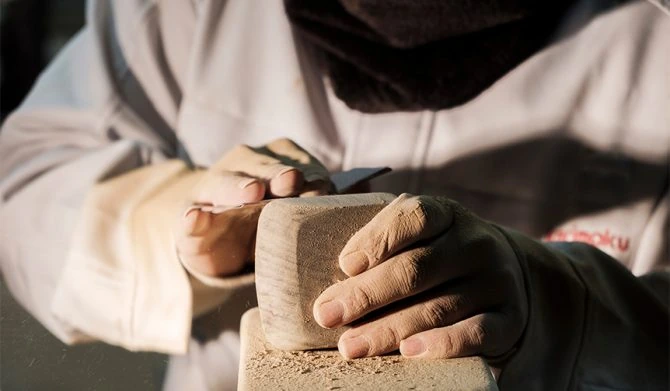
The wooden Karimoku editions are interesting for more than the name. Haroshi × Karimoku reveals layers of material, and the official description refers to finishing by craftspeople. Here the pattern comes from the wood and its construction. Our Karimoku article explores the production and differences between releases.
READYMADE × BAPE 1000% takes another approach, using textile clothing to change the silhouette. There are seams, fastenings and surfaces whose condition matters separately from the body. A collection can follow materials as well as characters: graphics, timber, reflective finishes or work with fabric.
Wood and craftsmanship
A series, a separate edition and a blind box
The word series often appears on small BE@RBRICK figures sold in sealed boxes, where the particular figure is revealed on opening. That does not mean every BE@RBRICK is sold blind. Larger collaboration editions usually specify the design, size and contents in advance.
For example, GINBIS’s announcement of its Series 52 release explicitly describes sealed packaging with unknown contents until opened, and different probabilities for the designs.
There are also secret variants. Assortments, odds and sales formats need checking for each release; there is no universal rule of rarity covering every year of BE@RBRICK. A sealed box is not a promise of an expensive find.
If you want a particular figure, establish whether the listing offers that exact design or an unopened random box. If you enjoy opening boxes, decide on a budget beforehand and allow for duplicates. We will look more closely at series and secret figures in the next article.
Why prices vary so much
Several things can contribute to a price: scale, material, production complexity, release conditions, the collaborator and demand for the particular edition. A large figure is not necessarily more expensive than a small wooden one, and a famous character does not make every release rare.
It also helps to distinguish the manufacturer’s price, a shop’s asking price and a completed resale. They answer different questions. An ambitious listing shows what the seller wants; it does not prove buyers pay that amount.
Our article on rare BE@RBRICK editions and auctions compares documented sales. For a first purchase, a more useful question is what you value in this particular edition: its image, material, history or a combination of them. Resale prospects need a separate assessment, and prices are not guaranteed to rise.
How to choose your first BE@RBRICK
Start with something you already enjoy. One well-chosen figure can be more satisfying than several unrelated purchases made just because a description says limited. A collection might follow an artist, a label, a character, a material or a single size. There is no compulsory route.
Before buying, check:
- The complete release name, size and contents: one figure or a set.
- The material and actual dimensions, as well as the percentage label.
- The condition of the finish, joints and extra components.
- Completeness, packaging and provenance.
- Photographs of the actual item being offered, especially if it has had a previous owner.
Packaging and markings matter, but no single detail replaces an assessment of the whole object. Our BE@RBRICK authenticity guide provides practical examples.
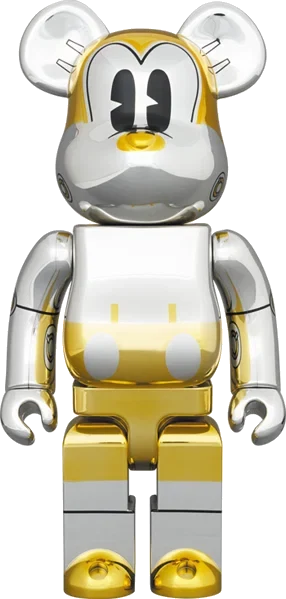
To explore scale, browse our BE@RBRICK 400% and BE@RBRICK 1000% sections. Specific examples include BAPE × Sorayama Baby Milo Gold 1000% and Baby Milo Silver 400% + 100%. Check each listing for its exact contents and purchase availability.
Making room for BE@RBRICK at home
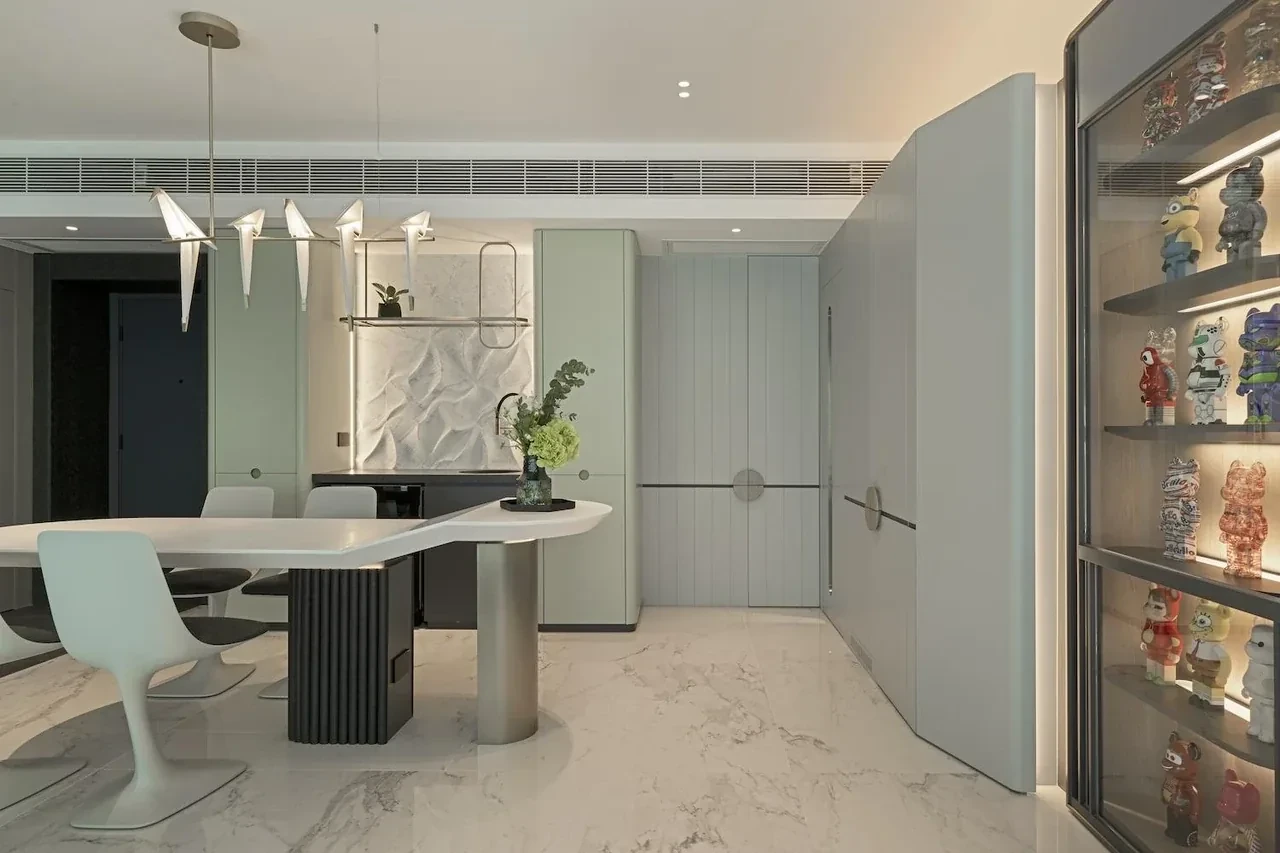
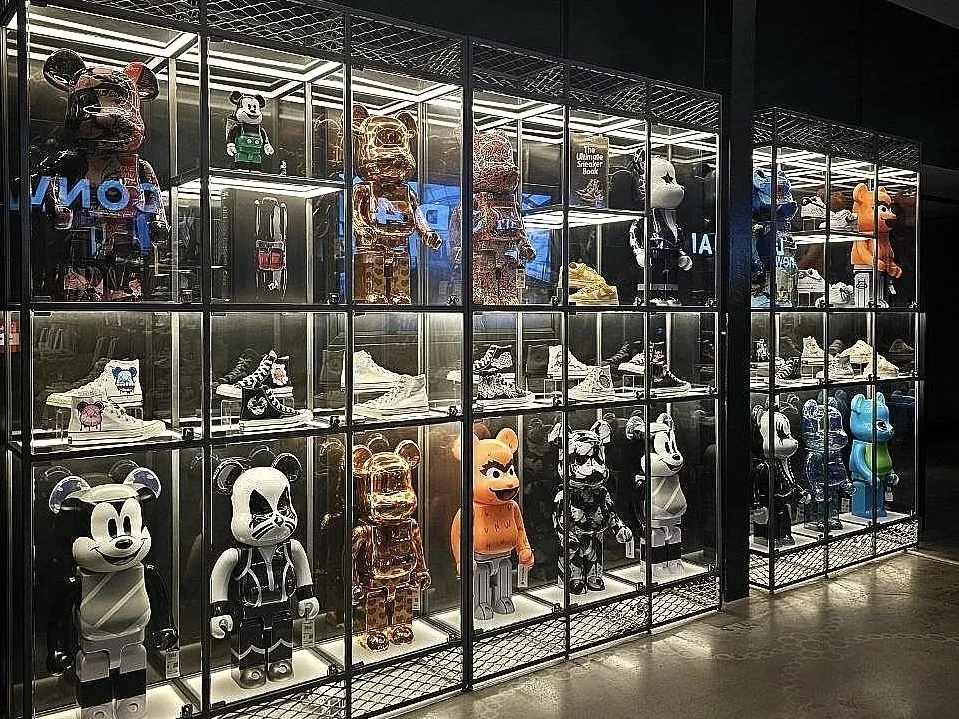
Choose the position as you choose the figure. A single large BE@RBRICK can be a strong accent, while smaller formats can sit together on a shelf. Leave some space between objects so that each silhouette and design remains visible.
Look beyond colour. The height of nearby furniture, the wall behind the figure, the light and safe access all affect how it feels in the room. Follow care guidance for the particular material: plastic, wood and textiles need different handling. Direct sunlight and an unstable surface are poor choices for a collectible.
Art toys at home brings together real examples of display. For a different perspective on how a personal interest becomes a substantial collection, read about collector Gao Ke.
You do not need a list of the most expensive models to begin. Start with the BE@RBRICK you would like to see every day, where it will stand and what makes it interesting to you.